Water Heater Repair: Common Problems
Your water heater works quietly in the background every single day, heating water for showers, dishes, laundry, and more, and most homeowners never think about it until something goes wrong. When it does, the disruption is immediate and hard to ignore. Cold showers, rusty water, strange noises from the utility room, or a spreading puddle on the floor are not the kinds of surprises anyone wants. For homeowners in Marin and Sonoma County, understanding the most common water heater problems, how to recognize them early, and when professional water heater repair is the right call can save significant time, money, and frustration.
This guide covers everything you need to know: how your water heater works, the warning signs that something is wrong, what can be repaired versus what warrants replacement, and how to keep your system running at peak performance for as long as possible.
How Your Water Heater Works
Before diagnosing a problem, it helps to understand the system. Most homes in Marin and Sonoma County rely on one of two primary water heater configurations: a conventional storage tank unit or a tankless (on-demand) unit.
Conventional Storage Tank Water Heaters
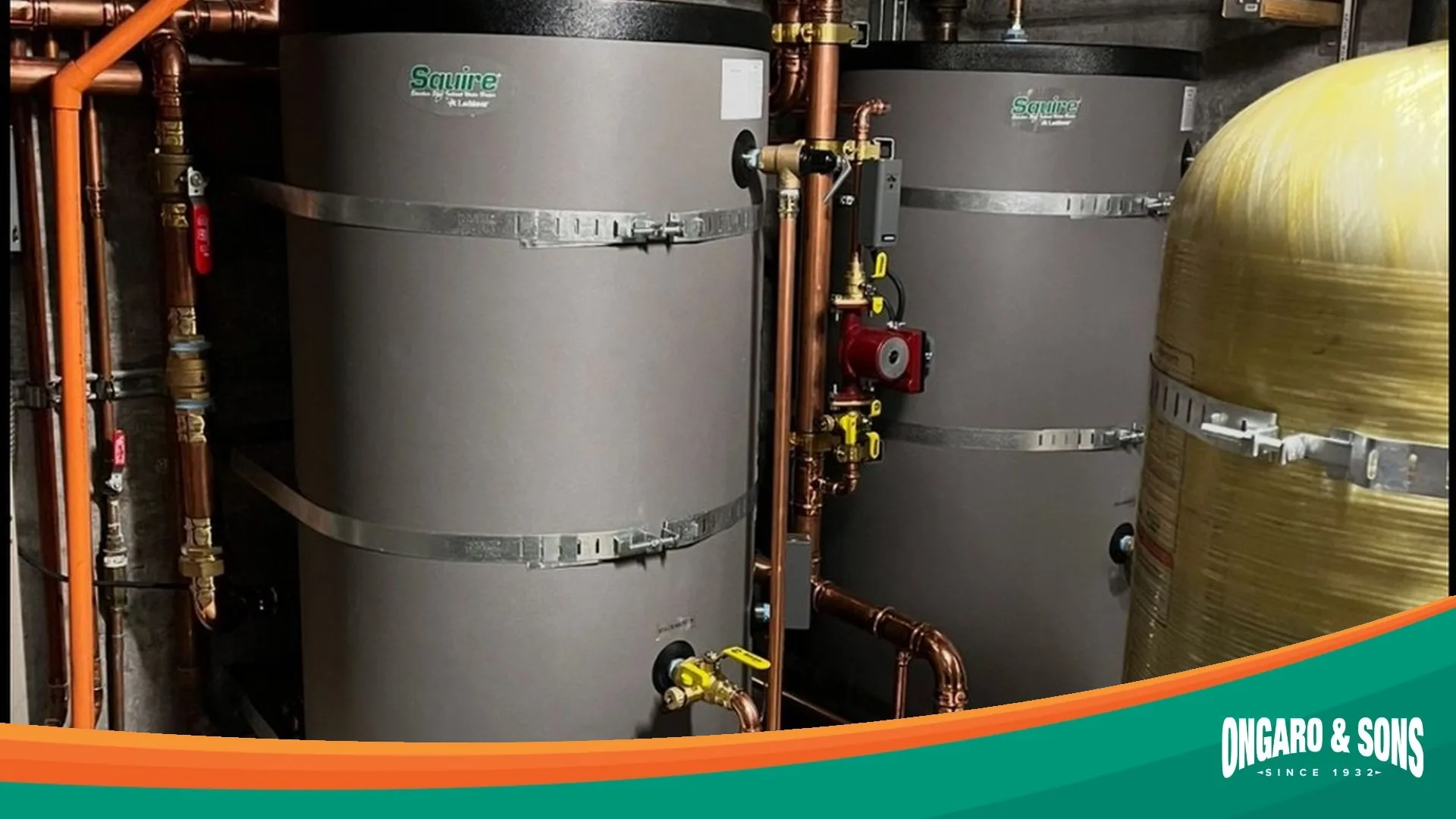
A conventional storage water heater holds a fixed volume of water, typically between 30 and 80 gallons, and keeps it continuously heated to a set temperature. The U.S. Consumer Product Safety Commission recommends a thermostat setting of around 120°F as the appropriate balance between safe hot water delivery and the prevention of scalding injuries. When you open a hot water tap, preheated water flows out of the tank and cold water refills it from the bottom, where it is reheated and held until needed again.
These units run on natural gas, propane, or electricity. Gas models use a burner assembly beneath the tank. Electric models use heating elements mounted inside the tank. Both types rely on a thermostat to regulate temperature, a pressure relief valve (T&P valve) to prevent dangerous pressure buildup, and an anode rod to slow internal corrosion.
Tankless Water Heaters
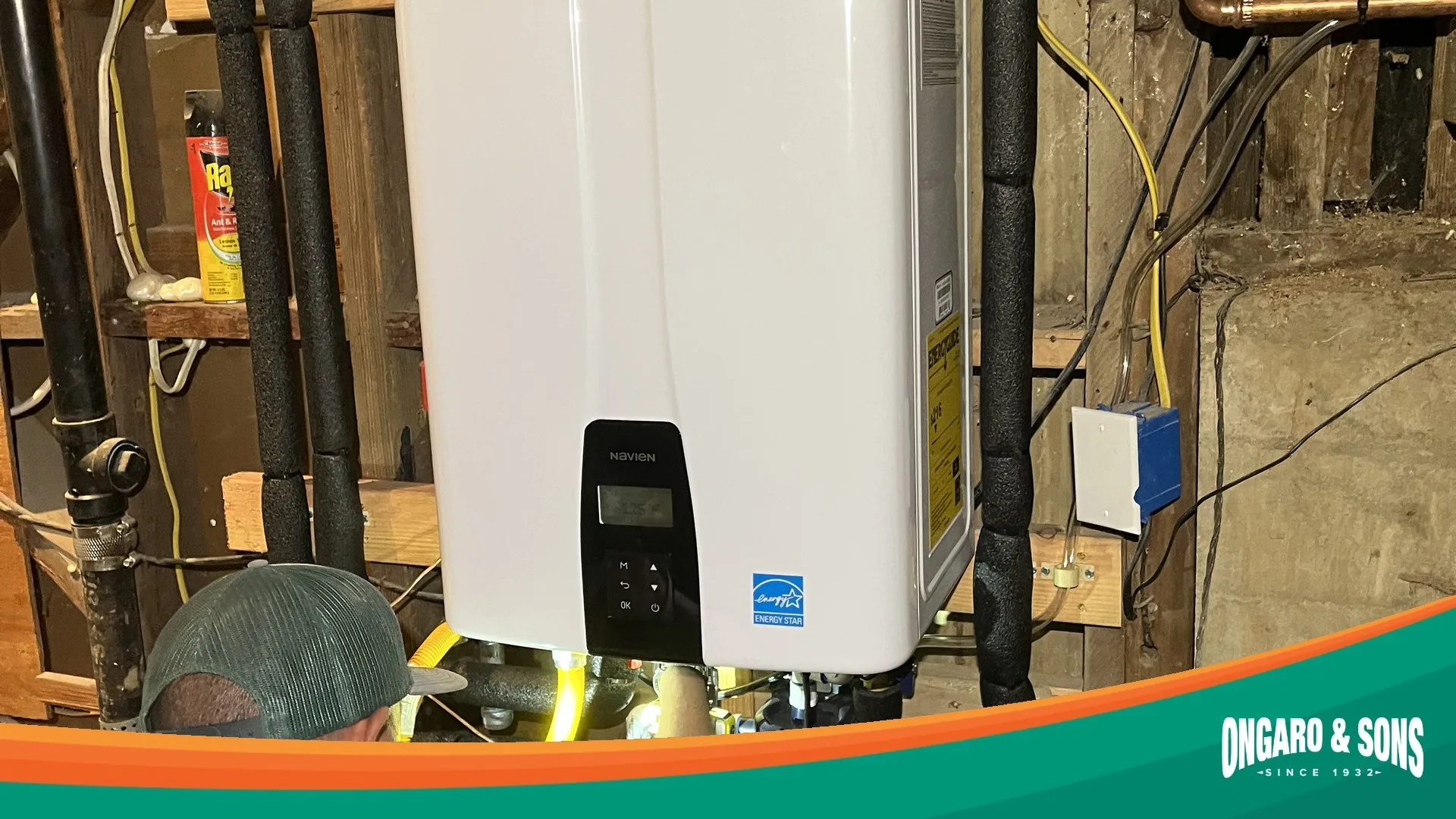
Tankless units heat water on demand rather than storing it. When a tap is opened, cold water flows through a heat exchanger and is warmed instantly by a high-powered gas burner or electric elements. There is no storage tank, no standby heat loss, and no finite supply of hot water; the system produces hot water continuously for as long as the tap is open.
Tankless systems require professional installation and are sized by flow rate (gallons per minute) rather than storage capacity. They are increasingly common in the high-performance homes found throughout Marin County and the Wine Country. Before installation or when troubleshooting an existing unit, our guide to what you should know about tankless water heaters covers what North Bay homeowners frequently overlook.
Both systems share certain vulnerabilities: sediment buildup, component wear, and improper venting are common culprits in both. The specific failure modes and repair approaches differ enough, however, that proper diagnosis always requires a trained technician.
Common Water Heater Problems and What They Mean
Water heaters rarely fail without warning. Most problems announce themselves gradually through recognizable symptoms. Here are the most common issues homeowners encounter and what they typically indicate.
No Hot Water or Insufficient Hot Water
This is the most obvious sign that something is wrong. If you are getting no hot water at all, the likely culprits include a failed heating element (electric units), an extinguished or malfunctioning pilot light (gas units), a faulty thermostat, or a tripped circuit breaker.
If you are getting some hot water but running out faster than usual, or if the water never gets as hot as it should, the problem may be a failing heating element, a miscalibrated thermostat, or sediment accumulation reducing the effective capacity of the tank. Heavy sediment insulates the water from the heating element or burner, forcing the system to work harder for longer to reach temperature, and often failing to get there.
For tankless units, insufficient hot water is often tied to a flow rate mismatch, a dirty inlet filter, a failed igniter, or a fault code in the unit’s control board.
Discolored or Rusty Hot Water
Rust-colored or brown hot water coming from your taps is a serious warning sign. It almost always points to one of two sources: internal corrosion of the tank itself, or a depleted anode rod.
The anode rod is a sacrificial metal rod, typically magnesium or aluminum, that attracts corrosive minerals in the water before they attack the tank’s steel lining. It is designed to be consumed over time. When it is depleted, corrosion shifts to the tank. Once the tank itself has begun to corrode internally, water heater repair is unlikely to solve the problem. Replacement is typically the appropriate next step.
In areas of Marin and Sonoma County with naturally hard water (mineral-heavy water drawn from local aquifers), anode rods can deplete faster than in regions with softer municipal water. This is one reason why annual professional maintenance is especially valuable here.
If the discoloration appears only when running hot water but not cold, the tank is the source. If it appears in both hot and cold lines, the issue may be the supply pipes rather than the water heater itself.
Strange Noises: Rumbling, Popping, or Banging
Water heaters are designed to operate quietly. Any unusual noise, especially rumbling, popping, or banging from the tank, almost always indicates sediment buildup.
Over time, dissolved minerals in the water supply precipitate out as hard deposits and settle to the bottom of the tank. As the burner or heating elements heat the water, it forces its way through these hardened sediment layers, creating the distinctive rumbling, cracking, or popping sounds homeowners describe.
Beyond being loud, heavy sediment reduces efficiency significantly. Your system must consume more energy to heat the same volume of water. It also accelerates wear on the tank lining and can cause the bottom of the tank to overheat, shortening the unit’s service life. In many cases, a professional flush and descaling service can resolve the problem and extend the life of the unit, but if sediment accumulation is severe and the tank has been operating in that condition for years, the damage may already be done.
Leaking Water
Water pooling around the base of your water heater is never something to ignore or monitor and wait on. Leaks can originate from several sources, and the cause determines the severity.
Loose or corroded pipe connections at the inlet or outlet are a relatively straightforward repair. A faulty temperature and pressure relief valve (T&P valve), which is designed to release water if internal pressure rises to unsafe levels, may need replacement. Condensation on the outside of the tank can sometimes create the appearance of a leak, particularly in homes with high humidity.
The most serious scenario is a leaking tank. If the tank itself has developed a crack or hole due to internal corrosion or structural failure, repair is not an option. A leaking tank requires immediate replacement. Beyond the water damage risk, a failing tank under pressure represents a genuine safety concern.
If you notice pooling water around your water heater, turn off the cold water supply to the unit and call a licensed plumber before the situation escalates.
The T&P Relief Valve Is Discharging
The temperature and pressure relief valve is a critical safety component. It is designed to release water if the temperature inside the tank climbs above 210°F or if pressure exceeds 150 psi, conditions that could cause a tank to rupture.
If the T&P valve is discharging water, it may mean the valve itself has failed (valves can become stuck open over time), or, more seriously, it may mean the system is actually generating dangerous levels of heat or pressure. Either scenario warrants immediate professional attention. Do not attempt to cap or disable a discharging T&P valve.
Pilot Light Issues (Gas Units)
On gas water heaters, a pilot light that repeatedly goes out often indicates a problem with the thermocouple, a small sensor that detects whether the pilot flame is burning. When the thermocouple fails or becomes dirty, it sends a signal to close the gas valve even when the pilot is lit. The result is a pilot that will not stay on.
Thermocouple replacement is a relatively straightforward repair for a qualified technician. However, if the pilot light will not relight at all, or if you smell gas near the unit, do not attempt to troubleshoot the system yourself. Leave the area, avoid any open flames or electrical switches, and contact a professional immediately.
Fluctuating Water Temperature
If your hot water swings between scalding and lukewarm unexpectedly, the likely cause is a failing thermostat, a malfunctioning mixing valve, or, in tankless systems, mineral buildup on the heat exchanger restricting consistent water flow.
In homes with multiple bathrooms and fixtures running simultaneously, fluctuating temperature can also indicate that the unit is undersized for the household’s demand. A properly sized replacement may be the most effective long-term solution.
How Long Should a Water Heater Last?
Knowing your water heater’s age and expected lifespan is one of the most practical pieces of information you can have when deciding between repair and replacement.
Conventional storage tank water heaters, when properly maintained, typically last between 8 and 12 years. Units with regular annual maintenance, including anode rod inspection and tank flushing, routinely reach 12 to 15 years. The serial number on the unit’s label includes the manufacturing date; if you are unsure of your unit’s age, a technician can identify it quickly.
Tankless water heaters have a significantly longer service life, often reaching 15 to 20 years with proper maintenance. Annual descaling, particularly important in the hard-water areas of Sonoma and Napa Counties, is essential to achieving that lifespan.
The U.S. Department of Energy recommends evaluating fuel type, size, and energy efficiency when selecting a replacement unit, as different configurations offer meaningfully different operating costs and performance characteristics over the life of the equipment.
Water Heater Repair vs. Replacement: How to Decide
This is the question homeowners most frequently face, and the answer is rarely black and white. Several factors should inform the decision.
Age of the Unit
If your water heater is fewer than 7 to 8 years old and experiencing a single, clearly isolated failure such as a thermocouple, a heating element, or a T&P valve, repair almost always makes financial sense. The unit still has substantial service life ahead of it.
If the unit is 10 or more years old and beginning to show multiple symptoms, the calculus shifts. Each repair becomes an investment in a system that is already approaching the end of its designed service life, and the next failure may not be far behind. In that range, a conversation about replacement, including the efficiency gains that come with a newer unit, is worth having.
Nature of the Failure
Tank corrosion, internal rust, and structural failure of the tank itself are not repairable. If the tank is compromised, replacement is the only appropriate path. Similarly, if the heat exchanger in a tankless unit has failed due to severe mineral scaling, repair may cost more than a new unit.
Conversely, component failures such as thermostats, thermocouples, heating elements, pressure relief valves, and inlet/outlet connections are generally repairable, especially in younger units.
Efficiency Considerations
Older water heaters are substantially less efficient than modern units. Today’s high-efficiency storage tank models are rated using the Uniform Energy Factor (UEF), a standardized metric that measures how efficiently a unit converts energy to hot water. A higher UEF means lower operating costs over the life of the appliance.
Heat pump water heaters, in particular, represent a meaningful efficiency leap. The ENERGY STAR program notes that heat pump water heaters are up to four times more efficient than conventional electric resistance models, extracting heat from the surrounding air and transferring it to the water rather than generating heat directly. For Marin and Sonoma County homeowners considering this upgrade, our heat pump water heater page explains what the transition involves and what to expect.
For homeowners operating with PG&E electricity, the efficiency gap between an aging electric resistance water heater and a modern heat pump model is significant. When a repair event presents the opportunity to reconsider the current system, it is worth evaluating the long-term operating efficiency of a replacement unit against the near-term cost of a repair.
Repair Cost as a Percentage of Replacement Cost
A general rule of thumb: if the estimated repair cost exceeds 50% of the cost of a new, comparable unit, replacement typically delivers better long-term value, especially on an older system. Your technician can help frame the decision with accurate numbers.
The Role of Water Quality in Water Heater Performance
Water quality is a frequently overlooked factor in water heater health, and it is particularly relevant across Marin, Sonoma, and Napa Counties where both municipal and well water sources can carry high levels of dissolved calcium and magnesium.
Hard water accelerates sediment buildup, shortens anode rod life, and increases scale formation on heating elements and heat exchanger surfaces. In tankless units especially, scale accumulation on the heat exchanger reduces heat transfer efficiency and can cause nuisance shutdowns or failure codes.
Whole-house water softeners and dedicated filtration systems can meaningfully extend the service life of water heating equipment by reducing mineral load on the system. If your home has a known hard water issue and you are experiencing recurring water heater problems, addressing water quality as part of a broader plumbing evaluation may be as important as the repair itself.
Water Heater Maintenance: What You Can Do and What Requires a Pro
Consistent maintenance is the most effective strategy for avoiding unplanned water heater repair calls. Some tasks are straightforward for homeowners. Others genuinely require a licensed technician.
What Homeowners Can Do
Setting the thermostat to 120°F is the most basic maintenance step. The CPSC recommends this temperature as the appropriate balance between safe hot water delivery and the prevention of scalding injuries, which is particularly important in homes with young children or elderly family members.
Visually inspecting the unit monthly for corrosion around fittings, moisture on the floor, or discoloration on the tank takes only a few minutes and can catch developing problems before they become costly ones.
Periodically testing the T&P relief valve confirms it is functional. To do this, carefully lift the test lever until water discharges, then release it. If water does not discharge or does not stop when the lever is released, the valve needs professional replacement.
What Requires a Licensed Plumber
Annual tank flushing to remove sediment accumulation is a job best left to a professional. It requires attaching a hose to the drain valve, safely routing the discharge, and managing the process without scalding or water damage risk.
Anode rod inspection and replacement requires draining the tank, locating and removing a hex-head fitting that may be extremely tight after years in service, inspecting the rod, and installing an appropriately matched replacement. Done incorrectly, it can damage the tank or create a leak point.
Venting inspection on gas units is critical. Improper venting can allow combustion gases, including carbon monoxide, to enter the living space. Annual professional inspection of the flue, draft hood, and vent connections is not optional maintenance; it is a safety requirement.
Descaling service for tankless units involves circulating a descaling solution through the heat exchanger to dissolve mineral scale. It requires specific equipment, knowledge of the unit’s service access points, and proper neutralization and disposal of the descaling solution.
California Code Considerations for Water Heater Replacement
California has some of the most progressive building and appliance standards in the country, and water heater replacements in Marin and Sonoma County are subject to state code requirements that affect equipment selection, permitting, and installation.
Title 24, California’s Building Energy Efficiency Standards, sets minimum efficiency thresholds for new water heater installations. Any replacement requires a permit in most jurisdictions, and permitted installations require a licensed contractor to perform the work and ensure code compliance. DIY water heater installation is not code-compliant in California.
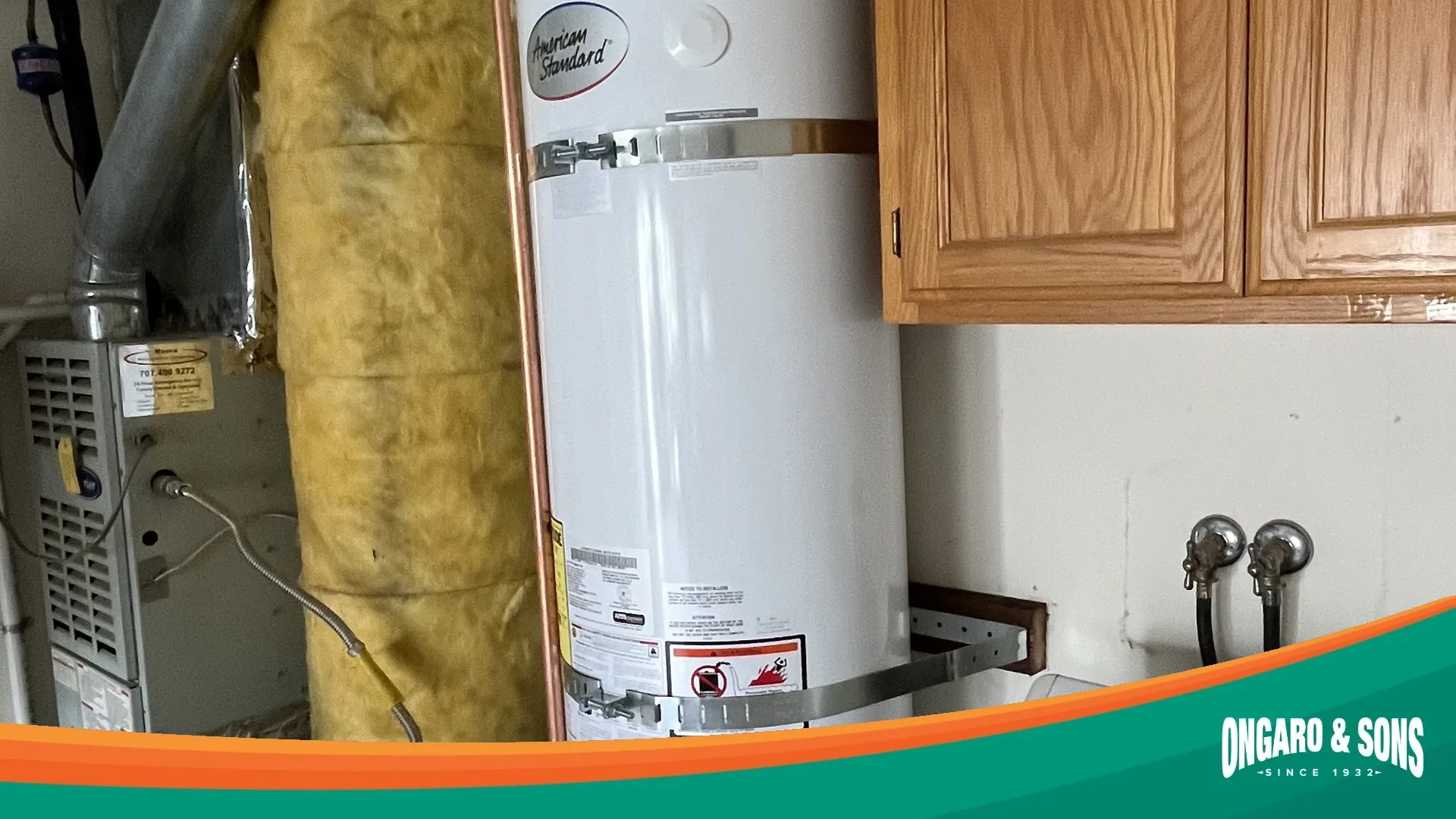
Seismic strapping is required for all water heater installations in California. The tank must be anchored to the wall using approved strapping hardware to prevent it from toppling in an earthquake. Any professional replacement should include proper seismic restraint as a standard part of the installation.
Gas water heaters in California must also meet FVIR (Flammable Vapor Ignition Resistant) standards, a flame-arrestor technology that prevents ignition of gasoline vapors or other flammable materials near the unit. This is an important consideration for homes where water heaters are located in garages.
Working with a licensed contractor who understands current California code requirements is not just a best practice; it is the only way to ensure your installation is legal, safe, and warrantied.
Why Professional Water Heater Repair Matters
There is a tendency to approach water heater problems as a DIY opportunity, particularly with widely available instructional content online. For minor issues in straightforward situations, some homeowners have the mechanical aptitude to manage simple tasks. But water heater systems involve gas lines, high-voltage electrical connections, pressurized water systems, and combustion venting, a combination that makes professional service the responsible choice for most repair and replacement work.
certified technicians, whose credentials are maintained through North American Technician Excellence, are evaluated on real-world working knowledge of HVAC and plumbing systems, not just theoretical understanding. The difference in diagnostic accuracy, and the quality of a repair or installation, between a trained, credentialed technician and an untrained one is substantial.
For Marin and Sonoma County homeowners, the quality of the service provider matters as much as the quality of the equipment. A high-efficiency water heater improperly installed will underperform and may fail prematurely. A properly installed mid-grade unit will consistently outperform.
Why Homeowners in Marin and Sonoma County Trust Ongaro & Sons
Ongaro & Sons has been serving Marin County, Sonoma County, and Napa County since 1932, when Ernest V. Ongaro founded the company in Fairfax. Now in its fourth generation of family ownership, the company brings since 1932 of regional expertise to every service call, a depth of institutional knowledge that simply cannot be replicated by a newer company or a corporate franchise.
Every plumbing technician is fully licensed and certified. Ongaro & Sons is a licensed member since 1948, a founding member of the Redwood Empire Chapter, reflecting a decades-long commitment to professional standards and ongoing education in the trades. The company carries a Diamond Certified designation, awarded based on independent research of customer satisfaction and company performance, and holds a BBB A+ rating with continuous accreditation since 1995.
Flat-rate, upfront pricing means there are no surprises at the end of the job. You know what the service will cost before work begins. And with more than 2,500 verified reviews averaging 4.9 stars across the North Bay, the track record speaks for itself.
When your water heater needs attention, you deserve a provider who will diagnose the problem accurately, present your options plainly, and perform the work to the standard your home deserves.
Schedule Your Water Heater Service with Ongaro & Sons
Whether you are dealing with a water heater that is making noise, not producing enough1 hot water, showing signs of leaking, or simply due for professional maintenance, the team at Ongaro & Sons is ready to help. Serving homeowners across Marin County, Sonoma County, and Napa County with the expertise, credentials, and commitment to quality that families in the North Bay have relied on for generations.
Call us at 415-741-2820 or schedule your appointment online to speak with our team. Phone lines are staffed scheduled for scheduling and inquiries, with service appointments available Monday through Friday and Saturday mornings.
If you are exploring your water heater options before making a decision, our guide to choosing the right water heater and our water heater replacement guide are excellent starting points.
Frequently Asked Questions About Water Heater Repair
How do I know if my water heater needs repair or replacement?
Age and the nature of the failure are the two most important factors. If the unit is fewer than 8 years old and has a single, isolated component failure, repair typically makes the most sense. If the unit is 10 or more years old, showing multiple symptoms, or has a compromised tank due to internal corrosion, replacement usually delivers better long-term value. A licensed plumber can help you weigh the options with accurate repair cost estimates compared to the cost of a new unit.
Why is my water heater making a rumbling or popping noise?
Rumbling, popping, or cracking sounds almost always indicate sediment buildup at the bottom of the tank. Over time, dissolved minerals precipitate out of the water and harden into deposits. As the system heats the water, it forces its way through those layers, creating noise. Beyond the sound, heavy sediment reduces efficiency and accelerates wear on the tank. A professional flush can often resolve the issue, though in severe cases the damage may already warrant replacement.
What should I do if my water heater is leaking?
Turn off the cold water supply valve to the unit immediately. Do not continue running hot water or operating the system. The appropriate next step depends on the source of the leak. If water is pooling from a loose fitting or the T&P relief valve, a repair may resolve it. If the tank itself is leaking due to internal corrosion, replacement is required. Call a licensed plumber before the situation escalates, as water heater leaks can cause significant structural damage quickly.
How often should a water heater be serviced?
Annual professional maintenance is the standard recommendation for both tank and tankless water heaters. For storage tank units, an annual service should include a tank flush to clear sediment, an anode rod inspection, a T&P valve test, and a venting inspection on gas units. For tankless units, annual descaling is particularly important in hard-water areas like much of Marin and Sonoma County. Regular maintenance extends service life, maintains efficiency, and helps catch developing problems before they become a more serious issue.
What causes discolored or rusty hot water?
Rusty or brown hot water coming specifically from the hot water tap (not the cold) almost always indicates internal corrosion of the water heater tank or a depleted anode rod. The anode rod is a sacrificial component designed to attract corrosive minerals before they attack the tank lining. When it is fully depleted, corrosion shifts to the tank itself. If the discoloration is caught early enough, anode rod replacement may resolve the problem. If the tank is already corroded internally, replacement is the appropriate solution.
Can I repair a water heater myself in California?
California requires permits for water heater replacements, and permitted work must be performed by a licensed contractor. DIY installation is not code-compliant and can void manufacturer warranties, create insurance complications, and, most importantly, create genuine safety risks involving gas lines, pressurized systems, and combustion venting. For most homeowners, professional service is the only responsible path for anything beyond the most basic maintenance tasks like adjusting the thermostat setting.
What is a T&P relief valve and why does it matter?
The temperature and pressure relief valve (T&P valve) is a safety device that opens automatically if the temperature or pressure inside the tank reaches dangerous levels. It is designed to prevent a catastrophic tank failure. If your T&P valve is discharging water regularly, it could indicate the valve itself has failed and needs replacement, or, more seriously, that the system is generating genuinely dangerous pressure or temperature conditions. Either scenario requires prompt professional attention.