Sonoma County, California
Home Services in Cloverdale, CA
At the north end of Sonoma County, Cloverdale's warm Alexander Valley climate keeps cooling systems busy. Ongaro & Sons provides air conditioning, heating, plumbing, and electrical service across Cloverdale.
Since 1932 Ongaro & Sons has worked on North Bay houses. The trades it holds today are heating and cooling, plumbing, electrical and solar. It is Diamond Certified, holds a BBB A+ Rating, works under a single contractor license carrying the C-20 HVAC, C-36 plumbing and C-10 electrical classifications, prices flat rate by the job, and shows 2,771 Google reviews averaging 4.8 stars. We serve Cloverdale from our Petaluma headquarters, we pull the permit from whichever authority actually has your address, and we scope the work before anyone prices it.
On this page
Cloverdale is not in the Bay Area air district
Sonoma County is split between two air districts. Petaluma, Santa Rosa, Rohnert Park, Sonoma, and Cotati sit inside the Bay Area Air Quality Management District. Cloverdale does not. It falls under the Northern Sonoma County Air Pollution Control District, created in 1971 when, in its own words, the northern portion of the county was established as its own air district "primarily because of its rural nature." The county publishes the boundary on its air quality districts page.
That is the first thing worth knowing before you choose equipment here. The Bay Area district's building appliance rulemaking phases zero-NOx standards in on three dates, 2027 for small tank-type water heaters up to 75,000 BTU per hour, 2029 for furnaces under 175,000 BTU per hour, and 2031 for larger tanks and for tankless units. Someone in Petaluma replacing a gas tank has that calendar in the background. Someone here does not, because the rule does not reach this side of the county line at all.
Three cautions come with that, and they matter more than the headline. First, being outside the Bay Area district is not a general exemption: it exempts a Cloverdale house from nothing in state code, because the air district governs emissions and nothing else about the job. Second, the Northern Sonoma County district publishes no equivalent residential water heater NOx rule of its own, so the accurate statement is that the Bay Area rule does not reach here, not that some other rule does or does not. Third, the statewide story people arrive with, that gas appliances become illegal in 2030, is not what it sounds like anywhere in California: the Air Resources Board's Clean Space and Water Heater Standards FAQ says that regulation "has not been finalized," that no formal proposal has gone to its board, and that existing space and water heaters may still be used or repaired after 2030.
The northern district does regulate things you will meet. Any wood burning appliance installed here, or sold new or used inside the district, has to be an EPA certified device, and open burning of dried vegetative matter grown on the property takes a district burn permit and a permissive burn day.
Which building department has your address
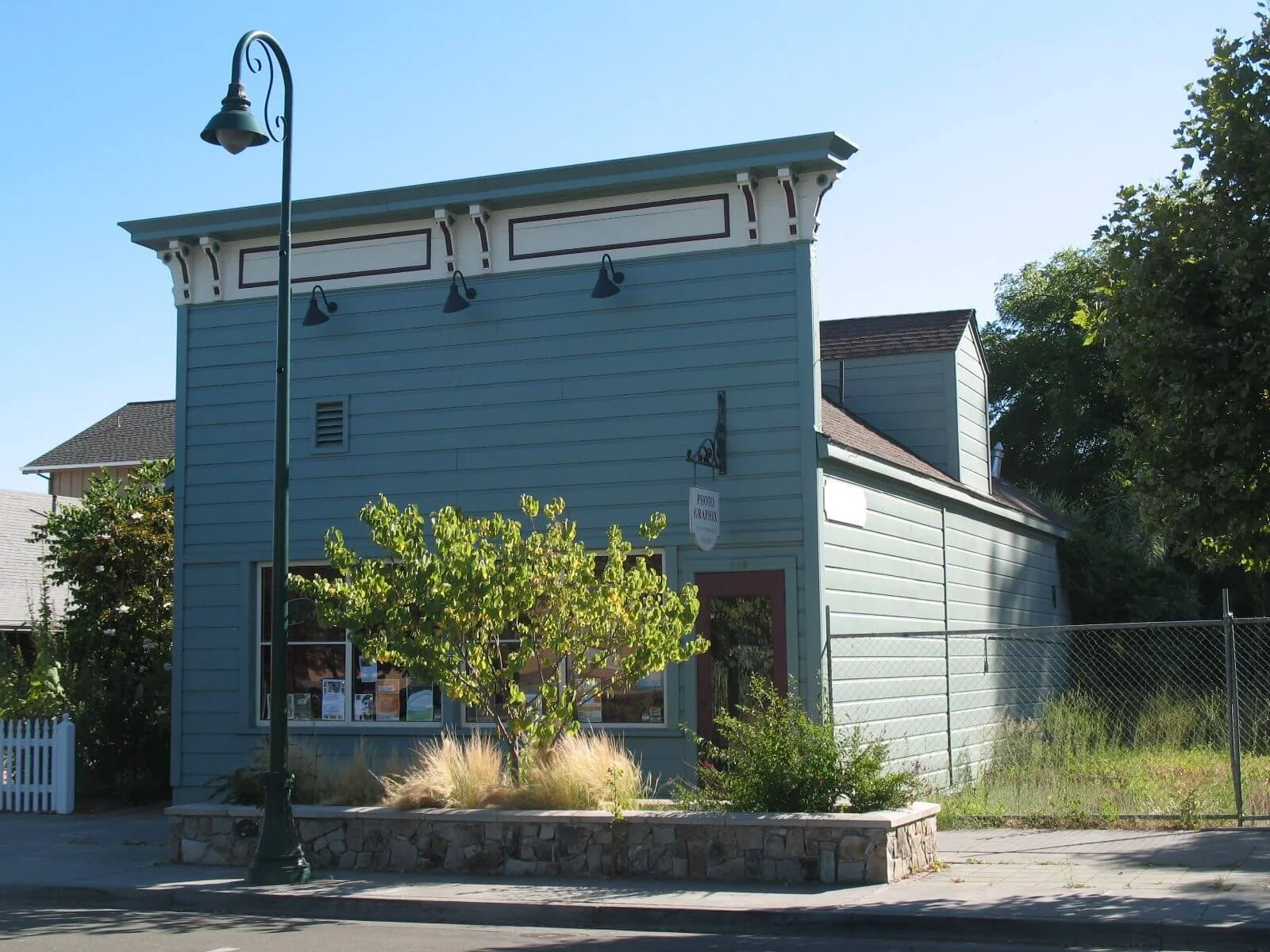
Cloverdale is an incorporated city, and the City of Cloverdale Building Division issues permits inside the city limits. Its standard is broad: a permit is required ahead of construction, alteration, addition, or demolition affecting any structure in its jurisdiction. Changeouts, repipes, service upgrades, and panel work all sit inside that language.
Many of the addresses we work at are not in the city at all. Properties spread along the Alexander Valley are unincorporated Sonoma County, and those permits go through Permit Sonoma instead. Two counters, two submittal processes, two inspection schedules, for houses that can sit a few minutes apart. We confirm which one applies as part of the estimate, not after the equipment is on the truck.
State rules are identical under both. California's 2025 Building Energy Efficiency Standards took effect January 1, 2026, per the California Energy Commission, and every new or replacement water heater and HVAC system has to meet Title 24 prescriptively or through performance modeling. That cycle moved new single-family construction to a single fuel baseline, prescriptively requiring a heat pump for water heating and for space heating, which governs houses not yet built rather than a replacement in one already standing. Bracing is statute: Health and Safety Code section 19211 requires all new and replacement water heaters, and all existing residential water heaters, to be braced, anchored, or strapped in line with the California Plumbing Code, and subsection (d) caps the covered appliance at 120 gallons.
Charger permitting is state law rather than local discretion, and it lives in two sections. Government Code 65850.7 requires every city and county to adopt an expedited, streamlined permitting process off a published checklist, to approve conforming applications administratively through a building permit or similar nondiscretionary permit, and to confine review to health and safety.
Government Code 65850.71 sets the deadlines that follow, five business days to completeness and twenty more to approval for one to twenty-five stations at a single site, with the exceptions the statute lists. CALGreen, Title 24 Part 11, is separate again, and its EV charging provisions carry forward in the 2025 code cycle, in effect since January 1, 2026; whether they reach a given project depends on whether the work counts as a triggering alteration, which the building official decides.
What that changes about the equipment you buy
With no district phase-out on the calendar, the choice between gas and electric gets made on merits here: electrical capacity, where the equipment lives, comfort, and which rebate you can still reach.
The electrical side usually decides it. A heat pump water heater commonly needs a 240-volt circuit a gas tank never required, and a ducted heat pump replacing a furnace and condenser changes the load profile of the whole house. Add a car charger and the panel, not the appliance, becomes the constraint, which is why panel upgrades in Cloverdale are frequently the enabling step for everything else on the list.
Refrigerant is the quiet factor on the cooling side. Every pound of R-22 still in circulation is reclaimed or previously stockpiled, because United States production and import stopped in 2020 and EPA permits only the servicing of existing equipment. On a pre-2010 system that pushes the repair-or-replace call toward replacement faster than mechanical condition alone would. R-410A is a separate matter: EPA's technology transitions rule applies a 700 GWP limit to newly manufactured residential and light commercial equipment, and that is the reason new systems arrive with lower-GWP refrigerants. A working R-410A system does not need replacing.
What fails in Cloverdale houses
Across the four trades, this is what we get called for at this end of the county:
- Air conditioning that keeps up in June and falls behind during a long inland heat run
- West and south-facing rooms that run hot in the afternoon while the hallway thermostat reads fine
- A furnace that lights, runs briefly, and drops out again
- Well pressure that swings, or a pump cycling more often than it used to
- Sediment noise in a water heater, or a tank recovering more slowly each year
- Slow drains that clear and come back within weeks, which points downstream of the fixture
- A tub that gurgles when a toilet flushes, pointing at the main line or the septic side
- Lights that dim or flicker when a large appliance starts
- Breakers that trip on a pattern rather than at random
- Warm cover plates, a warm breaker, or a panel that smells hot under load
An older downtown house and a newer valley property generate different halves of that list, which is the reason diagnosis starts with the building.
Heating and cooling
Cloverdale sits at the north end of the county, inland, without the marine influence that keeps the coast and the lower valleys cool through the afternoon. Summers are hot and cooling carries real load for months rather than weeks. That length of run exposes a marginal system. Equipment slightly undersized, a coil slightly dirty, a charge slightly off, a duct run leaking into an attic: none of those show on a mild day, and all of them show during a sustained heat run.
On the older in-town houses we routinely find one hallway return trying to serve an entire house, supply runs added over decades without the return side ever being enlarged, and ductwork routed through an unconditioned attic. Adding tonnage on top of that makes the system louder and shortens its life. Airflow first, equipment second.
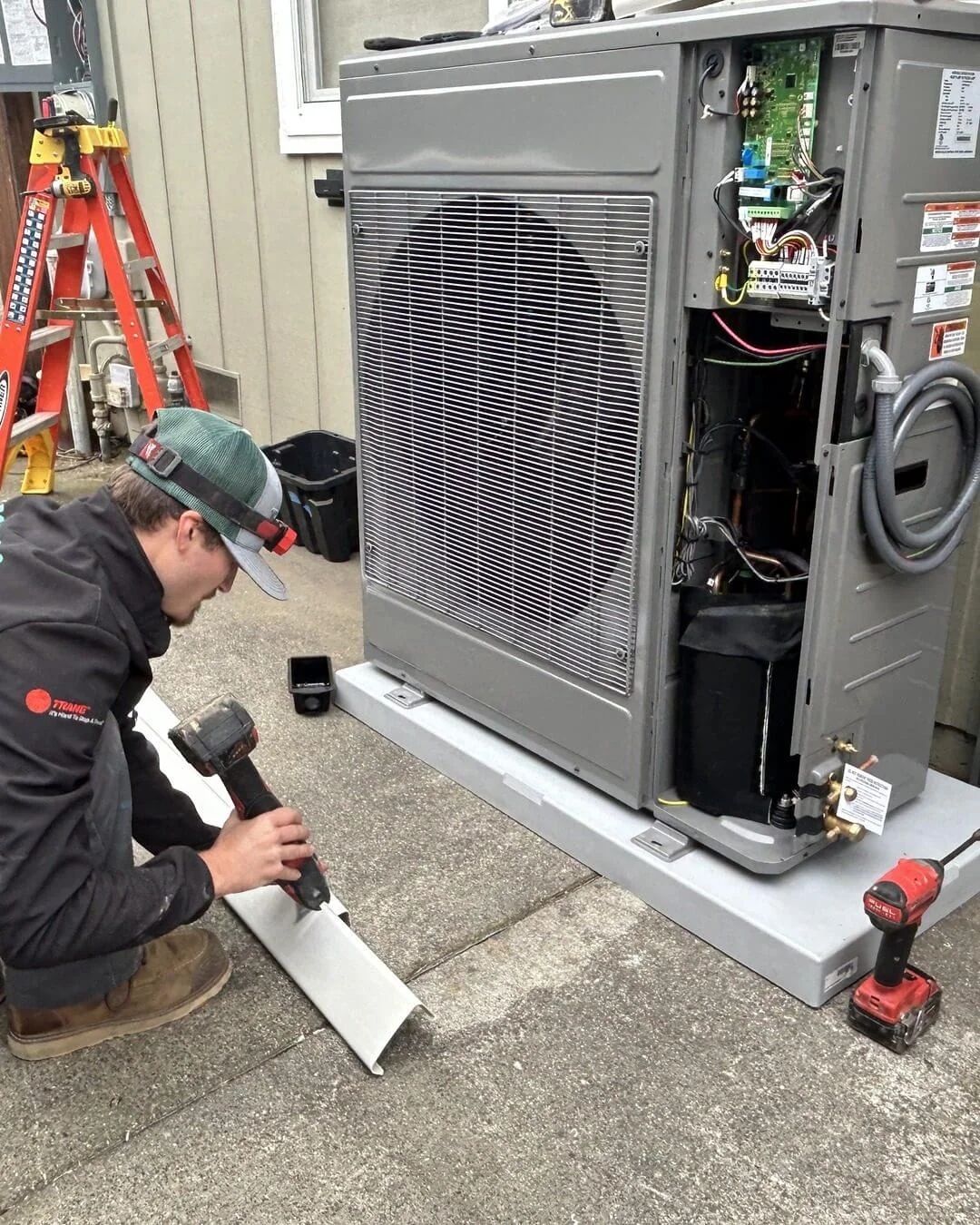
Heat pumps fit here for a specific reason. Where winters are mild and summer is the hard part, cooling drives the sizing, and a heat pump is a cooling system that also heats, with auxiliary electric heat as backup rather than the primary source. We are a Mitsubishi Diamond Contractor Elite and a Trane Comfort Specialist, which matters because it means we commission heat pump installations in Cloverdale properly rather than leaving them on factory defaults.
For older homes with no practical duct path, ductless systems put capacity in the rooms that need it without cutting chases through a century-old wall. During smoke season, a sealed return and a filter the blower can move air through do more for indoor air than a high-rated filter that starves the system.
Plumbing on city water, and plumbing on a well
Cloverdale runs two plumbing worlds inside one mailing address. In town, homes are on the municipal system, and the city draws its water from wells in the Russian River corridor. Out in the valley, many properties are on private wells and septic.
On a well, the pressure tank, pump control, and pressure switch become part of the plumbing system in a way they never are in town, and water heater sizing and recovery behave differently when supply pressure swings. Sediment and mineral load vary well to well, so we test rather than repeat a number: we do not publish a hardness figure for any city without that utility's own water quality report behind it, and a private well has no report at all.
Septic changes the diagnosis on every drain call. A slow drain on a sewer lateral and one on a septic system look identical at the fixture and are entirely different problems at the other end. Camera the line before anyone digs. On in-town lines, root intrusion under mature street trees recurs, and trenchless versus open-cut gets decided by depth, soil, and what sits on top of the line.
Water heater work in Cloverdale is where it all converges: bracing, the Title 24 compliance path, the electrical question on a heat pump model, the rebate window, and on a valley property the behavior of the well.
Electrical, backup power, and the panel
Two things drive most of the electrical work here: capacity and outages.
On the older streets near downtown we routinely find 100-amp services, original subpanels, and branch circuits never intended to carry a modern kitchen, let alone a car charger. The answer is not automatically a service upgrade, since load calculations, load management devices, and circuit sharing can sometimes make an existing service work. But the calculation comes first, and anyone quoting the appliance without opening the panel has quoted half the job. Electrical work in Cloverdale starts there.
PG&E may turn off power for safety during severe weather through its Public Safety Power Shutoff program, and northern Sonoma County carries more of that exposure than the southern end of the county does. That is why backup power comes up in nearly every electrical conversation up here. With Certified Generac Generator installer status and the C-10, the generator and its electrical work are one scope rather than two. A standby generator is a permitted project with a fuel connection, a transfer switch, a load plan, and an inspection, and the sizing question is what you want to keep running rather than what the house draws at peak.
On charging, the equipment decision in Sonoma County is not purely electrical. Sonoma Clean Power runs a smart charger enrollment program rather than an installation rebate, paying a monthly bill credit plus a sign-up bonus for enrolling an eligible Wi-Fi connected smart charger. Eligible devices are currently limited to WallBox and ChargePoint models, with SCP saying it is "working hard to add more EV chargers to our program," so the charger you buy decides whether you can enroll at all.
The rate plan matters separately: PG&E's electric vehicle rate plans split between EV2-A, which runs on your existing meter and covers home and vehicle use together, and EV-B, which requires a second dedicated meter and is not available with CARE, FERA, or Medical Baseline. That second meter is an electrical scope decision, and wanting one after the install is the expensive sequence. A third plan, E-ELEC, is built for homes adding an EV, battery storage or a heat pump, and trades a Base Services Charge for lower per-kilowatt-hour prices.
Solar and storage
Cloverdale summers are close to the best case for an array: long, hot, clear, and coincident with the months when cooling load peaks. Production and demand line up better here than they do in a coastal town.
Rural valley parcels often have room for a ground mount that an in-town lot cannot fit. On an in-town roof, the roof covering is the first thing to look at, because an array outlives most roofing materials and pulling panels to reroof later is work you pay for twice.
Storage is a separate decision from solar, and around here it is usually the more interesting one. A grid-tied system without storage and without islanding capability shuts down during an outage, because the inverter is required to stop backfeeding so it cannot energize a line a crew is working on. Keeping a refrigerator, a well pump, and a few circuits alive through a shutoff is a battery and transfer question, not a panel-count question. All of it interacts with the main service, the busbar rating, and the interconnection, so solar in Cloverdale and panel work get scoped together.
What drives the cost
We do not publish prices, because the same equipment on two houses here is two different jobs. What moves the number: which building department issues the permit and what it requires; access, meaning a garage with room to work versus a closet in a century-old house; whether ductwork can be reused, repaired, or has to be replaced; whether the panel has capacity or the project has to create it; city water and sewer versus a well and septic, which adds components on both the supply and disposal sides; line depth and what sits on top of a sewer lateral, which decides trenchless versus open-cut; equipment tier and refrigerant generation; and whether the job needs a load calculation, a Title 24 compliance path, or both. An estimate that skips those is a number, not a scope.
Rebates and incentives, and where they stand
Sonoma Clean Power is the community choice energy provider for Cloverdale and the first place to look. Its heat pump water heater rebate is live. The installation address has to be an SCP account, the equipment has to meet the performance requirements SCP publishes, and households on the CARE or FERA bill discount programs qualify for additional support against what remains of the project cost once other rebates apply. Levels and windows shift, so we confirm the terms in force when your proposal is written rather than printing a figure that ages.
Maintenance that matters here
Cooling service belongs in spring, ahead of the first sustained heat run rather than during it. A system that was marginal last August will be marginal again, and learning that in April leaves options that learning it in July does not.
Filters need changing more often through smoke season than the label interval suggests. On a well, the pressure tank precharge and the pump's cycling behavior are worth an annual look, because a pump that short cycles destroys itself quietly. Septic pumping frequency depends on tank size and household use rather than a fixed calendar interval anyone can print on a page. On a water heater, a sediment flush and an anode check extend tank life, and confirming the strapping is still tight costs nothing. Inside a panel, connections loosen with thermal cycling. A monitored solar array tells you a string is down within a week; an unmonitored one tells you at the annual true-up.
The parts of Cloverdale we work in
Downtown Cloverdale is the older part of town. The blocks along North Cloverdale Boulevard hold the city's early housing and its historic commercial buildings, and those houses give us what older houses always give: undersized services, retrofitted ductwork, original supply lines, and utility spaces sized for a much smaller set of appliances than anyone owns now.
Out along the Alexander Valley the picture changes. Parcels are larger, driveways longer, and on rural valley properties we regularly work on homes with private wells, septic systems, and no natural gas service at all. Those houses have room for equipment and often room for a ground-mount array, along with their own constraints: distance from the road, distance to utility infrastructure, and service that ends at the property line rather than continuing down a street. We reach both from Petaluma and work throughout Sonoma County.
How to choose a contractor
Ask which building department will issue the permit for your address, and listen for whether the answer is specific. Anyone who does not know whether your parcel is inside the city or in unincorporated county has not looked yet.
Ask for a load calculation instead of a tonnage rule of thumb, and ask to see it. Ask whether the quote includes the electrical work a heat pump or heat pump water heater conversion requires, or whether that arrives later as a change order. Ask what happens if a rebate program shifts between signing and installation, because at least one will. Check that the license class matches the work: C-20 for HVAC, C-10 for electrical, C-36 for plumbing.
We are Diamond Certified and we hold a BBB A+ Rating. Both are checkable, which is the reason to list them.
What North Bay homeowners say
Two from customers who called us for electrical work:
Great customer service and fantastic work. We plan to make them our go-to electrician.
Todd E.
I called Ongaro and Sons this morning because of problems with my erratic lighting and Cody and John came over within 1 hour after my initial call and were kind and helpful and fixed the breaker panel after trouble shooting it within ten minutes.
Judith F.
Book service in Cloverdale
If you want a scope rather than a guess, Book online and we will get a technician out. We serve Cloverdale from our Petaluma headquarters, we confirm which agency issues your permit before quoting a schedule, and we tell you which incentives are open the week your project gets booked. More for Cloverdale homeowners: HVAC in Cloverdale, plumbing in Cloverdale, electrical in Cloverdale, heat pumps, water heaters, panel upgrades, solar, and the wider Sonoma County service area.
Cloverdale homeowner questions
Who is the best home services company in Cloverdale?
Judge it on what you can verify. Ongaro & Sons has been in business since 1932, is Diamond Certified, holds a BBB A+ Rating, and carries 2,771 Google reviews averaging 4.8 stars. We hold C-20, C-10, and C-36 licenses, so heating, cooling, plumbing, electrical, and solar come from one licensed company instead of three subcontractors coordinating around each other.
Is Cloverdale in the Bay Area Air Quality Management District?
No. Sonoma County is divided, and Cloverdale answers to the Northern Sonoma County Air Pollution Control District, an agency stood up in 1971 for the rural northern part of the county. The Bay Area district covers Petaluma, Santa Rosa, Rohnert Park, Sonoma, and Cotati. The division matters because appliance rules written by one district carry no force in the other's territory.
Does the 2027 zero-NOx water heater rule apply to my Cloverdale house?
Not as written. That requirement comes from the Bay Area district's Regulation 9, Rule 6, where residential compliance begins in 2027 on dates that vary by unit size, and this city sits outside that district's boundary. We verify the requirement in force when a project is booked.
Do I need a permit, and who issues it for my address?
Yes for practical purposes, and the issuer depends on the parcel. Inside city limits, the City of Cloverdale requires a permit ahead of construction, alteration, addition, or demolition affecting any structure, and a changeout falls inside that. Out in unincorporated county, including much of the Alexander Valley, Permit Sonoma handles it. We identify the agency before committing to a schedule.
Is a heat pump a good choice for Cloverdale's climate?
Usually. Inland north county summers put the heavier annual load on cooling, and since a heat pump is a cooling system that also heats, the sizing driver and the seasonal demand line up well. Mild winters let auxiliary electric heat serve as backup rather than the main source. The limiting factor is rarely the weather. It is the electrical service and the condition of the ductwork.
Will my electrical panel handle a heat pump and an EV charger?
Sometimes, and a load calculation is the only way to find out. Houses near downtown often surprise people: 100-amp services are common there, and they were never meant to carry a modern kitchen plus two large 240-volt loads. Options include a service upgrade, a panel upgrade, load management hardware, or circuit sharing. Any of those can be right. Guessing between them is not.
What rebates can I still get for a heat pump water heater in Cloverdale?
Start with Sonoma Clean Power, which serves this city. Its heat pump water heater rebate is live, requires the installation address to be an SCP account, and requires equipment meeting the performance specifications SCP publishes. Households enrolled in the CARE or FERA bill discount programs qualify for further support against what remains of the project cost once other rebates apply. Levels and windows change, so the number worth relying on is the one confirmed at quote time rather than one printed anywhere.
Does the Bay Area water heater rule apply to my Cloverdale house?
No. Cloverdale sits in the Northern Sonoma County Air Pollution Control District rather than the Bay Area district, so the zero-NOx dates phasing in for Bay Area addresses do not reach here. Two qualifications matter. Being outside that district exempts your house from nothing in state code, since the air district governs emissions and nothing else about the job. And the northern district publishes no equivalent residential water heater rule of its own, so the accurate statement is that the Bay Area rule does not reach you rather than that some other rule replaces it.
How long can Cloverdale take to approve a home charger permit?
State law caps it. On an application covering one to 25 charging stations, the clock runs five business days to deemed-complete status and another twenty business days to deemed approval, unless the building official has already acted on it, made adverse impact findings, denied it, or an appeal is pending. Review is ministerial rather than discretionary, and the permit itself is still required.
My house is on a well and septic. Does that change the work?
Considerably. A well brings the pressure tank, pump control, and pressure switch into the plumbing system, and how supply pressure behaves affects how a water heater performs. Septic changes drain diagnosis, because a slow fixture may be pointing at the tank or the leach field rather than at a line. We camera lines on either system before recommending excavation.
Will my solar system run during a Public Safety Power Shutoff?
Not on its own. A grid-tied array without storage and without islanding capability stops when the grid stops, because the inverter has to quit backfeeding for the safety of crews working the line. What keeps a fridge, a pump and a handful of circuits alive through a shutoff is storage and a transfer switch, and neither lives in the panel schedule. A standby generator solves the same problem differently.
Does my water heater legally have to be strapped?
Yes, and the requirement reaches further than most people expect. California Health and Safety Code section 19211 covers tanks already in place, not only ones being installed, and calls for bracing, anchoring, or strapping consistent with the California Plumbing Code. The statute defines the covered appliance as one holding no more than 120 gallons. An unstrapped tank is out of compliance today, not at replacement time.