Sonoma County, California
Home Services in Monte Rio, CA
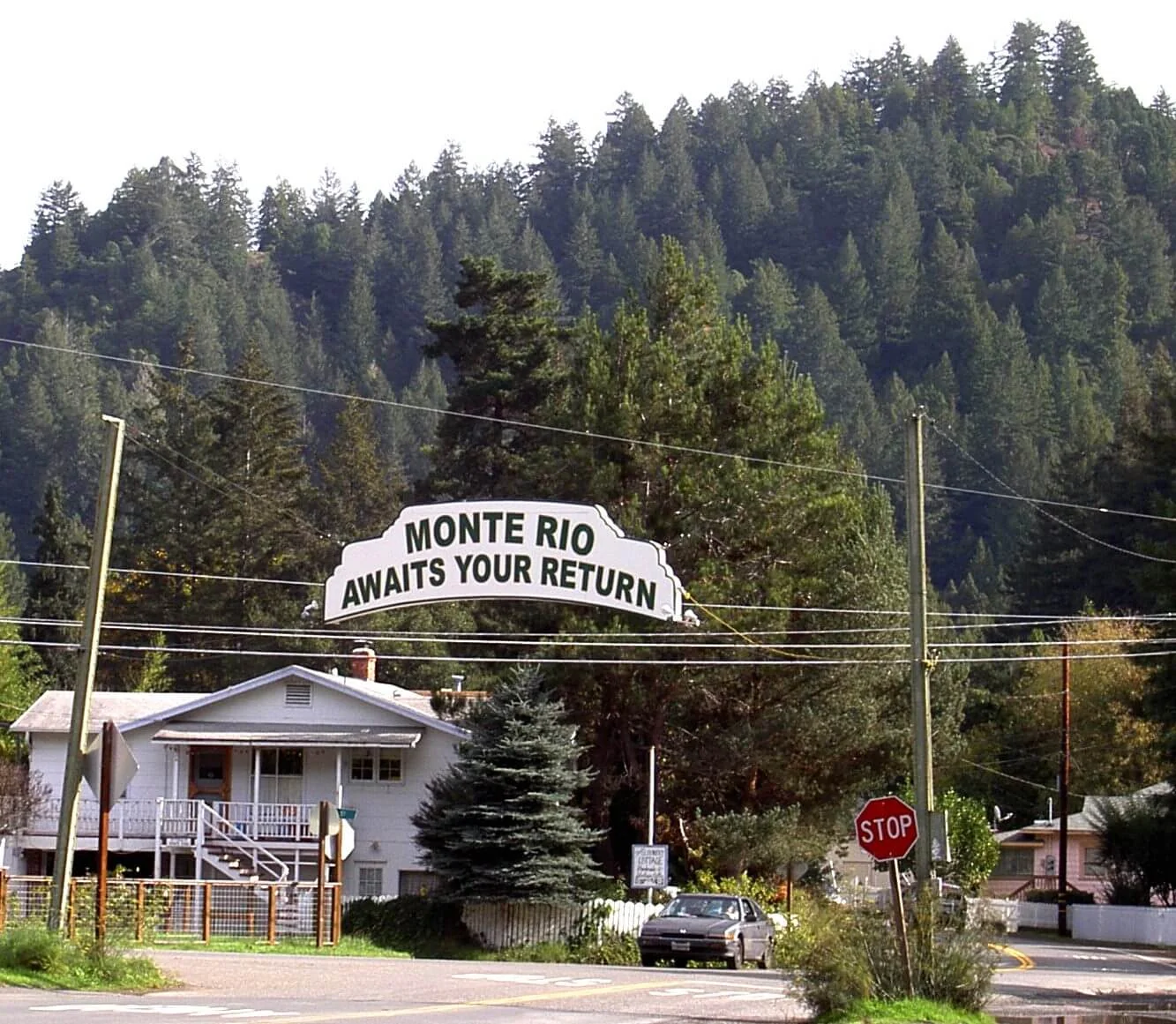
Along the Russian River beneath the redwoods, Monte Rio's homes need heating and plumbing ready for damp winters. Ongaro & Sons serves Monte Rio with dependable HVAC, electrical, and solar work.
Trading in the North Bay since 1932, Ongaro & Sons today keeps heating and cooling, plumbing, electrical and solar in-house. We are Diamond Certified, hold a BBB A+ Rating, and average 4.8 stars across 2,771 Google reviews. A great many homes in Monte Rio started life as summer cabins, and almost every recurring problem here traces back to a building being asked to do a job it was never built for.
On this page
A cabin is not a small house
The housing along this stretch of the river was largely built for warm-weather use. People arrived in summer and left before the rains. Nobody designed for a January night, because nobody was there for one.
Those buildings are now lived in year round, and the mismatch shows up in a consistent set of findings that we see again and again.
There is often no insulation to speak of. Walls with no cavity insulation, floors open to a ventilated underfloor space, and single glazing. That is a comfortable arrangement in August and a very expensive one in December, and it is why heating bills here surprise people who moved from a conventional house.
The building sits on piers rather than a foundation. Post and pier construction leaves the floor structure and everything under it fully exposed to the weather, which is why floors are cold, why pipes freeze in a river valley that rarely freezes, and why plumbing under these buildings fails more often than it should.
The electrical service was sized for a cabin. Lights, a refrigerator and a hotplate is a very different demand from a year-round household with modern appliances, and a great many services here have simply never been reassessed against what the building now does.
The plumbing was minimal and has been extended piecemeal. A single bathroom and a kitchen, added to over decades by different hands with different materials, is the usual picture, and it explains a lot of pressure and drainage complaints that get blamed on the water supply.
Nothing was detailed for winter. Exposed pipe runs, uninsulated water heaters in open underfloor spaces, and shutoffs nobody has turned in twenty years.
None of that makes these buildings bad. They are frequently lovely, and a converted cabin done properly is a genuinely comfortable house. But the work has an order to it, and doing it in the wrong order wastes money.
The right order for a cabin conversion
This is the part worth more than any equipment recommendation.
Insulate and seal before you size anything. A heating system sized against an uninsulated building is a large, expensive system that will still be expensive to run. Insulating the floor, sealing the obvious air paths, and dealing with the underfloor space cuts the load first, which means the equipment that follows can be smaller, cheaper to buy and cheaper to run. Doing it the other way around means paying twice.
Deal with the underfloor space next. In a pier-supported building that space is the weather, and everything passing through it suffers accordingly. Insulating the floor properly, protecting pipe runs, and dealing with ground moisture is the difference between a warm floor and a permanently cold one.
Then look at the service. Once the load is known, the electrical assessment is meaningful. Before that it is guesswork on a moving target.
Then choose equipment. With a reduced load and a known service, a modest heat pump usually covers both seasons comfortably, and ductless heads suit these buildings particularly well because there is rarely a sensible duct route and no reason to create one.
A contractor who quotes equipment on the first visit without discussing any of that is selling you the most expensive version of the answer.
Freeze protection in a river valley
People are surprised that freezing matters here. It does, because the pipes are not inside the building.
Under a pier-supported cabin, the plumbing is in outside air. A clear night that would be harmless to a house with a sealed underfloor space is a real risk to a building where the supply runs are effectively outdoors. The same applies to a water heater sitting in an open underfloor space, and to hose bibbs on exposed walls.
The protection list is short and cheap. Insulation on exposed runs that is intact and dry rather than decorative, hose bibbs either frost-proof or isolated for the season, and a main shutoff that is located, labeled and turns. If there is an exterior tankless water heater, note that its freeze protection depends on having power, so an outage during cold weather removes it.
For a property that stands empty in winter, the same logic taken further: leave a low background temperature rather than switching everything off, and know how to isolate the supply properly.
The river, and why elevation matters
Monte Rio sits on the Russian River, and low-lying property here can take water.
The relevant consequence for our work is where things get put. Mechanical and electrical equipment placed at grade in a location that can flood is equipment that will eventually be replaced, and elevating it during an installation costs a fraction of what replacing it costs afterwards. Where a property is in a mapped flood area, there may also be requirements about how equipment is elevated and protected, and we check the mapping for the address rather than assuming.
The same reasoning applies to anything below the level at which waste can leave by gravity. Where a fixture sits low, it needs a pump arrangement rather than a hope, and where a building can take water, a backwater arrangement is worth discussing rather than discovering the need for.
Damp, redwoods and heating demand
The canopy and the river between them keep this valley cool and damp. Roofs stay wet under trees, needle litter blocks gutters and valleys, and buildings get very little solar gain.
That means heating demand is higher than a regional figure suggests, and it means moisture control does more for comfort than capacity does. Mechanical ventilation that is actually used, exhaust fans terminating outdoors rather than into a roof space, and an underfloor space that has been dealt with properly change how one of these buildings feels far more than a larger appliance would.
Cooling is rarely the point. The warm afternoons that do occur are covered by the same heat pump that handles the winter, which is one of the reasons the equipment answer here is simple once the building work is done.
Power in a wooded river valley
Rural lines running through heavy timber produce frequent, long outages, and under the Public Safety Power Shutoff program, PG&E turns off lines ahead of dangerous fire weather rather than after it.
Without power there is no heat regardless of fuel, since controls, ignition and fans are electric. On a well there is no water. And any pump the property relies on to move water away from a low point stops exactly when the weather makes it necessary.
Backup gets scoped as a list of circuits rather than a machine: any pump, refrigeration, the heating controls and fan, and some lighting. That is a fraction of the cost of covering a building, and cheaper again while a panel is already open for other work.
Under this canopy an array underperforms, which makes a generator a more realistic answer here than on an open site. The C-10 sits alongside Certified Generac Generator installer status, so the install does not split across two trades.
Which air district, and what actually applies
Sonoma County lists Monte Rio under the Northern Sonoma County Air Pollution Control District rather than the Bay Area district.
The zero-NOx appliance requirements that dominate discussion across the Bay Area belong to the Bay Area agency, whose authority stops at its own boundary, so they are not the rules governing a Monte Rio address. What still shifts over the years is what suppliers keep in stock, which follows the largest markets rather than local jurisdiction.
For a converted cabin the electric route is attractive for reasons that have nothing to do with any district. There is no flue to run through a wall in a wet climate, no combustion air opening to keep clear in an exposed underfloor space, and one system covering both seasons in a building where plant space is scarce.
Electrical: a service sized for a different building
A load calculation is the same exercise here as anywhere. Floor area gives the lighting and receptacle figure, fixed appliances enter at the demand factors the code permits, heating and cooling are compared with only the larger counted, and the total is measured against what the service can deliver.
What is distinctive in Monte Rio is the starting point. Many services here were installed for a seasonal cabin and have been asked ever since to carry a full household. The finding is not usually a dangerous panel so much as an undersized one, and the fix depends on the number the calculation produces once the building's load is known, which is another argument for insulating before deciding anything.
Older buildings bring the rest of the usual findings: panels amended over decades by several hands, ungrounded two-wire circuits behind modern-looking receptacles, and connections in damp locations that have corroded quietly enough to raise resistance without showing a fault.
Where the calculation comes up short, listed load management equipment is worth pricing before a service upgrade, since it is frequently cheaper and quicker.
Permits and the state rules
Monte Rio is unincorporated, so building permits and inspections come from Sonoma County. Where a property sits in a mapped flood area, additional requirements can apply to how equipment is installed, and on a converted cabin any work that changes the building's use or its systems is worth scoping properly at the start.
Two state rules follow the work itself. An equipment replacement has to meet the energy standards, currently the 2025 edition, in force since January 2026, and in an uninsulated building the envelope provisions are frequently the part that matters. And section 19211 requires water heaters up to 120 gallons braced, anchored or strapped, and it reaches the tank already in place rather than only its replacement. In a cabin conversion, that tank is frequently sitting on something improvised, which is exactly the case the rule exists for.
Solar, assessed on this site rather than the region
None of this is a permitting problem. Government Code 65850.5 obliges the county to expedite small residential rooftop systems and to keep its review within health and safety.
In practice the canopy governs. A roof under mature trees in a river valley produces far less than a regional average implies, and no equipment choice compensates for shade. We would rather tell you a property does not suit an array than sell one that disappoints.
Where a clearing exists, a modest system paired with storage makes more sense than a large one, because under the Net Billing Tariff applying to interconnection applications from April 2023 onward, exported energy is credited at its hourly value to the grid rather than at the retail rate. Self-consumption is worth more than export, and in an area with frequent outages a battery is doing a second job.
What drives the cost here
The building rather than the equipment leads, and that is the useful thing to understand before getting quotes. In a converted cabin, insulation, sealing and the underfloor space are where the money produces the result, and equipment fitted to an unimproved building is money spent on the symptom.
Access and distance are second, since this is a long way out on narrow roads through trees.
Condition is third, and it produces findings rather than surprises: what the exposure has done to pipe runs, insulation, terminations and structure under a pier-supported building.
And the things an inspector will not sign off without: restraint, expansion capacity, combustion air, proper venting, and the permit.
Maintenance for a converted cabin
Before the first cold snap, walk the underfloor space: insulation intact and dry, pipe protection in place, and the shutoff findable and turnable.
Clear gutters, valleys and roof debris before the wet season, since under a canopy that is where most water problems begin.
Have the underfloor insulation inspected rather than assumed, because insulation that has been repeatedly wetted looks approximately right and does almost nothing.
Check that equipment is still standing clear of where water collects, since ground under pier-supported buildings settles and changes.
On a well, check the pressure tank's air charge, service the sediment filter and test the water periodically.
An annual water heater flush, filters at an interval this environment earns, and a minute a year on ground-fault test buttons and shutoffs completes it. A maintenance plan keeps the seasonal half from being remembered in a January storm.
Where we work around Monte Rio
We cover the village, the cabins and houses along the river and up the hillsides above it, and the parcels back in the timber where wells and onsite wastewater systems are the norm.
Every truck starts from Petaluma, and the lower river is a long run. Booking ahead gets you the window you want, and combining several jobs into one visit is worth genuine money out here.
How to choose a contractor for a converted cabin
Ask what they would do before sizing anything. If the answer goes straight to equipment without mentioning insulation, sealing or the underfloor space, the quote is for the expensive version of the answer.
Ask what they intend to do about the floor and the space beneath it, because in a pier-supported building that is where the comfort is being lost.
Ask how the freeze protection will be handled for runs that are effectively outdoors.
Ask whether the electrical assessment will be done after the load is known rather than before, since a service sized for a seasonal cabin needs measuring against what the building will do.
Finally, confirm the classifications on the license: C-20, C-36 and C-10. Holding all three is what lets one visit cover work that crosses trades, which on a conversion is most of it.
What North Bay homeowners say
The entire team that came to install my HVAC unit could not have been more professional or courteous! They were exemplary, and a wonderful example of what excellent customer service should be.
Anthony D.
New Compressor for Air Conditioning. Staff was excellent and overcame all issues with a perfectly functioning new system in 7 hours.
Alan L.
Home services across Monte Rio and Sonoma County
One company, all four trades: heating and cooling across Sonoma County, plumbing across Sonoma County, electrical across Sonoma County, and solar across Sonoma County. Along the river we also serve Guerneville, Duncans Mills and Cazadero. The Sonoma County service overview covers the whole county.
Book service in Monte Rio
Tell us roughly when the building went up, whether it is on piers, and what the floor and the space underneath are like. If the complaint is cold or expensive heating, mention insulation and drafts, because on these buildings that is usually the real diagnosis. Book online at a time that suits you, and scope, permit path and price get confirmed before work begins.
Monte Rio homeowner questions
Who is the best home services company in Monte Rio?
Ongaro & Sons. In the North Bay since 1932, Diamond Certified, BBB A+ Rated, averaging 4.8 stars on 2,771 Google reviews, and today running heating and cooling, plumbing, electrical and solar. On a converted cabin the practical test is whether a company works on the building before the equipment, and whether one visit can cover work that crosses trades, which on these properties is nearly all of it.
Why is my heating bill so high in such a small house?
Because size is not the driver, the envelope is. A building put up for summer use often has no wall insulation, an open floor over a ventilated underfloor space and single glazing, so the heat leaves as fast as it is made. That is comfortable in August and very expensive in December, and no equipment change alters it. Reducing the load is what reduces the bill.
Should I replace the heating system first?
Almost never first. A system sized against an uninsulated building is large, expensive to buy and expensive to run, and it will still be all of those things afterwards. Insulating, sealing and dealing with the underfloor space cuts the load first, which lets the equipment that follows be smaller and cheaper on both counts. Doing it in the other order means paying twice.
Why are my floors always cold?
Usually because there is nothing between the floor and the outside air. In a pier-supported building the space underneath is effectively outdoors, so an uninsulated floor is a large cold surface you are standing on. Insulating it properly, along with protecting what runs through that space, is the change people notice most in these buildings.
Do pipes really freeze here?
They do, and people are caught out by it because the air temperature does not seem extreme. The reason is that under a pier-supported cabin the plumbing is not inside the building at all. A clear night that would be harmless to a house with a sealed underfloor space reaches exposed runs directly. Insulation that is intact and dry, protected or isolated hose bibbs, and a shutoff that turns are the whole list.
My electrical service seems undersized. Is it?
Frequently, and for a straightforward reason: it was installed for a cabin used in summer and has been asked ever since to carry a full year-round household. The finding is usually an undersized panel rather than a dangerous one. What size it needs to be depends on the load, which is another reason to improve the building before deciding, since a smaller load can change the answer entirely.
Can I add a bathroom or a laundry?
Often, and the constraints are drainage and the onsite wastewater system rather than the fixtures. Where a fixture would sit below the point at which waste can leave by gravity, it needs a sealed pump arrangement. And anything that changes fixture count or expected flow can bring the wastewater system into scope with the county, which belongs at the start of a project rather than partway through.
My property can flood. Where should equipment go?
Higher than it currently is, in most cases. Anything mechanical or electrical set at ground level on a parcel the river can reach has a replacement date, whether or not anyone has written it down. Raising it while the equipment is going in anyway is much the cheaper move. Where a property sits in a mapped flood area there can also be requirements about elevation and protection, and we check the mapping for the address rather than assume.
Does solar pay in Monte Rio?
Usually not under the canopy, and we would rather say so. A regional production estimate assumes an open sky, and a river valley under second-growth redwood does not have one. Nothing on the equipment list closes that gap. Where a genuine clearing exists, a modest system paired with storage beats a large one, since self-consumption is worth more than export under current rules and a battery also helps with the outages.
Do the Bay Area appliance rules reach a Monte Rio address?
Sonoma County lists Monte Rio under the Northern Sonoma County Air Pollution Control District rather than the Bay Area district, so the zero-NOx requirements adopted by the Bay Area agency are not the rules for this address. The local case for electric equipment stands on its own anyway: no flue through a wet wall, no combustion air opening in an exposed underfloor space, and one system for both seasons where plant space is tight.
What should backup cover in a winter outage?
Any pump the property depends on, refrigeration, the heating system's controls and fan, and a little lighting. Scoped that way it is a fraction of the cost of covering the building, and cheaper again if the panel is already open. Under this canopy an array underperforms, so a generator is a more realistic answer here than it would be on an open site.
Does the water heater strapping rule apply to mine?
Yes. Section 19211 covers water heaters up to 120 gallons and reaches the tank already installed rather than only its replacement. In a converted cabin the tank is frequently sitting on something improvised in a space that was never meant to house it, which is exactly the situation the requirement exists for, so it is worth looking at what the restraint is fixed to.