Sonoma County, California
Home Services in Santa Rosa, CA
As the largest city in the North Bay, Santa Rosa spans diverse neighborhoods and warm inland summers. Ongaro & Sons delivers heating, cooling, plumbing, and electrical service across all of Santa Rosa.
Ongaro & Sons has worked in the North Bay since 1932 and runs every Santa Rosa job from our Petaluma headquarters, a short run up Highway 101. Our California contractor license covers all of it, carrying the C-20 HVAC, C-36 plumbing and C-10 electrical classifications, and the company is Diamond Certified with a BBB A+ Rating and 2,771 Google reviews averaging 4.8 stars. Four trades, one permit record, a flat-rate price by the job, and a written scope before anyone starts cutting.
On this page
The decision behind almost every service call here
Homeowners think they are choosing a contractor. They are usually choosing between four projects, and the contractor is downstream of that.
The four: repair what broke, replace it with the same thing, replace it with something on a different fuel, or stage a sequence of upgrades over a couple of years. For three decades the first two were the only realistic options, and a failed furnace meant a same-week swap of like for like. That is no longer automatic here.
None of that means you have to electrify. It means the cheapest-looking path on the day equipment dies is not always the cheapest across the next ten years, and the difference gets settled before a technician opens a panel door.

What makes Santa Rosa its own set of problems
The city sits inland on the Santa Rosa Plain, far enough from the coast that the marine layer burns off early and afternoons run hot all summer. Cooling equipment here does sustained work, not the light duty a coastal Marin system sees. The consequence shows up every July: systems fail on the hottest days, because that is the only time a compressor runs at full load for hours.
Santa Rosa sits fully inside the Bay Area Air Quality Management District, and BAAQMD, not the state, writes the local rules on gas appliances. Northern Sonoma County towns like Healdsburg and Cloverdale fall in a different district on a different track.
The water is Russian River water. Sonoma Water stores it behind Lake Mendocino on the East Fork of the Russian River and Lake Sonoma on Dry Creek, draws it through collector wells in the alluvial aquifer beside the river, and adds three groundwater wells in the Santa Rosa Plain. That blend is why scale management belongs in any tankless conversation here.
Permitting splits at the city line. Inside city limits the City of Santa Rosa Building Division is the authority; unincorporated pockets around town, including much of the Larkfield and Wikiup area, fall to Permit Sonoma. Getting that wrong costs a week.
Then the housing. Older east- and west-side neighborhoods run equipment well past its service life, and on those streets we routinely find 100-amp services, subpanels with nothing left, and supply lines repaired more than once. The neighborhoods rebuilt after the 2017 Tubbs Fire, Coffey Park and Fountaingrove among them, are the opposite case: newer high-efficiency and often all-electric systems, tighter envelopes, panels sized for modern loads. The same rule change lands very differently on those two houses.
Age, capacity, code, sequence
We run every large replacement through the same four questions, in this order. Taking them out of order is how a project goes sideways in month two.
First, age and fuel. Cooling systems built before 2010 most likely use R-22, which the United States stopped producing and importing in 2020. Repair supply is reclaimed or stockpiled, and that scarcity, not the labor, usually pushes an older air conditioner from repair into replacement.
Second, capacity. What does your electrical service actually have left? This decides more projects in this city than any other question, and it gets its own section below.
Third, code. What will the permit require that your current installation lacks? Seismic strapping, combustion air, condensate routing, a disconnect within sight. Rarely deal-breakers, but they are scope, and scope discovered mid-job is the worst way to find it.
Fourth, sequence. If several systems are near the end, what order gets you the most for the least disruption? Almost always electrical first and appliances after, because reversing that means paying twice for access.
| Path | When it is the right call | What it commits you to |
|---|---|---|
| Repair now | Equipment is young for its type, the part is available, the rest tests clean | A repair, and the same decision again later |
| Replace like for like | The appliance failed, the fuel stays put, the panel has nothing to give | A new unit on existing fuel, and a rule change you may meet again |
| Change fuel to electric | You have panel headroom, or will create it, and want current rebates | A load calculation, likely electrical work, a longer project |
| Stage it | More than one system is near the end of its life | Service and panel first, appliances after, on your calendar |
Your electrical service usually decides it
A heat pump water heater, a ducted or ductless heat pump, an induction range, and a vehicle charger are all 240-volt loads. Each is manageable alone. Nobody adds them in isolation, though: the second arrives two years after the first, and by then the panel is full.
The deciding document is a load calculation, a formal accounting of square footage, existing appliances, and proposed additions against the rating of your service. A 200-amp service with four spare spaces is not the same as one already carrying a pool pump and a spa.
Three outcomes are common. Sometimes real headroom exists and the new circuit lands. Sometimes a subpanel solves the space problem without touching service size. Sometimes the service size itself has to change, and in our experience that is the step that adds calendar time, because it brings PG&E into the schedule alongside the city. Load management devices, which shed one appliance while another runs, can occasionally substitute, but the building official has to accept the approach, so we confirm that before designing around one.
If you expect to add more than one electric appliance in the next five years, get the electrical panel upgrade in Santa Rosa question answered up front rather than on the day your water heater quits.
Permits and code inside the city
Santa Rosa's rule is broad. Any owner or authorized agent who intends to construct, enlarge, alter, repair, move, demolish or change the occupancy of a building "shall first make application to the building official and obtain the required permit." Water heaters, furnaces, condensers, panels, and re-piping all sit inside that. The city also states that "only properly licensed contractors or owner-builders may obtain building permits."
One detail helps multi-trade projects: the city allows that "a single building permit application may be filed for all work on a project, including building, electrical, mechanical, and plumbing." A heat pump conversion involving a panel change and a condensate line does not need three separate tracks. Applications run through the Accela Citizen Access portal.
Several state and district rules ride along:
- Seismic strapping. California Health and Safety Code section 19211 requires all new and replacement water heaters, and all existing residential water heaters, to be braced, anchored, or strapped per the California Plumbing Code, defining a water heater as one with a capacity of not more than 120 gallons.
- Title 24. The state energy standards in force are the 2025 cycle, effective since the start of 2026, and the California Energy Commission publishes them. The headline change was for houses that do not exist yet: new single-family construction moved to a single fuel baseline, prescriptively requiring a heat pump for water heating and for space heating. Nothing in that reaches a replacement in a house already standing, and anyone telling you otherwise is stretching a new-construction rule well past where it goes.
- Gas water heaters and BAAQMD. Three dates matter and they are not the ones most homeowners have heard. Under the district's building appliance rulemaking, a small residential storage tank is the first to change, in 2027. A furnace below 175,000 BTU per hour follows in 2029. Larger storage tanks and every tankless unit sit furthest out, in 2031.
- The 2030 gas ban you have heard about. The Air Resources Board's Clean Space and Water Heater Standards FAQ says the regulation "has not been finalized" and that no formal proposal has reached its board, and confirms existing space and water heaters may still be used or repaired after 2030.
- Vehicle charger permits, and the section people cite wrongly. Government Code 65850.7 requires every city and county to run an expedited, streamlined process off a published checklist, to approve conforming applications administratively rather than at discretion, and to confine review to health and safety. The deadlines are not in that section. They are in Government Code 65850.71: five business days to completeness and twenty more to approval for one to twenty-five stations at a single site, ten and forty for larger sites.
- CALGreen. The EV-ready provisions in CALGreen, Title 24 Part 11, are new-construction requirements. They govern what has to be built into a new house, and we do not stretch them into a claim about an existing one.
What drives what you pay
We do not publish prices, because a number without a scope is a guess. Naming the variables is more useful, since it lets you tell a thorough estimate from a thin one.
HVAC: whether ductwork can be reused or has to be resealed, whether the equipment location has the clearances current code expects, and the static pressure the ducts produce when measured rather than assumed. Plumbing: material and condition of existing supply lines, access to the run, and what the camera finds in the lateral. Electrical: existing service size, whether meter and main are combined, and distance from panel to new load. Solar: roof condition and remaining life, orientation and shading, and the busbar rating of the panel the array interconnects with.
The pattern is the same across all four. Price is set by what already exists in your house, not by the box being installed, which is also why a walk-through beats a phone quote.
Incentives, and where they stand today
Programs here move fast, and several pages on this topic describe money that is gone.
Sonoma Clean Power, the community choice electricity provider for Santa Rosa, runs a live heat pump water heater rebate. The installation address has to be an SCP account, the equipment has to meet the performance requirements SCP publishes, and households enrolled in the CARE or FERA bill discount programs qualify for additional support covering a share of what is left after other rebates apply. Amounts and windows move often enough that the figure on any web page is the wrong thing to plan around, so we confirm the current terms when we quote.
For vehicle charging, Sonoma Clean Power runs a smart charger enrollment program rather than an installation rebate, paying a monthly bill credit plus a sign-up bonus to active SCP customers who enroll an eligible Wi-Fi connected charger, currently limited to WallBox and ChargePoint models. The consequence worth knowing: the charger model you buy determines whether you can enroll at all, so equipment selection is not purely an electrical question.
Heating and cooling
This city asks a lot of a cooling system and comparatively little of a heating one, the reverse of how many older houses here were originally equipped. Plenty of homes on the older streets were built around a furnace with air conditioning added later, onto duct runs never sized for the airflow a condenser needs. When we measure static pressure on those systems it is frequently high, and that is why a correctly sized condenser can still fail to cool the back bedrooms.
Sizing is the second recurring problem, and oversizing is far more common than the opposite. An oversized system satisfies the thermostat quickly, shuts off, and repeats. Short cycling wears the compressor and leaves the rooms furthest from the air handler behind.
Two refrigerant transitions are in play. R-22 systems are the ones where a compressor failure usually ends the conversation, because supply is constrained. R-410A is different: EPA's technology transitions rule applies a 700 GWP limit to new residential and light commercial equipment, which is why new systems ship with lower-GWP alternatives, but an existing R-410A system is fine and does not need replacing on that basis.
Heat pumps deserve a serious look precisely because the cooling load is real. One machine covers both seasons, and where a house has no ductwork, ductless systems avoid a remodel. We are a Mitsubishi Diamond Contractor Elite and a Trane Comfort Specialist, the top tiers those manufacturers award. On the coldest mornings a well-designed system carries the load with auxiliary electric heat as backup rather than as the primary source. Start with HVAC in Santa Rosa, or go straight to heat pumps or AC repair.
Plumbing
Two things shape residential plumbing work here: the water itself, and the age of what is buried.
Russian River water carries dissolved minerals, and the evidence turns up inside equipment. On tankless units in this area we regularly find scale in the heat exchanger, and scale insulates, so output drops before function does. What a homeowner notices is a lukewarm shower rather than a fault code. That is maintenance, not a defect, and an annual descale corrects it, which is the strongest argument for pairing a tankless water heater in Santa Rosa with a service plan instead of installing it and forgetting it.
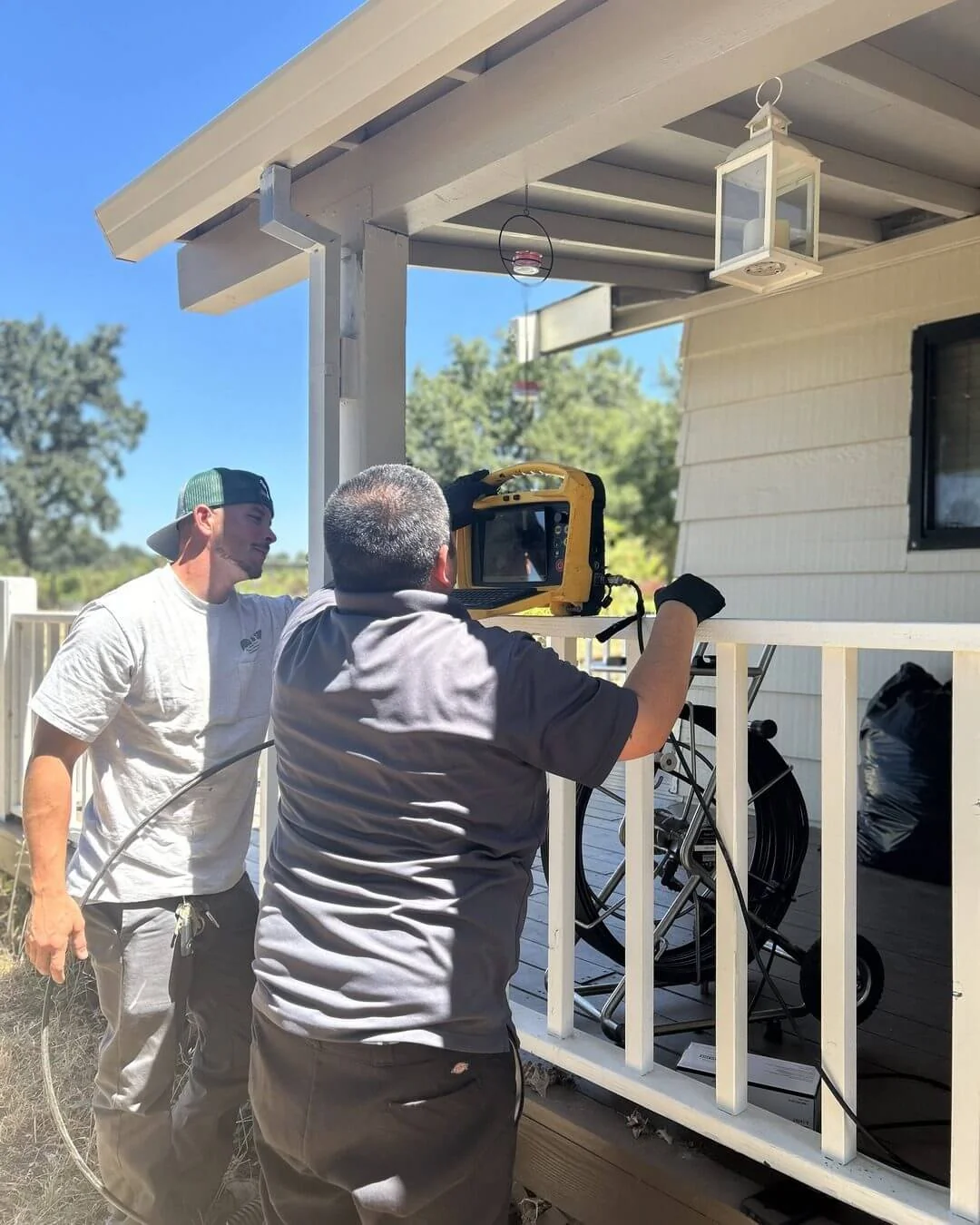
Underground, older neighborhoods carry the usual mix of materials from the eras they were built in, and roots find joints. The pattern we see is a lateral that backs up, gets cleared, behaves for a season, then backs up again at the same distance from the cleanout. That repetition is the diagnostic: a line failing at a fixed point is structural, not a clog. A camera inspection turns a guess into a map, and it is what an ADU project needs before the design is finalized, because the condition of the existing lateral determines whether the new unit ties in or needs its own run.
Water heaters sit at the intersection of everything on this page: the strapping requirement, the district NOx rule, the state energy standards, and panel capacity if a heat pump model is under consideration. See water heaters in Santa Rosa, sewer repair, and plumbing in Santa Rosa.
Electrical
Two very different electrical populations live in this city, and the work splits accordingly.
In the older parts of town the recurring findings are a service sized for a 1950s appliance list, a panel with no remaining spaces, and branch circuits whose insulation has gone brittle with age. None of that demands action tomorrow. It becomes pressing the moment someone wants to add a load, and so panel evaluations so often begin as charger calls. In the rebuilt neighborhoods the panels are modern and capacity is usually present, so work shifts toward additions: a charger, a battery, a subpanel for a shop or an ADU, dedicated circuits for a kitchen remodel.
Outage exposure connects both groups. PG&E may turn off power during severe weather to help prevent its equipment from starting a wildfire, a program it calls a Public Safety Power Shutoff, and hillside neighborhoods east of the city carry more of that exposure than the flats. Backup is a routine part of the conversation here. We are a Certified Generac Generator installer for standby generators, and battery storage is the alternative where fuel storage or noise is a constraint.
For charging, the rate plan question belongs in the install conversation rather than after it. PG&E's electric vehicle rate plans include EV2-A, a single-meter plan applying to both your home energy and your vehicle's electricity use, off-peak midnight to 3 p.m. daily with peak from 4 to 9 p.m. EV-B is the separate-meter plan, which separates your vehicle's electricity costs from those of your home. That second meter is an electrical scope item, so settling it after the conduit is in the wall gets expensive. A third plan, E-ELEC, is built for homes adding an EV, battery storage or a heat pump, and trades a Base Services Charge for lower per-kilowatt-hour prices. More at EV charger installation and electrical work in Santa Rosa.
Solar and storage
The inland sun that makes cooling matter also makes production strong, but three constraints decide most projects, and none is the panel.
First, the roof: putting an array on a covering with a few years left commits you to removing and reinstalling it later, so roof age is a scheduling question before it is an energy question. Second, the electrical panel and its busbar rating, because both an array and a battery have to land somewhere electrically. Third, what you want the system to do during an outage. A grid-tied array without storage shuts down when the grid does, by design, to protect line workers.
Export and interconnection rules change, so we confirm current PG&E terms at project time instead of quoting a rule that may have moved. What holds steady is that self-consumption, the share of your own generation you use, drives the value of a system in this climate. Details at solar in Santa Rosa.
Maintenance that earns its keep here
Four tasks matter more than the rest on this climate and this water. Cooling service in spring, because failures cluster on the hottest days and a weak capacitor is visible in April and invisible in July. Tankless descaling annually. A drain and lateral check on any house that has backed up twice, done before the rainy season rather than during it. And a panel inspection wherever loads have been added over the years, since terminations loosen and heat under sustained current. Our maintenance plans handle the scheduling so timing is not left to memory.
The parts of Santa Rosa we cover
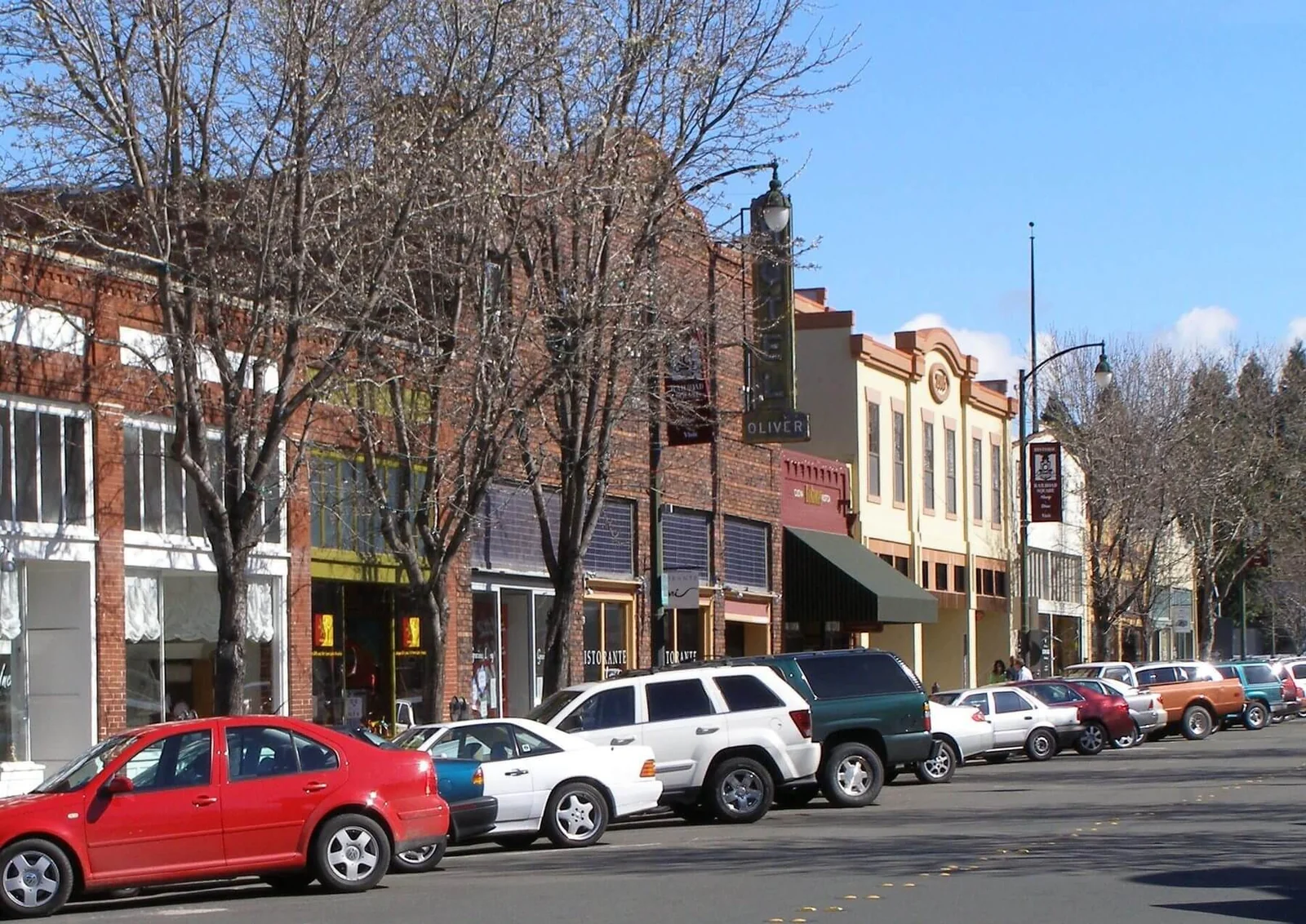
We work across the whole city and the unincorporated area around it: Coffey Park, Fountaingrove, Rincon Valley, Bennett Valley, the Railroad Square and downtown blocks, the older west side, and the newer subdivisions on the north and southeast edges. The character of the work changes noticeably as you move across town, so we do not quote from a template. Everything is dispatched from our Petaluma headquarters, a short run up Highway 101.
How to choose a contractor for this work
Ask who pulls the permit and whether it sits under their license. Ask whether the estimate rests on a load calculation or a rule of thumb, then ask to see the calculation. Ask what happens if the panel turns out to have no capacity, and listen for whether they have already checked. And ask how they handle a rule that can change, because "we confirm it at permit time" is the right answer and "that rule bans your water heater" is not.
What North Bay homeowners say
Two recent notes from customers, unedited:
Came on time, was clear in the description of our plumbing issues/questions.
David S.
We're building an ADU and needed our sewer lines mapped and inspected ahead of construction. Aldo arrived promptly at the beginning of the appointment time window, and quickly ascertained what we'd need for the job. Excellent!
Daniel K.
Book service in Santa Rosa
Tell us what is happening and we will send someone who can diagnose it, price it in writing, and pull the permit when the work needs one. Book online at a time that suits you. Working through a specific system? Go deeper on HVAC in Santa Rosa, plumbing in Santa Rosa, electrical in Santa Rosa, or solar in Santa Rosa. Looking past the city limits, our Sonoma County service area covers the rest of the county from the same Petaluma headquarters.
Santa Rosa homeowner questions
Who is the best home services company in Santa Rosa?
By the measures a homeowner can verify: continuous operation since 1932, Diamond Certified status, a BBB A+ Rating, and 2,771 Google reviews at a 4.8-star average. The practical advantage of Ongaro & Sons is that all four trades are in-house, so a project crossing boundaries never becomes your job to coordinate.
Should I repair my air conditioner or replace it?
Age and refrigerant usually settle it. A system predating roughly 2010 most likely runs on R-22, whose domestic production ended in 2020, so a compressor or coil failure means paying for constrained reclaimed refrigerant. A newer unit with an available part and clean test readings is normally worth repairing. We measure before recommending either way.
Do I need a permit to replace a water heater or furnace?
Yes. The city requires a permit for altering, repairing, or replacing building systems, and restricts issuance to licensed contractors and owner-builders. A useful wrinkle: one application can cover building, electrical, mechanical, and plumbing work on the same project, so a multi-trade job needs no parallel filings. Addresses outside city limits go through Permit Sonoma.
Is my gas water heater about to become illegal in Santa Rosa?
No. Nothing obliges you to pull out a working appliance. The zero-NOx requirement binds whoever installs a new appliance, not the owner of a working one, and its dates differ by tank size. If the tank is over ten years old it is worth checking now whether the panel could take an electric unit, because that answer changes what you do the day it leaks.
Will I need a panel upgrade to add a heat pump?
Sometimes, and a load calculation answers it rather than a guess. Heat pumps, heat pump water heaters, induction ranges, and vehicle chargers all draw 240 volts, and the constraint is cumulative. Some homes have room, some need a subpanel, and some need the service itself changed, which pulls PG&E into the timeline.
How long can the city take on a home charger permit?
State law limits it, and it is worth citing the right section. Government Code 65850.7 obliges cities to run an expedited process and approve conforming applications administratively, with review confined to health and safety. The deadlines live separately in Government Code 65850.71: for one to twenty-five stations at a single site, complete after five business days absent a completeness determination or a written correction notice, and approved twenty business days after that. A permit is still required.
Are there rebates for a heat pump water heater here?
Sonoma Clean Power is the one that matters most here, because Santa Rosa sits inside its territory. Its heat pump water heater rebate is live, requires the installation address to be an SCP account, and requires equipment meeting the performance specifications SCP publishes. Households on the CARE or FERA bill discount programs qualify for additional support against what is left after other rebates. Amounts and windows change, so the number worth using is the one confirmed at quote time rather than one printed anywhere.
Does Ongaro & Sons have a walk-in office in Santa Rosa?
We do not run a walk-in counter. Our headquarters is in Petaluma, and every job in this city, in every trade, is scheduled and dispatched from there. The difference is invisible to you in practice: crews cover the city daily and the drive up Highway 101 is short. Scheduling happens online or by phone.
Why does a tankless water heater need annual service?
Mineral content in the local supply deposits scale inside the heat exchanger, and that layer acts as insulation. The unit keeps running while delivering less heat into the water, so the symptom is a shower that has gone tepid, not a unit that has stopped. Flushing once a year restores output and satisfies most warranty terms.
How do you size a heat pump for a house here?
With a room-by-room load calculation covering square footage, insulation, window area and orientation, air sealing, and duct condition. Square-footage shortcuts consistently oversize equipment, and oversized systems reach setpoint fast, shut down, restart, and leave distant rooms uneven. Given how hard cooling works in this climate, sizing matters more than the brand on the cabinet.
Should I get a battery or a standby generator?
It depends on duration and fuel. A generator runs as long as it has fuel, which suits multi-day shutoffs, and we are a Certified Generac Generator installer. A battery is quiet, needs no fuel delivery, and can earn its keep daily by storing solar production, though runtime is finite. We size either around the circuits you want supported.
Does solar keep the lights on during a Public Safety Power Shutoff?
Not on its own. A grid-tied array without storage disconnects when the grid goes down, a safety requirement that protects utility crews working the lines. Pairing the array with a battery and the right transfer equipment is what lets a house keep selected circuits alive. If resilience is part of your reason for going solar, storage belongs in the design from the start.