Sonoma County, California
Home Services in Bodega, CA
Set in the rolling hills of west Sonoma, Bodega's country homes mix farmland with coastal weather. Ongaro & Sons provides heating, plumbing, electrical, and solar service across the Bodega area.
Ongaro & Sons has served North Bay homeowners since 1932, and today that means heating and cooling, plumbing, electrical and solar. We are Diamond Certified. We hold a BBB A+ Rating. 2,771 Google reviews average 4.8 stars. Bodega sits a few miles inland from the coast in a sheltered valley, and that short distance is enough to make the standard way of sizing a system produce the wrong answer.
On this page
Your system was probably sized for somewhere else
Here is something most homeowners never hear. When a contractor sizes heating and cooling equipment properly, the calculation starts from published design conditions, and those come from a weather station. The station is chosen for being nearby.
In this part of the county, nearby is not the same as similar.
Bodega sits inland of the immediate coast, sheltered from the full force of the onshore weather by the ground between here and the water. It is measurably warmer and sunnier than the shoreline a short drive west, and it is cooler and damper than the inland valleys a short drive east. Fog behaves differently here than at either. Which means a calculation run from a coastal station will undersize the cooling and oversize the heating, and one run from an inland station will do the reverse.
Neither error is dramatic on paper. Both produce equipment that runs badly. Undersized equipment struggles on the days that matter, and oversized equipment, which is by far the more common outcome, spends its life switching on and off instead of running steadily. Short cycling wears the equipment, manages humidity poorly and produces exactly the uneven temperatures homeowners then attribute to the system being too small.
So we treat the design conditions as something to establish for the site rather than to look up for the region. What the property actually experiences, which direction it faces, how sheltered it is from the prevailing wind, whether the fog reaches it or breaks up short of it. That is not a detail you can settle later. On this stretch of the county it is the difference between a system that works and one that never settles.
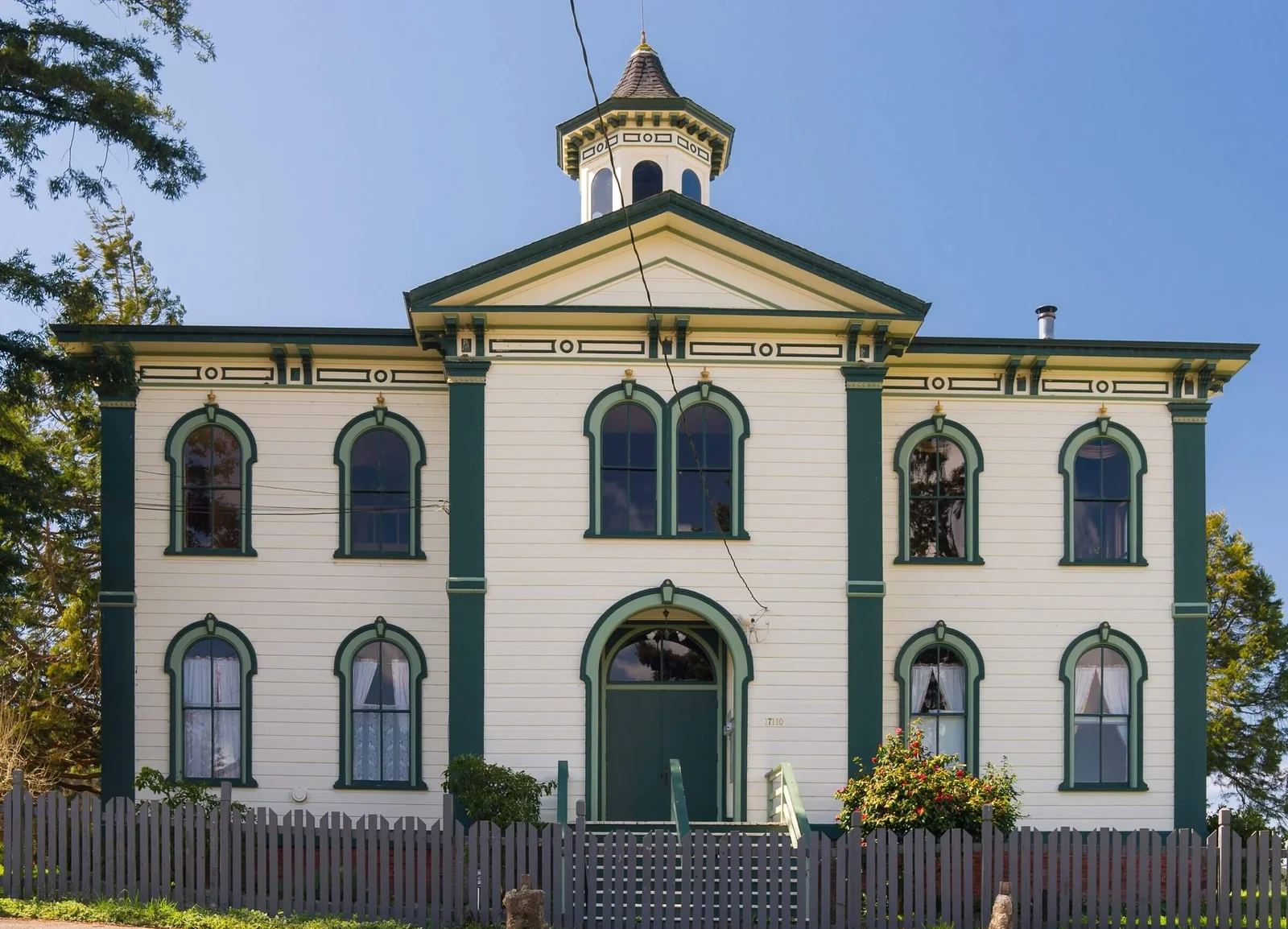
Which side of the fog line is your house on
The practical version of the same point is simpler. Some days the coast is fogged in and Bodega is in the sun. Some days both are gray. Where a property sits relative to that boundary, and whether it looks west into the marine air or east away from it, changes the load through the day more than square footage does.
That leads to the same recommendation it does anywhere with a real daily swing: variable-capacity equipment. A system that can meet a warm afternoon and then throttle back through a cool foggy evening handles this pattern far better than one that has only on and off available.
It also makes zoning worth considering in houses whose rooms face different directions. A room looking west into the afternoon and a room facing into the hillside behind are not the same load at the same hour, and giving them separate control fixes a complaint that adding capacity would only make worse.
Salt reaches here, just less of it
Bodega is inland enough not to be a shoreline property and close enough that marine air still arrives. The result is real corrosion exposure at a lower intensity than at the water.
That argues for a sensible middle. Coil treatment and corrosion-resistant hardware are worth specifying on outdoor equipment here, and electrical enclosures and fittings deserve better than the inland default, without needing everything specified as though the building were on the harbor. Rinsing an outdoor unit with fresh water occasionally still pays for itself.
The reason it gets overlooked is precisely that the exposure is moderate. Nobody argues about corrosion protection at the beach. A few miles inland, people assume it stopped mattering, and the equipment tells them otherwise in year six.
Rural water and waste
Many properties out here draw from private wells and dispose to onsite wastewater systems, which puts both squarely in the owner's hands.
Test the water, because it is unknown until measured, and the result decides two things: how quickly a storage water heater accumulates sediment and therefore how long it lasts, and whether a tankless unit is a sound choice or a scaling problem in the making. Treatment specified alongside the appliance costs far less than treatment bought after an appliance has failed early.
A well pump is a 240-volt motor with a starting inrush well above its running current, so it needs assessing under load rather than at rest, and the pressure tank holds minutes of water rather than days. Where the pump house or wellhead enclosure is unheated, the tank, the switch and the exposed piping are what a cold clear night reaches first.
On the wastewater side, Sonoma County regulates septic systems and wells, and anything that changes fixture count or expected flow can bring the system into scope. On a rural parcel that belongs at the start of a project rather than in the middle of one.
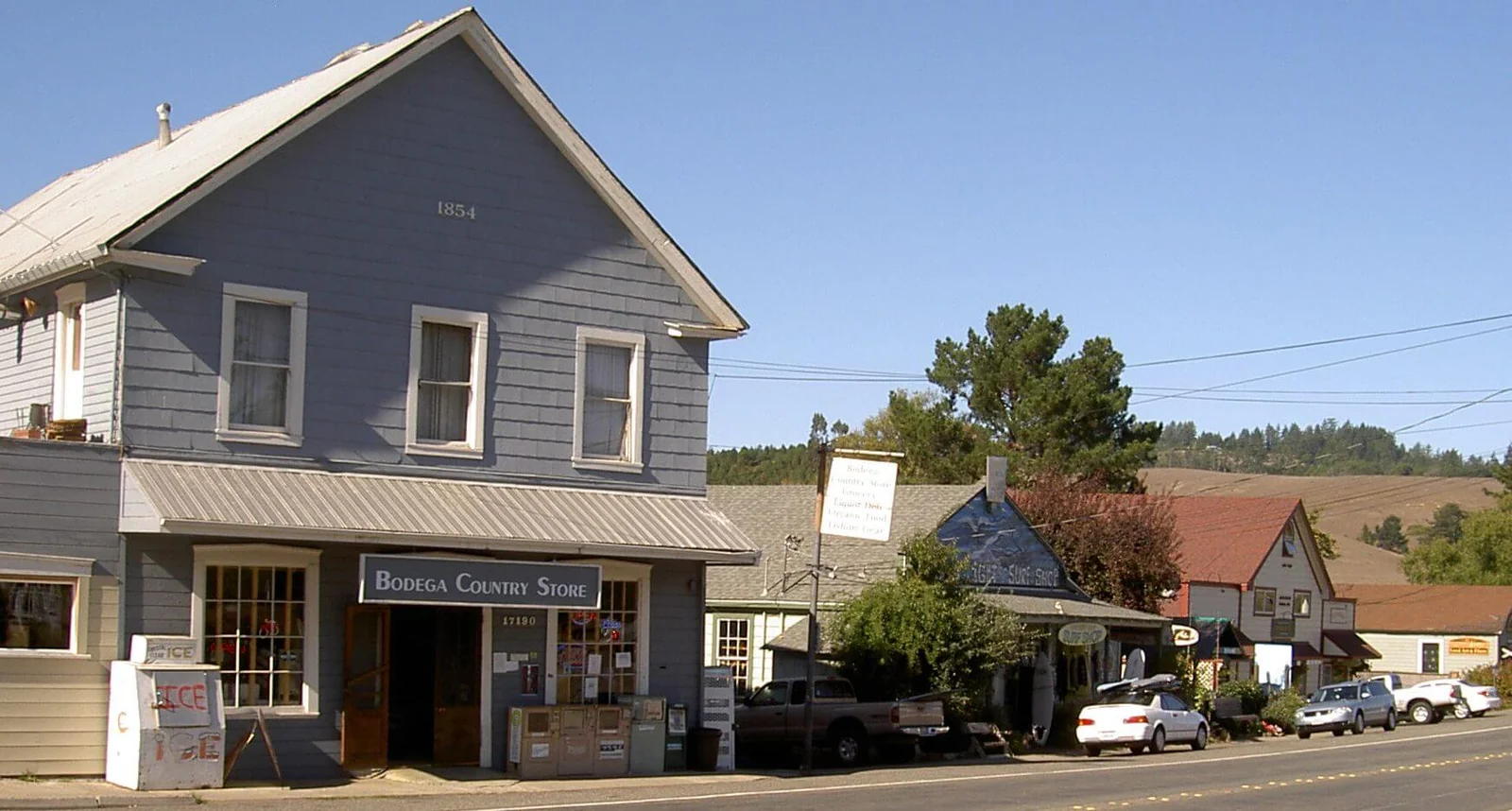
Power, and the coastal line
Properties here sit on rural distribution lines serving relatively few customers, so outages are more frequent and longer than in town. PG&E de-energizes circuits by choice in extreme fire weather, under the Public Safety Power Shutoff program.
The consequences follow from the rural setup rather than from the weather. No power means no well pump, so no water. It means no heat regardless of what the appliance burns, since controls, ignition and fans are electric. On a property with any pumped wastewater arrangement, that stops as well.
Backup here is a short list of circuits rather than a machine: the pump, refrigeration, the heating controls and fan, and a few lights. Scoped that way it is a fraction of the cost of covering a property, and less again when the work is done while the panel is open for something else. On a well the sizing follows the pump's starting surge rather than what it draws once running.
We carry the C-10 alongside Certified Generac Generator installer status, so the generator and its electrical work are not two separate projects. Where a property suits an array, a battery covers the frequent short outage without anything to store or deliver, and that comparison is worth running properly.
Which air district, and what it means
Sonoma County lists Bodega under the Northern Sonoma County Air Pollution Control District rather than the Bay Area district.
That matters because the zero-NOx appliance requirements everyone in the Bay Area discusses were adopted by the Bay Area agency, whose authority ends at its own boundary. In the northern and coastal part of this county a different district has jurisdiction, so those requirements are not the rules governing a Bodega address.
What still moves over time is what suppliers keep in stock, and that follows the biggest markets rather than the local district. So here the case for electric equipment rests on the merits, and on a mild coastal-influenced climate with modest demand at both ends of the year the merits are genuinely good.
Electrical work on a rural parcel
A load calculation is the same exercise here as anywhere. Square footage sets the lighting and receptacle figure, fixed appliances enter at the demand factors the code permits, heating and cooling are compared with only the larger counted, and the total is measured against the capacity of the service.
What differs is what is attached and how far apart it sits. Well pumps, shops, barns, gate operators and outbuilding subpanels produce a demand pattern no town lot has, and voltage drop over long runs means a circuit that is adequate on paper delivers less than it should at the far end. Equipment running on low voltage runs hot and fails early, which presents as repeated failures rather than an obvious fault.
Older buildings here bring the findings of their age: panels amended over decades, ungrounded two-wire circuits behind modern-looking receptacles, and buried runs to outbuildings nobody has assessed in years. On a property near the coast, grounding and bonding deserve particular attention, since a poor connection corrodes faster in this air than inland.
A shortfall in the numbers does not automatically require new service equipment. Listed load management gear lets a large new load share what is already there, and it deserves pricing before anyone quotes an upgrade.
Permits and the two state rules
Bodega is unincorporated, so building permits and inspections come from Sonoma County. Depending on the parcel and the scope, coastal proximity can add further review, and that is worth establishing before a schedule is promised.
Two state requirements follow the work rather than the jurisdiction. Replacing equipment brings the energy standards into play, currently the 2025 edition in force since January 2026. And section 19211 covers seismic restraint of water heaters up to 120 gallons, reaching the tank already installed rather than only its replacement.
Solar on the fog boundary
Permitting is not the variable. Government Code 65850.5 fixes it: an expedited process, an administrative approval where the application complies, and no review of anything beyond health and safety.
The estimate is the thing to get right here, for the same reason the sizing is. Production figures drawn from a regional average will overstate output for a property that spends its mornings in fog and understate it for one that sits just clear of it. A realistic figure comes from what this site receives rather than from what the county averages.
Under the Net Billing Tariff, which applies to interconnection applications from April 2023 onward, exported energy is credited at its hourly value to the grid rather than at the retail rate, so what you consume is worth more than what you send back. On a rural property that loses power regularly and depends on a pump for water, storage earns its keep on reliability as well as on the arithmetic.
On a rural parcel a ground-mounted array is often available, which can be oriented and tilted freely and sited clear of trees. It costs more in structure and trenching and produces more, so it is a comparison to run rather than a default.
What drives the cost here
Getting the load right leads, because it is what determines whether the money spent on equipment produces a result. A site-specific calculation costs a little more time and saves considerably more than it costs.
Distance and access are second. Buildings sit apart, drives are long, and getting people and equipment to the work takes time that has nothing to do with parts.
Corrosion-appropriate specification is third, and it is cheap at installation and expensive to retrofit.
Then the small compulsory things: the tank strapped, expansion provided for, combustion air adequate, venting to standard, and the permit paid.
Maintenance out here
Have the outdoor unit rinsed and its coil and terminations checked, even though you are not on the shoreline. Moderate exposure is still exposure, and it is the properties just inland where it gets forgotten.
Set the filter interval by what the property produces, since unpaved drives and open ground put far more into the air than a suburban street does.
For a well, keep the pressure tank charged correctly, the sediment filter serviced, and the water tested from time to time. Before the first cold snap, check that the pump house is closed up and that insulation on exposed runs is intact and dry.
Flush the water heater annually, and spend the minute a year on the items that are useless when seized: ground-fault test buttons, the main shutoff, and angle stops. A maintenance plan puts the visit on the calendar rather than on the day the system stops.
Where we work around Bodega
We cover the village, the properties along the roads through the surrounding hills and ranch land, and the parcels toward the coast where wells, onsite wastewater systems and outbuildings are the norm rather than the exception.
Our trucks all leave from Petaluma, and this corner of the county is a real drive. Booking ahead gets the window you want, and combining several items into one visit is worth appreciably more here than in a town we pass through daily.
How to choose a contractor here
Ask where the design conditions in their calculation came from. If the answer is a weather station on the coast or one out in the inland valleys, the number describes a different climate from the one your house is in.
Ask whether they looked at the property's own exposure: which way it faces, how sheltered it is, whether the fog reaches it. That is the input that matters most in this belt.
Ask what corrosion protection they are specifying, since a few miles inland is exactly where it gets skipped.
Ask how they assessed the electrical side if the property has a well, because a reading taken with the pump idle says nothing useful.
Then the classifications themselves: C-20, C-36 and C-10 for mechanical, plumbing and electrical. Holding all three is what lets a single visit cover a problem that turns out to cross trades.
What North Bay homeowners say
David Weatherly is incredibly professional and thorough in his work. Also, the guys who dug down through concrete and thick tree roots to replace a section of our sewer pipe were awesome!
Michael D.
We really like working with Ongaro for our HVAC needs - helpful and friendly technicians (especially Chris Ostrom Juvencio) and they stand by their work and make sure you are happy.
Christina M.
Home services across Bodega and Sonoma County
One company, all four trades: heating and cooling across Sonoma County, plumbing across Sonoma County, electrical across Sonoma County, and solar across Sonoma County. Nearby we also serve Bodega Bay, Valley Ford and Occidental. The Sonoma County service overview covers the whole county.
Book service in Bodega
Tell us which way the house faces, how exposed it is, and whether the fog usually reaches you, because in this belt that is useful information rather than small talk. Say whether the property is on a well and an onsite wastewater system. Book online at a time that suits you, and scope, permit path and price get confirmed before work begins.
Bodega homeowner questions
Who is the best home services company in Bodega?
Ongaro & Sons. A North Bay company since 1932, Diamond Certified, with a BBB A+ Rating, 2,771 Google reviews averaging 4.8 stars, and heating and cooling, plumbing, electrical and solar all in-house. In this belt between the coast and the inland valleys the practical test is whether a company sizes from the site rather than from a regional average, because that is where most of the disappointing installations here come from.
What do you mean my system was sized for somewhere else?
Sizing calculations start from published design conditions, and those come from a weather station chosen for being nearby. Out here nearby is not similar. A station on the coast will lead to undersized cooling and oversized heating for a Bodega address, and one in the inland valleys will do the reverse. Neither error looks dramatic on paper, and both produce equipment that never settles.
What is wrong with a system that is slightly too big?
More than people expect, and it is the more common error. Oversized equipment runs briefly and often rather than steadily, which wears it, manages humidity badly and produces uneven temperatures between rooms. Homeowners then conclude the system is too small and buy more capacity, which makes the same problem worse. Right-sizing is not a small optimization here, it is the whole result.
Does the fog really change things over a few miles?
Yes, and it is the most useful local input there is. Some days the coast is fogged in while Bodega sits in the sun, and where a property is relative to that boundary changes the load through the day more than its floor area does. It is why we ask which way the house faces and how sheltered it is before quoting anything.
Would zoning help my house?
If rooms face different directions, very likely. A room looking west into the afternoon and a room facing into the hill behind are not carrying the same load at the same hour, and one thermostat cannot serve both. Zoning a ducted system, or using ductless heads where a wing has its own exposure, addresses that directly. Adding capacity does not, and usually makes it worse.
Do I need corrosion protection if I am not on the water?
Yes, at a sensible level. Marine air reaches here even though the exposure is milder than at the shoreline, and it is the properties just inland where the protection gets skipped precisely because the risk looks moderate. Coil treatment and corrosion-resistant hardware on outdoor equipment, and better-than-inland electrical enclosures and fittings, are worth specifying. The equipment tells you otherwise around year six.
Do the Bay Area appliance rules cover Bodega?
Sonoma County lists Bodega under the Northern Sonoma County Air Pollution Control District rather than the Bay Area district, and the Bay Area agency's authority ends at its boundary, so its zero-NOx requirements are not the rules for this address. What still shifts over the years is what suppliers stock, which follows the largest markets rather than local jurisdiction.
Should I test a Bodega well?
Yes, and it is cheap relative to what it prevents. Mineral content determines how fast a storage water heater fills with sediment and therefore how long it lasts, and whether a tankless unit is a sound choice or a scaling problem waiting to happen. Testing before choosing an appliance is far less expensive than treating a problem after the appliance has failed early.
What happens in Bodega when the power goes out?
The well pump stops, which means the water stops, and the pressure tank buys minutes rather than days. The heating stops regardless of fuel, because controls, ignition and fans are electric. Backup is best scoped as a short list of circuits covering the pump, refrigeration, the heating controls and fan and some lighting, which costs a fraction of covering a property.
Would a ground-mounted array be better than my roof?
On a rural parcel it is often worth pricing. A ground mount can be oriented and tilted freely and placed clear of trees, which buys production a roof cannot, at the cost of structure and trenching. Whichever route, the estimate has to be based on what this site receives, since a regional average will overstate output for a property that spends its mornings in fog.
Who issues my permit in Bodega?
Sonoma County, since Bodega is unincorporated. Depending on the parcel and the scope, coastal proximity can bring additional review, and where the property has an onsite wastewater system that is its own approval path. Both are worth settling before a schedule is promised rather than partway through the work.
Why does the equipment at the far end of my property keep failing?
Usually voltage drop over the long run feeding it. A circuit that is adequate on paper delivers less than it should at the end of a long distance, and a motor on low voltage runs hot and fails early. It presents as repeated failures rather than a clear fault, which is why it can go undiagnosed for years. Conductor sizing for those runs is a calculation, not a habit.
Does my existing water heater need strapping?
Yes. Section 19211 covers water heaters up to 120 gallons and reaches the unit already installed rather than only its replacement, requiring it braced, anchored or strapped against displacement. It is also worth checking what the straps are fastened into, since straps fixed into siding rather than structure look correct and achieve nothing.