Eichler Home Services in Marin County
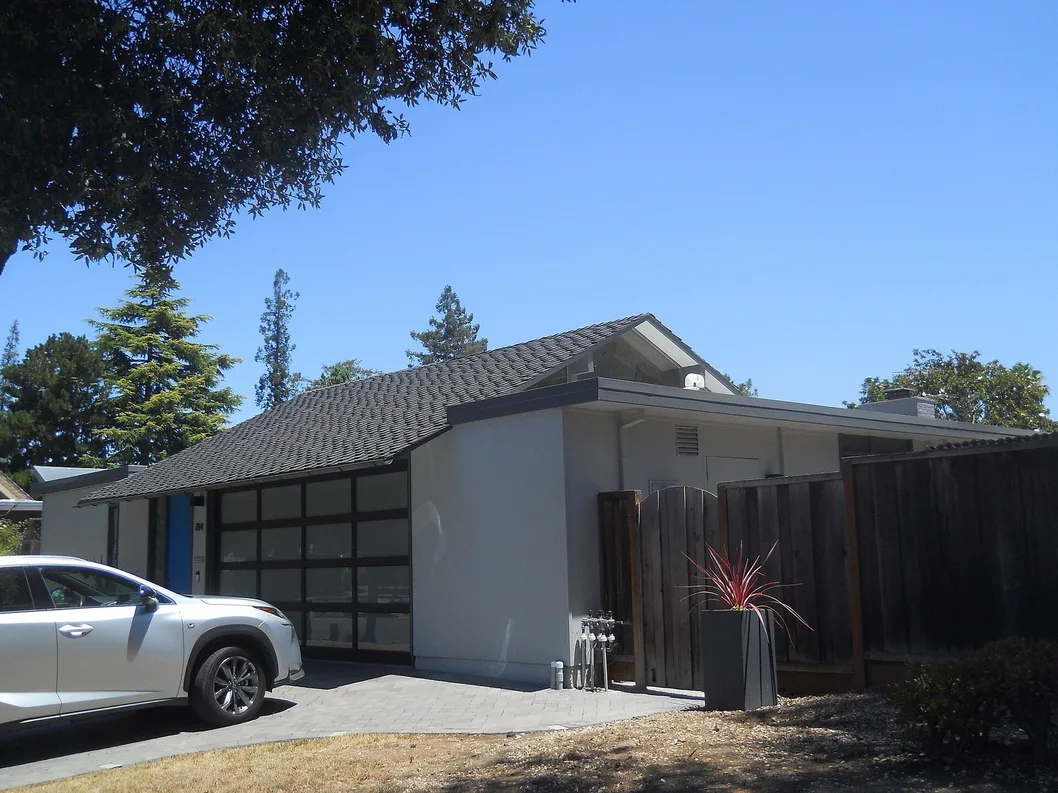
Ongaro & Sons works on Eichler homes across Marin County, and we have run trucks in the North Bay since 1932. We are Diamond Certified, we hold C-20 HVAC, C-10 electrical, and C-36 plumbing licenses, and we carry 2,756 Google reviews averaging 4.8 stars. One company covers the slab, the boiler, the panel, and the roof.
On this page
Why Eichler heating problems are different
Most Eichler heating calls come in late fall: half the house will not warm up, the boiler is firing far more often than it used to, or a stripe of warm concrete has appeared in a hallway floor that was always an even temperature.
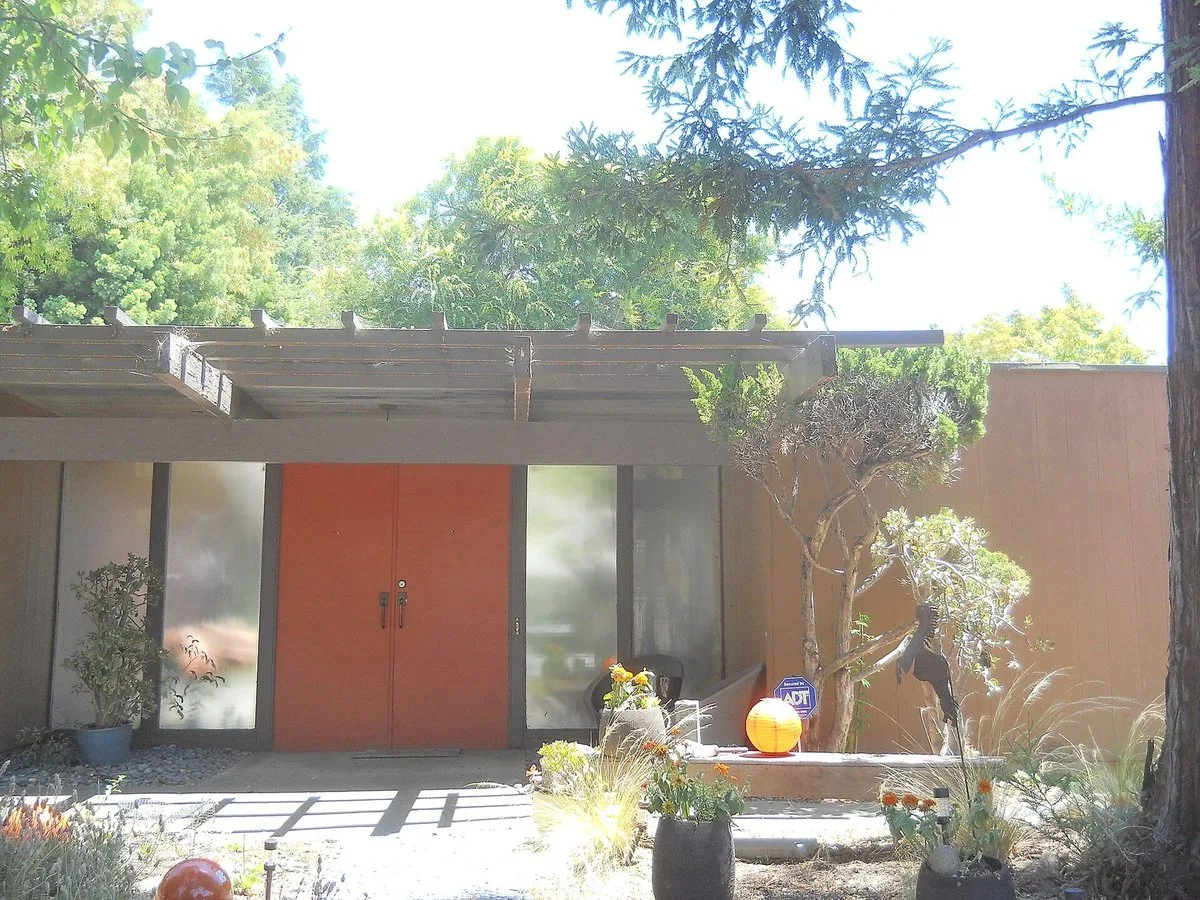
What makes these houses different is that the heat is inside the concrete. Tubing was placed before the slab was poured, the boiler warms water and pushes it through those loops, and the floor itself is the radiator. There is no duct to balance, no attic to crawl, and no register to close, so the diagnostic approach that works in a conventional ranch house does not apply here. That one design decision drives nearly every service question in these homes.
The three things that fail in an Eichler heating system
An Eichler heating complaint comes down to one of three parts: the boiler, the controls, or the tubing in the slab. Each fix disrupts on a very different scale, so the first job is deciding which one is at fault.
The heat source. Boiler, circulator pump, expansion tank, zone valves, aquastat, thermostat. All of it sits above the slab, visible and serviceable. Short-cycling, no ignition, a pump that hums without moving water, a waterlogged expansion tank: these are repairs, and they are the outcome we hope for.
The distribution. The tubing buried in the concrete. When a buried loop develops a pinhole, the system keeps running and the house keeps partially heating, which is why these leaks go unnoticed for so long. The lost water gets replaced by the automatic fill valve, quietly topping the loop off the domestic supply.
The envelope. Less a failure than a permanent condition. Many of these homes still have original single-glazed floor-to-ceiling walls and a low-slope roof with little insulation above the decking. A good boiler there still loses the heat it makes, which the owner experiences as "the heating does not work."
Our heating and cooling work across Marin County leans on that split: a boiler will not fix a glass wall, and glass will not fix a failed circulator.
Finding a slab leak without opening the floor
The most useful number in an Eichler is one almost nobody tracks: how often the system takes on make-up water. A closed hydronic loop is supposed to stay closed. If it drinks from the cold supply regularly, that water is going somewhere, and under the slab is the likeliest somewhere. What we look at, in order:
- Whether the fill valve is feeding the system, and how often. We isolate it and watch what pressure does with the loop sealed.
- Whether the loop holds a static test pressure with the boiler off and cold, over hours rather than minutes.
- Rust staining, mineral crust, or wet fittings where the loops surface out of the concrete near the boiler.
- Warm patches, damp patches, or an unexplained hairline in the slab, plus the perimeter outside, where subsurface water often shows first.
We do not cut concrete on a hunch. A failed pressure test says a loop is compromised; it does not say the whole system is finished, and those two conclusions lead to very different projects.
Dominic and Ethan did an excellent job removing our 60 year old unusable furnace and installed a new furnace and ducts throughout our house. They even found and connected an old inaccessible duct that had be disconnected 50 years ago.
James R.
Slab, panel, path, glass
Once diagnosis is done, every Eichler heating decision comes down to four questions asked in this order. Answer them plainly on paper and the equipment choice tends to make itself.
The slab. Does the buried loop hold pressure? If it does, keeping hydronic heat is genuinely on the table and a boiler replacement is a contained job. If it does not, you are choosing between repairing the failed section and moving heat delivery somewhere else entirely.
The panel. Every electric option, ductless heat pump, heat pump water heater, induction range, vehicle charger, is capped by what the electrical service can carry. This is where plans die most often.
The path. Where does a refrigerant line set physically go? Where does condensate drain? Where does a flue terminate? With no attic, no crawlspace, and a low-slope roof, routing is a design constraint that eliminates some equipment outright, not a detail to work out later.
The glass. A load calculation on an Eichler as it stands and one on the same house after the glazing is upgraded can produce meaningfully different equipment. Settle whether glass work belongs to this project before anything is sized, or you get a system that short-cycles in three years.
The panel usually decides it
These houses were built for a household that heated with gas, cooked with gas, had no air conditioning, and nothing plugged in overnight in the carport. The service that was generous then is the binding constraint now.
So the first real deliverable on an Eichler electrification project is a load calculation, not a proposal. It tells you whether the existing service carries what you want, whether a subpanel solves it, or whether the service itself changes, which brings utility coordination and meter work into scope.
One quirk works in a Marin homeowner's favor, at least in San Rafael. The city's minor permit list, the work it issues without plan review, names "Main service panel" and "Sub-panels (New & change outs)" on the electrical side. It does not name hydronic boilers, ductless heat pumps, or heat pump water heaters. So electrical groundwork on a Terra Linda Eichler often clears permitting faster than the mechanical work depending on it, the reverse of what most owners assume when they sequence a project.
Routing is the other half of the problem. The slab is not a wire chase, and there is no attic to drop from. New circuits realistically follow wall cavities, a purpose-built soffit, or an exterior run, and each carries a visual cost in a house whose whole appeal is uninterrupted lines. Our electrical work in Marin County here spends more time on routing than on the panel.
Permits, code, and inspection
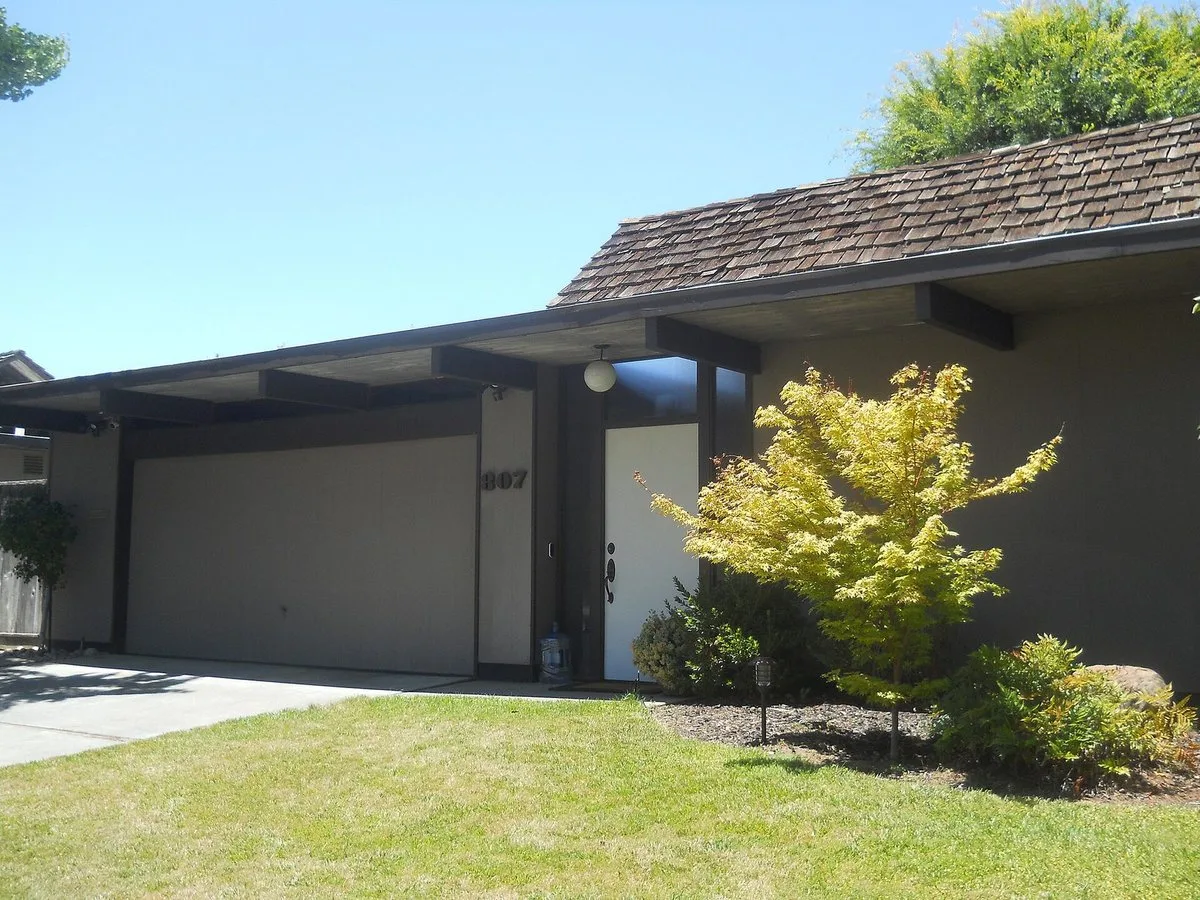
Marin's Eichler tracts do not all answer to the same building department, and that is the first thing to establish.
- Terra Linda is inside the City of San Rafael. Permits and inspections run through the San Rafael Building Division, and since February 2026 both permit applications and inspection scheduling run through the city's OpenGov system, which replaced the eTRAKiT platform it used before.
- Lucas Valley, Marinwood, and Strawberry are unincorporated. They permit through Marin County Building and Safety rather than through any city.
- Novato is incorporated. Confirm the path with its building department rather than assuming county process applies there.
- San Rafael's no-plan-review list is narrower than it looks. On plumbing it names "C/O water heater 100-gallon capacity and under" and "C/O tank-less water heater." On mechanical, "C/O of Furnace, A/C units and Ducting. (must be in same location)" and "New A/C units." Boilers and ductless heat pumps are absent, so we confirm the review path before putting a date on the calendar.
- Title 24 governs replacement equipment. California's 2025 Building Energy Efficiency Standards took effect January 1, 2026, per the California Energy Commission. That cycle put new single-family construction on a single fuel baseline, requiring a heat pump prescriptively for both water heating and space heating, which is not automatically the rule in an existing home.
- All of Marin sits inside the Bay Area Air Quality Management District. Its 2023 amendment to Regulation 9, Rule 6 set zero-NOx requirements for residential water heaters, on dates spread across 2027 and 2031 depending on size and equipment type. They apply at the point of sale, not to the unit already in the house.
- Nobody's gas water heater is banned. We check what is in force the day the permit is pulled.
- Seismic anchoring is not optional. California Health and Safety Code section 19211 requires "all new and replacement water heaters, and all existing residential water heaters" up to 120 gallons to be braced, anchored, or strapped per the California Plumbing Code.
- Refrigerant is in transition. R-22 production and import in the United States ended in 2020, and R-410A is phasing down under the AIM Act toward lower global warming potential refrigerants, because newly manufactured residential and light commercial equipment has to sit under a 700 GWP limit.
What the cost is made of
The equipment nameplate is rarely what moves an Eichler quote. These are, roughly in order of impact.
Whether the buried loop survived is the largest fork in the road. A boiler exchanged into a sound loop is a defined scope on a predictable schedule. A loop that will not hold pressure turns the project into a heat delivery redesign, and the two outcomes are nowhere near each other.
Electrical scope comes next. Adding a subpanel to a service with headroom is a straightforward day. Changing the service pulls in the utility, the meter, and a longer calendar, and it sets the schedule for everything downstream.
Then roof work. Line sets, condensate, and flues all pass through a low-slope assembly and have to be flashed to last, and the existing roofing warranty is a real consideration rather than a footnote. Penetration count, and how far equipment sits from where the refrigerant lands, changes labor meaningfully.
Concealment costs more than owners expect, since finish work on exposed post-and-beam construction is nothing like patching drywall in a tract colonial. Zoning carries a price too: one outdoor unit feeding several indoor heads costs differently from multiple single-zone systems, and open plans built around a central atrium often argue for more zones. Finally, materials that will be cut or demolished in a house of this era should be tested before they are disturbed. If scope grows past what you planned to spend at once, financing options are worth understanding before work starts.
Great customer service and fantastic work. We plan to make them our go-to electrician.
Todd E.
Rebates and incentives, and their real status
MCE is the community choice energy provider for Marin, and its programs are the first place to look. MCE's heat pump rebates cover heat pump water heaters and heat pump heating and cooling systems, ductless equipment included. Eligibility is written for "MCE customers who own and have lived in their single-family detached homes for at least 12 months in MCE's service area," and installation has to be performed by a participating contractor.
The sequencing terms deserve more attention than they get, because Eichler owners tend to plan several upgrades together. MCE states that "If your home has solar or EV charging, the equipment must have been installed for at least 12 months," and that a participant cannot "install other home electrification projects (including solar, battery storage, or EV charging) for 12 months after your heat pump unit" is completed. Read, the order in which you do the heat pump, the array, and the charger is a rebate decision, not a scheduling preference. If solar in Marin County sits anywhere on your five-year list, it belongs in the conversation on day one.
What is worth confirming at permit time is the utility and state side, which is where the money that does exist sits.
Maintenance specific to these houses
Track the make-up water. Note the pressure reading on the boiler gauge a few times a season and write it down. An owner who knows the loop has been static for two years holds information nobody else on the street has, and one who catches the fill valve working has found a slab leak early enough to have options.
An annual hydronic visit covers combustion and venting, expansion tank pre-charge, the circulator, relief valve, zone valve operation, and control calibration. Boilers reward this more than furnaces do, because a system quietly running long costs money well before it fails outright.
If ductless equipment has been added, the list changes shape: filters at the indoor heads, coil and blower wheel cleaning, condensate line clearing, and outdoor unit clearance, which matters more here than usual because Eichler side yards are narrow and fences sit close.
Roof penetrations get looked at during the same visit, since anything passing through a low-slope assembly is a place water can eventually find. On the plumbing side, water heater strapping, the temperature and pressure relief discharge line, and the main shutoff get verified, tying into our broader plumbing work in Marin County. Our maintenance plans keep those checks on a schedule instead of on memory.
The Eichler neighborhoods we serve
Terra Linda is the best known of the San Rafael tracts, and its flat streets and repeating floor plans mean the same failure patterns show up house after house. Marinwood and Lucas Valley run north along the Lucas Valley Road corridor with more varied lots and, in places, tighter equipment access. Strawberry, near Mill Valley, sits closer to the bay with the moisture exposure that implies. Novato adds its own tracts at the north end of the county.
We work all of them out of our Petaluma headquarters, alongside the rest of our Marin County service area. Marin's mild winters are part of why heat pump conversions perform well here: equipment spends most of the season inside its efficient range and rarely leans on auxiliary electric heat.
How to choose a contractor for an Eichler
Ask whether they will pressure-test the buried loop before recommending you abandon it. A contractor who reaches for replacement before testing is selling a product, not solving a problem.
Ask for a load calculation rather than a square-footage rule of thumb, and whether it was run on the house as it stands or as you hope to improve it. Both are legitimate. Not knowing which one you got is not. Ask who pulls the permit and from which department: a bidder who cannot say whether your address answers to San Rafael or to the county has not looked at it.
Ask to see the roof detail in writing before signing, meaning where each penetration lands, how it gets flashed, and what happens to your roofing warranty. Ask whether mechanical, electrical, and plumbing work is self-performed or subcontracted, because in an Eichler all three trades touch the same six feet of wall. And ask what plan B costs if the loop test comes back bad.
What North Bay homeowners say
Two reviews from North Bay homeowners on comparable jobs.
Schedule an Eichler visit
Start with the diagnosis, not the quote. We test what needs testing, run the load calculation, and tell you which of the four questions your house passes. Book online or reach us through our contact page. For related work nearby, see our heating and cooling, electrical, plumbing, and solar pages for Marin County, the full Marin County service area, our maintenance plans, and financing options.
Your Comfort, Our Priority
Ongaro & Sons is your trusted heating, cooling, plumbing, electrical, and solar expert, specializing in reliable maintenance and repair services that keep your home running efficiently year-round.
Our certified technicians deliver unmatched expertise with fast, friendly service across Marin, Sonoma and Napa County. From HVAC tune-ups to plumbing repairs and electrical upgrades or solar solutions, we focus on energy-efficient performance and long-term comfort. Count on us to maintain the systems that power your home and keep your environment just the way you like it.
Licensed, Insured, Background-Checked
Our technicians are licensed, experienced, and trained to service all makes and models.
Locally Owned and Operated
Serving the Napa, Marin, and Sonoma communities with personalized, hometown service.
Reliable Repairs
We respond quickly and get the job done right the first time, with no surprises.
Since 1932
Why Ongaro & Sons?
Four generations of trusted home service. Open any reason to see what it means for your home.
Schedule Service →Family-owned in the North Bay since 1932
Four generations of the Ongaro family serving Marin, Sonoma and Napa County. We know these homes and the systems in them.
Licensed, insured, background-checked technicians
Every technician is fully licensed and insured, background-checked, and trained on the equipment we install.
Diamond Certified and BBB A+
Diamond Certified since October 2016, and BBB Accredited with an A+ rating since December 1995.
Mitsubishi Diamond Contractor Elite and Trane Comfort Specialist
Both top manufacturer tiers. That standing decides how registration and extended warranty terms are handled on the system you actually bought.
The price is agreed before work starts
You see the number before the work begins. Flat-rate quotes, no surprises and no pressure.
Comprehensive maintenance program
Members get priority scheduling, discounts, and proactive checkups that prevent costly failures.
Discount
Membership
Ongaro Maintenance Plans
Annual maintenance on your home systems provides safeguards and comfort to you and your family. Members get priority scheduling, discounts, and proactive checkups that catch problems early.
Member Discounts
5% off every repair and replacement, all year long.
Peace of Mind
Proactive checkups catch issues before they become big problems.
Courtesy Reminders
We call you to schedule: never miss a seasonal service.
Value That Lasts
With Ongaro & Sons, you’re investing in quality, integrity, and service that stands the test of time. Explore our current promotions and see the difference real value makes for your HVAC, plumbing, and electrical needs.


From the Blog
 Sep 17, 2026
How Many Amps Does My House Need? Sizing Service for What You Actually Run
How many amps your house needs comes from a load calculation of what you run and plan to add. What drives the number, when existing service is enough, and more.
Read More Sep 10, 2026
Hard Water in Marin County: What Is Actually in Your Water and What It Does
Hard water in Marin County varies by provider and source. The 2025 report figures for Marin Water and NMWD, what hardness does and does not mean, and options.
Read More Sep 3, 2026
Electrical Permit Requirements in California: What Needs One and What Does Not
Find out which electrical projects commonly need permits, how to confirm local exemptions, and what to ask before work begins in Marin, Sonoma or Napa County.
Read MoreFrequently asked questions
Who is the best company for Eichler home services in Marin County?
Judge it on scope and evidence. Ongaro & Sons has been a North Bay contractor since 1932, we are Diamond Certified, and we hold C-20, C-10, and C-36 licenses, so the boiler, the panel, and the plumbing sit under one roof rather than across three bidders. We carry 2,756 Google reviews averaging 4.8 stars. On this housing type, single accountability matters more than usual.
How can I tell whether my Eichler's radiant slab is leaking?
The clearest signal is a loop that keeps needing water, since a sealed hydronic system should hold pressure indefinitely. Other indicators include an isolated warm area on an otherwise cool floor, rust or mineral deposits where tubing exits the concrete, damp ground at the foundation edge, and a zone that has quietly started running much longer than it once did.
Can a failed slab loop be repaired, or is the whole system finished?
A failed pressure test says a section is compromised. It does not automatically condemn everything. Depending on how the house was zoned, one bad loop can sometimes be isolated while the rest carry the load, or a targeted repair made where access allows. The call turns on how many loops are affected, where they run, and what flooring sits above them.
If the radiant heat cannot be saved, what goes in instead?
Ductless heat pump systems are the usual answer, because they deliver heating and cooling without ductwork, and ductwork is precisely what these houses cannot accommodate. Indoor units mount on walls or ceilings and connect to an outdoor unit through small refrigerant lines. The design work lies in zone count and placement, so the equipment disappears into the architecture rather than fighting it.
Does an Eichler need an electrical panel upgrade before a heat pump?
Often, though not always, and a load calculation is the only way to know. These homes were wired for gas heat, gas cooking, no cooling, and no vehicle charging. Adding electric heating capacity on top may exceed what the service can carry. Sometimes a subpanel resolves it. Sometimes the service itself is replaced, which involves the utility and a longer timeline.
Do I need a permit to replace an Eichler boiler or add a ductless system?
Yes, and the issuing department depends on your address. Terra Linda goes through San Rafael's building division. Lucas Valley, Marinwood, and Strawberry are unincorporated and go through Marin County. Novato runs its own process. San Rafael's list of work exempt from plan review does not include boilers or heat pumps, so we establish the review path before committing to an installation date.
Is my gas water heater about to become illegal in Marin?
No. The air district amended Regulation 9, Rule 6 in 2023 to set zero-NOx requirements for residential water heaters, with compliance dates that differ by size and equipment type across 2027 and 2031. Nothing requires removing a working appliance today.
What rebates apply to an Eichler heat pump conversion in Marin?
MCE, the county's community choice energy provider, offers rebates covering heat pump water heaters and heat pump space conditioning, ductless included. Qualification requires being an MCE customer who has owned and occupied a single-family detached home in the service area for at least twelve months, with installation by a participating contractor.
Why does the order of my projects affect my rebate?
MCE's terms place timing conditions around other electrification work. Solar or vehicle charging equipment already at the property must have been in place at least twelve months, and participants agree not to add solar, battery storage, or charging equipment for twelve months after heat pump completion. If an array or charger sits anywhere in your plans, sequencing gets decided before the first project starts.
Will adding a ductless system spoil the look of the house?
It does not have to, but it will if nobody plans for it. Head placement, line set routing, and outdoor unit location are architectural decisions here, not afterthoughts. Ceiling cassettes, careful positioning on secondary walls, and concealed or exterior-run line sets keep the primary sightlines intact. Ask any bidder to show placement on a drawing before you agree to anything.