Marin County, California
Home Services in Tomales, CA
In the rolling ranch country of Tomales, rural homes rely on resilient, well-serviced systems. Ongaro & Sons offers heating, plumbing, electrical, and solar work built for West Marin's coast and countryside.
Ongaro & Sons opened in 1932. The four trades it holds today are heating and cooling, plumbing, electrical and solar. We hold Diamond Certified and a BBB A+ Rating; 2,771 Google reviews average 4.8 stars. Of everywhere in West Marin, Tomales is the one we reach most easily, because the road from our Petaluma headquarters runs west across the dairy country rather than around the coast.
On this page
A nineteenth-century town in working dairy country
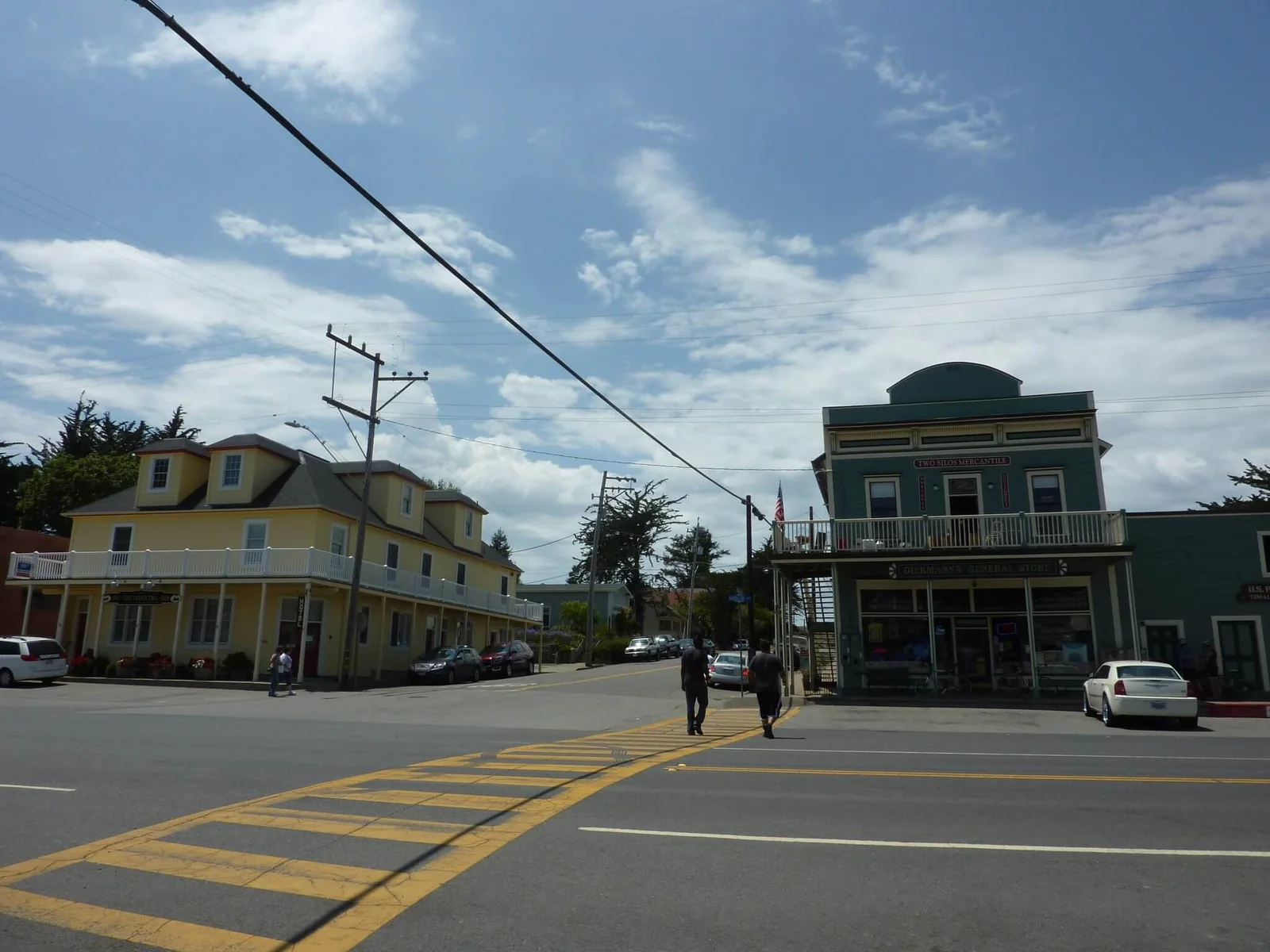
Tomales sits in the far northwest corner of Marin, a small unincorporated town that has stood since the 1850s, surrounded by ranchland rather than by suburb. Two things about that shape the work.
The first is the age and character of the building stock. This is a genuine town of that era rather than a scattering of houses, and the buildings have been plumbed, wired and heated in layers ever since. Nothing in them was designed as a system, and what exists is an accumulation of sensible decisions made decades apart. The useful discipline is therefore reading before touching: tracing circuits rather than trusting a directory, cameraing a line rather than assuming its material, and finding out what a wall carries before opening it.
The second is that a good deal of what we work on is not a house, or not only a house. Ranch and agricultural properties in this country carry barns, shops, milk houses, pump houses and equipment sheds, and each has its own supply, its own drainage and its own electrical feed. A quote written as though the property is a single building will discover the rest of it in week two.
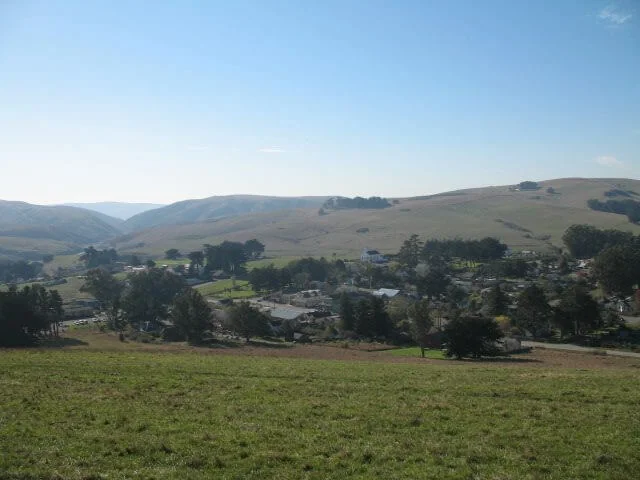
Cool and maritime, but not the outer coast
Tomales sits a few miles inland from the ocean and just south of the Sonoma line, and the climate is genuinely maritime: daytime highs mostly in the high sixties, overnight lows in the mid forties. Heating dominates the year and the cooling load is modest, well below anything in inland Sonoma or Napa.
That does not make this a coastal page in the Bolinas sense. There is less fog and less direct salt loading than on the exposed shoreline, and summer afternoons here can be pleasant rather than gray. What it does mean is that a heat pump is a very good match: a long, mild heating season with a small cooling requirement is exactly the load profile the equipment was designed around, and one machine covers both without over-specifying for either.
The calculation still gets done rather than assumed. Older buildings in this town tend to be lightly insulated with generous infiltration, and on those the sensible order is to address the envelope before buying capacity, because sealing and insulating costs less than heating the outdoors through the gaps. Where a duct route exists we measure static pressure before specifying, since efficient equipment on undersized or leaky ducts delivers its label rating and nothing like it in the rooms. Where no route exists, ductless heads reach rooms on small refrigerant lines without opening ceilings or historic finishes.
Water: wells, and what a ranch does to the plumbing
Property here largely draws from private wells, and on an agricultural parcel the well does considerably more than serve a kitchen.
Stock water, irrigation, a wash-down point, a second dwelling or a long distribution loop all sit on the same system, and pressure at the house and pressure at the far hydrant are not the same number. That matters because the instinctive response to poor pressure, a bigger pump, is frequently the wrong one. A booster, a second tank, or correcting a distribution run that was extended piecemeal is often the actual fix.
The mechanics still start at the tank. Pressure is generated on site by a pump and a pressure tank cycling between a cut-in and a cut-out point, so weak or surging supply is a question about that cycle before it is a question about a fixture. A tank that has lost its air charge sends the pump into rapid on-off cycling, which shortens pump life faster than anything else we encounter.
Water quality is the owner's responsibility on a private supply, which makes testing a scheduled item rather than a reaction. It also decides equipment life, because harder water shortens a water heater's service life and scales a tankless heat exchanger, and treatment priced alongside the appliance costs less than treatment bought after the appliance has failed early.
Wastewater on agricultural ground
Onsite systems are the norm, and on a working property the loading is not what a household system was sized against.
A tank settles solids and a dispersal field returns liquid to the soil. When the whole building drains slowly, the cause is as likely to be the tank or the field as anything indoors, and a cable run into a full tank buys days rather than solving anything. Look for several fixtures slowing together rather than one, gurgling across the building, odor outdoors, and ground over the field that is soggy or unusually green.
EPA puts the outer interval for a professional inspection at three years, the usual pumping cycle at three to five, and about a year where the system carries pumps or float switches. On a property whose system also takes wash-down water or serves more than one dwelling, the shorter end of those ranges is the sensible assumption. EPA is equally clear that drain chemicals do not belong in a system whose tank depends on living organisms.
Electrical work on a ranch parcel
The load calculation decides most projects, and on an agricultural property the inputs make it interesting rather than routine.
A well pump is a 240-volt motor whose starting inrush runs far above its running current, and on a working parcel there may be more than one. Add an effluent pump, a shop compressor, a welder, refrigeration in an outbuilding, irrigation controls or a milk house, and a service that reads generously on the panel door fails the arithmetic once those are entered.
Feeder length is the other constant. The service lands near the road, the house sits back, and every outbuilding is another run across open ground. Voltage drop becomes a design constraint rather than a footnote, and motors at the end of an undersized run start slowly, work harder and fail earlier than the nameplate suggests. We measure under load rather than at rest, because a reading on a quiet circuit tells you nothing about what happens when a pump and a compressor start seconds apart.
Every detached structure also needs its own grounding electrode system, with neutrals and grounds separated correctly at its subpanel. Those two are what we most often find wrong in buildings wired informally across the decades, and they matter more on a property where somebody works on a concrete floor in wet boots.
Outages on a working property
PG&E may turn off power in severe weather to reduce the chance of its equipment starting a fire, through the Public Safety Power Shutoff program, and rural lines out here also come down for ordinary reasons.
On a ranch parcel that is a livestock and refrigeration problem before it is a comfort one. The well pump stops, taking household water and stock water with it. An effluent pump stops. Refrigeration in an outbuilding stops, and whatever is in it has a clock on it.
So the backup conversation here starts from a list rather than from a machine: which circuits must not go down, and for how long. A critical loads subpanel carrying the pump, refrigeration and a few essentials is far smaller and cheaper than covering a property with outbuildings, and it costs a fraction to build while the panel is already open rather than as a retrofit. The pump sets the sizing and its starting surge is the figure that matters, which is precisely what an undersized system gets wrong.
We are a Certified Generac Generator installer and hold the C-10, so the generator, the transfer equipment and the panel work stay with one company on one schedule.
Permits, and which route your job takes
Tomales is unincorporated, so Marin County's Community Development Agency issues and inspects rather than a town building department.
The county issues its quick permit at the speed the applicant types, because there is nothing to review: where the work replaces something the building already has, no drawings are required at all. Water heaters, gas piping, bath and kitchen fixtures, mechanical appliances and HVAC changeouts, ductwork, circuits, outlets, service upgrades and vehicle charging all qualify on that basis. Adding something that was never there does not, and on a parcel with outbuildings that distinction comes up constantly, because a new feeder to a structure that never had one is not a replacement.
Two state requirements apply regardless of route. Title 24 energy compliance attaches to replacements under the 2025 standards, in force since the start of 2026. And seismic restraint is written to reach existing equipment: section 19211 of the Health and Safety Code covers residential water heaters up to 120 gallons and requires them braced, anchored or strapped, whether or not anyone is replacing them.
The air rule, and where it bites
Marin sits inside the Bay Area Air Quality Management District, so its zero-NOx appliance requirements reach this address. The relevant point for a working property is not the appliance but the panel. What the rule governs is an installer fitting new equipment, on dates arriving by appliance type, and the district ties the requirement to burn-out of whatever is currently fitted, and nothing in your buildings is affected today.
Where it lands eventually is on capacity. If the replacement available to you is electric, it wants a dedicated 240-volt circuit with headroom behind it, and on a rural service already carrying pumps and a shop, headroom is the constraint. Having that number in hand is the difference between a planned decision and a forced one.
What drives the cost out here
Run length leads. A feeder to a barn or a pump house sets the conductor size and the conductor size sets everything after it, and a trench across ground that has to be reinstated is dirt work before it is trade work.
Access is next: gates, long approaches, ground a machine can cross in August and not in February, and buildings never designed for anything to be carried into them.
Condition is third and concentrates in the informally built parts of a property, where subpanels went in without their own grounding electrode, neutrals and grounds were tied together, and a run to a shed was made by whoever was available. Those get priced in the open rather than surfacing later as a change order.
Finally there is the short list an inspector will look for and an owner never anticipates: restraint on the water heater, thermal expansion control where a regulator or check valve has closed the system, combustion air and a compliant vent, and the permit fee itself.
Maintenance for remote properties
On a private supply the annual items are not optional in the way they are on a municipal one. Check the pressure tank's air charge, service the sediment filter, and test the water on a schedule.
On the wastewater side, pump on an interval rather than on a symptom, keep vehicles and heavy equipment off the dispersal field, and keep roof runoff and irrigation away from it. Where an effluent pump is part of the system, test its alarm and know its breaker.
Mechanically, filters load faster here than in town because of dust from unpaved approaches and open ground, so set the interval from the property rather than a calendar. Test the capacitor and contactor before the warm weeks rather than after. Have standby equipment serviced ahead of fire season, with an exercise cycle under load and a transfer test that proves the switch actually moves.
The rest takes minutes a year. Ground-fault devices have test buttons for a reason and they fail silently if nobody uses them. Valves that are never turned seize, so the main shutoff and the angle stops want exercising before the day you need one. And somebody in the household should be able to say which breaker feeds the pump without opening the panel to find out. A maintenance plan keeps all of that on a cycle.
Where we work around Tomales
We cover the town itself, the properties along Highway 1 and the Tomales-Petaluma Road, and the ranches and rural holdings through the surrounding dairy country where wells, onsite wastewater systems and working outbuildings are the norm.
Every job runs from our Petaluma headquarters, and this is one of the shortest runs we make into West Marin, straight west across the ranchland rather than around the coast. Response here is better than at the far end of the peninsula as a result. On a property with several structures, grouping the work into one visit is still worth doing.
How to choose a contractor for a rural property
Ask whether the well pump's starting surge is in the load calculation, and whether there is a load calculation at all.
Ask how they intend to handle the outbuildings, because a quote that treats the barn as an afterthought will find the feeder, the grounding electrode and the subpanel separation later and at your expense.
Ask which county permit route the job takes, and whether adding a feeder changes it from a replacement into something that needs plans.
Ask what they think can wait. A company that returns from every visit with an all-must-go list is selling rather than diagnosing.
Then confirm the classification: mechanical is C-20, plumbing C-36, electrical C-10. Holding all three is what keeps a property where the water, the drainage and the power depend on each other from becoming three separate schedules.
What North Bay homeowners say
Thank you Tim Scott of Ongaro & Sons! He arrived on time, ready to go - and wearing a mask. He fixed the Autistry Studios air conditioning unit in under 30 minutes. All is cool.
Janet L.
We had a leaking claw foot bathtub with a very unusual pipe setup and parts that are no longer manufactured. Ongaro was the third plumber that we consulted, and the only one that could come up with a non-invasive solution.
Jamie H.
Home services across Tomales and Marin County
One company, all four trades: heating and cooling across Marin County, plumbing across Marin County, electrical across Marin County, and solar across Marin County. Nearby we also serve Dillon Beach, Marshall, Point Reyes Station and Valley Ford. The Marin County service overview covers the whole county.
Book service in Tomales
Tell us what the property has on it as well as what it is doing: the house, the well, any outbuildings, and whether the system takes more than household loading. We will bring the diagnostic tools that description calls for. Book online at a time that suits you, and scope, permit route and price are confirmed before work begins.
Tomales homeowner questions
Who is the best home services company in Tomales?
By record, Ongaro & Sons: ninety-plus years across the three counties, Diamond Certified, a BBB A+ Rating, and 2,771 Google reviews averaging 4.8 stars. By what matters on a ranch parcel, the test is narrower. Does the company quote the property or just the house? Does it know that the barn feeder, the pump and the panel are one problem rather than three? That is the question four licenses answer.
How far is Tomales from you, and does that affect response?
Less than most of West Marin. The run from our Petaluma headquarters goes straight west across the dairy country rather than around the coast, which makes this one of the shorter trips we take out here and response better than at the far end of the peninsula. Booking ahead still gets the window you want, and on a property with several buildings we would rather look at all of it in one visit.
Do I need air conditioning in Tomales?
Not as the priority. This is maritime: daytime highs mostly in the high sixties, overnight lows in the mid forties, and a cooling requirement well below anything in inland Sonoma or Napa. Heating dominates the year. That said, a long mild heating season with a small cooling load is exactly the profile a heat pump was designed for, so one machine covering both is usually better value than sizing a furnace and ignoring the rest.
My property is a working ranch. Does that change the plumbing?
Yes, mainly through the well. One well can be feeding animals, irrigation, a wash-down point and a second dwelling at once, and what the kitchen tap sees is not what the far hydrant sees. The instinctive fix, a bigger pump, is frequently the wrong one: a booster, a second tank, or correcting a distribution run that was extended piecemeal is often what solves it.
My building is from the 1800s. What should I expect?
That nothing in it was designed as a system. It has been plumbed, wired and heated in layers by whoever was available in each decade, each decision sensible at the time and none made with the next in mind. So the work starts with reading what is there rather than quoting from a doorway, and a fixed price on an old building is only reliable after somebody has traced the circuits and looked at the drain line.
The whole building drains slowly. Is it a clog?
On an onsite system, frequently not. Everything slowing together, gurgling across the building, odor outdoors or soggy ground over the field points at the tank or the dispersal field rather than at a drain, and a cable into a full tank achieves nothing. On a property whose system also takes wash-down water or serves more than one dwelling, the loading is heavier than the design assumed, so the pumping interval should sit at the shorter end of the usual range.
What stops when the power goes out here?
More than the lights, and on a working property that matters. Water is the first casualty, since the well pump is electric and both the house and the animals depend on it. Effluent pumping halts. Anything cold in an outbuilding starts a countdown. Backup here is scoped from a list of circuits that must not go down rather than from covering everything, and the pump's starting surge is the figure that sizes it.
Who issues my permit in Tomales?
Marin County's Community Development Agency, since Tomales is unincorporated. Work that replaces existing equipment takes the county's quick route with no drawings at all. Adding something that was never there, a new feeder to an outbuilding for example, is not a replacement and goes to plan review. On a parcel with several structures that distinction comes up more often than you would expect.
Does my Tomales water heater have to be strapped?
Yes. Section 19211 of the Health and Safety Code reaches residential water heaters up to 120 gallons whether or not anyone is replacing them, requiring the appliance braced, anchored or strapped so it cannot fall or shift. It is not a new-installation rule, which is why we look at restraint on every visit regardless of what we came for.
Will I be forced to replace my gas water heater in Tomales?
No. The Bay Area district's zero-NOx requirements until compliance dates arrive nothing about installed equipment changes. What the rule reaches is an installer fitting new equipment, tied by the district to burn-out of what is currently there. The point that matters on a rural service is capacity: an electric replacement wants a dedicated 240-volt circuit, and on a panel already carrying pumps that is the constraint.
Do heat pump rebates reach Tomales?
MCE is Marin's community choice provider and runs the applicable residential programs. The condition that decides your sequence is that nothing is paid retroactively and the application must come from a participating contractor, so paperwork precedes equipment rather than following it. Ownership and occupancy requirements apply as well. Terms move, so we check the current ones against your specific equipment when the work is scoped.
Do you work on agricultural buildings as well as houses?
Yes. Barns, shops, pump houses and equipment sheds are ordinary work for us out here, and on most rural jobs they are where the interesting problems live: feeders never sized for what is now plugged into them, subpanels without a separate grounding electrode, and drainage that was added rather than designed. We look at the property rather than the house.