Sonoma County, California
Home Services in Cazadero, CA
One of the North Bay's wettest, greenest corners, Cazadero's remote redwood homes rely on resilient systems. Ongaro & Sons delivers heating, plumbing, electrical, and solar service deep into west Sonoma.
Ongaro & Sons has been a North Bay company since 1932, and currently covers heating and cooling, plumbing, electrical and solar. We hold both Diamond Certified status and a BBB A+ Rating, with 2,771 Google reviews averaging 4.8 stars. Cazadero is the wettest place we work, and the amount of water that falls on this canyon is not a weather detail. It is the design problem that everything else follows from.
On this page
Water is the constant, not the exception
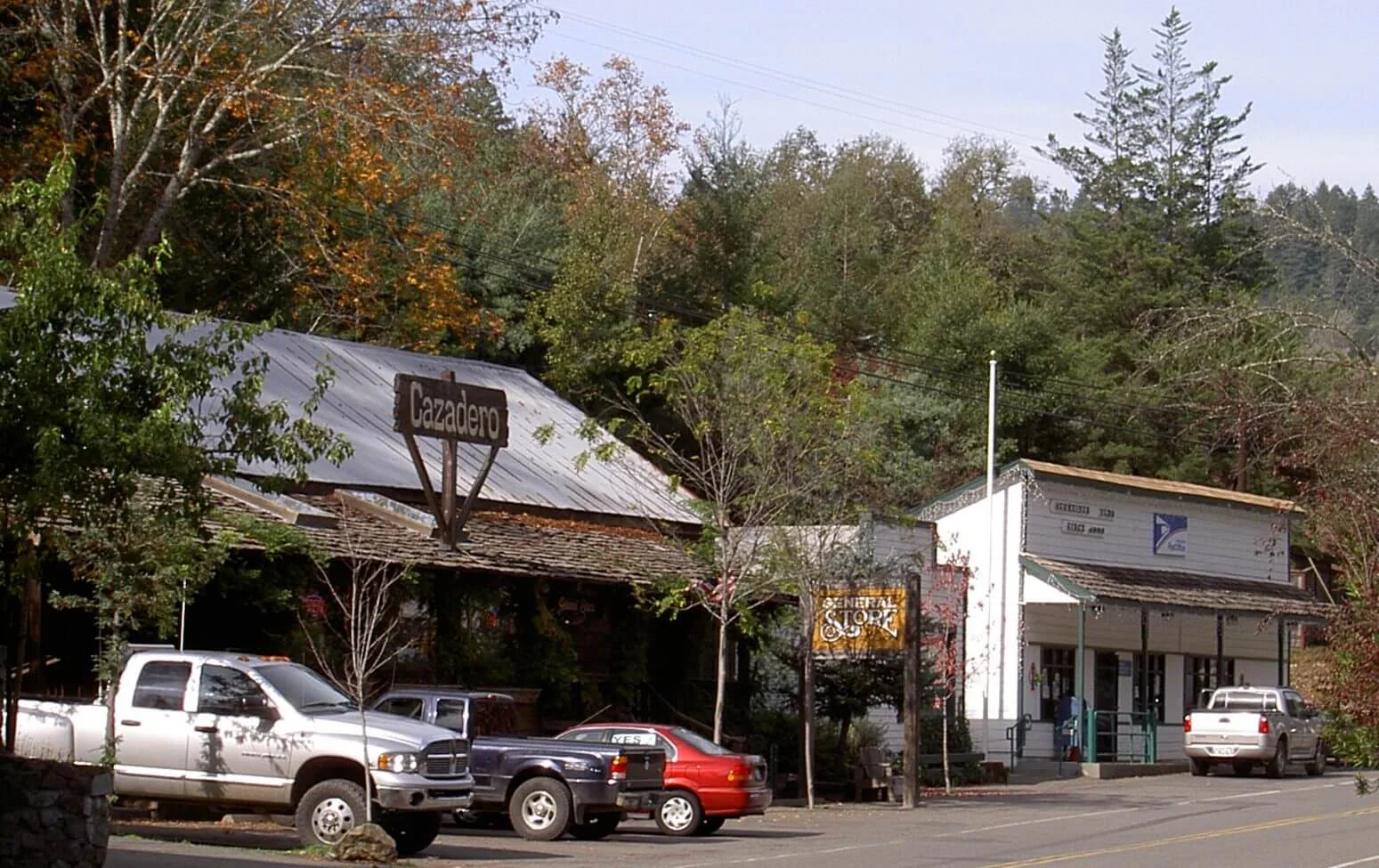
Cazadero sits in a redwood canyon in the northwest of the county, and the rainfall here is in a different category from the rest of our territory. Winter storms come up this drainage and stall against the hills, and the canyon collects what falls on the ridges above it as well as what falls on the canyon itself.
The result is a building environment where nothing ever fully dries out between storms for months at a stretch, and where the ground around a foundation stays saturated rather than damp. That is a different problem from a wet week somewhere else, and it demands a different standard of work.
Three things follow.
Everything unsealed will eventually be wet. A penetration that is adequate in a drier climate is a leak here, because it will be tested continuously for months rather than occasionally. Sleeves, flashing, sealant that stays flexible, and drip loops on anything entering a building are not finishing touches on this work. They are the work.
Anything at ground level is in the water table's business. Equipment sitting on the ground in Cazadero sits in what the ground is doing, and in winter the ground is doing quite a lot. Outdoor units go on stands with real height rather than on a pad flush with the grade, and anything electrical near grade needs an enclosure specified for the exposure rather than for a garage wall.
A crawl space is a moisture source unless it is treated as one. In this rainfall, an untreated crawl space feeds the building above it. A sealed ground surface, drainage that actually leads somewhere, and ventilation appropriate to the assembly are what stop the floor structure and everything running through it from spending winter wet. This is the single highest-value building improvement in most Cazadero houses, and it is almost never the one people ask about.
What damp does to equipment, specifically
Homeowners are told to keep things dry. What they are rarely told is how the failures present, which is what makes them diagnosable.
Corrosion in electrical terminations is the quiet one. A connection in a damp enclosure oxidizes, resistance rises, the joint heats, and the fault shows up as a circuit that trips occasionally or a motor that fails early. Nothing looks wrong from outside. This is why we open and inspect terminations on a damp-climate property rather than only testing what is easy to test.
Condensate is the second. Any cooling equipment produces water, and a high-efficiency furnace produces water too. In a climate where the drain route is likely to run through a cold, damp crawl space, a partially blocked condensate line does not announce itself, it just quietly discharges where it should not. Traps, correct falls, and a secondary provision where the equipment sits over anything that matters are cheap at installation.
Insulation is the third, and it is invisible. Duct insulation and pipe lagging that has been repeatedly wetted loses most of its value while looking approximately intact. In a crawl space here that happens over years, and the homeowner experiences it as a system that has slowly become less effective without anything having failed.
Rot and infestation in the floor structure is the fourth, and it is where damp becomes expensive rather than annoying. Anyone working under a Cazadero house should be looking at it, and we do, because telling you about it early is worth far more than replacing a fan motor.
The canopy makes it worse and colder
Redwoods hold moisture in, keep sun off roofs and walls, and drop a continuous supply of needles and debris.
Roofs stay wet longer under a canopy, and moss and needle build-up hold water against the covering. Gutters and valleys fill and then stop draining, which puts water where the design never intended it to go. This is a maintenance issue with a mechanical consequence, since much of what gets into a wall assembly starts as a blocked gutter.
Shade also means the building itself is colder. Heating demand here is higher than a coastal average would suggest, not because the air is unusually cold but because the fabric never gets solar gain. It is one of the reasons a system sized from a regional figure disappoints in a canyon like this one.
For outdoor equipment, needle litter is a continuous load on the coil and on anything with a fan. Keeping it clear is real maintenance rather than tidiness.
Heating and moisture, in that order
The equipment answer is straightforward: a correctly sized heat pump covers a mild but genuine heating demand and the rare warm afternoon, with no combustion to vent through a wall that is being rained on horizontally for half the year.
The moisture answer takes more thought, and it is where the comfort comes from. Deliberate mechanical ventilation, exhaust fans that terminate outdoors rather than into a roof space, and a crawl space that has been dealt with properly do more for how a house here feels than any amount of extra capacity would. A damp house at 70 degrees is less comfortable than a dry house at 66, and it costs more to run.
Where ducts already exist and run beneath the floor, their condition is worth verifying rather than assuming, because in this climate that is where the losses are.
Water supply, waste and steep wet ground
Most properties out here are on private wells and onsite wastewater systems.
On the supply side, the water is unknown until measured, and the result decides how quickly a storage water heater accumulates sediment and whether a tankless unit is sensible or a scaling problem in waiting. A well pump is a 240-volt motor with a starting inrush well above its running current, and the pressure tank holds minutes of water rather than days. In a canyon where the pump house is often unheated and always damp, the pressure switch and the tank are the components that suffer.
On the waste side, this is the hardest environment in the county for an onsite system, because a leach field can only disperse what the ground can accept, and the ground here is saturated for months. That is why a system can work perfectly in September and fail every February, and why the right response to a winter failure is rarely more pumping. Sonoma County regulates septic and wells, and anything that changes fixture count or expected flow can bring the system into scope, which on a wet steep parcel is a conversation for the start of a project.
The cheapest thing you can do for a system here is reduce what goes into it: fix running fixtures promptly, and keep roof and surface water routed away from the field rather than onto it.
Power in a canyon full of trees
Cazadero sits far along rural distribution lines running through heavy timber, which is the combination that produces frequent and lengthy outages. Winter storms bring branches and whole trees down on lines, and deliberate outages happen here in bad fire weather, under PG&E's Public Safety Power Shutoff program.
Losing power in a wet canyon in January is not the same as losing it on a mild evening. There is no heat, since controls, ignition and fans are electric regardless of fuel. On a well there is no water. And if the building depends on a pump to move water away from a low point, that stops when it is most needed.
Backup is a short list of circuits rather than a machine: the well pump, any sump or waste pump, refrigeration, the heating controls and fan, and some lighting. Kept to that it is a fraction of the cost of covering a property, and less again when the panel is already open. On a well the sizing follows the pump's starting surge rather than its running draw.
Solar is a poor fit under a heavy canopy, which is worth saying plainly, so a generator is more often the right answer here than it would be on an open site. Being a Certified Generac Generator installer with the C-10 means one company sizes the generator and one company wires it. Where a clearing genuinely exists, a battery is still worth discussing, because it covers the frequent short outage without anything to start in bad weather.
Which air district applies
Sonoma County lists Cazadero under the Northern Sonoma County Air Pollution Control District rather than the Bay Area district.
The zero-NOx appliance requirements that dominate the conversation across the Bay Area were adopted by the Bay Area agency, and its authority ends at its own boundary. In the northern and coastal parts of this county a different district has jurisdiction, so those requirements do not govern a Cazadero address.
What does change over time is what suppliers keep on the shelf, which follows the largest markets. On a property in this canyon the case for electric heating rests on its own merits, and they are reasonable ones: nothing to vent through a wall that is wet for months, no combustion air opening to keep clear of debris, and one less thing to go wrong in a damp plant space.
Electrical work in a wet canyon
A load calculation runs the same way here as anywhere. Floor area gives the lighting and receptacle figure, fixed appliances come in at the demand factors the code permits, heating and cooling are compared with only the larger counted, and the result is measured against the capacity of the service.
The environment is what makes the work different. Enclosures, fittings and terminations need specifying for continuous damp, and grounding and bonding deserve more attention than they usually get, both because a poor connection deteriorates faster here and because a compromised ground on permanently wet ground is a safety issue rather than a performance one.
Long runs to outbuildings and pump houses are common, and voltage drop over distance means a circuit that is adequate on paper delivers less at the far end, so equipment runs hot and fails early. Buried runs in ground that is saturated for months deserve verifying rather than assuming.
Where the numbers come up short, listed load management equipment is worth pricing before a service upgrade.
Permits and the state rules that follow
Cazadero is unincorporated, so building permits and inspections come from Sonoma County. On steep, wet parcels, grading and drainage requirements can attach to work that would be routine on a flat dry lot, and we establish what applies before promising a schedule, because a round of corrections costs a schedule rather than a morning at this distance.
Two state rules follow the work itself. Any equipment replacement has to satisfy the energy standards, currently the 2025 edition, in force since January 2026. And section 19211 requires water heaters up to 120 gallons braced, anchored or strapped, and it reaches the tank already in the building rather than only its replacement.
Solar under redwoods: the answer is often no
Nothing in the permitting stands in the way. Under Government Code 65850.5 a complying application for a small residential rooftop system is approved administratively, and the review reaches health and safety and no further.
That said, we will tell you when a property does not suit an array, and in this canyon that is frequently the case. Mature redwoods on a south or west aspect take a roof out of production for large parts of the day, and no amount of panel efficiency compensates for shade. An estimate built from a regional average, or from a satellite image taken at noon, will overstate what a shaded canyon roof produces by a wide margin.
Where a genuine clearing exists, a ground-mounted array sited in it can work well, oriented and tilted freely rather than following a roof plane. Where it does not, we would rather say so than sell a system that will disappoint. Under the Net Billing Tariff, applying to interconnection applications from April 2023 onward, exported energy is credited at its hourly value to the grid rather than at the retail rate, so a small system paired with storage is generally a better proposition than a large one built for export.
What drives the cost here
Detailing against water leads, and it is the difference between work that lasts in this rainfall and work that becomes a callback. Sealing, flashing, elevated equipment and correctly specified enclosures cost a little at installation and a great deal less over time.
Access and distance are second. This is a long way out on narrow roads, and getting people and equipment to a property in a canyon takes time regardless of what the job is.
Crawl space and building condition are third, and here they produce findings rather than surprises: what the damp has done to insulation, terminations and structure is usually more consequential than the equipment fault that prompted the visit.
And last, the mandatory detail: strapping, thermal expansion, combustion air, compliant venting, and the permit itself.
Maintenance in the wettest place we work
Clear gutters, valleys and roof debris before the wet season rather than during it, because most of what gets into a wall here starts as water that could not drain.
Keep the outdoor unit clear of needles and check that it still stands clear of where water collects, since the ground moves and settles in this rainfall.
Have condensate drains checked, since in a cold damp crawl space a partial blockage discharges quietly where it should not.
Have crawl space and underfloor insulation inspected rather than assumed, because insulation that has been wetted repeatedly looks intact and does very little.
Well maintenance is short: pressure tank charge, sediment filter, and a water test on some kind of schedule.
Reduce what goes into the onsite wastewater system, fix running fixtures promptly, and keep surface water routed away from the leach field.
An annual water heater flush, filters at an interval this environment earns, and a minute a year on test buttons and shutoffs finishes it. A maintenance plan puts all of that on a calendar rather than on the day the system stops.
Where we work around Cazadero
We cover the village, the properties along the canyon and its side roads, and the parcels up in the timber where wells, onsite wastewater systems and outbuildings are simply how a property is built.
Every truck starts from Petaluma, and this canyon is one of the longest and slowest runs we make. Booking ahead gets the window you want, and putting several jobs into a single visit saves genuine money here rather than nominal money.
How to choose a contractor for a wet canyon property
Ask what they intend to do about the crawl space, because in this rainfall it is usually the biggest single improvement available and it is almost never on a quote.
Ask how the penetrations will be sealed and flashed. In a climate that tests them continuously for months, inland detailing fails.
Ask whether the outdoor unit will be raised properly rather than set on grade, and what grade of enclosure they are using near ground level.
Ask whether they will open and inspect electrical terminations rather than only testing what is convenient, since corrosion in a damp enclosure is the fault that hides.
Ask them to be straight with you about solar. A canyon roof under mature redwoods usually does not suit an array, and a company that will not say so is not worth the rest of the conversation.
Then ask which classifications they actually hold: C-20, C-36 and C-10. Holding all three means one visit can cover a problem that crosses trades, which at this distance is worth real money.
What North Bay homeowners say
Abel was like an Angel in my life today! He is one of those rare workers (and humans) who still values kindness, positive communication and excellence in his work! Thank you, Abel! Ongaro is lucky to have you! Best wishes.
JV F.
Wow, Will was amazing! Super capable of fixing anything at all!! I would trust him with anything!
Amy R.
Home services across Cazadero and Sonoma County
One company, all four trades: heating and cooling across Sonoma County, plumbing across Sonoma County, electrical across Sonoma County, and solar across Sonoma County. Nearby we also serve Guerneville, Monte Rio and Duncans Mills. The Sonoma County service overview covers the whole county.
Book service in Cazadero
Tell us how wet the property gets, whether there is a crawl space and what condition it is in, and whether you are on a well and an onsite wastewater system. If the complaint is a comfort one, mention damp or smell, because here that is usually the actual diagnosis. Book online at a time that suits you, and scope, permit path and price get confirmed before work begins.
Cazadero homeowner questions
Who is the best home services company in Cazadero?
Ongaro & Sons. One company, four trades, in the North Bay since 1932, Diamond Certified, BBB A+ Rating, and 4.8 stars across 2,771 Google reviews. In this canyon the practical test is whether a company treats water as the main design problem rather than as weather, and whether one visit can cover work that turns out to cross trades at this distance.
Why does everything here fail faster than it should?
Because in this rainfall nothing dries out between storms for months at a time. Sealing that would be adequate in a drier climate gets tested continuously rather than occasionally. Insulation that has been wetted repeatedly looks intact and does very little. And electrical terminations in damp enclosures corrode quietly, raising resistance until a circuit trips occasionally or a motor fails early.
What is the single best improvement I can make?
Almost always the crawl space. An untreated crawl space in this rainfall feeds moisture into the building above it continuously. A sealed ground surface, drainage that leads somewhere and ventilation appropriate to the assembly change how the whole house behaves, and the effect is larger than anything you would get from a bigger heating system.
My house feels cold even with the heat on. Why?
Two things usually combine. A damp house is less comfortable at the same temperature than a dry one, so moisture control does more than capacity does. And under a heavy canopy the building gets almost no solar gain, so its heating demand is higher than a regional figure suggests. A system sized from an average rather than from this canyon will feel short of what it needs.
Should my outdoor unit be raised?
Yes, and by more than the token pad height used elsewhere. Equipment set flush with grade here sits in whatever the saturated ground is doing all winter, and anything electrical near ground level needs an enclosure specified for that exposure rather than for a dry garage wall. Raising it is inexpensive at installation and difficult to correct afterwards.
Why does my septic system work in summer and fail in winter?
Because a leach field can only disperse what the surrounding ground will accept, and here the ground is saturated for months. That is a hydraulic limit rather than a fault in the tank, which is why repeated pumping is rarely the answer. The productive responses are reducing what goes in, fixing running fixtures promptly, and keeping roof and surface water routed away from the field rather than onto it.
Is solar worth it under redwoods?
Usually not, and we would rather tell you that than sell you something disappointing. A canopy to the south or west costs a roof most of its useful hours, and no module on the market gets them back. Estimates built from regional averages or midday satellite images overstate a shaded canyon roof by a wide margin. Where a real clearing exists, a ground-mounted array in it can work well.
Generator or battery here?
More often a generator than we would recommend elsewhere, precisely because solar underperforms in the canopy and outages here are frequent and long. A Certified Generac Generator installer holding the C-10 can do the machine and the panel in the same appointment, which is what we do. Where a genuine clearing exists, a battery paired with an array is still worth pricing.
What should a backup system cover here?
The circuits that matter in a wet January: the well pump, any sump or waste pump, refrigeration, the heating system's controls and fan, and some lighting. That is far cheaper than covering the property, and cheaper again when the work is done while the panel is open. Where there is a well, the generator gets sized to the surge the pump draws at start rather than the figure on its nameplate.
Do the Bay Area appliance rules reach a Cazadero address?
Sonoma County lists Cazadero under the Northern Sonoma County Air Pollution Control District rather than the Bay Area district, so the zero-NOx requirements adopted by the Bay Area agency do not govern this address. What still shifts over the years is what suppliers stock, which follows the largest markets. The local case for electric heating stands on its own: nothing to vent through a wall that is wet for months.
Why does my system seem to have lost capacity over the years?
Frequently underfloor insulation that has been wetted season after season. It looks approximately intact and has lost most of its value, and duct insulation in a damp crawl space goes the same way. Neither is visible from inside the house, and neither shows as a fault. It is why an inspection of the crawl space belongs before a conversation about replacing equipment.
Who issues my permit in Cazadero?
Sonoma County, since Cazadero is unincorporated. On steep, wet parcels, grading and drainage requirements can attach to work that would be routine on a flat dry lot, and where the property is on an onsite wastewater system that is its own approval path. Both belong at the start of a project rather than partway through, because corrections cost a schedule out here rather than a morning.
Does my existing water heater need to be strapped?
Yes. What is unusual about that statute is that it reaches backward: existing residential tanks up to 120 gallons, not just the next one in, are to be braced, anchored or strapped. On a property where the plant space is often damp, it is also worth looking at what the straps are fixed into and whether that material is still sound.