Sonoma County, California
Home Services in Two Rock, CA
In the rural ranchland west of Petaluma, Two Rock's country properties depend on resilient systems. Ongaro & Sons provides heating, plumbing, electrical, and solar service built for Sonoma's coast-side countryside.
A North Bay company since 1932, Ongaro & Sons today runs heating and cooling, plumbing, electrical and solar under a single license. We are Diamond Certified, hold a BBB A+ Rating, and average 4.8 stars across 2,771 Google reviews. Two Rock is dairy and ranch country, and on a working agricultural property the electrical supply is frequently not the one a residential contractor is expecting.
On this page
Three-phase supply changes the residential answer
A house in town is fed single-phase, and every piece of residential equipment is designed for that. Working dairy and ranch properties are different, because the equipment that runs a dairy, a large pump or a shop is often three-phase, and where a property has three-phase service the house sits alongside it rather than separately from it.
That matters more than it sounds, and it is the sort of thing a contractor who works only in subdivisions will not think to ask about.
Residential equipment is single-phase, and it stays single-phase. A furnace, a heat pump, a water heater or a range is fed from one phase of the supply plus neutral. So the question is not whether your house can use three-phase power, it is which phase it is connected to and whether the loads across the three are reasonably balanced.
Imbalance is a real and diagnosable condition. When the loads across the three phases are unequal, voltage on the heavily loaded phase sags. If the house sits on that phase, the equipment in it runs on low voltage without anybody connecting the two facts. Motors then run hot and fail early, and the failures look random. Measuring across all three phases under load rather than checking one is how that gets found.
Adding a large load means choosing a phase deliberately. A heat pump or a vehicle charger is a substantial new single-phase load, and putting it on whichever phase is convenient rather than whichever is least loaded is a decision made by default. On a property with agricultural equipment, that decision is worth making on purpose.
Some equipment on the property is three-phase and some is not, and they are not interchangeable. A three-phase motor cannot run on single-phase, and a single-phase motor should not be fed from a three-phase supply incorrectly. Where a phase converter is in use to run three-phase equipment from a single-phase service, that is its own arrangement with its own behavior, and it belongs in the assessment rather than being ignored.
We establish what the service actually is before quoting anything on a ranch property, because the answer changes the electrical scope and sometimes the equipment.
The whole parcel is the electrical system
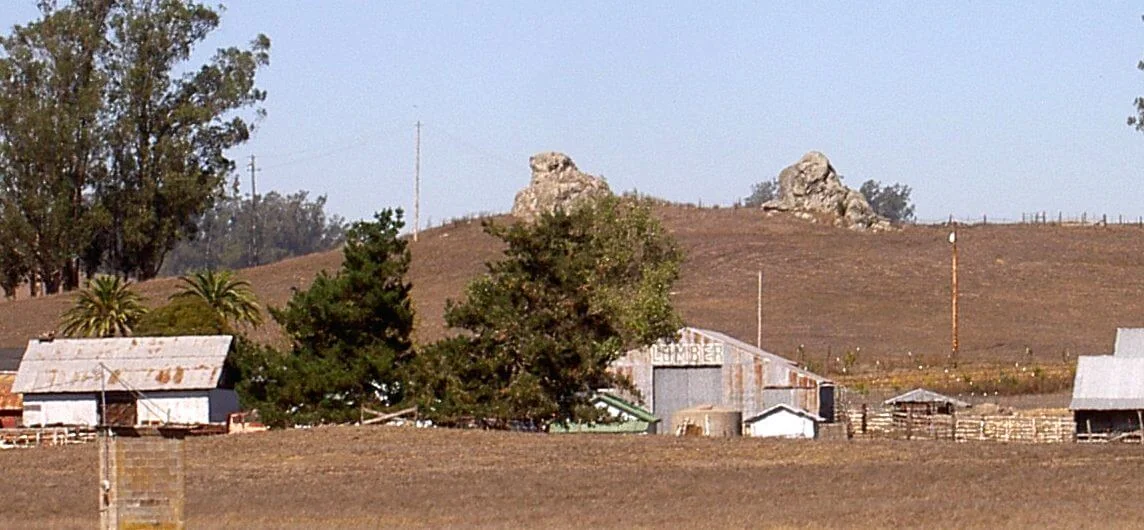
Even where the supply is conventional, an agricultural property is not a house with a large yard.
The load calculation itself is standard: floor area gives the lighting and receptacle figure, fixed appliances are added at their code demand factors, only the greater of the heating or cooling figure counts, and the sum is compared with the service capacity. What is hard is knowing what belongs in it.
A working property may have a well pump, stock water, irrigation, a milking or processing operation, a shop, a barn, gate operators, and several subpanels feeding buildings a long way from the meter. Some of that runs seasonally, some runs at particular hours, and almost none of it is visible from a reading taken on a quiet afternoon. The assessment has to account for those loads by their ratings or by measuring while they run, or it describes a property that does not exist.
Distance then does the rest of the damage. Voltage drop over a long run means a circuit adequate on paper delivers less at the far end, and equipment on low voltage runs hot and fails early. On a ranch with buildings hundreds of feet apart, conductor sizing on those runs is a calculation rather than a habit, and it is worth getting right the first time because nobody wants to trench twice.
Buried runs to outbuildings that were installed decades ago deserve verifying rather than assuming, and the older buildings bring the usual findings of their age: panels amended repeatedly by different hands and ungrounded two-wire circuits behind modern-looking receptacles.
What that means for the house
The practical upshot for a homeowner on a ranch property is a short list.
Ask for the assessment to cover the whole service rather than the dwelling. A house that appears to have plenty of headroom can be sharing a supply with equipment that takes most of it for part of the year.
Where the calculation comes up short, listed load management equipment lets a new load share what is already installed, and it is frequently cheaper and quicker than a service upgrade. On a property where a service upgrade means utility work across a distance, that difference can be substantial.
And where a new large load is going in, have the phase chosen deliberately if the supply is three-phase, because it costs nothing at the time and cannot be changed later without work.
Exposure, wind and dust
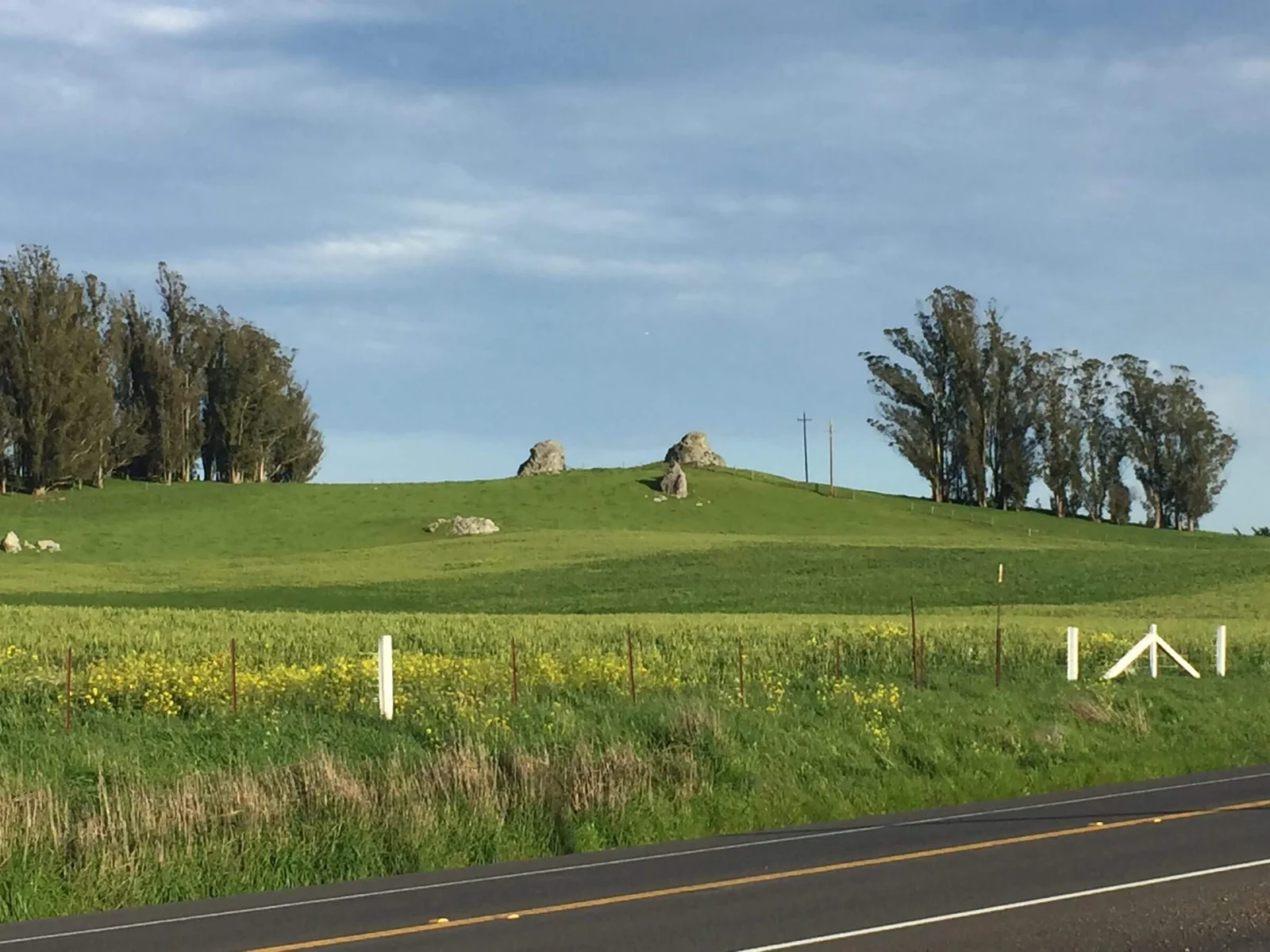
Two Rock sits in open rolling grassland west of Petaluma with almost no shelter. The wind is close to constant, it carries dust off worked ground and unpaved drives, and this close to the coast it carries some salt as well.
Dust loads filters faster than any standard interval assumes, and a loaded filter restricts airflow, raises static pressure across the system and costs capacity. It also settles on the outdoor coil, and a unit rejecting heat through a fouled coil is fighting a deficit that has nothing to do with its rating. Both are maintenance items here rather than faults.
Wind and salt argue for coil treatment and hardware specified for the exposure, and for siting the outdoor unit with some shelter from the prevailing direction while keeping the manufacturer's clearances.
The climate itself is mild and marine-influenced, with modest heating demand and little call for cooling, which makes a correctly sized heat pump a straightforward answer. The care goes into not oversizing, since in a mild climate a system with more capacity than the building needs cycles on and off rather than running steadily, which handles moisture badly and leaves rooms uneven.
Water, backflow and waste
Ranch properties here typically draw from private wells, and often the same source serves more than the house.
Test the water, because it is unknown until measured, and the result decides how quickly a storage water heater accumulates sediment and whether a tankless unit is a sound choice or a scaling problem in waiting.
Where stock water, irrigation or any non-potable use shares a supply with the dwelling, the separation and the backflow protection are what keep the domestic side clean. On a property whose plumbing has been extended over decades by different hands, that gets verified on site, because it is an arrangement that is either correct or genuinely hazardous.
A well pump is a 240-volt motor with a starting inrush well above its running current, which puts it at the center of both the electrical assessment and the backup conversation. The pressure tank holds minutes of water rather than days.
Sonoma County regulates septic systems and wells, and anything changing fixture count or expected flow brings the system into scope, which belongs at the start of a project.
Outages on an exposed line
Long overhead lines across open country come down in weather, and PG&E runs a Public Safety Power Shutoff program, which means planned outages when fire conditions are severe.
On a ranch the consequences run past the house. No power means no well pump and therefore no water, for the household and for anything else that depends on it. It means no heat regardless of fuel, since controls, ignition and fans are electric.
Backup gets scoped as a list of circuits rather than a machine, and on a working property that list needs to be drawn up with the operation in mind rather than only the dwelling: the pump first, then refrigeration, the heating controls and fan, and lighting. Kept tight it is a fraction of the cost of covering a property, and less again when the panel is already open. The pump usually sets the sizing through its starting surge.
Open ground suits both approaches here. A generator can be sited with genuine clearance from structures, and an unshaded parcel is a strong candidate for an array with storage. We are a Certified Generac Generator installer and hold the C-10, so whichever route suits, the machine, the transfer equipment and the panel work stay on one schedule with one company.
Which air district, and what it requires
Sonoma County publishes which of its two air districts covers each community. Two Rock is not named on either published list, and neighboring communities differ, with Valley Ford listed as falling partly in each district.
So this is a lookup rather than an assumption. The county publishes an interactive map for checking an address, and that is what settles it for a Two Rock parcel.
Where the Bay Area district's zero-NOx appliance requirements do apply, they fall on whoever installs new equipment, phase in one appliance category at a time, and are tied by the district to burn-out of what is already there, so nothing currently in your building is affected. What changes over the years, regardless of jurisdiction, is what suppliers stock, and since a compliant unit is in practice electric, capacity becomes the deciding factor. On a property with agricultural loads that is a calculation rather than a glance.
Permits and the state rules
Two Rock is unincorporated, so building permits and inspections come from Sonoma County, and where a property is on an onsite wastewater system that is a separate approval path.
Two things apply no matter who signs off the permit. Change out a piece of equipment and the energy standards govern the result, in the 2025 edition that has been enforced since January 2026. Then there is earthquake restraint under section 19211, covering any water heater up to 120 gallons and drafted so that it captures the tank you own now, not merely the one you buy next.
Solar on ranch land
Before the design, the permitting. Government Code 65850.5 requires an expedited process for small residential rooftop systems, and a review that stays inside health and safety.
This is good ground for it. There is little shading, roofs on houses and outbuildings are usually simple, and a ranch parcel often has room for a ground-mounted array that can be oriented and tilted freely rather than following a roof plane.
Two local factors shape the design. Wind loading on an unsheltered site is an engineering input rather than an afterthought, and mounting hardware needs specifying for wind and for the salt this air carries. And the consumption profile of a working property, with pumps and equipment running during daylight, suits current export rules well: interconnection applications from April 2023 onward fall under the Net Billing Tariff, where exports are credited at their hourly value to the grid rather than at the retail rate, so daytime consumption is worth more than daytime export.
What drives the cost here
Establishing what the service is leads, and on a ranch property that is real work rather than a formality. Whether the supply is single or three-phase, what is connected, what runs seasonally, and what condition the buried runs are in all change the answer.
Distance is second. Buildings sit far apart, runs are long, and trenching across ground that has to be reinstated takes time.
Exposure is third: coil treatment, hardware for wind and salt, and filter intervals that reflect what the property produces.
Last come the small mandatory items every inspector checks and nobody budgets: the water heater restrained, expansion once the system is closed, adequate combustion air where there is combustion, compliant venting, and the permit fee.
Maintenance on a working property
Change filters on the interval the property earns rather than the one printed on the box, and use the filter the equipment was designed for. Over-restrictive filtration on a system not built for it makes the airflow problem worse.
Have the outdoor coil cleaned as a scheduled item, since dust here is continuous and a fouled coil is a capacity loss you have already paid for.
Have voltage checked under load, and across all three phases where the supply is three-phase, because imbalance is diagnosable and only shows up while things are running.
On the well, check the pressure tank's air charge, service the sediment filter and test the water periodically. Have any backflow protection between non-potable use and the domestic supply verified rather than assumed.
Flush the water heater annually, and spend a minute a year on ground-fault test buttons and on the shutoffs that need to turn when it matters. A maintenance plan keeps the seasonal half on a calendar.
Where we work around Two Rock
We cover the ranches and dairies along the roads through this country, the houses on them, and the surrounding parcels where wells, onsite wastewater systems and outbuildings are simply how a property is built.
Every truck starts from Petaluma, which puts Two Rock among the closer parts of our west county work. Booking ahead still gets you the window you want, and grouping several items into one visit is worth doing on a spread-out property.
How to choose a contractor for a ranch property
Ask whether they have established what the service is before quoting. On a working property, single-phase and three-phase are different situations and a contractor who has not asked has not looked.
Ask whether the assessment covers the whole parcel or only the dwelling, since seasonal and agricultural loads are invisible from a quiet meter and are frequently what the calculation runs into.
Ask, if the supply is three-phase and a large new load is going in, how they intend to choose which phase it lands on. It costs nothing to decide deliberately and it cannot be changed later without work.
Ask how long runs to outbuildings were sized, because voltage lost inside the property is what kills motors at the far end.
Ask what filter interval they recommend and why, since a standard interval is the wrong answer on a dusty property.
Last, ask which classifications they hold, and expect C-20, C-36 and C-10. Holding all three lets one visit cover a problem that crosses trades, which on a property this size is worth real money.
What North Bay homeowners say
Excellant service. Josh is great. Got a/c bak on. Explained everything.
Val S.
Zachary from Ongaro was on time and got the job done. Always happy with ongaro heating.
Diana G.
Home services across Two Rock and Sonoma County
One company, all four trades: heating and cooling across Sonoma County, plumbing across Sonoma County, electrical across Sonoma County, and solar across Sonoma County. Nearby we also serve Petaluma, Valley Ford and Bodega. The Sonoma County service overview covers the whole county.
Book service in Two Rock
Tell us what is on the property besides the house, whether the service is single or three-phase if you know, and what the system is doing. If something has failed more than once, say so, because on a ranch a repeat failure usually points at the supply or the run rather than the appliance. Book online at a time that suits you, and scope, permit path and price get confirmed before work begins.
Two Rock homeowner questions
Who is the best home services company in Two Rock?
Ongaro & Sons. A North Bay company since 1932 with four trades on a single license, Diamond Certified, BBB A+ Rating, and an average of 4.8 stars from 2,771 Google reviews. On a working property the practical test is whether a company establishes what the electrical service is before quoting, because on a ranch that answer changes the scope and sometimes the equipment.
My property has three-phase power. Can the house use it?
Not directly, and that is normal. Residential equipment is single-phase, so the house is fed from one phase of the supply plus neutral. The useful questions are which phase it is on and whether the load across the three is reasonably balanced, because those determine what voltage the house sees.
What is phase imbalance and why should I care?
When the loads across the three phases are unequal, voltage on the heavily loaded phase sags. If your house is on that phase, everything in it runs on low voltage without anybody linking the two facts, and motors run hot and fail early. The failures look random. Measuring across all three phases while things are running is how it gets found, and checking one phase at rest is how it gets missed.
Does it matter which phase my new heat pump goes on?
Yes, and it costs nothing to get right on the day. A charger or a heat pump lands on one leg of a three-phase service, and letting the installer pick the nearest leg rather than the least loaded one is a choice nobody made on purpose. Undoing it later is real work. On a property with agricultural equipment on the same service, it is worth deciding deliberately.
I have a phase converter for shop equipment. Is that a problem?
Not a problem, but it belongs in the assessment rather than being ignored. A converter running three-phase equipment from a single-phase service has its own behavior and its own effect on the supply, and an assessment made without accounting for it will not describe your property accurately. We ask about it rather than discovering it.
Why did my electrician say the service was fine when it clearly is not?
Very likely because the reading was taken with the property quiet. Irrigation, stock water, a well pump, a shop and outbuilding subpanels can take a large share of the service for part of the year and be invisible the rest of the time. Seasonal loads have to be counted by their ratings or measured while they run, or the calculation describes a property that only exists in the off-season.
Equipment at the far end of my property keeps failing. Why?
Usually voltage lost over the run feeding it. A circuit adequate on paper delivers less at the end of a long distance, and a motor on low voltage runs hot and fails early. It presents as repeated failures rather than an obvious fault, which is why it goes undiagnosed for years. Conductor sizing on long runs is a calculation, and worth getting right first time given what trenching costs.
How often should I really change filters here?
More often than the box says. Wind across worked ground and unpaved drives puts far more dust into the air than a suburban street does, and a loaded filter restricts airflow, raises static pressure and costs capacity. Use the filter the equipment was designed for at an interval this property earns, rather than reaching for the most restrictive filter available, which makes the airflow problem worse.
Why does my air conditioning underperform on hot days?
Frequently a fouled outdoor coil. Dust settles on it continuously here, and a unit rejecting heat through a dirty coil is fighting a deficit that has nothing to do with its rated capacity. Coil cleaning is a scheduled service item on a property like this, and it is one of the cheapest ways to recover performance you have already paid for.
My irrigation and the house share a water source. Is that safe?
Only if it has been done correctly. Where a non-potable use shares a supply with the domestic side, the separation and the backflow protection are what keep the drinking water clean, and on a property whose plumbing has been extended over decades that is worth verifying rather than assuming. It is either right or hazardous, with very little in between.
Which air district covers a Two Rock property?
That has to be looked up. Two Rock is not named on either of the county's published district lists, and neighboring Valley Ford is listed as partly in each. The county publishes an interactive map for checking an address, and we use it rather than guess. Anyone who answers confidently without checking is guessing on your behalf.
What should backup cover on a working property?
The list has to be drawn up with the operation in mind rather than only the house. The pump comes first, since losing it means losing water for everything, then refrigeration, the heating system's controls and fan, and lighting. Kept tight, that is a fraction of what covering a property costs, and the pump generally sets the sizing through its starting surge rather than its running draw.
Is this good ground for solar?
Yes, comparatively. Little shading, simple roof planes on houses and outbuildings, and usually room for a ground-mounted array that can be oriented and tilted freely. Wind loading on an open site is an engineering input, and hardware needs specifying for wind and salt. The consumption pattern of a working property, with pumps running in daylight, suits current export rules well.