Napa County, California
Home Services in Calistoga, CA
Known for its hot springs and upvalley heat, Calistoga puts real demands on home cooling. Ongaro & Sons keeps Calistoga comfortable with expert air conditioning, heating, plumbing, and electrical service.
Ongaro & Sons goes back to 1932 in the North Bay. The present service list is heating and cooling, plumbing, electrical and solar. We are Diamond Certified and holders of a BBB A+ Rating, averaging 4.8 stars over 2,771 Google reviews. At the top of the valley the equipment has the hardest job of anywhere we work, and the reason four trades matter is that the panel is usually what decides whether the mechanical answer is even available.
On this page
The largest day-to-night swing we design for
Calistoga sits at the north end of Napa Valley, and its climate is the opposite of nearly everywhere else we serve. Summer days push past ninety regularly and can peak above a hundred, while nights fall into the low forties as cool Pacific air draws down through the gap. Both numbers are real, and the distance between them is the point.
That swing changes how a system should be specified, and it is worth spelling out because most equipment advice is written for places that do not have it.
Peak matters, but so does what happens for the other twenty hours. A system sized only against the hundred-degree afternoon spends most of the season running far below its capacity, and equipment running far below capacity short-cycles. Variable-capacity equipment is worth genuinely more here than in a mild climate, because it can meet the afternoon and then throttle down rather than switching on and off through a mild evening.
The night is an asset rather than a problem. In a climate where outside air drops into the forties overnight, a well-sealed house with good controls can carry a meaningful part of its own cooling load through thermal mass and night ventilation. That is not a substitute for equipment, but it does mean the envelope work has a bigger payoff here than it does somewhere the night never cools.
Both seasons are real. Winter is not severe but it is genuine, and combined with an actual cooling season it makes the case for a properly sized heat pump doing both jobs strong rather than marginal.
Sizing gets done on the building rather than on the region. Calistoga has intact Victorian-era housing alongside later construction, and a Victorian with single glazing and light insulation behaves nothing like a newer house on the same street when it is a hundred outside.
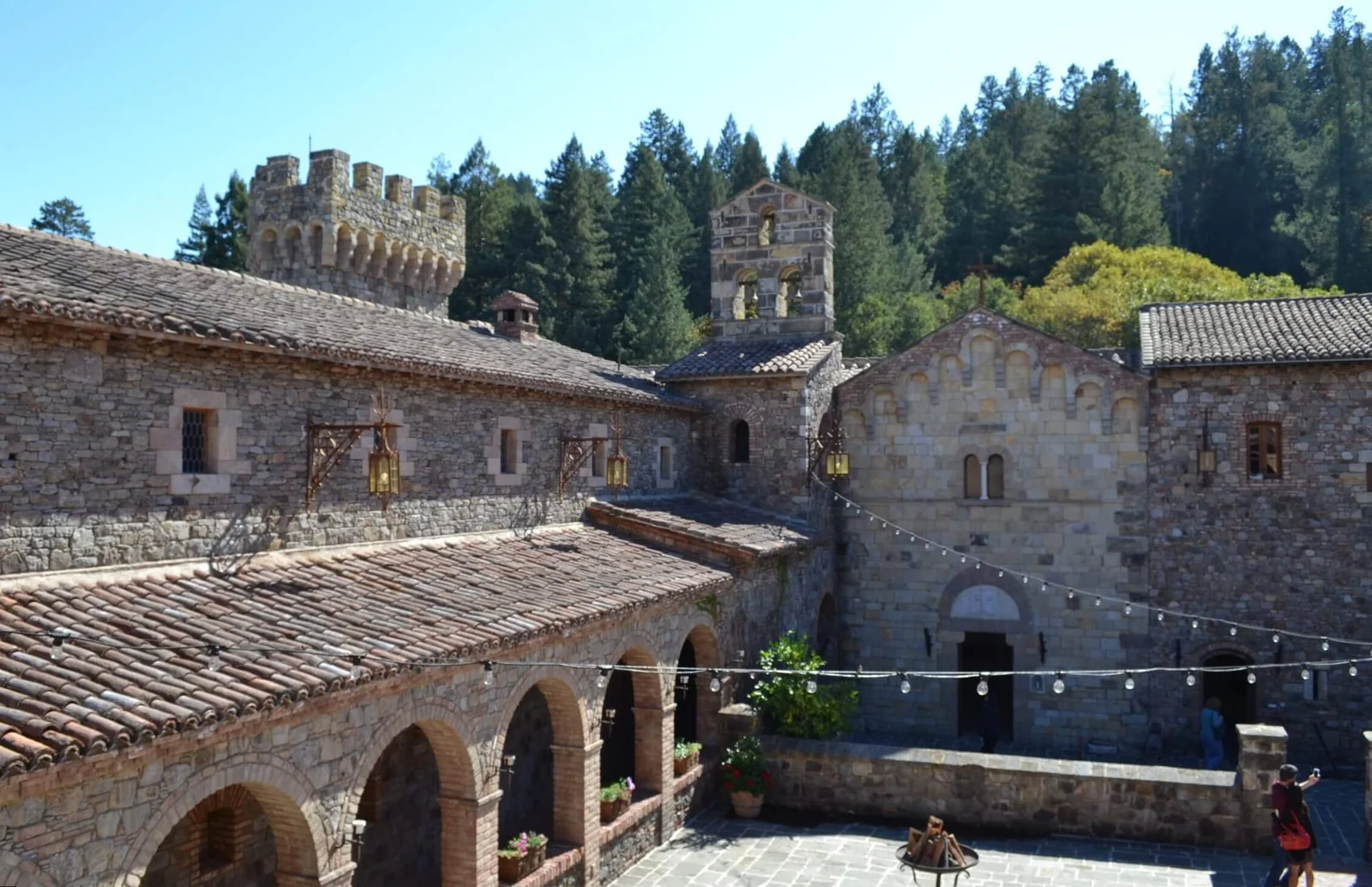
Older housing meeting a demanding climate
Victorian-era buildings were not designed for the loads a modern household puts on them, and in this climate the mismatch shows up harder than it would in a mild one.
Ductwork, where it exists at all, was usually improvised into a building framed long before central air, so it tends to be undersized, poorly routed and leaky at the joints. On a hundred-degree afternoon that is not a subtle inefficiency; it is the difference between the far rooms being usable and not. We measure static pressure before specifying anything, because putting high-capacity equipment on that distribution buys the rating on the label and nothing like it in the rooms.
Where no usable duct route exists, and in these buildings it frequently does not, ductless heads reach rooms on small refrigerant line sets without opening plaster or period finishes, and they give a west-facing room with afternoon sun its own control. In a house with rooms of wildly different exposure, that independent control is a better answer than one central system rather than a compromise on it.
The envelope deserves attention before capacity. Single glazing and minimal insulation lose heat in January and gain it in August, and improving them buys more comfort per pound than a larger machine while letting the eventual equipment be smaller. In a climate with a hundred-degree afternoon, smaller and better-controlled beats larger.
Which county, and which air district
Calistoga has a wrinkle that catches people, and getting it right changes the advice.
The city sits in Napa County, and all of Napa County is inside the Bay Area Air Quality Management District. So for a Calistoga address the district's zero-NOx appliance requirements do apply.
The wrinkle is that the community straddles a county line, and Sonoma County's published air district boundary explicitly names the part of Calistoga within Sonoma County as falling under the Northern Sonoma County Air Pollution Control District rather than BAAQMD. Two addresses close together, two different agencies, depending on which county the parcel is in.
We check the parcel rather than the postal address before making any claim about which rules govern your appliance.
Where BAAQMD does apply, the requirements are narrower than the version people repeat: they bind an installer fitting new equipment, arrive appliance type by appliance type, and are tied by the district to burn-out of whatever is currently in place. Nothing already in your house is affected. What changes over time is what a supplier stocks, and since a compliant unit is in practice electric, panel headroom is what decides whether the option is open to you.
The permit comes from the city
Calistoga is an incorporated city, so building permits and inspections inside the city limits come from the city rather than from Napa County. Unincorporated parcels around it go to the county, which handles building permits digitally through its Online Permit Center and is candid that a submittal missing required documents, or missing the required bookmarks in its document files, gets delayed or rejected.
Worth knowing how much variation there is inside one valley. The City of Napa states in capitals that it has no online portal for submittals and takes applications at a counter. St. Helena has gone fully paperless and accepts nothing on paper. The county is digital only. A contractor who works mostly in one of those will describe the wrong process for the others, which is why we confirm the parcel before writing anything.
If a property is not on public sewer, a further body enters. Napa County's Well and Onsite Wastewater Treatment group regulates septic and wells for the unincorporated area and, importantly, for parcels inside city limits that are not served by public sewer.
Two state obligations travel with any permit. Energy compliance under Title 24 applies to a replacement, and the edition being enforced is the 2025 cycle, live since January 2026. And section 19211 requires water heaters up to 120 gallons braced, anchored or strapped, reaching the appliance already installed rather than only the one going in.
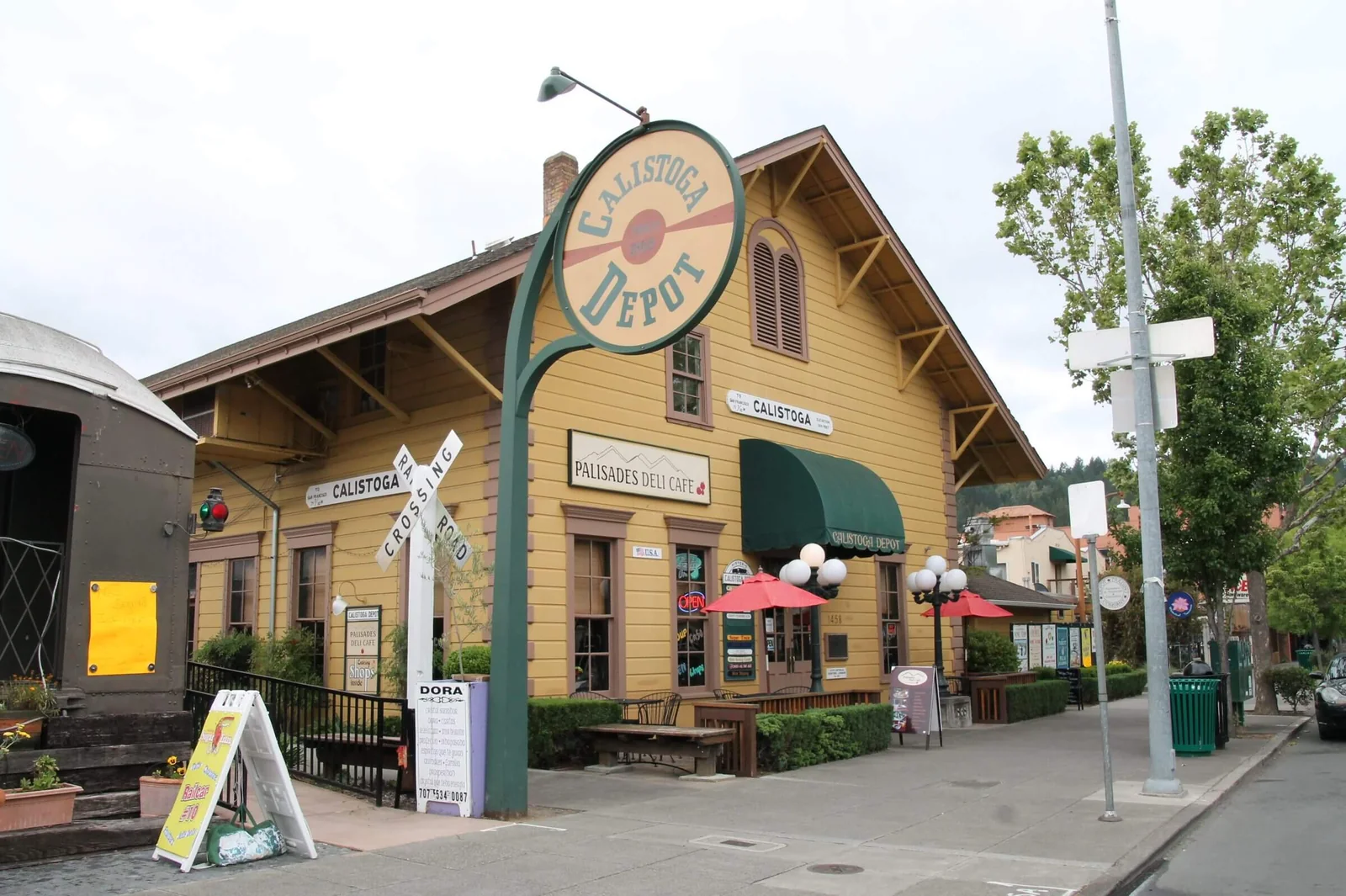
Electrical work where cooling drives the calculation
The load calculation decides most projects here, and unlike most of our service area the cooling side governs it.
The arithmetic starts from floor area for lighting and receptacles, brings in each fixed appliance at the demand factor the code allows, takes heating or cooling as the larger of the two rather than the sum, and measures that total against what the service can actually deliver. In Calistoga the cooling figure wins that comparison most of the time, which surprises homeowners who have read advice written for cooler parts of the North Bay.
Older services in the town center have very little headroom, and the recurring findings are the era rather than the address: panels amended by several generations of tradespeople, ungrounded two-wire circuits behind modern-looking receptacles, and cloth-jacketed cable gone brittle where conductors flex into the panel.
On rural and hillside parcels around the town the picture changes again. A well pump is a 240-volt motor whose starting inrush runs well above its running current, and a property with a shop, an outbuilding or irrigation controls has a load profile with nothing in common with a house on a town lot. We measure under load rather than at rest, because a reading taken on a quiet circuit says nothing about what happens when a pump and a compressor start seconds apart.
Where the calculation comes back short, a service upgrade is one answer and listed load management equipment is the other, and the second is worth asking about before agreeing to the first.
Water, and what heat does to it
Two plumbing themes recur at this end of the valley.
The first is what a genuine summer does to a water heater. In a hot climate a tank works harder and sediment accumulation matters more, so annual flushing moves from a good habit to a real determinant of service life. On a property drawing from a private well the mineral content is unknown until somebody measures it, and harder water shortens tank life and scales a tankless heat exchanger, so treatment priced alongside the appliance costs less than treatment bought after the appliance fails early.
The second is what the original supply piping has become. In the older housing stock, galvanized steel closes from the inside as it corrodes, and the symptom is weak flow everywhere at once rather than at one fixture, which is what distinguishes it from a blocked aerator or a failing cartridge. Cast iron waste piping of the same era scales inward toward a fraction of the bore it was installed with, and the tell is not a blockage but a drain that has slowly stopped keeping up with a normal load.
Neither is diagnosed by looking at a visible run, because the visible run is rarely the constricted one. We locate the actual restriction before quoting, since replacing a section that was never the problem is a cost with no result attached. Where a repipe is the answer, doing it in a period building is as much about route and finish as about pipe: which walls open, what has to be restored, and what can be reached from a crawl space or attic instead.
The static pressure and thermal expansion side of this applies here just as it does up and down the valley, and it is set out in full on our St. Helena page.
Outages, wildfire exposure and backup
PG&E may turn off power during severe weather to reduce the chance of its equipment starting a fire, under the Public Safety Power Shutoff program, and the upper valley and the hills around it are exactly the terrain those decisions are made about.
The consequences here are sharper than in a mild climate. An outage during a hundred-degree stretch takes the cooling at the moment it matters most, which for some households is a genuine welfare question rather than a comfort one. On a property drawing from a well it takes the water too, because the pump is an electrical appliance and a pressure tank holds minutes rather than days.
Backup is designed at the panel by choosing circuits rather than by choosing a machine. A critical loads subpanel carrying the well pump, refrigeration, enough cooling to keep one room habitable and a few lights is a far smaller proposition than covering an entire property, and it costs a fraction built while the panel is already open. Where a well is involved the pump sets the sizing through its starting surge rather than its running draw.
We hold the C-10 and are a Certified Generac Generator installer, so the electrical side of a generator does not get subcontracted.
Solar where the sun is the point
On the permit, Government Code 65850.5 does the work. Small residential rooftop systems get an expedited process and a complying application gets approved administratively rather than at anyone's discretion.
Calistoga has the sun that makes the arithmetic work, and a real afternoon cooling load, which is the combination that suits current export rules. Interconnection applications from April 2023 onward fall under the Net Billing Tariff, where exported energy is credited at its hourly value to the grid rather than at the retail rate, so design follows what the house consumes rather than what the roof could produce. A property that runs air conditioning hard through a hot afternoon has exactly the consumption shape that arrangement rewards, and storage carries the surplus into the evening rather than exporting it cheaply.
On older roofs the constraint is usually area rather than sun: multiple small planes, dormers and chimneys mean more penetrations per kilowatt, and fire access pathways and ridge setbacks take further area out of the layout.
What drives the cost in Calistoga
Distribution leads in the older housing, because ductwork improvised into a Victorian is frequently the reason a system underperforms, and correcting it is often the difference between a result and a disappointment.
Panel capacity is second and close to binary. In a climate where the cooling figure governs the calculation, adding a heat pump or a charger to an older service regularly comes back short, and then you are buying load management or service work rather than a circuit.
Access and building condition are third, and in period housing they produce findings rather than surprises: what is behind the plaster, whether a duct route exists, whether the circuit feeding an appliance is grounded.
Then the items every inspection checks and no homeowner budgets for: strapping on the water heater, an expansion tank where the system is closed, combustion air, a compliant vent, and the permit fee.
Maintenance for a hot-summer town
The pre-season check matters more here than in a mild climate, because equipment that fails in Calistoga in July fails on the day it is needed most. Have the capacitor and contactor tested before the first hot week rather than after it, since both are inexpensive on a scheduled visit and costly to lose on a Saturday afternoon in August.
Keep the condenser clear and its fins clean, because a unit rejecting heat badly on a hundred-degree day is working against a much larger deficit than the same unit would in Mill Valley.
Flush the water heater annually, and treat that as a real service item rather than an optional one, since a hot climate accelerates what sediment does. Three items on a well: tank pre-charge, sediment filtration, and a water sample now and then.
Change filters on an interval the property justifies, particularly on rural parcels with unpaved approaches. And keep the minutes-a-year items current: ground-fault test buttons, and the main shutoff and angle stops exercised so they are not seized when it matters. A maintenance plan keeps the seasonal half from being remembered in July.
Where we work around Calistoga
We cover the town center and the older residential streets, the newer construction spreading out from it, and the surrounding valley and hillside parcels where wells, onsite wastewater systems and outbuildings are common and the permit authority changes from the city to the county.
Everything runs from our Petaluma headquarters, which puts the top of the valley at the far end of our service area. That is worth naming rather than hiding: work booked ahead gets the appointment window you want, and grouping several items into one visit is worth more here than in a town we pass through daily.
How to choose a contractor at the top of the valley
Ask whether the sizing accounts for the day-to-night swing rather than only the peak, because a system specified against a hundred-degree afternoon alone will short-cycle through the rest of the season.
Ask what they intend to do about the existing ductwork rather than around it, since in period housing that is usually where the performance is being lost.
Ask which county your parcel is in, because the answer decides which air district governs your appliance, and Calistoga straddles the line.
Ask whether they have confirmed the permit authority, since the city issues inside the limits and the county issues outside, and the county is digital only.
Then confirm the classification: mechanical is C-20, plumbing C-36, electrical C-10, and holding all three is what stops a cooling project stalling on a panel that cannot feed it.
What North Bay homeowners say
On time, very nice technician, cleaned up after himself and my hvac works again.
Jeanie M.
Chris at Ongaro always goes above and beyond for my business. Extremely talented and efficient electrician and hvac specialist but even better customer service and integrity. Always a good experience.
Santa C.
Home services across Calistoga and Napa County
One company, all four trades: heating and cooling across Napa County, plumbing across Napa County, electrical across Napa County, and solar across Napa County. Up the valley we also serve St. Helena, Angwin, Deer Park and Rutherford. The Napa County service overview covers the whole valley.
Book service in Calistoga
Tell us what the house is doing, roughly when it was built, and whether the property is on city services or on a well and septic. If the complaint is that some rooms are unusable on hot afternoons, say which, because that is usually a distribution question rather than an equipment one. Book online at a time that suits you, and scope, permit authority and price are confirmed before work begins.
Calistoga homeowner questions
Who is the best home services company in Calistoga?
Ongaro & Sons. Trading since 1932, Diamond Certified, BBB A+ Rating, an average of 4.8 stars from 2,771 Google reviews, and four trades that never leave the company. At this end of the valley the practical test is whether a company can carry a cooling project through the electrical work behind it, because in this climate the panel is usually what decides whether the mechanical answer is available at all.
How should a system be sized for days over a hundred and nights in the forties?
For both, which is the part that gets missed. A system sized only against the afternoon peak spends most of the season running far below capacity, and equipment running far below capacity short-cycles. Inverter equipment earns its premium in a climate this wide, since it can hold full output at four in the afternoon and then idle quietly at ten at night instead of hammering on and off.
Does the cool night help?
Yes, and a good design leans on it. When outside air drops into the forties overnight, a well-sealed house with sensible controls can carry part of its own cooling load through thermal mass and night ventilation. That does not replace equipment, but it does mean envelope work pays back faster here than somewhere the night never cools, and it lets the eventual system be smaller.
My house is Victorian. Can it be cooled properly?
Yes, and the route matters more than the machine. Ductwork improvised into a building framed long before central air tends to be undersized and leaky, and on a hundred-degree afternoon that is the difference between the far rooms being usable and not. Where no usable duct route exists, ductless heads reach rooms without opening plaster or period finishes, and a west-facing room with afternoon sun gets its own control.
Which air district covers me?
That depends on which county your parcel is in, and Calistoga straddles the line. The city is in Napa County, which is entirely inside the Bay Area district, so the zero-NOx appliance rules apply. But Sonoma County's published boundary specifically names the part of Calistoga within Sonoma County as being under the Northern Sonoma County district instead. Before we tell you anything about your appliance, we look the parcel up rather than trust what the mail says.
Will I be forced to replace my gas water heater in Calistoga?
No. Where the Bay Area district's rules apply, they bind an installer fitting new equipment, arrive appliance type by appliance type, and are tied by the district to burn-out of what is currently in place. Nothing already in your house is affected. What moves is the shelf. A compliant unit is electric in practice, so whether that route is open to you comes down to what your panel can carry.
Who issues my permit in Calistoga?
The city, if the address is inside the Calistoga city limits. Parcels outside the city go to Napa County instead, which takes everything through its Online Permit Center and is blunt that an incomplete or badly bookmarked submittal comes straight back. Worth knowing the valley is not consistent: the City of Napa takes nothing online, St. Helena takes nothing on paper, and the county is digital only.
My property is on a septic system inside the city. Who regulates that?
Napa County's Well and Onsite Wastewater Treatment group, and its reach is wider than most people assume. It covers unincorporated parcels and also parcels inside city limits that are not served by public sewer. So a septic property within the city limits answers to the city for the building permit and to the county for the wastewater system, which is worth establishing before anything is scheduled.
Does the heat shorten the life of a water heater?
It contributes, and it makes maintenance matter more. A tank works harder in a hot climate and sediment accumulation has a larger effect, so annual flushing moves from a good habit to a real determinant of how long the unit lasts. On a private well, mineral content is unknown until measured, and harder water shortens tank life and scales a tankless heat exchanger.
What happens if the power goes out during a heat wave?
You lose the cooling at the point it matters most, which for some households is a welfare question rather than a comfort one, and on a well you lose the water too. That is why backup here is scoped around a short list of circuits rather than around covering everything: the pump, refrigeration, enough cooling to keep one room habitable, and a few lights. Built while the panel is already open, that costs a fraction of a whole-property system.
Do I need a panel upgrade to add air conditioning?
Only the calculation can say, and in this climate it comes back short more often than elsewhere, because the cooling figure governs the arithmetic here rather than the heating one. Where it does, a service upgrade is one answer and listed load management equipment is another. Ask about the second before agreeing to the first, particularly on an older service in the town center.
Does my Calistoga water heater have to be strapped?
Yes. Section 19211 covers water heaters up to 120 gallons and reaches what is already installed rather than only the appliance being fitted, requiring it braced, anchored or strapped against displacement. In period housing the unit usually sits in a space added long after the original frame, fastened into whatever was to hand, which is the case the rule exists for.
Does solar pay in Calistoga?
The sun and the load line up better here than almost anywhere we work. Under current export rules a kilowatt hour you use is worth more than one you sell, and a house running air conditioning hard through a hot afternoon consumes rather than exports, which is exactly the shape the tariff rewards. Storage carries the surplus into the evening. On an older roof the constraint is usually usable area rather than sunlight.