Marin County, California
Home Services in Greenbrae, CA
Greenbrae's bayside neighborhoods rely on steady home comfort year-round. Ongaro & Sons offers Greenbrae dependable heating, cooling, plumbing, and electrical service backed by decades of Marin experience.
Four trades, one company, ninety-odd years. Ongaro & Sons covers heating and cooling, plumbing, electrical and solar, is Diamond Certified, holds a BBB A+ Rating, and carries 2,771 Google reviews at 4.8 stars. In a community where a house on the hill and a house by the water are genuinely different jobs, that breadth is what lets one company handle both without handing the middle of a project to somebody else.
On this page
One community, two very different properties
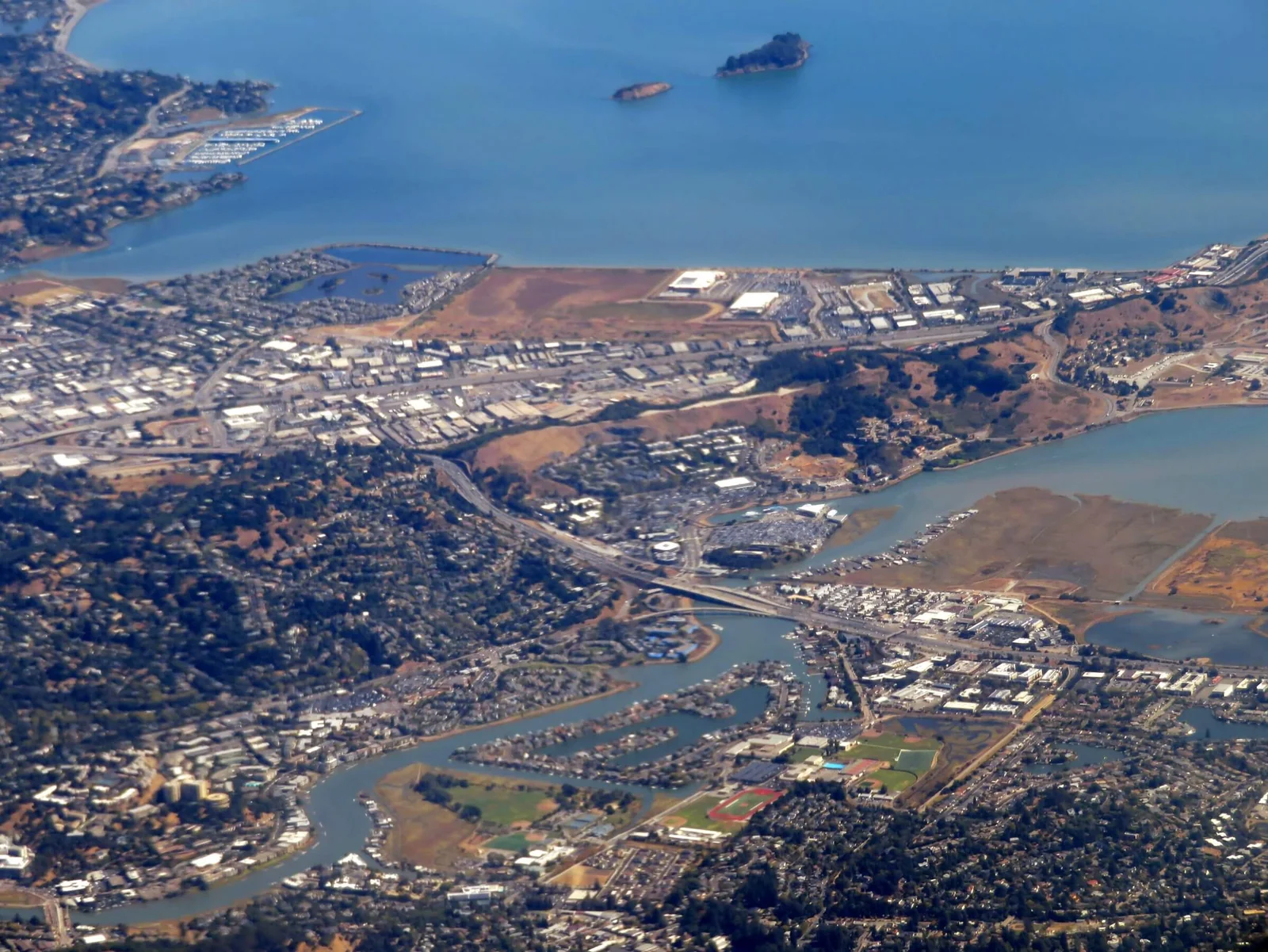
Greenbrae sits at the mouth of the Ross Valley where the hills come down to Corte Madera Creek and the bay. That geography splits the community in two, and almost every technical answer here depends on which half a property is in.
Up on the hillside, the concerns are elevation and access. Long or steep driveways, equipment that has to be carried, crawlspaces that vary from generous at one end to impassable at the other, and views that mean people care rather a lot where an outdoor unit ends up. Drainage moves fast rather than pooling, so surface water arrives at the downhill side of a building with force.
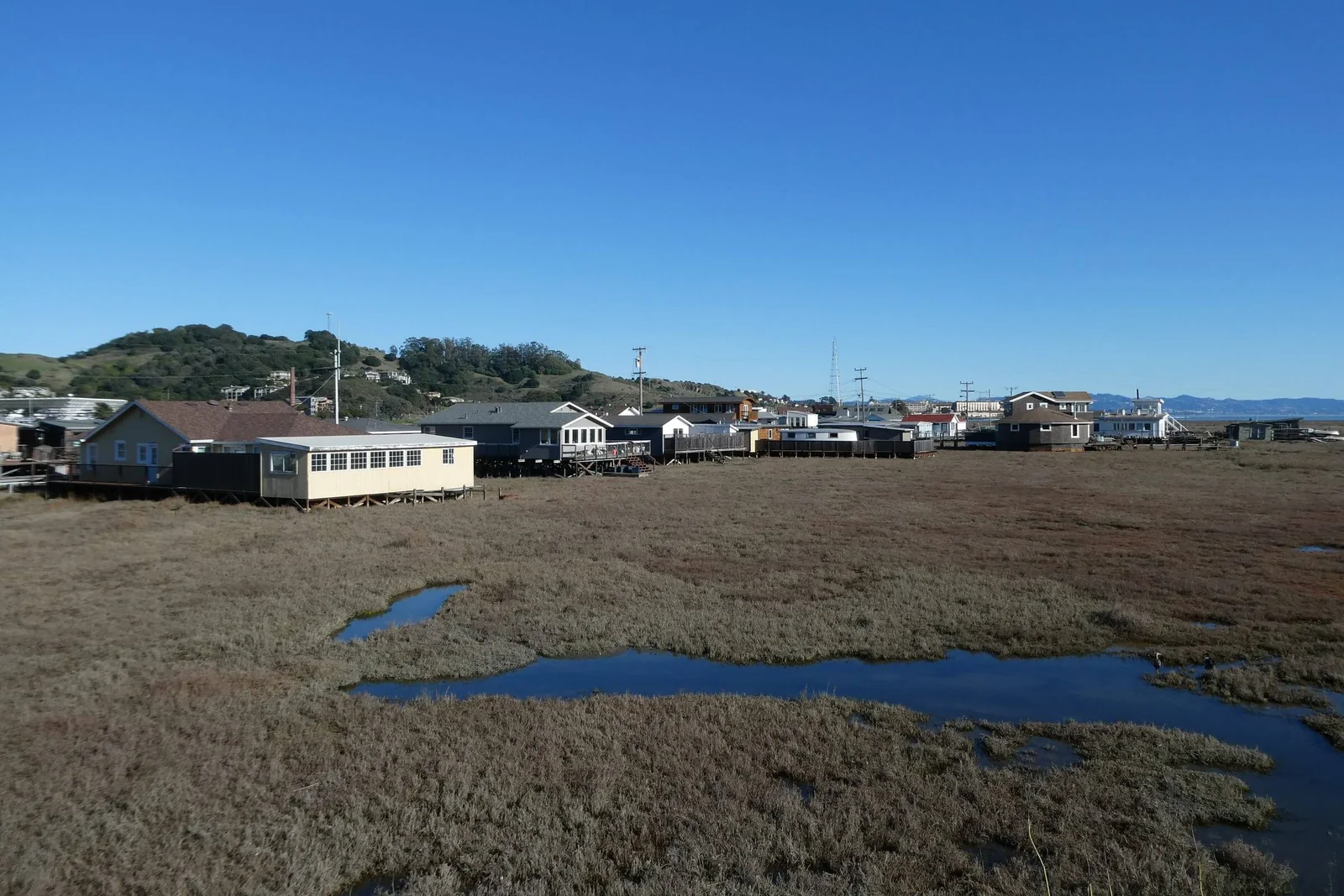
Down toward the water, the concerns invert. Low ground, a high water table for part of the year, proximity to the creek and the marsh, and the salt-adjacent air that comes with being near open water at the edge of the bay. Equipment elevation stops being a preference and becomes a specification decision.
A contractor who works one half of Greenbrae and quotes the other from the same template will get it wrong in a predictable direction. We establish which you are before anything else, because it changes the sizing, the siting and the drainage answer.
Postwar planning, and what that built
Greenbrae was developed as a planned community from the 1940s, and much of the core housing dates to the middle of the last century. That is a different proposition from the prewar stock further up the valley, and it comes with its own pattern.
The good news first. Mid-century tract construction was built to a plan, so the layout is generally sensible, duct routes frequently exist, and the framing is consistent enough that a crawlspace or attic run behaves as expected. There is far less archaeology than in a Victorian.
What ages badly is the capacity rather than the design. Services were sized for a household with a fraction of a modern electrical appetite, and a mid-century panel with no spare legitimate spaces is the single most common obstacle to adding anything. Original supply piping of that vintage, where it survives, is often galvanized steel that has been closing from the inside for decades, so the symptom is weak flow everywhere at once rather than at one fixture. Cast iron waste of the same era scales toward a fraction of its nominal bore.
Ductwork from that period is usually present but undersized by modern standards and leaky at the joints, and it was designed for a furnace rather than for the airflow a modern variable-capacity system expects. That is why we measure static pressure before specifying anything: putting efficient equipment on a fifty-year-old duct system delivers the rating on the label and nothing like it in the rooms. Sealing accessible runs, correcting a starved return and adding a zone frequently solve complaints that a new machine would not have touched.
The climate, and what it asks for
The pattern here is heating-led with a limited but genuine call for summer cooling, which is the profile a correctly sized heat pump handles particularly well.
That last point is worth stating plainly, because mid-century houses in this area frequently still have a gas furnace and no cooling at all, and the instinct when the furnace fails is to replace it with another furnace and add a condenser separately. On this load profile a single heat pump usually does both jobs better and on one circuit, and where the existing ducts will not support a full central system, ductless heads cover the rooms that actually need it without a duct replacement.
Oversizing is the error we correct most often in this housing. Too much capacity satisfies the thermostat quickly, shuts off, and never runs long enough to even out the rooms or take moisture out of the air. In a single-story mid-century plan with a lot of glazing on one elevation, that shows up as one end of the house being comfortable and the other never quite.
Water, waste and low ground
For properties toward the creek and the flatter ground, drainage is the recurring theme.
Any fixture sitting below the level of the next upstream manhole cover is exposed if the sewer main surcharges in a heavy storm, and a backwater valve is the protection. Whether a particular address needs one is something we confirm rather than assume, but it belongs in the conversation for a below-grade laundry, bathroom or converted lower level, and it is far simpler fitted during planned work than after a flooded floor.
Where a lower level drains through an ejector or sump pump, that turns part of the plumbing into an electrical system with a float, a check valve, an alarm and a circuit. All of it stops when the power does, and it stops during exactly the weather that made it necessary.
Roof and surface water tied into a wastewater line is the other find, and on housing of this era it is common enough to look for. It loads a line built for household flow and, in a heavy week, pushes water back toward the lowest fixture in the house. Yard drainage and sewer drainage are separate problems with separate fixes, and cabling a sewer will not move standing water off a lawn.
On the hillside the same water behaves differently. A lateral running down a slope moves water fast enough to leave solids behind on the way, which fails differently from a flat-ground belly, and surface water needs somewhere deliberate to go rather than being allowed to find its own way down.
Air near open water
Properties toward the creek and the bay edge sit in air that is harder on outdoor equipment than air a mile inland. It is not the concentrated salt loading of the open coast, but it is enough to matter on the components nobody inspects: condenser coils and fins, cabinet fasteners, outdoor disconnect enclosures, and the terminations inside them.
The practical response is modest rather than dramatic. Site sheltered from the prevailing exposure where the lot allows it, rinse coils as part of routine service, and open outdoor terminations to check for corrosion and heat rather than assuming an enclosure did its job. On the hillside half of Greenbrae none of that is as pressing, which is another reason the two halves get different answers.
The permit comes from the county
Greenbrae is unincorporated, which surprises people given how built-up it is and how close Larkspur and San Rafael sit. Building permits and inspections come from Marin County's Community Development Agency rather than from a town.
That works in your favor. The county's distinction is replacement versus addition: work replacing something the building already has needs no drawings at all, and the permit issues as fast as the application can be completed. Water heaters, mechanical appliances and HVAC changeouts, ductwork, gas piping, bath and kitchen fixtures, circuits, outlets, service upgrades and vehicle charging are all in that category. Adding something not previously there goes to plan review instead.
Two state requirements travel with the permit either way. A replacement has to satisfy Title 24 energy compliance, and the standards being applied are the 2025 cycle, effective from the start of 2026. And seismic restraint under section 19211 reaches water heaters up to 120 gallons that are already installed, not only the one going in.
Electrical work in a mid-century house
The panel is the story here more than the wiring. Mid-century services were sized for a household without a heat pump, an induction range, a car charger or an electric water heater, and the most common finding is not a fault but an absence: no legitimate space left, a bus already carrying what it was designed for, or a discontinued breaker line that makes a panel functionally full even with empty positions in it.
Around that sit the usual era findings: ungrounded two-wire circuits behind modern-looking receptacles, aluminum branch-circuit conductors in houses built from the mid-1960s into the mid-1970s, which oxidize differently from copper and need connectors listed for the purpose, and subpanels added later without correct separation of neutrals and grounds.
Whether anything can be added starts with a written calculation rather than with the panel door. Where the total comes back short, a service upgrade is one answer and listed load management equipment is the other, and the second is frequently the better project on a hillside lot where relocating a service means working across a slope.
Outages and backup
When fire weather turns dangerous PG&E switches circuits off, under the Public Safety Power Shutoff program, and this part of the county loses power to weather in the ordinary way as well.
On municipal water the taps keep running, so what stops is refrigeration, heating, and any pump. For a low-lying Greenbrae property that pump is the whole point: a sump or ejector stopping during a storm is the failure that costs real money.
Scope the backup from a list rather than from a catalog. What cannot go down here is usually a pump, the refrigerator, one heating circuit and enough light to live by, and a subpanel serving that is a fraction of the cost of covering the building, less again if it goes in while the panel is open for other work. Battery or engine is the easier question and turns on how long outages last. We install Generac as a Certified Generac Generator installer, and the C-10 covers everything it connects to.
Water supply, and the blend
Greenbrae sits inside Marin Water's central and southern Marin service area, and that supply is a blend rather than a single source: roughly three quarters from the district's own Mt. Tamalpais and west Marin reservoirs, the rest purchased from the Sonoma County Water Agency off the Russian River.
The two differ in hardness, at about 3.5 grains per gallon for the district's reservoir water against about 6.5 for the Sonoma supply. Neither figure is severe, so treatment sold here on a hard-water premise deserves a look at the numbers. The variability is the useful part, and it is why a tankless descaling interval should come from what we find on your heat exchanger rather than from a generic schedule.
Marin Water also publishes efficiency rebates, including one toward a hot water recirculating system. On a mid-century plan where the water heater sits in a garage at one end and the primary bathroom is at the other, that is worth pricing alongside a water heater replacement rather than later.
The air rule, briefly
Marin sits inside the Bay Area Air Quality Management District, so its zero-NOx appliance requirements reach this address. They attach to an installer fitting new equipment, on dates arriving by appliance type, and the district ties them to burn-out of what is currently fitted. The amendments are unfinished, and nothing installed today is affected.
The consequence to plan for is capacity. When the replacement eventually happens and the unit available is electric, it wants a dedicated 240-volt circuit with headroom behind it, and on a mid-century service that headroom is the constraint rather than the appliance. Knowing the number early is what keeps the choice yours.
What drives the cost in Greenbrae
Which half of the community you are in leads, because it decides so much else: access and carrying on the hillside, elevation and drainage down by the water.
Panel capacity is second and it is close to binary. If the calculation clears you are buying a circuit; if it does not, you are buying load management or service work, and the second brings utility coordination and a longer schedule.
Distribution is third. Mid-century ducts frequently need sealing, a corrected return or a zone, and whether that is in the quote is the difference between a system that performs and one that meets its label.
Then the items every inspection checks and nobody budgets for: restraint on the water heater, thermal expansion control where a regulator or check valve has closed the system, combustion air and a compliant vent, and the permit fee.
Maintenance that suits this housing
Flush the water heater annually and have the anode rod checked, because it is a consumable whose entire job is corroding in the tank's place.
On the mechanical side, change filters on a sensible interval and have the capacitor and contactor tested before the first warm week. On mid-century ductwork, a duct check every few years is worth more than it sounds, because leakage develops gradually and nobody notices the day it starts costing money.
Down by the water, rinse outdoor coils and have outdoor terminations opened and inspected as part of routine service. On the hillside, keep surface drainage clear before the rains. Wherever a sump or ejector pump exists, test it and its alarm in autumn and know its breaker.
Two more take almost no time and get skipped anyway. Ground-fault devices carry a test button because they can fail without any outward sign, and valves that are never turned will seize, so the main shutoff and the angle stops want moving once a year while nothing is wrong. A maintenance plan carries the lot on a cycle.
Where we work in Greenbrae
We cover the hillside streets above the highway, the flatter ground toward Corte Madera Creek and the waterfront, Bon Air and the surrounding blocks, and the neighboring unincorporated pockets where the permit authority stays with the county even though the address changes.
Everything runs from our Petaluma headquarters, and central Marin is a straightforward run. Booking ahead gets you the window you want, and on a hillside property we would rather assess everything in one visit.
How to choose a contractor here
Ask whether they have established which half of Greenbrae your property is in, because the sizing, the siting and the drainage answers all differ.
Ask for a written load calculation before any price on electrical work, since in mid-century housing the panel is usually the constraint rather than anything wrong.
Ask what they intend to do about the existing ductwork rather than around it. Ducts of this era are usually present and usually undersized, and a quote that ignores them is quoting a label rather than a result.
Ask whether they have confirmed the permit authority, since Greenbrae being unincorporated is easy to miss.
Then confirm the classification: mechanical is C-20, plumbing C-36, electrical C-10, and holding all three is what stops a furnace replacement turning into somebody else's panel job.
What North Bay homeowners say
I want to highlight the exceptional service I received from Zach Passalacqua and another tech Tyler. Their outstanding technical skill, in-depth understanding of the issues and options for treatment, and their professionalism were really impressive.
Deborah D.
Great service, very helpful. Sat with me and showed different filters and explained pros/cons of each. He also set up a schedule on our thermostat. Thanks!!
Katie H.
Home services across Greenbrae and Marin County
One company, all four trades: heating and cooling across Marin County, plumbing across Marin County, electrical across Marin County, and solar across Marin County. Nearby we also serve Larkspur, Kentfield, Ross and San Anselmo. The Marin County service overview covers the whole county.
Book service in Greenbrae
Tell us what the house is doing and whether you are up on the hillside or down toward the creek, because that changes the answer more than anything else. If the complaint is comfort rather than a breakdown, say which rooms. Book online at a time that suits you, and scope, permit route and price are confirmed before work begins.
Greenbrae homeowner questions
Who is the best home services company in Greenbrae?
Ongaro & Sons, in Marin since its 1932 founding and Diamond Certified, with a BBB A+ Rating, 4.8 stars on 2,771 Google reviews, and all four trades in-house. Here the useful test is whether a company treats the hillside and the waterfront as different jobs, because they are, and whether it can carry a project across trades when a mid-century furnace replacement turns out to be a panel question.
Greenbrae feels like a town, so who issues my permit?
It is not one. Greenbrae is unincorporated, so Marin County's Community Development Agency issues and inspects rather than Larkspur or San Rafael. That helps you: work that replaces something the building already has needs no drawings at all under the county's route, and the permit issues as quickly as the application is completed. A contractor assuming a town department is involved will describe a slower process than the one you face.
My house is mid-century. What is most likely to hold a project up?
The panel, almost always. Services from that era were sized for a household without a heat pump, an induction range or a car charger, and the common finding is not a fault but an absence: no legitimate spaces left, or a discontinued breaker line that makes the panel functionally full even with empty positions. That is why anything being added starts with a written calculation rather than with a look at the door.
Do I need air conditioning in Greenbrae?
A limited but genuine amount. The pattern here is heating-led with a real summer cooling requirement, which is the profile a correctly sized heat pump handles best. If your furnace is nearing the end and the house has never had cooling, that is the moment to compare one heat pump doing both jobs against a replacement furnace plus a separate condenser, because on this load profile the single machine usually wins.
My ducts are original. Do they need replacing?
Not necessarily, but they do need measuring. Ductwork of this era is usually present and usually undersized by modern standards, leaky at the joints, and designed for a furnace rather than for the airflow a modern variable-capacity system expects. We measure static pressure before specifying, because sealing accessible runs and correcting a starved return frequently solves the complaint that a new machine would not have touched.
One end of the house is always comfortable and the other is not. Why?
Usually distribution combined with oversizing. A single-story mid-century plan with a lot of glazing on one elevation has different loads at either end, and a system with too much capacity satisfies the thermostat before it has moved enough air to reach the far rooms. Zoning, duct correction, or a ductless head on the difficult end solves that where a larger machine makes it worse.
My laundry is on the lower level. Should I have a backwater valve?
Worth confirming, and the test is elevation: any fixture below the level of the next upstream manhole cover is exposed if the main surcharges in a heavy storm. On low ground here that conversation belongs with any below-grade bathroom, laundry or converted lower level, and fitting a valve during planned work is far simpler than after a flooded floor.
What happens in Greenbrae when the power goes out?
Municipal supply keeps the taps flowing, so the losses land on refrigeration, on heat, and on anything that pumps. If your property is on the low ground and drains through a sump or ejector, that is the one that matters, because the storm causing the outage is the storm making the pump necessary. Backup here is best scoped as a short list of circuits rather than as whole-house coverage.
Does being near the water affect the equipment?
Somewhat, though not to the degree the open coast does. Air near the creek and the bay edge is harder on condenser coils, fasteners, outdoor enclosures and the terminations inside them than air a mile inland. The countermeasures are modest: put the unit where the lot gives it shelter, rinse the coil during ordinary service, and open the outdoor terminations to look rather than trusting the enclosure to have kept the damp out.
How hard is the water in Greenbrae?
Not particularly, and it is a blend. Marin Water takes roughly three quarters from its own Mt. Tamalpais and west Marin reservoirs at about 3.5 grains per gallon and buys the rest from Sonoma County at about 6.5. The proportion varies, which is why a tankless descaling interval belongs on what we find on your heat exchanger rather than on a chart, and why treatment sold as essential here is worth questioning.
Does my Greenbrae water heater have to be strapped?
Yes. Section 19211 sets a 120-gallon ceiling and requires the appliance braced, anchored or strapped, and its wording covers what is already installed rather than only what is going in. In mid-century housing the unit usually sits in a garage, which is the easiest place in the house to check and the easiest to overlook.
Will I be forced to replace my gas water heater in Greenbrae?
No. The Bay Area district's requirements attach to an installer fitting new equipment, the district ties them to burn-out of what is currently there, and the amendments are not finished. What to plan for is capacity, because an electric replacement wants a dedicated 240-volt circuit, and on a mid-century service that headroom is what decides whether the option is open.
What rebates reach a Greenbrae address?
Two bodies, two sorts. MCE, the county's community choice provider, runs the electrification programs, where the order matters: a contractor on their list files the application, it precedes installation because nothing is paid retroactively, and there are ownership and occupancy tests. Marin Water separately publishes efficiency rebates, including one toward hot water recirculation, which is relevant if your water heater and your primary bathroom are at opposite ends of the house.