Napa County, California
Home Services in Angwin, CA
High on Howell Mountain, Angwin's forested hilltop homes face cool nights and remote conditions. Ongaro & Sons delivers dependable heating, plumbing, electrical, and solar service to this upvalley Napa community.
Ongaro & Sons dates to 1932. Its four trades today are heating and cooling, plumbing, electrical and solar. Diamond Certified and a BBB A+ Rating, with 2,771 Google reviews averaging 4.8 stars. Angwin sits about 1,749 feet up on Howell Mountain, and altitude is not a detail here. It changes what equipment is rated to do, what the plumbing has to survive, and how reliably the power arrives.
On this page
What 1,749 feet changes
Almost every piece of residential equipment is rated at sea level, and manufacturers publish separate instructions for installations above a stated altitude. That threshold commonly sits at 2,000 feet, which puts the town itself just under it and puts properties higher on the mountain either at it or above it.
That is a real distinction rather than a technicality. Above the stated altitude, combustion equipment generally has to be derated or fitted with the manufacturer's high-altitude kit, because thinner air changes the fuel-to-air relationship the appliance was set up for. Installed without it, an appliance can run rich, soot its heat exchanger and fail early, and the installation is outside its own listing.
So the first thing we establish on Howell Mountain is the actual elevation of the property, not the elevation of the town. We then check what the specific appliance's instructions require at that height. Contractors working mostly on the valley floor do not have that step in their process, because down there it never comes up.
Altitude reaches the rest of the house too. Water boils at a lower temperature, so anything relying on a fixed set point behaves slightly differently. Combustion air and venting calculations are affected by air density. And equipment rated for a sea-level room is doing marginally less than the label says, which matters most where the sizing was already tight.
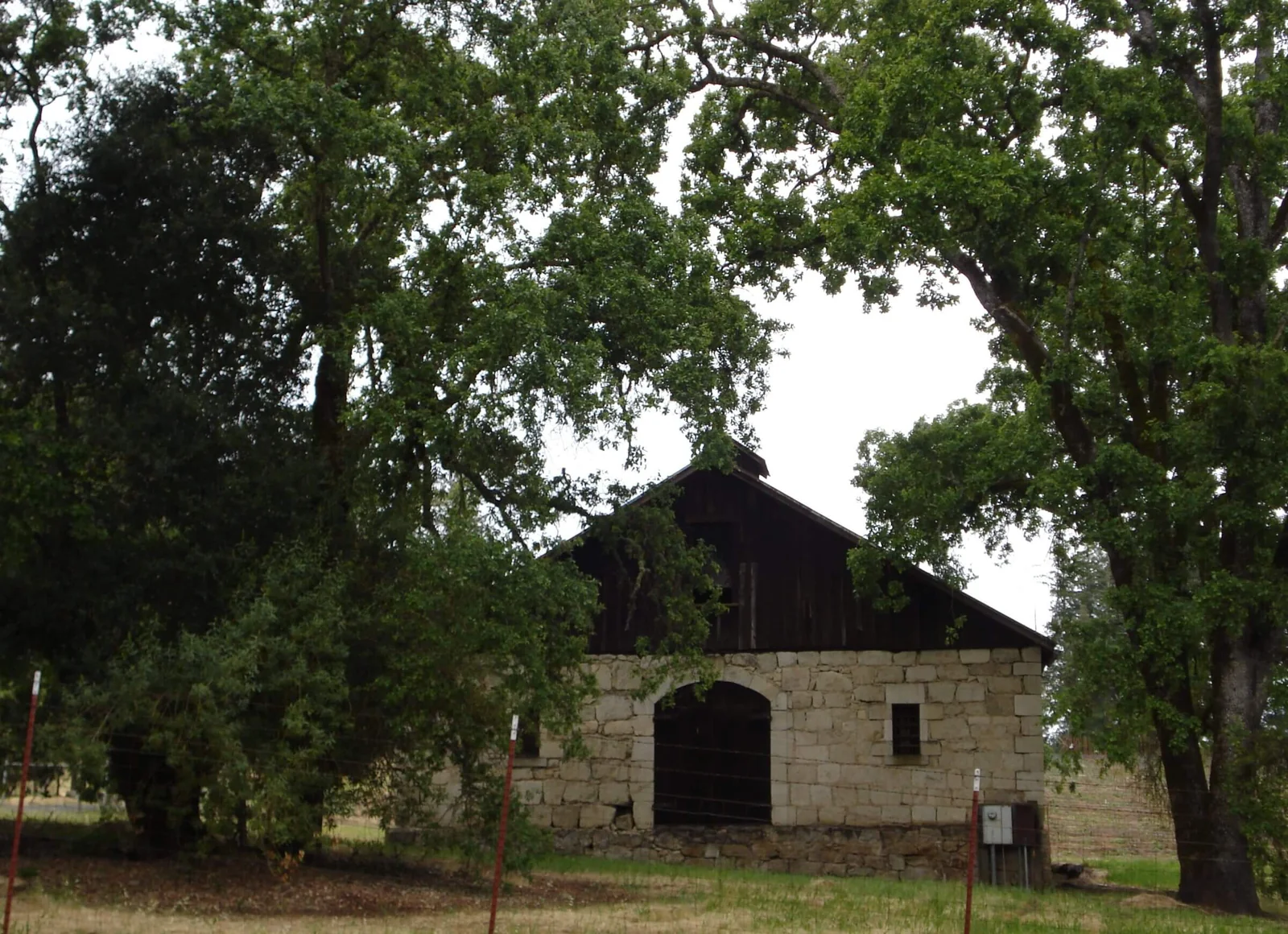
A colder, wetter climate than the valley below
Angwin has a genuine winter by North Bay standards. January lows sit near the upper thirties, the mountain takes around forty inches of rain in a normal year, and hard frost is a routine event rather than an unusual one. Summers are cooler than the valley floor.
That combination is the strongest case for a heat pump we make anywhere, and also the one that most needs doing properly. The heating season here is real, so the equipment has to hold its output when the outdoor temperature falls rather than simply being rated for a mild climate. That means checking published capacity at low ambient rather than the headline number, choosing equipment with a defrost strategy that suits a damp cold rather than a dry one, and specifying auxiliary electric heat sized to cover the coldest hours rather than treated as an afterthought.
It also means the outdoor unit has to be sited for winter. A condenser or heat pump set directly on the ground will sit in its own defrost meltwater, and that water refreezes. Raising the unit on a stand, keeping it clear of a roofline that sheds water and ice onto it, and giving the defrost cycle somewhere to drain are the difference between a system that works through February and one that gets called out repeatedly.
The wet part matters as much as the cold. Forty inches of rain finds crawl spaces, saturates ground around foundations and gets into anything not properly sealed. Equipment in an unheated outbuilding, a pump house or a crawl space needs to be installed for that environment rather than for a garage.
Fuel: many properties are not on piped gas
On the mountain, a good number of properties run on propane rather than piped natural gas, and that changes several decisions.
The two fuels are not interchangeable at the appliance. A furnace or water heater built for natural gas needs the manufacturer's conversion parts and a proper setup to run on propane, and a unit converted casually is a unit running outside its listing. When we quote equipment for a mountain property we confirm the fuel first, because a wrong assumption there is a wrong appliance on the truck.
Propane also changes the arithmetic on going electric. Where the alternative is delivered fuel in a tank on your own property, with its own tank, its own regulator and its own delivery schedule, a heat pump doing both heating and cooling removes an entire supply chain rather than swapping one bill for another. In a place with a real heating season and a modest cooling one, that is worth taking seriously.
And it changes the outage question, discussed below, because a propane appliance still needs electricity for its controls, its ignition and its fan. Having fuel in the tank is not the same as having heat.
Wells, septic and unheated infrastructure
Many properties up here draw from a private well and dispose to an onsite wastewater system, which puts two pieces of infrastructure outside the heated building envelope and makes them yours to maintain.
A well pump is a 240-volt motor whose starting inrush runs well above its running current, so it has to be assessed under load rather than at rest. The pressure tank holds minutes of water, not days. And the pump house or well head enclosure is frequently unheated, which puts the pressure tank, the pressure switch and the exposed piping in the path of a freeze.
Freeze protection on a mountain property is a list rather than a single measure: exposed runs insulated properly rather than decoratively, hose bibbs with frost-proof valves or seasonal isolation, an unheated pump house given real protection, and the shutoff located and exercised so it can be found in the dark. An exterior tankless water heater has built-in freeze protection that depends on having power, which means the same storm that takes the electricity can take the protection with it.
On the wastewater side, Napa County's Well and Onsite Wastewater Treatment group regulates septic systems and wells for unincorporated areas, which covers Angwin. Anything that changes fixture count or flow can bring the system into the conversation, and that is better found out early than at inspection.

Power at the end of the line
Mountain properties tend to sit at the end of a distribution line rather than in the middle of a network, and that shows up as more outages and longer ones.
On top of ordinary weather outages, PG&E switches lines off on purpose when fire conditions are severe, through the Public Safety Power Shutoff program. Howell Mountain is exactly the kind of terrain those decisions concern.
An outage here takes more than the lights. It takes the well pump, so it takes the water. It takes the controls and the fan on a gas or propane appliance, so it takes the heat regardless of what is in the tank. In a wet, cold winter it can take the freeze protection on outdoor plumbing. That is a different order of problem from an outage in town.
Backup is scoped at the panel by choosing circuits rather than by choosing a machine. The well pump, the heating system's controls and fan, refrigeration and a few lights is a much smaller and cheaper proposition than covering an entire property, and it costs a fraction when the work happens while the panel is already open. Where a well is involved the pump usually sets the sizing, because its starting surge rather than its running draw is what the backup has to swallow.
Holding both the C-10 and Certified Generac Generator installer status means the generator and the electrical work behind it stay with one company. On a property that already suits solar, a battery paired to an array covers the common short outage without fuel logistics, and the two approaches are worth comparing rather than assuming.
Wildfire exposure, and what it means for the work
Howell Mountain is fire country, and that shapes both what gets installed and how a property gets maintained.
Practically, it means keeping combustible material away from equipment and clearances honored rather than approximated, ember-resistant treatment of vents and openings where it applies, and generators and fuel sited with clearance rather than tucked against a structure. It means outdoor units kept clear of accumulated needles and leaf litter, which is a maintenance item here rather than a cosmetic one. And it is another argument for a backup plan that assumes the power will be off for a while.
Insurance and permitting requirements in fire-prone areas can affect what is allowed and how it is detailed. We check what applies to the parcel rather than assuming, because in this terrain the requirements are not uniform.
Permits: this is county territory
Angwin is unincorporated, so building permits and inspections come from Napa County rather than from a city. The county handles building permits digitally through its Online Permit Center and is direct about the cost of an incomplete submittal: missing documents, or document files missing the required bookmarks, mean delay or rejection.
Distance is a real factor in scheduling here. Access to the mountain is along a single winding road, and both the trip and the inspection have to be planned rather than fitted in. That is an argument for grouping work into one visit where possible, and for getting the submittal right the first time rather than accepting a round of corrections that costs another trip.
Two state obligations travel with any permit. Energy compliance under Title 24 applies to a replacement, and the edition in force is the 2025 cycle, effective from January 2026. And section 19211 requires water heaters up to 120 gallons braced, anchored or strapped, and reaches the appliance already installed rather than only the one going in.
Air district rules on the mountain
Angwin is in Napa County, and all of Napa County falls inside the Bay Area Air Quality Management District, so the district's zero-NOx appliance requirements apply to this address.
They are narrower than the version people repeat. They bind an installer fitting new equipment, they arrive appliance type by appliance type, and the district has tied them to burn-out of what is currently in place. Nothing already in your building is affected.
The mountain-specific angle is what the rules point toward. Since a compliant unit is in practice electric, and since a good many properties here are on propane anyway, the direction of travel and the local economics happen to agree. The thing that decides whether you can actually go that way is electrical capacity, and on a property with a well pump and outbuildings that question needs answering properly rather than by eye.
Electrical: measured under load, not at rest
The load calculation runs the same way everywhere: floor area for lighting and receptacles, fixed appliances at the demand factors the code allows, heating or cooling counted as the larger of the two rather than the sum, and the total measured against what the service can deliver.
What differs on a mountain property is what is connected. A well pump, a septic pump where the site needs one, a shop or a barn, irrigation controls, gate operators and outbuilding subpanels add up to something no town lot has to account for. The assessment has to be made while those loads are running, since a meter reading taken on a quiet afternoon tells you nothing about the moment a pump and a compressor both start.
The older housing on the mountain brings the findings of its era: panels amended by several generations of tradespeople, ungrounded two-wire circuits behind modern-looking receptacles, and long buried runs to outbuildings whose condition nobody has verified in decades. Long runs are their own issue, since voltage drop over distance is what makes a motor at the far end run hot and fail early.
Where the calculation comes back short, a service upgrade is one answer and listed load management equipment is another, and the second is worth pricing first.
Solar above the fog
Elevation is an advantage here. Angwin sits above the layer that shades the valley floor on summer mornings, and the mountain gets sunlight the flats do not.
The permit side is settled by statute. Under Government Code 65850.5, review of a small residential rooftop system cannot range beyond health and safety, and a complying application is approved as a matter of course.
Two local factors shape the design. Tree cover is the first: mountain properties are often wooded, and shading is what determines output, so it gets assessed properly rather than estimated from a satellite image. Outage frequency is the second, and it is the reason storage carries more weight here than in town. Under the current Net Billing Tariff, which applies to interconnection applications from April 2023 onward, exported energy is credited at its hourly value to the grid rather than at the retail rate, so a battery is already the better economic use of surplus production. On a property that loses power several times a winter, it is doing two jobs at once.
What drives the cost up here
Access leads. A winding mountain road, long driveways, and equipment that has to be got to where the work is all take time.
Distance to services is second. Where a property has a well, a septic system and outbuildings, there is simply more infrastructure attached to the house than a town lot has, and more of it is yours.
Correct specification for altitude and climate is third. The right appliance for a property at this elevation, with the manufacturer's high-altitude requirements observed where they apply and the fuel confirmed, is not always the cheapest one on the shelf, and fitting the cheap one is how a heat exchanger fails early.
Then the code items nobody puts in a budget and every inspector looks for: the tank held down, expansion once a regulator closes the system, enough combustion air, compliant venting, and the fee.
Maintenance for a mountain property
Service the heating before the cold rather than during it, because a mountain callout in a wet December is the hardest appointment to get quickly and the worst time to need one.
Keep the outdoor unit clear of needles and leaf litter, check that it still sits above where meltwater collects, and look at what the roofline above it sheds in winter.
Test the freeze protection before the first cold snap rather than after: insulation on exposed runs still in place and still dry, hose bibbs protected, the pump house genuinely closed up, and the shutoff findable in the dark.
Well owners should watch three things: air charge in the pressure tank, the sediment filter, and periodic water testing.
Flush the water heater annually, change filters on an interval a rural property justifies, and keep ground-fault test buttons and shutoffs exercised. A maintenance plan keeps the seasonal half from being remembered on the first frost.
Where we work around Angwin
We cover the community itself, the properties along the mountain roads around it, and the surrounding parcels where wells, onsite wastewater systems and outbuildings are the norm rather than the exception.
Everything runs from our Petaluma headquarters, which puts Howell Mountain at the far edge of our service area. That is worth naming rather than hiding: work booked ahead gets the appointment window you want, and grouping several items into one visit is worth considerably more here than in a town we drive through daily.
How to choose a contractor for a mountain property
Ask what elevation they have specified for. If a quote for combustion equipment does not mention the manufacturer's high-altitude requirements at all, they have not checked, and on this mountain that is a live question rather than a theoretical one.
Ask whether they confirmed the fuel. Propane and natural gas equipment are not interchangeable, and a conversion done without the manufacturer's parts puts the appliance outside its listing.
Ask how the heat pump was chosen, specifically what its capacity is at low outdoor temperature and how the auxiliary electric heat is sized. A machine picked on its mild-weather rating will disappoint here.
Ask where the outdoor unit will sit and what happens to its defrost water in freezing weather.
Ask whether the electrical assessment was done under load, since a well pump's starting surge is invisible to a reading taken on a quiet circuit.
Last, the classifications. C-20 for mechanical, C-36 for plumbing, C-10 for electrical. Holding all three is what stops a mountain project stalling between trades and costing another trip up the hill.
What North Bay homeowners say
Awesome work!!! and a very professional team of Gustavo, Kevin, John and crew helped us replacing our whole furnace, A/C, all ducts and insulation.
Rene C.
Thank you Tim Scott of Ongaro & Sons! He arrived on time, ready to go - and wearing a mask. He fixed the Autistry Studios air conditioning unit in under 30 minutes. All is cool.
Janet L.
Home services across Angwin and Napa County
One company, all four trades: heating and cooling across Napa County, plumbing across Napa County, electrical across Napa County, and solar across Napa County. Down the hill we also serve St. Helena, Deer Park and Calistoga. The Napa County service overview covers the whole valley.
Book service in Angwin
Tell us where on the mountain the property is, whether it runs on propane or piped gas, and whether it is on a well and septic. If the complaint is a heating one, say what the system does when it is coldest, because that is usually the diagnostic information. Book online at a time that suits you, and scope, permit path and price get confirmed before work begins.
Angwin homeowner questions
Who is the best home services company in Angwin?
Ongaro & Sons, founded in 1932 and Diamond Certified, holding a BBB A+ Rating and 4.8 stars across 2,771 Google reviews, with all four trades in-house. On a mountain property the practical test is whether a company checks the elevation against the appliance's own instructions, confirms the fuel before ordering, and can handle the electrical work a well and outbuildings bring with them.
Does altitude really affect my furnace?
Yes, and it is written into the appliance's own instructions. Manufacturers publish separate requirements above a stated altitude, commonly 2,000 feet, and thinner air changes the fuel-to-air relationship the unit was set up for. Angwin sits just under that mark and properties higher on the mountain reach or pass it. Fitted without the required derate or high-altitude kit, an appliance can run rich, soot its heat exchanger and fail early.
How do I know which elevation applies to my house?
By checking the property rather than the town. Howell Mountain rises steeply, so two homes a short distance apart can sit either side of a manufacturer's threshold. We establish the actual elevation at the address and then read what that specific appliance's instructions call for at that height, rather than applying a rule of thumb for the area.
Is a heat pump a good idea with real winters here?
It is a strong option, and it has to be specified properly. What matters is the published capacity at low outdoor temperature rather than the headline rating, a defrost strategy suited to damp cold, and auxiliary electric heat sized to cover the coldest hours rather than added as an afterthought. Chosen that way it handles a Howell Mountain winter. Chosen on its mild-weather numbers, it will disappoint.
Where should the outdoor unit go?
Up off the ground, clear of what the roofline sheds, and somewhere its defrost water can drain away. A unit set directly on the ground sits in its own meltwater, which then refreezes, and that is the cause of a great many winter callouts up here. Siting it correctly at installation costs nothing and prevents the problem entirely.
My house runs on propane. Does that change the equipment?
Yes. Natural gas and propane appliances are not interchangeable. A unit built for one needs the manufacturer's conversion parts and a proper setup to run on the other, and a casual conversion puts the appliance outside its listing. We confirm the fuel before ordering anything. Propane also strengthens the case for going electric, since a heat pump doing both seasons removes a delivery schedule rather than just changing a bill.
What happens to the water in Angwin when the power goes out?
It stops. A well pump is an electrical appliance, and the pressure tank holds minutes rather than days. That is why backup here gets scoped around the pump first, then the heating system's controls and fan, then refrigeration and a few lights. Size to the surge the pump draws at start, not the figure on its nameplate.
I have propane in the tank. Why do I still lose heat in an outage?
Because the appliance needs electricity for its controls, its ignition and its fan even though the fuel is not electric. Fuel in the tank and heat in the house are two different things up here. It is one of the main reasons a modest backup arrangement is worth more on a mountain property than a larger one would be in town.
What should I do about freezing pipes?
Treat it as a list rather than a single measure. Exposed runs insulated properly and kept dry, hose bibbs either frost-proof or isolated for the season, an unheated pump house protected rather than nominally, and the main shutoff located and exercised so it can be found in the dark. If you have an exterior tankless water heater, note that its built-in freeze protection needs power, so the storm that takes the electricity takes the protection too.
Who issues my permit in Angwin?
Napa County, since Angwin is unincorporated. The county handles building permits digitally through its Online Permit Center and states plainly that a submittal missing documents, or missing the required bookmarks in its files, will be delayed or rejected. Getting it right first time matters more here than on the valley floor, because a round of corrections costs another trip up the mountain.
Who regulates my septic system and well?
Napa County's Well and Onsite Wastewater Treatment group, which covers unincorporated areas including Angwin. Anything that changes fixture count or expected flow can bring the system into scope, so it is worth raising early rather than discovering at inspection. On the water side, mineral content is unknown until it is measured, and it affects both water heater life and whether a tankless unit is a sensible choice.
Is solar worth it at this elevation?
The elevation helps, because the mountain sits above the layer that shades the valley floor on summer mornings. The real variable is trees, since mountain properties are often wooded and shading determines output more than orientation does, so it gets assessed on site rather than from an image. Storage carries extra weight here: under current export rules a stored kilowatt hour is worth more than an exported one, and on a property that loses power several times a winter the battery is doing two jobs.
Will I have to replace my existing gas or propane appliances?
No. The Bay Area district's zero-NOx requirements fall on an installer fitting new equipment, take effect one appliance category at a time, and are tied by the district to burn-out of the existing unit. Nothing already in your building is affected. What changes over years is what suppliers stock, and since a compliant unit is in practice electric, electrical capacity is the thing worth checking while you still have time to plan.