Marin County, California
Home Services in Larkspur, CA
From its historic downtown to the redwood-shaded hills, Larkspur blends old charm with modern comfort needs. Ongaro & Sons provides heating, cooling, plumbing, and electrical service across Larkspur and the Ross Valley.
Since 1932 the company has worked here. Now it covers heating and cooling, plumbing, electrical and solar. We are Diamond Certified. A BBB A+ Rating as well, and 2,771 Google reviews averaging 4.8 stars. In a city where the flood risk does not require rain, having the plumbing, the electrical and the mechanical answers come from the same company is what stops equipment being replaced back into the position that failed it.
On this page
The flooding here can happen on a clear day
This is the fact that separates Larkspur from every other town we work in, and it is the one most people find counterintuitive.
Corte Madera Creek is tidal. That means the low-lying parts of this city are exposed to water from two independent directions: rainfall arriving down the watershed, and tide arriving up the creek from the bay. The second does not care about the weather. A king tide can put water in the streets of the low areas under a blue sky, and the neighborhoods around the Larkspur Marina, Riviera Circle, Larkspur Plaza Drive and the Redwood Highway corridor are where that shows up.
For our trades that changes the logic in a specific way. Storm-driven flooding is a drainage problem: you manage where water goes and how fast it leaves. Tidal flooding is an elevation problem, because the water is not passing through, it is rising to a level and staying there for a period. You cannot drain against a tide.
So on low-lying Larkspur property the questions we ask before any equipment decision are about height rather than about capacity. How high is the water heater sitting, and is it on the floor or on a plinth? Where is the furnace or air handler, and what is the lowest component in it? How high is the electrical panel, and how high is any subpanel? Is the condenser on a pad at grade, and could it be higher? Where does the sump discharge to, and does that outfall still work when the creek is high?
Each of those has a cheap answer at the moment of replacement and an expensive one afterwards. Raising equipment while the old unit is coming out costs very little; raising it later means doing the job twice.
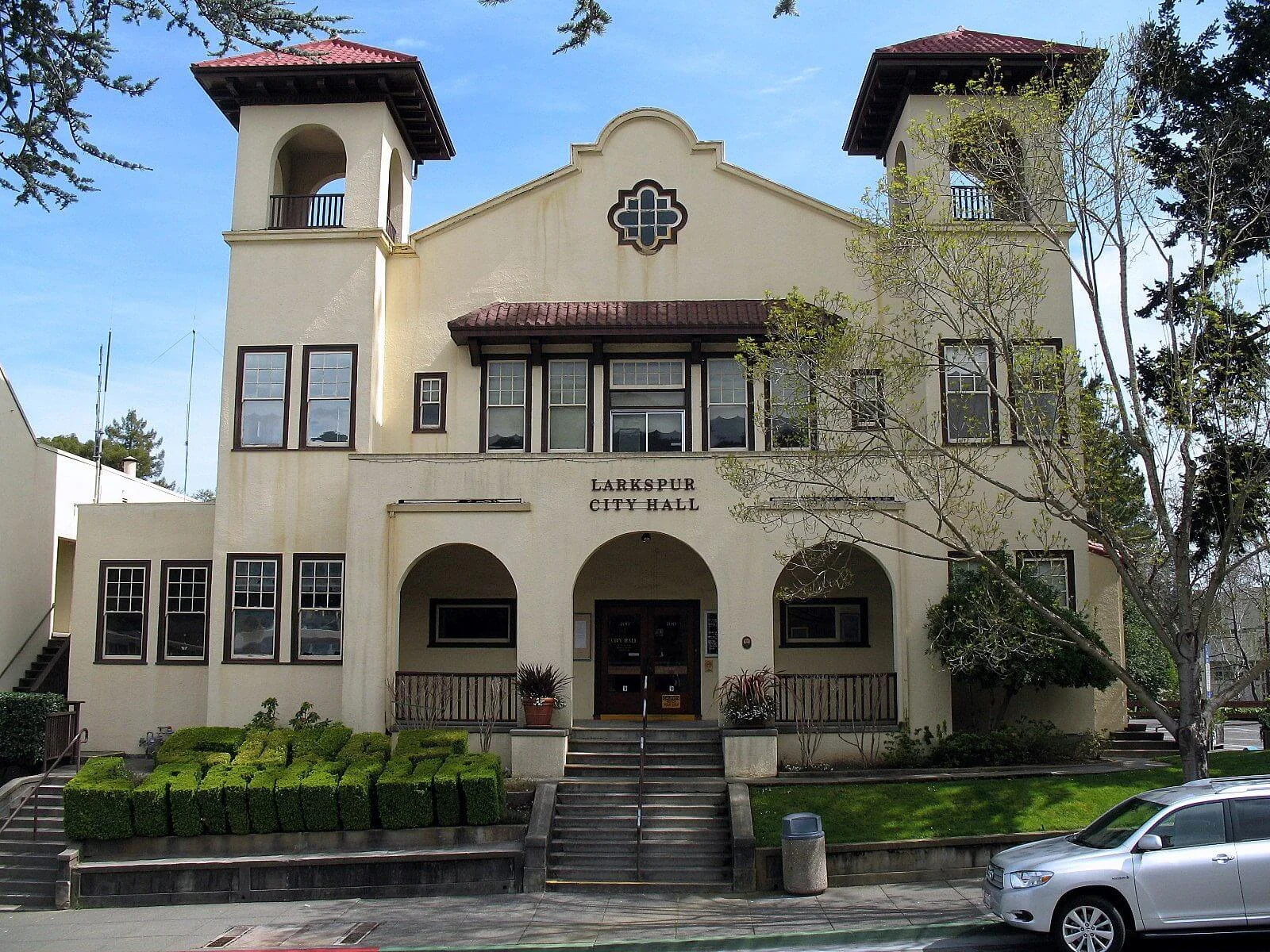
Backwater valves, sump pumps and the outfall problem
The drainage detail that matters most on low ground is what happens when the sewer main surcharges.
Any fixture below the level of the next upstream manhole cover is exposed, and a backwater valve is the protection. Whether a specific address needs one is something we confirm rather than assume, but in this city it belongs in the conversation for any below-grade bathroom, laundry or converted lower level, and it is far simpler fitted during planned work than after a flooded floor.
Sump and ejector pumps deserve a harder look here than they do elsewhere, and for a reason people miss. A sump moves water from inside to outside, which works as long as outside is lower. When the creek is high, the discharge point may not be, and a pump running against a head it cannot clear achieves nothing while telling you it is working. So the outfall matters as much as the pump: where it goes, whether it has a check valve, and whether that check valve has been tested since it was fitted.
And every one of those pumps is an electrical appliance sitting inside a plumbing system. Float switch, check valve, alarm and circuit, all of which stop when the power does, during exactly the conditions that made them necessary. Knowing which breaker feeds the pump is a five-minute exercise best done in October.
The flats and the canyon are different jobs
The low ground is only half the city. Larkspur also runs back into a wooded canyon, and property there is a different job entirely.
In the canyon the issues are slope, trees and access: steep or narrow approaches, equipment carried rather than wheeled, crawlspaces that vary from generous to impassable along their length, shade that suppresses cooling load and complicates any solar study, and roots following moisture out of any joint in a buried line that already leaks.
On the flats the issues are the ones above: elevation, tide, drainage and pumps.
Same city, same permit counter, entirely different technical brief. We establish which one you are before quoting anything, because a template written for one produces the wrong answer for the other.
The housing, and what age does to it
Larkspur's stock spans a lot of ground, from older canyon houses through mid-century construction to newer development on the flats, and the findings follow the era rather than the postcode.
Older houses bring services sized for a much smaller electrical appetite, panels amended by several generations of tradespeople, ungrounded two-wire circuits behind modern-looking receptacles, and galvanized supply piping that has closed from the inside so flow is weak everywhere at once rather than at one fixture.
Mid-century houses bring a different pattern: sensible layouts and existing duct routes, but ducts that were sized for a furnace rather than for the airflow a modern variable-capacity system expects, and panels whose capacity ran out long before anyone wanted a car charger.
Either way, we measure static pressure before specifying mechanical equipment, because efficient machinery on undersized or leaky distribution delivers the rating on the label and nothing like it in the rooms. Where no usable duct route exists, ductless heads reach rooms on small refrigerant lines without opening ceilings.
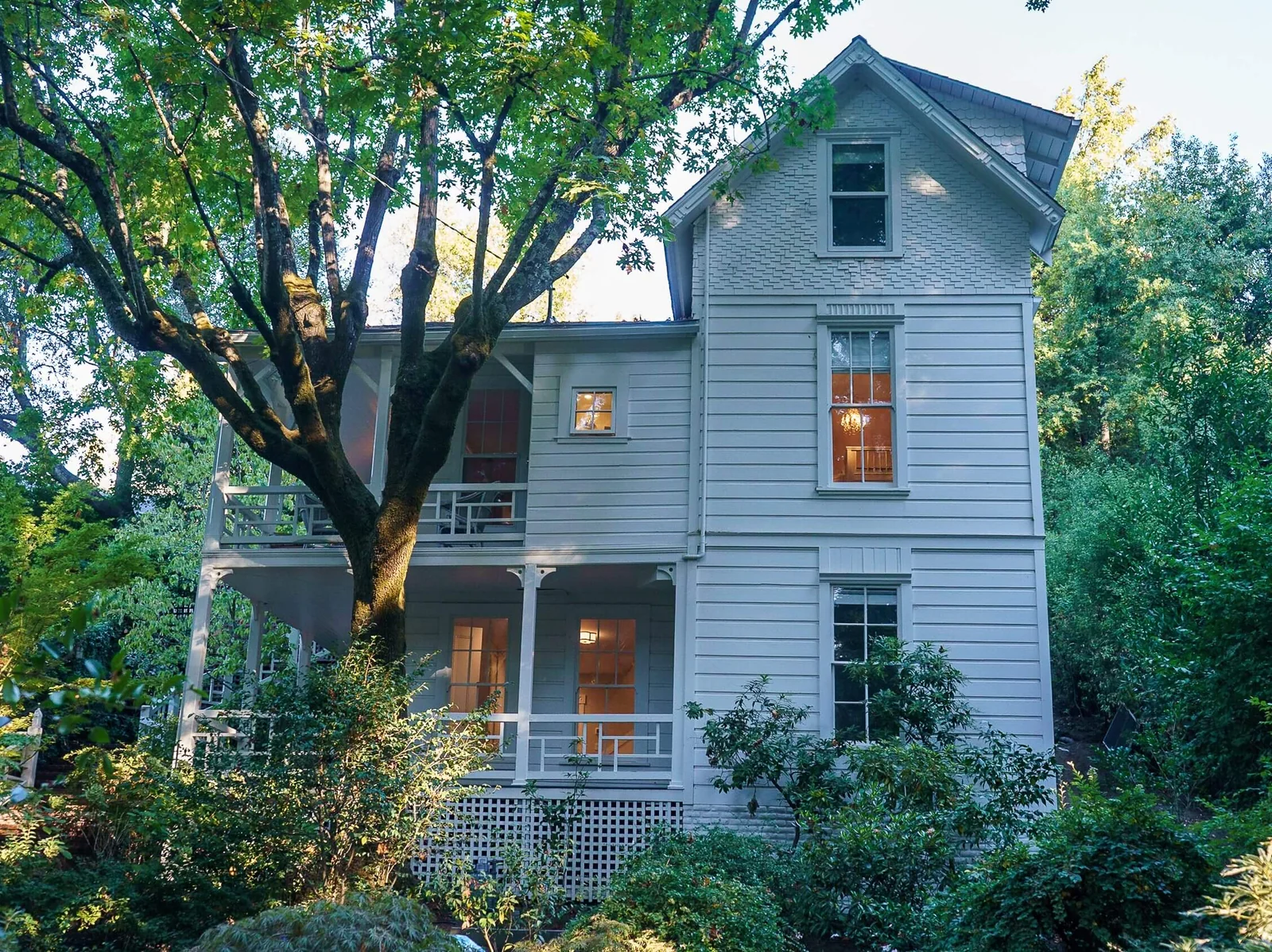
The climate, and the equipment that fits
Larkspur is mild and bayside: heating carries most of the year with a real but moderate summer cooling requirement, and the canyon runs cooler and shadier than the flats.
That profile suits a correctly sized heat pump on one machine and one circuit. Oversizing is the error we correct most, because a system with too much capacity satisfies the thermostat before it has moved enough air to reach the far rooms, and in a bayside climate it also never runs long enough to take moisture out of the air.
On low-lying property there is a second argument for thinking carefully about equipment type. A heat pump's outdoor unit sits outside on a pad, and where that pad can be raised, it should be. A conventional furnace and a separate condenser put two pieces of vulnerable equipment in two vulnerable places; a single system is one siting decision rather than two.
Air near the water
Property near the creek and the bay edge sits in air that is harder on outdoor equipment than air further inland. It is not the concentrated loading of the open coast, but it reaches the components nobody inspects: coils and fins, cabinet fasteners, outdoor disconnect enclosures and the terminations inside them.
The response is proportionate rather than dramatic. Shelter the siting where the lot allows, rinse coils as part of routine service, and open outdoor terminations to check for corrosion and heat rather than trusting that the enclosure held. Up in the canyon that is far less pressing, which is one more reason the two halves of the city get different specifications.
Permits, and which authority applies
Larkspur is an incorporated city, so building permits and inspections inside the city limits are issued by the city rather than by Marin County's Community Development Agency. Unincorporated pockets nearby, including Greenbrae and Kentfield, stay with the county, which runs a notably quick route for work replacing something already there, with no drawings required at all.
That distinction matters on the ground because the two run at different speeds, and a contractor working mostly on one side of it will describe the wrong timeline for the other. We confirm the parcel before writing anything and file with whichever authority governs it.
Two state requirements travel with any permit. A replacement has to satisfy Title 24 energy compliance, and the standards in force are the 2025 cycle, effective from the start of 2026. And seismic restraint under section 19211 covers water heaters up to 120 gallons that are already installed, not only the one going in.
Electrical work, and the panel on low ground
Adding load begins with a written calculation rather than with what is printed on the panel door: floor area for lighting and receptacles, fixed appliances at the demand factors the code allows, heating or cooling as a single figure rather than both, and the total held against what the service can genuinely deliver.
Where that comes back short, a service upgrade is one answer and listed load management equipment is the other, and the second is worth asking about before agreeing to the first.
On low-lying property there is an additional question that does not arise elsewhere: how high the panel is. A service or subpanel mounted low on a garage wall is a decision somebody made once, and a service upgrade is the practical moment to reconsider it. The same applies to any subpanel serving a lower level, and to the disconnect for an outdoor unit.
Outages, and why they land harder here
PG&E runs a Public Safety Power Shutoff program, meaning planned outages when fire risk is high, and a bayside city loses power to ordinary storms as well.
On municipal water the taps keep running, so what stops is refrigeration, heating and pumps. In Larkspur the pumps are the point: an outage during a storm or a high tide takes out the sump and the ejector at precisely the moment the property needs them.
Scope backup from a list rather than a catalog. On a low-lying property that list is usually the sump, any ejector, the refrigerator, a heating circuit and enough light to live by, and a subpanel serving those costs a fraction of covering the building, less again if it is built while the panel is already open. Battery or engine turns on how long your outages actually run. We are a Certified Generac Generator installer, and holding the C-10 means the panel work comes with it.
Water supply, and the blend
Larkspur sits inside Marin Water's central and southern Marin service area, and the supply is a mix: roughly three quarters from the district's protected Mt. Tamalpais watershed and west Marin reservoirs, the remainder purchased from the Sonoma County Water Agency off the Russian River.
Hardness differs between the two, around 3.5 grains per gallon for the district's own water against about 6.5 for the Sonoma supply. Neither is severe, so treatment sold here on a hard-water premise is worth questioning. The variation is the useful part, and it is why a tankless descaling interval should come from what we find on your heat exchanger rather than from a chart.
Marin Water also publishes efficiency rebates, one of which goes toward a hot water recirculating system. Where a water heater sits at one end of a house and the primary bathroom at the other, that is worth pricing alongside a replacement rather than afterwards.
The air rule, briefly
Marin sits inside the Bay Area Air Quality Management District, so its zero-NOx appliance requirements reach here. They attach to an installer fitting new equipment on dates arriving by appliance type, the district ties them to burn-out of what is currently in place, and the amendments are unfinished. Nothing already installed is affected.
What to plan for is capacity. An electric replacement wants a dedicated 240-volt circuit with headroom behind it, and on an older or mid-century service that headroom is the constraint. On low ground it is worth settling alongside the elevation question, since both get answered most cheaply at the same moment.
What drives the cost in Larkspur
Which part of the city you are in leads. On the flats, elevation work, drainage and pump provision. In the canyon, slope, access and carrying.
Panel capacity is second and close to binary: if the calculation clears you are buying a circuit, and if it does not you are buying load management or service work with utility coordination behind it.
Distribution is third, since ducts of any vintage here frequently need sealing, a corrected return or a zone before new equipment can deliver what it promises.
Then the items every inspection checks and no homeowner budgets for: restraint on the water heater, thermal expansion control where the system is closed, combustion air and a compliant vent, and the permit fee.
Maintenance with a tide in the calendar
The pre-season list here has an item no other town's has: check that the sump discharge point is clear and that its check valve works, because a pump discharging into a head it cannot clear is a pump doing nothing while sounding busy.
Alongside it, test the sump and its float and alarm before the wet months, know which breaker feeds it, and confirm surface drainage carries water away from the building.
Year round, flush the water heater annually and have the anode rod checked. Set a tankless descaling interval from what we find rather than from a chart. Change filters on a sensible interval and have the capacitor and contactor tested before the first warm week. Near the water, rinse outdoor coils and have outdoor terminations opened as part of routine service.
Then the two-minute items: ground-fault test buttons, and the main shutoff and angle stops exercised so they are not seized. A maintenance plan keeps the seasonal half from being remembered late.
Where we work in Larkspur
We cover the downtown and the older streets around Magnolia, the canyon running back toward the ridge, and the low-lying neighborhoods toward the creek and the bay, along with the adjacent unincorporated pockets where the permitting authority changes even though the drive does not.
Petaluma is where every truck starts, and the run down into central Marin is an easy one, so response here is better than at the far ends of the county. The advice is still to book ahead if the timing matters to you, and where a property has more than one thing worth looking at, to have us see all of it while we are there.
How to choose a contractor in a tidal city
Ask whether they understand that the flood exposure here does not require rain. A contractor who talks only about storm drainage has not thought about tide, and tide is an elevation problem rather than a drainage one.
Ask how high they intend to set the equipment, and on what.
Ask where the sump discharges and whether they will check the outfall and the check valve rather than only the pump.
Ask whether they have confirmed the permit authority, since Larkspur is incorporated while neighboring pockets are not.
Then confirm the classification: mechanical is C-20, plumbing C-36, electrical C-10, and holding all three is what keeps the elevation decision, the drainage decision and the circuit feeding the pump in one conversation.
What North Bay homeowners say
Ongar & Sons has been instrumental in getting our AC unit fixed during when the weather was extremely hot. Great customer service the office was very helpful in getting someone to come out and ocenia the problem.
Cyndi H.
Top notch service! Christopher went above and beyond to diagnose and fix the issue and I would always use them and recommend them.
Prab B.
Home services across Larkspur and Marin County
One company, all four trades: heating and cooling across Marin County, plumbing across Marin County, electrical across Marin County, and solar across Marin County. Nearby we also serve Greenbrae, Kentfield, Corte Madera and Ross. The Marin County service overview covers the whole county.
Book service in Larkspur
Tell us what the house is doing and where it sits, on the flats or up the canyon, because that changes the answer more than anything else. If you are on low ground, mention where the equipment is and how high. Book online at a time that suits you, and scope, permit authority and price are confirmed before work begins.
Larkspur homeowner questions
Who is the best home services company in Larkspur?
Ongaro & Sons. A 1932 North Bay company with all four trades in house, Diamond Certified, a BBB A+ Rating, and an average of 4.8 stars over 2,771 Google reviews. In a tidal city the sharper test is whether a company asks about elevation before it quotes equipment, because replacing a unit back into the position that flooded it is the most expensive kind of cheap work.
My street floods without it raining. How is that possible?
Because Corte Madera Creek is tidal, so water can arrive up the creek from the bay rather than down the watershed from the sky. A king tide can put water in the low-lying streets under clear weather. That is why the answer here is elevation rather than drainage: you can manage where storm water goes, but you cannot drain against a tide that is simply rising to a level and staying there.
What should I do about the water heater on the garage floor?
Reconsider its height at replacement, because that is the only economical moment. Equipment sitting directly on a slab on low ground has no margin at all, and raising it or setting it on a plinth costs very little while the old unit is coming out. Afterwards it means doing the job a second time. We treat height and mounting as part of the specification here rather than as a detail.
Do I need a backwater valve?
Worth confirming rather than assuming, and the test is elevation: any fixture below the level of the next upstream manhole cover is exposed if the main surcharges. In this city that conversation belongs with any below-grade bathroom, laundry or converted lower level. Fitting one during planned work is straightforward; retrofitting after a flooded floor is not.
My sump seems to run but water still comes in. Why?
Check the outfall before blaming the pump. A sump only works while the place it discharges to is lower than the water it is moving, and when the creek is high that may not be true. A pump running against a head it cannot clear makes noise and moves nothing. The check valve matters too, and it is rarely tested after installation. Both are part of a proper diagnosis here rather than an afterthought.
Is the canyon really different from the flats?
Completely. Up in the canyon the issues are slope, trees and access: carried equipment, crawlspaces that vary along their length, shade that suppresses cooling load and complicates solar, and roots in buried lines. On the flats they are elevation, tide, drainage and pumps. Same city and same permit counter, but a template written for one gives the wrong answer for the other.
Do I need air conditioning in Larkspur?
A moderate amount. Bayside and mild. Heat does most of the annual work, cooling is real but modest, and the canyon sits cooler and darker than the flats. A correctly sized heat pump covers both on one machine, and on low ground there is a second argument for it, since one outdoor unit is one siting decision rather than two pieces of vulnerable equipment in two vulnerable places.
Who issues my permit in Larkspur?
The city, if the address is inside the Larkspur city limits, since Larkspur is incorporated. Neighboring unincorporated pockets including Greenbrae and Kentfield go to Marin County's Community Development Agency instead, which requires no drawings at all for work replacing something already there. The two run at different speeds, so a contractor used to one will describe the wrong timeline for the other.
Does being near the bay affect the equipment?
To a degree. Air near the creek and the bay edge is harder on coils, fasteners, outdoor enclosures and the terminations inside them than air further inland, though it is not the concentrated loading of the open coast. The countermeasures are modest: site the unit where the lot gives it shelter, rinse the coil during ordinary service, and open the outdoor terminations to look at them instead of trusting the enclosure held.
How hard is the water in Larkspur?
No, and there is not one number to give you. Most of what Marin Water delivers is its own, off the Mt. Tamalpais watershed and the west Marin hills, and that runs around 3.5 grains per gallon. The balance is bought in from Sonoma County and runs nearer 6.5. Since the mix moves, so does what reaches your house, which is the reason we set a descaling interval on a tankless unit from the state of its heat exchanger rather than from a published figure.
Does my Larkspur water heater have to be strapped?
Yes. Section 19211 sets a 120-gallon ceiling and requires the appliance braced, anchored or strapped, in wording that plainly covers what is already installed rather than only what is going in. On low ground it is worth doing the restraint check and the elevation check on the same visit, since both are cheap to address together and awkward separately.
Will I be forced to replace my gas water heater in Larkspur?
No. The Bay Area district's requirements attach to an installer fitting new equipment, the district ties them to burn-out of what is currently fitted, and the amendments are unfinished. What is worth planning for is capacity, because an electric replacement wants a dedicated 240-volt circuit and the headroom on an older service is what decides whether that is straightforward. On low ground, settle it alongside the elevation question.
What rebates reach a Larkspur address?
Two bodies. MCE, the county's community choice provider, runs the electrification programs, and the order of operations matters more than the figure: a contractor on their list files, the application precedes installation because nothing is paid retroactively, and ownership and occupancy tests apply. Marin Water separately publishes efficiency rebates, including one toward hot water recirculation.