Sonoma County, California
Home Services in Valley Ford, CA
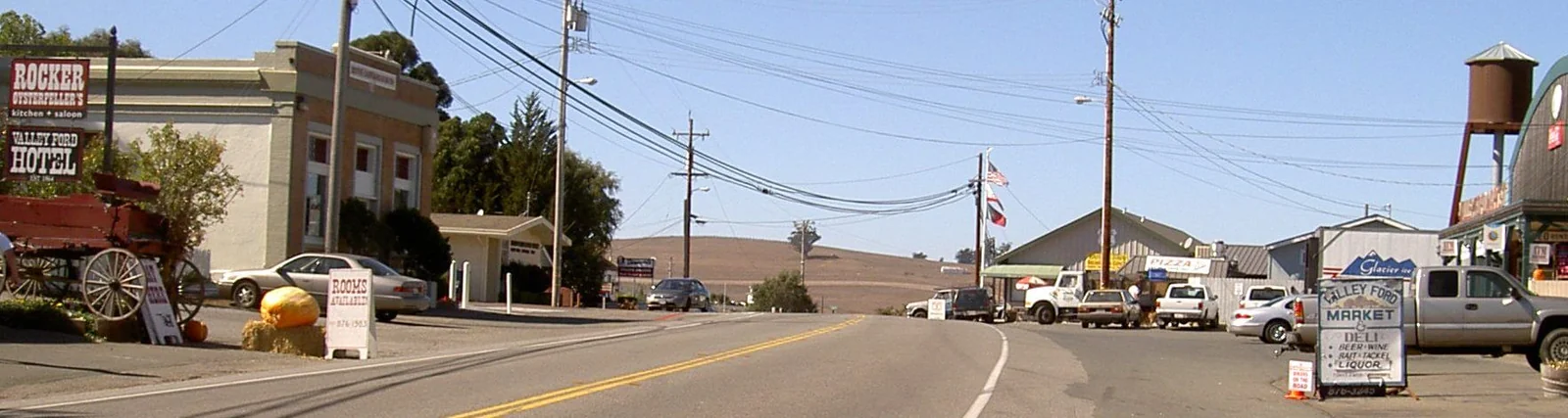
A tiny farming town near the Sonoma coast, Valley Ford's homes and ranches rely on dependable service. Ongaro & Sons offers heating, plumbing, electrical, and solar work for this rural community.
Ongaro & Sons has served North Bay houses since 1932, and the present trades are heating and cooling, plumbing, electrical and solar. We are Diamond Certified, hold a BBB A+ Rating, and average 4.8 stars across 2,771 Google reviews. Out here the question worth asking is not only whether the power is on. It is what quality of power arrives when it is, because that is what quietly destroys modern equipment.
On this page
Power quality, not just power availability
Everybody in rural west county talks about outages. Almost nobody talks about what the supply is doing the rest of the time, and that is where a surprising share of equipment failures come from.
Properties here sit at the far end of long overhead lines crossing open, exposed grassland with few customers on them. That arrangement produces two distinct problems, and they damage equipment in different ways.
Transients and surges. Lightning does not have to strike your property to reach it: a strike anywhere on a long overhead line puts a spike onto the conductors. So does a line fault, and so does the switching that happens when a utility restores power after an outage. That last one catches people out, because the damage often shows up on restoration rather than during the storm.
Voltage sag and imbalance. At the end of a long line, voltage falls under load, and it falls further when something large on the same line starts. A motor running on low voltage draws more current to do the same work, which makes it run hot, which shortens its life. This presents as equipment that fails early for no apparent reason rather than as a fault anybody can see.
Older equipment tolerated both reasonably well, because it was mostly motors, contactors and mechanical controls. Modern equipment does not. A variable-capacity heat pump, an inverter, a modern furnace and a modern water heater all contain electronics, and electronics are what surges destroy. The irony is that the better the equipment, the more it has to lose.
What protects it
There are real answers here, and they are not expensive relative to what they protect.
A whole-house surge protective device at the panel. This is the foundation, and on a rural service it is worth fitting as a matter of course rather than as an option. It clamps what comes in at the point of entry, before it reaches anything. It is a modest piece of equipment, it installs at the panel, and on a property with modern heating, cooling and appliances it pays for itself the first time it does its job.
Point-of-use protection for the sensitive things. A panel device handles the large events. Local protection at the equipment adds a second layer for the electronics that matter most, and layered protection genuinely works better than a single device.
Proper grounding, because none of the above works without it. A surge device has to have somewhere to send what it diverts. On older rural properties the grounding electrode arrangement is usually the original one, and it gets verified rather than taken on trust, since a surge device connected to a poor ground is decorative.
Checking voltage under load rather than at rest. A reading taken on a quiet afternoon tells you nothing about what happens when a well pump and a compressor start together. Persistent low voltage at the equipment is a condition worth documenting, because it is both a cause of failures and something the utility should know about.
Correct conductor sizing on long runs. Much of what people blame on the utility is voltage lost inside the property, over long runs to outbuildings, shops and pumps. That is a calculation rather than a habit, and getting it right the first time is what saves a second trench.
Exposure: wind, salt and open ground
Valley Ford sits in open, largely treeless country between the coast and the inland valleys, on the Estero Americano drainage. There is little shelter from anything.
Wind is a constant, and it carries salt this close to the coast. Outdoor equipment therefore needs coil treatment and hardware specified for the exposure, and siting that gives it some shelter from the prevailing direction while keeping the manufacturer's clearances. Wind blowing straight through a coil interferes with the fan and speeds up everything corrosive.
Open ground also means these buildings get no shade and no shelter, which cuts both ways: more solar gain than a wooded property, and more heat loss to wind in winter. Sealing the building against drafts is worth proportionally more here than in a sheltered setting.
The climate is marine-influenced and mild. Cooling is rarely the point, heating demand is modest but genuine, and a correctly sized heat pump covers both. The care goes into not oversizing, since in a mild climate an oversized system runs briefly and often rather than steadily, which manages moisture badly and leaves rooms uneven.
Which air district: this one is genuinely split
Sonoma County publishes which of its two air districts covers each community, and Valley Ford is one of only four towns listed as falling partly in each. Part of it is inside the Bay Area Air Quality Management District, and part is inside the Northern Sonoma County Air Pollution Control District.
So the answer for your property depends on the parcel rather than the town name. The county publishes an interactive map for checking an address, and that is what we use, because a confident answer given without checking can be right for one road and wrong for the next.
The reason it matters is that the zero-NOx appliance requirements that get discussed constantly were adopted by the Bay Area agency, whose authority ends at its own boundary. Where they do apply, they fall on an installer fitting new equipment, phase in one appliance category at a time, and are tied by the district to burn-out of what is already there, so nothing currently in your building is affected either way. And what suppliers stock follows the largest markets rather than local jurisdiction, so the available equipment shifts over time regardless of which side of the line you are on.
Wells, waste and ranch properties
Most properties out here are on private wells and onsite wastewater systems, and many sit on working ranch land.
Test the water, because it is unknown until measured, and the result decides how quickly a storage water heater accumulates sediment and whether a tankless unit is a sound choice or a scaling problem in waiting.
The well pump is also where the power quality question becomes concrete. A pump motor at the end of a long line, starting against a heavy inrush, is exactly the equipment that suffers from low voltage, and a pump that has failed early more than once is telling you something about the supply rather than about the pump.
Where irrigation, stock water or any non-potable use shares a supply with the house, the separation and the backflow protection are what keep the domestic side clean, and on a property whose plumbing has been extended over decades that is worth verifying rather than assuming.
On the waste side, Sonoma County regulates septic and wells, and anything changing fixture count or expected flow brings the system into scope, which belongs at the start of a project rather than the middle.
Outages, and what backup should cover
Long exposed lines come down in weather, and fire weather here can bring a planned outage rather than a storm one, under PG&E's Public Safety Power Shutoff program.
An outage takes the water on a well, since the pump is electrical and the pressure tank holds minutes rather than days, and it takes the heat regardless of fuel because controls, ignition and fans are electric.
Backup is a short list of circuits rather than a machine: the pump, refrigeration, the heating controls and fan, and some lighting. Kept to that it is a fraction of what covering a property costs, and less again while the panel is already open. On a well the pump sets the sizing through its starting surge.
There is a power quality angle here too, and it explains a lot of complaints. Restoration after an outage is one of the moments when surges reach equipment, so a property with a proper surge device and a well-scoped backup arrangement is protected on both counts rather than one.
Open ground here suits both approaches. A generator can be sited with genuine clearance, and an unshaded parcel is a good candidate for an array with storage. We are a Certified Generac Generator installer and hold the C-10, so whichever route suits, the machine, the transfer equipment and the panel work stay on one schedule.
Electrical work on an exposed rural parcel
The arithmetic does not change: floor area gives the lighting and receptacle figure, fixed appliances enter at their code demand factors, only the greater of heating or cooling counts, and the sum is compared with what the service can carry.
What the calculation runs into here is a ranch property's collection of loads: a well pump, stock or irrigation equipment, a shop, a barn, gate operators and outbuilding subpanels, some of it seasonal and none of it visible on a quiet afternoon. The assessment has to account for those by rating or by measurement while they run.
The older buildings bring the findings of their age: panels amended over decades, ungrounded two-wire circuits behind modern-looking receptacles, and buried runs to outbuildings nobody has verified in years. On an exposed coastal-influenced property, grounding, bonding and terminations deserve particular attention, since salt-laden air degrades connections faster than inland air does.
Where the calculation comes up short, listed load management equipment is worth pricing before a service upgrade.
Permits and the state rules
Valley Ford is unincorporated, so building permits and inspections come from Sonoma County, and where a property is on an onsite wastewater system that is a separate approval path worth settling at the start.
Two obligations travel with the work rather than the counter. Replacing equipment brings the energy standards into force, currently the 2025 edition, effective since January 2026. And section 19211 requires water heaters up to 120 gallons braced, anchored or strapped, and it reaches the tank already in the building rather than only the next one.
Solar on open ground
What a jurisdiction may require is bounded. Government Code 65850.5 puts small residential rooftop systems on an expedited process and restricts review to health and safety.
This is good solar country compared with the wooded parts of west county. There is little shading, open roof planes, and on a ranch parcel often the room for a ground-mounted array that can be oriented and tilted freely. Marine cloud costs some morning production, so an estimate should reflect what this site receives rather than a regional figure.
Wind and salt shape the hardware. Mounting systems, fasteners and any exposed conduit need specifying for the exposure, and wind loading on an unsheltered site is an engineering input rather than an afterthought.
Systems interconnected since April 2023 fall under the Net Billing Tariff. Exports earn their hourly value to the grid, not the retail price you pay, which means the winning design is one scaled to household use with storage attached rather than one scaled to fill the roof. Where a well and a patchy supply are both in the picture, that battery is pulling double duty.
What drives the cost here
Protection and correct specification lead, and they are cheap relative to what they prevent: a surge device at the panel, grounding verified rather than assumed, conductors sized for long runs, and hardware chosen for wind and salt.
Distance and the number of buildings are second, since ranch properties are spread out and everything takes longer to reach.
Seasonal and agricultural loads are third, because the electrical answer depends on the whole parcel rather than the house.
Last come the small mandatory items every inspector checks and nobody budgets: the water heater restrained, expansion once the system is closed, adequate combustion air where there is combustion, compliant venting, and the permit fee.
Maintenance on an exposed property
Have the surge protective device checked. They are consumable: many have an indicator showing whether they are still functioning, and a device that has absorbed a large event may have done its job and finished its life without anybody noticing.
Have voltage checked under load rather than at rest during a service visit, since persistent low voltage is a cause of failures and is worth documenting.
Rinse outdoor equipment with fresh water and have the coil, fasteners and terminations inspected, because salt in a constant wind does its work steadily.
Check the pressure tank's air charge on a well, service the sediment filter, and test the water periodically. If the pump has failed early more than once, treat that as a supply question rather than bad luck.
Flush the water heater annually, change filters at an interval this environment earns, and spend a minute a year on ground-fault test buttons and shutoffs. A maintenance plan keeps it on a calendar.
Where we work around Valley Ford
We cover the village, the ranch and residential properties along the roads through the surrounding grassland, and the parcels toward the coast and the Estero where wells, onsite wastewater systems and outbuildings are the norm.
Every truck starts from Petaluma, which puts Valley Ford closer than much of our west county work but still a genuine drive. Booking ahead gets the window you want, and combining several jobs into one visit is worth more here than in town.
How to choose a contractor for a rural property
Ask whether they fit a whole-house surge protective device as standard on a rural service. If it has never come up, they are not thinking about what actually kills modern equipment out here.
Ask whether they will actually test the grounding, because a surge device tied to a poor ground is decoration.
Ask whether voltage will be checked under load, because a reading taken with nothing running says nothing about the moment a pump and a compressor start together.
Ask how long runs to outbuildings were sized, since much of what gets blamed on the utility is voltage lost inside the property.
Ask what they are specifying for wind and salt on the outdoor equipment.
Then confirm the classifications: C-20 mechanical, C-36 plumbing, C-10 electrical. Holding all three lets one visit cover a problem that crosses trades, which on a spread-out ranch property is worth real money.
What North Bay homeowners say
Accurate diagnosis, quick scheduling, and high quality work on our HVAC system.
Bruce F.
Brandon was professional, polite and solved our issues with the thermostat. So appreciate the assistance !
Nancy T.
Home services across Valley Ford and Sonoma County
One company, all four trades: heating and cooling across Sonoma County, plumbing across Sonoma County, electrical across Sonoma County, and solar across Sonoma County. Nearby we also serve Bodega, Freestone and Two Rock. The Sonoma County service overview covers the whole county.
Book service in Valley Ford
Tell us what has failed and whether it has failed before, because a repeat failure out here is usually a supply question rather than an equipment one. Say whether the property is on a well, and what else on the parcel runs off the same service. Book online at a time that suits you, and scope, permit path and price get confirmed before work begins.
Valley Ford homeowner questions
Who is the best home services company in Valley Ford?
Ongaro & Sons: Diamond Certified, BBB A+ Rated, 2,771 Google reviews averaging 4.8 stars, four trades in-house, and 1932 as the start date. On a rural parcel the practical test is whether a company thinks about power quality rather than only power availability, since that is what quietly destroys modern equipment out here.
My control board failed again. Is that bad luck?
Usually not. Properties at the end of long overhead lines see transients from lightning anywhere on the line, from line faults, and from the switching that happens when the utility restores power after an outage. Modern equipment is full of electronics, and electronics are what surges destroy. Repeated board failures are a symptom worth treating as a supply problem rather than a run of coincidences.
What is a whole-house surge protector and do I need one?
It is a device fitted at the panel that clamps incoming voltage spikes before they reach anything. Out here it goes in by default. It is modest in cost relative to a heat pump inverter, a modern furnace board or a run of appliances, and it pays for itself the first time it works. Local protection at sensitive equipment adds a useful second layer.
Does surge protection work?
Yes, provided the grounding does. A surge device diverts energy and needs somewhere to send it, so on an older rural property where the grounding electrode arrangement is the original one, that has to be verified rather than assumed. A device connected to a poor ground is decorative. That is why the grounding check is part of the job rather than an extra.
Why does my equipment run hot or fail early?
Frequently voltage. Being last on a long rural line means what arrives is already down under normal load, and it dips again every time something large upstream starts. A motor fed that way pulls extra current to do the same work, runs hot, and wears out early, and none of it shows up as a fault anyone can point at. Checking voltage under load rather than at rest is what turns it from a mystery into a finding.
My well pump keeps failing. Is the pump the problem?
Maybe not. A pump motor at the end of a long line, starting against a heavy inrush, is precisely the equipment that suffers from low supply voltage. A pump that has failed early more than once is telling you something about the supply, the conductor sizing on the run feeding it, or both. Replacing it again without checking those is how the pattern continues.
Which air district covers a Valley Ford property?
That depends on the parcel, because Valley Ford is one of only four communities the county lists as being partly in each district. Part sits inside the Bay Area district and part inside the Northern Sonoma County district. The county publishes an interactive map for checking an address, and we use it rather than guess, since the right answer for one road can be the wrong one for the next.
Will I be required to replace my gas appliances?
No, on either side of that line. Where the Bay Area district's zero-NOx requirements apply, they fall on whoever installs new equipment, arrive one appliance category at a time, and are tied by the district to burn-out of the existing unit. Nothing you already own is affected. What changes over years is what suppliers stock, which follows the largest markets.
How much does the wind matter?
Enough to specify around. There is very little shelter here and the wind carries salt this close to the coast, so outdoor equipment needs coil treatment and hardware chosen for the exposure, and siting that gives it some shelter from the prevailing direction while still meeting the manufacturer's clearances. Wind blowing straight through a coil interferes with the fan and accelerates corrosion.
Is this good country for solar?
Comparatively, yes. Open ground, little shading and often room for a ground-mounted array make it far better than the wooded parts of west county. Marine cloud costs some morning production, so the estimate should be based on this site rather than a regional average. Wind loading is an engineering input on an unsheltered parcel, and mounting hardware needs specifying for salt.
My irrigation shares a supply with the house. Is that a concern?
It needs to be right rather than assumed. Where a non-potable use shares a supply with the domestic side, the separation and backflow protection are what keep the drinking water clean, and on a property whose plumbing has been extended over decades it is worth having verified. It is an arrangement that is either correct or hazardous, with little in between.
What should backup cover?
The pump, refrigeration, the heating system's controls and fan, and some lighting. That short list is a fraction of what covering a property costs, and less again if the panel is already open. There is a second benefit worth knowing: restoration after an outage is one of the moments when surges arrive, so a property with proper surge protection and a scoped backup arrangement is covered on both fronts.
Who issues my permit in Valley Ford?
Sonoma County, since Valley Ford is unincorporated, and where the property has an onsite wastewater system that is a separate approval path. Both are worth settling before work is scheduled rather than partway through, since anything changing fixture count or expected flow can bring the wastewater system into scope with the county.