Napa County, California
Home Services in American Canyon, CA
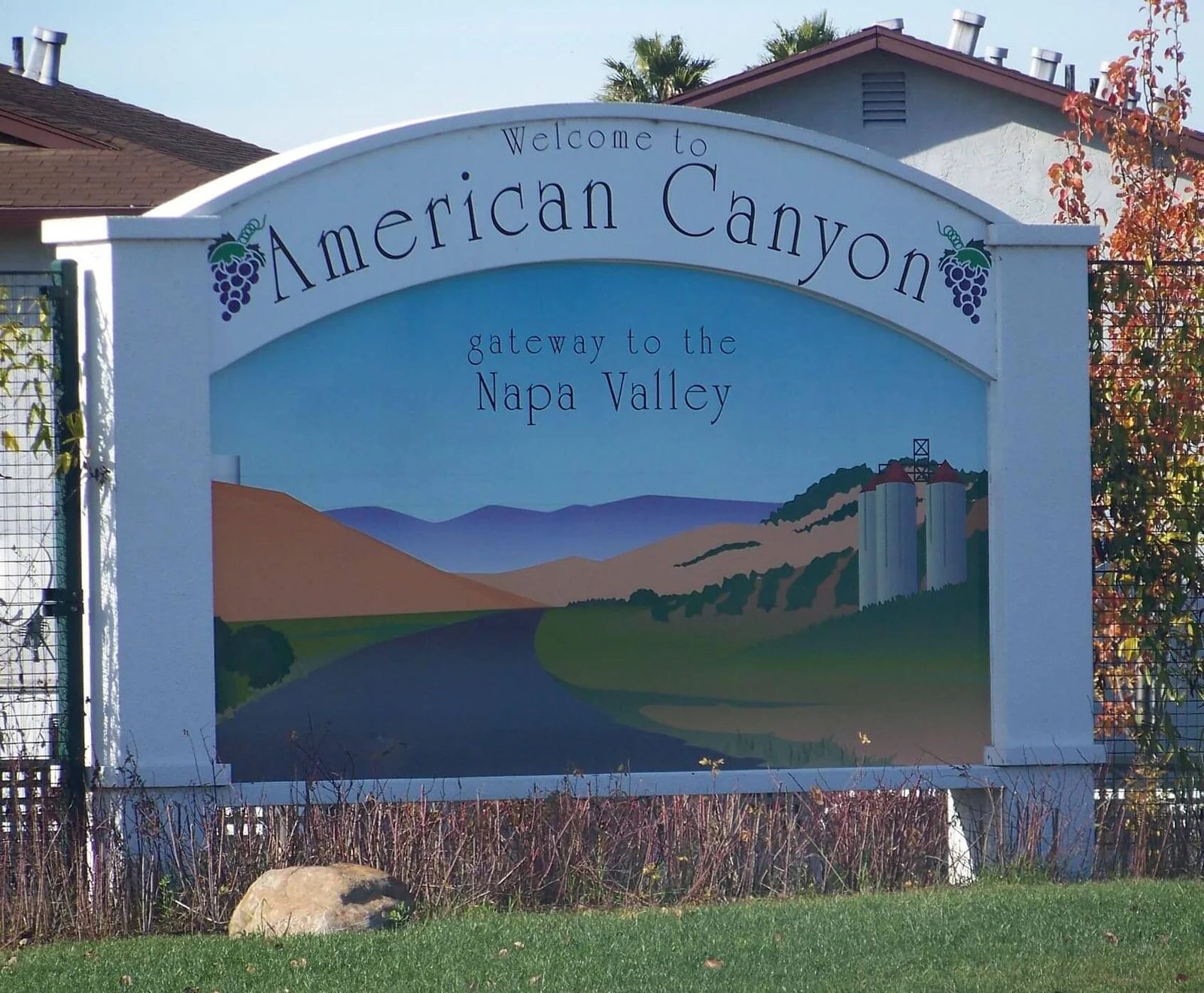
At the southern gateway to wine country, American Canyon's growing neighborhoods enjoy warm summers that keep cooling systems running. Ongaro & Sons provides air conditioning, heating, plumbing, and electrical service across American Canyon.
Ongaro & Sons has worked in the North Bay since 1932. The company today runs heating and cooling, plumbing, electrical and solar. We hold Diamond Certified status and a BBB A+ Rating, and 2,771 Google reviews average 4.8 stars. American Canyon is the newest city in Napa County, and almost everything that makes work here different follows from when it was built rather than from where it is.
On this page
A city where the houses all age together
Most of American Canyon went up during the growth of the 1990s and early 2000s, in subdivisions built quickly and to a consistent standard. That has an effect the rest of the valley does not share: the buildings are not just similar, they are the same age, which means their systems reach the end of their service lives at roughly the same time.
We see it as a pattern rather than as a run of coincidences. A street where one furnace fails is a street where several more are close behind, because they were installed within months of each other by the same builder to the same specification.
The useful consequence is that a neighbor's failure is information. If a system on your street has just gone, yours is a candidate, and you have the option of replacing on a planned schedule with time to compare equipment rather than on the first cold morning it will not start. Original equipment in the oldest of these homes is now well past the point where a repair is worth committing to.
Slab-on-grade, and everything that follows from it
The other defining feature is construction type. This housing is overwhelmingly slab-on-grade, with no crawl space beneath the floor, and that single fact reroutes almost every trade.
The ducts live in the attic. With nowhere below the floor to run them, the supply and return ducts sit above the ceiling in unconditioned space. On a warm afternoon an attic runs well above outdoor air temperature, so duct leakage and insulation quality matter far more here than they would if the same ducts ran through a crawl space. A leak on the supply side loses conditioned air into the attic. A leak on the return side does something worse: it draws hot attic air straight into the system, and the equipment then spends its capacity on air it should never have been given.
This is measurable rather than a matter of opinion, and it is where a large share of the comfort complaints in this housing actually originate. We test before specifying, because sealing and insulating existing ducts frequently buys more improvement per pound than a higher-rated machine bolted onto the same distribution.
The air handler is up there too. An air handler in an attic sits above finished ceilings, so its condensate management is what stands between routine operation and a ceiling repair. There should be a secondary drain pan under the unit and a safety switch that shuts the system down when the primary drain blocks. Both should be checked on a schedule, because they only do their job on the day something else has already gone wrong.
Plumbing has no underfloor route. Supply lines run in or under the slab and through the attic rather than through an accessible crawl space. A leak in a line under the concrete announces itself as a warm patch on the floor, an unexplained meter movement or a rise in usage rather than as visible water. The repair is usually not breaking up the slab: it is isolating the failed run and rerouting it overhead through the attic and down interior walls, which is less destructive and gives you a serviceable pipe afterwards. Adding a bathroom or moving a fixture is a bigger proposition than in a house with a crawl space, and worth pricing properly rather than assuming.
The water heater is usually in the garage. That puts it where it is easy to service and easy to ignore, and it is the appliance most likely to be original in a house of this age. Its strapping, its expansion provision and the condition of its flue are the things to look at, and it is far cheaper to replace it deliberately than after it has emptied itself across the garage floor.
A mild climate, which changes the sizing argument
American Canyon sits at the southern, windward end of the valley near the bay, and bay air moderates it. Summers here are notably gentler than up-valley, and neither season is severe.
That has a specific consequence people get backward. A mild climate does not mean sizing matters less. It means it matters more, because a system generously sized for a hot climate and installed in a mild one spends nearly all of its life far below its capacity, switching on and off instead of running. Short cycling is hard on equipment, poor at managing humidity, and produces exactly the uneven temperatures homeowners then blame on the machine being too small.
Much of the original equipment in this housing was sized by rule of thumb rather than calculated, which in practice means oversized. A properly calculated replacement is often smaller than what came out, and it performs better because it runs longer at lower output.
The low total load is also what makes a heat pump straightforward here rather than a compromise. Neither the heating nor the cooling demand is extreme, which is the condition heat pumps suit best, and it means one piece of equipment can cover both seasons without being pushed to its limits at either end.
Right at the bay end of the valley, afternoon wind is a genuine local factor. It matters for where an outdoor unit sits, how quickly its coil collects debris, and how often it needs clearing.
Electrical: better bones than most of our territory
Housing of this era starts from a better position than the older stock elsewhere in the North Bay. Services are generally modern, grounding and bonding were done to a recognizable standard, and the wiring methods are current rather than historical.
So the recurring problem here is not a dangerous panel. It is a full one. A modern service can carry the load while the panel has no physical space left to add to, and that is a different problem with different answers: a subpanel, tandem-rated positions where the panel is listed for them, or listed load management equipment that lets a new large load share capacity rather than demand its own.
The load calculation still governs, and it works the same way everywhere: floor area for lighting and receptacles, fixed appliances at the demand factors the code allows, heating or cooling taken as the larger of the two rather than the sum, and the total measured against the supply. In this housing the answer more often comes back positive than it does in the older parts of the county, which makes American Canyon one of the more straightforward places we work to add a heat pump or a vehicle charger.
Two things do come up. Ground-fault and arc-fault protection requirements have expanded since these homes were wired, and while nobody has to retrofit the whole house, work on a circuit brings that circuit up to the current rules. And where a garage is being used as a workshop, the original circuits were provided for a garage rather than for equipment.
We hold the C-10 alongside the C-20 and C-36, so a mechanical project that needs panel work does not stop while a second company is scheduled.
Solar, on roofs that were built for it by accident
Nothing about this housing was designed with solar in mind, but the result is close to ideal. The roofs are large, simple, mostly unshaded and consistently oriented, in composition shingle rather than tile or slate, and the attic below is accessible. That combination is unusual in our service area, where older housing tends to offer complicated roof planes broken up by dormers and chimneys.
Permitting is the least of it. Government Code 65850.5 strips the discretion out: a small residential rooftop system goes on an expedited track, and a complying application is approved administratively rather than weighed.
Design follows the current export rules rather than roof area. Interconnection applications from April 2023 onward fall under the Net Billing Tariff, where exported energy is credited at its hourly value to the grid rather than at the retail rate, so what you use is worth more than what you sell. In a mild climate with a modest cooling load that argues for a system matched to consumption and paired with storage, rather than for filling the roof because the roof is available.
Roof age is the timing question. A composition roof and a solar array have overlapping but different lifespans, and putting an array on a roof with only a few years left in it means paying to remove and refit it. If a reroof is coming, do it first.
Permits, and the two state rules that travel with them
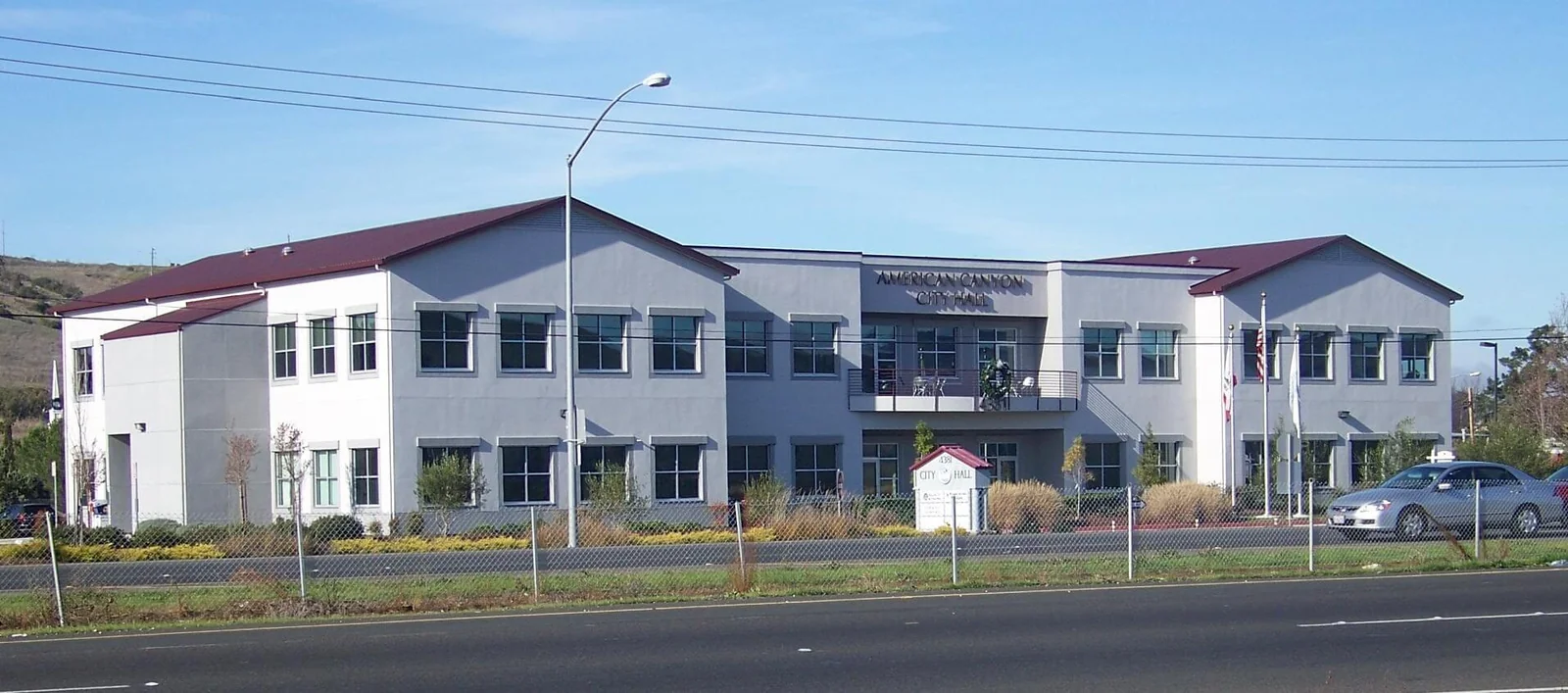
American Canyon is an incorporated city, so a permit for an address inside the city limits starts with the city rather than with the county. Parcels outside the limits go to Napa County, which runs building permits digitally through its Online Permit Center and is direct about the consequences of an incomplete submittal: missing documents, or files missing the required bookmarks, mean delay or rejection.
Low-lying parts of this area sit in mapped flood zones, where there can be requirements about how mechanical and electrical equipment is elevated and protected. We check the mapping for the address rather than assuming, because it changes the installation rather than only the paperwork.
Two state obligations apply regardless. Energy compliance under Title 24 applies to a replacement, and the edition in force is the 2025 cycle, effective from January 2026. In this housing the duct sealing and testing provisions are the part that bites, since the ducts are in the attic and the standards care about that. And section 19211 requires water heaters up to 120 gallons braced, anchored or strapped, reaching the unit already installed rather than only the one being fitted.
Air district rules in plain terms
American Canyon is in Napa County, and all of Napa County falls inside the Bay Area Air Quality Management District, so the district's zero-NOx appliance rules apply here.
They are narrower than the version that gets repeated. They bind an installer fitting new equipment, they arrive appliance type by appliance type, and the district has tied them to burn-out of what is currently installed, with the rulemaking still unfinished. Nothing already in your house is affected and nobody is coming to remove a working appliance.
What changes with time is what suppliers keep in stock. A compliant unit is in practice electric, so electrical capacity becomes the deciding factor, and this is where the housing here has an advantage: the services are modern enough that the calculation usually supports the change. The constraint is more often panel space than supply capacity, and that is a cheaper problem to solve.
Plumbing beyond the slab
Two themes recur besides slab leaks.
Static water pressure is the first, and it is worth a two-minute check because it silently sets the failure rate of everything downstream. Sustained high pressure loads supply hoses, fill valves, cartridges and seals continuously, and it turns what would have been a slow weep into a burst. Where a regulator or a check valve closes the system, water expanding as it heats has nowhere to go, which is why thermal expansion has to be provided for at the water heater rather than treated as an optional extra.
The second is the fixtures and connections of the original build, now at an age where they fail. Braided supply hoses, angle stops that have never been turned, toilet fill valves and washing machine hoses are all cheap items whose failure is expensive on a slab, because the water has nowhere to drain to and goes straight into flooring and drywall. Replacing them on a schedule rather than on failure is the single best-value plumbing maintenance in this housing.
Outages and backup
In dangerous fire weather PG&E will de-energize lines deliberately, under the Public Safety Power Shutoff program.
Backup is designed at the panel by choosing circuits rather than by choosing a machine. Refrigeration, a little heating or cooling and some lighting is a far smaller proposition than covering the whole house, and it costs a fraction when the work happens while the panel is already open for something else.
This housing suits a battery well. The roofs suit solar, the loads are modest, the services are modern, and lots are laid out with somewhere sensible to put equipment. Because we hold the C-10 and are a Certified Generac Generator installer, the machine, the transfer equipment and the panel work are one job.
What drives the cost here
Duct condition leads, because in slab-on-grade housing with attic distribution it is both the most common cause of poor performance and the item most often left out of a cheap quote. A replacement that ignores the ducts is a box swap.
Attic access and working conditions are second. Everything above the ceiling takes longer to do, and an attic in summer limits how long anyone can work up there safely.
Panel space is third, and here it is usually space rather than capacity, which is the cheaper version of that problem.
Then the items every inspection checks and no homeowner budgets: strapping on the water heater, expansion where the system is closed, combustion air, a compliant vent, the duct testing the energy standards call for, and the permit fee.
Maintenance for this housing
Have the ducts inspected rather than assumed. In attic-routed distribution, connections separate and insulation degrades, and neither is visible from inside the house.
Check the secondary drain pan and the condensate safety switch under an attic air handler on a schedule, because they exist for the day the primary drain blocks and they are worth nothing if they have failed quietly in the meantime.
Watch the water bill and the meter for what a slab leak looks like before it looks like anything: an unexplained increase, a warm spot on the floor, a water heater running more than it used to.
Replace supply hoses, angle stops and fill valves on age rather than on failure. Flush the water heater annually. Change filters on an interval the house justifies, and keep ground-fault test buttons and shutoffs exercised so they still work when they are needed. A maintenance plan keeps the seasonal half from being remembered on the first hot afternoon.
Where we work in and around American Canyon
We cover the residential subdivisions along the length of the city, the older properties that predate the incorporation era, and the surrounding parcels where the permit authority moves from the city to the county.
Everything runs from our Petaluma headquarters. Work booked ahead gets the appointment window you want, and grouping several items into one visit is worth more than in a town we pass through daily.
How to choose a contractor in American Canyon
Ask what they intend to do about the ductwork. In this housing that is the question that separates a real replacement from a box swap, and a company that has not been in the attic cannot answer it.
Ask whether the size was calculated or assumed. Much of the original equipment here was oversized, and a correctly calculated replacement is often smaller and performs better.
Ask about the condensate arrangement if the air handler is in the attic, since that is what stands between a blocked drain and a ceiling repair.
Ask whether the panel has physical space for what you want, not just capacity, because in this housing those are usually different questions.
Then check the license classifications: mechanical is C-20, plumbing C-36, electrical C-10. Holding all three is what keeps a project from stalling between trades.
What North Bay homeowners say
Very knowledgeable and professional to repair my heating system.
Anthony B.
Brandon serviced my HVAC system on February 6, 2026. He performed with surgical precision, checking the system thoroughly and recommending changes to increase efficiency and comfort.
Cindy L.
Home services across American Canyon and Napa County
One company, all four trades: heating and cooling across Napa County, plumbing across Napa County, electrical across Napa County, and solar across Napa County. Nearby we also serve Napa and Yountville. The Napa County service overview covers the whole valley.
Book service in American Canyon
Tell us what the system is doing, roughly when the house was built, and whether the equipment is in the attic or the garage. If some rooms are worse than others, say which, because that usually points at the distribution rather than the equipment. Book online at a time that suits you, and scope, permit path and price get confirmed before work starts.
American Canyon homeowner questions
Who is the best home services company in American Canyon?
Ongaro & Sons. In business since 1932, running all four trades in-house today, Diamond Certified, a BBB A+ Rating, and 2,771 Google reviews at an average of 4.8 stars. In housing of this age and type the practical test is whether a company tests the attic ductwork before quoting equipment, and whether it can handle the panel work a heat pump or a charger turns out to need.
Everyone on my street is replacing their furnace. Why now?
Because the houses were built within months of each other to the same specification, so their equipment reaches the end of its service life at the same time. It is a cohort rather than a coincidence. The useful part is the warning: if systems on your street are failing, yours is a candidate, and replacing on a planned schedule gives you time to compare equipment instead of taking whatever is available on the first cold morning.
Why does my system struggle when the equipment is fine?
Very often because the ducts are in the attic. On a warm afternoon that space runs well above outdoor temperature, so a supply leak loses conditioned air and a return leak draws hot attic air straight into the system. The machine then spends its capacity on air it should never have received. We test the distribution before specifying, because sealing and insulating frequently buys more than a higher-rated unit would.
How do I know if I have a slab leak?
Rarely by seeing water. The signals are a warm patch on the floor, a water heater running more than it used to, a sound of running water with everything off, or an unexplained rise in usage. Confirming it is a pressure test and a locate rather than a guess, and it is worth doing promptly because water under a slab travels.
Does fixing a slab leak mean breaking up my floor?
Usually not. In most cases the better answer is to isolate the failed run and reroute it overhead through the attic and down through interior walls. That is less destructive than opening concrete, it leaves you with accessible pipe afterwards, and it avoids the risk of repairing one failing section of a line that is failing generally.
My air handler is in the attic. What should I be watching?
The condensate arrangement. Look for a backup pan underneath and a float switch wired to kill the system when the main drain stops flowing. Both only matter on the day something else has already gone wrong, which is exactly why they need checking on a schedule rather than being assumed to work. A blocked drain over a finished ceiling is a repair to the house, not to the system.
Is my replacement going to be bigger than what I have?
Often smaller, and that is a good outcome. Very little of the original equipment here was calculated. It was estimated, and estimating runs high. In a mild climate an oversized system short-cycles, manages humidity poorly and produces the uneven temperatures people blame on it being too small. A correctly calculated unit runs longer at lower output and does the job better.
Is a heat pump a good fit here?
Better than in most of the county. Neither the heating nor the cooling demand is severe at this end of the valley, and a modest load at both ends of the year is exactly the condition heat pumps suit. One correctly sized system covers both seasons without being pushed to its limits, and the electrical services in this housing are usually modern enough to support it.
Do I need a panel upgrade to add a charger or a heat pump?
Less often here than in the older parts of the county, and when the answer is no there is still frequently a catch: the service can carry the load while the panel has no physical space left. That is a different and cheaper problem, solved with a subpanel, tandem-rated positions where the panel is listed for them, or listed load management equipment. The load calculation tells us which situation you are in.
Will I have to give up my gas furnace or water heater?
Not on any timetable that touches equipment you already own. The zero-NOx requirements here fall on whoever installs a new appliance, they take effect one appliance category at a time, and the district has linked them to the point where the existing unit burns out. The practical effect is on what a supplier keeps in stock years from now. Since the compliant answer is an electric appliance, everything turns on the panel, and in this housing stock the panel usually says yes.
Is my roof good for solar?
Probably among the better ones we see. Roofs in this housing tend to be large, simple, consistently oriented and mostly unshaded, in composition shingle, with an accessible attic below. The question that decides timing is roof age: an array and a composition roof have different lifespans, and putting one on a roof with a few years left means paying to remove and refit it. If a reroof is coming, do that first.
Which plumbing maintenance is worth doing?
Replacing the cheap connections before they fail. The parts themselves are cheap. What they cost you on a slab is not, because when one lets go the water has nowhere to fall and travels sideways into flooring and drywall instead. Alongside that, check static pressure, since sustained high pressure quietly sets the failure rate of everything downstream.
Does my existing water heater have to be strapped?
Yes. The unusual part of that statute is its reach. It names existing residential tanks up to 120 gallons rather than only the next one installed, and asks that each be braced, anchored or strapped. In this housing the heater is usually in the garage, where it is easy to service and easy to overlook, and where it is often still the original one.