Marin County, California
Home Services in Fairfax, CA
Tucked into wooded Marin hillsides, Fairfax homes range from vintage bungalows to modern remodels. Ongaro & Sons handles heating, cooling, plumbing, and electrical work suited to Fairfax's eclectic, tree-lined streets.
Ongaro & Sons traces to 1932, when Ernest V. Ongaro opened his first shop here in Fairfax, and now runs heating and cooling, plumbing, electrical and solar as one licensed company. We are Diamond Certified and hold a BBB A+ Rating, with an average of 4.8 stars over 2,771 Google reviews. In a town of prewar houses on steep lots, that matters because the heating job, the panel job and the drainage job in a Fairfax house are frequently the same house telling you the same thing three ways.
On this page
An inland valley that gets genuinely warm
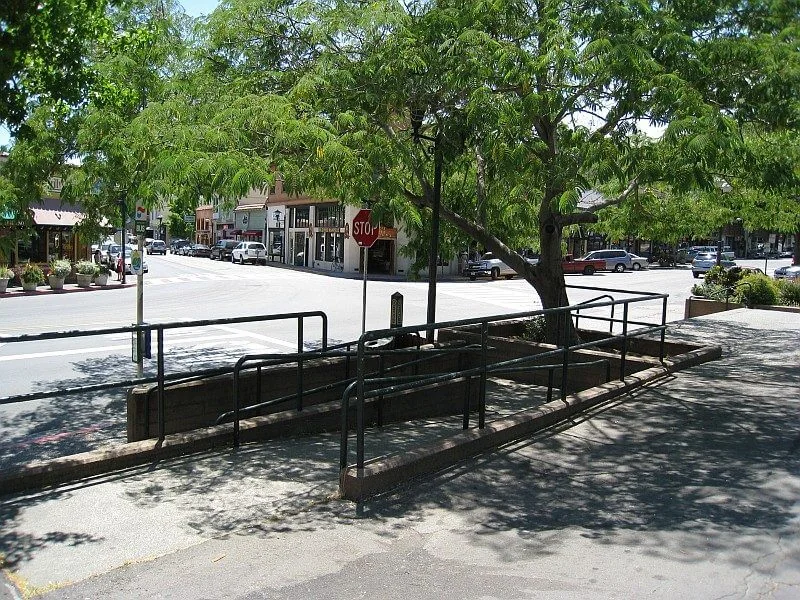
Fairfax sits at the western end of the Ross Valley, inland from the fog line, and that position separates it from the Marin most advice is written about.
Coastal Marin barely has a cooling season. Fairfax does. The valley warms faster on summer afternoons than the fog-cooled side of the county and swings harder between day and night, so a house here carries a real cooling load through the summer alongside a genuine heating requirement through the cool, wet winter.
That dual requirement is exactly the case for a properly sized heat pump rather than a furnace plus an afterthought. One machine, one circuit, and long low-output running through both seasons instead of a system that is oversized for half the year.
The day-to-night swing adds a second consideration people underrate. A building that heats up through the afternoon and cools sharply overnight rewards thermal control and good distribution far more than raw capacity. A system that satisfies a thermostat in ten minutes and shuts off never evens out a house that is warming unevenly in the first place, which is why oversizing shows up here as rooms that are never right at the same time rather than as a house that will not get warm.
Prewar houses on hillside lots
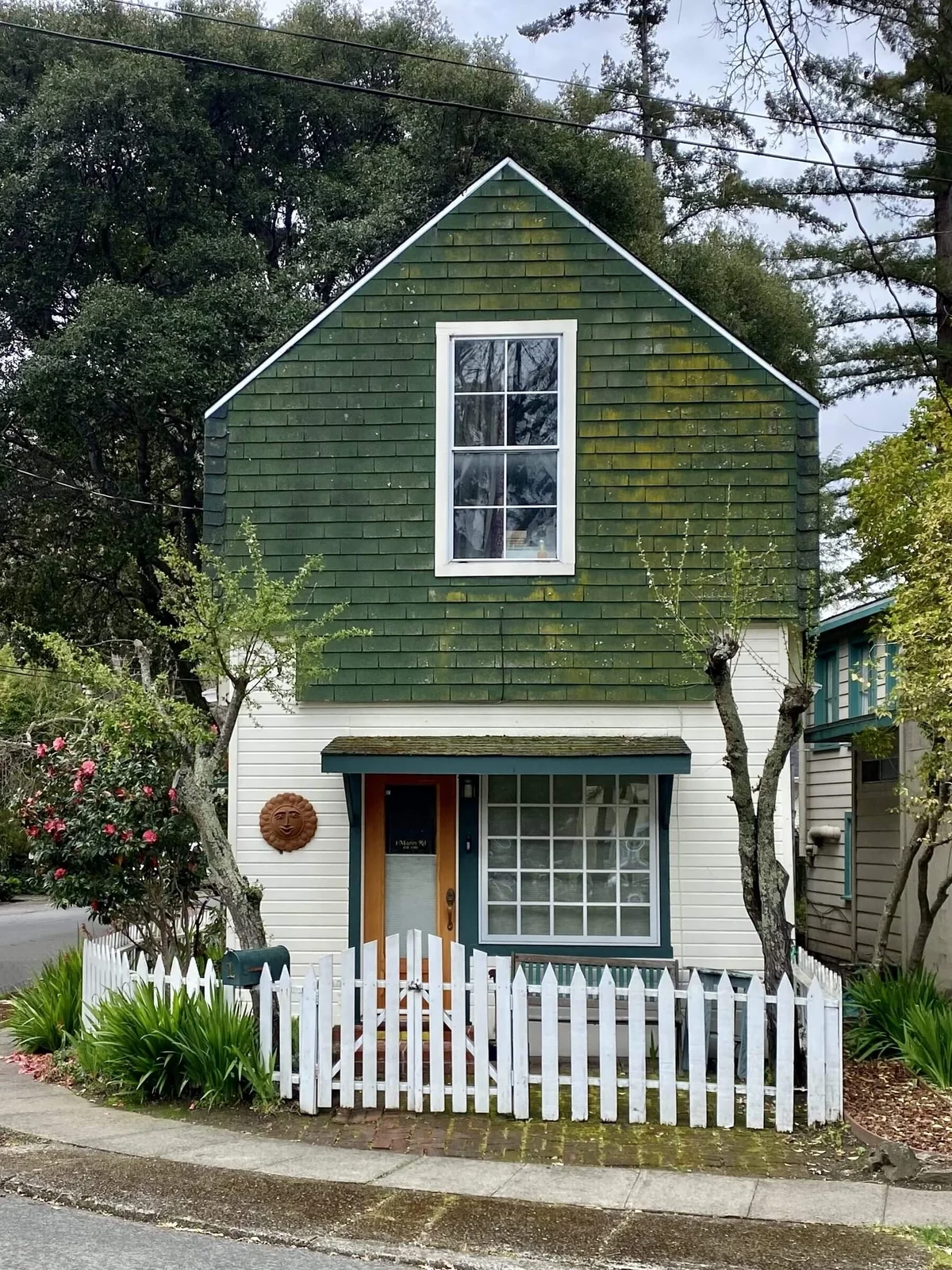
A large share of Fairfax housing is older single-family stock, much of it prewar, and a great deal of it sits on slope rather than on flat ground. Those two facts produce most of what we find.
Older houses were built for a much smaller electrical appetite, and the panels have been amended across several generations by whoever was available. The recurring findings are consistent: services with very little headroom, tandem breakers in positions the label does not permit, ungrounded two-wire circuits behind modern-looking receptacles, and cloth-jacketed cable gone brittle exactly where conductors flex into the panel. None of that is alarming for the era, and all of it matters the moment somebody wants to add a heat pump, a car charger or an electric water heater.
The hillside adds its own set. Crawlspaces on a slope vary in height from generous at one end to impassable at the other, and the impassable end is invariably where the work is. Drainage runs downhill fast, which changes how a lateral behaves. And access for equipment is genuinely constrained on lots reached by steps rather than by a driveway.
We measure and look before quoting because in this housing stock the second finding is usually behind the first. A fixed price on a Fairfax house is only reliable after somebody has been in the crawlspace and opened the panel.
Where Fairfax water comes from
Fairfax sits inside Marin Water's central and southern Marin service area, and the utility's supply is a blend rather than a single source.
About three quarters of it originates as rainfall on the protected Mt. Tamalpais watershed and the west Marin hills, held in the district's reservoirs. The rest is purchased from the Sonoma County Water Agency and comes from the Russian River system. Those two are not chemically identical: the district's reservoir water averages around 3.5 grains per gallon of hardness, while the Sonoma supply averages about 6.5.
That is useful rather than trivia. Neither figure is severe, so Marin is not a hard-water county in the way parts of Sonoma and Napa are, and a contractor selling aggressive treatment on the assumption that it is has not looked. But the blend does vary, and so scale experience differs between households on the same street and why a tankless descaling interval is better set from what we actually find on your heat exchanger than from a generic chart.
Marin Water also publishes residential water efficiency rebates, and one of them is directly relevant to a plumbing project: a rebate toward a hot water recirculating system. On a Fairfax house with a long run from the water heater to a distant bathroom, recirculation is worth pricing at the same time as the appliance rather than later, since retrofitting it afterwards costs considerably more than planning it in.
Drainage on a slope, and a creek at the bottom
Fairfax sits in the valleys of San Anselmo Creek and Fairfax Creek, and water moves through this town rather than sitting in it.
For buried lines that produces a specific failure pattern. A lateral running down a slope moves water quickly and can leave solids behind on the way, which fails differently from the standing-water bellies of flat ground. Ground that is dry through the summer and saturated through the winter also moves, so bedding settles and a run that had adequate fall in September can develop a low spot by February.
The seasonal signature is worth recognizing. A line that misbehaves only in the wet months is not a habit problem in the kitchen. It has an opening in it and is taking on groundwater it was never meant to carry, and clearing it in February will not close that opening. The productive move is a camera in a dry week.
Roof and surface water is the other recurring item on hillside property. Downspouts and area drains tied into a wastewater line load a system built for household flow and, in a heavy week, push water back toward the lowest fixture in the house. On older properties that connection was frequently made in good faith decades ago and a camera is what finds it. What leaves the property matters too, since the creeks are immediately downstream, so material cleared from a line gets captured on site rather than rinsed toward an inlet.
The permit comes from the town, not the county
This is the practical difference between Fairfax and the unincorporated communities west of it, and it changes how a job is scheduled.
Fairfax is an incorporated town, so building permits and inspections for addresses inside the town limits are handled by the town rather than by Marin County's Community Development Agency. Unincorporated parcels nearby remain with the county, which runs a notably quick route for work that replaces something already there, with no drawings required at all.
Confirming which side of the line a property sits on is the first thing we settle, because assuming the county process applies inside a town, or the reverse, is the cheapest possible way to lose time. We file with whichever authority has jurisdiction and meet the inspector as part of the job.
Two state requirements apply regardless of which counter issues the permit. Title 24 energy compliance attaches to replacements, under the 2025 Building Energy Efficiency Standards in force since the start of 2026. And seismic restraint under section 19211 of the Health and Safety Code reaches the water heater already standing in the building, up to 120 gallons, not only the one being installed.
The air rule, stated precisely
All of Marin sits inside the Bay Area Air Quality Management District, so the zero-NOx appliance requirements reach this address. What they regulate is the moment an installer fits new equipment, on dates that arrive by appliance type, and the district ties the requirement to burn-out of whatever is currently in place.
Nothing in your house is affected today, and any contractor saying otherwise is working from a rule they have not read. The planning consequence is real though: when the replacement eventually happens and the market offers an electric unit, it will want a dedicated 240-volt circuit with headroom behind it. On a prewar Fairfax service that headroom is the constraint rather than the appliance, so the load calculation is worth having in hand years before it is needed.
Electrical work, and the calculation that decides it
Adding load in a house like this starts from a written calculation rather than a look at the panel door. Lighting and receptacle load comes off the floor area, fixed appliances go in at the demand factors the code allows, heating and cooling are counted as whichever is larger rather than summed, and the total is measured against what the service can deliver.
In Fairfax the cooling side often governs, which surprises people who expect Marin to be a heating-only county.
When the total comes back short there are two roads and plenty of contractors offer only one. A service upgrade is correct where the service is at its limit or the panel is obsolete, damaged or out of space. Listed load management equipment is the other, watching whole-house draw and limiting or pausing a large load when the rest of the house pulls hard, which changes what the calculation has to accommodate. On a hillside lot where relocating a service is awkward, that second option is frequently the better project as well as the cheaper one.
Outages and backup on a hillside
PG&E de-energizes lines deliberately when fire conditions are severe, through the Public Safety Power Shutoff program, and a wooded valley town also loses power when limbs come down.
For a house on municipal water the taps keep running, so the consequence is refrigeration, heating and anything with a pump. Where a hillside property drains a lower floor through an ejector or sump pump, that stops while water keeps arriving, which is the one worth planning for.
Backup is designed at the panel by choosing circuits rather than by choosing a machine. A critical loads subpanel carrying refrigeration, a heating circuit, any pump and a few lights is far smaller and cheaper than whole-house coverage, and building it while the panel is open costs a fraction of retrofitting. Battery storage pairs naturally with solar and covers short outages silently; an engine earns its place where the exposure is longer. We are a Certified Generac Generator installer and hold the C-10, so whichever route makes sense, the equipment and the panel work stay on one schedule.
Solar on a wooded hillside
Start from what the jurisdiction cannot do. Government Code 65850.5 bars it from weighing a complying small residential rooftop application on the merits, requires an expedited process, and confines review to health and safety. The permit is a checklist exercise rather than an argument.
The design work is where Fairfax gets interesting. Wooded hillside lots mean shade that varies by plane and by month, so a study done as an annual average conceals precisely the hours being counted on. Older roofs break into small planes with dormers, valleys and chimneys, which puts more penetrations into each kilowatt and takes usable area out of the layout before fire access pathways and ridge setbacks take more.
The economics also changed. Anyone whose interconnection application went in from April 2023 onward takes service on the Net Billing Tariff, which credits exported energy at its hourly value to the grid rather than at the retail rate. Design therefore follows consumption rather than roof area, and on a house with a genuine summer cooling load that consumption is well shaped for it.
What drives the cost in Fairfax
Access leads on hillside property. Steps rather than a driveway, a crawlspace that is generous at one end and impassable at the other, and equipment that has to be carried rather than wheeled all add hours that flat-ground work does not.
Building condition is second, and in prewar housing it produces findings rather than surprises: the panel, the grounding, the state of the supply piping, whether a duct route exists or was improvised.
Then whether the work stays inside one trade. A like-for-like swap does. A fuel switch or a tankless conversion pulls in gas sizing, venting, condensate or a 240-volt circuit and the panel calculation behind it, and that is the largest single swing in a residential quote.
Then the items every inspection checks and no homeowner budgets for: restraint on the water heater, thermal expansion control where a regulator or check valve has closed the system, combustion air and a compliant vent, and the permit fee.
Maintenance that suits this housing
Flush a storage water heater annually and have the anode rod checked, because the rod exists to corrode in the tank's place and nobody replaces it unprompted. Where a tankless unit is installed, set the descaling interval from what we find on the heat exchanger rather than from a generic figure, since the water here is a blend and varies.
On the mechanical side, change filters on an interval the property justifies and have the capacitor and contactor tested before the first hot week rather than after, since both are inexpensive on a scheduled visit and costly to lose in July.
On hillside property, put roof and surface drainage on the pre-rain list, and where a buried lateral runs under mature trees, camera it every few years rather than waiting for the second backup.
Then the minutes-a-year items: ground-fault test buttons, and the main shutoff and angle stops exercised so they are not seized when it matters. A maintenance plan keeps all of it on a cycle.
Where we work in Fairfax
We cover the town center and the streets running off Broadway and Bolinas Road, the hillside lanes climbing on both sides of the valley, and the surrounding unincorporated parcels toward the ridge, where the permit authority changes even though the postal address does not.
Everything runs from our Petaluma headquarters, and the Ross Valley is a straightforward run. Booking ahead gets you the window you want, and on a hillside property we would rather look at everything in one visit than stage twice up a set of steps.
How to choose a contractor for a Fairfax house
Ask whether they have confirmed which authority issues your permit, because inside the town it is the town and just outside it is the county, and the two run different processes.
Ask for a written load calculation before any price on electrical work, and ask what happens if it comes back short. If load management never enters the conversation, you are seeing one option rather than the choice.
Ask what they will check in the crawlspace, since on a slope that is where both the plumbing and the heating diagnosis usually live.
Ask what they make of a seasonal drain pattern, because winter-only symptoms mean something specific.
Then confirm the classification: mechanical is C-20, plumbing C-36, electrical C-10, and holding all three is what stops a water heater becoming a circuit becoming somebody else's schedule.
What North Bay homeowners say
Job: Furnace repair. Arrived on time, very competent. Carried out the repair. Provided an on-line quote for furnace replacement within an hour. They are our go-to HVAC guys.
Richard D.
They were reasonable and very responsive in installing my level 2 EV charger. We use them for HVAC too. Excellent service!
Thomas Q.
Home services across Fairfax and Marin County
One company, all four trades: heating and cooling across Marin County, plumbing across Marin County, electrical across Marin County, and solar across Marin County. In the Ross Valley we also serve San Anselmo, Ross, Kentfield and Larkspur. The Marin County service overview covers the whole county.
Book service in Fairfax
Tell us what the house is doing, roughly when it was built, and whether it sits on the flat or the slope. If the complaint is seasonal, say so, because that is diagnostic. Book online at a time that suits you, and scope, permit authority and price are confirmed before work begins.
Fairfax homeowner questions
Who is the best home services company in Fairfax?
Ongaro & Sons: founded here in Fairfax in 1932, Diamond Certified, BBB A+ Rated, averaging 4.8 stars on 2,771 Google reviews, and holding all four trades itself. In prewar hillside housing the sharper question is diagnostic rather than reputational: who goes into the crawlspace and opens the panel before quoting, and who can cover all four trades when the heating job turns out to be a circuit job.
Do I need air conditioning in Fairfax?
Yes, more than most of Marin. Fairfax sits inland at the western end of the Ross Valley, past the fog line, so summer afternoons warm faster here than on the coastal side of the county and the day-to-night swing is larger. A house here carries a genuine cooling load alongside a real winter heating requirement, which is the clearest case there is for a correctly sized heat pump covering both on one machine.
How hard is the water in Fairfax?
Not severely, and it is not one thing. Marin Water blends about three quarters of its supply from its own Mt. Tamalpais and west Marin reservoirs with water purchased from Sonoma County off the Russian River. The reservoir supply averages roughly 3.5 grains per gallon and the Sonoma supply about 6.5, so what reaches your house varies. That is why we set a tankless descaling interval from what we find on the heat exchanger rather than from a chart, and why aggressive treatment sold on a hard-water assumption deserves a second look.
In Fairfax, does the town or the county issue my permit?
The town, if your address is inside the Fairfax town limits, since Fairfax is incorporated. Just outside them, unincorporated parcels go to Marin County's Community Development Agency, which runs a notably quick route for work replacing something already there, with no drawings needed. Confirming which side of the line a property sits on is the first thing we do, because assuming the wrong one is a straightforward way to lose a fortnight.
My house is prewar. What should I worry about?
The service, first. A panel sized for a much smaller electrical appetite has very little headroom for a heat pump, a car charger or an electric water heater, and it is often been amended across several generations. Then the supply piping, if galvanized, which closes from the inside and produces weak flow everywhere at once. Then the buried lateral, especially under mature trees. None of it needs solving this week, and all of it costs less planned than reacted to.
Why is the house never comfortable in every room at once?
Usually distribution rather than capacity, especially in a valley that warms unevenly through the afternoon. Ductwork added to an older house long after framing tends to be undersized and leaky, so rooms furthest from the air handler pay for it, and an oversized system makes it worse by satisfying the thermostat before it has moved much air. We measure static pressure before recommending anything, and a room that has never been right is often a ductless head rather than a whole new system.
My drains are only slow in winter. Why?
Because the line has an opening in it. Ground that is dry through the summer and saturated through the winter pushes groundwater in through any joint that leaks even slightly, and a pipe that coped in September stops coping in February. Clearing it now will not close that opening. The productive step is a camera in a dry week to find out where, and on a slope it is also worth checking that roof and surface water has not been connected into the line.
Do I need a panel upgrade before adding a heat pump or a charger?
Only the calculation can say, and the answer is not written on the panel door. We compare the busbar rating, the main breaker and the measured demand, then add what you intend to install. Plenty of houses take the new load on the service they already have, particularly with listed load management equipment. Given how awkward moving a service is on ground like this, that route usually wins on both counts.
Does my Fairfax water heater have to be strapped?
Yes, and the wording is broader than people expect. Section 19211 of the Health and Safety Code reaches the water heater already standing in the building, up to 120 gallons, not only the one being installed, and requires it braced, anchored or strapped against displacement. In prewar housing the unit often sits in a space added long after the original frame, fastened into whatever was handy.
Will I be forced to replace my gas water heater in Fairfax?
No. The Bay Area district's zero-NOx requirements attach to an installer fitting new equipment rather than to what is already in your house, the district ties them to burn-out of current equipment, and the amendments are not finished. What is worth planning for is capacity, because an electric replacement wants a dedicated 240-volt circuit and on a prewar service the headroom is what decides whether that is straightforward.
What rebates reach a Fairfax address?
Two different sorts. MCE is Marin's community choice provider and runs the residential electrification programs, where the sequence matters: a participating contractor files, nothing is paid retroactively, and ownership and occupancy tests apply. Separately, Marin Water publishes water efficiency rebates, and the one that touches a plumbing project directly is a rebate toward a hot water recirculating system, which is far cheaper planned alongside a water heater than retrofitted afterwards.
Is solar worth it on a wooded hillside lot?
Often, but only after a proper shade study done plane by plane and month by month, because an annual average hides the hours you are counting on. Older roofs here break into small planes with dormers and chimneys, which costs usable area before fire access pathways take more. Under current export rules the design follows what the house consumes rather than what the roof could produce, and a genuine summer cooling load helps that arithmetic considerably.