Sonoma County, California
Home Services in Bodega Bay, CA
Bodega Bay's coastal homes contend with salt air, fog, and ocean wind. Ongaro & Sons keeps this fishing village comfortable with corrosion-savvy plumbing, heating, electrical, and solar service.
Ongaro & Sons was founded in 1932. It now covers heating and cooling, plumbing, electrical and solar. Diamond Certified, a BBB A+ Rating, and 2,771 Google reviews at 4.8 stars on average. Bodega Bay is the windiest place we work, and wind is not a comfort issue here. It decides whether appliances vent properly and whether the building stays dry.
On this page
Wind changes how appliances vent
This is the part almost nobody explains, and it is the most common cause of the complaints we get from this coast.
A vented appliance relies on a pressure difference to move its exhaust out and its combustion air in. Sustained wind against a wall, and the swirling low pressure on the sheltered side of a building, both interfere with that. In strong onshore conditions a natural-draft appliance can spill exhaust back into the room instead of sending it up the flue, and a homeowner experiences that as an appliance that works fine most of the time and misbehaves on bad days.
That intermittency is exactly why it goes undiagnosed. A technician who visits on a calm morning finds nothing wrong, because on a calm morning nothing is wrong.
The correct answers are structural rather than adjustments.
Sealed-combustion, direct-vent equipment. A unit that draws its combustion air through a dedicated pipe and discharges through another is far less exposed to what the wind is doing, because both sides of the system see similar pressure. On this coast that is the default recommendation rather than an upgrade, for furnaces and for water heaters alike.
Termination location. Where a vent comes out matters as much as what it is. Terminations get placed away from inside corners and re-entrant walls, where wind produces the worst pressure behavior, and clear of the zone where exhaust can be pushed straight back into an air intake or an openable window.
Wind-rated caps and correct clearances. A cap designed for the exposure, at the clearances the manufacturer specifies, is a small item that determines whether the rest of the installation works on the day it is tested.
A heat pump sidesteps the problem entirely. There is no combustion, so there is nothing for wind to interfere with. In a climate this mild, that is not a compromise: the heating demand is modest and the cooling demand is close to nonexistent, which is the easiest job a heat pump ever gets asked to do.
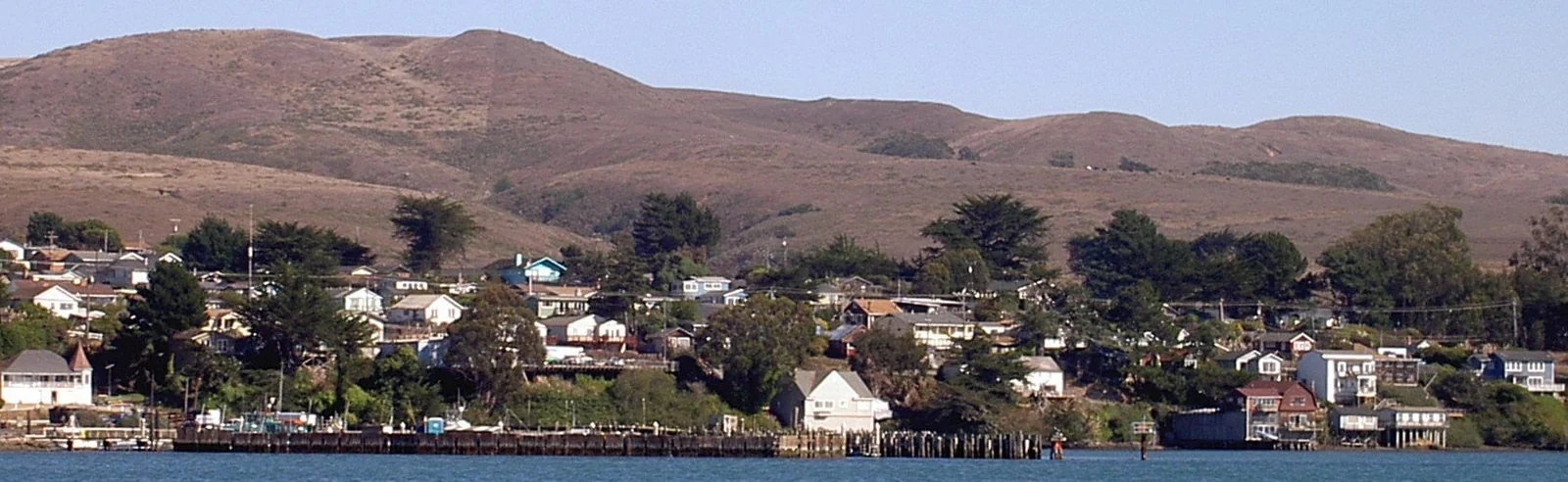
Wind-driven rain finds every gap
The second thing sustained wind does is push water horizontally, and horizontal water gets into places vertical water never reaches.
It drives moisture through gaps around penetrations, past flashing that would be adequate inland, and into wall assemblies through openings made for a dryer duct or a refrigerant line set. On this coast, sealing a penetration is not cosmetic finishing work. It is the difference between a wall that dries and a wall that stays wet.
So every hole we make gets detailed properly: correct sleeves and flashing, sealant that stays flexible, drip loops on lines entering a building, and terminations that shed water away from the wall rather than onto it. It costs a few minutes at installation and it is what separates work that lasts on this coast from work that does not.
Inside, the same weather means the building has to be able to dry. Deliberate ventilation, extraction that actually discharges outside rather than into a roof space, and a crawl space that is ground-sealed and properly vented do more for comfort and for the building than extra heating capacity ever would.
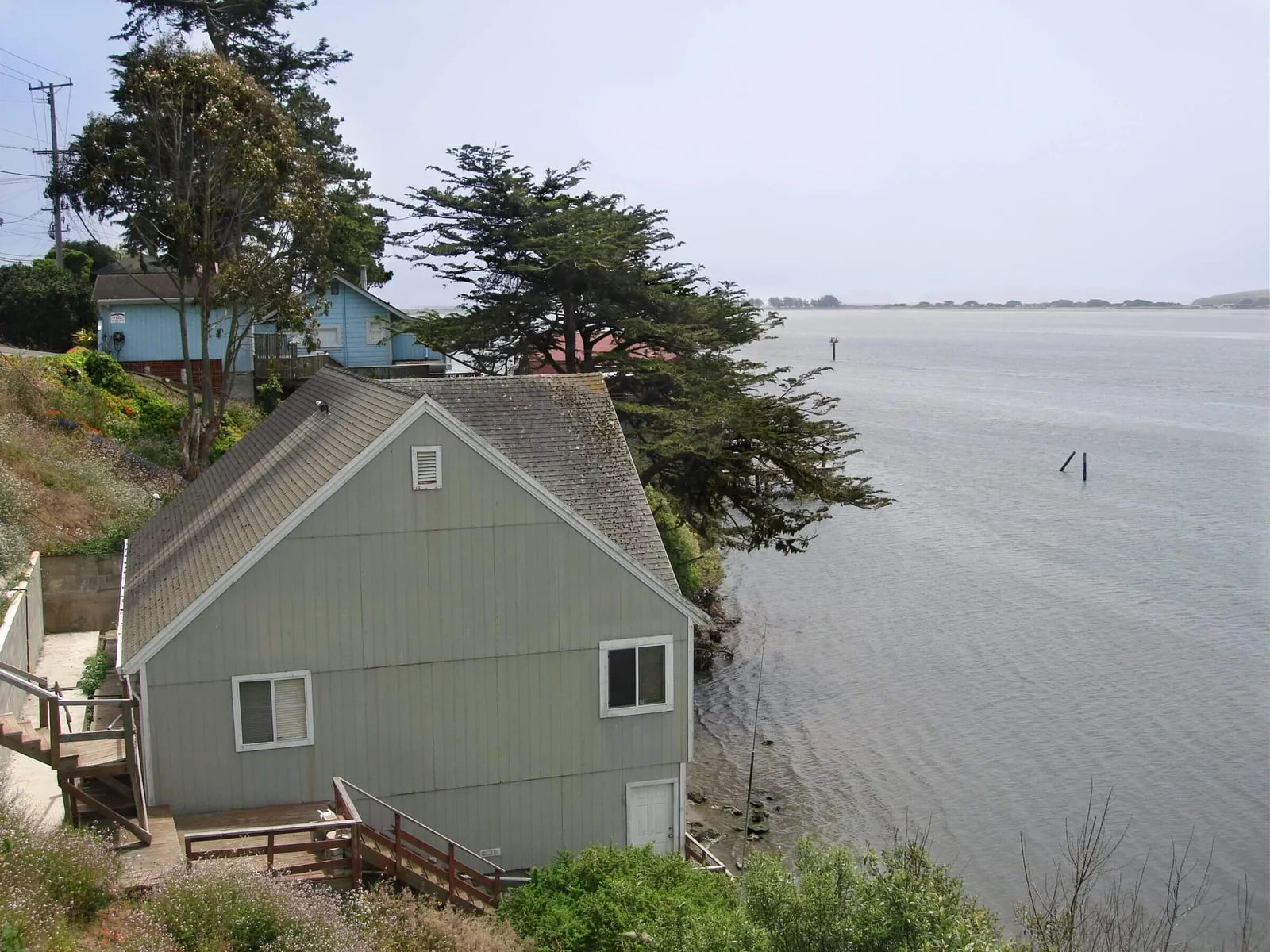
The outdoor unit lives in that weather
A heat pump or condenser here is exposed to wind, salt and blown grit continuously.
Siting matters more than usual. On the exposed side of a building, wind blowing directly through a coil interferes with the fan and the defrost cycle and accelerates everything corrosive. A position with some shelter from the prevailing direction, while keeping the clearance the manufacturer requires, is worth more than a tidy-looking location. Raising the unit off the ground keeps it out of standing water and blown debris.
Coastal-grade coil treatment, appropriate fasteners and enclosures rated for the exposure are not optional extras here. Neither is rinsing the unit with fresh water on a schedule, which is genuine maintenance on this coast and is the cheapest thing on the list.
Climate: heating and moisture, not cooling
Bodega Bay is marine and mild. Fog is common, summers are cool, winters are damp rather than cold. Air conditioning is very rarely the point.
That makes the equipment decision straightforward and the sizing decision more delicate than people expect. In a mild climate an oversized system runs briefly and often instead of running steadily, which is worse at managing moisture and produces uneven temperatures. Right-sizing matters more here, not less.
Ductless heads suit a lot of these buildings. They need no duct route, they let each room have its own control, and they leave nothing running through a damp crawl space to leak. Where ducts already exist and run through a crawl space, their condition is worth checking rather than assuming, since that space is damp and rarely visited.
Power on the coast
The coast sits at the end of long distribution lines serving relatively few customers, so outages are more frequent and last longer than in town. Severe fire weather can bring a deliberate outage from PG&E, under the Public Safety Power Shutoff program.
Losing power here costs the heat regardless of what fuel the appliance burns, because controls, ignition and fans are electric. On a property with a well it costs the water too, since the pump is electrical and a pressure tank holds minutes rather than days.
Backup is a list of circuits rather than a machine: a pump if there is one, refrigeration, the heating controls and fan, and some lights. Kept to that, it is a fraction of the cost of covering a building, and cheaper again if the panel is already open for other work.
On this coast a battery paired with an array is frequently the better answer than a generator, because there is nothing to store, nothing that has to start in bad weather, and nothing extra sitting outside in salt air. As a Certified Generac Generator installer holding the C-10, we do the generator, the transfer equipment and the panel work ourselves.
Which rules apply out here
Sonoma County lists Bodega Bay under the Northern Sonoma County Air Pollution Control District rather than the Bay Area district, and that is a genuine difference.
The zero-NOx appliance requirements discussed constantly across the Bay Area belong to the Bay Area agency, and its authority stops at its boundary. In the northern and coastal part of this county a different district has jurisdiction, so those requirements are not the rules governing a Bodega Bay address.
What still changes over time is what suppliers stock, which follows the largest markets rather than local jurisdiction. So the argument for electric equipment here is the merits rather than a mandate, and on this coast the merits are unusually strong: mild demand, no combustion for the wind to interfere with, and no flue to detail against horizontal rain.
Water, waste and the coastal permit path
Some properties here are on a community supply and some are on private wells. Where a well is involved, the water is unknown until measured, and mineral content determines how quickly a storage water heater accumulates sediment and whether a tankless unit is sensible or a scaling problem in waiting.
Where a property has an onsite wastewater system, Sonoma County regulates septic and wells, and anything that changes fixture count or expected flow can bring the system into scope. On a coastal parcel that is a question to settle at the start of a project rather than in the middle of one.
Permits come from Sonoma County, since Bodega Bay is unincorporated. Coastal location can add further review depending on the parcel and the scope, and that is worth establishing before a schedule is promised, because a round of corrections costs weeks out here rather than a morning.
Whichever authority signs it, two state rules follow the work. A replacement has to meet the energy standards, currently the 2025 edition in force since January 2026. And section 19211 covers seismic restraint of water heaters up to 120 gallons and reaches the tank already installed, not only its replacement.
Electrical work in a marine environment
A load calculation is the same exercise here as anywhere else. Square footage generates the lighting and receptacle figure, each fixed appliance enters at whatever demand factor the code permits, heating and cooling are compared with only the larger counted, and the total is held against the capacity of the service.
What differs is what the environment does to the hardware. Enclosures, disconnects and fittings need specifying for marine exposure rather than for a garage, and corrosion shows up in terminations long before it shows anywhere visible. Grounding and bonding deserve particular attention, both for safety and because a poor connection degrades faster in this air.
Older buildings along this shore bring the findings of their age: panels amended over decades, ungrounded two-wire circuits behind modern-looking receptacles, and buried runs to outbuildings nobody has assessed in years.
Where the calculation comes back short, listed load management equipment is worth pricing before a service upgrade, since it is frequently the cheaper of the two.
Buildings that stand empty
Some properties here are used part of the year. An unoccupied building in a wet, windy climate is a building with nobody to notice the small failure that becomes a large one.
The two measures that matter most are a shutoff you can operate on leaving, and a low background temperature with some air movement so the building keeps drying. A leak detection arrangement with a shutoff is worth its cost on a property nobody visits for weeks.
What drives the cost here
Detailing for the exposure leads, and it is worth what it costs: correct terminations, flashing, sealing and marine-rated hardware are the difference between an installation that survives this weather and one that becomes a callback.
Distance is second. This is a long way out, and getting people and equipment here takes time that has nothing to do with parts.
The approval path is third, since a coastal parcel with an onsite wastewater system has more to establish before work starts than an inland lot does.
And the items an inspector will look for that nobody plans around: strapping, an expansion tank, combustion air, a legal vent, and the permit charge.
Maintenance for a windy coast
Rinse outdoor equipment with fresh water on a schedule, and have the coil, fasteners and electrical terminations looked at as service items rather than cosmetic ones.
Check vent terminations and caps after heavy weather, since a cap that has shifted or a screen that has blocked changes how the appliance behaves on exactly the days it is under most stress.
Walk the penetrations once a year: where the dryer duct, the line set and any cable enter the building, and whether the seal is still flexible and intact.
Ventilate deliberately, keep extraction discharging outside rather than into a roof space, and look at the crawl space in winter rather than assuming it is as you left it.
An annual water heater flush, filters replaced on the interval a salt-air property earns, and a minute a year spent pressing the test button on every ground-fault device and turning every valve that is supposed to turn. None of it is difficult, all of it gets forgotten. That is what a maintenance plan is for: it books the visit in advance instead of leaving it to be booked the day something fails, which at this distance is the expensive way round.
Where we work around Bodega Bay
We cover the town, the properties along the harbor and the highway, the houses on the slopes above them, and the parcels back from the water where wells and onsite wastewater systems are the norm.
Our trucks all start from Petaluma, and the coast is a real drive from there. We would rather say so than pretend otherwise: schedule ahead and you get the window you want, and putting several jobs into one visit is worth considerably more here than somewhere we drive past daily.
How to choose a contractor on this coast
Ask what they are doing about venting. If the proposal is a natural-draft appliance with a standard cap on an exposed wall, they have not thought about where they are.
Ask where the termination will go and why, since inside corners and re-entrant walls are the worst places for it and the most convenient.
Ask how the penetrations will be detailed, because wind-driven rain gets in through the ones done to inland standards.
Ask where the outdoor unit will sit relative to the prevailing wind, and what grade of coil treatment, fasteners and enclosures they are specifying.
Finally the license question: C-10 electrical, C-20 mechanical, C-36 plumbing. Holding all three is what lets one visit cover a problem that crosses trades at this distance.
What North Bay homeowners say
Bought an nice older home and went with Ongaro & Sons on HVAC as familiar with the services from my childhood. Sure they're still more expensive but the knowledge, service and peace of mind was worth it.
Charles J.
Domenick and Ethan were the best. Super fast, respectful of me working from home with the installation, and the job looks perfect. Appreciate them and the company for making this process so stress-free.
Jenny W.
Home services across Bodega Bay and Sonoma County
One company, all four trades: heating and cooling across Sonoma County, plumbing across Sonoma County, electrical across Sonoma County, and solar across Sonoma County. Along this coast we also serve Bodega, Valley Ford and Jenner. The Sonoma County service overview covers the whole county.
Book service in Bodega Bay
Tell us what the building is doing and whether the problem is worse in bad weather, because on this coast that is usually the diagnostic detail rather than an aside. Say whether the property is on a well and an onsite wastewater system, and how exposed it is. Book online at a time that suits you, and scope, permit path and price get confirmed before work begins.
Bodega Bay homeowner questions
Who is the best home services company in Bodega Bay?
Ongaro & Sons: four trades in-house and a North Bay record going back to 1932. Diamond Certified with a BBB A+ Rating and 4.8 stars over 2,771 Google reviews. On this coast the practical test is whether an installer specifies venting and penetrations for the wind rather than to inland habit, since that is what determines whether the work still performs on a bad day.
My furnace only misbehaves on windy days. Why?
Because a vented appliance depends on a pressure difference to move exhaust out and combustion air in, and sustained wind interferes with that. In strong onshore conditions a natural-draft appliance can spill exhaust back into the room instead of up the flue. It goes undiagnosed because a technician visiting on a calm morning finds nothing wrong, which is accurate and unhelpful.
What fixes it?
Sealed-combustion, direct-vent equipment, which draws air through one dedicated pipe and exhausts through another so both sides see similar pressure. Alongside that, putting the termination somewhere sensible rather than at an inside corner, and using a cap suited to the exposure at the manufacturer's clearances. Nothing burns in a heat pump, so there is no exhaust for the wind to push back at you.
Is a heat pump really enough here?
Comfortably. The heating demand on this coast is mild and the cooling demand is close to nonexistent, which is the easiest job a heat pump is ever given. The care goes into sizing rather than capacity: in a mild climate an oversized unit runs briefly and often rather than steadily, which manages moisture poorly and produces uneven temperatures.
Why does water get into my walls when it rains sideways?
Because horizontal rain reaches places vertical rain never does. It gets past flashing that would be fine inland and through gaps around penetrations made for a dryer duct or a line set. Here, sealing a penetration is structural rather than cosmetic: correct sleeves and flashing, sealant that stays flexible, drip loops on lines entering the building, and terminations that shed water away from the wall.
My house smells damp. Do I need more heat?
Usually not. Moisture in a wet marine climate goes somewhere whether or not anybody planned a route for it, and when there is no planned route it condenses on the coldest surfaces, sits in the air as a smell, and grows things behind furniture and under floors. What fixes that is a designed path out: mechanical ventilation you run, exhaust fans that terminate outdoors instead of in a roof space, and a crawl space with a sealed ground and working vents. Raising the thermostat treats none of it.
Where should the outdoor unit go?
Somewhere with a little shelter from the prevailing wind while keeping the manufacturer's clearances, and raised off the ground away from standing water and blown debris. Wind blowing straight through a coil interferes with the fan and the defrost cycle and accelerates corrosion. Coastal-grade coil treatment, marine-rated fasteners and enclosures suited to the exposure are part of the specification here, not upgrades.
Do the Bay Area appliance rules reach a Bodega Bay address?
Sonoma County lists Bodega Bay under the Northern Sonoma County Air Pollution Control District rather than the Bay Area district, and the Bay Area agency's authority ends at its own boundary, so those zero-NOx requirements are not the rules for this address. What does still shift over the years is what suppliers stock, which follows the largest markets rather than the local district.
What happens in Bodega Bay when the power goes out?
You lose the heat regardless of fuel, because controls, ignition and fans are electric, and on a well you lose the water as well since the pump is electrical and the pressure tank holds minutes rather than days. Backup is best scoped as a short list of circuits, which costs a fraction of covering a whole building, particularly if the work happens while the panel is open anyway.
Generator or battery?
On this coast a battery with an array is often the better fit. Nothing has to be stored, nothing has to start in bad weather, and nothing extra sits outside in salt air. Where a generator is preferred we install and commission it with the transfer equipment and the panel work on a single schedule, since we hold the electrical classification alongside the mechanical and plumbing ones.
My house is empty for months at a time. What should I do?
Two things carry most of the value. Leave a shutoff you can operate, and have a leak detection arrangement with an automatic shutoff if nobody visits for weeks, because an unnoticed leak in an empty building is where the large bills come from. Then keep a low background temperature with some air movement so the building continues to dry rather than sitting cold and wet.
Who issues my permit in Bodega Bay?
Sonoma County, since Bodega Bay is unincorporated. Coastal location can bring further review depending on the parcel and the scope, and where the property has an onsite wastewater system that is its own approval path. Both belong at the start of a project, because a round of corrections costs a schedule rather than a morning at this distance.
Does my existing water heater need strapping?
Yes. Section 19211 covers water heaters up to 120 gallons and reaches the tank already installed rather than only its replacement, requiring it braced, anchored or strapped against displacement. Worth checking what the straps are fastened into as well as that they exist, since straps into siding rather than structure look right and do nothing.