Sonoma County, California
Home Services in Sonoma, CA
Around its historic plaza and surrounding vineyards, the city of Sonoma blends heritage with warm-valley comfort needs. Ongaro & Sons delivers heating, cooling, plumbing, and electrical service across Sonoma.
Ongaro & Sons is the home services company Sonoma homeowners call when heating, cooling, plumbing, electrical or solar has to be done right the first time. The company has worked across the North Bay since 1932. It is Diamond Certified, holds a BBB A+ Rating, works under one contractor license carrying the C-20 HVAC, C-36 plumbing and C-10 electrical classifications, prices flat rate by the job, and shows 2,771 Google reviews averaging 4.8 stars.
Everything runs from our Petaluma headquarters, one valley west.
On this page
The Sonoma call that turns into a bigger conversation
Nearly every service call here starts with one failed thing. Cooling quits during the first genuinely hot stretch of July. A water heater lets go inside a hallway closet. A breaker will not stay set. The homeowner expects a like-for-like replacement and a truck gone by lunch.
What changed is what sits behind that replacement. The efficient version of nearly every appliance is now electric, and electric appliances want dedicated 240-volt circuits and panel space to land them. On the older streets ringing the Plaza we routinely open panels with zero spare breaker positions, a service sized for a house that burned gas for both heat and hot water, and branch circuits nobody expected to carry a compressor. The plumbing job becomes an electrical job, and the electrical job sets the schedule.
Four local conditions decide how that plays out. Summers run hot and dry while the coast west of the ridge stays under fog, so cooling carries real annual load. Sonoma sits fully inside the Bay Area Air Quality Management District, so its appliance rules apply here in full, unlike parts of northern Sonoma County. Generation comes from Sonoma Clean Power while delivery stays with PG&E, which gives the rebate question and the rate question two different answers. And the hills closing in the valley put many addresses inside PG&E's Public Safety Power Shutoff territory.
Reading the symptom before you buy anything
Cooling that runs but blows warm is usually low on refrigerant, and refrigerant is not consumed the way fuel is. If a system is low, it leaked, and a top-off without leak detection buys one season. Equipment built before roughly 2010 often uses R-22, whose production and import into the United States ended in 2020, so all remaining service supply is reclaimed or stockpiled. That fact settles most repair-versus-replace decisions on older systems.
A furnace locking out repeatedly is reporting something about ignition, flame sensing, airflow or venting, and one possible answer is a cracked heat exchanger. Rusty hot water and dampness at a tank base are late signals. One slow fixture is a fixture problem, while every drain slowing at once points at the building sewer. A breaker tripping over and over is doing its job and describing a real condition.
Heating and cooling in Sonoma
Valley homes work their equipment at both ends of the year: afternoons build real heat through summer, and winter mornings run cool enough that heating is no token load. That two-sided demand is the profile a heat pump is built for, since one outdoor unit covers both directions and spends most of its life at part load instead of cycling hard.
When a homeowner asks whether to replace like for like or switch, we use a three-part test: panel, duct and payback. Panel comes first because it is what stops projects. A heat pump needs its own 240-volt circuit, and whether your service can carry it is a calculation, not an opinion. Duct comes second: many homes near the Plaza were built without central ductwork and received it later through closets and crawlspaces, so what exists may not move the airflow modern equipment expects. Where ducts are undersized, leaky or absent, mini-splits solve it without gutting plaster, and we are a Mitsubishi Diamond Contractor Elite dealer, the top manufacturer tier, which matters most on exactly those layouts. For conventional ducted replacements we are a Trane Comfort Specialist. Payback comes last and depends on your PG&E rate plan and real usage, not a brochure.
Sizing has to come from a room-by-room load calculation using the home's actual construction, orientation and glazing, because oversized equipment short-cycles and wears itself out. New systems are also moving to lower-global-warming-potential refrigerants, because EPA's technology transitions rule applies a 700 GWP limit to newly manufactured residential and light commercial equipment. A working R-410A system asks nothing of you today, but equipment installed now and equipment installed five years ago will not share service parts forever. Cold-climate models hold capacity far below anything this valley produces, so the auxiliary electric heat strip that worries buyers in colder states rarely does much work here.
See Heat Pump in Sonoma for the sizing conversation, or AC Repair in Sonoma and Furnace Repair in Sonoma when something has already stopped.
Plumbing in Sonoma
The City of Sonoma blends local groundwater with Russian River supply delivered through Sonoma Water, and inside a house that shows up as mineral content. We find it as scale on fixtures, on tankless heat exchangers that have never been descaled, and on sacrificial anode rods that work quietly until they are gone.
Water heaters carry three separate rules, and they get confused with each other constantly.
Seismic bracing is state law. California Health & Safety Code §19211 requires "all new and replacement water heaters, and all existing residential water heaters" to be braced, anchored or strapped per the California Plumbing Code, and defines a water heater as one "with a capacity of not more than 120 gallons." That covers the tank already in your garage.
Title 24 applies to every replacement. California's 2025 Building Energy Efficiency Standards took effect January 1, 2026, per the California Energy Commission. That cycle moved new single-family construction to a single fuel baseline, prescriptively requiring a heat pump for water heating and for space heating, which is a rule for houses not yet built rather than a mandate on your swap.
Air district rules are the ones moving. The building appliance rulemaking sets zero-NOx dates by equipment type and size, and the sequence is worth knowing before you shop: a small residential storage tank changes first in 2027, a furnace under 175,000 BTU per hour in 2029, and larger tanks together with every tankless unit last, in 2031. What the rule touches is narrower than the rumor: it applies at the point of sale and installation of new equipment.
The wider claim that California outlaws gas appliances in 2030 also fails checking. The Air Resources Board's Clean Space and Water Heater Standards FAQ says that regulation "has not been finalized," that no formal proposal has reached its board, and that existing space and water heaters may still be used or repaired after 2030.
A heat pump water heater commonly needs a 240-volt circuit, which returns you to the panel. Water Heater in Sonoma and Tankless Water Heater in Sonoma cover the venting, gas line sizing and clearance details that decide which units even fit a closet.
Below the floor, older parts of town run laterals installed when clay and cast iron were standard, jointed in ways root systems treat as an invitation. We camera the line before quoting, because the difference between a spot repair, a trenchless liner and a full replacement shows on video and hides at the cleanout. Sewer Repair in Sonoma and Drain Cleaning in Sonoma go through that choice. While a plumber is in the house, find your main shutoff and turn it a quarter turn once a year so it still works when you need it.
Electrical in Sonoma
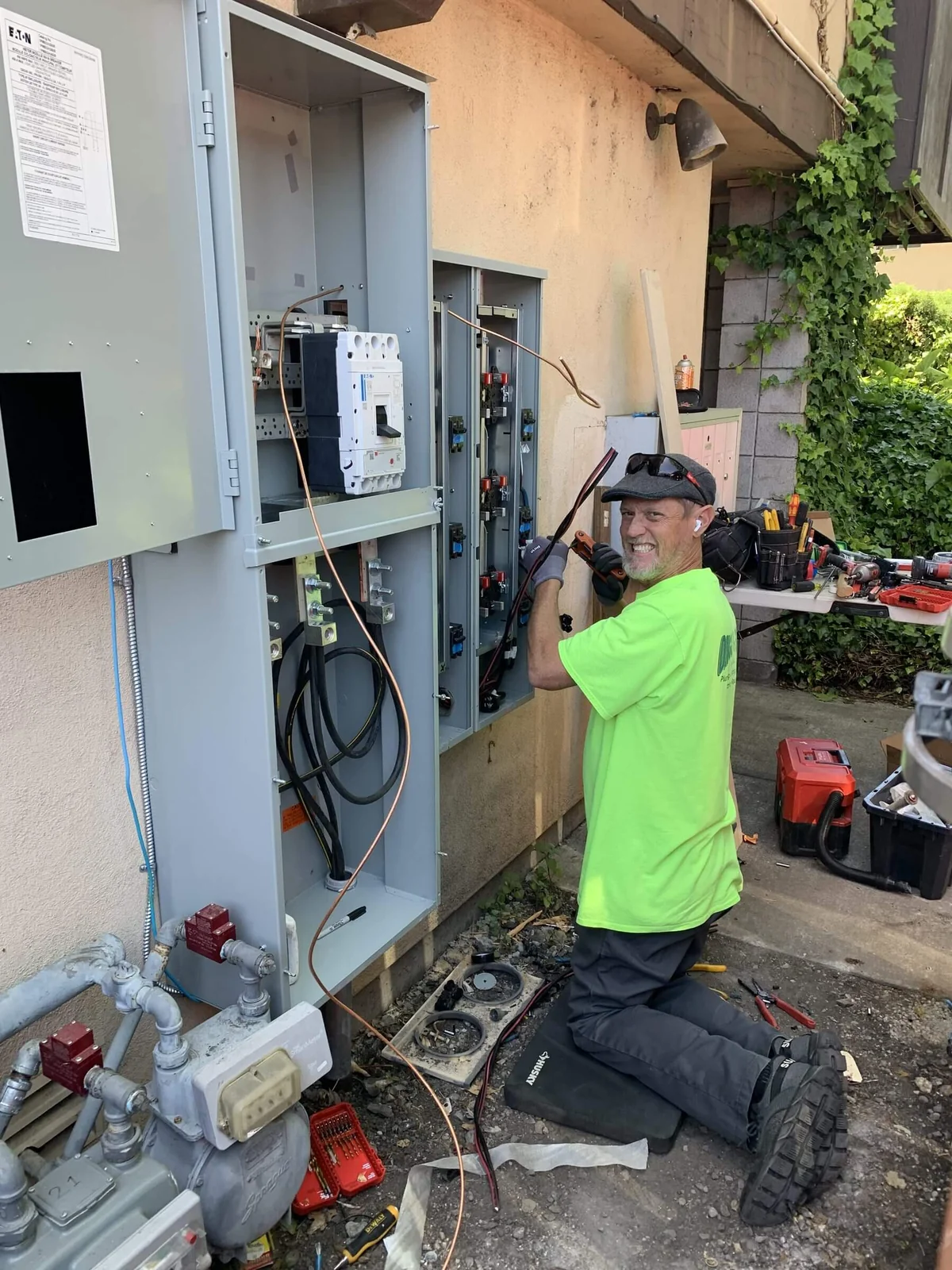
Electrical capacity quietly governs everything else on this page. Adding a heat pump, a heat pump water heater, an induction range or a car charger to an older Sonoma house is not a question of free slots in the panel. It is a load calculation against the whole existing service, and it either passes or it does not. If it fails, the fix is a service upgrade, load management hardware that keeps two large appliances from drawing at once, or a reduced scope. Anyone quoting without that calculation is transferring risk to you, and it surfaces mid-project when it costs most. Electrical Panel Upgrade in Sonoma covers the work, including PG&E coordination for the meter and service conductors that adds calendar time no contractor controls.
Home car chargers follow state rules rather than local preference, and two sections do the work. California Government Code 65850.7 requires every city and county to create "an expedited, streamlined permitting process for electric vehicle charging stations," to publish a checklist, and to approve conforming applications through "a building permit or similar nondiscretionary permit," with review limited to health and safety. Government Code 65850.71 supplies the deadlines: for one to twenty-five stations at a single site, five business days to completeness and twenty more to approval, subject to the exceptions the statute lists, with larger sites on ten and forty. The permit is still required; the statute only caps how long a city can sit on it.
Here is the part unique to Sonoma County. Sonoma Clean Power runs a smart charger enrollment program rather than an installation rebate, paying a monthly bill credit plus a sign-up bonus to active SCP customers who enroll an eligible Wi-Fi connected charger. Eligible devices are currently limited to WallBox and ChargePoint models, with SCP noting "We are working hard to add more EV chargers to our program." SCP slows charging during grid stress and says a customer "can override an event anytime." So the hardware you buy decides whether you can enroll at all, which makes charger selection financial and not purely electrical. Marin and Napa have no equivalent lever.
Rate plan matters too: EV2-A keeps one meter across household and vehicle use, while EV-B requires a second dedicated meter, a scope decision belonging in the install conversation. The third, E-ELEC, is aimed at households going further than a charger, adding heat pumps or storage alongside it. EV Charger Installation in Sonoma walks through both. One clarification, because it gets quoted incorrectly: CALGreen applies its EV-ready provisions to new construction and imposes no retrofit obligation on an existing house.
Backup power is the other subject this valley raises on its own, since Public Safety Power Shutoffs are a planned part of PG&E's wildfire mitigation and hillside circuits above the valley floor are the most exposed. We are a Certified Generac Generator installer. A standby generator gets sized against the loads you intend to run, wired through a transfer switch, and exercised on a schedule so it starts when the circuit opens. Electrical in Sonoma covers the rest of the residential scope.
Solar and battery storage in Sonoma
Sonoma's building department has made this easier than most. The City of Sonoma Building Division publishes an expedited solar permitting pathway for one and two-family dwellings and a separate expedited pathway for battery energy storage systems, from a department that issues "more than 600 building permits...per year." Outside the city limits, the same project goes through Permit Sonoma.
Battery storage is where local reasoning gets interesting. In a valley with real shutoff exposure, a battery is less a bill-management device than the thing keeping a refrigerator, a well pump, a furnace blower and a few circuits alive through a planned outage. That makes sizing a loads exercise: we work backward from the circuits you want carried and for how long, then design the critical loads subpanel around the answer.
Two constraints appear on almost every retrofit here. Roof age, framing, orientation and shading from mature valley trees shape array design, and replacing a roof under a two-year-old array is a cost nobody plans for. Then the panel again, since interconnecting solar and storage has to respect the busbar rating of the existing service. Utility rate and interconnection rules change regularly, so we confirm what applies when your system is designed. Solar in Sonoma has the full scope.
Permits, code and inspection in Sonoma
We pull permits on this work as a matter of course. Here is what to expect.
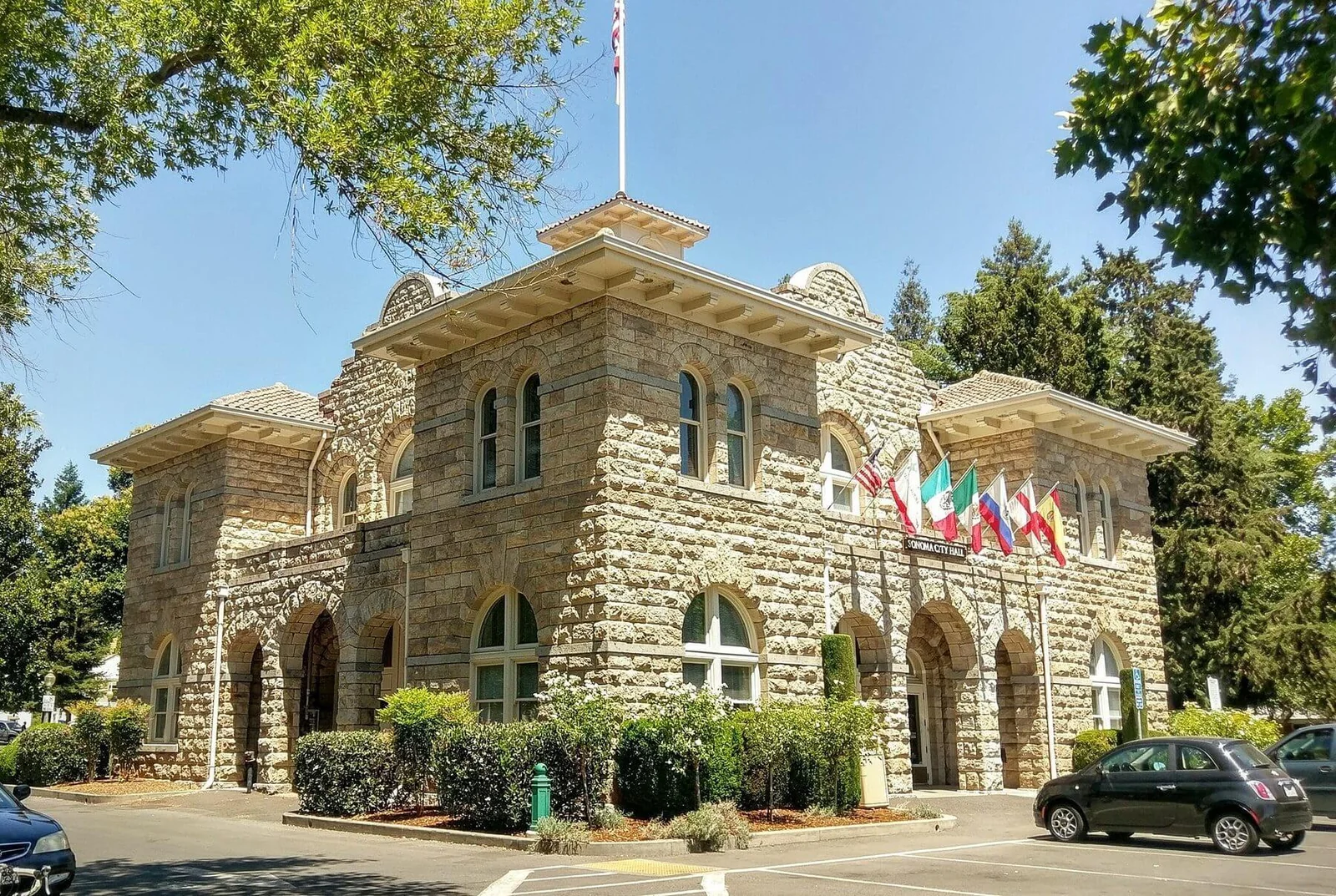
- Jurisdiction follows the address. Inside the limits, the City of Sonoma Building Division reviews and inspects. In the unincorporated valley, Permit Sonoma does. A permit opened at the wrong agency wastes weeks.
- Water heater replacement is permitted work. Inspection checks bracing under Health & Safety Code §19211, relief valve discharge, combustion air and venting on gas units, and Title 24 documentation.
- Furnace and air conditioning changeouts are permitted and inspected, with Title 24 compliance documented on the permit. Refrigerant line work, condensate routing and clearances are reviewed.
- Service and panel upgrades need a load calculation, a permit, an inspection, and PG&E coordination for the meter and service conductors. That utility step is scheduled, not instant.
- Car charger installations run through the expedited ministerial process every California jurisdiction must maintain, on the statutory clock above.
- Solar and battery storage use the city's expedited pathways inside the limits, and Permit Sonoma's process outside them.
- Leave the work accessible until sign-off. Closing a wall or backfilling a trench early means opening it again.
- Unpermitted work surfaces at resale, and correcting it later costs far more than the permit did.
Where the cost sits
Nobody prices a house from a photograph. What this costs in Sonoma is set by a short list of physical conditions, long before equipment selection enters the conversation.
Access leads. A furnace in a floor closet in an older Plaza-area home with plaster walls, no attic and a low crawlspace takes longer to remove and install than the same unit in a garage with a roll-up door. Electrical capacity is next, since whether the service passes its load calculation determines whether a heat pump project involves one trade or two. Duct condition matters on every ducted system, and venting and gas line sizing decide tankless feasibility. On sewer work, depth, length, soil and whether the line runs under a driveway or a mature tree move the number more than the pipe does, and hardscape restoration is a real line item. On solar, roof complexity, array size and whether interconnection forces a service upgrade set the range.
Two non-physical factors count as well. Incentive programs open and close on their own calendars, changing what a project nets. And work sequenced in advance costs less than work done under pressure after something has already failed.
Rebates and incentives, and where they stand
These programs move, so current status matters more than the general idea.
Sonoma Clean Power runs the heat pump water heater rebate most likely to reach a Sonoma address. The installation address has to be an SCP account, the equipment has to satisfy SCP's published performance requirements, and households on the CARE or FERA bill discount programs qualify for further support against what remains once other rebates apply. Levels and windows change, so the figure worth using is the one confirmed at quote time.
On charging, SCP runs an enrollment program rather than an installation rebate, paying a bill credit for an eligible Wi-Fi connected smart charger, with eligible devices limited to specific WallBox and ChargePoint models. The hardware you buy therefore decides whether you can enroll at all.
Financing helps when project timing and cash timing do not line up.
Maintenance that earns its keep in this valley
Sonoma is hard on cooling equipment in July and hard on standby equipment in the fall, and a service rhythm built around that calendar prevents most of the calls described above.
For heating and cooling: clean coils, clear condensate lines, change filters at intervals matched to your real dust load, verify refrigerant charge, and inspect ductwork, which in older homes is where a surprising share of capacity disappears. For plumbing: check the anode and flush a storage tank on schedule, descale a tankless unit annually given local mineral content, confirm the strapping is still tight, and camera an aging lateral before the rainy season. For electrical: check the panel for heat and loose connections, test GFCI and AFCI devices, and load-test a standby generator before fire season. Our maintenance plans keep that calendar off your desk.
The Sonoma neighborhoods and areas we work in
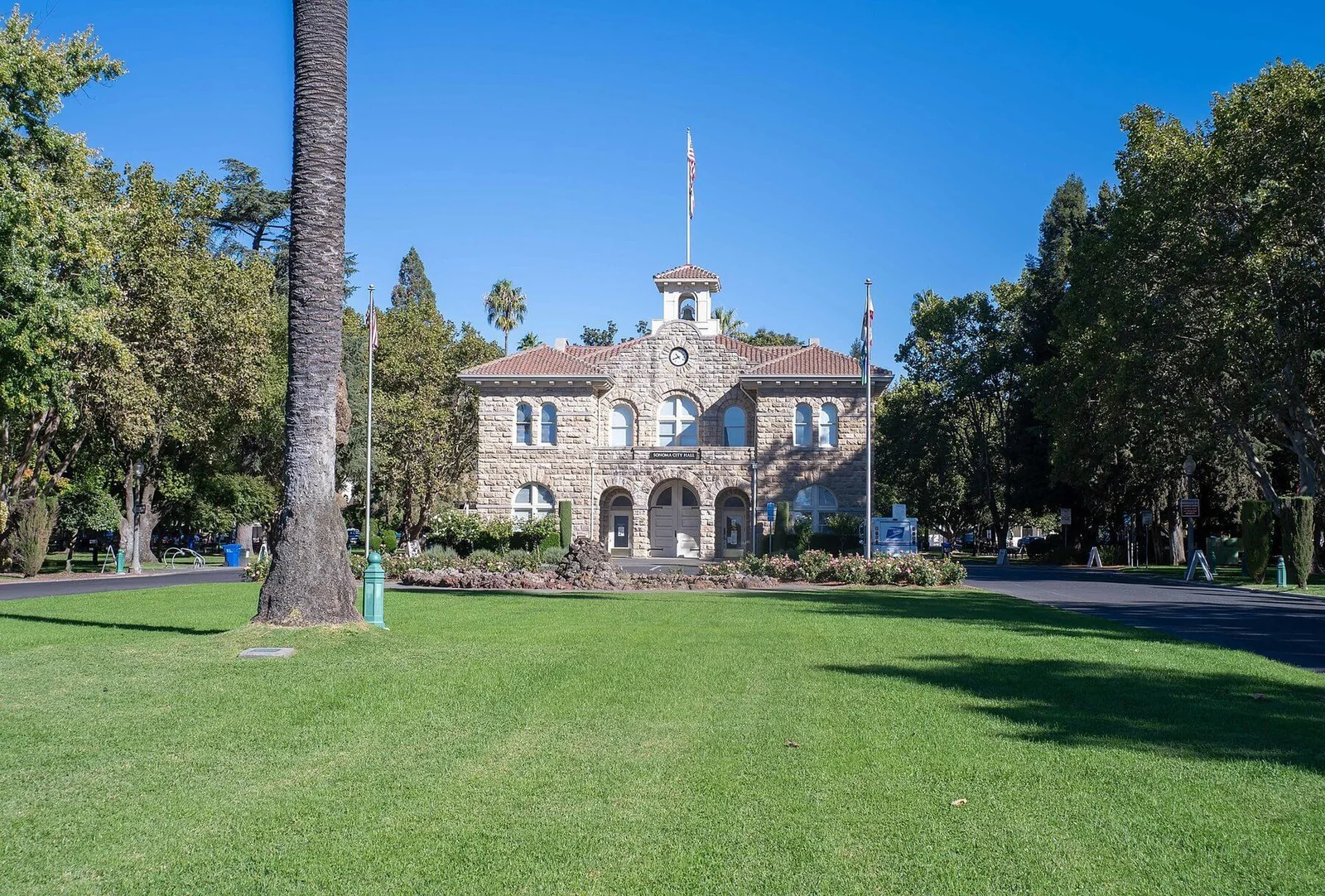
The streets around the Plaza hold the oldest stock in town, with a consistent set of conditions: tight utility closets, plaster over lath that does not forgive rerouting, limited or nonexistent attic space, and services sized for a much smaller electrical life. Work there is slower and more careful, and a quote that does not say so is hiding it.
Boyes Hot Springs and the Springs mix eras heavily, and many houses have been added onto more than once. That leaves plumbing and wiring installed across several decades in one building, where the junction between the older section and the newer addition is usually exactly where the problem lives.
Past the city limits, valley properties bring longer service runs, different permit authority and sometimes a different water source than the city system. We cover all of it from Petaluma. See Plumbing in Sonoma, HVAC in Sonoma and the wider Sonoma County service area.
How to choose a contractor for this work in Sonoma
Five questions separate a company that finishes your project from one that discovers a problem halfway through.
Ask who pulls the permit, under which license class, and in which jurisdiction. Ask for the load calculation in writing before accepting a quote on a heat pump, a heat pump water heater or a car charger, and ask what happens to the price if that calculation forces a service upgrade. Ask who handles rebate paperwork and what happens if a program closes between estimate and install. Ask about manufacturer standing, because the top tiers require training and performance rather than a signature: Mitsubishi Diamond Contractor Elite and Trane Comfort Specialist for heating and cooling, Certified Generac Generator installer for standby power. And ask about third-party accountability, which for us means Diamond Certified and a BBB A+ Rating.
One company holding C-20, C-10 and C-36 matters more here than in a newer town, because these projects cross trades and a single point of responsibility means nobody stands in your hallway blaming another contractor.
What North Bay homeowners say
Two reviews that describe how this works across trades:
James is the BEST! Whenever we have a plumbing or electrical issue we always call Ongaro.
Edward L.
Bought an nice older home and went with Ongaro & Sons on HVAC as familiar with the services from my childhood. Sure they're still more expensive but the knowledge, service and peace of mind was worth it. Shout-outs: Nicholas N., Adam A. and Joseph R.
Charles J.
More are on our reviews page.
Book a Sonoma appointment
Tell us what the house is doing and we will send a technician licensed for the trade it actually turns out to be. Book online to pick a window, or use our contact page if you would rather describe the situation first. We handle the permit application and inspection scheduling as part of the job. Explore the rest of our Sonoma work: HVAC in Sonoma, Plumbing in Sonoma, Electrical in Sonoma and Solar in Sonoma. County-wide, see heating and cooling, plumbing, electrical and solar across Sonoma County, or start from the Sonoma County service area. Ongaro & Sons has served the North Bay since 1932.
Sonoma homeowner questions
Who is the best home services company in Sonoma?
Ongaro & Sons has served the North Bay since 1932, is Diamond Certified, holds a BBB A+ Rating, and carries 2,771 Google reviews at a 4.8-star average. What sets us apart locally is that one licensed company carries C-20, C-10 and C-36, so a heat pump job that becomes a panel job needs no second contractor.
Do I need a permit to replace a water heater in Sonoma?
Yes, inside the city limits and in the unincorporated valley alike. Inspection verifies the seismic bracing state law requires, the relief valve discharge, venting and combustion air on gas units, and Title 24 paperwork. We file the application, meet the inspector, and hand you the signed record. Skipping it creates a problem that reappears at resale.
Which building department handles my project outside the city limits?
Permit Sonoma reviews and inspects unincorporated addresses in the valley, while the City of Sonoma Building Division handles anything inside the limits. A Sonoma mailing address does not tell you which one applies, so we confirm jurisdiction from the parcel before anything is filed. The agencies run different processes and timelines.
Is my gas water heater about to be banned?
No. We verify the current requirement when your permit is filed. No requirement reaches an appliance already installed and working. What the rule governs is what may be sold and fitted, on dates that vary by size and type, so the practical question at your address is what your electrical service could support if you chose to change.
Does a heat pump really handle a Sonoma Valley summer?
Yes, and summer is the easier half. Cooling is what the equipment does in reverse, so a correctly sized system handles July the way a conventional air conditioner would while covering both seasons with one outdoor unit. The tougher engineering question is winter capacity, and current cold-climate models hold output well below anything this valley produces.
Why did my air conditioning quote turn into an electrical quote?
Because the load calculation came back short. Older services here were sized for a house heating itself and its water with gas, and adding a compressor changes total connected demand. When that calculation fails, the options are a service upgrade, load management hardware preventing two large appliances from drawing simultaneously, or a smaller scope.
What rebates can a Sonoma homeowner get right now?
Sonoma Clean Power runs the heat pump water heater rebate that reaches this valley. It requires the installation address to be an SCP account and the equipment to meet SCP's published performance requirements, with additional support for households on the CARE or FERA bill discount programs. SCP separately pays a bill credit for enrolling an eligible smart charger, with eligible devices limited to specific WallBox and ChargePoint models, so the hardware decides whether you can enroll. Levels and windows move, so we confirm the terms in force at quote time.
Does Sonoma Clean Power pay for my car charger installation?
Not the installation itself. The program pays a recurring bill credit plus a sign-up bonus for enrolling a qualifying Wi-Fi connected smart charger, and eligible hardware is currently limited to specific WallBox and ChargePoint models. You must be an active Sonoma Clean Power customer. During grid stress the charging rate drops, and you can override any event.
How long can the city take to approve a car charger permit?
State law caps it. Deadlines live in 65850.71, the section immediately following. An application covering between one and twenty-five charging stations is deemed complete five business days after submission and deemed approved twenty business days after that, unless the building official has acted, denied it, made adverse-impact findings, or an appeal is pending. Review is ministerial rather than discretionary.
Should I add a battery when I install solar here?
It depends what you want it to do. If the goal is riding through a planned public safety shutoff, the battery is the component that does that, sized against the specific circuits you need carried and for how long. If the goal is purely bill management, the arithmetic depends on current rate structures. We design from a loads list.
My drains slow down every fall. What is that?
Usually roots in the building sewer. Older laterals in this part of the valley were jointed in ways that let fine roots enter, and those roots wake up with the first real rain. The distinguishing symptom is every drain slowing together rather than one fixture. A camera inspection settles whether cleaning, lining or replacement is right.
How often should Sonoma systems be serviced?
Service cooling before the first hot week and heating before the first cold one, twice yearly on equipment doing both. Flush a storage water heater and check the anode annually. Descale a tankless unit each year given local mineral content. Exercise a standby generator ahead of fire season, and camera an aging lateral before the rains.