Napa County, California
Home Services in Napa, CA
From its historic downtown to valley neighborhoods, the city of Napa balances warm summers with year-round comfort needs. Ongaro & Sons delivers heating, cooling, plumbing, and electrical service throughout Napa.
The best home services company in Napa is the one that has been doing all four trades here the longest and can show its work. Ongaro & Sons has worked across the North Bay since 1932 and does all four today, is Diamond Certified with a BBB A+ Rating, holds the C-20 HVAC, C-36 plumbing and C-10 electrical classifications on one contractor license, prices flat rate by the job, and shows 2,771 Google reviews averaging 4.8 stars. Every Napa job runs from our Petaluma headquarters.
We pull the permit, size equipment from a calculation instead of a rule of thumb, and explain what drives the number before anything is ordered.
On this page
What makes a Napa job its own problem
Five things about this city change how the work gets done, and none are true in quite the same way one town over.
Jurisdiction. Napa is a city inside a county that is mostly not city. Within the city limits your permit comes from the City of Napa Building Division. Outside them it goes to Napa County Planning, Building and Environmental Services, a separate process with its own inspectors.
How that permit is obtained. The City of Napa Building Division states on its own page, in capitals, that "THE CITY DOES NOT HAVE AN ONLINE PORTAL FOR SUBMITTALS." Applications are made in person at the counter, which is open "from 8 AM - 4 PM Monday through Thursday" with "last submittal and/or permit issuance" at 3:30 PM. Read those two facts together and you get a four-day week with a mid-afternoon cutoff. That is a scheduling fact rather than a difficulty: a contractor who works Napa builds the counter trip into the job, and one who does not discovers it the morning a crew is already in your driveway. Depending on scope, the city also notes a project may trigger an outside agency review from Napa Sanitation District, which is a second queue rather than a second form.
Air district. Napa County appears without qualification in the Bay Area Air Quality Management District's own list of its counties, so the zero-NOx standards reach homes here in full.
The district's building appliance rulemaking phases them in on three dates: 2027 for small tank-type water heaters up to 75,000 BTU per hour, 2029 for furnaces below 175,000 BTU per hour, and 2031 for larger tanks and for tankless units.
Climate. Napa runs hot through summer, cooler than up-valley St. Helena but well above anything on the coast, and it gives much of that heat back overnight. Cooling is not optional the way it can be in a coastal town, and heating still has to carry a real winter. In the hills on either edge of town, PG&E may turn off power during severe weather through its Public Safety Power Shutoff program.
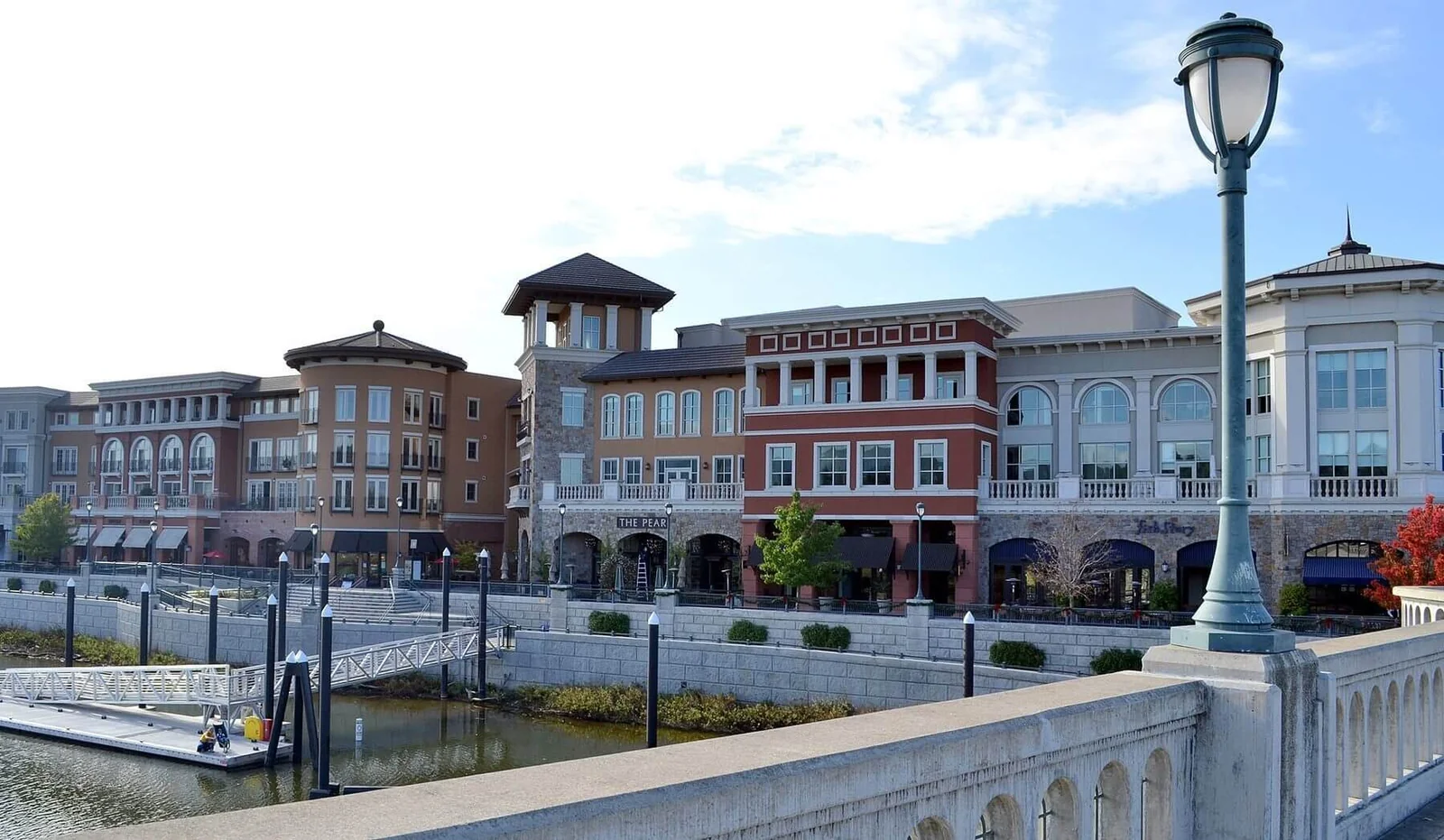
Two housing stocks. Downtown and the streets around it hold Victorian and early-twentieth-century homes. South and east Napa run newer subdivisions with garages, attic space and panels sized for modern appliances. The city also operates its own water utility rather than buying wholesale from a regional agency, drawing on local reservoir storage plus State Water Project deliveries.
What the first visit covers
Before anyone quotes a number, a technician walks the systems the job will touch: equipment, ducts and return path on heating and cooling; the water main, main shutoff, venting and supply piping on plumbing; the panel, service conductors and grounding on electrical; roof planes, shading and busbar space on solar.
Field experience beats any statistic here. On the older streets near downtown we routinely find 100-amp services, cloth-insulated branch circuits, galvanized supply lines narrowed from the inside, and furnaces wedged into interior closets venting into a shared masonry chimney. In the newer south and east Napa tracts equipment usually sits in a garage with room to work, and duct design limits the job more than access does.
Symptoms point at specific failures, and which one you have changes the decision:
- Warm air at the registers while the outdoor unit runs nonstop usually means charge loss, a failing capacitor or a contactor, not a finished system.
- A furnace that lights, runs a minute, drops out and retries points at a flame sensor, a pressure switch or a restricted flue.
- Hot water running out partway through a shower is sediment in the tank or a broken dip tube.
- The lowest fixture in the house backing up first is a main line problem, and snaking one drain will not hold.
- Breakers tripping when two ordinary appliances run at once is circuit loading, a load calculation question before it is a breaker question.
Why the load calculation is worth paying for
A number pulled off square footage is a guess. Napa's day-to-night swing punishes an oversized air conditioner: it satisfies the thermostat quickly, shuts down before it has evened out the house, and burns through compressor starts. Undersized equipment never recovers on the worst afternoons. We run a room-by-room load calculation from your construction, glazing, orientation, insulation and infiltration, then confirm the ductwork can carry the resulting airflow.
The same step exists in every trade. Water heaters are chosen on first-hour delivery against a household's real draw pattern, not on tank gallons. Electrical work starts with a service load calculation, the only defensible way to decide whether a panel upgrade is genuinely required. Solar is modeled against your roof planes and shading rather than a generic per-panel figure.
The permit, and what the law guarantees you
Permits are the record that the work met code, and that record matters when you sell the house. Several rules apply to Napa homes regardless of who does the work:
- Water heaters must be braced. California Health & Safety Code section 19211 requires all new, replacement and existing residential water heaters up to 120 gallons to be braced, anchored or strapped per the California Plumbing Code.
- Title 24 applies to replacements. The 2025 Building Energy Efficiency Standards took effect January 1, 2026, per the California Energy Commission. Replacement equipment has to meet them prescriptively or through performance modeling.
- Charger permits run on a statutory clock, set in two sections. Government Code 65850.7 obliges cities and counties to approve charging station applications administratively through a building permit or similar nondiscretionary permit and to confine review to health and safety. Government Code 65850.71 sets the deadlines: for one to twenty-five stations at a single site, complete after five business days and approved twenty business days later, absent action, a denial, a substantial-evidence adverse-impact finding or an appeal. The permit is still required; the law caps how long a city can sit on it, and in a city with no online portal that cap is worth knowing.
- Solar permits work the same way. Government Code 65850.5 requires an "expedited, streamlined permitting process for small residential rooftop solar energy systems," and states that a jurisdiction "shall administratively approve applications to install solar energy systems through the issuance of a building permit or similar nondiscretionary permit."
- EV-ready wiring rules target new houses. CALGreen, Title 24 Part 11, sets those provisions as new-construction requirements. Nothing in them obligates an existing home to retrofit.
Where the application lands depends on the address, city counter or county department, and we confirm that from the parcel before scheduling, because getting it wrong costs a day.
Install day, and what drives the price
This is where the two housing stocks separate. In a newer subdivision the crew usually has garage or attic access, a clear equipment path and a panel with capacity. Downtown, the same scope can mean carrying equipment through finished rooms, finding a closet that will not accept a modern cabinet, or discovering that a shared chimney will not serve a new appliance.
We do not publish prices, because a number without your house attached is meaningless. What moves it:
- Whether existing venting, gas line, condensate route or circuit can be reused or has to be replaced to meet current code.
- Panel capacity, and whether the new load triggers a service upgrade.
- Duct condition, sizing and leakage, which often costs more to correct than the equipment costs to swap.
- Access: crawlspace height, attic hatch size, side yard width, and how far equipment travels indoors.
- Code items the replacement triggers on its own, such as strapping, an expansion tank or combustion air.
Inspection, commissioning and what comes after
The inspector verifies that the installation matches code and permit. Commissioning is separate and it is ours: refrigerant charge verified against measured superheat and subcooling, static pressure checked across the air handler, temperature rise and gas pressure measured on heating. Then we register the manufacturer warranty in your name, which people forget and later regret.
After that it is maintenance. Napa's long warm season loads condenser coils with dust and pollen, and a dirty coil raises head pressure and shortens compressor life. Heating equipment that idles all summer earns a check before the first cold week.
Heating and cooling in Napa
Napa asks a system to do two jobs: summer afternoons pull real cooling load, and winter mornings need heat that recovers quickly in houses with modest insulation. That is what a modern variable-capacity heat pump is built for, since it spends most of the year at part load instead of cycling between full output and off. We are a Mitsubishi Diamond Contractor Elite and a Trane Comfort Specialist, the top installer tiers those manufacturers award, which governs warranty terms and parts access.
Refrigerant is the quiet factor in every repair-or-replace conversation. R-22 production and import into the United States ended in 2020, per EPA, which permits only the servicing of existing equipment, so repairs on those systems depend on reclaimed or previously stockpiled supply and the economic life of pre-2010 equipment is shorter than its mechanical life. R-410A is a different case: EPA's technology transitions rule sets a 700 GWP limit on newly manufactured residential and light commercial equipment, which is why new systems arrive on lower-GWP refrigerants, though an existing R-410A system does not need replacing.
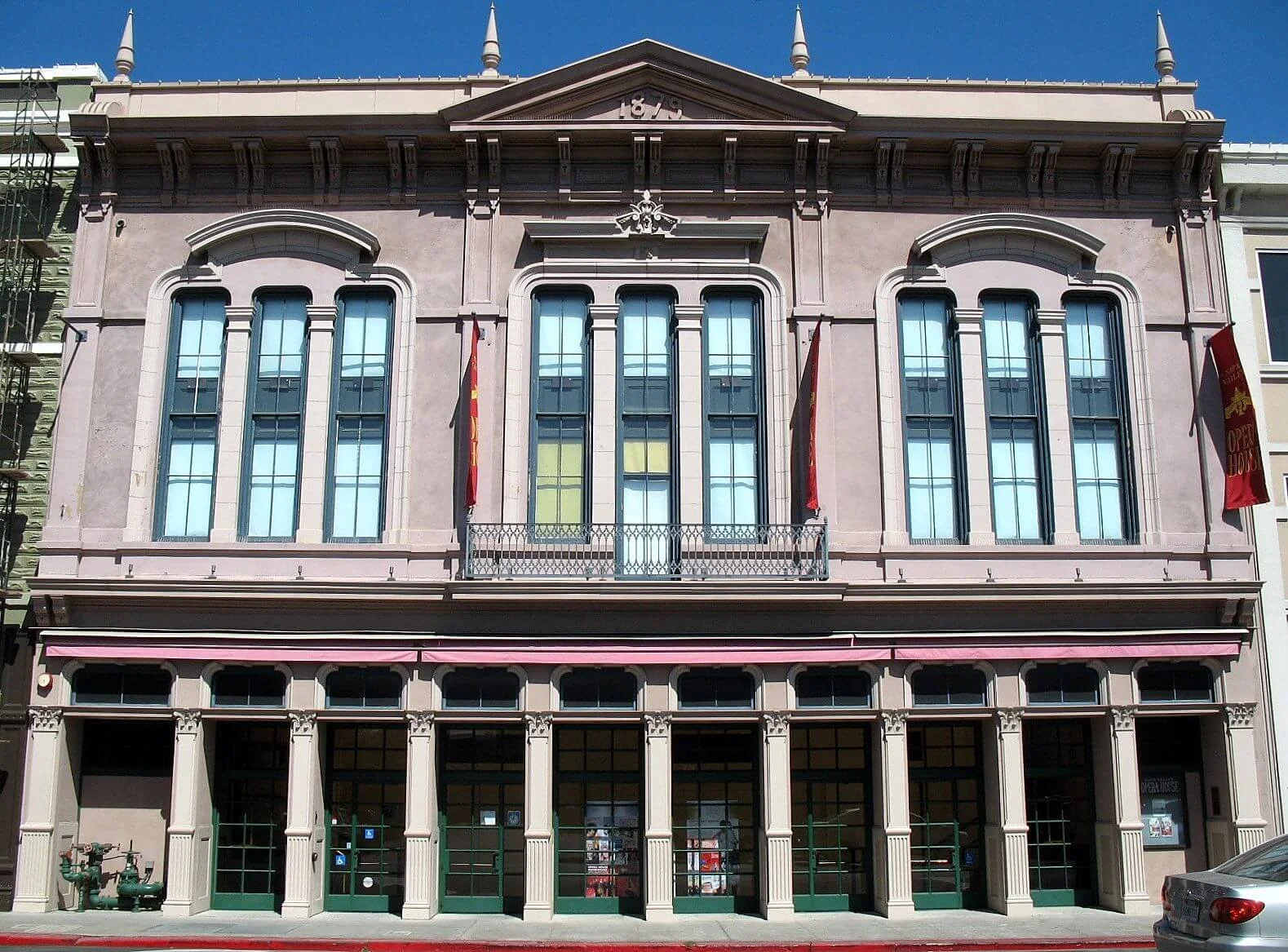
Ducted retrofits downtown hit a wall that has nothing to do with equipment. With no attic and no accessible crawlspace, running properly sized supply and return is invasive or impossible, and a ductless or ducted mini-split becomes the sensible answer rather than a compromise. In south and east Napa the runs already exist, and the work is correcting undersized returns and leaky connections. Both paths run through our HVAC in Napa page.
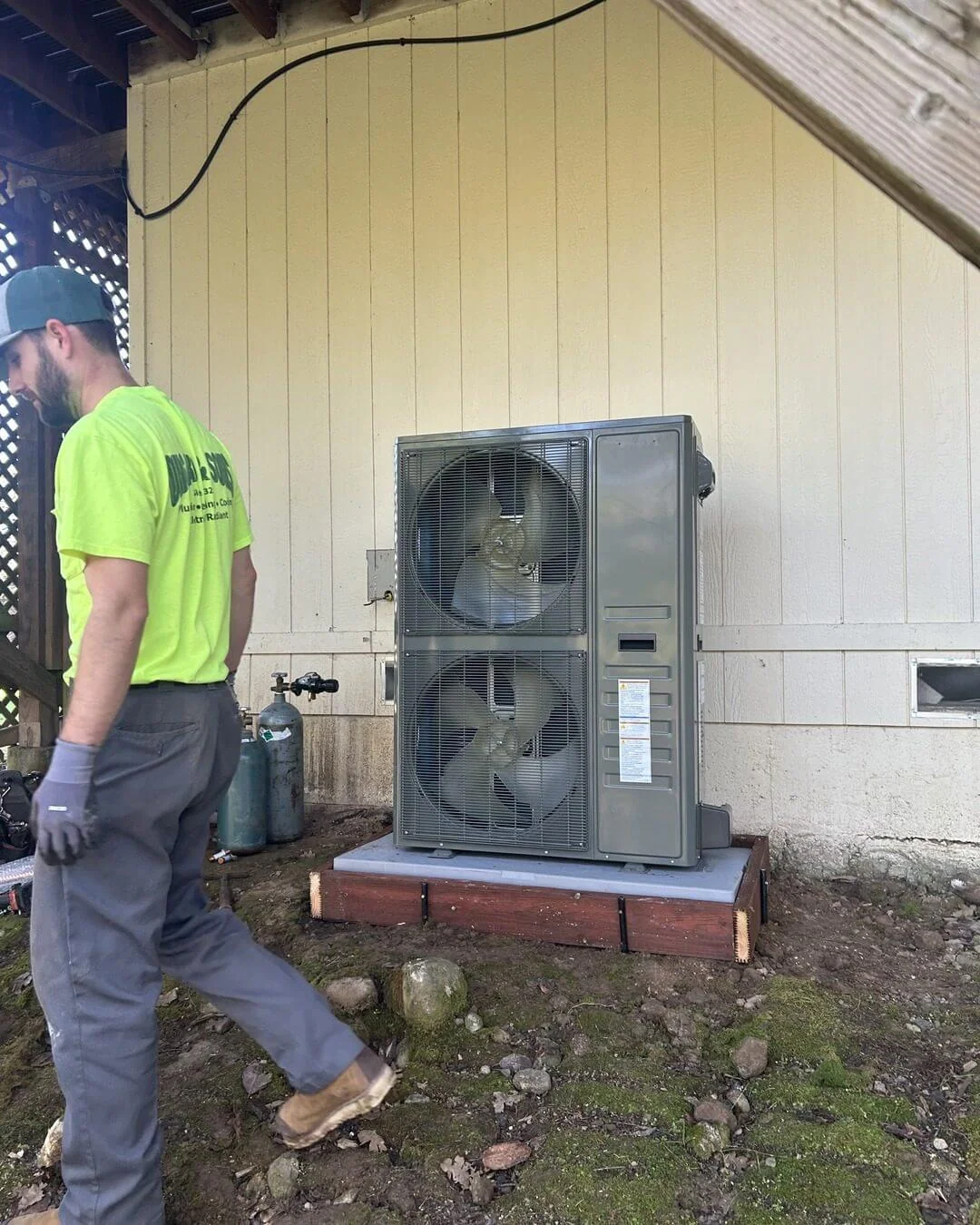
On incentives, current status matters more than a list. Napa's community choice provider is MCE, not Sonoma Clean Power, so Sonoma County programs do not apply at a Napa address. MCE's heat pump rebates go to customers who "own and have lived in their single-family detached homes for at least 12 months in MCE's service area," require a participating contractor to file the paperwork, and "cannot be applied to a project retroactively," which is why the application goes in before the equipment does.
Plumbing in Napa
Because the City of Napa runs its own water system, service line age and pressure characteristics here are a city matter rather than something inherited from a regional wholesaler. On older streets the consequence is supply piping that has lost interior diameter over decades, which appears as weak flow at upstairs fixtures long before it appears as a leak.
Water heaters are the most regulated appliance in the house right now, and that deserves plain language. The air district's 2023 amendment to Regulation 9, Rule 6 established zero-NOx requirements for residential water heaters, with dates that land on different appliances in different years across 2027 and 2031, and that govern what may be sold or installed rather than what you may keep. Nobody's existing gas water heater is banned. We confirm the requirement that applies on the day your permit is pulled.
Heat pump water heaters are where plumbing and electrical stop being separate trades. These units generally need a dedicated 240-volt circuit, so the panel and the service load calculation enter a conversation that started as plumbing. In a downtown house on a 100-amp service that is the deciding factor. In a newer garage installation it is often a short run to a panel with room.
Drain and sewer work follows the same age split. Older laterals near downtown used materials and joint methods that root intrusion eventually finds, and a line backing up repeatedly at the lowest fixture says the problem sits between the house and the street. A camera inspection settles that before anyone digs. Repiping, gas line work and fixture replacement are covered on our plumbing in Napa page. Every job runs under our C-36 license.
Electrical in Napa
Electrical demand in a Napa house has grown faster than the service feeding it. A heat pump, an induction range, a heat pump water heater and a car charger were not on anyone's list when a 100-amp service went in, and adding two of them at once is what forces the question.
The answer is not automatically a bigger panel. A service load calculation frequently shows headroom, and load management devices can sometimes let a new circuit coexist with the existing service. Where an upgrade is required, it is worth doing once and correctly, including the grounding and bonding older installations often lack. On pre-war houses we also find ungrounded two-prong receptacles and shared neutrals, and those get addressed on their own merits rather than folded into a panel quote.
Car charging has its own decision chain. The permit protection described above applies, and the electrical scope is straightforward: a dedicated circuit, correct breaker sizing, GFCI protection where required, and a load calculation supporting it. Two Napa-specific points matter before you buy hardware. MCE's EV charging program covers workplaces, multifamily properties of four or more units, and commuter parking lots such as park-and-ride or ferry terminals, per MCE, so it does not reach a house. It does not follow that nothing does: MCE Sync rewards residential customers for smart charging, and PG&E's residential charger rebate states in its terms that Community Choice Aggregation customers are eligible.
Your PG&E rate plan is also an install-time decision: EV2-A uses your existing meter for home and vehicle use together, while EV-B requires a second dedicated meter that separates the two. That second meter is an electrical scope item, so settle it before the work is designed. PG&E's third residential option, E-ELEC, is written for a home taking on more than one electric load. It carries a Base Services Charge, so it is worth comparing rather than assuming. More is on our EV charger installation in Napa page.
Standby power belongs here too. Because PG&E may shut off power during severe weather to reduce wildfire risk, homes in the hills around Napa have reason to plan for extended outages. We are a Certified Generac Generator installer, and a standby install is as much gas and electrical coordination as an equipment purchase: load selection, transfer switch placement, fuel supply. The rest of our C-10 work is on the electrical in Napa page.
Solar in Napa
Solar here rests on two different arguments. One is the summer cooling load, which peaks when the sun does and grows if you electrify heating. The other is outage resilience, which is a battery question rather than a panel question. Panels alone do not power a house during a shutoff, because a grid-tied inverter disconnects when the grid goes down. If riding one out is the goal, storage and a critical-loads subpanel deliver it, and the design starts from which circuits you want alive.
Technical review starts with the roof. Age and remaining service life come first, since an array on a roof with a few years left in it means paying to remove and reinstall it later. Then plane orientation and pitch, then shading from mature trees and neighboring structures, a real constraint on the older tree-lined streets. Then the electrical side: main breaker rating, busbar rating and interconnection space, which often decides whether a panel upgrade rides along.
Permitting is favorable by statute, as quoted above, which removes discretionary review from the equation. Interconnection with PG&E is a separate approval on its own timeline. Design, storage and that sequence are covered on our solar in Napa page.
Napa neighborhoods and areas we work
Downtown Napa and the older streets around it hold the historic housing stock and the tightest access, and panel and piping age drive most of the scope there. Alta Heights sits on the slope east of downtown, with the grade, driveway access and outage exposure that hillside addresses bring. Browns Valley runs west toward the hills with a mix of eras on a single street. South and east Napa hold the newer subdivisions, where work is more standardized and the constraints are usually duct design and equipment placement. We also cover the unincorporated county around all of it, alongside the rest of Napa County, from our Petaluma headquarters.
How to choose a contractor for this work
Five questions separate a serious bid from a fast one:
1. Will you pull the permit, and which jurisdiction is my address in? Anyone who cannot answer the second half immediately has not looked at your parcel. 2. Can I see the load calculation? The output, not a promise of one. A bid that arrives before anyone measured windows or checked ducts was sized off floor area. 3. What is the current status of the incentive you just quoted? Ask for the program name and the condition attached to it. 4. What happens when existing conditions are not code-compliant? Strapping, disconnects, combustion air and grounding are cheap up front and expensive as a change order. 5. Who holds the license, and in which classification? Multi-trade work should be licensed for every trade it touches. Ours are C-20, C-10 and C-36.
What North Bay homeowners say
Two recent reviews from customers across the North Bay, in their words:
Great and timely service. Gino explained everything and made it easy to understand. Thank you.
Mark U.
Professional, knowledgeable and respectful of our property. Would not.hesitate to recommend for any electrical project.
James N.
Book service in Napa
Tell us what the house is doing and we will send a technician to look at it. Book online and pick a window that works, or describe the problem and we will tell you which trade needs to come first. No bid leaves here without somebody having stood in front of the equipment. Napa neighbors also read our HVAC in Napa, heat pump, plumbing, water heater, electrical, panel upgrade, EV charger and solar pages, plus the wider Napa County overview.
Napa homeowner questions
Who is the best home services company in Napa?
The company has served North Bay households since 1932, and its trades today are heating and cooling, plumbing, electrical and solar. We are Diamond Certified, carry a BBB A+ Rating, and are licensed in every trade classification we work in. Our 2,771 Google reviews average 4.8 stars.
Do I need a permit to replace a furnace, water heater or electrical panel in Napa?
Yes. All three are permitted work in California, and that paperwork becomes the proof the installation met code when you eventually sell. It also buys you an independent inspection of somebody else's workmanship at no additional charge. We file the application, schedule the inspection and see the sign-off through as part of the job.
Can I apply for a City of Napa building permit online?
No. The Building Division's website says plainly that the city has no online portal for submittals, so applications happen in person at its First Street counter. For a homeowner the takeaway is about timing rather than difficulty: any bidder working in this city should already have that trip factored into their schedule.
What if my house sits outside the Napa city limits?
Then the city plays no part in your project. Plan review, permitting and inspections for unincorporated addresses are handled by Napa County Planning, Building and Environmental Services, which runs its own process with its own inspectors. We check the parcel and confirm which authority applies before anything goes on the calendar.
Will the air district rule force me to replace my gas water heater?
No. The zero-NOx amendment governs what may be sold and installed as compliance dates arrive from 2027 onward, not what already sits in your garage. Your existing water heater can run until it fails. What changes is the replacement decision when that day comes, and we confirm what is in force when the permit is pulled.
Does a Napa home really need air conditioning?
For most households, yes. The city sits well inland of the marine influence that keeps coastal Marin towns comfortable, and summer afternoons reach a level where an unconditioned house stops being merely warm. Evenings do cool down considerably, which is exactly why correctly sized equipment matters so much here.
How do you size a heat pump for a Napa house?
With a room-by-room load calculation that uses your real construction, window area and orientation, insulation levels and air leakage, followed by a check that the ductwork can move the airflow the result calls for. We never size from floor area, and we do not simply match what was there before.
What rebates exist for heat pumps or heat pump water heaters in Napa?
MCE runs the one most likely to reach a Napa house. Three conditions decide it: the home has to be single-family detached and you have to have owned and lived in it for at least a year, the contractor has to be a participating one who files the paperwork on your behalf, and the application has to go in before installation because MCE will not apply a rebate retroactively. Because MCE is the community choice provider here, Sonoma-specific offers are unavailable at a Napa address.
Is there a rebate for installing a home EV charger in Napa?
Not from MCE. Its charging program funds workplace installations, multifamily buildings with four or more units, and commuter lots such as park-and-ride sites and ferry terminals. A single-family home charger falls outside all three. What a Napa homeowner can act on instead is the rate plan choice, which changes what charging costs every night.
My Napa house still has a 100-amp service. Does it have to be upgraded?
Not automatically. The proper test is a load calculation run against everything you actually intend to add, and it sometimes shows usable capacity remaining, especially where additions are staged over several years. Where the math does not support the new load, load management hardware is occasionally an alternative to a full upgrade.
Do I need a battery to keep power on during an outage in Napa?
If resilience is the objective, yes. A grid-tied array shuts itself down the moment utility power stops, which leaves a solar-only house dark. Pairing storage with a critical-loads subpanel is what keeps a refrigerator, a well pump or medical equipment running. In the hills around town that choice deserves attention early.
Do you work on older homes near downtown Napa?
Regularly, and they are the jobs that reward experience most. Century-old houses tend to combine limited service capacity, original branch wiring, aging supply lines and closets that will not physically accept modern equipment cabinets. The answers there are different: ductless systems, staged electrical work, and targeted repiping rather than a standard scope.