Do Tankless Water Heaters Need Electricity? Yes, Including the Gas Ones
Most modern residential tankless water heaters need electricity, including the gas models. Gas supplies the heat in a gas tankless unit, while electricity runs the controls, the ignition, the combustion fan and the sensors. Electric tankless units use electricity to heat the water itself. Check the manual for your exact model: if it requires electrical power, it normally stops heating during an outage unless a suitable backup supplies that power.
Quick answer. Yes. A gas tankless unit's electrical draw is small compared with a whole-house electric tankless unit, but it cannot operate without it, and the actual rating is on the model's specification sheet rather than in a rule of thumb. That is the difference that surprises people, because an old gas tank heater with a standing pilot kept making hot water through an outage. If outage performance matters to you, ask about a compatible battery backup or a generator circuit when the unit is specified, and remember that fuel and water pressure have to be available too.
The trade is easy to miss at installation. A traditional gas tank heater with a standing pilot and a natural-draft flue had no electrical components at all in its basic form, so it kept working when the power went out. A tankless unit replaced the pilot with electronic ignition and the natural draft with a powered vent, both of which improve efficiency and safety, and both of which make power a requirement.
Why Does a Gas Tankless Unit Need Power?
| Component | What it does | Why it needs power |
|---|---|---|
| Component Control board | What it does Runs the unit, monitors sensors, sets the burner rate | Why it needs power It is a computer |
| Component Flow sensor | What it does Detects that a tap has opened | Why it needs power Sends the signal that starts the sequence |
| Component Ignition | What it does Lights the burner on demand | Why it needs power Electronic ignition replaced the standing pilot |
| Component Combustion fan | What it does Draws in air and moves exhaust through the venting the model requires | Why it needs power The burner is not allowed to light without it |
| Component Gas valve | What it does Modulates the burner as demand changes | Why it needs power Electronically controlled |
| Component Display and controls | What it does Temperature setting, error codes | Why it needs power Electronic interface |
The combustion fan is what makes power non-negotiable. Whether the unit is indoors with a sealed vent or outdoors with its own venting arrangement, the fan moves the combustion air and the exhaust, and the control board will not allow the burner to light without it. That is a safety design.
How Much Electricity Does a Gas Tankless Unit Use?
Much less than a whole-house electric tankless heater, but the actual rating varies by model and by accessories. Look for the rated voltage, current and maximum power consumption in the specifications. A recirculation pump and freeze protection can add to the load.
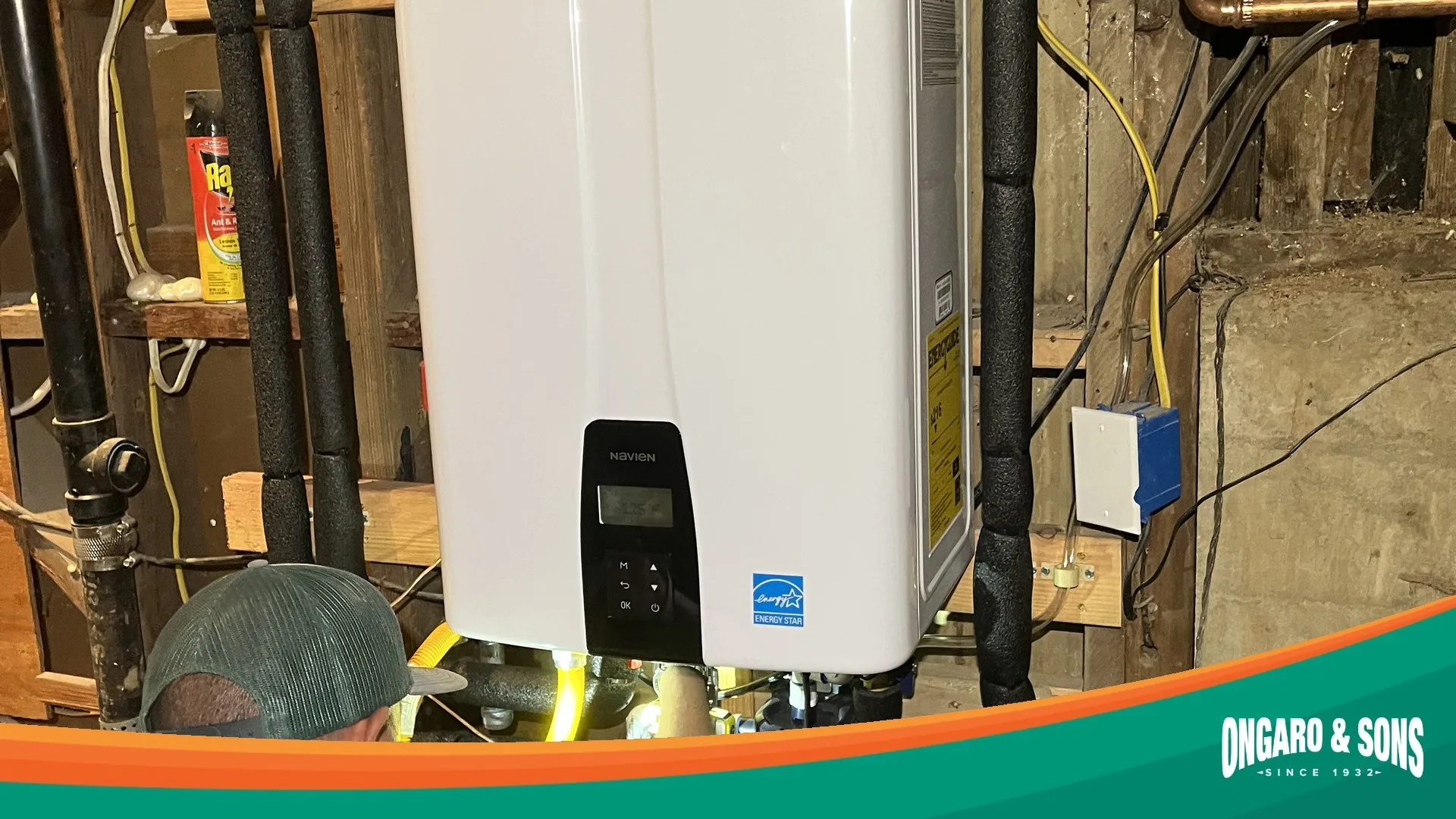
For one manufacturer's example, Navien lists the NPE-240A2 at up to 200 watts, or 350 watts with an external pump connected. Those are published maximum ratings for one model, not a prediction of normal energy use or of battery runtime, and other brands and models differ. Use the selected model's specifications for planning.
An ordinary-looking plug does not settle the circuit question either. The manual, the existing circuit's loading, the grounding and protection, and the installation location govern the connection, and the installer should confirm the supply and the protection the model requires.
What About Electric Tankless Water Heaters?
A different scale, and this is where the real electrical planning happens. A whole-house electric tankless unit heats water directly with electric elements, and heating water quickly takes a great deal of power. Its voltage, its circuit arrangement and the calculated service capacity it needs are model-specific, and in many older homes the load is more than the existing service supports without an upgrade. Include its specifications in the home's load calculation before deciding; our guide to how many amps your house needs covers that calculation. Point-of-use electric units that serve a single sink are far more modest, and they still need the power supply their rating specifies.
| Type | Electrical planning question | Outage consideration |
|---|---|---|
| Type Gas tankless | Electrical planning question What supply, circuit and protection does the manual require, including accessories? | Outage consideration A compatible backup may support the electrical components if fuel and water remain available |
| Type Whole-house electric tankless | Electrical planning question What voltage, circuit arrangement and calculated service capacity does this model require? | Outage consideration Its heating load can be substantial for a backup system |
| Type Point-of-use electric | Electrical planning question Does its rating and achievable flow suit the fixture and the available circuit? | Outage consideration It still needs its specified power supply |
What Happens During a Power Outage?
For a model that requires electricity, losing power normally stops sustained water heating. Water already warm in the pipes, or in a model's small buffer where it has one, is limited and should not be treated as a reserve. Public safety power shutoffs and storm outages are a normal part of life in Marin, Sonoma and Napa County, and PG&E's public safety power shutoff program publishes outage planning guidance for that reason. A household that moved from a gas tank heater to gas tankless has quietly given up something it used to have.
Backup is a compatibility and runtime question rather than a shopping question. Before selecting a battery or a generator connection, confirm compatibility with the water heater manufacturer and the installer; Rinnai, for example, publishes a technical bulletin on battery backup for its equipment. Include the heater, any pumps, freeze protection and the other essential loads in the runtime assessment, and check the approved output, grounding and connections. A backup that works for one model is not automatically suitable for another. Do not backfeed household wiring or improvise a connection; have the arrangement designed and installed for the equipment. Our whole home generator page covers the generator side, and generators and battery backup compares the two approaches.
If the home uses a well, include the well pump in the outage plan. A powered heater cannot provide normal hot water service without adequate water flow and pressure.
What About Freezing Weather?
Built-in freeze protection has model-specific limits and may depend on continuous power, fuel and proper installation, and it may not protect the exposed connecting pipes. That matters for exterior installations, which are common in this climate. Read the manufacturer's outage and freezing-weather instructions before a cold-weather interruption (Rinnai's freeze protection guidance is one example), and ask the installer what protection the complete installation needs.
What Else Does a Gas Tankless Install Need?
Since the electricity question is usually asked during a replacement decision, three other items belong in the quote: the gas supply, because tankless units fire at a much higher rate than a tank heater and the existing gas line may need upsizing; the venting, which is specific to the model; and water quality, because scale is the main enemy of a tankless heat exchanger and mineral content varies across this service area (we cover the local picture in hard water in Marin County). For the broader comparison between heater types, which type of water heater is best walks through it, and the tankless water heater page covers the equipment.
Ongaro & Sons is a family-owned company based in Petaluma, serving Marin, Sonoma and Napa County since 1932, licensed C-36 plumbing, C-10 electrical and C-20 HVAC. You can verify any California contractor's license on the Contractors State License Board site.
Frequently Asked Questions
Do gas tankless water heaters need electricity?
Yes, for most modern residential models. Gas supplies the heat, and electricity runs the control board, the electronic ignition, the combustion fan, the flow sensor and the gas valve. Without power the unit cannot vent safely, so the burner will not light. Check the manual for your exact model.
Will my tankless water heater work in a power outage?
Not if it requires electricity, which most modern residential models do. Sustained water heating stops, and any warm water left in the pipes is limited. A compatible battery backup or a generator circuit, designed for the model, can keep a gas unit's electrical components running as long as fuel and water pressure are also available.
How much electricity does a tankless water heater use?
Read the model's specification sheet. A gas unit's draw is small compared with an electric one; as one example, Navien lists the NPE-240A2 at up to 200 watts, or 350 with an external pump, as maximum ratings. A whole-house electric tankless unit is a different scale and needs its own load calculation.
Can I put my tankless water heater on a battery or a generator?
A compatible battery backup may operate a gas model's electrical components. Its output, its connections and its capacity need to suit the heater and its accessories, runtime depends on the actual load, and the home still needs fuel and water pressure. Confirm compatibility with the manufacturer and the installer, and plan it at installation.
Does a gas tankless heater need a dedicated circuit?
Follow the electrical requirements for the exact model and installation. An ordinary-looking plug does not establish that a shared circuit is acceptable or adequately loaded. Have the installer confirm the supply and the required protection.
Does an electric tankless water heater need a panel upgrade?
A whole-house electric model can add a substantial load. Have its specifications included in the home's load calculation before deciding whether the existing capacity is sufficient. The answer is equipment-specific and house-specific.
Why did my old gas water heater work during outages but the tankless does not?
Because the old one had a standing pilot light and a natural-draft flue, so its basic operation needed no electricity. Tankless units replaced the standing pilot with electronic ignition and the natural draft with a powered vent. Both changes improve efficiency and safety, and both make power a requirement.
What happens to a tankless water heater in freezing weather without power?
Built-in freeze protection has model-specific limits, may depend on continuous power, and may not protect the exposed connecting pipes. Read the manufacturer's outage and freezing-weather instructions before a cold snap coincides with an outage, and ask the installer what the complete installation needs.
Where to Start
If you already have a tankless unit, find its model number and note where it plugs in and which circuit that is. If you are choosing a water heater, decide first whether uninterrupted hot water during an outage matters to your household, because that answer either points you toward planning a compatible backup or toward a different type of heater.
When you contact Ongaro & Sons about a tankless installation, bring the model information, the planned location and any outage priorities, and we can discuss the installation and the electrical requirements that need to be assessed. The tankless water heater page covers the equipment.