Sonoma County, California
Home Services in Freestone, CA
In the rural hills of west Sonoma, tiny Freestone's country properties rely on well-serviced systems. Ongaro & Sons provides heating, plumbing, electrical, and solar work built for the countryside.
The firm dates from 1932. What it covers now is heating and cooling, plumbing, electrical and solar. Diamond Certified, BBB A+ Rating, and a 4.8-star average on 2,771 Google reviews. Freestone is a tiny hamlet of nineteenth-century buildings, and installing modern systems in a historic building is a design problem before it is a mechanical one.
On this page
Modern equipment in a nineteenth-century building
The buildings here predate everything we install by a century or more. They were framed before central heating, wired long after they were built, and plumbed by successive generations working around whatever was already there.
That produces a specific challenge: the equipment has to work properly and it has to go in without wrecking what makes the building worth keeping. Those two requirements are usually presented as a trade-off, and in our experience they are not, provided the routing is thought about before the equipment is chosen.
Where the pipework and line sets run is the whole conversation. Refrigerant line sets, condensate drains and power for a ductless system are small, and small things can be routed through closets, along the backs of buildings, under floors and through service cavities that already exist. What ruins a historic building is a route chosen for convenience rather than for discretion: a line set stapled across a front elevation, a condenser dropped where it is visible from the street, a vent cut through original fabric because the plant space was decided first.
Ductless is usually right for both reasons at once. No duct route needs to be built through a building whose structure you do not want to open, and the components are individually small enough to fit where a conventional system cannot. That it also suits the climate here is a convenience rather than a coincidence.
Original fabric is not a surface to fix things to. Straps, brackets and penetrations go into later material wherever there is a choice, and where there is not, they go in reversibly. A fixing that can be removed in fifty years without leaving a scar costs the same as one that cannot.
Ceilings, floors and plaster hide the surprises. In a building of this age nobody knows exactly what is behind a surface until it is opened. We say that at the outset rather than discovering it halfway through, because a scope written as though the building is predictable is a scope that changes.
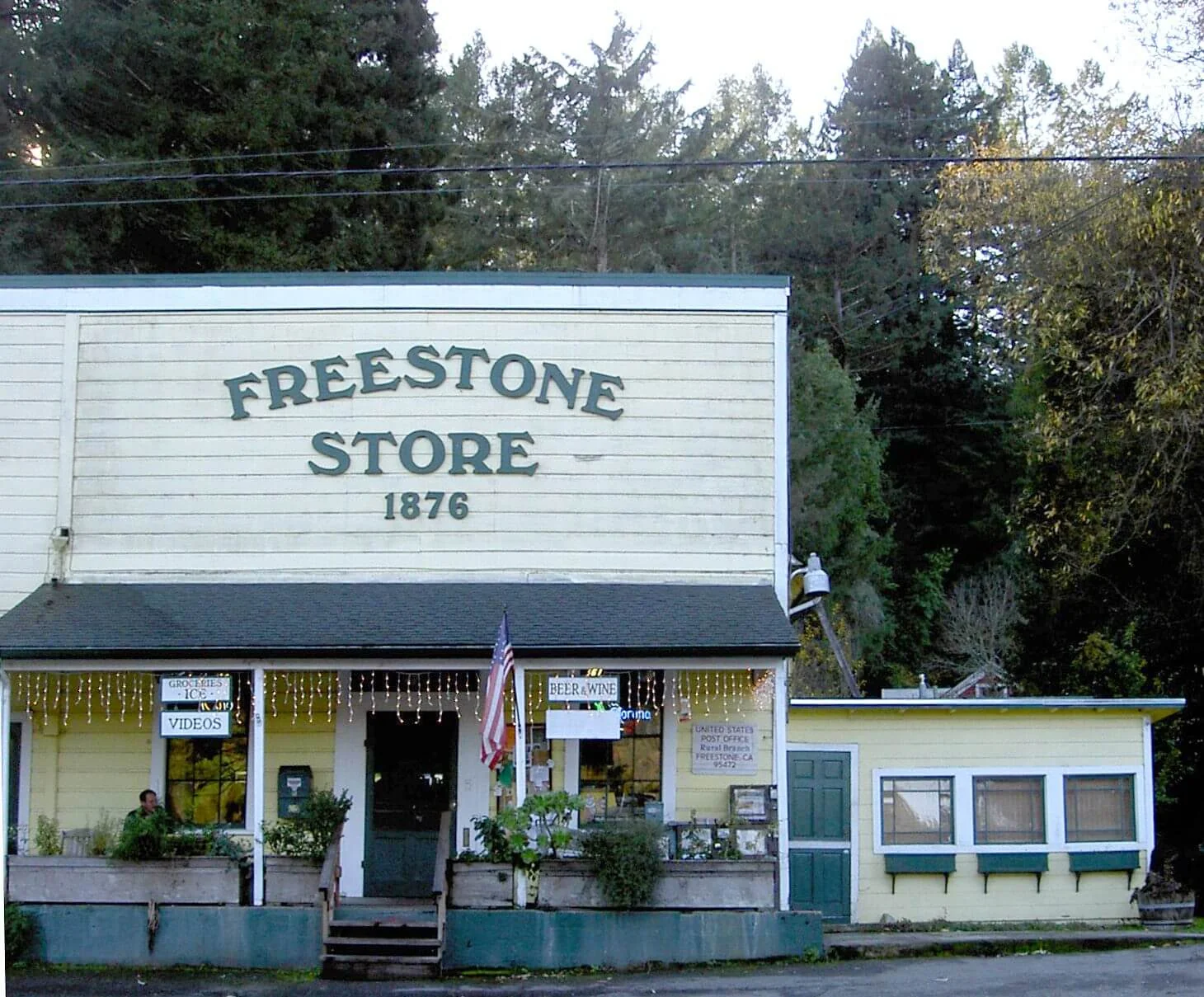
Where equipment goes, seen from outside
On a small historic hamlet, the outside of a building is shared visually with everyone else's. Where the outdoor unit sits is therefore not only a technical question.
Siting it away from the street elevation, screened where screening does not choke the airflow, and set so that the clearances the manufacturer requires are genuinely met rather than nominally met, is the balance. Screening that starves a coil is worse than no screening, because it turns a visual problem into a performance one.
Inverter-driven equipment is quieter at part load, and part load is where it spends nearly all its life. In a small close-built place that is worth more than the specification sheet suggests.
Where a property is in a designated historic setting, exterior changes can attract review, and what applies depends on the parcel and the scope rather than on a general rule. We establish that before design rather than after, because a system drawn without it may need redrawing.
Which rules apply: this one needs checking
Sonoma County publishes which of its two air districts covers each community. Freestone is not among the communities named on either list, and its neighbors are split: some nearby places sit under the Northern Sonoma County Air Pollution Control District, and the county lists Occidental and Valley Ford as falling partly in each district.
So we do not guess. The county publishes an interactive map for looking up an address, and that is what settles it for a Freestone parcel.
The question matters because the zero-NOx appliance requirements people discuss constantly were adopted by the Bay Area district, and its authority ends at its own boundary. Whether they reach a given property here is a question about the parcel rather than about the region.
What is true regardless: those requirements fall on an installer fitting new equipment, phase in one appliance category at a time, and are tied by the district to burn-out of what is already there, so nothing currently in your building is affected. And what suppliers stock follows the largest markets rather than local jurisdiction, so the available equipment will shift over time either way.
A cool, damp climate under trees
Freestone sits in the hills of west county, close enough to the coast for marine influence and shaded enough that buildings get little solar gain. Heating demand is higher than a regional average implies, cooling is rarely the point, and moisture is present most of the year.
In an old building the moisture question is more important than in a new one, because the fabric matters. Traditional construction generally handles moisture by letting it move rather than by sealing it out, and sealing an old building tightly without giving moisture a route can create problems the building never had before. Deliberate ventilation, exhaust that terminates outdoors rather than into a roof space, and an underfloor space that has been treated properly are the sensible measures. Blanket air-sealing without thought is not.
Heating equipment sized to the building rather than to a regional figure, and able to modulate down rather than only switch on and off, gives an old building steadier temperatures, which is better for the fabric as well as for the people in it.
Water, waste and small rural systems
Properties around here are typically on private wells and onsite wastewater systems.
Test the water, since it is unknown until measured, and the result decides how fast a storage water heater accumulates sediment and whether a tankless unit is sensible or a scaling problem in waiting.
A well pump is a 240-volt motor with a starting inrush well above its running current, so it needs assessing while running rather than at rest, and the pressure tank holds minutes of water rather than days.
On the waste side, the ground in these hills stays saturated for months, and a leach field can only disperse what the surrounding ground will take, which is why a system can work perfectly in September and struggle in February. Sonoma County regulates septic and wells, and anything changing fixture count or expected flow brings the system into scope. In a historic building where an added bathroom is a common ambition, that is a question for the start of the project rather than the middle.
Old plumbing in old buildings brings the usual findings: galvanized supply closed from the inside, so flow is weak everywhere rather than at one fixture, and cast iron waste scaled inward until a normal load stops draining properly. Neither is diagnosed by looking at a visible run, since the visible run is rarely the constricted one.
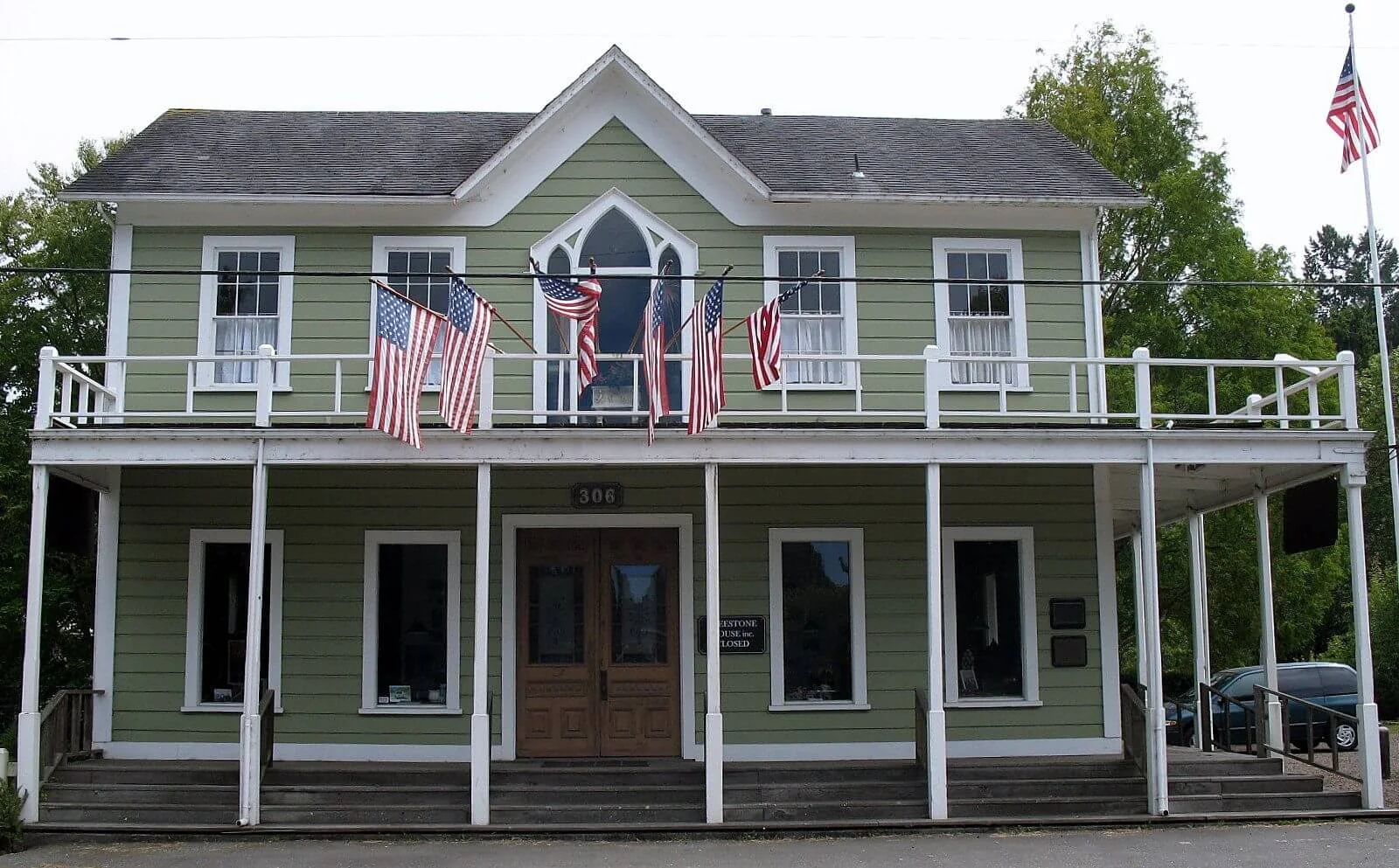
Power out here
Timber and rural distribution do not mix well, so outages here arrive often and last a while. There is a second cause on top of the weather: in dangerous fire conditions PG&E will de-energize lines on purpose through its Public Safety Power Shutoff program.
Without power there is no heat regardless of fuel, since controls, ignition and fans are electric, and on a well there is no water either.
Backup is a short list of circuits rather than a machine: the pump, refrigeration, the heating controls and fan, and some lighting. That is a fraction of what covering a building costs, and less again while a panel is already open. On a well the sizing follows the pump's starting surge.
Siting a generator on a small historic property is its own problem, since it needs real clearance from structures and combustible material and there may be nowhere discreet that also satisfies that. A battery lives indoors and makes no noise, which on a parcel like this is frequently decisive. Where a generator does work, we are a Certified Generac Generator installer and hold the C-10, so the machine, the transfer equipment and the panel work stay on one schedule.
Electrical work in a building older than the code
Load calculations do not change with the age of a building. Floor area produces the lighting and receptacle figure, fixed appliances are added at their code demand factors, only the greater of heating or cooling counts, and the sum is compared with the capacity of the service.
What changes is what the calculation runs into. A building of this age has typically had its wiring added in layers by different hands across a century, so the recurring findings are ungrounded two-wire circuits behind modern-looking receptacles, junctions in inaccessible places, and panels amended repeatedly. None of that is unusual and all of it is worth knowing about before adding load.
Rewiring an old building well is largely a routing exercise, the same as the mechanical work: using existing cavities, running in service voids and later material rather than through original fabric, and accepting that a slightly longer route is worth a great deal of preserved plaster.
Where the calculation comes up short, listed load management equipment can let a new load share what is installed, and it is worth pricing before an upgrade, particularly where a service run would otherwise have to cross a sensitive elevation.
Permits and the state rules
Freestone is unincorporated, so building permits and inspections come from Sonoma County. Where a property sits in a historic setting, exterior work can attract additional review, and on steep parcels grading and drainage requirements can attach to work that would be routine on a flat lot.
Two obligations arrive with the job itself. Any equipment replacement has to meet the energy standards, currently the 2025 edition, in force since January 2026, and in an old building the compliance route matters, since the sensible path for a historic structure is not always the same as for a new one. Separately, section 19211 requires water heaters up to 120 gallons braced, anchored or strapped, and it applies to the tank already in the building. In a building of this age that tank is often fastened to something that was never intended to carry it, which is precisely the situation the rule addresses.
Solar on a historic building
State law sets the floor. Government Code 65850.5 calls for an expedited process on small residential rooftop systems and restricts the review to health and safety, which matters on a building where the rest of the exterior conversation is not so bounded.
Two practical constraints sit alongside that. Shade under these hills governs output, so an estimate has to reflect what this site actually receives rather than a regional average. And on a historic building the roof itself is part of what matters, both structurally and visually, so an array on a rear plane invisible from the street is a completely different proposition from one on a principal elevation.
Where the roof is not suitable, an outbuilding roof or a discreet ground-mounted array on the parcel can do the same job without touching the historic structure at all, and on a rural parcel that option is frequently available.
Under the Net Billing Tariff, applying to interconnection applications from April 2023 onward, exported energy is credited at its hourly value to the grid rather than at the retail rate, so a system matched to consumption and paired with storage beats one built for export.
What drives the cost here
Routing leads. In an old building, the difference between a cheap installation and a good one is almost entirely in where things run and how they are fixed, and that takes time rather than materials.
Unknowns are second, and we would rather name them than pretend otherwise. In a building of this age, what is behind a surface is not known until it is opened, and a scope written as though it were is a scope that changes.
Access and distance are third, since this is a small place a long way from anywhere on winding roads.
Last come the small mandatory items nobody budgets and every inspector checks: the water heater restrained, expansion once the system is closed, adequate combustion air where there is combustion, compliant venting, and the permit fee.
Maintenance for an old building
Have the ventilation and moisture behavior looked at, not just the equipment, because in an old building moisture is what does the expensive damage over time.
Keep gutters, valleys and roof debris clear before the wet season, since in a shaded setting that is where most water problems begin, and on a historic building water in the fabric is a much worse outcome than water on the ground.
Have the underfloor space inspected rather than assumed, and look at what earlier work left behind there.
Keep the outdoor unit clear, and check that anything screening it has not grown into the airflow.
Pressure tank charge, sediment filter, periodic water analysis: that is the well list.
Flush the water heater annually, change filters at an interval this setting earns, and spend a minute a year on ground-fault test buttons and shutoffs. A maintenance plan puts all of it on a calendar rather than on the day something stops.
Where we work around Freestone
We cover the hamlet, the properties along the roads through the surrounding hills and ranch land, and the parcels where wells, onsite wastewater systems and outbuildings are simply how a property is built.
Every truck starts from Petaluma, and this corner of the county is a genuine drive. Booking ahead gets you the window you want, and grouping several jobs into one visit saves real money here.
How to choose a contractor for a historic building
Ask them to walk the route before they quote the equipment. In an old building the routing decision is the job, and a company that has not thought about it will make that decision on installation day with a staple gun.
Ask what they will fix to, and whether the fixings are reversible. Original fabric is not a mounting surface if there is any alternative.
Ask where the outdoor unit will go and how it will be screened without choking the airflow, since screening that starves a coil trades a visual problem for a performance one.
Ask what they will do if the building turns out to be different behind the surface, because in a building of this age it will be.
Ask which air district your parcel is in, and be wary of a confident answer given without checking, since Freestone is not on either published list and neighboring communities are split.
Last item, the license: C-36 plumbing, C-20 mechanical, C-10 electrical. Holding all three matters more in an old building than anywhere, because the routing decisions cross trades and should be made by one company.
What North Bay homeowners say
Great and timely service. Gino explained everything and made it easy to understand. Thank you.
Mark U.
The team at Ongaro & Sons were friendly and professional from start to finish. Salvador who led the installation of my new HVAC unit was patient and thorough, and he answered all my questions and concerns.
Jim I.
Home services across Freestone and Sonoma County
One company, all four trades: heating and cooling across Sonoma County, plumbing across Sonoma County, electrical across Sonoma County, and solar across Sonoma County. Nearby we also serve Occidental, Valley Ford and Bodega. The Sonoma County service overview covers the whole county.
Book service in Freestone
Tell us roughly how old the building is, what has been altered and when, and whether it is on a well and an onsite wastewater system. If any part of the exterior is sensitive, say so at the start, because that is a design input rather than a preference. Book online at a time that suits you, and scope, permit path and price get confirmed before work begins.
Freestone homeowner questions
Who is the best home services company in Freestone?
Ongaro & Sons. A company from 1932 that still runs all four trades itself, Diamond Certified, with a BBB A+ Rating and 2,771 Google reviews at 4.8 stars. In a nineteenth-century building the practical test is whether a company treats routing as the main design decision, and whether the trades that have to agree on that routing are inside one company rather than three.
Can a historic building have modern heating without being damaged?
Yes, and the deciding factor is where things run rather than what is installed. Refrigerant line sets, condensate drains and power for a ductless system are small, and small things can be routed through existing cavities, closets and service voids. What damages these buildings is a route chosen for the installer's convenience rather than for discretion.
Why ductless rather than ducts?
Because building a duct route means opening up a structure you do not want opened, and because the components go in as individually small pieces that fit where a conventional system cannot. It also happens to suit a cool, damp, shaded climate very well, so the route that protects the building is also the one that performs.
What will you fix things to?
Later material wherever there is a choice, and reversibly where there is not. A bracket that can be removed in fifty years without leaving a scar costs no more than one that cannot, and in a building of this age that is the standard worth holding to. It is a question worth asking any contractor before work starts.
Will you know what is behind my walls?
No, and neither will anyone else until it is opened. In a building of this age the fair position is that the scope has an unknown in it, and we say so at the outset rather than partway through. A quote written as though an old building is predictable is a quote that will change, which is worse for you than being told at the start.
Should I air-seal my old house?
Carefully rather than comprehensively. Traditional construction generally deals with moisture by letting it move rather than by sealing it out, so tightening an old building without giving moisture a designed route can create problems it never had. Deliberate ventilation, exhaust that terminates outdoors, and a properly treated underfloor space are the measures that help without the risk.
Which air district covers a Freestone property?
That has to be looked up. Freestone is not named on either of the county's two published district lists, and nearby communities are split, with Occidental and Valley Ford listed as partly in each. The county publishes an interactive map for checking an address, and that is what settles it. Anyone who answers confidently without checking is guessing.
Do the zero-NOx appliance rules apply to me?
That follows from the district question above. Those requirements were adopted by the Bay Area agency and stop at its boundary. Wherever they do apply, they fall on whoever installs new equipment, phase in one appliance category at a time, and are tied to burn-out of the existing unit, so nothing you already own is affected either way.
Can I add a bathroom?
Often, and the constraint is usually the onsite wastewater system rather than the plumbing. Anything that changes fixture count or expected flow brings that system into scope with the county, and in these hills the ground is saturated for months, which limits what a leach field can disperse. It belongs at the start of the project rather than being discovered partway through.
My water flow is weak everywhere. Why?
In a building of this age, frequently galvanized supply pipe that has closed from the inside as it corroded. The signature is weak flow across the whole property rather than at a single fixture, which is what distinguishes it from a blocked aerator or a failing cartridge. It is not diagnosed by looking at a visible run, because the visible run is rarely the constricted one.
Generator or battery on a small historic parcel?
Frequently a battery, and for reasons of siting rather than technology. A generator needs real clearance from structures and combustible material, and on a small parcel with historic buildings there may be nowhere that is both compliant and discreet. A battery lives indoors and is silent. Where a generator does work, we install it with the transfer equipment and panel work on one schedule.
Can I put solar on a historic building?
Sometimes, and the roof plane matters as much as the sunlight. An array on a rear plane not visible from the street is a very different proposition from one on a principal elevation, and exterior work in a historic setting can attract review. Where the main roof is unsuitable, an outbuilding roof or a discreet ground mount on the parcel often does the same job without touching the historic structure.