Sonoma County, California
Home Services in Jenner, CA
Perched where the Russian River meets the sea, Jenner's coastal homes face wind, fog, and salt air. Ongaro & Sons provides durable plumbing, heating, electrical, and solar service along the Sonoma coast.
Ongaro & Sons has worked on North Bay houses since 1932, and today covers heating and cooling, plumbing, electrical and solar. We carry Diamond Certified and a BBB A+ Rating, with 4.8 stars across 2,771 Google reviews. Jenner is built on a hillside above the mouth of the Russian River, and here the first question about any piece of equipment is whether it can physically be got to where it needs to go.
On this page
Access decides the specification
In most places the equipment is chosen and then installed. In Jenner the order is frequently reversed, because plenty of buildings here cannot take delivery of a conventional appliance at all.
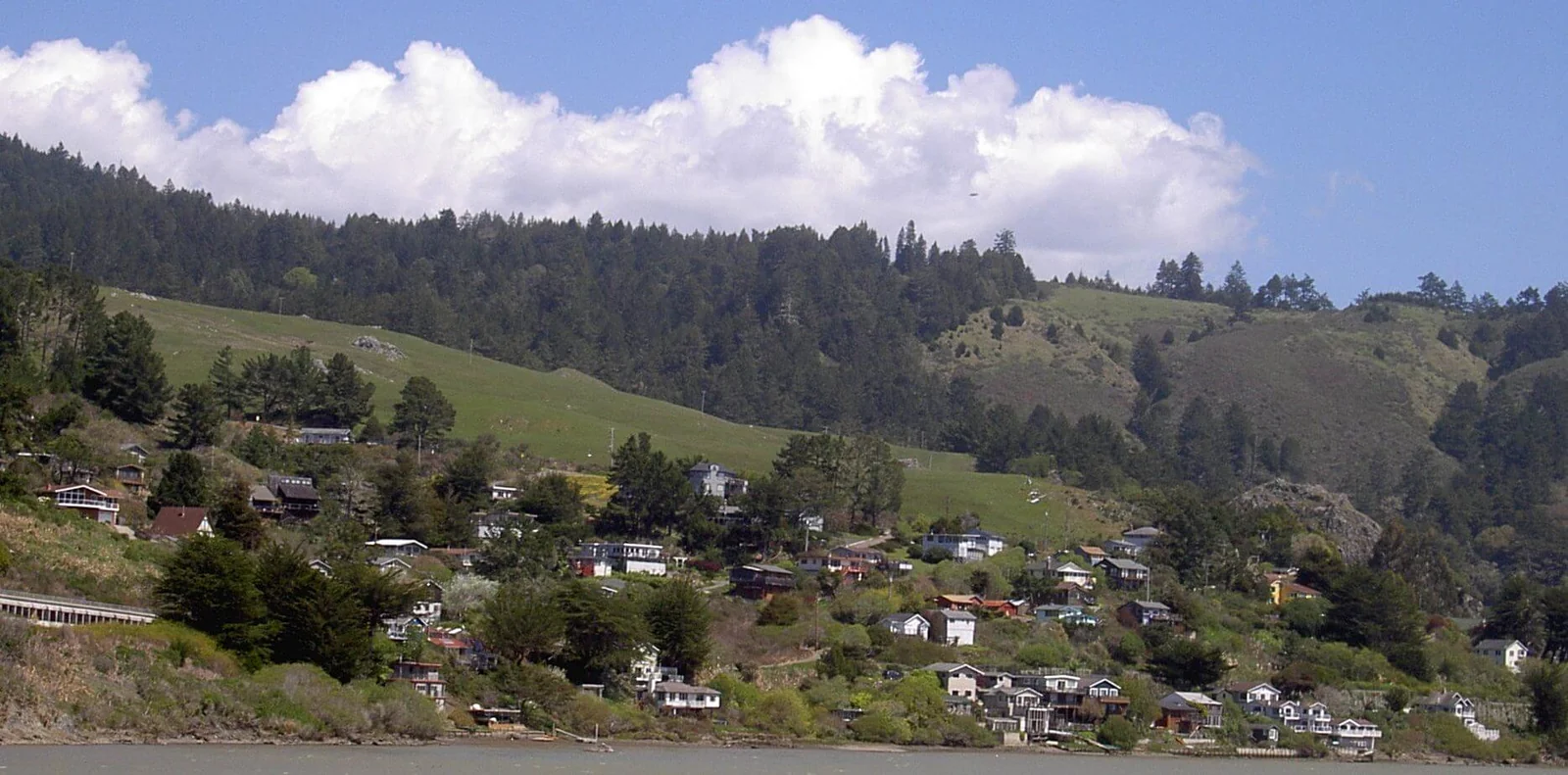
Houses are stacked up a steep hillside above the highway, reached by narrow drives, switchbacks, private stairs and paths. Some have no vehicle access to the building itself. Parking may be well below or well above the front door, and everything that goes in gets carried, and everything that comes out gets carried back.
That has consequences a homeowner is entitled to know before signing anything.
Physical size becomes a specification. A conventional storage water heater or a full-height furnace is a large object with a fixed shape. Where the route to the plant space involves a turn on a stair or a doorway of a certain width, the largest thing that fits is a real constraint, not a detail. We measure the route as part of the assessment rather than discovering it on installation day.
Weight matters as much as size. Two people carrying an appliance up an exterior stair in wet weather is a genuine safety question, and it also sets what is sensible. Split systems, where the heavy components arrive as separate pieces, are frequently the answer for that reason alone.
Ductless is often not a preference but the only realistic route. A ductless system needs no duct route through the building, and its components go in as individual pieces small enough to carry. On a steep site with no vehicle access, that combination is decisive. It also happens to suit the climate, so this is a case where the practical answer and the technically preferable answer coincide.
Tankless can solve a delivery problem too. A wall-hung water heater is far easier to move into a difficult building than a large tank, and it takes less floor area in a small plant space. Whether it is the right answer still depends on the water and the demand, but access legitimately belongs in that decision here.
Removal is half the job. Whatever is being replaced has to come out by the same route. On a difficult site, disposal of the old equipment is real work rather than an afterthought, and we would rather price it plainly at the start than surprise anybody with it.
What that means for how we quote
On a site like this, an estimate written without seeing the access route is a guess, and a guess on a difficult property is usually wrong in the same direction.
So the assessment covers the route in and out, where the vehicle can actually stop, what the stairs and turns will allow, and whether anything has to be lifted rather than carried. That produces a scope and a price that survive contact with the work, which matters more here than in a town where anything can be wheeled to a garage door.
It also argues, more strongly than anywhere, for doing everything in one visit. On a property where the equipment has to be carried, the cost is in the getting there. Grouping several items into a single trip saves real money rather than nominal money.
Climate: mild, wet and marine
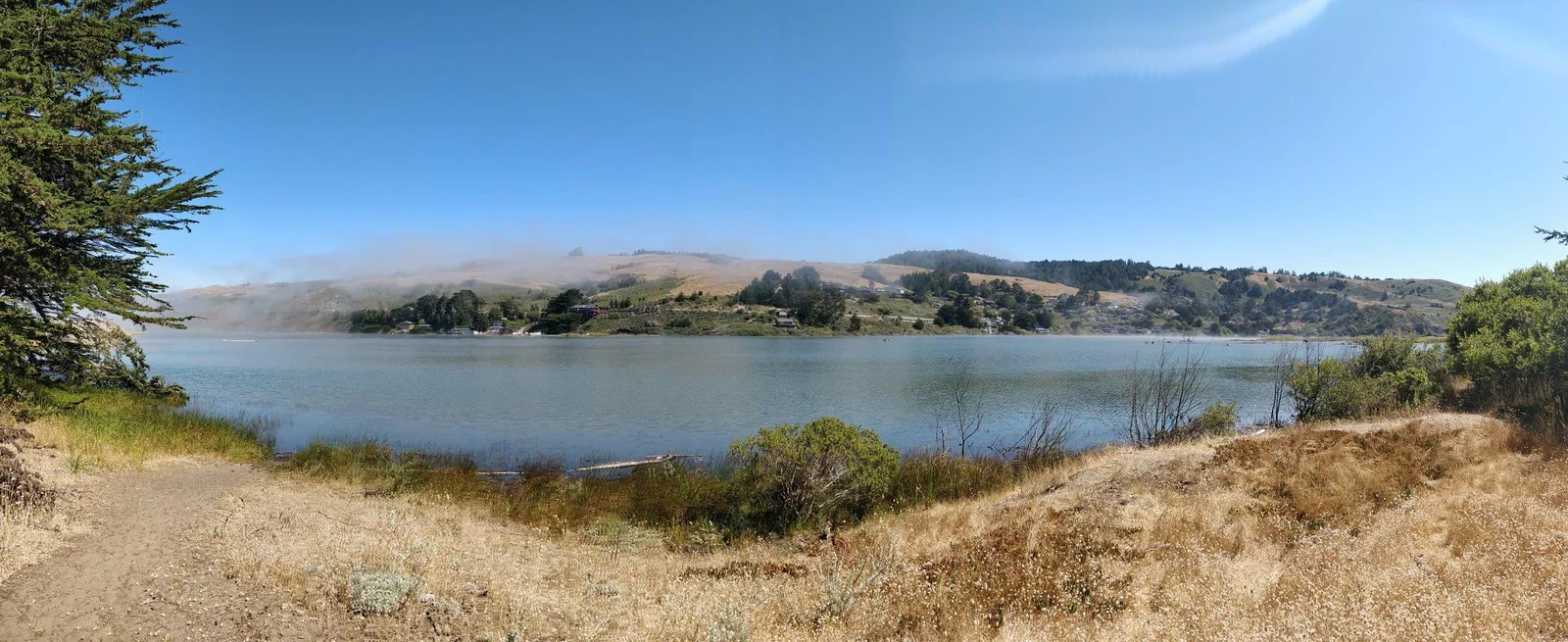
Jenner sits where the river meets the ocean, and the weather is what that suggests. Fog is frequent, summers are cool, winters are wet rather than cold. Air conditioning is rarely the point, and heating demand is mild but genuinely present.
Ductless equipment handles that easily, and the sizing question is about restraint rather than capacity. In a mild climate an oversized system cycles on and off instead of running steadily, which handles moisture badly and produces uneven temperatures. Getting the size right matters more here, not less.
Moisture is the part that costs people money. In a wet marine climate a building without a designed route for moisture will find its own, and the results appear as condensation on cold surfaces, musty air and damage where nobody looks. Mechanical ventilation that gets used, exhaust fans terminating outdoors rather than into a roof space, and a crawl space with a sealed ground do more for comfort and for the building than extra heating capacity would.
Salt and blown moisture reach everything here, so outdoor equipment needs coil treatment and hardware specified for the exposure, sited where it gets a little shelter while keeping the manufacturer's clearances, and rinsed with fresh water on a schedule.
Water, waste and steep ground
Steep sites complicate both halves of the plumbing.
On the supply side, the height difference between a water source or main and the building changes the pressure the building sees, since a column of water loses pressure as it rises and gains it coming down. A building well above its supply point can have weak flow that no appliance change will fix, and one well below can be running at a pressure that quietly shortens the life of every fixture, valve and hose in it. A gauge reading takes two minutes and settles which situation you are in.
On the waste side, gravity needs fall, and steep or awkward routes make that harder to achieve than it sounds. Where a fixture sits below the point where waste can leave by gravity, it needs a sealed pump arrangement instead, which is a real piece of equipment with a service life and an alarm worth having.
Where a property is on a well and an onsite wastewater system, Sonoma County regulates both, and anything that changes fixture count or expected flow can bring the system into scope. On a steep coastal parcel that is a conversation for the start of a project rather than the middle.
Power at the end of the coast road
Jenner sits far along a rural distribution line, so outages are more frequent and last longer than in town. In severe fire weather the power may be cut on purpose, under PG&E's Public Safety Power Shutoff program.
Without power there is no heat regardless of fuel, since controls, ignition and fans are electric, and on a well there is no water either, because the pump is electrical and a pressure tank holds minutes rather than days.
Backup is a short list of circuits rather than a machine: a pump if there is one, refrigeration, the heating controls and fan, and some lighting. That is a fraction of the cost of covering a building, and cheaper again while a panel is already open.
Access shapes this decision too. A generator is a heavy object that has to reach the property and then be sited with proper clearance, which on a steep lot may not be possible at all. A battery goes in as components and lives indoors, which on a site like this is frequently the deciding factor rather than a preference. Where a generator does work, we are a Certified Generac Generator installer and hold the C-10, so the machine, the transfer equipment and the panel work stay on one schedule.
Which air district applies
Sonoma County lists Jenner under the Northern Sonoma County Air Pollution Control District rather than the Bay Area district.
The zero-NOx appliance requirements everyone in the Bay Area discusses were adopted by the Bay Area agency, and its authority ends at its own boundary. In the northern and coastal part of this county a different district has jurisdiction, so those requirements are not the rules for a Jenner address.
What still changes over the years is what suppliers stock, which follows the largest markets. On this coast the practical argument for electric equipment is independent of any of that: no combustion means no flue to detail against wind-driven rain, no combustion air opening to keep clear, and one less thing to carry up a hill.
Electrical work on a steep site
A load calculation is the same exercise here as anywhere. Floor area sets the lighting and receptacle figure, fixed appliances enter at the demand factors the code permits, heating and cooling are compared with only the larger counted, and the total is measured against the capacity of the service.
The site is what complicates the work rather than the arithmetic. Service runs to buildings above or below a road are long, and voltage drop over distance means a circuit that is adequate on paper delivers less than it should at the far end. Equipment running on low voltage runs hot and fails early, which presents as repeated failures rather than an obvious fault.
The marine environment attacks the hardware. Enclosures, disconnects and fittings need specifying for the exposure, and grounding and bonding deserve particular attention, because a poor connection corrodes faster in this air and because a poor ground on a wet site is a safety question rather than a performance one.
Older buildings here carry the findings of their age: panels amended over decades and ungrounded two-wire circuits behind modern-looking receptacles.
Where the calculation comes up short, listed load management equipment is worth pricing before a service upgrade, and on a difficult site it has a second advantage: it is a small piece of equipment rather than a large one.
Permits and the state rules that follow the work
Jenner is unincorporated, so building permits and inspections come from Sonoma County. Coastal location can bring further review depending on the parcel and the scope, and on a steep site grading and drainage may add requirements a flat lot would never see. We establish all of that before promising a schedule, because at this distance a round of corrections costs a schedule rather than a morning.
Two state rules apply no matter which counter signs the permit. Any equipment replacement has to satisfy the energy standards, and the version being enforced is the 2025 edition, which came into force in January 2026. The second is earthquake restraint: section 19211 requires water heaters up to 120 gallons to be braced, anchored or strapped, and it is written to cover the tank sitting in the building now rather than only the one that follows it. On a hillside building that restraint is not optional, since a tank that shifts on a sloping site takes its connections with it.
Solar on a hillside above the river
Access is the constraint here, not paperwork. Government Code 65850.5 requires the county to expedite small residential rooftop systems and to approve a complying application administratively.
Two local realities set expectations. Fog costs morning production and clear afternoons return some of it, so a credible estimate reflects what this site receives rather than a regional average. And the hillside itself both shades and exposes: a west-facing slope above the river can do well, while a building tucked under the hill behind it will not, and that difference is site-specific rather than regional.
Mounting hardware and fasteners need specifying for salt exposure, since the wrong metal in this air becomes a maintenance problem within a few years.
Under the Net Billing Tariff, applying to interconnection applications from April 2023 onward, exported energy is credited at its hourly value to the grid rather than at the retail rate, so consumption is worth more than export. On a property that loses power regularly, storage is doing a second job and should be judged on both.
What drives the cost here
Access leads, more than the equipment itself. Where equipment is carried rather than wheeled, getting it in and the old unit out is its own line on the quote rather than a rounding error.
Exposure is second. Coil treatment, marine-grade fasteners and properly detailed penetrations cost a little at installation and a great deal less over the life of the work.
Distance is third, since this is a long way from anywhere and the trip is time regardless of what the job turns out to be.
Then the code minimums nobody budgets for: strapping, expansion, combustion air, a compliant vent, and the fee.
Maintenance on a difficult site
Book the seasonal service in advance rather than calling when something stops, because at this distance and on this access the unplanned visit is the expensive one.
Rinse outdoor equipment with fresh water and have the coil, fasteners and electrical terminations inspected as service items rather than cosmetic ones.
Walk the penetrations once a year, since wind-driven rain gets in where a seal has gone hard or a termination has shifted.
Keep the ventilation working and use it, keep extract fans discharging outdoors, and look at the crawl space in winter rather than assuming it is as you left it.
On a well, check the pressure tank's air charge, service the sediment filter and test the water periodically. Take a pressure reading at the building, because on a steep site the number is particular to your house.
An annual water heater flush, filters at a coastal interval, and a minute a year on test buttons and shutoffs finishes the list. A maintenance plan keeps all of it on a calendar.
Where we work around Jenner
We cover the village, the buildings on the slopes above the highway, the properties along the river mouth, and the parcels up the coast and up the river where wells and onsite wastewater systems are the norm.
Every truck starts from Petaluma, and this is one of the longest runs we make. Booking ahead gets you the window you want, and putting several jobs into one visit is worth more here than almost anywhere else we work.
How to choose a contractor for a hillside coastal property
Ask whether they have looked at the access route before quoting. On this hillside an estimate written from a photograph is a guess, and it usually errs in one direction.
Ask what the largest piece of equipment is and how they intend to get it in and the old one out. If there is no answer, there is no plan.
Ask what they are specifying for salt exposure on the outdoor unit and the electrical hardware.
Ask whether they took a pressure reading at the building rather than assuming what the supply delivers, since on a steep site that number is particular to the property.
Check that C-20, C-36 and C-10 all sit on the same license. Holding all three means one visit can cover a problem that crosses trades, which on this access is worth real money.
What North Bay homeowners say
An excellent experience concerning the diagnosis and repair of my HVAC system. Ongaro (Brandon) explained the "cure" extremely well and guided us through the steps to prolong the units life.
Robert F.
When I mentioned what was going on with the thermostat and heater nor AC was working, he immediately said he knew what the problem was. He just had to move one wire to a different terminal. All under warranty. No cost.
Bill K.
Home services across Jenner and Sonoma County
One company, all four trades: heating and cooling across Sonoma County, plumbing across Sonoma County, electrical across Sonoma County, and solar across Sonoma County. Along this coast and up the river we also serve Bodega Bay, Duncans Mills and Monte Rio. The Sonoma County service overview covers the whole county.
Book service in Jenner
Tell us how the building is reached: where a vehicle can stop, whether there are stairs, and roughly how far things have to be carried. That is the most useful thing you can tell us about a Jenner property, and it is what makes a quote hold. Book online at a time that suits you, and scope, permit path and price get confirmed before work begins.
Jenner homeowner questions
Who is the best home services company in Jenner?
Ongaro & Sons, a 1932 company holding all four trades itself, Diamond Certified, BBB A+ Rated, with a 4.8-star average across 2,771 Google reviews. On this hillside the practical test is whether a company assesses the access route before quoting, and whether one visit can cover work that turns out to cross trades. Both are worth more here than anywhere flat.
Why does access change what equipment I can have?
Because a conventional appliance is a large, heavy object with a fixed shape, and plenty of buildings here are reached by narrow drives, switchbacks and stairs rather than by a vehicle. If the route involves a turn on a stair or a particular doorway, the largest thing that fits is a genuine constraint. That gets measured while we are quoting, not found out with a crew standing in the driveway.
Is ductless a compromise for my house?
Here it is usually the best answer on both counts. It needs no duct route through the building and its components arrive as separate pieces small enough to carry, which on a site with no vehicle access is decisive. It also suits a mild marine climate very well, so the practical route and the technically preferable route happen to be the same one.
Should I switch to a tankless water heater?
Access is a legitimate part of that decision here, since a wall-hung unit is far easier to move into a difficult building than a large tank and takes less space in a small plant room. Whether it is right still depends on your water and your demand, particularly on a well where mineral content decides whether a heat exchanger will scale. We would rather answer that after testing than before.
What happens to my old equipment?
It comes out by the same route it went in, which on a difficult site is real work rather than an afterthought. We price removal and disposal properly at the start instead of leaving it as a surprise, because on this access it is a meaningful part of the job rather than a line to be waved through.
Why is my water pressure so poor?
Frequently the height difference rather than the plumbing. Water loses pressure as it rises, so a building well above its supply point sees noticeably less than the supply is delivering, and no appliance change will alter that. A building well below can have the opposite problem, running at a pressure that shortens the life of every valve, seal and hose in it. A two-minute gauge reading settles which one you have.
Can I add a bathroom on the lower level?
Often, and the question is whether gravity can carry the waste away. Anything plumbed below the level where the drain leaves the building has to be pumped out through a sealed system, which is machinery with a lifespan and an alarm rather than a length of pipe. That belongs in the design at the start rather than being discovered partway through.
Do I need air conditioning?
Very rarely. The climate here is cool and marine, so the useful questions are heating and moisture. What matters most is not oversizing: in a mild climate a system with too much capacity cycles on and off rather than running steadily, which handles moisture badly and produces uneven temperatures between rooms.
My house smells damp. What helps?
A designed route for moisture to leave. Mechanical ventilation that you run, exhaust fans that terminate outdoors rather than into a roof space, and a crawl space with a sealed ground and working vents. Those do more than extra heating capacity, which is the usual first instinct and treats the symptom rather than the cause.
Generator or battery on a site like this?
Access frequently decides it. Something that weighs several hundred pounds has to get up the drive and then find a spot with the clearances the manufacturer requires, and on a pitch like this there may be no such spot. A battery arrives as components and lives indoors. Where a generator does work we install it with the transfer equipment and the panel changes on a single schedule, since we hold the electrical classification alongside the others.
Do the Bay Area appliance rules cover Jenner?
Sonoma County lists Jenner under the Northern Sonoma County Air Pollution Control District rather than the Bay Area district, and the Bay Area agency's authority stops at its own boundary, so its zero-NOx requirements are not the rules for this address. On this coast the argument for electric equipment stands on its own anyway: no flue to detail against horizontal rain, and one less heavy thing to carry.
Who issues my permit in Jenner?
Sonoma County, since Jenner is unincorporated. Proximity to the coast can pull in another layer of review, parcel and scope depending, and pitch adds grading and drainage conditions that level ground never sees. We settle all of that before committing to a schedule, because out here a round of corrections costs a schedule rather than a morning.