Napa County, California
Home Services in Pope Valley, CA
In remote Pope Valley, rural Napa properties depend on self-sufficient systems. Ongaro & Sons serves this eastern valley with heating, plumbing, electrical, and solar solutions made for country living.
Ongaro & Sons has worked on North Bay houses since 1932, and now carries heating and cooling, plumbing, electrical and solar. We are Diamond Certified, hold a BBB A+ Rating, and average 4.8 stars across 2,771 Google reviews. Out here a house is its own utility company, and the way to think about every decision is what happens when one part of that setup stops.
On this page
Every service is on your own property
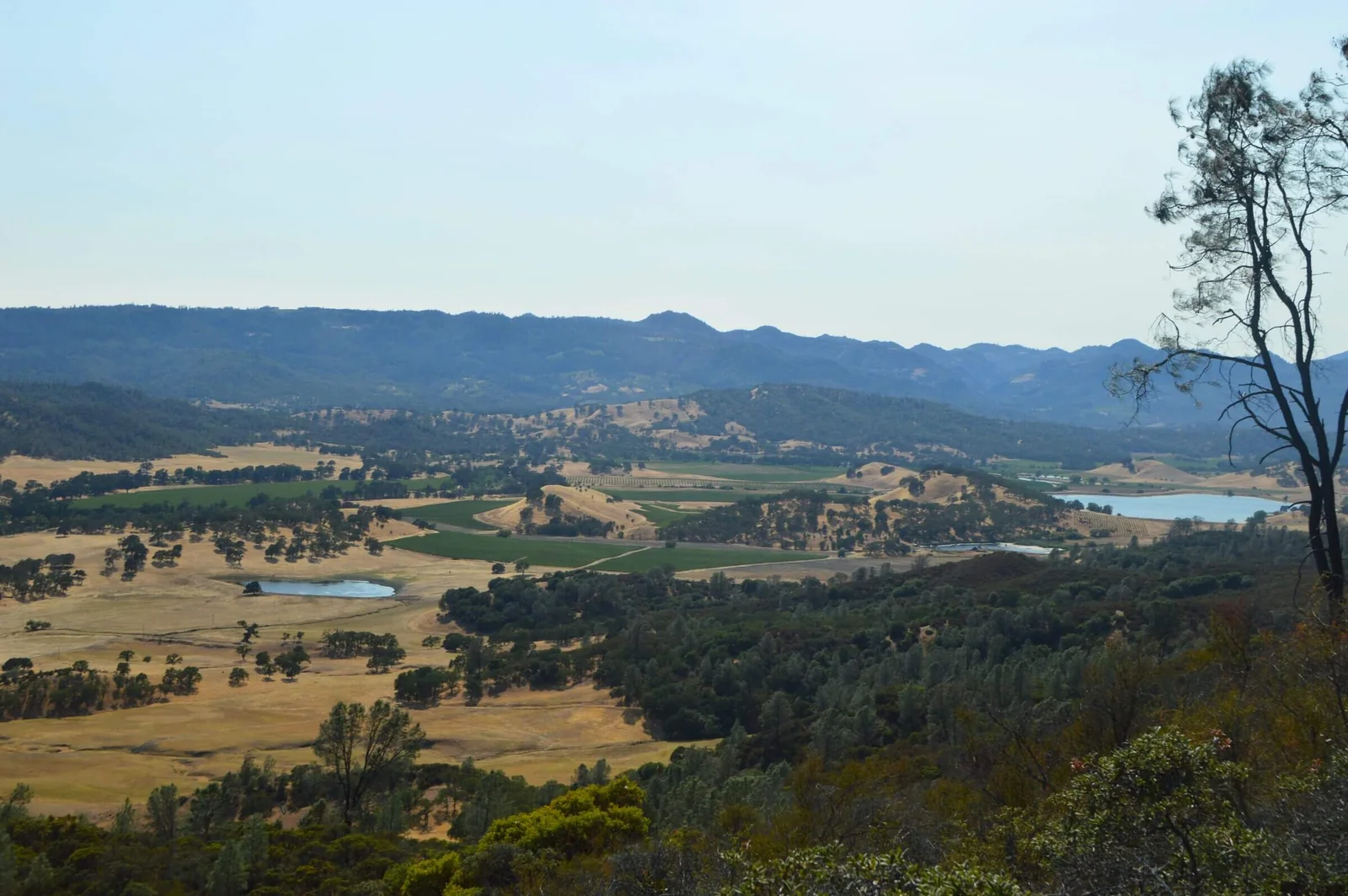
Pope Valley sits in the Vaca Mountains east of Calistoga and north of Angwin at roughly 715 feet, bordering Lake Berryessa. It covers about 72 square miles with only a few hundred residents, which works out near nine people to the square mile. Properties are spread out along long drives rather than gathered into neighborhoods.
The practical consequence is that the things a town takes from the street arrive here from equipment you own. Water comes from a well you maintain. Wastewater goes to a system on your ground. Fuel for anything not electric sits in a tank you have filled. And the electricity comes down a long line to a small number of customers.
That means the failure modes are linked in a way they never are in town, and thinking about them separately is what leads people to be caught out.
What one failure takes with it
Losing power in a town is inconvenient. Out here it is a sequence.
The well pump stops, so the water stops, and the pressure tank holds minutes rather than days. If the wastewater system uses a pump to lift effluent to a leach field on higher ground, that stops too, and the household has to leave it alone until power returns. The furnace or boiler stops even where the fuel is propane, because the controls, the ignition and the fan are all electric. In summer the cooling stops in a place where afternoon heat is real and there is no marine air coming to help. If an exterior tankless water heater is fitted, its freeze protection stops as well, since that protection depends on having power.
None of those failures is caused by the others, but one event triggers all of them, and that is why the design conversation here is different. The question is not what would be nice to have running. It is which few circuits stop the sequence.
That short list is usually the well pump, any wastewater pump, refrigeration, the heating system's controls and fan, and a handful of lights. Scoped that way, backup is a far smaller and cheaper proposition than covering a property, and it costs a fraction if the work happens while the panel is already open for something else. Where a well is in the picture the pump sets the sizing, because its starting inrush rather than its running current is what the system has to swallow.
PG&E may also shut off power deliberately during severe weather to reduce the chance of its equipment starting a fire, under the Public Safety Power Shutoff program, and this is precisely the terrain those decisions concern. Between that and ordinary weather outages on a long rural line, the question here is not whether the power will go but how the property behaves while it is off.
We are a Certified Generac Generator installer and hold the C-10, so the generator, the transfer equipment and the panel work stay on one schedule with one company. Where a property suits solar, and out here most do, a battery covers the common short outage with nothing to deliver or store, and the two approaches deserve a real comparison.
Choose equipment for parts, not just for specification
This is the recommendation that separates a remote property from a suburban one, and most contractors will not raise it.
In town, if a part fails, the part arrives. Out here, the practical measure of a piece of equipment is not only how efficient it is but how quickly somebody can put it right when it stops. A model with a long parts lead time, an unusual control board or a proprietary component only one supplier stocks is a different proposition at the end of a long valley road than it is on a suburban street.
So we lean toward mainstream, well-supported equipment with widely stocked components, unless there is a genuine reason to do otherwise. The efficiency difference between the best equipment and the very best is usually modest. The difference between a week without heat and an afternoon without heat is not.
The same logic argues for keeping the obvious consumables on the property rather than ordering them each time: filters in the size the system takes, a spare pressure switch for the well if the pump is old, a spare set of the fuses or breakers the panel uses. It is a small amount of money against a category of problem that is entirely about time.
It also argues for doing the whole job on one visit. Distance means a second trip is expensive in a way it is not elsewhere, so we would rather find everything at the first appointment and fix it in one go.
Heat, cold and no marine relief
Pope Valley is inland, and nothing moderates it. Summer runs hot and dry with a genuine cooling load, and winters are cool with clear nights that get properly cold, though snow is not part of the picture.
That is a wide operating range for one system, and it is exactly the condition a correctly sized heat pump handles well, provided it is chosen on the numbers that matter rather than the headline rating. Its capacity at low outdoor temperature is what determines whether it carries a January night here, and its auxiliary electric heat should be sized to cover the coldest hours rather than added as an afterthought.
Sizing gets done on the building rather than on the region. The housing here spans a long range of ages and standards, and an older ranch house with light insulation behaves nothing like newer construction on the same road. Where ductwork was improvised into a building framed before central air, that distribution is usually the reason the system underperforms, and measuring static pressure before specifying is what separates a real replacement from a box swap. Where no usable duct route exists, ductless heads reach rooms on small refrigerant line sets without opening up the structure, and they give a room with hard afternoon exposure its own control.
Unpaved roads and dry ground mean dust, which loads filters faster than any standard interval assumes, and a loaded filter restricts airflow and costs capacity. The interval here is set by the property, not by the box.
Fuel, and why electric is worth considering
Where there is no piped gas, appliances run on propane from a tank on the property, and that changes two things.
The first is technical. Natural gas and propane appliances are not interchangeable. A unit built for one needs the manufacturer's conversion parts and a proper setup to run on the other, and a conversion done casually puts the appliance outside its listing. We confirm the fuel before ordering anything, because a wrong assumption there is a wrong appliance at the end of a long drive.
The second is strategic. When the alternative is delivered fuel with its own tank, regulator and delivery schedule, a heat pump covering both heating and cooling removes a supply chain rather than swapping one bill for another. On a property that is also a good candidate for solar and storage, those decisions reinforce each other rather than competing.
Water: a private supply that has to be understood
A well is not a tap. It is a pump, a pressure tank, a pressure switch, a supply line and often a filter, and each of those is a component with a service life.
Test the water, because mineral content is unknown until it is measured and it decides two things: how quickly a storage water heater fills with sediment and therefore how long it lasts, and whether a tankless unit is a sensible choice or a scaling problem in waiting. Treatment specified alongside the appliance costs far less than treatment bought after the appliance has failed early.
Know the pressure at the house, because a well system's pressure is set by its switch rather than by a municipal main, and a badly adjusted one produces either weak flow or a system running at pressure that shortens the life of everything downstream.
Protect what sits outside the heated envelope. A pump house or well head enclosure is frequently unheated, which puts the tank, the switch and exposed piping in the path of a freeze on a clear winter night. Insulation that is intact and dry, hose bibbs either frost-proof or isolated for the season, and a shutoff you can find in the dark are the list.
On the wastewater side, Napa County's Well and Onsite Wastewater Treatment group regulates septic systems and wells across the unincorporated area, and anything that changes fixture count or expected flow can bring the system into scope. On a property this size that is better established early than discovered at inspection.
Electrical: distance is the design problem
The load calculation runs the same way it does anywhere: floor area for lighting and receptacles, fixed appliances at the demand factors the code allows, heating or cooling counted as the larger of the two rather than the sum, and the total measured against what the service can actually deliver.
What dominates here is distance. Buildings sit far apart, and voltage drop over a long run means a circuit that is adequate on paper delivers less than it should at the far end. Equipment running on low voltage runs hot and fails early, which presents as repeated failures rather than as an obvious fault, and it is the single most common electrical finding on properties like these. Conductor sizing for long runs is a calculation, not a habit, and it is worth getting right the first time because trenching is not something anyone wants to do twice.
The rest of the findings belong to age and to accumulation: panels amended over decades, ungrounded two-wire circuits behind modern-looking receptacles, and buried runs to outbuildings that nobody has assessed in years. On a property where a shop, a barn or a pump has its own subpanel, the condition of those feeders matters as much as the condition of the main panel.
A shortfall in the numbers does not automatically require new service equipment. Listed load management gear lets a large new load share what is already installed, and it is worth pricing before anyone quotes an upgrade. Carrying the C-10 with the C-20 and C-36 means whichever answer the calculation points to stays inside one company and one visit.
Wildfire exposure
This is fire country, and it shapes both the installation and the maintenance.
Practically it means clearances around equipment honored rather than approximated, generators and fuel sited with real separation from structures, outdoor units kept clear of accumulated needles and leaf litter as a maintenance item rather than a cosmetic one, and ember-resistant treatment of vents and openings where it applies. It is also another argument for a backup arrangement that assumes power will be off for a while rather than for an hour.
Requirements in fire-prone areas are not uniform across parcels, so we check what applies to the address rather than assuming.
Solar where there is sun and space
State law removes most of the friction from the permit. Government Code 65850.5 requires an expedited process for small residential rooftop systems and bounds the review by health and safety.
Pope Valley has the two things that make solar work: strong inland sun with no coastal layer to fight, and enough land that a ground-mounted array can be oriented and tilted freely and put where it suits the property rather than following a roof plane. That option costs more in structure and trenching and wins on production, so it is a comparison worth running rather than a default either way.
Storage carries more weight here than almost anywhere. Under the Net Billing Tariff, which applies to interconnection applications from April 2023 onward, exported energy is credited at its hourly value to the grid rather than at the retail rate, so a stored kilowatt hour is already worth more than an exported one. On a property that loses power several times a year and depends on a pump for water, the battery is doing two jobs and should be evaluated on both.
Permits and the county process
Pope Valley is unincorporated, so the permit authority is Napa County. The county handles building permits digitally through its Online Permit Center and states plainly what sinks a submittal: a missing required document, or files without the bookmarks it asks for, means delay or rejection.
Getting the submittal right the first time matters more here than anywhere else in the county, because a round of corrections costs another long trip rather than another morning.
Whichever authority signs the permit, two state rules follow the job itself. Replacing equipment brings the energy standards into play, and the version being enforced is the 2025 edition, live since January 2026. Earthquake restraint is the other: section 19211 reaches water heaters up to 120 gallons, and it is written to cover the one already in place, not just its replacement.
Air district rules out here
Every address in Napa County sits inside the Bay Area Air Quality Management District, so its zero-NOx appliance requirements reach Pope Valley too.
The scope is narrower than the rumor suggests. The obligation falls on whoever installs new equipment, it phases in one appliance category at a time, and the district has anchored it to the point where the existing unit burns out. Nothing currently installed in your building is affected.
What changes over years is what suppliers stock. Since a compliant unit is in practice electric, capacity is the deciding factor, and on a property with a well pump and outbuildings that is a calculation rather than a glance. Worth answering while you still have a working appliance and time to plan.
What drives the cost here
Distance leads, and it is not a surcharge. Long drives, buildings far apart, trenching across ground that has to be reinstated, and getting equipment to where the work is all take time.
The number of systems is second. A property with a well, an onsite wastewater system, propane and outbuildings simply has more infrastructure attached to it than a town lot, and more of it belongs to the owner.
Specification for serviceability is third, and it saves money rather than costing it: mainstream equipment with widely stocked parts is worth more here than a slightly higher rating on a machine nobody carries components for.
Then the small required items: the water heater held down, expansion provided for, adequate combustion air, compliant venting, and the fee.
Maintenance on a remote property
Service the heating before the cold and the cooling before the heat, because the appointment you want in a hurry is the hardest one to get at this distance and the worst one to need.
Change filters on an interval the dust earns, not the one printed on the box, and keep spares of the right size on the property.
On the well, check the pressure tank's air charge, service the sediment filter, and test the water on a schedule. If the pump is old, a spare pressure switch on a shelf is a cheap insurance policy.
Before the first cold snap, check the freeze protection: insulation intact and dry, pump house genuinely closed up, hose bibbs protected, shutoff findable in the dark.
Keep the outdoor unit clear of needles and leaf litter, flush the water heater annually, and keep ground-fault test buttons and shutoffs exercised. A maintenance plan is worth more here than in town, because it puts the visit on the calendar rather than on the day something fails.
Where we work around Pope Valley
We cover the valley itself, the ranch and residential properties along the roads through it, and the parcels toward Lake Berryessa where wells, onsite wastewater systems, propane and outbuildings are simply how a property is built.
Everything runs from our Petaluma headquarters, and this is the furthest corner of our service area. We will say that rather than pretend otherwise: schedule ahead and you get the window you want, and putting several items into one visit is worth more here than anywhere else we work.
How to choose a contractor for a remote property
Ask how quickly they can get parts for what they are proposing. At this distance, serviceability is a specification, and a company that has not considered it is optimizing the wrong number.
Ask whether they will do the whole assessment on the first visit. A second trip out here is expensive for both of us, and a proper first look avoids most of them.
Ask whether they confirmed the fuel before quoting, because propane and natural gas equipment are not interchangeable and a casual conversion puts an appliance outside its listing.
Ask how the heat pump was chosen, specifically its capacity at low outdoor temperature and how the auxiliary electric heat was sized, since a machine picked on mild-weather numbers will not carry a clear January night here.
Ask how they sized the long runs, since voltage drop over distance is the most common electrical fault on properties like these.
And check the license itself carries all three classes: C-20, C-36, C-10. Holding all three is what lets one visit cover a problem that turns out to cross trades.
What North Bay homeowners say
Chris from Ongaro and Sons provided excellent service for our AC split system. He was prompt, highly knowledgeable, and took the time to explain how we can best manage our system.
Alex P.
We really like working with Ongaro for our HVAC needs - helpful and friendly technicians (especially Chris Ostrom Juvencio) and they stand by their work and make sure you are happy.
Christina M.
Home services across Pope Valley and Napa County
One company, all four trades: heating and cooling across Napa County, plumbing across Napa County, electrical across Napa County, and solar across Napa County. Over the hills we also serve Angwin, Deer Park and Calistoga. The Napa County service overview covers the whole county.
Book service in Pope Valley
Tell us what is on the property besides the house, whether it runs on propane, and what the system is doing. The more we know before we set out, the more likely one visit covers it, which matters more here than anywhere else we work. Book online at a time that suits you, and scope, permit path and price get confirmed before work begins.
Pope Valley homeowner questions
Who is the best home services company in Pope Valley?
Ongaro & Sons: in the North Bay since 1932, four trades in-house, Diamond Certified, BBB A+ Rating, and 2,771 Google reviews averaging 4.8 stars. At this distance the practical test is whether one company can cover a problem that crosses trades in a single visit, and whether it specifies equipment that can be repaired quickly out here.
Why does one power outage cause so many problems?
Because out here the systems are linked. Water goes first, since the pump is electric and the pressure tank buys minutes rather than days. If a pump lifts effluent to a leach field, that stops as well. The heating stops even on propane, because the controls, ignition and fan are electric. An exterior tankless heater loses its freeze protection, which also needs power. One event, several consequences.
What belongs on the backup list?
The short list that breaks the chain rather than the whole property: the well pump, any wastewater pump, refrigeration, the heating system's controls and fan, and a few lights. Scoped that way it is far smaller and cheaper than covering everything, and cheaper again when the work is done while the panel is already open. The pump usually sets the sizing, because its starting surge is what the system must absorb.
Does the brand of equipment matter more out here?
The supportability does. In town a failed part arrives quickly. Here, a model with a long parts lead time or a proprietary component that one supplier stocks is a different proposition. We lean toward mainstream, well-supported equipment with widely stocked components, because the efficiency gap between good and best is usually small and the gap between an afternoon without heat and a week without heat is not.
What spares are worth keeping on the property?
The cheap ones that turn a wait into an afternoon: filters in the size your system takes, a spare pressure switch if the well pump is getting on, and spare fuses or breakers of the type your panel uses. Set that against what a second trip out here costs in hours, and it stops being a close call.
My house runs on propane. Does that change the equipment?
Yes, and not marginally. An appliance built for one of those fuels will not simply run on the other: it needs the manufacturer's conversion parts and a correct setup, and a conversion done casually leaves it outside its listing. We confirm the fuel before ordering. Propane also strengthens the case for electric heating and cooling, since a heat pump removes a delivery schedule rather than just changing a bill.
Is a heat pump up to a Pope Valley winter?
Yes, if it is chosen on the right numbers. What matters is published capacity at low outdoor temperature rather than the headline rating, and auxiliary electric heat sized to cover the coldest hours rather than added as an afterthought. The wide summer-to-winter range here is exactly what one correctly specified system can handle, which is part of why it suits a property that would otherwise need two fuels.
Should I test a Pope Valley well?
Yes, and it costs very little. Mineral content sets how quickly a storage water heater accumulates sediment and therefore how long it lasts, and it decides whether a tankless unit is sensible or a scaling problem waiting to happen. Buying the treatment with the appliance costs a fraction of buying it after the appliance has died young.
How do I keep the pump house from freezing?
Treat it as a list rather than one measure. Insulation on exposed runs intact and dry rather than decorative, the enclosure closed up rather than nominally, hose bibbs either frost-proof or isolated for the season, and the main shutoff located and exercised so it can be found in the dark. Clear winter nights out here get properly cold, and the pump house is where it shows first.
Why does equipment at the far end of my property keep failing?
Almost always voltage drop. Over a long run a circuit that is adequate on paper delivers less than it should at the far end, and a motor on low voltage runs hot and fails early. It presents as repeated failures rather than an obvious fault, which is why it goes undiagnosed for years. Nobody trenches a long run twice by choice, so the conductor size gets calculated rather than guessed.
Would a ground-mounted array make more sense than a roof?
Frequently, yes. There is strong inland sun here with no coastal layer to fight, and usually enough land to site an array where it suits the property, oriented and tilted freely rather than following a roof plane. It costs more in structure and trenching and it produces more, so it is a comparison worth running properly. Storage matters more than usual here, because it backs up the pump as well as saving energy.
Who issues my permit in Pope Valley?
Napa County, since Pope Valley is unincorporated. The county handles building permits digitally through its Online Permit Center and is plain that a submittal missing required documents, or missing the bookmarks it asks for, gets delayed or rejected. A round of corrections out here costs a whole day on the road rather than a morning, so the first submittal has to be complete.
Will I be forced to replace my existing appliances?
No. The Bay Area district's zero-NOx requirements fall on whoever installs new equipment, phase in one appliance category at a time, and are tied by the district to burn-out of the existing unit. Nothing you already own is affected. What changes over years is what suppliers stock, so the useful step is knowing your electrical capacity now, while you still have a working appliance and time to plan.