Marin County, California
Home Services in Point Reyes Station, CA
The hub of West Marin, Point Reyes Station blends historic buildings with coastal weather demands. Ongaro & Sons delivers heating, plumbing, electrical, and solar service throughout the Point Reyes area.
A North Bay firm since 1932, Ongaro & Sons currently runs heating and cooling, plumbing, electrical and solar in house. We are Diamond Certified and hold a BBB A+ Rating, with 2,771 Google reviews averaging 4.8 stars. We pull the permit, we meet the inspector, and the number is settled before a tool comes out.
On this page
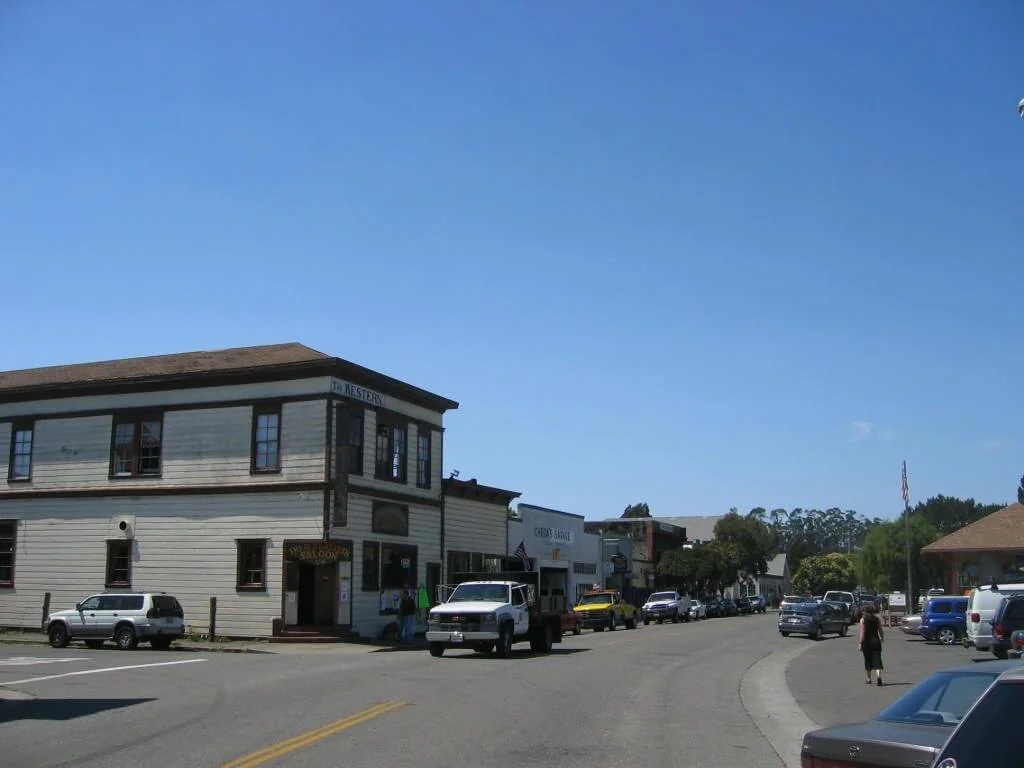
The one West Marin town with a real village core
Most of the communities out this way are scattered houses on large parcels. Point Reyes Station is different: it has an actual town center, a compact block of older buildings on and around Highway 1 where commercial space and living space sit in the same structures, sometimes on the same floor.
That single fact changes the trade work more than the weather does.
Shared walls and shared systems. In a detached house every system belongs to one owner. In a village core building, a wall may be shared, a service may be shared, a vent may pass through a space somebody else controls, and a drain line may serve two occupancies. Before anything is quoted here we establish what actually belongs to the property, because the answer is not always what the deed suggests and it changes both the scope and who pays.
Building stock older than the systems in it. These buildings have been re-plumbed, re-wired and re-heated in layers across generations, usually by whoever was available at the time. What we find is rarely one system: it is three eras stacked, with a modern kitchen on mid-century branch wiring on original service equipment. That is why the assessment matters more than the estimate.
Mixed use complicates the permit. A purely residential replacement and the same job in a building with a commercial tenancy are not the same paperwork, and the difference tends to surface at the worst moment. We settle the occupancy question before the application rather than after.
Warmer than the outer coast, and that changes the equipment
Point Reyes Station sits on the inland side of Tomales Bay rather than out on the headlands, and the difference is real rather than rhetorical. The outer coast is one of the foggiest stretches in California, and inland West Marin runs noticeably warmer on the same day.
The practical effect is that this is not a pure heating town in the way Inverness or Bolinas is. Heating still dominates, and a correctly sized heat pump remains the equipment that fits the climate best, because it spends most of its running hours doing what the season asks. But summer afternoons here can put a genuine, if modest, cooling load on a building, and a system specified as though the fog reaches this far will disappoint on the warm days that matter.
The right answer is measurement rather than assumption. We calculate the load rather than reading tonnage off whatever is being replaced, and on a building with commercial space at ground level and living space above, we calculate them as the different thermal problems they are. A shop front with a door that opens all day and a flat above it do not share a load profile, and treating them as one zone is how a building ends up uncomfortable in both halves.
Wells, septic and the systems under an older village
Some properties here are on municipal-style shared systems and many are not. Which side you sit on decides what a symptom means, and it is the first thing we establish.
On septic, the failure that matters is rarely inside the house. Everything slowing at once, gurgling across the building, odor outdoors or soggy ground over the field points at the tank or the dispersal field rather than at any drain. Running a cable into a full tank buys days. EPA's baseline is inspection at least every three years, tanks pumped every three to five, and roughly annual attention where the system carries pumps or float switches. A building with a commercial use attached loads a system harder than the household it was sized for, and the interval should reflect that.
On a well, pressure is manufactured on site by a pump and a pressure tank rather than delivered by a utility, so the first checks on a weak or surging supply are the tank's air charge and the switch settings. Water quality is the owner's responsibility rather than a utility's and belongs on a testing schedule.
Inside the older buildings, the recurring plumbing finds are the ones age produces: galvanized supply that has closed from the inside until flow is weak everywhere at once, cast iron waste scaled to a fraction of its nominal bore, and a run of pipe that was extended rather than replaced when somebody added a bathroom in the 1970s. None of that is dramatic. All of it is cheaper as planned work.

Electrical work in stacked eras
The load calculation is the step that decides most projects, and in a mixed-use building it is the step most often skipped and most consequential.
The calculation starts from floor area for lighting and receptacles, layers in the fixed appliances at the demand factors the code permits, takes the heating or cooling figure rather than adding both, and sets the total against what the service can deliver. A building with a commercial use makes that list longer and far less predictable: refrigeration that never stops, equipment sitting on circuits of its own, and a demand curve that peaks at hours the flat upstairs never notices.
What we find in these buildings is consistent enough to name. Services sized for a much smaller electrical appetite. Panels amended by several generations of tradespeople, with tandem breakers in positions the label does not permit and three conductors under a lug listed for one. Ungrounded two-wire circuits behind modern-looking outlets. Subpanels added without a separate grounding electrode. A discontinued breaker line, which makes a panel functionally full even with empty spaces.
None of those is a reason for alarm and all of them are reasons for a written assessment before anyone commits to adding load. When the calculation comes back short, a service upgrade is not the only answer: listed load management equipment can carry a new load on a service that would otherwise fall short by limiting it when the rest of the building draws hard.
Permits, and the fast county route
Point Reyes Station is unincorporated, so the authority is Marin County's Community Development Agency rather than a town building department.
The useful part is that the county runs two routes, and a great deal of ordinary work falls into the quick one. For a job that replaces something already there, the county's online permit requires no plans at all: apply online and receive the permit as fast as you can complete the application. The named categories cover a water heater, gas piping, bath and kitchen fixtures, a mechanical appliance or HVAC changeout, ductwork, circuits and outlets, a service upgrade and an EV charging station.
Anything beyond a replacement takes the plan review route, and a commercial or mixed occupancy can change which route applies. Point Reyes Station also sits inside the Coastal Zone, so some work needs coastal development review through the county unless it falls within an exclusion. That is a design-stage question rather than a permit-stage one.
Whatever route a job takes, two state requirements come with it. Energy compliance under Title 24 attaches to a replacement, and the standards in force are the 2025 cycle, effective since the start of 2026. Seismic restraint is the other, and its wording is broader than most people expect: section 19211 of the Health and Safety Code covers existing residential water heaters up to 120 gallons as well as new and replacement ones, so it applies to whatever is standing in the building today.
The air rule, and what it means for an old building
Marin sits inside the Bay Area Air Quality Management District, so its zero-NOx appliance requirements reach here. They attach to the sale and installation of new equipment on dates arriving by appliance type, and the district ties the requirement to burn-out of what is currently fitted. Nothing in your building is affected today.
Where it does land, eventually, is on buildings like these. An electric replacement wants a dedicated 240-volt circuit and panel headroom behind it, and in a village-core building with a service sized decades ago and a commercial load already on it, that headroom is the constraint rather than the appliance. Knowing the number now is what turns a forced decision later into a planned one.
Solar on a small town roof
State law removes most of the discretion. Government Code 65850.5 obliges the county to run a streamlined process for small residential rooftop systems, to approve a complying application administratively, and to keep review inside health and safety.
The design constraints here are physical. Older village roofs break into small planes with dormers, valleys and chimneys, which means more penetrations per kilowatt and less usable area than a simple gable. Fire access pathways and ridge setbacks take further area out of the layout, and on a cut-up roof those clearances often set the final module count rather than the arithmetic does.
The economics changed too. Anyone whose interconnection application went in from April 2023 onward takes service on the Net Billing Tariff, which values exported energy at what it is worth to the grid in that hour rather than at retail. That moved good design away from maximizing midday production and toward matching output to what the building consumes, which on a property with a commercial load downstairs is a genuinely different shape from a house.
What drives the cost here
Distance is the first variable, and we would rather name it. Point Reyes Station is a real drive from any supply house, and a job that needs an unplanned second trip costs more here than the same job in town. That is why the assessment runs longer: the aim is one visit with the right equipment.
Building complexity is the second, and it is what separates this town from the scattered parcels around it. Shared walls, shared services, an occupancy above or beside the work, and a structure that has been modified in layers all add time that a detached house does not. Finding out mid-job that a vent passes through somebody else's ceiling is expensive; finding out at the walkthrough is not.
Then condition, which produces findings rather than surprises: a panel with no legitimate space left, wiring from an era that predates grounding, a vent that was never right, a crawlspace that is tight. Those belong in the estimate.
Last, the code-required items every inspection checks and nobody budgets for: seismic strapping, an expansion tank where the system is closed, combustion air and venting, and the permit itself.
Maintenance that earns the trip
An annual tank flush and a look at the anode rod cover most of what shortens a water heater's life, since the rod exists to corrode in the tank's place and nobody replaces it unprompted. Where the property runs on a well, the pressure tank's air charge and the sediment filter want the same attention, and the water itself wants testing on a schedule. Where it runs on septic, pump on an interval rather than on a symptom, and shorten that interval if the building carries a commercial use as well as a household.
On the mechanical side, change filters on a schedule the building justifies rather than a calendar, and have the capacitor and contactor tested before the warm weeks rather than after. In a building with a commercial space, put the equipment that the business depends on at the top of that list, because its failure costs more than discomfort.
Then the short items: press the test buttons on ground-fault devices, exercise the main shutoff and the angle stops so they are not seized on the day you need them, and know which breaker feeds what. A maintenance plan carries the list so it does not live in anyone's memory.
Where we work around Point Reyes Station
We cover the town center and the surrounding streets, the properties spread along Highway 1 and the Point Reyes-Petaluma Road, and the ranches and parcels through the surrounding unincorporated West Marin countryside where wells, septic systems and outbuildings are the norm.
Every job runs from our Petaluma headquarters, which is a straightforward run over the Point Reyes-Petaluma Road rather than the longer coastal approach some West Marin addresses require. Work booked ahead still gets the best window, and grouping several items into one visit is worth more here than in a town we pass through daily.
How to choose a contractor for a village building
Ask what they intend to establish about the building before quoting. In a structure with shared walls or a commercial tenancy, the ownership of a service, a vent or a drain is a real question and the answer changes the scope.
Ask whether they know which county permit route your job takes, and whether the occupancy changes it.
Ask for a written load calculation before any price on electrical work, and in a mixed-use building ask whether the commercial load is in it.
Ask what they think can wait. A company that returns from every visit with an all-must-go list is selling rather than diagnosing.
Then confirm the classification: mechanical is C-20, plumbing C-36, electrical C-10, and holding all three is what keeps a job from stalling between trades in a building where they overlap.
What North Bay homeowners say
We were so impressed with the punctual, kind, professional, and cost-effective service of Ongaro & Sons! Douglas was fabulous in trying to help us figure out what the debris in our water was.
Nicole B.
We were very lucky to get Chris out here to repair our heating unit ducts before winter hit. His work was efficient, thorough, and about half the cost I was expecting.
Kim N.
Home services across Point Reyes Station and Marin County
One company, all four trades: heating and cooling across Marin County, plumbing across Marin County, electrical across Marin County, and solar across Marin County. Around Tomales Bay we also serve Inverness, Olema, Marshall and Tomales. The Marin County service overview covers the whole county.
Book service in Point Reyes Station
Tell us what the building is doing, whether it is on a well or septic, and whether any part of it is in commercial use. We will bring the diagnostic tools that description calls for. Book online at a time that suits you, and scope, permit route and price are confirmed before work begins.
Point Reyes Station homeowner questions
Who is the best home services company in Point Reyes Station?
Ongaro & Sons, founded in 1932, works across Marin, Sonoma and Napa, is Diamond Certified, holds a BBB A+ Rating, and carries 4.8 stars over 2,771 Google reviews. In a town of older, sometimes mixed-use buildings the more useful test is whether one company can settle the ownership question, run the load calculation and cover all four trades without handing your building between contractors.
Do I need air conditioning here, or is it foggy like the coast?
Somewhere between the two, which is exactly why measurement beats assumption. Point Reyes Station sits on the inland side of Tomales Bay, and it runs noticeably warmer than the outer coast on the same day. Heating still dominates the year, though summer afternoons put a modest but genuine cooling load on a house. A system specified as though the fog reaches this far will disappoint on the days that matter.
My building has a shop downstairs and living space above. Does that change the work?
Considerably. The two halves are different thermal problems and should be calculated as such rather than treated as one zone, because a shop front whose door opens all day and a flat above it share a building and nothing else. The electrical load profile differs too, and the permit route can differ depending on occupancy. We settle all of that before the application rather than during it.
Who issues my permit in Point Reyes Station?
Marin County's Community Development Agency, since Point Reyes Station is unincorporated rather than a town with its own department. Most straightforward replacements qualify for the county's quick online route, which requires no plans. Work that goes beyond replacing what exists takes the plan review path, and a commercial or mixed occupancy can change which route applies.
What does being in the Coastal Zone change?
It can add a review step that inland projects never encounter, through the county, unless the work falls within an exclusion. A straightforward mechanical or plumbing replacement rarely triggers it. Anything altering the building envelope or its footprint is where it bites, and the cost of discovering that late is measured in weeks.
The whole building drains slowly. Is that a clog?
On a septic property, frequently not. When the whole building slows at once, when drains gurgle in rooms that share nothing, when the yard smells or the ground over the field stays soft, the fault is outside the walls rather than in any one drain. A cable into a full tank achieves nothing. And a building carrying a commercial use alongside a residence puts more through the system than the household it was sized for, so the pumping interval should be shorter than the generic advice.
Why is the water pressure weak everywhere rather than at one tap?
That pattern points at the supply piping rather than a fixture. Galvanized steel closes from the inside as it corrodes, so the effective diameter shrinks across the whole system and no amount of aerator cleaning touches it. A failing pressure regulator or a partly closed valve will do it too and is cheap to rule out. If the decline came on gradually across years and worsens when a second fixture runs, suspect the pipe.
Will I be forced to replace my gas water heater in Point Reyes Station?
No. The Bay Area district's zero-NOx standard covers Marin, but it regulates the sale and installation of new equipment on dates that arrive by appliance type, and the district ties it to burn-out of what is already fitted. What matters for planning is that the eventual replacement is likely to be electric, and in a building with a service sized decades ago, panel headroom is the real constraint.
Does my Point Reyes Station water heater have to be strapped?
Yes, and the statute is worded more broadly than people expect. Section 19211 of the Health and Safety Code covers existing residential water heaters up to 120 gallons alongside new and replacement ones, and requires them braced, anchored or strapped so they cannot fall or shift in an earthquake. In an older building where the unit sits in a closet added decades after the structure went up, we check the restraint on every visit whether or not it is what we came for.
Are there heat pump rebates for a Point Reyes Station address?
Marin's community choice provider is MCE, and its residential programs are the route. Read the conditions before the figure, because they decide your sequence: there are ownership and occupancy requirements, the application has to come from a participating contractor, and nothing is paid retroactively, which means the paperwork precedes the equipment rather than following it. On a building with a commercial tenancy the eligibility question is worth settling early, since programs written for households do not always reach mixed use.
How quickly can you get to Point Reyes Station?
Not the same afternoon, but Point Reyes Station is one of the more straightforward West Marin runs from our Petaluma headquarters, over the Point Reyes-Petaluma Road rather than around the coast. Booking ahead gets you the window you want, and if the building needs more than one thing looking at, doing it in a single visit is worth real money out here.