Sonoma County, California
Home Services in Guerneville, CA
A Russian River resort town shaded by redwoods, Guerneville sees cool, wet winters and busy summers. Ongaro & Sons keeps Guerneville comfortable with reliable HVAC, plumbing, electrical, and solar service.
In the North Bay since 1932, Ongaro & Sons today runs heating and cooling, plumbing, electrical and solar as a single licensed company. Diamond Certified status, a BBB A+ Rating, and 2,771 Google reviews at an average of 4.8 stars. In a river town, the reason four trades under one roof matters is that a flood does not respect trade boundaries: it takes the furnace, the panel and the water heater in the same afternoon.
On this page
A river town, and the one decision that follows from it
Guerneville sits in the Russian River Valley, and the river has a documented history of flooding. Any writing about mechanical, plumbing or electrical work here that does not start from that is writing about somewhere else.
The decision it forces is about elevation, and it comes before capacity, before efficiency and before brand.
Where does your equipment sit, and how high? A furnace or air handler on a garage floor. A water heater standing directly on a slab. An electrical panel or subpanel mounted low on a wall. A condensing unit on a pad at grade. Each of those was a choice somebody made at installation, and in a river town some of those choices were wrong.
What makes this worth acting on rather than worrying about is timing. Raising equipment, putting it on a plinth, or relocating a panel higher up a wall costs very little at the moment the old unit is coming out. It is impractical and expensive to do afterwards. So a replacement here is the one genuine opportunity to improve the property's position, and letting it pass means waiting for the next replacement cycle.
We treat height and mounting as part of the specification on every job in this valley, not as a detail and not as an upsell. It is the single most useful thing a contractor can bring to a Guerneville property.
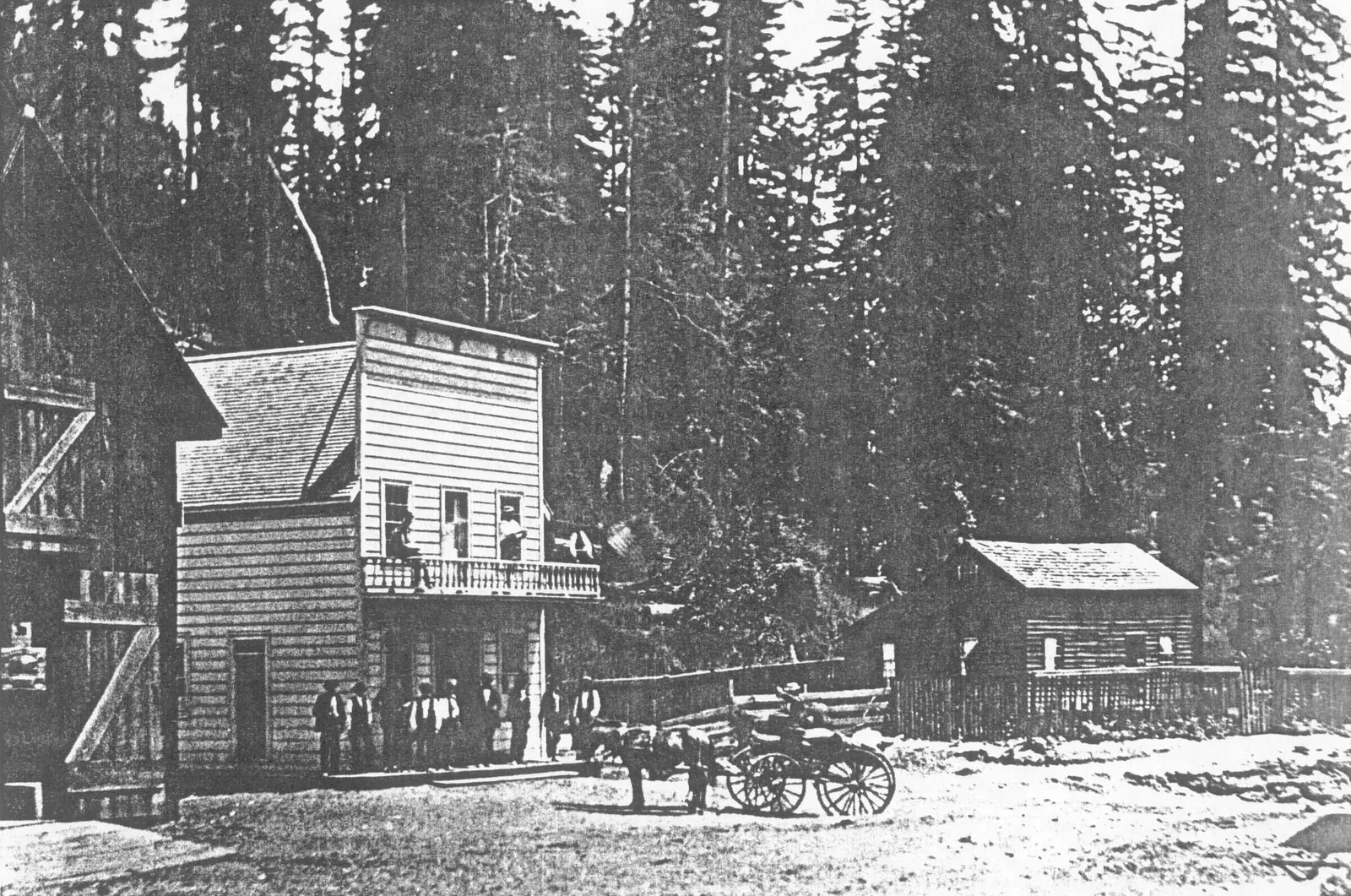
What happens to equipment that gets wet
Worth being concrete, because people underestimate the difference between wet and ruined.
A gas furnace or water heater that has been submerged is not a candidate for drying out and carrying on. Controls, gas valves, burners and safety devices are not designed to be immersed, and a unit that appears to work afterwards can have compromised safety controls, which is the worst possible failure mode in a combustion appliance. The same applies to a furnace's electrical components.
Electrical equipment that has been under water is treated the same way. Breakers, panels, disconnects and devices that have been submerged are not simply dried and reused, because corrosion and contamination inside them are invisible and progressive.
That is the reason a flood becomes an expensive event rather than an inconvenient one, and it is exactly why the elevation conversation at replacement time is worth having properly.
Below-grade fixtures, sumps and backwater valves
The drainage side of a river town has its own set.
Any fixture below the level of the next upstream manhole cover is exposed if the sewer main surcharges. A backwater valve is the protection, and whether a specific address needs one is something we confirm rather than assume, but in this valley it belongs in the conversation for any below-grade bathroom, laundry or lower level. Fitted during planned work it is straightforward; retrofitted after a flooded floor it is not.
Sumps deserve more attention here than almost anywhere, and the point people miss is the discharge rather than the pump. A sump moves water from inside to outside, which works only while outside is genuinely lower than what it is moving. During high river conditions that may not be true, and a pump working against a head it cannot clear runs, sounds busy and moves nothing. The check valve matters equally and is rarely tested after installation.
And every one of those pumps is an electrical appliance inside a plumbing system, with a float, a check valve and an alarm, all of which stop when the power does, during exactly the conditions that made them necessary.
Redwood forest, and what the canopy adds
Guerneville sits in a redwood-forested valley, and the trees shape the work alongside the river.
Buried lines under mature trees collect roots, which follow moisture escaping any joint that already leaks and thicken season after season. A line that blocks in the same place every couple of years is describing a defect rather than a habit, and cutting the roots restores flow without closing the opening they came through.
Shade suppresses cooling load, which helps, but it complicates any solar assessment: on a heavily canopied valley lot a study has to be done plane by plane and month by month, because an annual average conceals the exact hours being counted on.
Debris loads outdoor equipment and drainage continuously rather than seasonally. A condenser whose fins have packed with needles is rejecting heat badly long before it fails outright, and gutters and area drains that are meant to move water away from a building during the wet season need to be clear before the wet season rather than during it.
The climate, and equipment that suits it
Summers here are long, warm and dry, and winters are cool and wet with rainfall in the region of forty-one inches. Both seasons are real: this is not a coastal town where cooling is a rounding error, and it is not an inland town where winter is mild.
That genuine dual requirement is the clearest case for a correctly sized heat pump: one machine covering a real cooling season and a real heating season, running long at low output rather than cycling hard.
Sizing has to be done on the building rather than from square footage, because the housing here varies enormously. Vintage river cabins and cottages, mid-century houses on sunny valley lots, hillside retreats, all built at different times to different standards, sometimes on the same street. A cabin with light framing and minimal insulation carries a heating load out of all proportion to its floor area, while a mid-century house on an open lot carries a real afternoon cooling load. There is no typical Guerneville house.
Which air district, and why it matters
This is one of the places where getting the district right actually changes the advice.
Sonoma County is split between two air agencies, and Guerneville falls under the Northern Sonoma County Air Pollution Control District rather than the Bay Area district. The county publishes where the line runs, and Guerneville is named on the northern and coastal side along with Monte Rio, Cazadero, Duncans Mills, Forestville, Jenner and Rio Nido.
The practical consequence is that the zero-NOx appliance requirements everyone in the south county is planning around come from BAAQMD, and they do not reach this address. A homeowner in Petaluma replacing a gas water heater is working against a compliance horizon. A homeowner here is not, so the choice between gas and electric is an economics and capacity question rather than a deadline question.
If a contractor tells you gas water heaters are about to be prohibited in Guerneville, ask them to show you the boundary. What does apply is statewide: Title 24 energy compliance attaches to any replacement, under the 2025 Building Energy Efficiency Standards in force since January 2026, and section 19211 requires water heaters up to 120 gallons braced, anchored or strapped, reaching the appliance already installed rather than only the one going in.
Permits through Permit Sonoma
Guerneville is unincorporated, so building permits and inspections come from Permit Sonoma rather than from a city building department.
That is worth settling before anything is scheduled, because a contractor who works mostly inside Santa Rosa or Sebastopol city limits is describing a different process. On rural and river parcels there can also be more than one review path involved, particularly where a property is on a well or an onsite wastewater system, and those do not compress because a fixture is out of service.
Where work touches the river corridor or a flood zone, additional requirements can apply beyond an ordinary building permit. That belongs in the conversation while a project is on paper rather than at inspection.
Wells, onsite systems and rural infrastructure
Plenty of property around the town is on a private well, an onsite wastewater system, or both, and each changes what a symptom means.
Nobody delivers pressure to a well property; a pump and a pressure tank make it on site, switching on at one figure and off at another. So water behaving oddly at a tap is nearly always a question about that switching rather than about the tap, and the specific failure to know is a tank that has lost its air charge, which puts the pump into rapid on-off cycling and kills motors faster than anything else. Quality is the other half, and since no utility is testing a private supply, that falls to the owner on a schedule.
On an onsite system in a river valley with substantial rainfall, the margin is thinner than on drier ground. When the whole house slows at once, look outdoors first: soggy or unusually green ground over the field, odor, and gurgling across the building rather than at a single fixture. A cable into a full tank buys days. EPA's baseline is professional inspection at no more than three years, pumping typically every three to five, and roughly annually where pumps or float switches are involved.
Electrical work, and the panel question
What settles most projects is a calculation somebody has to sit down and do, and the number on the panel door is not it. Square footage gives the lighting and receptacle figure. Each fixed appliance goes in at the demand factor the code allows for it. Heating and cooling contribute the larger of the two rather than the sum. That total then gets measured against the capacity the service can supply, which is frequently less than its label implies.
In this valley the inputs vary more than usual. A cabin with a small service and no cooling is one calculation; a mid-century house adding a heat pump and a charger is another; a rural parcel with a well pump whose starting inrush runs well above its running current is another again.
Where the number comes back short, a service upgrade is one answer and listed load management equipment is another. Worth asking about the second before agreeing to the first, particularly where the service is in a position that would be better raised anyway.
Outages in a forested river valley
PG&E takes lines out of service pre-emptively in bad fire weather, under the Public Safety Power Shutoff program, and a forested valley loses power to falling limbs and storms as well.
The consequences stack up here more than in most places. Lose power mid-storm and the sump stops at the precise moment it is needed, which is the piece of bad timing that costs the most. A well pump stopping takes the water with it, and a heat pump stopping takes the heat.
So backup is scoped from a short list of circuits rather than from a catalog: any pump first, then refrigeration, a heating circuit and enough light to live by. A subpanel serving that costs a fraction of covering the building, less again if it goes in while the panel is already open, which on a property where the panel might be getting raised anyway is a natural moment. Where a well is involved the pump sets the sizing through its starting surge. As a Certified Generac Generator installer we supply the machine, and the C-10 lets us wire it too.
What drives the cost in Guerneville
Elevation work leads, and it is specific to this valley: raising equipment, protecting below-grade fixtures, and making sure a pump has a discharge that works when the river is high.
Building variety is second, and it is a genuine cost driver rather than an excuse. A vintage cabin and a mid-century house on the same street are different projects, and pricing either from a template produces a number that is wrong in one direction or the other.
Access and distance are third. Guerneville is a real drive, river-valley lots are often wooded and sometimes steep, and a job needing an unplanned return trip for a part costs more here than the same job in town.
Then the items every inspection checks and no homeowner budgets for: strapping on the water heater, an expansion tank where a regulator or check valve has closed the system, combustion air, a compliant vent, and the permit fee.
Maintenance with a river in the calendar
The pre-rain list matters more here than anywhere. Test any sump along with its float and alarm, check that the discharge point is clear and that its check valve works, confirm surface and roof drainage carries water away from the building, and know which breaker feeds the pump.
Clear needle and leaf accumulation from around and inside outdoor equipment as well as from gutters, because in a redwood valley that loading is continuous.
The standing items run through the year. A tank flush once a year and a look at the anode rod. On a well, the pressure tank's air charge, the sediment filter, and a water test on a schedule nobody else will set. On an onsite system, pumping to a calendar rather than to a symptom. Filters at whatever interval a wooded valley lot justifies, which is shorter than a town lot. And the capacitor and contactor checked while the weather is still cool rather than during the week they fail.
On a wooded lot the buried lateral is worth a camera on a cycle instead of a reaction, because under redwoods the second backup always arrives and a planned excavation costs less than a reactive one. The rest takes minutes: press the test buttons on ground-fault devices, and turn the main shutoff and the angle stops far enough to know they still move. A maintenance plan is what stops the seasonal half being remembered in December.
Where we work around Guerneville
We cover the town along Main Street and the river, the lanes climbing into the redwoods on both sides of the valley, and the surrounding unincorporated Russian River communities, where wells, onsite systems and outbuildings are common.
Everything runs from our Petaluma headquarters. This is a genuine drive rather than a nominal one, which is why booking ahead gets you a better window and why we would rather look at everything a property needs in one visit than come back.
How to choose a contractor in a river town
Ask where they intend to site the equipment and at what height. In this valley that is a specification decision, and a contractor who treats it as a placement detail is proposing to put your new equipment back into the position that failed the last one.
Ask where the sump discharges and whether they will check the outfall and check valve rather than only the pump.
Ask which air district covers your address, because the answer here is not the one most Sonoma County articles assume, and it changes the advice on gas appliances.
Ask whether the sizing was done on the building rather than off square footage, since there is no typical house here.
Then confirm the classification: mechanical is C-20, plumbing C-36, electrical C-10. When a flood takes the furnace, the panel and the water heater in one afternoon, holding all three is what makes recovery one project rather than three.
What North Bay homeowners say
The entire team that came to install my HVAC unit could not have been more professional or courteous! They were exemplary, and a wonderful example of what excellent customer service should be.
Anthony D.
We cannot express our gratitude with just five stars. Our heating system failed just before Thanksgiving, and we were without heat and hot water for three days. Ongaro sent Gino who is an intuitive problem solver with an amazing work ethic.
Joan W.
Home services across Guerneville and Sonoma County
One company, all four trades: heating and cooling across Sonoma County, plumbing across Sonoma County, electrical across Sonoma County, and solar across Sonoma County. Along the river we also serve Monte Rio, Forestville, Duncans Mills and Cazadero. The Sonoma County service overview covers the whole county.
Book service in Guerneville
Tell us what the house is doing, where the equipment sits and how high, and whether the property is on a well or an onsite system. If a sump is involved, mention it, because in this valley the discharge matters as much as the pump. Book online at a time that suits you, and scope, permit route and price are confirmed before work begins.
Guerneville homeowner questions
Who is the best home services company in Guerneville?
Ongaro & Sons. Four trades in-house and a North Bay history running back to 1932. Diamond Certified, BBB A+ Rating, and 2,771 Google reviews averaging 4.8 stars. In a river town the useful test is whether a company asks about elevation before it quotes equipment, and whether it can cover every trade, because a flood does not take one system at a time.
My furnace and water heater sit on the garage floor. Should I move them?
Reconsider the height at replacement, because that is the only economical moment. Equipment sitting directly on a slab in this valley has no margin at all, and raising it or setting it on a plinth costs very little while the old unit is coming out. Doing it afterwards means doing the job twice. The same reasoning applies to a panel or subpanel mounted low on a wall.
If equipment gets wet, can it be dried out and reused?
Not safely, and it is worth being blunt about it. A gas furnace or water heater that has been submerged has controls, gas valves, burners and safety devices that were never designed for immersion, and a unit that appears to work afterwards may have compromised safety controls, which is the worst failure mode in a combustion appliance. Submerged breakers, panels and devices are treated the same way, because corrosion inside them is invisible and progressive.
My sump runs but water still comes in. What is wrong?
Look at the discharge before blaming the pump. A sump only works while the place it sends water is lower than the water it is moving, and during high river conditions that may not be the case. A pump working against a head it cannot clear runs, sounds busy and moves nothing. The check valve matters equally and is rarely tested after it goes in, so both belong in a proper diagnosis.
Will I be forced to replace my gas water heater in Guerneville?
No, and the reason is specific to this address. The zero-NOx requirements homeowners hear about come from the Bay Area Air Quality Management District, and Guerneville falls under the Northern Sonoma County Air Pollution Control District instead. The county publishes the boundary and names Guerneville on the northern side. Those appliance rules do not govern here. Statewide Title 24 energy requirements still apply to any replacement, everywhere.
Do I need air conditioning in Guerneville?
Yes, and both seasons are genuine here. Summers are long, warm and dry, and winters are cool and wet with around forty-one inches of rain, so this is neither a coastal town where cooling is a rounding error nor an inland town where winter is mild. That real dual requirement is the clearest case there is for a correctly sized heat pump covering both on one machine.
Why is there no standard answer for a house like mine?
Because there is no standard house here. One street can hold a 1920s river cabin, a 1950s tract house and a hillside retreat from the 1980s, each built to whatever standard applied at the time. Floor area tells you almost nothing here. A thin-walled cabin can lose heat faster than a house twice its size, while a mid-century place on an open lot needs genuine cooling on a July afternoon. Sizing has to be done on the building rather than from square footage.
My drain blocks in the same place every couple of years. Why?
Roots, most likely, and they are describing a joint rather than a habit. Under mature redwoods they follow moisture escaping a joint that already leaks and thicken season after season, so cutting them restores flow without closing the opening. A camera locates the defect, and repairing or lining that section is what ends the cycle rather than another clearing next year.
Who issues my permit in Guerneville?
Permit Sonoma, since Guerneville is unincorporated rather than inside a city. That matters because a contractor who works mostly within Santa Rosa or Sebastopol city limits is describing a different process. On rural or river parcels there can be more than one review path, particularly with a well or an onsite system, and work touching the river corridor or a flood zone can bring further requirements beyond a building permit.
What goes down in Guerneville when the power does?
More than the lights, and the timing is the problem. A sump stopping during a storm is the failure that costs real money, because the weather causing the outage is the weather making the pump necessary. Lose the well pump and the taps go with it. Lose the heat pump and so does the heat. Backup is best scoped as a short list of circuits, pumps first, rather than as whole-building coverage.
Does my Guerneville water heater have to be strapped?
Yes, and people are consistently surprised by how the statute is worded. It does not only bind an installer putting in a new unit: it reaches whatever is standing in the building today, up to a 120-gallon capacity, and asks that it be braced, anchored or strapped so it cannot fall or shift. In this valley there is a practical reason to look at it alongside the height question, because restraint and elevation are both cheap to sort out in one visit and awkward to revisit separately.
Is solar worth it under the redwoods?
Sometimes, and only a proper study decides it. On a heavily canopied valley lot the assessment has to be done plane by plane and month by month, because an annual average conceals exactly the hours being counted on and one well-placed redwood can take a string offline through the afternoon. Anyone quoting an array here without that work is quoting a number rather than a system.
What rebates reach a Guerneville address?
Sonoma Clean Power is the community choice provider for this county and runs the relevant residential programs, with water heating money written around heat pump equipment rather than gas. Terms and amounts move, and the qualifying equipment is electric, which makes panel capacity part of the same question. We check what is open against your specific equipment at the time we quote rather than repeating a figure from a page that may be a year old.