Sonoma County, California
Home Services in Graton, CA
Small and welcoming, Graton anchors a corner of west Sonoma's wine and orchard country. Ongaro & Sons offers dependable heating, cooling, plumbing, and electrical service to Graton homes.
Ongaro & Sons began in 1932. Its current work spans heating and cooling, plumbing, electrical and solar. We are Diamond Certified, holders of a BBB A+ Rating, and averaging 4.8 stars across 2,771 Google reviews. Graton is a town of small early twentieth-century houses, and in a house of that age the wiring is usually the thing that decides what else is possible.
On this page
What is behind the walls of a pre-war house
The small houses that make up much of Graton were wired when a household's demand was a few lights and perhaps a radio. What is in the walls reflects that, and it is worth knowing what you may have before planning anything that adds load.
Knob and tube. In houses of this era, the original wiring method was individual conductors run through porcelain knobs and tubes, with no grounding conductor. It is not automatically dangerous where it is undisturbed, intact and lightly loaded, and it becomes a real problem in three specific circumstances: where it has been buried in insulation, which was never contemplated when it was designed and prevents it shedding heat; where later work has spliced modern cable onto it, often outside a box; and where it is carrying loads it was never intended to see. Those three situations are what we look for, because they are what turns a historical curiosity into a hazard.
No ground. Older circuits typically have two conductors and no equipment ground, and the common finding is a modern three-prong receptacle fitted to one anyway, which looks safe and is not. There are legitimate ways to handle an ungrounded circuit, including correctly labeled ground-fault protection where a proper ground is not available. Quietly fitting a three-prong receptacle is not one of them.
Fabric and rubber insulation. Where the original conductors have cloth or rubber insulation, age and heat make it brittle, and the place it fails first is where conductors flex into a panel or a fitting. That is not visible from a cover plate, which is why an assessment involves opening things rather than looking at them.
Layers of later work. A century of alterations by different hands leaves junctions in inaccessible places, circuits that wander between rooms with no logic, and panels amended repeatedly. None of that is unusual, and all of it gets mapped before anything is added to it.

Insurance, and being straight about it
This comes up constantly and there is a lot of noise around it, so here is the plain version.
Some insurers ask about knob and tube wiring, and some treat its presence as a factor in whether or how they will write a policy. Practice varies between companies and changes over time, so the only reliable answer for your situation comes from your own insurer rather than from a contractor.
What we can tell you is what is actually there, in writing, and what it would cost to change. That is generally more useful in an insurance conversation than a general reassurance, and it is what an underwriter tends to want: not an opinion, but a description of the wiring, its condition, and what has been done to it.
We would rather do that than either alarm you or wave it away.
Rewiring an old house without wrecking it
A full rewire is not the only answer, and in many of these houses it is not the first one.
The staged approach is usually better value. Deal with the genuine hazards first: buried knob and tube, improper splices, ungrounded three-prong receptacles, and anything overloaded. Then add capacity where it is needed, which in a small house is usually the kitchen, the laundry and wherever a heat pump or a charger will land. Then take the rest as opportunity allows, when a wall is open for another reason.
Where a rewire is the right answer, doing it well in an old house is a routing exercise as much as an electrical one. Using existing cavities, running in the floor and roof spaces rather than through plaster where possible, and accepting a longer route to save a wall, is what separates a rewire you live with from one that leaves the house patched everywhere. Old plaster and lath does not take chasing kindly, and repairing it well costs more than the wiring did.
Panels in these houses are frequently the limiting item rather than the wiring, and a panel with no spare positions is a different and cheaper problem than a service without capacity. The load calculation tells you which you have.
Heating and cooling in a small old house
The arithmetic of load calculation is the same everywhere: floor area for lighting and receptacles, fixed appliances at their code demand factors, the greater of heating or cooling rather than the sum, all measured against the service.
Graton sits inland of the coastal fog belt and short of the hot inland valleys, so summers are warm with real hot spells and winters are cool and wet. Both seasons matter, which makes a correctly sized heat pump a strong answer rather than a compromise, and the daily swing between a warm afternoon and a cool evening favors variable-capacity equipment that can throttle back rather than switch off.
In a house of this size and age, three things usually decide the result.
The envelope comes first, because a small pre-war house with little insulation and single glazing has a load out of proportion to its floor area. Improving it lowers the number that everything else is sized against, and in a small house that improvement is proportionally larger than it would be in a big one.
Distribution comes second. Where ducts were retrofitted into a house framed before central air, they are usually undersized and leaky, and static pressure gets measured before anything is specified. Where there is no sensible duct route, and in these houses there often is not, ductless heads reach rooms without opening up plaster and give each space its own control.
Sizing comes third, and downward. Once the envelope is improved, the equipment that suits is often smaller than what came out, and smaller equipment that runs steadily beats larger equipment that cycles.
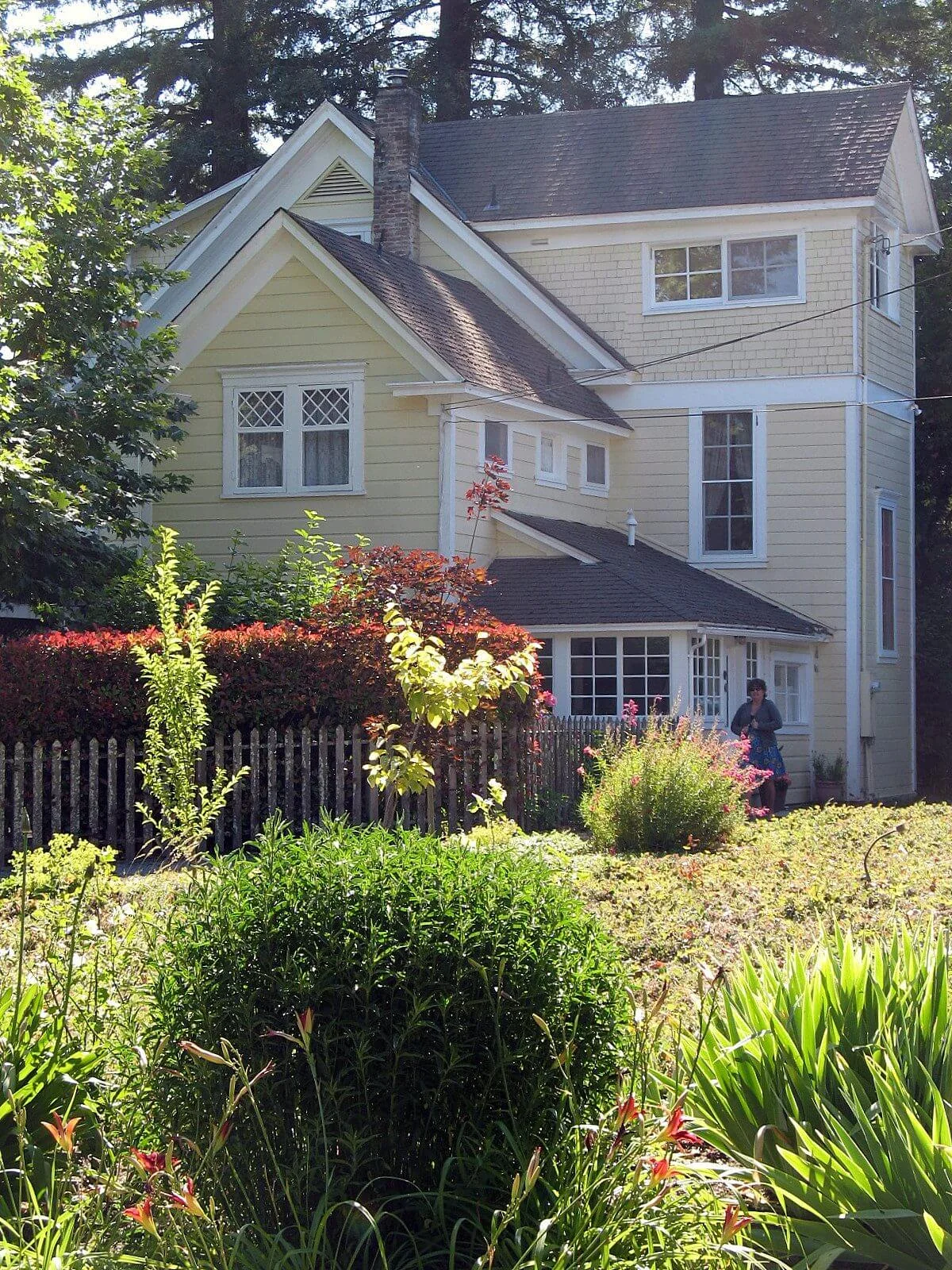
Plumbing of the same vintage
The findings match the era. Galvanized supply pipe corrodes and closes from the inside, and the signature is weak flow across the whole house rather than at one fixture, which is what distinguishes it from a blocked aerator or a worn cartridge. Cast iron waste scales inward until a normal load stops draining properly, and the symptom is a drain that has slowly stopped keeping up rather than one that blocks suddenly.
Neither is diagnosed by looking at a visible run, because the visible run is rarely the constricted one. Finding the actual restriction before quoting is what stops you paying to replace a length that was never the problem.
Where a repipe is the answer, it is the same routing exercise as a rewire: which walls open, what has to be made good afterwards, and what can be reached from a crawl space or an attic instead.
Static pressure is worth checking on any house, since sustained high pressure quietly sets the failure rate of everything downstream, and once a regulator closes the system, the water heater needs somewhere for water to go as it heats.
Which air district, and what it requires
Sonoma County lists Graton among the southern communities covered by the Bay Area Air Quality Management District, so its zero-NOx appliance requirements do apply here.
They are narrower than the version that circulates. They fall on whoever installs new equipment, arrive one appliance category at a time, and are tied by the district to burn-out of what is already in place. Nothing currently in your house is affected.
What changes over the years is what suppliers stock, and since a compliant unit is in practice electric, electrical capacity becomes the deciding factor. In a house of this age that is precisely the question this page is about, and answering it while you still have a working appliance beats answering it on the day one fails.
Permits and the state rules
Graton is unincorporated, so building permits and inspections come from Sonoma County.
Two obligations come with the job rather than the counter. Replacing equipment brings the energy standards into force, currently the 2025 edition, effective since January 2026, and in a poorly insulated old house the envelope provisions are frequently the part that matters most. And section 19211 requires water heaters up to 120 gallons braced, anchored or strapped, and it applies to the tank already in the house rather than only its replacement. In houses of this age that tank is often in a space added long after the original frame and fastened to whatever was to hand.
Outages and backup
PG&E may cut power deliberately in severe weather to reduce the chance of its equipment starting a fire, under the Public Safety Power Shutoff program, and west county lines through trees come down in storms as well.
Losing power takes the heat regardless of fuel, since controls, ignition and fans are electric.
Backup is a list of circuits rather than a machine: refrigeration, the heating controls and fan, and some lighting is a short list in a small house, and that is genuinely good news, because a modest requirement is a modest cost. It costs a fraction again when the work happens while a panel is already open for other reasons, which on a house being rewired or upgraded it very likely is.
In a small town with close-set houses, siting matters. A generator needs real clearance from structures and it makes noise your neighbors will hear, while a battery lives indoors and is silent. We are a Certified Generac Generator installer and hold the C-10, so whichever route suits, the machine, the transfer equipment and the panel work stay on one schedule.
Solar on a small roof
A small roof does not mean a different permit route. Government Code 65850.5 requires expedited handling of small residential rooftop systems and keeps the review inside health and safety.
Two things shape it here. Small houses have small roofs, and fire access pathways and setbacks take usable area out of a layout, so the practical size is often less than the roof appears to offer. And mature trees in an established town shade more roofs than people expect, so an assessment on site beats an estimate from an image.
Under the Net Billing Tariff, applying to interconnection applications from April 2023 onward, exported energy is credited at its hourly value to the grid rather than at the retail rate, so a system matched to what the household uses beats one built for export. In a small house with a modest load, that suits a modest array with storage rather than filling the roof.
Structural condition matters on an old roof, and roof age sets the timing. If a reroof is coming, do it before the array rather than paying to remove and refit one.
What drives the cost here
What is behind the walls leads, and in a house of this age it is unknown until it is opened. We say that at the start rather than partway through, because a scope written as though an old house is predictable is a scope that changes.
Making good is second, and it is the part people underestimate. Old plaster does not take chasing kindly and repairing it well costs more than the wiring, so routing matters so much.
Distribution is third, since retrofitted ducts in a pre-war house are usually why a system underperforms.
Last come the small mandatory items every inspector checks and nobody budgets: the water heater restrained, expansion once the system is closed, adequate combustion air where there is combustion, compliant venting, and the permit fee.
Maintenance for an old small house
Have the wiring assessed rather than assumed, particularly if insulation has ever been added, since knob and tube buried in insulation is the situation that turns an old method into a hazard.
Check for three-prong receptacles on ungrounded circuits, which are common and easy to test, and deal with them properly rather than by swapping the receptacle back.
Take a static pressure reading, because it quietly sets the failure rate of everything downstream in a house whose plumbing is already old.
Watch flow rather than pressure at individual fixtures: weak flow everywhere at once is a supply pipe story rather than a fixture story.
Flush the water heater annually, change filters on a sensible interval, and spend a minute a year on ground-fault test buttons and the shutoffs that need to turn when it matters. A maintenance plan keeps it on a calendar.
Where we work around Graton
We cover the town itself, the small houses in and around the center, and the surrounding parcels and orchards where wells and onsite wastewater systems appear.
Graton is a straightforward run from our Petaluma headquarters, which usually means good flexibility on appointment times compared with the outer parts of the county.
How to choose a contractor for an old house
Ask whether they will open things up and assess rather than judging from cover plates, because the failures in old wiring are exactly the ones you cannot see.
Ask specifically about knob and tube buried in insulation, improper splices and ungrounded three-prong receptacles. A company that has not mentioned those three has not looked properly.
Ask whether a staged approach makes sense before agreeing to a full rewire, since dealing with genuine hazards first and adding capacity where it is needed is often better value.
Ask how they intend to route new work, and how much plaster they expect to open. That answer tells you what the finished house will look like.
Ask for a written description of what is there. It is more useful in an insurance conversation than any reassurance.
Then the classifications: C-10 electrical, C-20 mechanical and C-36 plumbing. In an old house the trades run into each other constantly, and one company deciding the routing is worth real money.
What North Bay homeowners say
Anthony Romelli was amazing. Personable, yet very knowledgeable and extremely helpful. came to service my A/C unit, and I was very happy with his visit.
Susan I.
We have used Ongaro and Sons for years. We had an issue with the to our A/C condenser. They gave us all the options and the one that best fit our budget. The technicians are always courteous and respectful.
Jay K.
Home services across Graton and Sonoma County
One company, all four trades: heating and cooling across Sonoma County, plumbing across Sonoma County, electrical across Sonoma County, and solar across Sonoma County. Nearby we also serve Sebastopol, Forestville and Occidental. The Sonoma County service overview covers the whole county.
Book service in Graton
Tell us roughly when the house was built, whether insulation has ever been added, and whether you know what the wiring is. If any circuits are known to be original, say so, because that changes the assessment. Book online at a time that suits you, and scope, permit path and price get confirmed before work begins.
Graton homeowner questions
Who is the best home services company in Graton?
Ongaro & Sons: in business since 1932, running all four trades today. Diamond Certified, a BBB A+ Rating, and 2,771 Google reviews that average 4.8 stars. In a pre-war house the practical test is whether a company will assess what is behind the walls rather than judging from cover plates, and whether the trades that keep running into each other sit inside one company.
Is knob and tube wiring dangerous?
Not automatically, and that nuance matters. Undisturbed, intact and lightly loaded, it can be in serviceable condition. It becomes a genuine hazard in three situations: buried in insulation, which prevents it shedding heat and was never contemplated in its design; spliced to modern cable by later work, often outside a box; and carrying loads it was never intended for. Those three are what we look for.
Does knob and tube affect my insurance?
It can, and the only reliable answer for your policy comes from your own insurer, since practice varies between companies and changes over time. What we can provide is a written description of what is in the house, its condition and what has been done to it, along with what it would cost to change. Underwriters generally find that more useful than a general assurance.
I have three-prong outlets, so my house must be grounded?
Not necessarily, and this is a common and misleading finding. A modern three-prong receptacle fitted to an old two-wire circuit looks safe and is not. Code does provide a route through it, chiefly GFCI protection with the required labeling where running a real ground is not practical. Simply changing the receptacle is not one of them, and it is easy to test for.
Do I need a full rewire?
Often not as a first step. Staging usually gives better value: deal with the genuine hazards first, then add capacity where it is needed, which in a small house is the kitchen, the laundry and wherever a heat pump or charger will land, and take the rest as opportunity allows when a wall is open anyway. A load calculation tells you what you need.
Will a rewire wreck my plaster?
That depends almost entirely on routing, which is the reason to ask about routing before agreeing to anything. Go through the cavities that already exist, work from the floor and the roof rather than cutting plaster, and take the long way round when it saves a wall. That is the difference between a rewire you can live in and a house full of patches. Old plaster and lath repairs badly, and doing it well costs more than the wiring did.
Do I need a panel upgrade or a service upgrade?
They are different problems with different prices, and the load calculation distinguishes them. A panel with no spare positions is the cheaper situation, solved with a subpanel, tandem-rated positions where the panel is listed for them, or listed load management equipment. A service without enough capacity is the larger job. Establishing which one you have comes before anyone quotes either.
My water flow is weak all over the house. Why?
In a house of this age, usually galvanized supply pipe that has corroded and closed from the inside. The signature is weak flow everywhere at once rather than at a single fixture, which is what tells it apart from a blocked aerator or a failing cartridge. It is not diagnosed by inspecting a visible run, because the visible run is rarely the constricted one.
My drains are slow but nothing is blocked. Is that normal?
It is a common finding in houses with cast iron waste piping. The pipe scales inward over decades until it can no longer keep up with a normal load, so the symptom is gradual rather than sudden. That is a different problem from a blockage and a different fix, and clearing it repeatedly does not address what is happening.
Can this house take a heat pump?
Usually yes, and the sequence matters. Improve the envelope first, because a small pre-war house with little insulation has a load out of proportion to its size and improving it lowers the number everything else is sized against. Then deal with distribution, using ductless heads where no sensible duct route exists. Then size the equipment, which after those steps is often smaller than what came out.
Do the Bay Area appliance rules cover Graton?
Yes. The county lists Graton among the southern communities covered by the Bay Area district. The requirements are narrower than the rumor, though: they fall on whoever installs new equipment, arrive one appliance category at a time, and are tied by the district to burn-out of the existing unit. Nothing you already own is affected.
Is my roof big enough for solar?
Often smaller than it looks, because fire access pathways and setbacks take usable area out of the layout, and mature trees in an established town shade more roofs than people expect. That said, a small house has a small load, and under current export rules a system matched to consumption with storage beats one built for export. If a reroof is coming, do that first rather than paying to remove and refit an array.
Does my old water heater need to be strapped?
Yes. Section 19211 covers water heaters up to 120 gallons and is written to reach the tank already installed rather than only its replacement, requiring it braced, anchored or strapped. In houses of this age the heater usually sits in a space added long after the original frame and is fastened to whatever was to hand, which is exactly the case the requirement exists for.