Water Heater Replacement: 5 Signs It's Time For A New Unit
Most homeowners never think about their water heater until the moment it fails. Then, suddenly, there is cold water in the shower, a puddle on the utility room floor, and a decision that needs to be made fast. The problem with reacting to failure rather than planning ahead is that rushed decisions rarely produce the best outcomes, especially when the appliance in question serves every faucet, fixture, and appliance in your home.
Water heater replacement is one of the most impactful home service decisions you can make. Get it right, and you enjoy years of reliable hot water, lower energy costs, and greater peace of mind. Get it wrong, or wait too long, and you may be looking at property damage, inflated energy bills, and the added pressure of an unexpected breakdown. For homeowners across Marin County and Sonoma County, there is also a regulatory layer that makes strategic planning more important than ever.
This guide covers the five clearest warning signs that it is time for a new water heater, how to think about repair versus replacement, and how to choose the right system for your home and lifestyle. Whether your current unit is aging quietly or showing active symptoms, this is what you need to know.
Why Water Heater Replacement Planning Matters More in the North Bay
Before diving into the warning signs, it is worth understanding the context that makes proactive replacement planning particularly important for Marin County and Sonoma County homeowners.
Starting January 1, 2027, the Bay Area Air Quality Management District (BAAQMD) will prohibit the sale and installation of traditional natural gas water heaters throughout the nine-county Bay Area, including Marin, Napa, and southern Sonoma counties. This means that when your gas water heater reaches the end of its life after that date, your only replacement options will be zero-emission systems, most commonly heat pump water heaters.
That is not necessarily bad news. Heat pump water heaters are significantly more efficient than conventional gas or electric resistance models. But the transition does require planning, because many homes (particularly older construction common throughout Marin and Sonoma) may need electrical panel upgrades or circuit additions to support a new electric unit. Those upgrades take time and coordination with your utility.
The homeowners who come out ahead are the ones who assess their current unit now, understand their options, and make the transition on their own timeline rather than in response to a late-night failure. If your water heater is already showing the signs below, this context makes the case for acting sooner even stronger.
How a Water Heater Works (and Why the Basics Matter at Replacement Time)
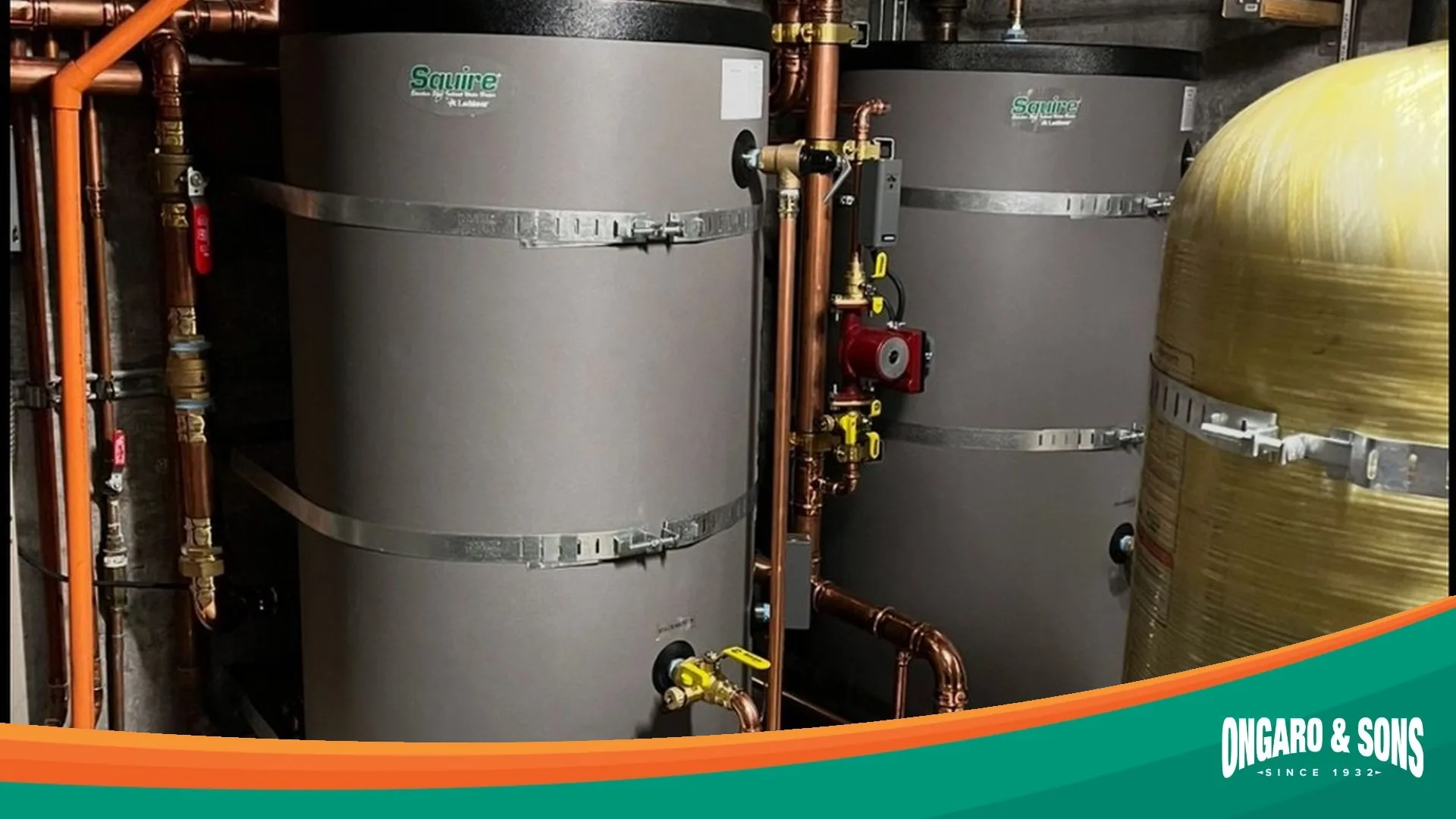
A conventional tank water heater maintains a stored supply of hot water, typically 40 to 80 gallons, at a consistent temperature, keeping it ready whenever you open a tap. Gas models heat the stored water with a burner; electric models use resistance heating elements. Either way, the system cycles on and off continuously to maintain temperature, which means it is always consuming some energy whether you are drawing hot water or not.
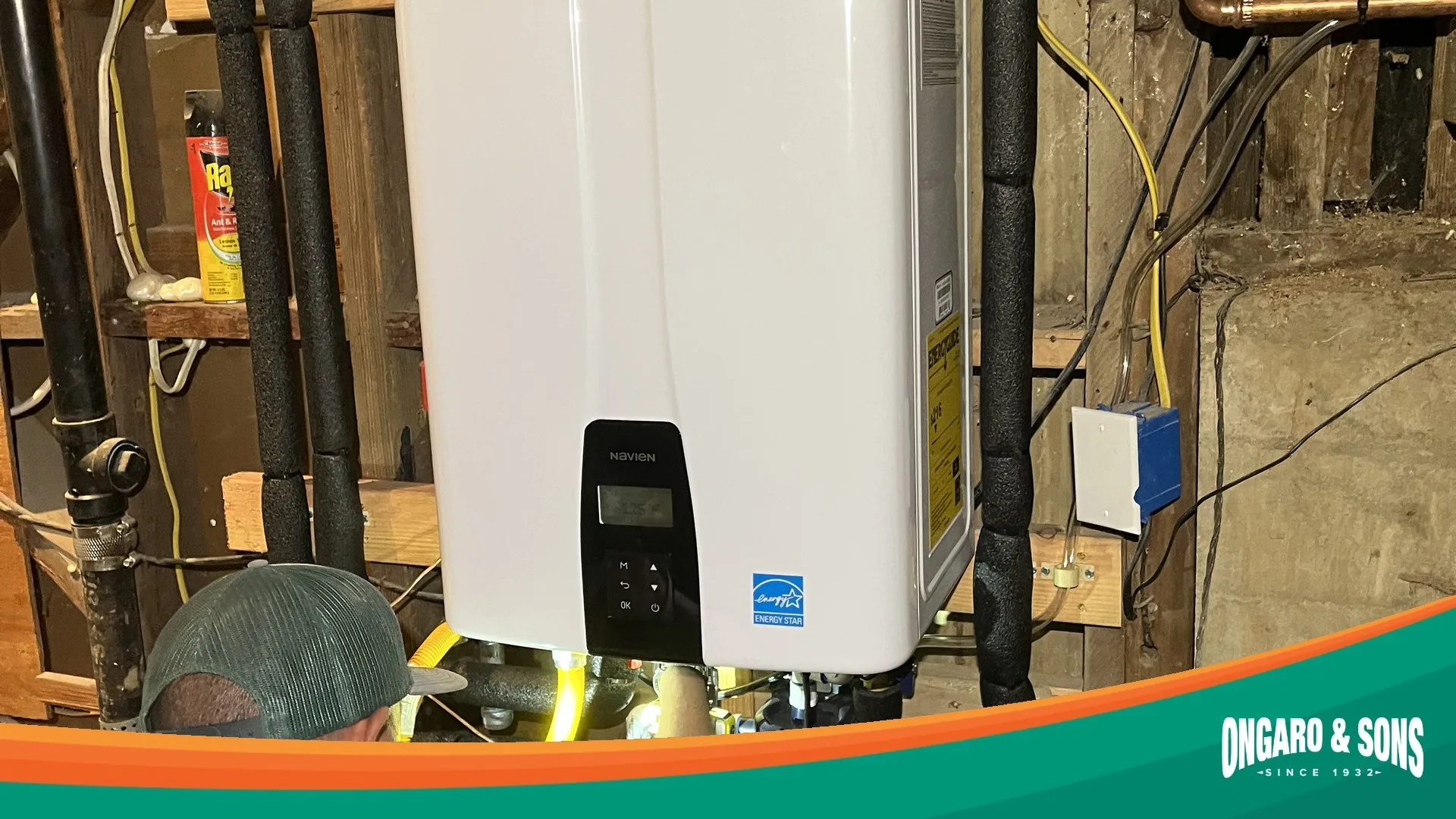
Tankless water heaters, by contrast, heat water on demand as it flows through the unit, eliminating standby heat loss entirely. According to the U.S. Department of Energy, tankless units can be 24 to 34 percent more energy efficient than conventional storage water heaters for households that use 41 gallons or less of hot water per day.
Heat pump water heaters operate on a different principle altogether. Rather than generating heat directly, they extract heat from the surrounding air and transfer it to the water in the tank. The Department of Energy notes that heat pump water heaters can be two to three times more energy efficient than conventional electric resistance models, a meaningful advantage for homeowners whose primary concern is long-term operating efficiency.
Understanding these basics matters because the technology your aging unit represents is often not the technology you should replace it with. A failing tank water heater may be the right moment to evaluate whether a tankless or heat pump system better fits your household’s needs, a decision worth making deliberately rather than under duress. If you want a side-by-side look at the options available, this guide to the different types of water heaters and which fits different homes is a useful starting point.
How Long Should a Water Heater Last?
Lifespan varies by unit type, installation quality, local water conditions, and maintenance history. Here is a general guide, grounded in industry data.
Conventional Tank Water Heaters
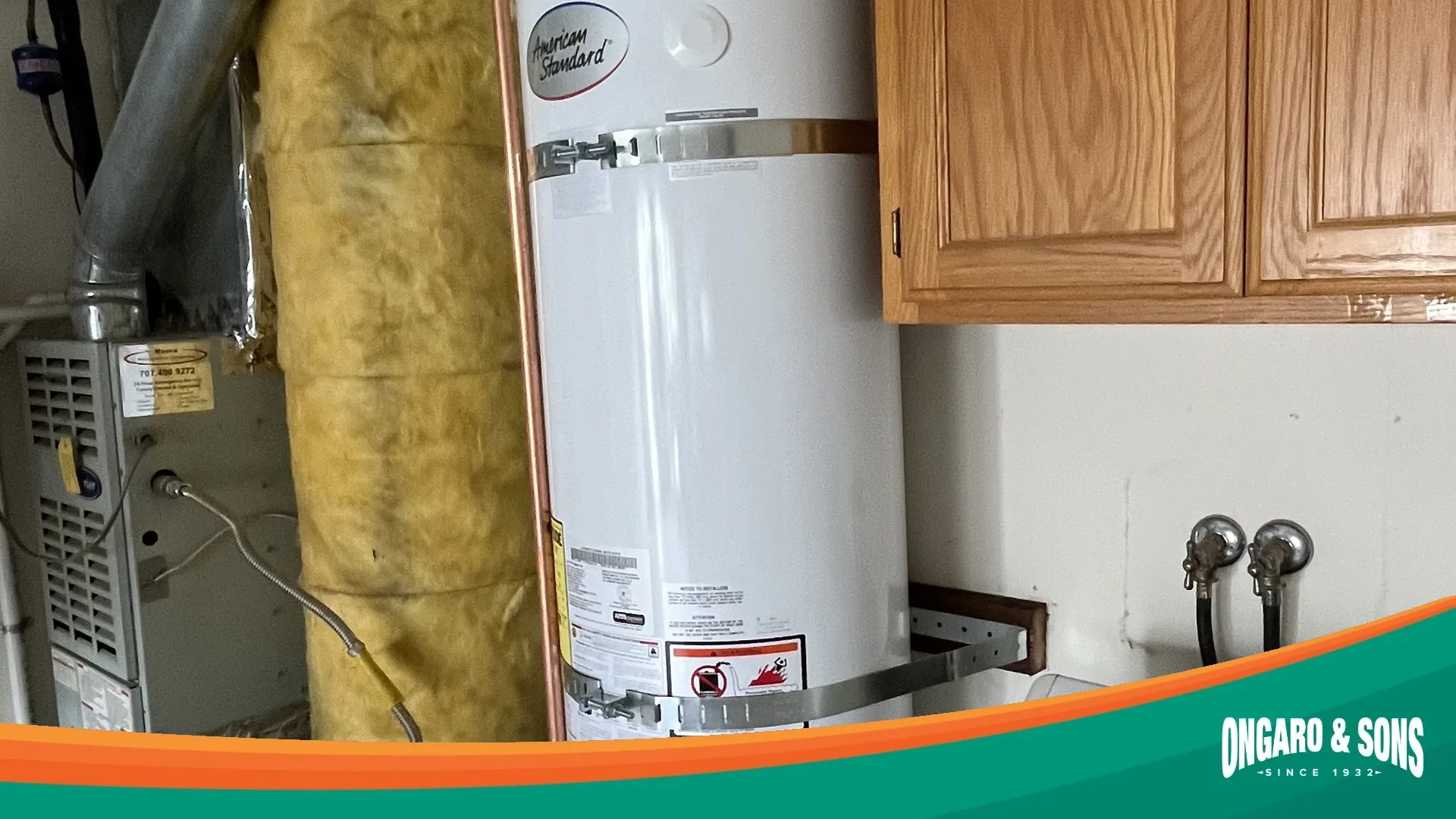
The most common type in North Bay homes, conventional tank water heaters, both gas and electric, have an average lifespan of 8 to 12 years. Some well-maintained units reach 15 years, but performance and efficiency generally degrade noticeably in the final years of a tank unit’s life. The U.S. Department of Energy notes that storage water heaters last 10 to 15 years compared to tankless models, though real-world performance often falls at the lower end of that range in areas with harder water.
Marin and Sonoma counties have variable water quality depending on the water district. Minerals in the water supply cause sediment to accumulate in the bottom of a tank over time, accelerating wear and reducing efficiency. Homes on well water or those in areas with notably hard water may see shortened lifespans without regular maintenance.
Tankless Water Heaters
Tankless units have a dramatically longer lifespan, typically 15 to 20 years or more, with replaceable components that can extend service life further. The trade-off is a higher upfront cost and the need for periodic descaling, particularly in areas with mineral-rich water. For homeowners in Marin County who are planning for a long-term stay in their home, the longevity of a tankless system often justifies the investment. There is more to know about tankless performance than most homeowners realize before they commit.
Heat Pump Water Heaters
Heat pump water heaters generally last 13 to 15 years with proper maintenance. Given that these will be the standard replacement option post-2027 under BAAQMD regulations, it is worth noting that they also represent some of the most efficient water heating available. For households currently running on natural gas, the efficiency gains from switching to a heat pump water heater are substantial, particularly in Marin and Sonoma’s relatively mild climate, where ambient air temperatures support strong heat pump performance year-round. A deeper look at how heat pump water heaters work and who they are right for is worth reading before making a final decision.
5 Signs It Is Time for a Water Heater Replacement
These are the signals that experienced plumbers look for when evaluating whether repair is a reasonable path or whether the better answer is a new unit.
Sign 1: Your Unit Is Past Its Prime
Age is the most reliable predictor of water heater failure, often more reliable than the presence of visible symptoms. A tank water heater that is 10 years old or older is living on borrowed time regardless of how it appears from the outside. Internal corrosion, anode rod depletion, and sediment accumulation are all happening whether you can see them or not.
The serial number on your water heater’s nameplate tells you its manufacture date, though the format varies by manufacturer. If you are not sure how to decode yours, a qualified plumber can read it quickly during a maintenance visit. For a unit already past the 10-year mark, the conversation should shift from “is anything wrong with it” to “what should I replace it with.”
For homeowners with a gas water heater who are currently under that 10-year threshold, it may still be worth considering a proactive replacement before the 2027 BAAQMD deadline. Replacing on your schedule, when you can take time to evaluate options, get proper permits, and coordinate any necessary electrical upgrades, is a very different experience from replacing under pressure.
Sign 2: Rusty or Discolored Hot Water
If the hot water from your taps runs brownish, reddish, or murky, the source is almost certainly internal corrosion in your water heater tank. Once a steel tank begins corroding from the inside out, it cannot be repaired. Rust in the water supply is a sign that the tank’s protective coating and sacrificial anode rod have been depleted, and the tank itself is deteriorating.
A few caveats worth noting: discolored water can also originate from aging galvanized pipes in older homes, particularly common in parts of Marin County. A qualified plumber can flush the system and run a diagnosis to isolate whether the issue is the water heater or the pipes. If the source is the water heater, replacement is the only appropriate course of action.
Rusty water is not a problem to defer. Beyond the obvious quality concern, a corroding tank is a tank that will eventually fail, and the question is whether it fails predictably on a planned schedule or suddenly in a manner that creates property damage.
Sign 3: Rumbling, Popping, or Banging Sounds
A water heater that operates noisily, particularly with popping, rumbling, or banging sounds during the heating cycle, is telling you something specific. Sediment has accumulated at the bottom of the tank, and the heating element or burner is working to heat water through an insulating layer of mineral deposits. That hard mineral crust absorbs and retains heat, causing it to superheat and crack, producing the sounds you are hearing.
The sediment buildup itself is a problem on multiple levels. It reduces efficiency, meaning the unit consumes more energy to produce the same amount of hot water. It creates hot spots on the tank floor that accelerate wear. And it significantly shortens the remaining useful life of the unit.
In some cases, a thorough tank flush performed early in a unit’s life can clear sediment and restore performance. But when an older water heater is already making significant noise, flushing often dislodges large deposits that then cause other problems. A skilled plumber will evaluate whether flushing is likely to help or whether replacement is the more sensible path given the unit’s age and history.
Sign 4: Visible Leaks Around the Tank or Connections
Water on the floor around a water heater requires immediate attention and an straightforward assessment. The source matters enormously.
Some leaks are minor and repairable: a dripping pressure relief valve, a loose inlet or outlet connection, a failed drain valve. These are component-level issues that do not necessarily mean the unit is finished. A plumber can diagnose the source and, if the unit is in otherwise good condition, make targeted repairs.
Leaks originating from the tank body itself are a different matter. A leaking tank almost always means internal corrosion has compromised the structure of the vessel. There is no meaningful repair for a cracked or corroding tank, only replacement. Left in place, a failing tank can rupture without warning and release dozens of gallons of water into your home. In a finished utility room or a home with adjacent living space, the resulting damage can be substantial.
If you notice standing water around your water heater, do not wait to have it evaluated. The cost of a water heater replacement is modest compared to the cost of water damage remediation in a Marin or Sonoma County home.
Sign 5: Your Hot Water No Longer Keeps Up
A water heater that once reliably supplied your household but now struggles, running out of hot water faster, producing water that never seems quite hot enough, or requiring long recovery times between uses, is aging out of its functional capacity.
This symptom can stem from several causes: sediment buildup reducing effective tank capacity, a failing heating element or burner, a corroding dip tube that allows cold water to mix with the stored hot supply, or simply a unit that was undersized for your household’s evolving needs. Any of these, in combination with an older unit, typically points toward replacement rather than repair.
It is also worth noting that declining performance often accompanies declining efficiency. A water heater working harder to deliver less hot water is consuming more energy in the process. On a home energy bill that already includes the costs of heating and cooling a North Bay home, an inefficient water heater represents a meaningful and avoidable expense.
Repair vs. Replacement: How to Make the Right Call
Not every water heater problem requires replacement. Minor repairs (a new thermostat, a replacement heating element, a fresh anode rod in an otherwise sound unit) can extend useful life when applied to a unit that still has good years ahead of it. The challenge is knowing when a repair is a sound investment versus when it is simply delaying an inevitable replacement at additional cost.
The Rule of Thumb Professionals Use
A widely used framework for this decision is the product of the repair cost multiplied by the unit’s age. If that figure exceeds the replacement cost, replacement is typically the better financial choice. For example, a repair estimate representing roughly half the cost of a new unit on a water heater already 8 years old typically makes replacement the smarter option, because the unit is likely to require additional attention in the short term and is approaching the end of its reliable service life regardless.
There are also qualitative factors that tilt the analysis toward replacement. A unit that has already required multiple repairs in recent years is demonstrating a pattern. A unit that operates very inefficiently compared to modern standards will cost more to run month over month regardless of whether it stays functional. And in the specific context of Marin and Sonoma homeowners with gas water heaters approaching the 2027 deadline, each repair dollar spent on a gas unit is a dollar that reduces the investment available for the transition to a more efficient electric system.
A straightforward professional evaluation from a licensed plumber will give you the information you need to make this decision with confidence. The goal is not to sell a replacement; it is to give you an straightforward picture of where your unit stands and what the realistic options are.
Choosing a Replacement Water Heater
When a replacement is warranted, the choice of unit matters as much as the decision to replace. The Department of Energy’s water heater selection guide identifies fuel type, household size, efficiency, and installation requirements as the primary factors to evaluate. When reviewing specific models, ENERGY STAR certified water heaters meet or exceed federal efficiency standards and are typically required for qualifying for rebate programs in California. Here is how those considerations play out in practical terms for North Bay homeowners.
Tank vs. Tankless vs. Heat Pump
Conventional tank water heaters remain a familiar and accessible option. They have lower upfront costs and straightforward installation in most homes. However, for gas-fueled homes in the BAAQMD service area, a new gas tank water heater installed today will be the last gas unit a homeowner can legally install after January 2027. That is worth factoring into any cost-benefit analysis.
Tankless water heaters deliver hot water on demand without maintaining a stored supply, which eliminates standby energy losses and provides essentially unlimited hot water for a household that uses it sequentially rather than simultaneously. Tankless units have higher upfront costs and, for whole-home gas applications, will also be subject to BAAQMD regulations, though tankless gas units above 75,000 BTU have a later compliance date than residential tank models. For whole-home electric tankless applications, dedicated electrical circuits are required. They shine particularly in smaller households or as supplemental point-of-use units, and their 20-plus-year lifespan makes the investment calculation favorable over time.
Heat pump water heaters are, in many respects, the most forward-looking choice for Marin and Sonoma homeowners. They use electricity to move heat rather than generate it, making them dramatically more efficient than either gas or electric resistance models. They qualify for current California rebate programs through Golden State Rebates, which includes PG&E customers, making the economics of the transition more accessible. California’s Golden State Rebates program currently offers rebates for qualifying heat pump water heater installations for PG&E residential customers. Heat pump water heaters do require adequate space and air circulation to operate properly, and they work most efficiently in locations that are not in freezing conditions, a consideration that is rarely a concern in the mild climate of the North Bay.
For homeowners in Marin County and Sonoma County with older gas units, the combination of efficiency gains, available rebates, and the approaching BAAQMD deadline makes a heat pump water heater an increasingly compelling choice when replacement is warranted.
What the 2027 BAAQMD Rule Means for Marin and Sonoma Homeowners
The BAAQMD’s amendments to Rules 9-4 and 9-6, adopted in March 2023, establish a zero-NOx emissions standard for newly installed residential water heaters beginning January 1, 2027. The official BAAQMD Building Appliances Rule Implementation page provides the full compliance timeline and affected product categories. The rule covers the nine-county Bay Area, explicitly including Marin, Napa, and southern Sonoma counties.
Importantly, the rule applies to new installations, not existing appliances. A gas water heater currently in operation can continue to be used and can be repaired until it reaches end of life. But once it fails after January 1, 2027, the replacement must be a zero-NOx unit. For homeowners whose current unit is already 8 to 10 years old, planning for that transition now, rather than managing it in the aftermath of an unexpected failure, is simply the prudent approach.
Homes with 100-amp electrical service, or with older panels, may need an upgrade to support a heat pump water heater. That upgrade process involves permit applications, utility coordination with PG&E, and scheduling, all of which take time. The homeowners who will have the smoothest experience are those who begin that process before they are operating without hot water.
What to Expect from a Professional Water Heater Replacement
A professional water heater replacement from a qualified plumbing contractor is typically a one-visit job when the installation location is straightforward and existing connections are in good shape. The process involves draining and disconnecting the old unit, proper disposal, and installing and testing the new system.
Where things become more involved, and where having an experienced contractor matters most, is when the replacement involves a technology change. Switching from a conventional gas tank to a heat pump water heater, for instance, involves electrical work, possibly new circuit installation, and potentially a different installation location to ensure adequate airflow for the heat pump to operate efficiently. A contractor who handles plumbing and electrical under one roof can coordinate these elements without requiring the homeowner to manage multiple trade schedules.
Permitting is another area where experience matters. Water heater replacements typically require a permit in most jurisdictions across Marin and Sonoma counties, particularly when the installation involves new electrical work. A licensed contractor familiar with local building departments handles this process as part of the job, ensuring the installation is code-compliant and the permit is properly closed out. This protects homeowners from complications at the point of sale and provides documentation of the upgrade for insurance and warranty purposes.
The anode rod, pressure relief valve, and pipe insulation are worth inspecting and addressing at the time of replacement, not as add-ons, but as part of the comprehensive job that ensures the new unit starts its life in optimal condition.
Why Marin and Sonoma Homeowners Choose Ongaro & Sons for Water Heater Replacement
When it is time to replace a water heater, whether you are reacting to a failure, planning ahead, or navigating the transition to a heat pump system, the contractor you choose shapes the outcome. Ongaro & Sons has served Marin County, Sonoma County, and Napa County since 1932, founded by Ernest V. Ongaro in Fairfax, CA and now in its fourth generation of family ownership. This is an independent family business, not a private equity-owned operation, and that matters when it comes to accountability and long-term reputation in the communities it serves.
The team includes industry-Certified technicians, and the company is a licensed plumbing and electrical contractor in the state of California (License #215233). Ongaro & Sons holds a licensed membership dating back to 1948 as a founding member of the Redwood Empire Chapter, a BBB A+ rating with accreditation since 1995, Diamond Certified status awarded based on independent customer satisfaction research, and recognition as a Best of Marin Hall of Fame honoree. That Diamond Certified standing reflects a 4.9-star rating across more than 2,500 verified reviews.
Pricing is always flat-rate and disclosed upfront before any work begins, with a 100% satisfaction guarantee behind every job. There are no hourly billing surprises, no hidden fees. And because Ongaro & Sons handles plumbing, electrical, and HVAC under one roof, heat pump water heater installations that require new electrical circuits do not require separate contractors and separate scheduling.
To schedule an evaluation or discuss water heater replacement options for your home, contact Ongaro & Sons through the water heater service page or call 415-741-2820. The team is available to take calls and schedule appointments 24 hours a day, seven days a week.
Frequently Asked Questions About Water Heater Replacement
How do I know if I need a water heater repair or a full replacement?
The age of the unit is the most reliable starting point. If your water heater is under 6 to 7 years old and the problem is a specific component (a failed thermostat, a bad heating element, a faulty pressure relief valve), a targeted repair often makes good financial sense. If the unit is 10 years old or older, or if the problem involves leaking from the tank body, internal corrosion, or rusty water, replacement is almost always the right call. A professional evaluation will confirm which path makes sense for your specific situation.
How long does a water heater replacement take?
A straightforward like-for-like replacement, same technology, same location, similar fuel source, is typically a same-day job for a qualified plumbing contractor. More complex installations, such as switching from a conventional gas tank to a heat pump water heater that requires new electrical circuits, may involve multiple visits or require coordination with your utility. Getting a proper assessment from your contractor upfront sets realistic expectations for the timeline.
What type of water heater is best for a home in Marin or Sonoma County?
For most North Bay homes, a heat pump water heater offers the best combination of efficiency, longevity, and future compliance with BAAQMD regulations. Marin and Sonoma’s mild climate is well-suited to heat pump performance, and PG&E customers are eligible for rebates through California’s Golden State Rebates program. For households with specific space or infrastructure constraints, a tankless unit may be the right fit. A licensed plumber familiar with North Bay homes and local codes can help evaluate which system is the best match for your specific property.
Do I need a permit to replace a water heater in Marin County or Sonoma County?
Yes, in most cases. Water heater replacements generally require a permit, particularly when the installation involves any change to the fuel source, electrical configuration, or location. A licensed contractor will typically obtain the necessary permits as part of the job. Working with a properly licensed contractor and pulling permits ensures the installation is code-compliant, protects your warranty, and avoids complications during a future home sale.
Will the BAAQMD gas water heater ban affect my existing unit?
No, the ban applies to new installations, not existing appliances. Your current gas water heater can remain in operation and can be repaired for as long as it functions. However, after January 1, 2027, any new installation or replacement in the nine-county Bay Area, including Marin, Napa, and southern Sonoma counties, must meet a zero-NOx standard, which effectively means the replacement unit must be electric. For homeowners whose current unit is already aging, planning for a proactive replacement before that deadline allows for a more deliberate and cost-effective transition.
What rebates are available for heat pump water heater replacement in Marin, Sonoma & Napa County?
PG&E residential customers are currently eligible for rebates on qualifying heat pump water heater installations through California’s Golden State Rebates program. Rebate availability and amounts are updated periodically, and it is worth confirming current terms at the time of your project. A contractor experienced with this program can help you understand eligibility and submit the necessary documentation as part of the installation process.
How can I make my new water heater last as long as possible?
Annual maintenance is the most effective investment in longevity. For tank units, this includes flushing sediment from the tank, inspecting and replacing the anode rod every three to four years, and testing the pressure relief valve. For tankless units, periodic descaling clears mineral buildup from the heat exchanger. For heat pump water heaters, keeping the air intake area clear and changing the filter as recommended supports efficient operation. Scheduling annual plumbing maintenance with a qualified contractor keeps small issues from becoming large ones and provides a record of service that is valuable for warranty purposes.
For water heater replacement in Marin County, Sonoma County, and Napa County, contact the plumbing team at Ongaro & Sons or explore your water heater service options here.