Backup Generator Install For PG&E Shutoffs
If you live in Marin or Sonoma County, you already know the drill. Dry October winds pick up, fire weather watches go out, and PG&E issues a Public Safety Power Shutoff notice. Within hours, the power is off. For some homeowners, that means a minor inconvenience. For others, it means spoiled medication, a dark house, a sump pump that stops working, and a medical device that runs out of battery. Backup generator installation has moved from a nice-to-have to a serious home infrastructure decision across the North Bay, and the homeowners who have already done it will tell you they wish they had done it sooner.
This guide covers everything you need to know: how standby generators work, how to size one for your home, what the installation process actually involves, and why professional installation is the only way to do it right.
Why PG&E Shutoffs Have Changed the Calculus for North Bay Homeowners
PG&E has conducted Public Safety Power Shutoffs since 2019 as a wildfire prevention measure, cutting electricity to high-risk areas when wind speeds, humidity, and dry vegetation create dangerous ignition conditions. Marin and Sonoma counties sit squarely in that risk corridor. The events have ranged from a few hours to multiple days, and the California Public Utilities Commission continues to oversee and refine the program as part of the state’s broader wildfire safety framework.
Beyond PSPS events, the North Bay grid faces the same pressures as the rest of California: aging infrastructure, increasing demand, and more frequent weather extremes. The question for most homeowners here has shifted from whether an outage will happen to how long the next one will last and whether they want to be ready for it.
Whole-home standby generators are the most complete answer that technology currently offers.
Standby Generators vs. Portable Generators: Understanding the Difference
Before discussing backup generator installation in detail, it is worth being clear about what a standby generator actually is, because “generator” covers a wide range of products with very different capabilities.
A portable generator is a gas-powered unit you roll out of the garage, fill with fuel, and manually connect to a few appliances using extension cords or a transfer switch. It will keep a refrigerator running and charge phones, but it requires you to be home, to have fuel on hand, and to manage the setup yourself every time the power goes out. It does not power your whole house.
A whole-home standby generator is permanently installed outside your home, connected to your natural gas or propane supply, and wired directly into your electrical system through an automatic transfer switch. When utility power drops, the transfer switch detects the outage within seconds and starts the generator automatically. Your lights stay on. Your HVAC keeps running. Your refrigerator never warms up. You may not even notice the power went out.
For Marin and Sonoma County homeowners with mid-to-high-end properties, the decision usually comes down to how much disruption they are willing to accept. A properly sized and professionally installed whole-home generator eliminates the disruption almost entirely.
Fuel Options: Natural Gas vs. Propane
Most residential standby generators run on one of two fuel sources: natural gas or propane. The right choice depends on what is already available at your property.
Natural gas is the preferred option for most homes in Marin and Sonoma counties that are connected to a municipal gas supply. It is delivered continuously through the existing gas line, which means you never have to monitor a tank or worry about running out during an extended outage. For a generator running during a multi-day PSPS event, that continuous supply is a significant advantage. Natural gas standby generators also tend to require less fuel-related maintenance over time.
Propane makes sense for rural properties in Sonoma County or Napa County that are not on the natural gas grid. A large propane tank installed on the property provides substantial runtime, though you need to ensure the tank is adequately filled heading into fire season. Propane generators are also a viable option when a home’s existing gas line is undersized for the additional load a generator would require.
For more on how natural gas supply factors into the decision, the natural gas generators guide covers fuel line requirements, sizing considerations, and what to expect during the installation process.
How to Size a Standby Generator for Your Home
Generator sizing is where many homeowners get into trouble, either by purchasing a unit that cannot handle their actual load or by oversizing unnecessarily. A properly sized generator is matched to the specific demands of your home.
The sizing process begins with a load calculation: an inventory of everything in the home that draws electrical power, weighted by which systems will run simultaneously during an outage. A whole-home generator designed to run everything at once needs to be sized very differently from a partial-load system that prioritizes specific circuits.
Key load categories to evaluate include:
HVAC systems. Heating and cooling equipment is typically the largest single draw in the home. Central air conditioning systems and heat pumps require significant startup amperage in addition to their running load. In Marin and Sonoma counties, where wildfire season and heat events increasingly overlap, maintaining cooling during a summer PSPS is a real concern. The relationship between generators and your HVAC system deserves careful attention during the sizing conversation.
Well pumps. Many Sonoma County and Napa County homes on rural properties depend on well pumps for water. These have high starting loads and must be factored in.
Medical devices and refrigeration. For households with medical equipment, maintaining power to life-critical devices is a primary driver, not a secondary one.
Lighting, appliances, and electronics. These tend to be lower-draw items but must be accounted for in a whole-home system.
A licensed electrical contractor will calculate the total load, account for starting surges, and recommend a generator size that handles your home’s realistic demands with appropriate headroom. This is not a calculation to guess at.
What Backup Generator Installation Actually Involves
A whole-home backup generator installation is a multi-trade project. It involves electrical work, gas line work, and in most jurisdictions, permitting and inspection. Here is what to expect from the process.
Site Assessment and Planning
Before any equipment is ordered, a technician will evaluate your property to determine where the generator can be sited, assess your existing electrical panel capacity, inspect the gas supply line, and confirm any local setback or zoning requirements. In Sonoma County’s unincorporated areas, Permit Sonoma requires permits for generator installations that connect to the electrical panel, along with associated electrical and plumbing work. Most cities in Marin County have similar requirements. Skipping permits is not a shortcut: it creates liability, can affect your homeowner’s insurance, and may complicate a future home sale.
Electrical Panel Evaluation
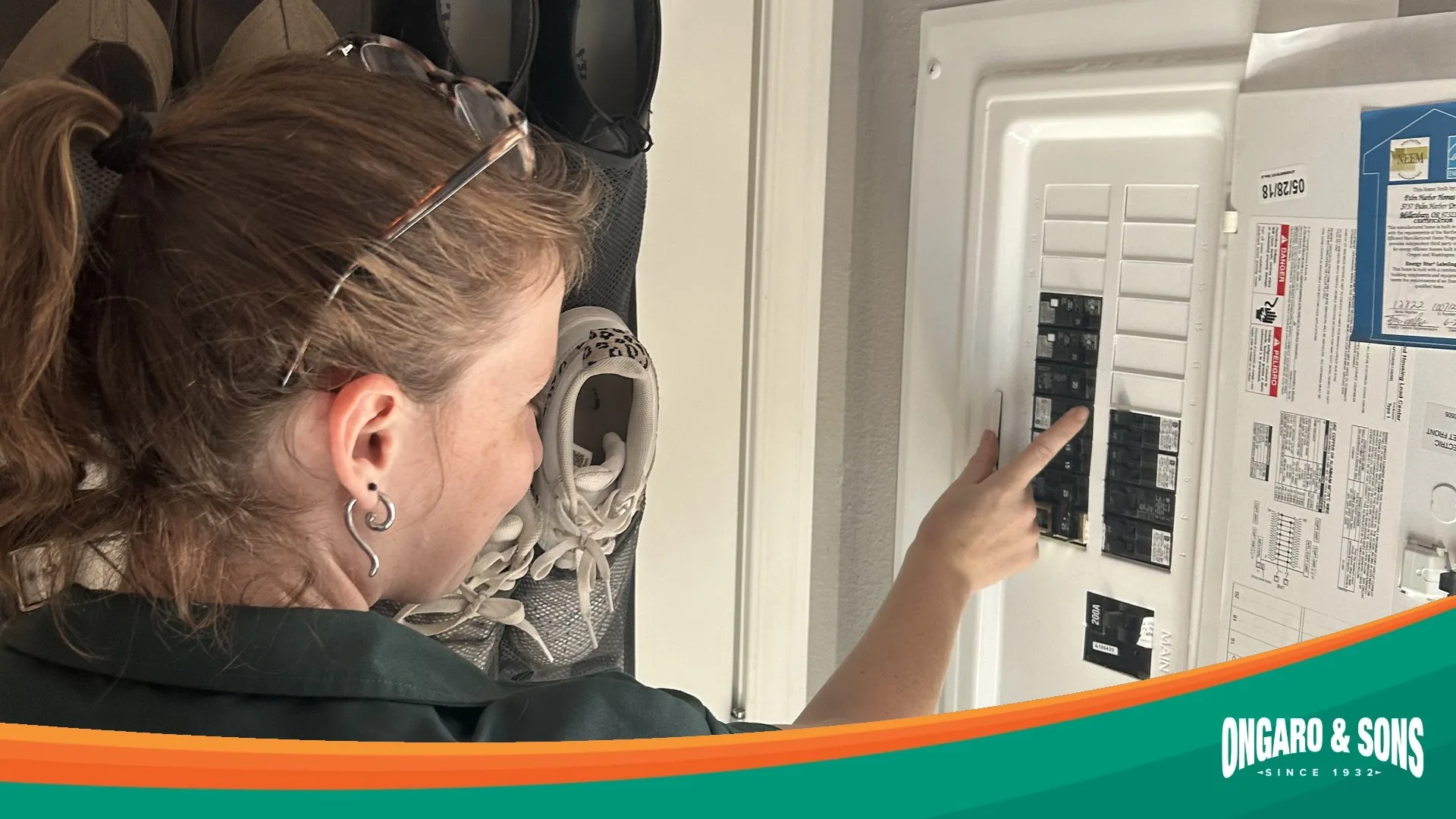
This is a step that surprises some homeowners. A standby generator connects to your home’s electrical system, and if your panel is already operating near capacity or is approaching the end of its useful life, the installation may include an electrical panel upgrade as part of the project. The generator is also wired into an automatic transfer switch, which is either installed as a separate unit or integrated into an upgraded panel. The transfer switch is what allows the generator to take over cleanly when utility power drops without backfeeding electricity onto the utility lines, a serious safety hazard.
Gas Line Work
If the home is on natural gas, the existing supply line may need to be upsized to handle the generator’s fuel demand alongside the home’s other gas appliances. This is licensed plumbing work, and it requires a permit and inspection in most North Bay jurisdictions.
Generator Placement and Installation
The generator unit itself is set on a concrete pad or composite mounting platform outside the home, at the required distance from windows, vents, and any combustible structure. Permanent standby generators are designed for outdoor installation and are weatherproof, which matters considerably during a North Bay rainstorm.
Final Inspection and Load Testing
After installation, the system is tested under load to confirm the automatic transfer switch operates correctly, the generator starts reliably, and all circuits perform as expected. This is where problems get caught before they matter.
Maintenance Keeps Your Generator Ready When You Need It
A standby generator that sits unused for months and then fails to start during a PSPS event is not a backup power system: it is an expensive yard ornament. Regular maintenance is what separates a reliable system from a false sense of security.
Most manufacturers recommend annual professional service that includes oil and filter changes, spark plug inspection, battery testing, and a full load test. In addition to annual service, many modern generators run a brief weekly self-test automatically, which exercises the engine and flags issues early.
For Marin and Sonoma County homeowners, the timing of annual service matters. Scheduling maintenance in the spring, before fire season begins, ensures the system is in peak condition when PSPS risk is highest.
Generators and battery backup systems can also complement one another. If your home already has or is considering solar, the generators and battery backup overview covers how these technologies work together and where each one makes the most sense.
Standby Generators vs. Solar Battery Backup
The comparison between a whole-home standby generator and a solar-plus-battery storage system is a common and legitimate one for North Bay homeowners. Both provide backup power; they just approach the problem differently.
A battery backup system stores energy from the grid or solar panels and dispatches it during an outage. The advantages are significant: no fuel, no emissions, no noise, and when paired with solar panels, the ability to recharge continuously as long as the sun is shining. The limitation is capacity. Current residential battery systems provide a finite amount of stored energy, and a multi-day outage with sustained HVAC load can deplete that storage faster than solar generation can replenish it, particularly in October when days are shorter.
A natural gas standby generator has effectively unlimited runtime as long as the gas supply is uninterrupted. For extended PSPS events, that distinction matters.
Many North Bay homeowners are choosing to integrate both: solar and battery storage for daily efficiency and clean energy goals, plus a standby generator as the backstop for prolonged outages. A licensed electrical contractor who works across both disciplines can help design a system where these technologies complement rather than conflict with each other.
Generator Lifespan, Signs of Aging, and When to Replace
A properly maintained whole-home standby generator typically lasts 20 to 25 years. That lifespan depends heavily on how well the unit is serviced, how frequently it runs, and whether the original installation was done correctly. Units that are undersized for their load, run without adequate maintenance, or were improperly installed will decline faster.
As a generator approaches the end of its useful life, several signs tend to appear. Difficulty starting, even after the weekly self-test cycle, is one of the earliest. Longer cranking times before the unit reaches stable output, visible oil or fuel leaks, excessive vibration during operation, and corrosion on electrical connections are all indicators worth taking seriously. A generator that runs but trips under load, or one that struggles to maintain stable voltage, is often telling you that its engine or alternator components are near the end of their service life.
For homeowners in Marin and Sonoma County who purchased a whole-home generator following the early PSPS events around 2019 and 2020, units that were already aging at the time of installation may be approaching that threshold now. If your generator is more than 15 years old and has not been evaluated recently, a professional assessment before fire season is a sound investment.
The repair versus replacement question generally comes down to the cost of the repair relative to the remaining useful life of the unit. A major engine or alternator repair on a generator that has 15 or more years of service on it rarely makes financial sense when a new installation provides modern efficiency, updated safety features, and a fresh warranty. A licensed contractor can help you evaluate that decision clearly.
Carbon Monoxide Safety and Why Professional Installation Is Non-Negotiable
Carbon monoxide is the primary safety hazard associated with generator use, and it deserves direct attention. The CDC’s generator safety guidance is clear: CO is colorless, odorless, and can be fatal. The Ready.gov power outage preparedness resource reinforces that generators must always be kept well away from occupied structures, with exhaust directed away from windows, vents, and doors.
Permanently installed standby generators are engineered and sited for safe outdoor operation, but safe siting requires professional judgment. Clearance requirements, exhaust direction relative to your home’s air intake vents, and proximity to adjacent structures all need to be evaluated by someone who understands both the equipment specifications and the local code requirements. This is not work for a YouTube tutorial and a weekend.
Beyond CO, improper electrical work on generator installations creates backfeed risk, which can electrocute utility workers and damage equipment. A licensed electrician with generator installation experience knows how to eliminate that risk through correct transfer switch design and installation. Professional installation is not a premium add-on: it is the baseline for a safe system.
Why Ongaro & Sons for Backup Generator Installation in the North Bay
Ongaro & Sons has been serving Marin and Sonoma County homeowners since 1932, now in its fourth generation of family ownership. The company was founded by Ernest V. Ongaro in Fairfax, CA, and has remained independently owned throughout its history. That matters: this is not a private equity-backed operation optimizing for transactions. It is a family business whose reputation has been built one home at a time, in the communities it serves, for more than ninety years.
The credentials are substantial. certified technicians handle the HVAC side of generator integration. Licensed electricians manage panel work, transfer switch installation, and load calculations. The company holds Trane Comfort Specialist and SPAN Certified Installer status, reflecting ongoing technical investment that goes well beyond licensing minimums. BBB A+ accreditation has been in place since 1995. Diamond Certified status is awarded based on verified independent research, not self-reporting. The team earned a Best of Marin Hall of Fame designation, and 4.9 stars across more than 2,500 reviews reflects what customers actually experience.
Ongaro & Sons backs its work with flat-rate upfront pricing and a 100% satisfaction guarantee. For a project as significant as whole-home backup power, that combination of longevity, credentials, and accountability is what the decision should rest on.
Schedule Your Backup Generator Installation Consultation
If you are ready to stop wondering what the next PSPS event will cost you and start having a plan, the next step is a consultation with a licensed technician who can assess your home, calculate your actual load, and give you a clear picture of what a properly designed system looks like for your specific property.
Ongaro & Sons serves homeowners throughout Marin County, Sonoma County, and Napa County. Call or schedule online to set up your appointment. Service is available Monday through Friday, 7:30 AM to 5:00 PM, and Saturdays from 7:30 AM to 1:00 PM.
Schedule your generator installation consultation with Ongaro & Sons
Frequently Asked Questions About Backup Generator Installation
How long does backup generator installation typically take?
For a whole-home standby generator, the installation process typically spans one to two days for the primary installation work, depending on the complexity of the electrical panel configuration, gas line requirements, and site preparation. Projects that include an electrical panel upgrade or significant gas line work may take longer. Your contractor will give you a timeline based on a site assessment before any work begins.
Do I need a permit to install a whole-home generator in Sonoma or Marin County?
Yes, in virtually all cases. Standby generators that connect to your electrical panel require electrical permits, and natural gas connections require plumbing permits. Sonoma County’s unincorporated areas are governed by Permit Sonoma’s specific requirements for backup generator installation. Most incorporated cities in Marin and Sonoma counties have comparable requirements. Reputable contractors will handle permitting as part of the project scope.
What size generator do I need to power my whole house?
Generator sizing depends on your home’s total electrical load, including HVAC systems, well pumps if applicable, appliances, and other high-draw equipment. Most North Bay homes require a generator in the 20 to 26 kilowatt range for full-house coverage, but the right answer comes from a load calculation performed by a licensed contractor, not a rule of thumb. Oversizing adds unnecessary expense. Undersizing means the generator trips under load when you need it most.
How often does a standby generator need to be serviced?
Most manufacturers recommend professional service once a year, covering oil and filter changes, spark plug inspection, battery and starter system testing, and a full load test. In addition, most modern standby generators run a short weekly self-test automatically. For North Bay homeowners, scheduling annual service in the spring before fire season ensures the system is ready before PSPS risk peaks.
Can a standby generator power my HVAC system?
Yes, provided the generator is sized correctly for your home’s total load including the HVAC equipment. Central air conditioning and heat pumps have high startup amperage requirements, which must be factored into the sizing calculation. A generator that can handle your HVAC’s running load but not its startup surge will trip every time the compressor cycles on. Proper sizing and load calculation by a licensed contractor prevents this problem.
Is natural gas or propane better for a home standby generator?
For homes on the municipal gas grid in Marin and Sonoma counties, natural gas is generally preferred because the supply is continuous and requires no tank management. Propane is the right choice for rural properties not served by natural gas infrastructure. In either case, the fuel supply line must be sized correctly for the generator’s demand, which is part of the installation process.
How does an automatic transfer switch work?
An automatic transfer switch monitors the utility power supply continuously. When it detects an outage, it disconnects the home from the grid and signals the generator to start. Once the generator reaches stable output, the switch transfers the home’s load to the generator. When utility power returns, the switch transfers the load back to the grid and shuts the generator down. The entire process typically takes less than thirty seconds and requires no action from the homeowner.