PG&E Power Shutoff (PSPS) Checklist for North Bay Homes: Before, During and After
To prepare for a PG&E Public Safety Power Shutoff (PSPS), sign up for alerts, plan for water and any medical needs, and learn which systems in your home stop when the power does. A PSPS is a planned outage. PG&E turns off power to specific areas during high winds and dry conditions, to reduce the chance that its equipment starts a wildfire. Shutoffs are most likely in the fall, and winter storms cause unplanned outages from December through March, so the same preparation covers both.
Quick answer.
- Before: sign up for PG&E Address Alerts and your county's alert system, plan for several days without power, and store drinking water if your home is on a well.
- During: check PG&E's outage map for status, keep the refrigerator and freezer closed, and open the garage door by hand with the release cord.
- Generators: run one only outdoors, at least 20 feet from the house, never plug it into a wall outlet, and let it cool before refueling.
- Safety: if a carbon monoxide alarm sounds, get everyone outside and call 911. Stay away from downed power lines.
- After: turn appliances back on one at a time, and leave anything that has been underwater off until it is checked.
Many hill and valley homes in Marin, Sonoma, and Napa County rely on a well, a septic pump or an electric gate. All three stop when the power does. That is why this checklist starts with what works in a home without power, and then moves to the supply list.
How Does a Public Safety Power Shutoff Work?
PG&E decides on a shutoff by looking at forecast wind speeds, humidity and how dry the vegetation is near its lines. Its Public Safety Power Shutoff page says it sends alerts by email, phone call or text as early as possible, day and night. Because forecasts change, the first alert may not arrive until the day the power is shut off.
A shutoff can last after the wind stops. Crews patrol the lines for damage before restoring power, and that takes time in rugged areas. Marin County's 2026 shutoff preparedness notice says outages can last from several hours to multiple days.
A shutoff can also reach your home when the wind is calm where you live, because the lines that feed your neighborhood may run through a high-risk area miles away. The CPUC's fire-threat map shows the areas the state designates as high fire-threat: Tier 2 (elevated) and Tier 3 (extreme).
During events, PG&E typically opens Community Resource Centers where people can charge devices and get water, according to the Marin County notice. Locations are announced at the time of each event.
PSPS process details checked October 27, 2026.
What Works in a Power Outage, and What Does Not?
Most home systems need electricity, including the ones that burn gas. This table covers what to expect in a typical North Bay home.
| System | Works without power? | Notes |
|---|---|---|
| System Gas furnace | Works without power? No | Notes The blower, igniter and controls need electricity |
| System Heat pump or ductless system | Works without power? No | Notes Runs entirely on electricity |
| System Gas tank water heater with a standing pilot | Works without power? Usually yes | Notes Models with electronic ignition or a powered vent do not |
| System Gas tankless water heater | Works without power? No | Notes Electronic controls and a fan need power |
| System Electric or heat pump water heater | Works without power? No | Notes The tank stays hot for a while if you limit use |
| System Well pump | Works without power? No | Notes Only the water already in the pressure tank remains |
| System Sump pump | Works without power? No | Notes Unless it has a battery backup |
| System Garage door opener | Works without power? No | Notes Use the manual release cord |
| System Refrigerator and freezer | Works without power? No | Notes Keep the doors closed. See the food safety times below |
| System Solar panels without a battery | Works without power? Usually no | Notes Standard grid-tied systems shut down during an outage to protect line workers. Some systems are built to run a few circuits in daylight; ask your installer |
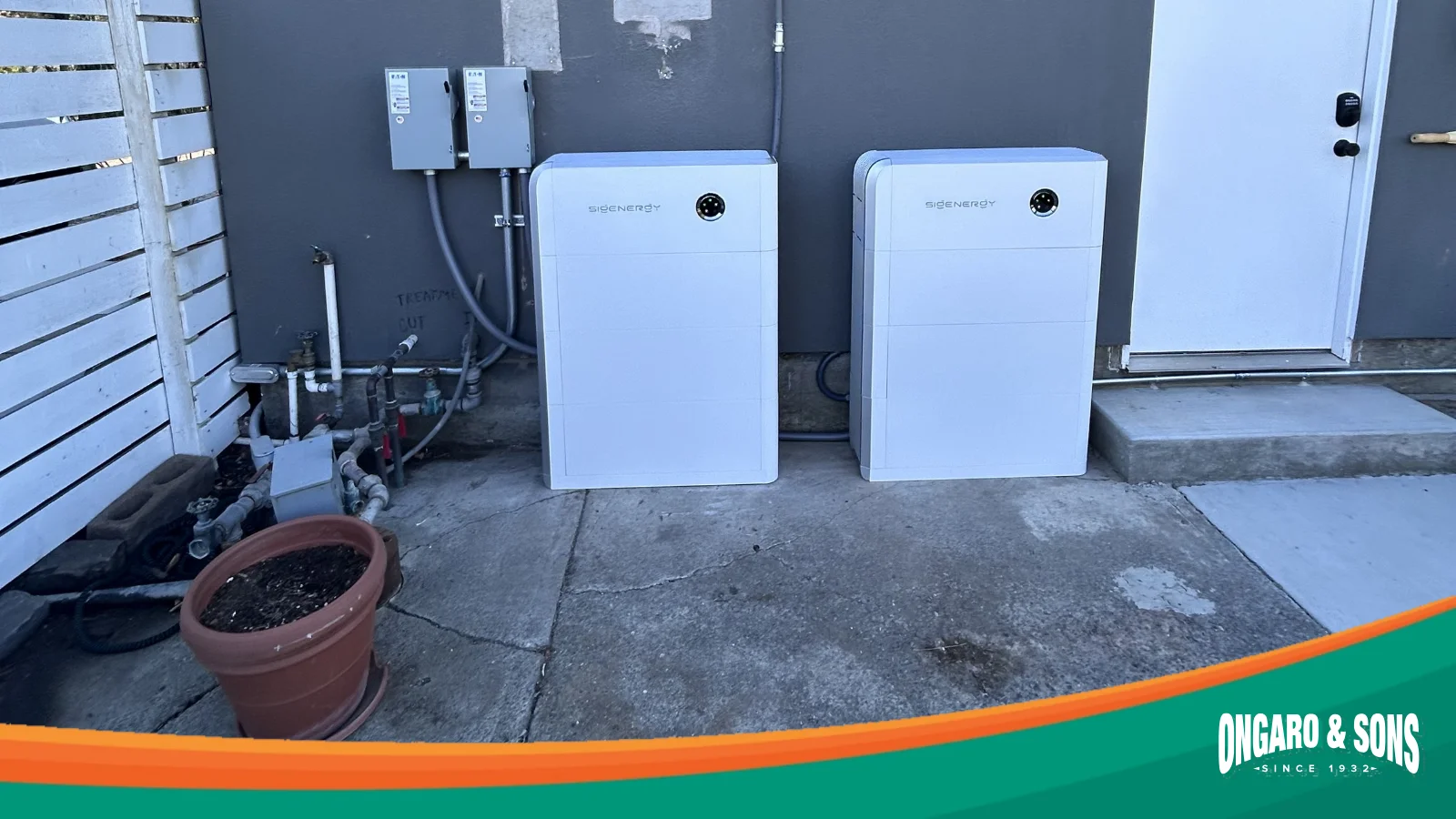
| System Solar panels with a battery | Works without power? If configured for backup | Notes Only the backed-up circuits, and only if the inverter and switching equipment are set up for backup. How long depends on the battery's charge |
| System Standby generator | Works without power? Yes | Notes Starts on its own and powers the home through an automatic transfer switch, a device that moves the home from utility power to generator power |
What to Do Before a Shutoff
Get the alerts
- PG&E notifications. PG&E sends shutoff notices to the phone and email on your account, so keep them current. PG&E's Address Alerts let anyone get notices for an address that matters to them, such as a parent's home or a rental.
- County alerts. Sonoma County uses SoCoAlert. Marin County uses Alert Marin. Napa County uses Alert Napa County. These systems cover evacuations and other hazards as well as outages.
Plan for medical needs
- If anyone in your home relies on powered medical equipment, enroll in PG&E's Medical Baseline program. PG&E offers extra shutoff alerts to people who rely on power for health and safety, which may include alerting you in person.
- Have a backup power plan for medical devices: batteries, a portable power station, or a place to go.
- Ask your pharmacist how to store medications that need refrigeration if the power is off for a day or more.
Plan for water, especially on a well
- A well pump needs electricity. When the power goes off, you have only the water already in the pressure tank.
- Store drinking water before a forecast wind event. Ready.gov recommends at least one gallon per person per day, for several days. For a household of four, three days is 12 gallons of drinking water, before any water for flushing.
- Fill a few buckets for flushing toilets if you are on a well.
- If your septic system uses a pump, limit water use until power returns.
Around the house
- Garage door: find the manual release cord and practice using it, so you can get a car out.
- Light: keep flashlights and batteries where you can find them in the dark. Avoid candles.
- Phones: charge phones, laptops and power banks when a shutoff is forecast. Cordless landline phones and internet routers stop working unless they have battery backup.
- Cars: keep a gas tank at least half full, or an EV charged. Gas station pumps also need electricity.
- Food: freeze containers of water to help keep a freezer or cooler cold, and keep an appliance thermometer in the refrigerator and freezer.
- Sump pump: if your crawl space relies on one, a battery backup keeps it running during a storm outage. See our sump pump page. Our article on water in a crawl space after rain covers when a pump is needed.
During the Outage
Keep food safe
Keep refrigerator and freezer doors closed as much as possible. FoodSafety.gov says a closed refrigerator keeps food safe for about 4 hours. A full freezer holds its temperature for about 48 hours, and a half-full freezer for about 24 hours.
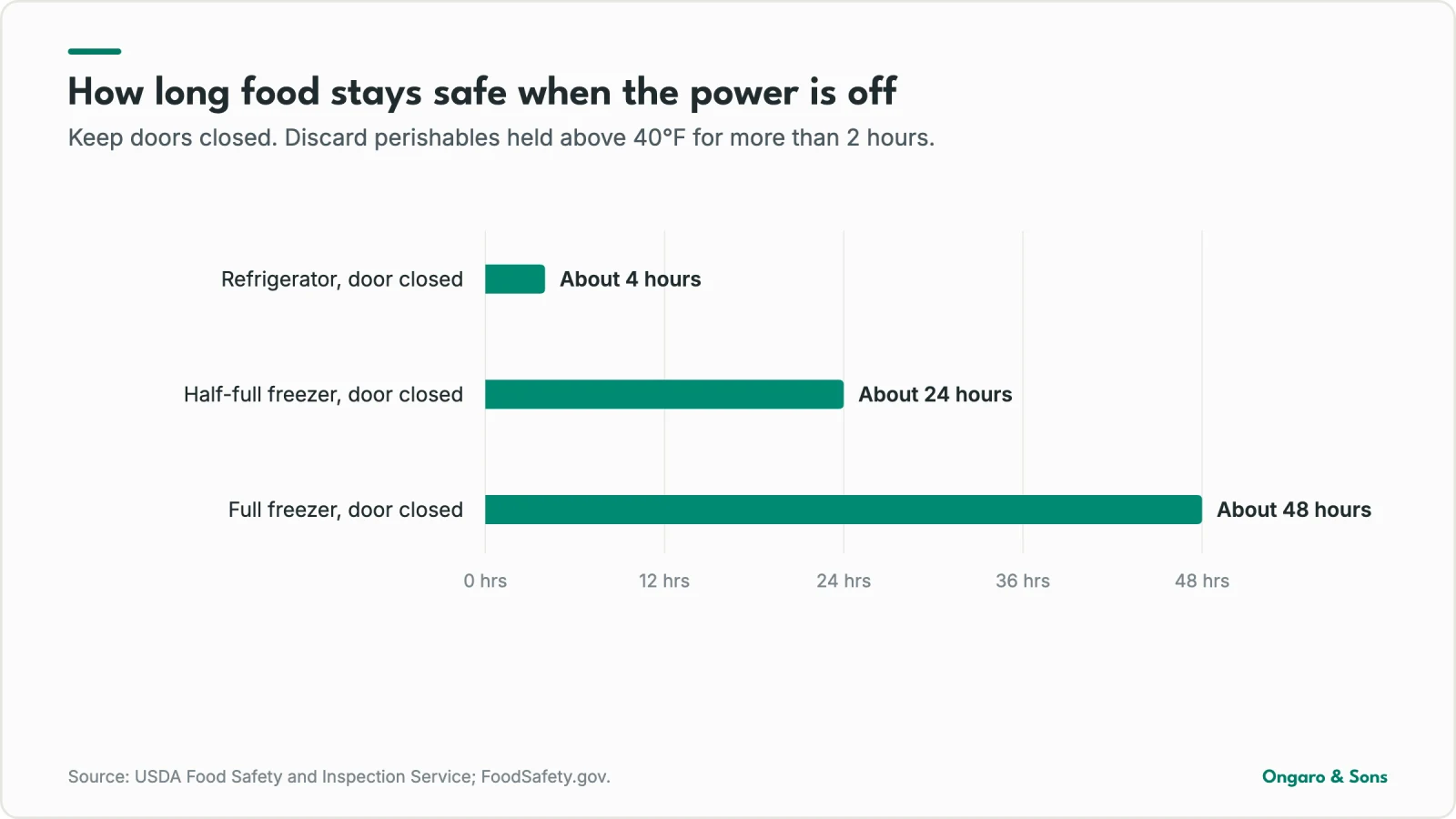
Throw out perishable food, such as meat, dairy and leftovers, that has been above 40°F for more than 2 hours. An appliance thermometer shows the actual temperature.
Stay warm without power
- Close off rooms you are not using, gather in one room, and dress in layers.
- Never use an outdoor grill, camp stove or propane heater indoors. They produce carbon monoxide, a gas you cannot see or smell.
Run a portable generator safely
Run a portable generator only outdoors, at least 20 feet from your home, with the exhaust pointed away from doors, windows and vents. Portable generators produce carbon monoxide too. The Consumer Product Safety Commission's carbon monoxide reports have put deaths from carbon monoxide poisoning linked to portable generators at about 85 to 100 a year in the U.S. CPSC's generator safety guidance adds:
- Never run a generator inside the home, or in a garage, basement, crawl space, shed or on a porch, even with doors open.
- Put battery-operated carbon monoxide alarms, or alarms with battery backup, on each level of the home. If one sounds, get everyone outside to fresh air, call 911, and stay out until responders say it is safe, as CPSC advises.
- Turn the generator off and let it cool before refueling. Never refuel it while it is hot. Store fuel in a container made and labeled for it, outside living areas, as the National Fire Protection Association's generator safety sheet advises.
- Never plug a generator into a wall outlet. That sends power back into the utility lines, which is called backfeeding. Backfeeding can injure line workers and neighbors, and it can damage your home's wiring.
How do you connect a generator to your house?
To power your home's circuits from a portable generator, an electrician installs one of two devices at your panel. A transfer switch is a small separate panel that connects selected circuits to the generator. An interlock is a plate on your main panel that stops the main breaker and the generator breaker from being on at the same time. Both keep the generator from feeding power into the utility lines, and both are electrical work that typically needs a permit. Our article on backup generators for PG&E shutoffs covers the larger, permanent option.
What If It Is a Storm Outage, Not a Shutoff?
Winter storms cause unplanned outages, often with no warning. Report an outage and check restoration estimates on PG&E's outage map. The preparation is the same as for a shutoff. The difference is timing: a storm outage can start while you are away or asleep, so a battery backup on a sump pump or a medical device matters more.
Storms bring two hazards a shutoff does not. Stay away from downed power lines and anything touching them, assume a fallen line is live, and call 911 and then PG&E, as PG&E's electric safety page advises. Do not touch outlets, cords or equipment that are wet or standing in water.
After the Power Comes Back
- During the outage, leave one lamp switched on so you know when power returns, and keep computers, TVs and other sensitive electronics unplugged until it does.
- Wait a few minutes before turning everything on. Power can flicker as lines are re-energized.
- Turn appliances back on one at a time, starting with heating, the refrigerator and the well pump, so you do not overload a circuit.
- Check refrigerator and freezer temperatures before deciding what food to keep.
- Reset the thermostat, clocks and timers. Check that the furnace or heat pump starts and runs normally.
- Check that the well pump and sump pump run, and that water pressure returns, from a dry, safe spot. If a pump, its outlet or its wiring has been underwater, leave it off until an electrician or plumber has checked it.
- Watch for problems. If a breaker trips again, an outlet or panel feels warm, or you smell something hot, turn off that circuit and call an electrician.
Surges can also occur when power returns. Our guide to whole-house surge protectors covers protection for equipment you cannot unplug, such as heating systems and well pumps.
When Does Backup Power Make Sense?
The checklist above gets most households through a shutoff. If a well pump, a sump pump or medical equipment has to keep running, backup power is the next step. The main options:
| Option | What it powers | Things to know |
|---|---|---|
| Option Portable power station (battery) | What it powers Phones, lights, a small medical device, a router | Things to know Quiet and safe indoors. Limited capacity |
| Option Portable generator with a transfer switch or interlock | What it powers Selected circuits, such as the refrigerator, furnace blower, well pump and lights | Things to know Must run outdoors. Needs fuel and someone home to start it |
| Option Standby generator | What it powers Selected circuits or the whole home, automatically | Things to know Runs on natural gas or propane. Starts on its own within seconds |
| Option Solar with a battery | What it powers Backed-up circuits, recharged by the sun | Things to know Battery size sets how long it lasts. Winter sun is weaker |
When we size a standby generator, the first question is which circuits have to stay on: refrigeration, a well pump, medical equipment, a home office. That list decides the size, and it usually costs less than backing up the whole house. A standby generator also needs a gas supply and a transfer switch. We hold both the plumbing and the electrical license, so the fuel line and the electrical work come from one contractor.
PG&E runs two programs for customers in high fire-threat areas or on circuits with Enhanced Powerline Safety Settings, a setting that switches a line off quickly when something contacts it.
- The Generator and Battery Rebate Program helps with the purchase of a qualifying portable generator or battery. PG&E's page says applications are due within 12 months of purchase or by December 31, 2026, whichever comes first. Rebates are first-come, first-served while funds last.
- The Backup Power Transfer Meter program installs a device at the meter that lets an eligible home connect a compatible portable generator safely. The program is fully subscribed for 2026, and PG&E says to check back in January 2027.
Program details checked October 27, 2026.
For more on the choices, see our guides to standby versus portable generators, natural gas generators and solar panels with battery backup.
Frequently Asked Questions
What does PSPS stand for?
PSPS stands for Public Safety Power Shutoff. It is a planned outage in which PG&E turns off power during high winds and dry conditions to reduce the risk of its equipment starting a wildfire.
How long does a PG&E power shutoff last?
It varies. Power stays off while the dangerous weather lasts, and crews then patrol the lines before restoring service. Marin County's 2026 notice says outages can last from several hours to multiple days, so plan for several days.
How do I know if my address could be in a shutoff?
Sign up for PG&E Address Alerts for your address, and check the CPUC's fire-threat map. Homes in Tier 2 or Tier 3 high fire-threat areas are more likely to be included in shutoffs, and may qualify for PG&E's backup power programs.
Can I run my furnace on a generator?
Yes, if the generator connects through a transfer switch or an interlock and has enough capacity. A gas furnace's blower and controls are a modest load. A heat pump needs a much larger generator.
Do solar panels work during a power shutoff?
Usually not on their own. Standard grid-tied solar systems shut down during an outage so they do not send power into lines that crews are working on. A solar system with a battery can keep backed-up circuits running if it is configured for backup. Ask your installer which loads your system can run during an outage, and for how long.
Where to Start on Your Shutoff Plan
Sign up for PG&E's alerts and your county's alert system today. Then walk through the table of what works without power with your own home in mind. The gaps it shows, such as a well, a medical device or a sump pump, are where a backup power plan matters most.
Ongaro & Sons is a family-owned company based in Petaluma, serving Marin, Sonoma, and Napa County since 1932, licensed C-10 electrical, C-20 HVAC and C-36 plumbing. We are a Certified Generac Generator installer. Our whole-home generator page covers standby generator installation, and our electricians work across the North Bay, including Santa Rosa, Petaluma, Napa, San Rafael and Novato.