EV Charger Installation Cost: Marin & Sonoma
You Got the EV. Now Here’s How Home EV Charger Installation Works in Marin and Sonoma County.
Quick Answer: Home EV charger installation is the process of connecting a dedicated 240-volt Level 2 circuit from your electrical panel to a wall-mounted charging unit, with a permit and inspection required in California. In Sonoma and Marin counties, costs vary based on panel condition, line set length, and equipment selected; homes with older 100-amp panels may need a panel upgrade first. Ongaro & Sons is a licensed C-10 electrical contractor and SPAN Certified Installer based in Petaluma, CA, serving Marin, Sonoma, and Napa counties since 1932.
The standard 120-volt outlet in your garage will charge your EV. Technically. At that rate, a depleted 75 kWh battery pack takes somewhere between 40 and 80 hours to fully charge. That’s not a charging strategy. That’s just leaving your car plugged in and hoping for the best.
What most new EV owners discover within the first week is that home Level 2 charging isn’t optional, it’s the whole point. A properly installed Level 2 charger gives you 25 to 35 miles of range back per hour, which means you wake up every morning with a full battery regardless of how far you drove the day before. You stop thinking about charging entirely. The car just works.
Getting there requires an electrical circuit, a permit, the right equipment, and a licensed electrician who knows what they’re doing. In Sonoma and Marin counties and across California, there are also rebates, rate programs, and code requirements that affect both the cost and the long-term economics of the installation. This guide covers all of it.
The Difference Between Level 1, Level 2, and DC Fast Charging
Understanding the three charging levels helps clarify why Level 2 home installation is the right call for almost every homeowner.
Level 1 charging uses a standard 120-volt household outlet. No special equipment or installation is required. You plug the cord that came with your car directly into the wall. The tradeoff is speed: most Level 1 charging delivers 3 to 5 miles of range per hour. For a driver covering 30 or 40 miles per day, Level 1 means an overnight charge barely keeps up. For anyone driving more than that, it doesn’t.
Level 2 charging runs on a 240-volt circuit, the same type of circuit that powers an electric dryer or range. A dedicated circuit, a wall-mounted charging unit (called an EVSE, or Electric Vehicle Supply Equipment), and a licensed installation are required. The payoff is substantial: Level 2 delivers 15 to 50 miles of range per hour depending on the charger’s amperage and your vehicle’s onboard charger capacity. A car that would take three days to charge from Level 1 is fully charged overnight with Level 2.
DC Fast Charging (Level 3) is what you’ll find at commercial charging stations along highways. These units push DC power directly to the battery at very high rates, adding 100 to 200 miles of range in 20 to 30 minutes. DC Fast Chargers require three-phase commercial power and cost tens of thousands of dollars to install. They are not a residential option.
For home use, Level 2 is the answer. The U.S. Department of Energy’s Alternative Fuels Data Center estimates that more than 80 percent of EV charging happens at home, and virtually all of it should be done at Level 2.
What Home EV Charger Installation Actually Involves
The installation process has several distinct steps, and understanding them helps you know what to expect and what questions to ask before you hire anyone.
Electrical Panel Assessment
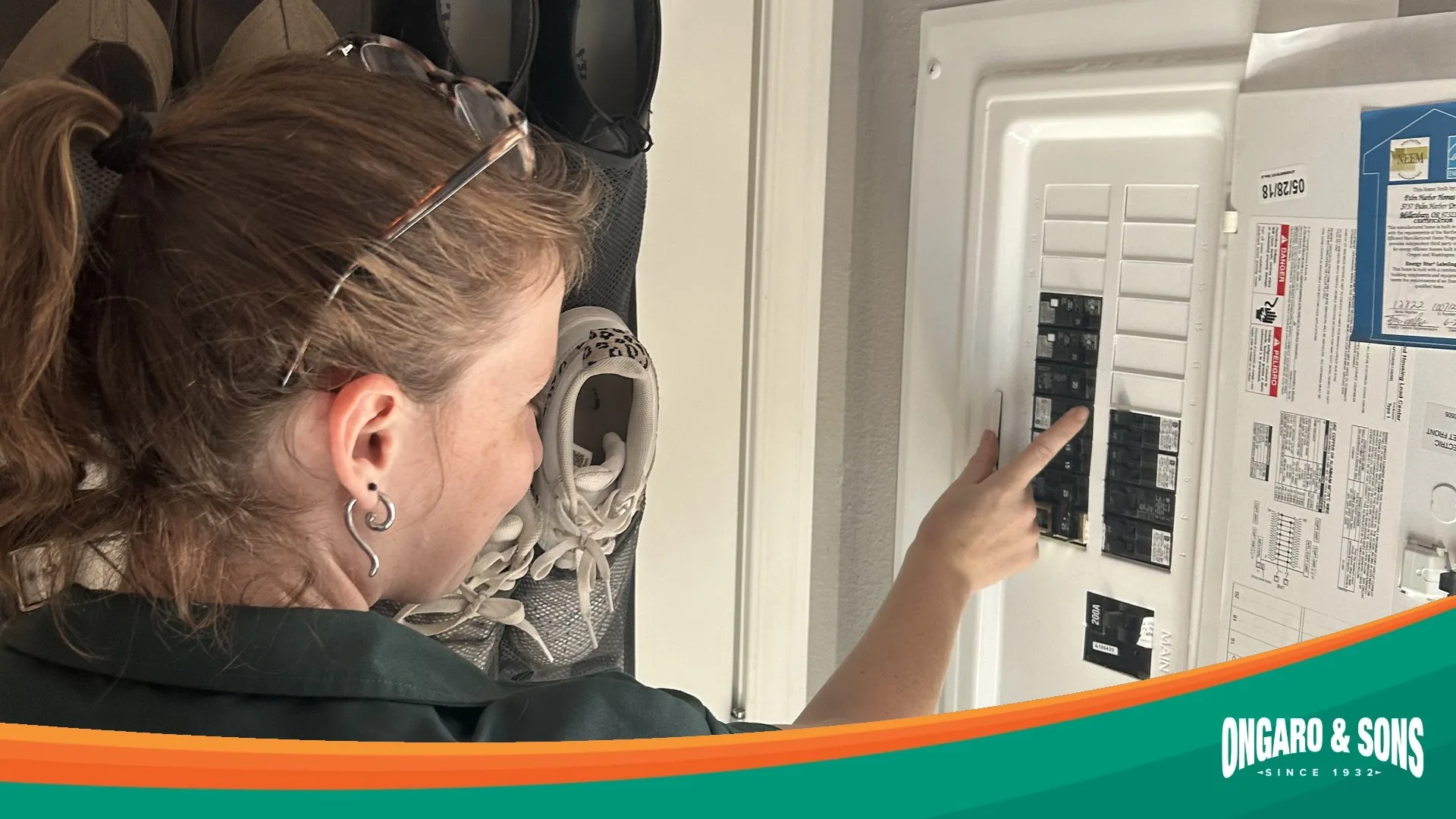
Before anything goes on the wall, a qualified electrician evaluates your electrical panel. This is the part most EV charger articles skip over, and it’s the part that most directly affects your total cost.
A Level 2 EV charger running at 48 amps requires a 60-amp dedicated circuit. At 40 amps (the most common residential charger configuration), you need a 50-amp circuit. Your electrical panel needs to have that capacity available, meaning it needs enough remaining amperage headroom and an open breaker slot.
Many homes in Sonoma and Marin counties, particularly those built before the 1990s, have 100-amp or 125-amp service panels that are already carrying a significant load. This is equally common in older neighborhoods in San Rafael, Fairfax, and Mill Valley as it is in Santa Rosa or Petaluma. Adding a 50-amp EV circuit to a panel that’s already at 80 to 90 percent capacity isn’t safe, and it won’t pass inspection. In those cases, a panel upgrade to 200-amp service is typically required before the EV circuit can be added.
This is not the electrician trying to upsell you. It’s load calculation. If your panel doesn’t have the headroom, the circuit doesn’t get installed safely.
Running the Circuit
Once panel capacity is confirmed, the electrician runs a dedicated 240-volt circuit from the panel to the location where the charger will be mounted. In a garage installation, this is usually straightforward. In situations where the panel is on the opposite side of the house from the garage, or where the charger needs to go on an exterior wall, the wire run becomes longer and potentially more complex.
One decision worth making upfront: conduit vs. direct wire. Running conduit (a protective pipe that the wire runs through) costs a bit more initially but makes it easy to pull larger wire in the future if you want to upgrade to a higher-amperage charger or add a second EV charger later. Direct wire is cheaper upfront but requires opening the wall again if you ever want to upgrade. Most electricians will recommend conduit for this reason.
Permit and Inspection
In California, a permit is required for EV charger installation. This is not optional, it’s not a technicality, and skipping it has real consequences.
California’s AB 1236 requires that local jurisdictions streamline EV charger permit approval, and most cities and counties in both Sonoma and Marin counties have complied with this requirement. That includes Santa Rosa, Petaluma, Windsor, and Sebastopol in Sonoma County, and San Rafael, Novato, Mill Valley, and Fairfax in Marin. In most cases, permits for straightforward residential EV charger installations are approved quickly, sometimes same-day through an online portal.
The permit matters for several reasons. An uninspected installation means your homeowner’s insurance may not cover a fire or electrical incident related to the charger. It also means the work may need to be torn out and redone if you sell the house and a buyer’s inspector flags it. Reputable electrical contractors pull permits as a matter of standard practice. If a company is offering to install your charger without a permit to save time or money, walk away.
Charger Mounting and Final Inspection
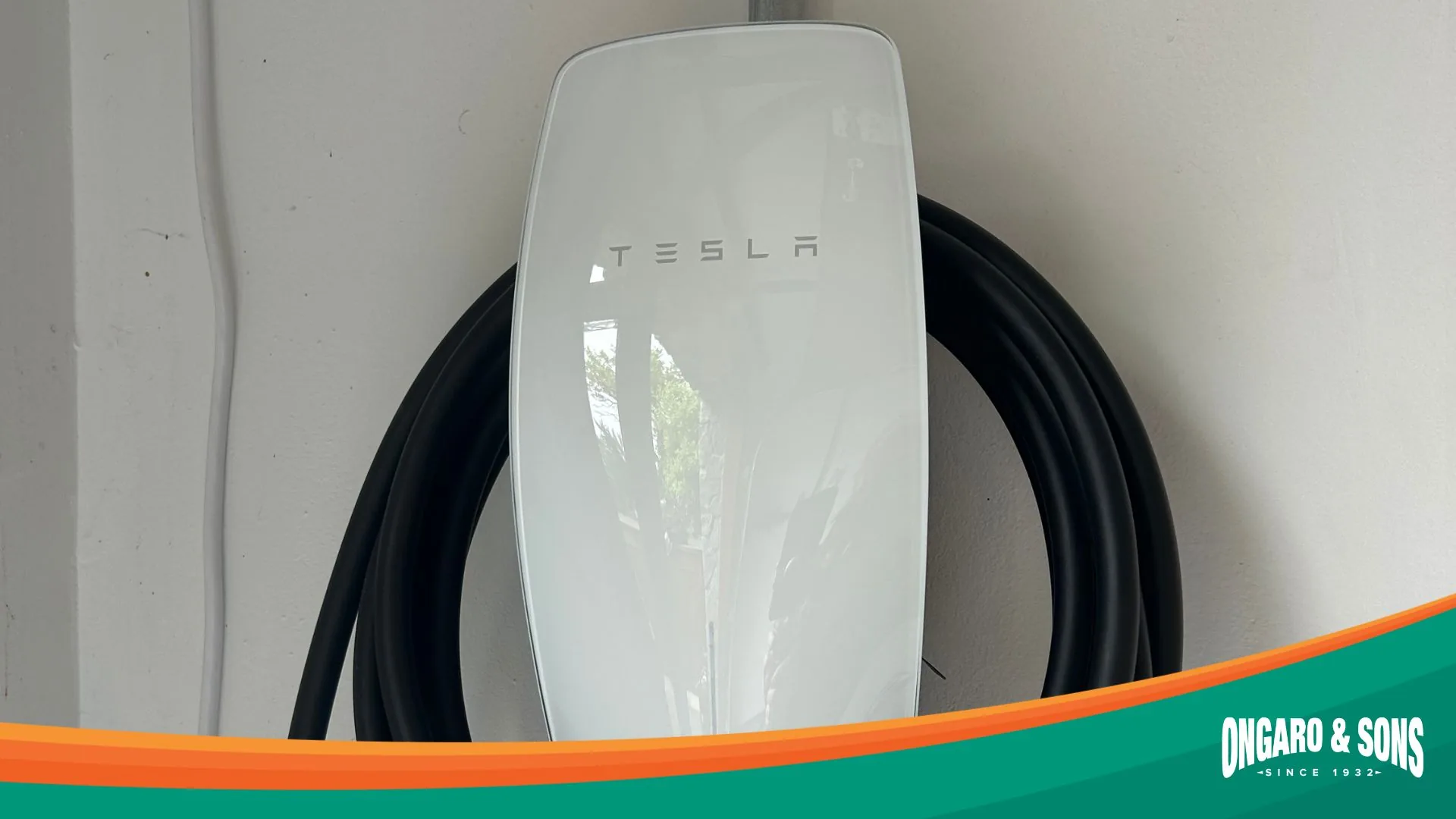
Once the circuit is run and the permit is in hand, the charger unit itself is mounted, wired, and tested. A city or county inspector then verifies the installation meets code before the permit is closed out. The whole process from first appointment to final inspection typically takes one to two weeks, depending on permit processing times in your jurisdiction.
Choosing the Right Home EV Charger
The charger market has exploded in the past few years and the options are genuinely confusing. Here’s what actually matters when you’re choosing a unit.
Amperage
EV chargers are typically sold in configurations ranging from 16 amps to 48 amps. The amperage determines how fast the charger can deliver power, but your vehicle also has an onboard charger with its own maximum acceptance rate.
For example, a Tesla Model 3 Long Range has an onboard charger that accepts up to 48 amps (11.5 kW). Plugging it into a 32-amp charger limits you to 32 amps. Plugging it into a 48-amp charger gives you the full rate. A Chevy Bolt, on the other hand, has an onboard charger that maxes out at 11.5 kW on AC charging regardless of what you plug it into, so a 48-amp charger offers no speed benefit over a 32-amp unit for that vehicle.
Before choosing charger amperage, check your vehicle’s documentation or the manufacturer’s spec sheet for maximum AC charging rate. Most modern EVs accept 32 to 48 amps. Buying more charger than your car can use isn’t a problem per se, it’s just not necessary. Buying less than your car can accept means leaving charging speed on the table.
Smart Charging Features
Most quality EV chargers today are “smart” chargers, meaning they connect to Wi-Fi and offer features like scheduled charging, energy usage monitoring, and remote control via a smartphone app. Scheduled charging is particularly valuable in PG&E territory (more on that in the rate section below).
Look for chargers that are Energy Star certified and listed by UL or ETL (both are NFPA-recognized testing laboratories). These certifications mean the unit has been tested for safety and efficiency.
Connector Type
If your vehicle uses the J1772 standard (most non-Tesla EVs), any J1772 EVSE will work. Tesla vehicles come with a J1772 adapter and can use any standard charger. If you have a newer vehicle with the NACS (North American Charging Standard) port, which Tesla and a growing number of manufacturers are adopting, verify that the charger you’re buying either uses NACS natively or that you have the appropriate adapter.
Weatherproofing
If the charger is going outside or in an unheated garage, verify it has a NEMA 4 or NEMA 6P rating for outdoor exposure. Most quality residential chargers are rated for outdoor installation, but it’s worth confirming before you buy.
What EV Charger Installation Costs in Sonoma and Marin Counties
Total cost depends on several variables. Here’s how to think about what drives the price.
Charger unit: Cost varies by brand, amperage, and smart-charging features. Avoid the cheapest units on Amazon. Electricians also won’t warranty their labor on units they don’t supply or that lack UL/ETL listing.
Electrical labor for the circuit and installation: A straightforward garage installation where the panel is nearby and the run is short is at the lower end of the range. Longer wire runs, subpanel work, or complex mounting situations will push this higher.
Permit fees: Fees vary by jurisdiction. Some cities in both Sonoma and Marin counties have reduced or waived EV charger permit fees as part of climate action commitments.
Panel upgrade (if required): A 200-amp panel upgrade cost varies depending on the complexity of the job, existing service entrance condition, and whether the meter base needs to be updated as well. Not every home needs this, but it’s the biggest potential variable.
Get a written estimate that breaks out labor, materials, permit fees, and any panel work as separate line items. It makes it easier to compare quotes and understand where the money is going.
PG&E’s EV Rate and Why It Changes the Economics
This is the part that most EV charger installation guides don’t cover, and it’s genuinely important for homeowners in Sonoma and Marin counties, both of which are in PG&E territory.
PG&E offers an EV-specific rate schedule called EV2-A, designed for residential customers who charge an electric vehicle at home. Under this rate structure, electricity is significantly cheaper during off-peak hours (overnight and on weekends) and more expensive during peak hours on summer weekday afternoons.
The practical implication: if you schedule your Level 2 charger to charge overnight, typically between midnight and 7 a.m., you can charge at the cheapest available rate. If you charge in the late afternoon during summer, you pay premium rates. The difference between peak and off-peak pricing under EV2-A is substantial enough that smart charging habits, combined with the rate structure, can meaningfully offset the cost of the charging equipment over time.
PG&E’s EV rate page has current rate plan details and a comparison tool. Smart chargers with scheduling features make this easy: you set the off-peak window once in the app, and the charger handles the rest automatically.
If you’re also considering solar panels or already have them, pairing solar production with EV charging during daylight hours adds another layer to the economics worth thinking through.
California Rebates and Federal Tax Credits
California and federal incentive programs for EV infrastructure shift regularly. The programs below reflect what was available as of early 2026. Verify current status before scheduling your installation.
EV charger installation in California comes with real financial incentives that reduce the out-of-pocket cost.
Federal Incentives: Federal tax credit programs for EV charger installation have changed significantly due to recent legislation. The credits that previously applied under the 30C program have been substantially modified or repealed. Consult a qualified tax professional to understand what federal incentives, if any, currently apply to your installation before making decisions based on tax savings.
TECH Clean California: The TECH Clean California program, funded through California’s utility system, offers rebates for qualifying electrification upgrades, which in some cases include EV charging infrastructure as part of a broader electrification project. Eligibility varies, and the program has income-qualifying tiers. Worth checking before you proceed with installation.
PG&E EV Charger Rebates: PG&E has periodically offered rebates for Level 2 charger installation. Program availability and amounts change, so check the PG&E EV incentives page for current offerings before your installation date.
Sonoma County and City Programs: Some jurisdictions in Sonoma County have offered additional local incentives for EV infrastructure as part of climate action plans. The Sonoma County Regional Climate Protection Authority tracks relevant programs at the county level.
Marin County Programs: Marin Clean Energy (MCE), the community choice aggregator serving most of Marin County, has offered rebates and programs for EV charging equipment separate from PG&E’s offerings. Marin County also has one of the highest EV adoption rates in California, and local incentive programs reflect that priority. Check MCE’s current programs before your installation date, and confirm whether both MCE and PG&E rebates can be stacked for your project.
If you’re doing a home energy audit as part of a broader electrification plan, that’s often the right time to map out which rebates apply to which upgrades and structure the work accordingly.
Should You Run Conduit for Your Home EV Charger Installation?
The EV charger you install today may not be the only one you need in five years. Two-car households are increasingly two-EV households. Installation decisions made now affect how easy or expensive future expansion will be.
Conduit: As mentioned above, running conduit rather than direct wire adds a modest upfront cost and makes future wire upgrades simple. If you ever want to add a 48-amp charger where you currently have a 32-amp unit, or add a second charger, you pull new wire through existing conduit instead of opening walls.
Panel capacity: If your panel is being upgraded as part of this project, upgrading to 200-amp service (rather than staying at 100 or 125-amp if that’s all that’s technically required for one charger) gives you room for future loads: a second EV, a heat pump, induction range, or solar inverter. A home energy audit is a useful way to look at all these loads together and plan the panel upgrade intelligently.
Subpanel in the garage: If your main panel is far from the garage and a long circuit run would be expensive, installing a small subpanel in the garage is sometimes a cost-effective alternative, particularly if you anticipate adding other circuits in the garage in the future.
Outlet vs. hardwired: Some installers hardwire the EVSE directly to the circuit; others install a NEMA 14-50 outlet and plug the charger in. The outlet approach makes it easier to replace the charger unit without an electrician if you upgrade vehicles and want a different charger later. Both are code-compliant; the choice is worth discussing with your electrician upfront.
What to Look for in an Electrical Contractor
EV charger installation is electrical work. In California, it must be performed by a licensed C-10 electrical contractor. You can verify any contractor’s license on the CSLB license check database.
Beyond license verification, look for:
- Experience with EV charger installations specifically, not just general electrical work
- A clear process for pulling permits (this should not be optional or something you have to ask about)
- A written estimate that itemizes equipment, labor, permit fees, and any panel work separately
- Willingness to assess your panel capacity plainly before quoting, not after you’ve agreed to a price
- References or reviews that speak to EV-related work specifically
The growth in EV adoption has brought a lot of new entrants into the charger installation market, including some who are not licensed electricians at all. Protect yourself: verify the license, confirm the permit process, and get everything in writing.
Ongaro & Sons is a licensed C-10 electrical contractor based in Petaluma, CA, serving Marin, Sonoma, and Napa counties since 1932. We are a SPAN Certified Installer, hold Diamond Certified® status and a BBB A+ rating. Our electrical practice covers EV charger installation, panel upgrades, whole-home rewires, and solar integration. We pull permits on every installation and assess your panel capacity before we quote you a price, not after.
Frequently Asked Questions
Do I need a permit to install a home EV charger in California? Yes. California law requires a permit for Level 2 EV charger installation, and California’s AB 1236 requires local jurisdictions to streamline the approval process. Cities and counties in both Sonoma and Marin counties comply with this requirement. Reputable electrical contractors pull the permit as a standard part of the job.
How long does home EV charger installation take? The physical installation typically takes two to four hours. The full process, including permit issuance and final inspection, usually takes one to two weeks depending on how quickly your local jurisdiction processes permits.
What if my electrical panel can’t support a Level 2 charger? If your panel doesn’t have the capacity for a 50-amp or 60-amp dedicated circuit, a panel upgrade is required before the EV circuit can be added safely. A qualified electrician will assess this during the initial evaluation. It adds cost, but it’s not optional.
Can I install a Level 2 EV charger myself? Installing a Level 2 EV charger yourself is not advisable and in California requires a licensed contractor. The work involves high-voltage wiring, a mandatory permit, and a code inspection. Unpermitted installations create homeowner’s insurance exposure and may have to be torn out if discovered during a home sale.
What is the best home EV charger to buy? The best charger for your home depends on your vehicle’s maximum AC charging rate, whether you want smart scheduling features, and whether the installation will be indoor or outdoor. Look for Energy Star certification and UL or ETL listing. Your electrician can advise on compatible units based on your specific vehicle and panel configuration.
How much does it cost to charge an EV at home in Sonoma or Marin County? The cost depends on your electricity rate and how much driving you do. Both counties are in PG&E territory. Under PG&E’s EV2-A off-peak rate, home charging is typically cheaper per mile than gasoline by a significant margin. Marin customers served by MCE for electricity supply still use PG&E for delivery, so the EV2-A rate structure applies. PG&E’s rate comparison tools can help you model the numbers for your specific situation.
How many miles of range does a Level 2 charger add per hour? A Level 2 charger operating at 32 amps adds approximately 20 to 25 miles of range per hour. At 48 amps, the rate is approximately 30 to 35 miles per hour, depending on the vehicle. Most EV owners with Level 2 charging at home never deplete their battery overnight regardless of daily mileage.
Is there a federal tax credit for installing a home EV charger? Federal tax credit programs for EV charger installation have changed significantly due to recent legislation. Consult a qualified tax professional to understand what federal incentives, if any, currently apply to your installation.
What size breaker do I need for a Level 2 EV charger? A 40-amp Level 2 charger requires a dedicated 50-amp breaker. A 48-amp charger requires a 60-amp breaker. The National Electrical Code requires circuits to be rated at 125 percent of continuous load, which is why the breaker size is always larger than the charger’s amperage rating. Your electrician will confirm the correct breaker size based on the specific charger you’re installing.
What’s the difference between a NEMA 14-50 outlet and a hardwired EV charger? A NEMA 14-50 outlet lets you plug in the charger unit, making it easy to swap chargers in the future. A hardwired installation connects the charger directly to the circuit. Both are code-compliant. The outlet approach offers more flexibility; hardwiring is sometimes preferred for permanence and a cleaner installation.
Schedule Your EV Charger Installation in Sonoma or Marin County
Ongaro & Sons installs home Level 2 EV chargers throughout Marin, Sonoma, and Napa counties. We handle the permit, assess your panel capacity before we quote, and give you a written breakdown of costs so there are no surprises.
Schedule a consultation to discuss your project. If your home also needs a panel upgrade, we can scope both at the same time and coordinate the work as a single project.