How Solar Energy Works: A Homeowner's Guide
The demand for solar energy is higher than ever as homeowners embrace the sustainable and clean energy source our bright sun emits. While this eco-friendly solution is helping us reduce our carbon footprint, there is still a lot of uncertainty about what it entails.
This article will break down everything you need to know about solar energy so you can decide if it’s a worthwhile investment for you and your family.
- How solar energy works
- Solar energy: a brief history
- The price of solar energy systems
- Three categories of solar energy systems
- Benefits of a solar battery
Once you take this crash course in solar energy, you will be equipped with a solid understanding of how solar energy works. We will touch on all your looming questions, such as: do I need a battery with my solar panels? How much will this actually cost me? It’s time to clear the air around solar so that any homeowner interested in harnessing the sun’s power can do so confidently.
How solar energy works
The best place to start your solar energy journey is at square one. Understanding how solar energy works will help you conceptualize how solar panels work with the sun and how the power is cycled to create this clean energy source. For the purpose of this article, we will focus on solar panel installation in your home and how the panels produce sustainable energy.
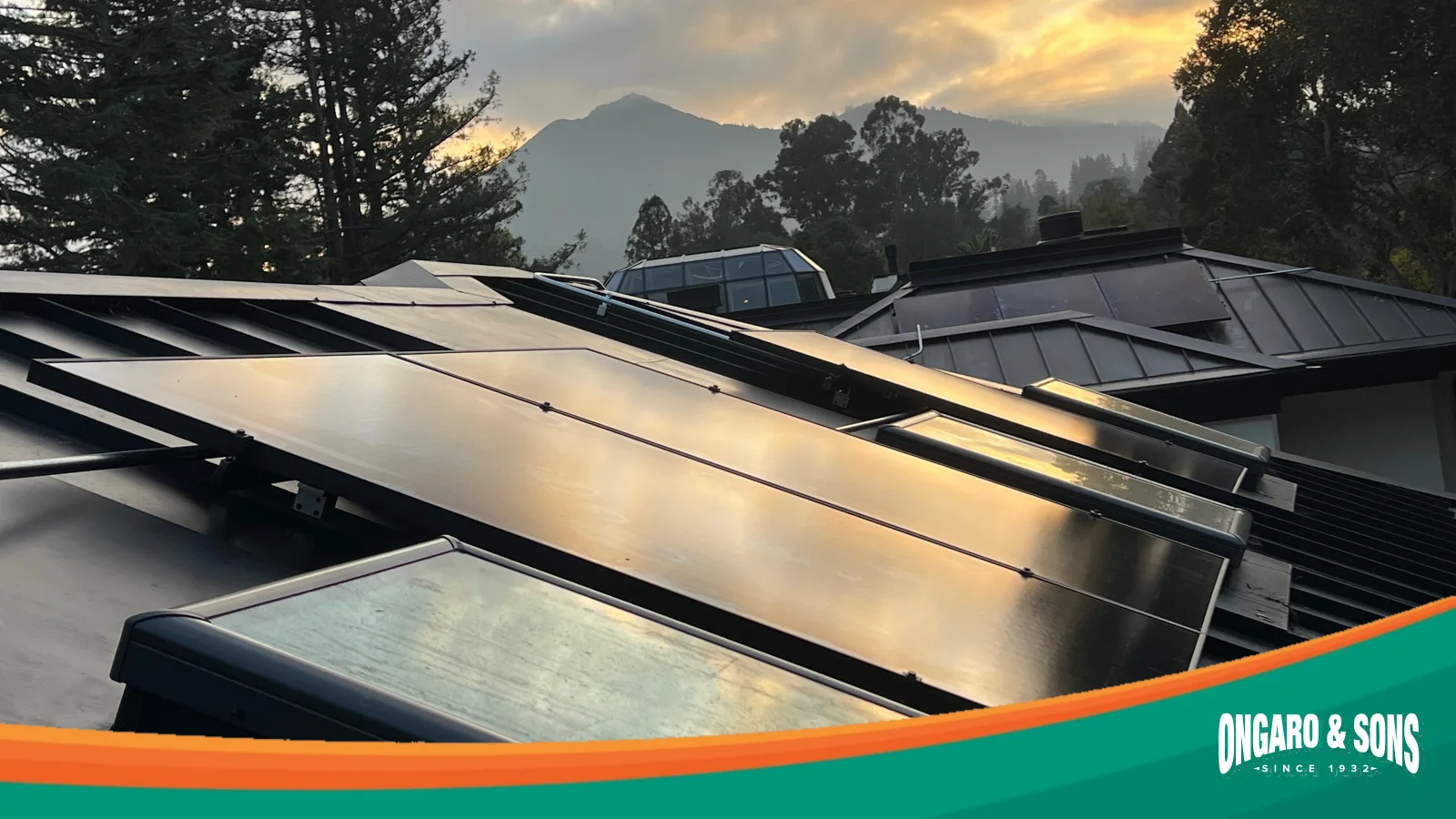
- Solar panels are installed on rooftops to collect sunlight
- Solar panels convert the sun’s rays to Direct Current (DC) electricity
- DC electricity is converted into Alternating Current (AC) electricity
- AC electricity can then be used to power your home and its appliances
That’s the short version of how solar energy works. But how do solar panels generate energy? Solar panels produce electricity through the photovoltaic effect. Those rows of squares on a solar panel are called solar cells or photovoltaic (PV) cells.
The majority of solar panels are constructed of silicon solar cells. Every cell has two layers: a negative and a positive. The negative layer sits on the outside. When the sunlight hits that layer, it then activates the extra electrons within. From there, those electrons move to the positive layer, which creates solar energy.
Once energy is created, it has to go through a converter to power your home. DC electricity usually cannot power a home on its own, so it needs assistance from a converter to turn it into AC electricity. Once the converter changes the DC electricity to AC electricity, you can use that energy to power your home.
Solar energy: a brief history
While it may seem like solar energy, also known as solar power, is the new kid on the block, the technology has been around for quite some time. In 1839, the photovoltaic effect was observed in France. Skip ahead 44 years to 1883. An American inventor, Charles Fritts, made the first solar cell from selenium.
Unfortunately, that first solar cell had a long road ahead of it since it was only 1% efficient. The first practical solar cell was invented in 1953 in the Garden State, New Jersey. That achievement opened the way to the solar panels used by millions today.
California has more rooftop solar than any other state.
The price of solar energy systems
Cost depends on system size, your roof, the equipment and whether you add a battery. Prices have fallen sharply over the past decade.
The federal tax credit for homeowner-owned solar ended for systems installed after December 31, 2025. From January 1, 2027, new solar systems also generally stop qualifying for California’s property tax exclusion, so a new system can add to a home’s assessed value.
Installing solar is a significant investment. To encourage households to lean green, homeowners can obtain financing for their solar energy systems in many ways. There are solar leases, loans, and power purchase agreements (PPAs) you can apply for to help you with the cost. One great thing to remember is that once your solar system is installed, the maintenance is low.
Solar energy system categories
Solar power can be harnessed to run various applications, batteries, homes, and cars, to name a few. Three main types of solar energy systems are available for powering your home through solar panels:
- Off-grid systems
- Solar-plus-storage systems (also referred to as hybrid systems)
- Grid-tied systems (the most popular)
Off-grid system
When your solar energy system is not connected to the electrical grid, it’s known as an off-grid system. Going off-grid when you can access the grid near your home isn’t the best move since doing so would limit your energy use.
Off-grid systems require far more panels than a grid-tied system and involve bulky and costly battery storage solutions. This type of system can become costly and impact your lifestyle since you have to be hyper-cognizant of how much energy you spend daily.
Solar-plus-storage system
A hybrid system, known as a solar-plus-storage system, is a solar panel system that is linked to an on-site solar storage system (usually a solar battery) and the grid. Solar panels power your home throughout the day, similar to a grid-tied system.
However, unlike the grid-tied system, when your solar panels produce more power than your home requires, that energy is stored back in your battery instead of on the grid. The beauty of this system is that whenever your panels are not making enough electricity to meet your needs, you can use the stored energy from your battery supply and lower your utility costs.
Grid-tied system
One of the most popular types of solar panel systems is the grid-tied system. Many homes today opt for this type of installation, which connects your solar energy to the local utility grid. Unlike the solar-plus system, which sends excess energy to a battery, any excess electricity with a grid-tied system will be returned to the grid.
In California, new solar customers are on PG&E’s Solar Billing Plan, also called net billing (since April 2023). Power you export earns much less than power you buy, so systems are designed to use more of their own output, often with a battery.
A big drawback of the grid-tied system is the absence of a storage system for surplus solar energy during a grid outage. There is no backup functionality like a battery system can provide, and the National Electrical Code mandates that grid-tied solar systems cease production when utility power is unavailable.
Having a battery connected to your solar power system provides a reliable energy source if the grid ever goes down. When the grid is operating without a hitch, a grid-tied system can work in your favor if your solar energy system isn’t producing the power your home needs.
Benefits of a solar battery
A solar battery is a low maintenance, helpful companion to any solar energy system. Whenever there is a grid outage, they become your best friend since they don’t solely rely on the grid to produce energy for your home.
Plus, if your utility company only dishes out wholesale rates for the energy you send back to them through the grid-tied system, you may benefit more from having a battery store the energy you produce. By holding onto your energy through a solar battery instead of sending it back to the grid, you can essentially get retail rates for your excess solar because you’re not buying it from the utilities.
Installing a solar battery may be worthwhile in the North Bay, where storms and PG&E Public Safety Power Shutoffs can cut power. Because exported solar earns less than the power you buy, a battery often makes the system pay off better. California’s SGIP battery rebates for PG&E customers are closed or waitlisted as of October 2026.
Conclusion
Solar energy is a growing trend that is not showing any signs of slowing. As homeowners seek ways to reduce their carbon footprint, reduce energy bills, and decrease their dependence on the grid, turning to solar panels offers a promising solution to many of our environmental concerns.
Now that you know how solar energy works, the types of solar energy systems that are available, and the cost of installing a solar energy system, you can determine whether a solar energy system is the right fit for your needs.
Ongaro & Sons – Your Solar Power Experts
Ongaro & Sons is a family-owned business in its fourth generation of operation. We consistently deliver the highest level of service and value in our industry, ensuring stability for our valued customers. Our friendly team offers heating, cooling, plumbing, electrical, and solar installation services for the North Bay area.
As solar energy continues to evolve, we stay current with advancing technologies through ongoing training and education opportunities. We offer our customers ongoing support, certified professional installation services, quality products, and seamless installation from site assessment to permits to ensure a hassle-free process from step one.
If you’re ready to reduce your carbon footprint through clean solar energy, contact Ongaro & Sons today. Our trained technicians know their way around solar technology and can customize a system that suits your unique needs.