How to Fix a Furnace: The Checks You Can Safely Do Before You Call
Fixing a furnace starts with ruling out the simple things. A thermostat setting, a blocked filter or a power supply that was switched off by accident can each stop a furnace without anything being broken, and a homeowner can check all three from outside the equipment. The rest, from the gas train to the control board, needs professional diagnosis.
Quick answer. First, rule out an emergency: if you smell gas, leave the house and call 911 from outside; if a carbon monoxide alarm sounds, get everyone out and call for help. If there are no warning signs, note any diagnostic code showing through the furnace's window or display before you change anything, then check the thermostat, the power controls you can safely reach, the filter and the room registers, following the owner's manual and leaving the equipment covers in place. Stop and call a licensed C-20 contractor if the furnace keeps shutting down, makes an unusual noise at ignition, leaks water or smells of something burning.
One rule overrides everything below, so it comes first.
When Should You Stop and Leave the House?
If you smell gas, do not troubleshoot anything. PG&E's guidance is unambiguous: leave immediately, get a safe distance from the building, and only then use a phone to call 911, followed by PG&E. Do not operate a switch, a phone or a flashlight, and do not start a vehicle, until you are well clear. That applies outside as well as inside, because gas does not stop at the door. Do not go looking for the source. PG&E's gas safety page and its guide to recognizing a gas leak cover what to watch for, including hissing near an appliance as well as the added rotten-egg odor.
The same applies to a carbon monoxide alarm. If it sounds, get everyone outside into fresh air and call for help from outside the building, and do not go back in until responders say it is safe. Carbon monoxide has no smell, and the early symptoms, headache, dizziness, nausea and confusion, are easy to mistake for something else. The National Fire Protection Association publishes the homeowner guidance, and California requires carbon monoxide alarms in dwellings with fuel-burning appliances under Health and Safety Code section 17926.
Smoke, a burning smell, water pooling near the furnace, or a bang at ignition also come before the checklist. Any of those means switch the furnace off if you can do so safely, leave it off, and arrange service.
Before You Touch Anything: Note the Diagnostic Code
Almost every furnace built in the last thirty years has a control board with a small light that flashes a diagnostic pattern, and most have a clear window in the front panel so you can see it without opening anything. Record the pattern before you change a setting or interrupt the power, because a reset can clear it and lose the one piece of information that points at the cause.
The owner's manual may explain the pattern. Do not remove an energized panel to reach the control board or the legend inside the door. When you arrange service, give the code, the model number and the symptoms; they help guide the diagnosis, though a code identifies a condition rather than proving which part has failed.
Check One: Is the Thermostat Actually Calling for Heat?
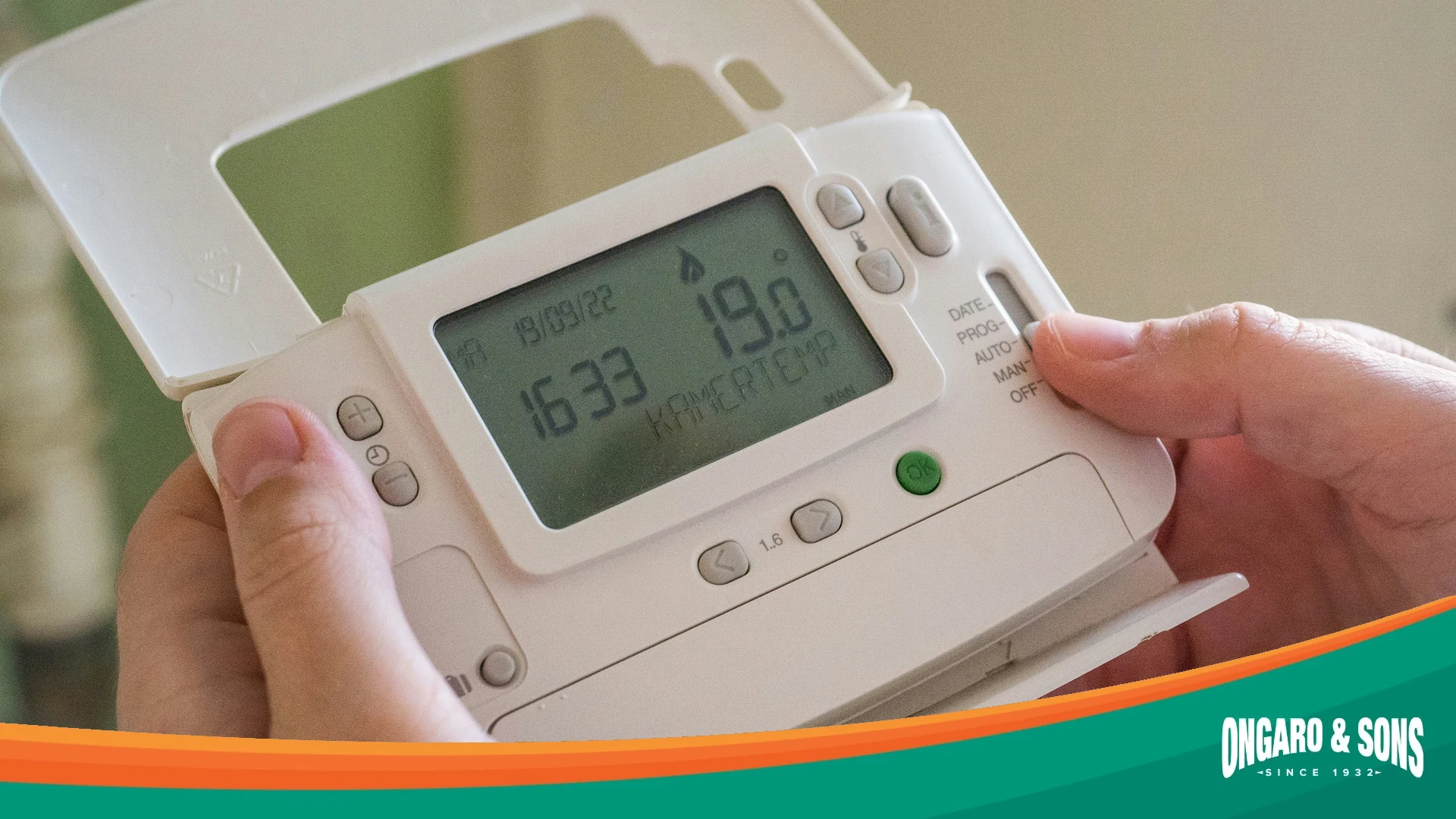
- Mode. Confirm it is set to Heat, not Cool and not Off. A thermostat knocked to Cool in October produces a furnace that does nothing.
- Setpoint. Raise it above the displayed room temperature and give the system a few minutes; most furnaces have built-in delays before the burners light and before the blower starts.
- Batteries. Many thermostats run on batteries even when wired. A dim, blank or frozen display is a battery symptom.
- Fan setting. If the fan is set to On rather than Auto, it runs continuously and blows room-temperature air between heating cycles, which reads as the furnace blowing cold. Set it to Auto.
- Schedule and hold. A programmed setback that nobody remembers setting will hold the house cool on a schedule. Check whether a program is active, and check the thermostat's instructions for any delay it describes.
Check Two: Does the Furnace Have Power?
| What to check | Where it is | What to do |
|---|---|---|
| What to check Furnace service switch | Where it is On or near the furnace, looks like a light switch | What to do Confirm it is on. It gets switched off by accident. |
| What to check Circuit breaker | Where it is Electrical panel, usually labeled furnace or air handler | What to do Check its visible position without removing the panel cover. Follow the equipment instructions before attempting a reset, and do not reset a breaker where there is heat, damage, water, a burning smell or an unexplained recurring trip. |
| What to check Filter or door cover | Where it is Front of the furnace | What to do If an owner-accessible cover was recently removed, confirm it is fitted as the manual directs, with the power off. Do not force a cabinet panel into place or bypass an interlock. |
The cover is the one that catches people. Most modern furnaces have an interlock switch that cuts power when the front panel is off, so the furnace cannot run with the cabinet open. If someone changed a filter and did not reseat the panel, the furnace is dead and nothing is broken.
If a breaker trips again after one reset, stop. A breaker that will not hold is reporting a fault, and repeatedly resetting it removes the protection without removing the cause. Our electrical repair page covers what that diagnosis involves.
Check Three: Is the Filter Blocked?
A dirty filter or a blocked return restricts the air moving through the furnace. On some systems the heat exchanger then overheats, a safety control shuts the burners down, the blower runs on to cool things off, and the burners relight once the limit resets. From inside the house that looks like a furnace that keeps starting and stopping and never warms the place up. Restricted airflow is one possible cause of that cycling; it is not a diagnosis by itself.
With the system off, inspect an owner-accessible filter and replace it according to the equipment and filter instructions: the correct size, the arrow in the airflow direction, and a filtration rating the equipment can handle. Do not rely on whether light passes through it. ENERGY STAR's heating and cooling guidance puts filter changes at the top of its maintenance list, and our guide to cleaning your HVAC system covers where the filter lives and how to change it.
Also walk the house and check that supply registers are open and clear of furniture and rugs, and that return grilles are unobstructed. Closing registers in unused rooms to save money produces the same restriction as a dirty filter.
Check Four: Pilot, Water and the Outside Vent
A standing pilot. If your furnace is old enough to have a pilot light instead of an electronic igniter, look through the viewport for a small flame. Follow only the lighting instructions printed on that furnace, and only if they describe relighting as an owner task, including the wait time they specify before introducing a flame. If the label is missing or unreadable, or the pilot will not stay lit, stop and call. Do not keep retrying: a pilot that goes out repeatedly is reporting a fault, not asking to be relit.
Water. High-efficiency furnaces, the ones vented in white PVC pipe rather than a metal flue, produce water that leaves through a drain line and a trap. If you see water pooling at the base of the furnace, stop using it and arrange service, and stay away from water that may be in contact with electrical equipment. Do not pour vinegar or anything else into the drain unless the equipment instructions specifically allow it; furnace traps, pumps and neutralizers differ, and servicing them wrong can affect safe operation.
The outside vent. From a safe position outside, follow the PVC vent pipes to where they exit the wall and look for an obstruction: leaves, a nest, landscaping grown across the opening. Do not climb, dismantle the vent or reach into it. A blocked combustion vent is a different fault from restricted air at a room register, and it needs its own diagnosis.
What Do the Symptoms Mean?
Use this to work out where you are, and where the line is.
| Symptom | Possible causes | What to do |
|---|---|---|
| Symptom Nothing happens at all | Possible causes Thermostat, service switch, breaker, cover interlock | What to do Check those four; if none applies, call |
| Symptom Blower runs, no heat | Possible causes Fan set to On, ignition fault, gas supply | What to do Check the fan setting; the rest is a technician's |
| Symptom Starts then stops repeatedly | Possible causes Restricted airflow, blocked vent, a safety control, an ignition or sensor fault | What to do Check the filter and registers; if it still cycles, leave it off and call |
| Symptom Ignites then shuts off after seconds | Possible causes Flame sensing or ignition fault | What to do Technician |
| Symptom Bang or boom at startup | Possible causes Abnormal ignition | What to do Switch it off, leave it off, arrange service |
| Symptom Grinding, squealing, rumbling or new rattling | Possible causes Blower or bearing wear, loose parts, combustion issues | What to do Switch it off and have it assessed |
| Symptom Smell of gas | Possible causes Gas leak | What to do Leave and call 911 |
| Symptom CO alarm sounding | Possible causes Combustion products entering the house | What to do Leave, then call from outside |
A new noise is a reason for an assessment, not a diagnosis. Possible causes range from a loose panel to a blower problem to an ignition fault, and sound alone cannot establish which, nor can it confirm or rule out a damaged heat exchanger, which takes a technician with instruments and eyes on the part. If the noise happens at ignition or the furnace is otherwise behaving abnormally, stop using it and arrange service.
What Should You Not Attempt?
Everything in this list is repair work, and each item is here for a specific reason.
- The gas valve and gas piping. Any adjustment to gas pressure or any work on the gas line is licensed work in California, and you can verify a contractor's classification on the Contractors State License Board site. Getting it wrong produces a leak or incomplete combustion.
- The burners and the burner compartment. Opening this means working around the gas train and the ignition system.
- Cleaning the flame sensor. Plenty of guidance online treats this as a homeowner task. For a reader with no trade background it belongs on a service visit, because it means opening the burner compartment and handling a component that sits beside the gas train and a line-voltage igniter.
- The heat exchanger. Inspection requires equipment and access a homeowner does not have, and this is the component whose failure can put combustion products into your air.
- The inducer or blower motor. Line voltage, capacitors that hold a charge after power is off, and mounting that affects balance.
- Anything on the control board. Reading the light through the window is fine. Touching the board is not.
- Bypassing a safety switch. If a limit switch, pressure switch or door switch is stopping the furnace, it is doing its job. Jumping it out is how houses catch fire.
Ongaro & Sons is a family-owned company based in Petaluma, serving Marin, Sonoma and Napa County since 1932, licensed C-20 HVAC, C-10 electrical and C-36 plumbing. We are a Trane Comfort Specialist and a Mitsubishi Diamond Contractor Elite, and the list above stops where it does because everything on it needs a gas license, a meter, or both.
What Is Different About Furnaces in the North Bay?
A short heating season hides problems. A furnace here may run only a few months a year and lightly at that. Components can degrade during the long idle period, and the first cold snap is when everyone finds out at once. A fall service visit moves that discovery to a convenient time.
If the furnace is in a closet, garage or crawl space. Closet installations in particular need adequate combustion air, and a closet that has been weatherstripped or packed with storage can starve it. Keep the area around the furnace clear.
If summer dust or smoke reached the house. A filter that was fine in May can be loaded by October after a dusty summer or a smoke event, so the first heating call of the season is sometimes a filter. Change it before you turn the heat on.
When Is It Worth Repairing Rather Than Replacing?
Compare the identified fault, the equipment's condition, its repair history, the availability of parts and the warranty coverage. A repair makes sense for an otherwise sound furnace with a failed component that has a defined life: an igniter, a sensor, a capacitor, a switch. Repeated failures, or a major repair on older equipment, may justify comparing replacement options. A suspected damaged heat exchanger is different: the furnace stays out of service until a qualified technician establishes a safe next step. If you are at that decision, our HVAC installation guide covers what a replacement involves and our furnace page covers the equipment.
Frequently Asked Questions
Why is my furnace blowing cold air?
Check the thermostat fan setting first: on On rather than Auto, the blower runs continuously between heating cycles and moves room-temperature air. If the fan is on Auto and the air is still cold, the burners are not lighting or are shutting down shortly after ignition, which is a technician's diagnosis.
Why does my furnace keep turning on and off?
Restricted airflow is the possibility you can check yourself: a blocked filter, closed registers or an obstructed outside vent can cause a safety control to shut the burners down until things cool. Replace the filter, open the registers and look at the vent termination from outside. If it still cycles, the cause is on the technician's side, such as a flame sensor, a pressure switch, a limit control or equipment oversized for the house. Leave it off and call.
How do I reset my furnace?
Check the owner's manual for your model before attempting a reset, and record any visible fault code first. Do not use a reset to keep a furnace running through repeated shutdowns. If it locks out again, leave it off and arrange diagnosis.
What do the flashing lights on my furnace mean?
They are a diagnostic code. Record the pattern through the viewing window and check the owner's manual for what it means. Give the code, the model number and the symptoms to whoever comes to service it; it points at a condition rather than proving which part has failed.
Can I fix my furnace myself?
You can resolve the situations that are not faults: thermostat settings and batteries, the service switch, a tripped breaker, a filter, a cover that was not reseated, blocked registers and an obstructed outside vent. Anything involving the gas valve, the burners, the flame sensor, the heat exchanger, the motors or the control board is licensed work.
Why does my furnace smell like burning when I first turn it on?
A dusty smell during the first cycle of the season is common: dust settles on the heat exchanger over the summer and burns off. A burning smell that persists, an electrical or plastic smell, or any smell of gas is different. The first two mean switch it off and call. Gas means leave and call 911.
How long should a furnace last?
It varies with the equipment, the installation and how it has been maintained; a furnace here often runs fewer hours per year than in a colder climate, though idle time brings its own wear on igniters, sensors and bearings. Age alone is not a reason to replace, but age combined with a major failure usually is.
Should I turn off my furnace if it is not working?
Yes, if it is behaving abnormally. If it is short cycling, making a new noise, leaking water, or producing any smell you cannot account for, switch it off at the service switch and leave it off until it has been looked at. A furnace that simply will not start can be left alone while you work through the checks above.
What do different furnace noises mean?
A new banging, rumbling, grinding or squealing needs an assessment. Possible causes include loose parts, blower or bearing problems and ignition faults, and sound alone cannot establish the cause or confirm a damaged heat exchanger. If the noise happens at ignition or the furnace is otherwise behaving abnormally, stop using it and arrange service. Gas odor or a CO alarm means evacuate and call for help.
Where to Start
Rule out an emergency, note the code, then go in this order and stop as soon as it runs: thermostat mode, setpoint and batteries; the service switch and the breaker's visible position; the front cover; the filter and the registers; the outside vent. If you get to the end and the furnace still will not run, you have done everything a homeowner should, and you have the code and the model number ready for whoever comes next.
If you would like us to take it from there, contact us and tell us the code, the model and what you saw. Our furnace repair page covers the service side, and an annual maintenance visit is what catches most of these before they become a no-heat morning.