Rooftop HVAC Unit Replacement: Planning the Equipment, Lift and Downtime
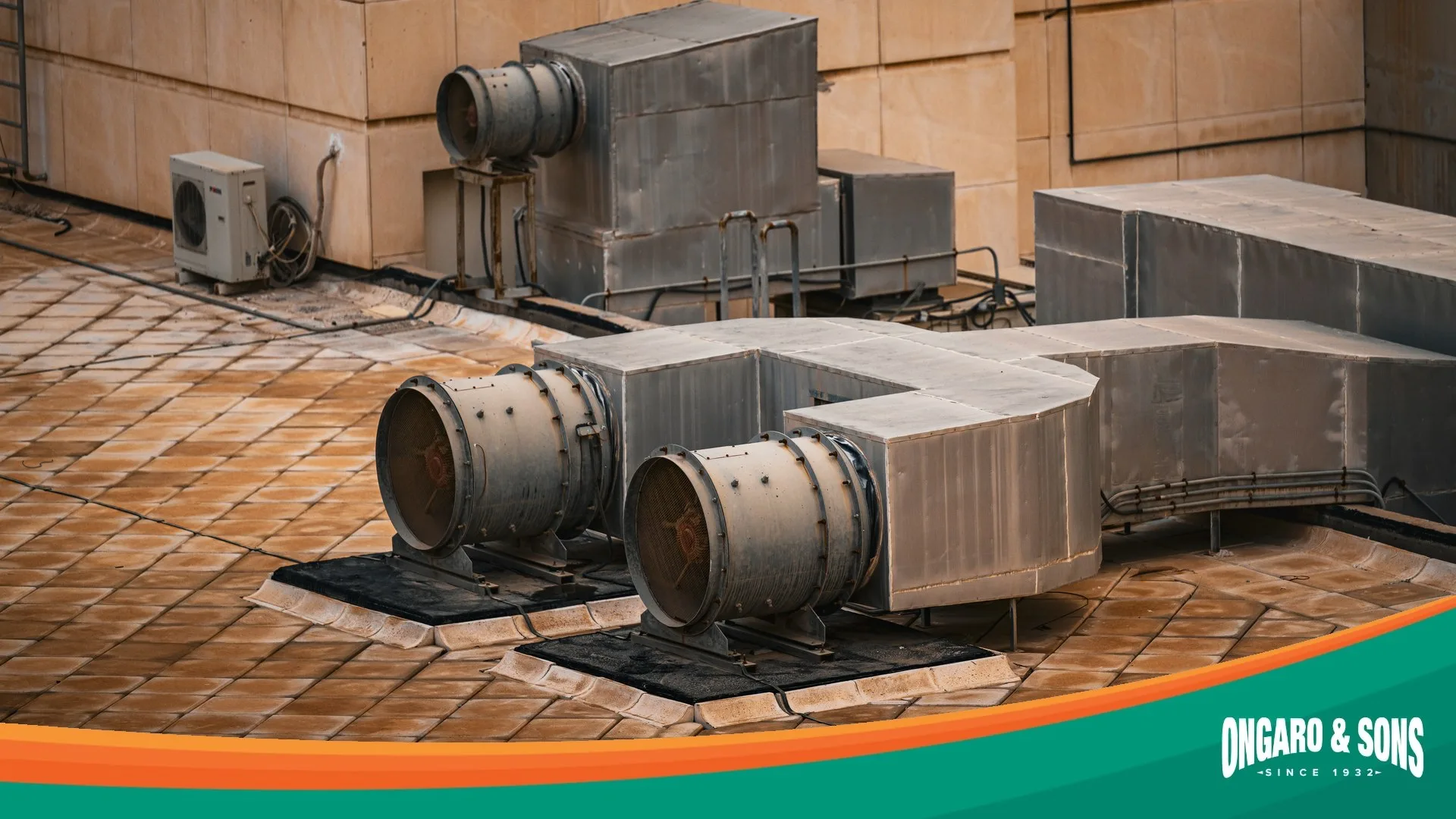
Rooftop HVAC unit replacement is the removal of existing roof-mounted heating and cooling equipment and the installation of a replacement suited to the building. A packaged rooftop unit, or RTU, combines the major system components in one cabinet sitting on a roof curb; its heating source and its connections vary by model, and most of the difficulty in replacing one is in the selection, the access and the scheduling rather than in the equipment.
Quick answer. Start with the equipment's condition, the building's current demand and the consequence of an outage. The budget includes the selected unit plus access, support, utilities, controls and any required code work. Ask a licensed C-20 contractor to survey the equipment and the roof installation before comparing scopes, and plan the lifting operation, the interruption to each occupied area and the commissioning together, without assuming the business can remain open throughout.
Commercial buildings in the North Bay run a lot of these. Retail, offices, restaurants, light industrial and older strip centers are frequently served by several rooftop units, each with its own age and condition, and often with shared controls, utilities or ductwork that the replacement plan has to account for.
When Should a Rooftop Unit Be Replaced?
| Factor | What to weigh |
|---|---|
| Factor Age and support | What to weigh Service history, the manufacturer's information, parts availability and warranty |
| Factor Repair scope | What to weigh A defined repair on otherwise suitable equipment, against the complete replacement scope |
| Factor Repair history | What to weigh A first real repair, against repeated calls across seasons |
| Factor Refrigerant | What to weigh Current refrigerant with a ready supply, against an older refrigerant whose supply is tightening |
| Factor Cabinet condition | What to weigh Sound, sealed, insulation intact, against rusted panels, failed seals and wet insulation |
| Factor Capacity fit | What to weigh Whether the unit's capacity still matches the building's current demand |
The cabinet is what gets overlooked. A rooftop unit lives outdoors permanently, and corrosion, failed seals and wet insulation deserve assessment alongside the mechanical faults. Determine whether the cabinet can be restored and whether moisture has affected components or the support; a repair that ignores those conditions can leave the underlying problem unresolved.
Refrigerant availability is the quiet one. As older refrigerants are phased down, servicing equipment that uses them gets progressively harder and more expensive. That does not make a working unit illegal or unusable, but it changes the math on a major repair, because the next repair may be harder than this one.
Does the Replacement Need the Same Capacity?
Check the building's current heating, cooling and ventilation demand before repeating the old unit's size. Tenant changes, added equipment, occupancy, envelope improvements and duct alterations can all change the requirement. Compare the proposed unit's capacity and airflow at the design conditions, including the fan's ability to serve the existing ducts at the static pressure they present.
Review the heating type, the outdoor-air controls, the building-control compatibility and the utility capacity together. A packaged heat pump may be an option, but its electrical and heating requirements need to be included in the comparison. The contractor should identify the California alteration requirements that apply to the project.
What Drives the Cost?
Compare the complete installation scope. The equipment selection and the building-specific work can both change the budget materially.
Lifting and access. Many packaged-unit replacements use a crane. Have the qualified lifting provider assess the setup area, the ground support, the lift path, overhead hazards, exclusion areas, weather limits and any street or traffic-control requirements. Other access methods may apply to a particular site. Confirm the plan before scheduling the removal.
Curb and support. An existing curb may be reusable if its condition, support, attachment, dimensions and duct openings suit the replacement. A different configuration may need an approved adapter or new support. Check the added height, the airflow path and the attachment requirements rather than assuming an adapter solves every mismatch.
Roofing. Identify whether the work will disturb the flashing, the membrane or other roof components, and agree on who performs that work and on the roof-warranty conditions. An adapter may preserve the existing flashed curb, but that has to be established during the survey.
Structure and anchorage. Review the unit's weight, the support locations, the attachment and the applicable wind and seismic requirements. A lighter proposed unit does not by itself establish that the existing support is suitable.
Electrical and fuel connections, where they apply. A different unit can have different electrical characteristics and, for gas equipment, a different input. The existing disconnect, circuit and gas line may or may not suit.
Code upgrades triggered by the replacement. Replacing equipment can bring the installation under current requirements from the Building Energy Efficiency Standards, which can mean economizer requirements, controls, refrigerant charge verification or duct testing the original installation never had. Required acceptance testing has its own documentation and qualified-technician requirements (the Energy Commission publishes the 2025 standards and forms), so the quote should say who performs it and what records are delivered.
How Do Refrigerant Rules Affect the Replacement?
This summary was reviewed in September 2026. Confirm the requirements that apply to the proposed equipment and transaction before ordering.
The EPA's Technology Transitions rules distinguish self-contained products from systems assembled in the field. A factory-built packaged rooftop unit may fall under the product provisions, so a deadline or an inventory exception written for a field-assembled split system should not be applied to it automatically. Ask the supplier to identify the equipment category, the refrigerant, the manufacturing date and the restrictions that apply.
The new-equipment transition does not by itself require replacing an existing working unit. Service still has to follow the applicable refrigerant rules, including the technician certification and handling requirements under Section 608, and the availability of the refrigerant and the actual repair scope matter when comparing repair with replacement.
For a replacement using an A2L refrigerant, include the selected unit's listed installation and service requirements, including any detection or mitigation features that apply, using the manufacturer's documentation for that model; Trane's technical guidance on the refrigerant transition is a useful overview of what changes.
How Do You Reduce Disruption to the Business?
Separate the equipment lead time, the lifting window, the installation work and the period each occupied area loses conditioning or ventilation. The schedule should include testing and a contingency if weather, access or inspection changes the plan.
Work timing. Off-hours installation may help if the contractor, the property manager, the lifting provider and the required inspectors can support it. Confirm noise restrictions and building access, and do not assume the system will be ready the next morning.
Phased work. Identify which spaces each unit serves. Replacing units in sequence can reduce the affected area, but the other units may not provide backup ventilation or temperature control to the space that is down.
Season. Milder-weather periods may reduce disruption, subject to the business's operating needs and the site conditions.
Staging. Have the unit, the curb adapter and any electrical materials on site before the crane day, so the crane is not waiting on a delivery. Crane time is scheduled and expensive, and everything else should be ready before it arrives.
Should You Repair or Replace the Unit?
Compare a diagnosed repair with the full replacement project. Consider safe operation, the warranty, parts availability, the rest of the equipment's condition and whether its capacity still fits the building. A major component failure makes that comparison more consequential, but it does not decide it by itself.
A confirmed heat-exchanger defect or another unsafe condition needs prompt professional action and may require the affected equipment to stay out of operation until it is corrected. Ask whether an approved component repair is practical and how its expected benefit compares with replacing the complete unit.
Does Maintenance Change the Outcome?
On rooftop equipment, more than on almost anything else, because these units live outdoors in a harsh position and nobody sees them. Inspect and service the installed equipment according to its instructions: the coils, the filters, the drains, the cabinet seals, the controls and any belts or bearings fitted to the unit. Verify heating and cooling performance and outdoor-air operation rather than checking only whether the fan runs.
Where an economizer is fitted, confirm its dampers, sensors, controls and minimum outdoor-air setting work as intended. A fault can lose the available outdoor-air cooling or bring in the wrong quantity of air, and it is easy to miss because the equipment is on a roof. Before attributing a higher bill to one component, compare the control schedules, the zone loads, the airflow and the mechanical condition. Our commercial maintenance page covers how a documented service schedule is structured.
What Should a Quote Include?
- Equipment. Make, model, capacity, efficiency rating, refrigerant, and warranty terms on the compressor, parts and labor separately.
- Load and ventilation assumptions. The current demand the selection is based on, the selected capacity and the fan performance at the duct system's static pressure.
- Curb and support. Whether the existing curb is reused, adapted or replaced, and the support and attachment assessment behind that.
- Lifting and access. Crane or other method, any street closure or traffic-control permits, and when the lift is scheduled.
- Roofing. Who does the flashing and membrane work, and what happens to the roof warranty.
- Electrical and fuel connections. Whether the existing disconnect, circuit and gas connection suit the new unit.
- Code upgrades and acceptance testing. What the replacement triggers under the current energy standards, who performs the required testing, and what records are delivered.
- Refrigerant safety features and commissioning. Model-specific requirements, including any detection or mitigation features.
- Controls. Whether the existing thermostat or building controls work with the new unit.
- Interruption by area. The planned interruption to each occupied space, the dependencies, and the contingency.
- Disposal. Removal of the old unit and refrigerant recovery.
- Permit, exclusions and change orders. Who pulls the permit, what is excluded, and how additional work is approved.
Before handover, ask for the applicable startup and acceptance records, the verified controls and schedules, the airflow and outdoor-air settings, the drain checks, the weather-sealing checks and the operating instructions, and confirm who will address any deficiencies found during testing.
Ongaro & Sons is a family-owned company based in Petaluma, in business since 1932 and serving Marin, Sonoma and Napa County, licensed C-20 HVAC, C-10 electrical and C-36 plumbing. Ask us to define the HVAC, electrical and any fuel-piping work included in a replacement scope, along with the coordination for lifting, structural review and roofing. You can verify any California contractor's license on the Contractors State License Board site.
Frequently Asked Questions
How long does a rooftop HVAC unit last?
It depends on the equipment, the exposure, the maintenance and the service history, and the cabinet often becomes the limiting factor before the refrigeration components do. Use the condition, the manufacturer's information and the repair history to plan replacement rather than a fixed number of years.
How long does a rooftop unit replacement take?
Separate the equipment lead time, the lifting window, the installation work and the period each area loses conditioning. The lift itself is usually the shortest and most disruptive part; curb adaptation, roofing, utility changes, access permits and acceptance testing extend the rest.
Do I need a crane to replace a rooftop unit?
A crane is common for packaged rooftop units, and the qualified lifting provider assesses the site: setup area, ground support, lift path, overhead hazards, weather limits and any street or traffic-control requirements. Other access methods may apply to a particular building.
What is a roof curb, and will I need a new one?
A roof curb is the raised frame the unit sits on, supporting it and carrying the duct connections through the roof. The existing curb may be reusable if its condition, support, attachment, dimensions and duct openings suit the replacement; otherwise an approved adapter or new support may be needed, with the added height, the airflow path and the roofing scope confirmed during the survey.
Should I repair or replace a rooftop unit?
Compare the diagnosed repair with the full replacement project, considering safe operation, the warranty, parts availability, the rest of the unit's condition and whether its capacity still fits the building. A major component failure makes the comparison more consequential without deciding it.
Will replacing a rooftop unit trigger code upgrades?
It can. Replacing equipment can bring the installation under current requirements from the state Building Energy Efficiency Standards, which may add economizer requirements, controls, refrigerant charge verification or duct testing, and required acceptance testing has its own documentation. Ask what the replacement triggers and who is responsible for the testing before you sign.
Can I still get refrigerant for my older rooftop unit?
The new-equipment transition does not by itself require replacing a working unit, and existing systems can continue to be serviced under the applicable refrigerant rules. What changes over time is the availability and cost of the older refrigerants, which is a real factor when weighing a substantial repair.
Why is one rooftop unit costing far more to run than the others?
Compare the control schedules, the zone loads, the airflow and the mechanical condition before attributing it to one component. A faulty economizer is one common cause, either losing available outdoor-air cooling or bringing in the wrong quantity of air, and condenser condition, sensors and refrigeration performance are others.
Where to Start
Gather the existing equipment records and have qualified personnel confirm the nameplates and the roof conditions; do not go onto the roof yourself for it. Document which spaces each unit serves and what happens when it is unavailable. Use that information to discuss the survey and the replacement priorities.
To arrange a survey, contact us. Our commercial heating and commercial cooling pages cover the mechanical side, and commercial services covers the full range.