Solar in Sonoma County
Ongaro & Sons has worked in the North Bay since 1932 and installs and services electrical systems across Sonoma County, and every array, battery and interconnection runs out of our Petaluma headquarters. The C-10 electrical classification that governs a solar interconnection sits on the same contractor license as our C-20 and C-36 work. We are Diamond Certified, hold a BBB A+ Rating, and carry 2,756 Google reviews averaging 4.8 stars.
There is one thing worth knowing about solar in this county before anything else, and almost nobody leads with it.
On this page
Three different organizations can be on the other end of your array
Everywhere else we work, the answer to "who am I connecting to" is one company. In Sonoma County it is three, and which one you get is decided by your address rather than by anything you choose.
Most of the county is PG&E for delivery and Sonoma Clean Power for generation. Your array interconnects with PG&E, PG&E owns the meter, and SCP supplies the electrons you buy. Two organizations appear in the paperwork on one project, and that is the normal case.
Some of the county is PG&E for both, because SCP enrollment is not automatic for every account and customers can opt out.
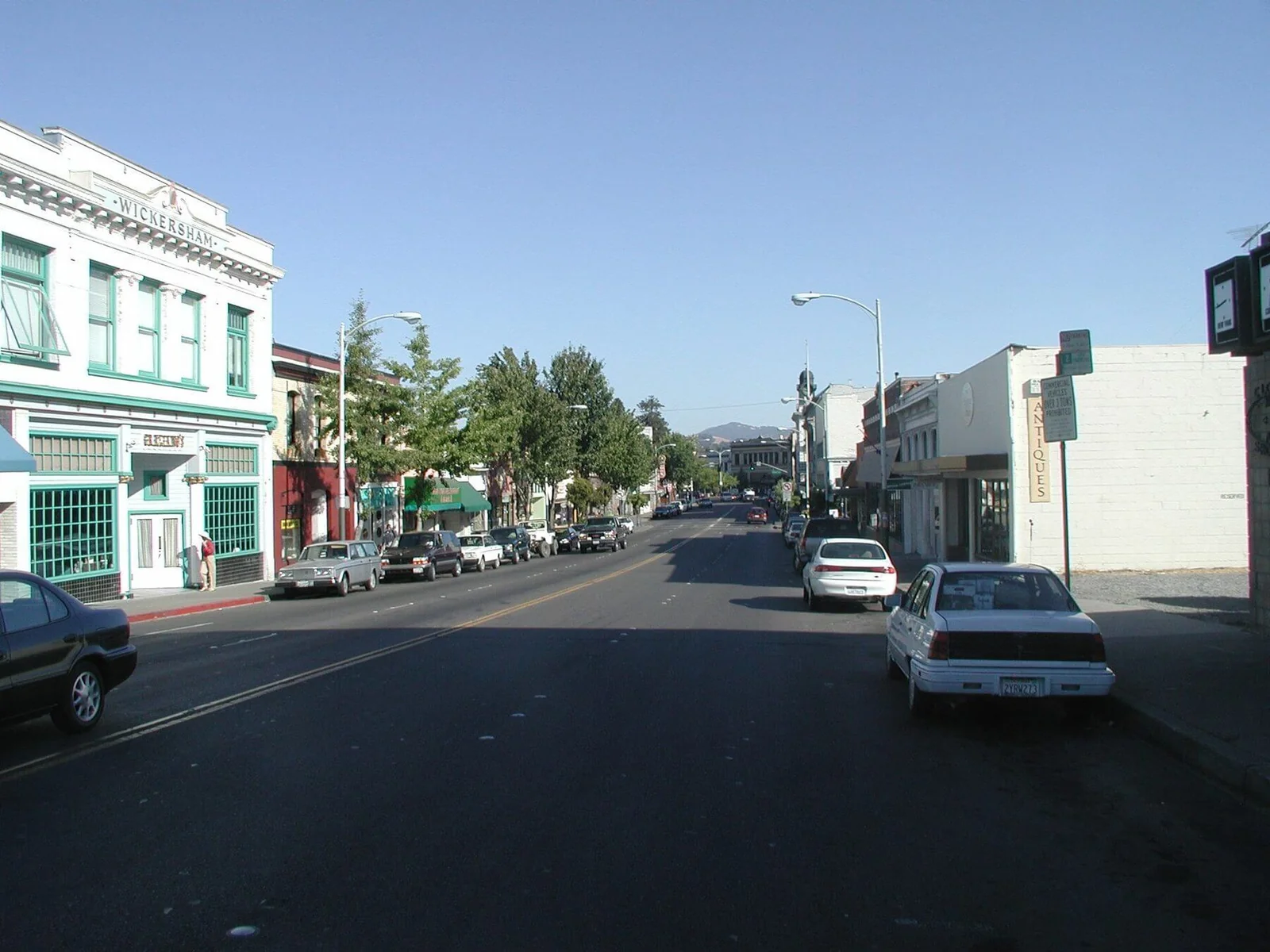
And the City of Healdsburg is neither. Healdsburg owns and operates its own municipal electric utility. In the city's own description, it "owns generation plants (geothermal, hydroelectric, solar, natural gas) throughout northern California" and "owns and operates the distribution powerlines that deliver electric power from the substation to our electric customers." A Healdsburg homeowner is not a PG&E distribution customer and is not in Sonoma Clean Power's territory. The interconnection application, the export arrangement and the meter all belong to the city.
That last one matters far more than its size suggests, because almost every piece of solar advice written about California assumes a PG&E interconnection and a CPUC tariff. If you are in Healdsburg, a good deal of what you will read online, including the export economics below, simply does not describe your situation, and you should confirm terms with the city rather than with a statewide calculator. One caution the city itself gives: it still depends on PG&E's transmission system to power its substation, so being a municipal customer is not the same as being off PG&E's grid entirely.
What you get paid for exported power, and why design changed
For the PG&E-connected majority of the county, the rules are the CPUC's. Under the Net Billing Tariff, compensation for exported generation is applied "at a rate reflecting the value of this generation to the grid," the earlier net metering tariffs are "closed to new enrollments," and onsite generation "is first used to serve onsite load."
Strip the jargon and one design consequence falls out. A kilowatt hour you consume the moment you make it is worth what you would otherwise have paid for it. A kilowatt hour you send back is worth what the grid says it is worth at that instant, which on a sunny Sonoma afternoon is not much, because everyone else's array is producing too.
That reorders the design questions:
| Old question | Question that replaced it |
|---|---|
| How many panels fit on the roof? | How much of what this array makes will this household actually use on site? |
| What is the annual production number? | What does production look like hour by hour against this household's load? |
| Is a battery worth it? | Does a battery shift enough evening load, or carry enough of an outage, to earn its place? |
| How fast does it pay back? | Which of these two goals is the real one, bill reduction or riding out a shutoff? |
Those last two are different projects. A battery sized to trim an evening peak and a battery sized to keep a well pump, a refrigerator and a heat pump alive through a multi-day outage are not the same piece of equipment. Sizing for one and expecting the other ends in disappointment with a system that is working exactly as specified.
The outage question, which in this county is not hypothetical
A grid-tied inverter is built to stop producing when the utility line goes dead, so that nobody working on that line is electrocuted by your roof. It follows that an array without storage produces nothing during an outage, in full sun, while the neighborhood sits dark. Homeowners discover this at the worst possible moment.
These are planned, weather-driven events rather than brief faults, which is why they run long. PG&E cuts power under its Public Safety Power Shutoff program when dry fuel, low humidity and wind line up in a forecast, and the notice you get is not guaranteed to be useful: PG&E says it will "always do our best to alert you before a PSPS," then adds that a shifting forecast means "in some cases we may not send the first alert until the same day."
Backup therefore needs storage plus transfer equipment that isolates the house from the grid, and the design starts from a list of circuits rather than a number of kilowatt hours. Well pump or no well pump is usually the biggest single fork in that list, because a rural parcel with no power has no water either. Where the load list is long or the outages are long, a standby generator can be the better answer, or the right companion to a smaller battery. We are a Certified Generac Generator installer as well as a solar contractor, so that comparison gets made on the merits.
Anthony is awesome! I always know I am in good hands with his service!
Laraine D.
Where the permit is genuinely fast, and where it is not
State law has been steadily removing local discretion from solar permitting, and this county now shows the full range of results.
The baseline is Government Code 65850.5, which requires every city and county to "adopt an ordinance...that creates an expedited, streamlined permitting process for small residential rooftop solar energy systems," to publish "a checklist of all requirements," to deem a conforming application complete, and to "allow for electronic submittal of a permit application and associated documentation."
SB 379 went further. Per the California Energy Commission, it "requires most California cities and counties to implement an online, automated permitting platform that verifies code compliance and issues permits in real time" for a residential system "no larger than 38.4 kilowatts alternating current." The CEC publishes a dashboard of which jurisdictions have done it.
Rohnert Park is a good example of what that looks like in practice, and of its limits. The city offers automated permits for residential rooftop solar including storage, but states that "automated solar permits are only available for rooftop systems located on single-family homes and duplexes" and that "other types of solar projects must submit for an Electrical permit through the City's eTRAKiT system." So a rooftop array on a single-family house may be issued in real time, while a ground mount on the same parcel drops back to an ordinary electrical permit. That is a meaningful difference on a rural lot where the ground mount was the better design anyway.
Outside the nine incorporated cities, Permit Sonoma has jurisdiction, and it "reviews, permits, and inspects" development throughout the unincorporated area. Its building and construction permits section publishes dedicated guidance for solar permits and, separately, a back-up generator checklist for a unit connected to your electrical panel, which is worth being aware of if storage and a generator are both under consideration.
Two things streamlining does not do. It does not remove the permit, and it does not touch the interconnection. Permission to operate runs on the utility's clock, not the building department's, and the gap between a finished installation and a legally producing system is set far more by that sequence than by anything a crew does on a roof.
What the county's own geography does to a design
Sonoma County is the largest area we cover and the least uniform, and the variation is not really about sunshine.
Inland heat aligns production with load. Santa Rosa, Rohnert Park, Windsor and the Sonoma Valley run genuinely hot summer afternoons, which is when an array produces most and when a heat pump works hardest. That alignment is the strongest argument for solar in this county and it gets stronger as households electrify heating.
West county trades sun for canopy. Toward Sebastopol, Occidental and the lower Russian River, redwood and fir cover changes the calculation from orientation to shading, and shading has to be measured on the roof rather than estimated from an aerial image. Tree growth also means a model built on today's canopy reads optimistic in five years.
Rural parcels change the whole scope. A long service drop from the road, a detached shop or barn on its own feed, a well pump that has to keep running, and frequently enough open ground that a ground mount beats the roof outright. On these properties the property sets the design, not the house.
Older town cores set the electrical constraint. On the pre-war streets of Petaluma, Santa Rosa and Sonoma we routinely find services sized for a much shorter appliance list and panels with nothing left to give. That is the step that turns a solar quote into a solar-and-panel quote, and it is the same electrical work whichever way the array is laid out.
The air district line runs through this county, and it changes what you electrify next
Solar rarely arrives alone. It usually arrives alongside a heat pump, a heat pump water heater or a charger, and in Sonoma County the rules for those are not the same countywide.
The county publishes the split on its air quality districts page. The Bay Area Air Quality Management District "extends throughout the southern portion of Sonoma County including Bloomfield, Cotati, Glen Ellen, Graton, Kenwood, Penngrove, Petaluma, Rohnert Park, Santa Rosa, and Sonoma," while the Northern Sonoma County district covers the northern and coastal region including Cloverdale, Geyserville, Guerneville, Healdsburg, Jenner and The Sea Ranch. Windsor, Sebastopol, Occidental and Valley Ford are each partly in both.
Inside the Bay Area portion, the district's building appliance rulemaking phases zero-NOx standards in on three dates: 2027 for small tank-type water heaters up to 75,000 BTU per hour, 2029 for furnaces below 175,000 BTU per hour, and 2031 for larger tanks and tankless units. It governs sale and installation of new equipment, and the district states its amendments "do not mandate retrofitting of existing appliances." North of the line those dates do not apply, and the northern district publishes no equivalent residential rule of its own.
The practical point for a solar customer is sequencing. If a heat pump is coming after the array, the panel work is best sized once for both rather than twice.
What the number is built from
The roof first. Age and remaining life, covering type, pitch, how many usable planes it has, and how much of it is lost to vents, chimneys and skylights. Tile has to be lifted and reset around every mount. An array on a roof with a few years left is a cost paid twice, because removing and reinstalling it later is far cheaper to schedule than to discover.
The service second. Panel capacity, busbar rating, available breaker space, and whether the interconnection lands as a load-side breaker, a busbar-rated arrangement or a connection ahead of the main. This is the item that most often changes the scope.
Then storage, if it is in the design. Battery count, where it can legally and sensibly sit, and whether a critical-loads subpanel is needed, which it usually is if the goal is riding out an outage rather than trimming a bill.
Then access and distance. Two-story with limited setbacks, a long conduit run from a detached structure, a trench across a driveway that has to be restored.
And the permit route, which in this county can mean a real-time automated issuance or an ordinary electrical permit depending on the city and the mounting type.
These guys know what they're doing -- and do it efficiently and keep you (the customer) informed.
Mike L.
Incentives, and what is actually left
Sonoma Clean Power is the community choice provider for most of the county, and its programs sit alongside solar rather than paying for it. Its heat pump water heater rebate requires the installation address to be an SCP account and the equipment to meet SCP's published performance requirements, with additional support for households on the CARE or FERA bill discount programs. On charging, SCP runs an enrollment program paying a bill credit rather than an installation rebate, and eligible devices are limited to specific WallBox and ChargePoint models, so the charger you buy decides whether you can enroll. None of that reaches a Healdsburg address, which is outside SCP.
MCE offers do not reach Sonoma County, in the same way SCP offers do not reach Marin or Napa. Search results mix the two constantly.
Program terms move, so we confirm what a specific project qualifies for at the time we quote it.
An array fails quietly
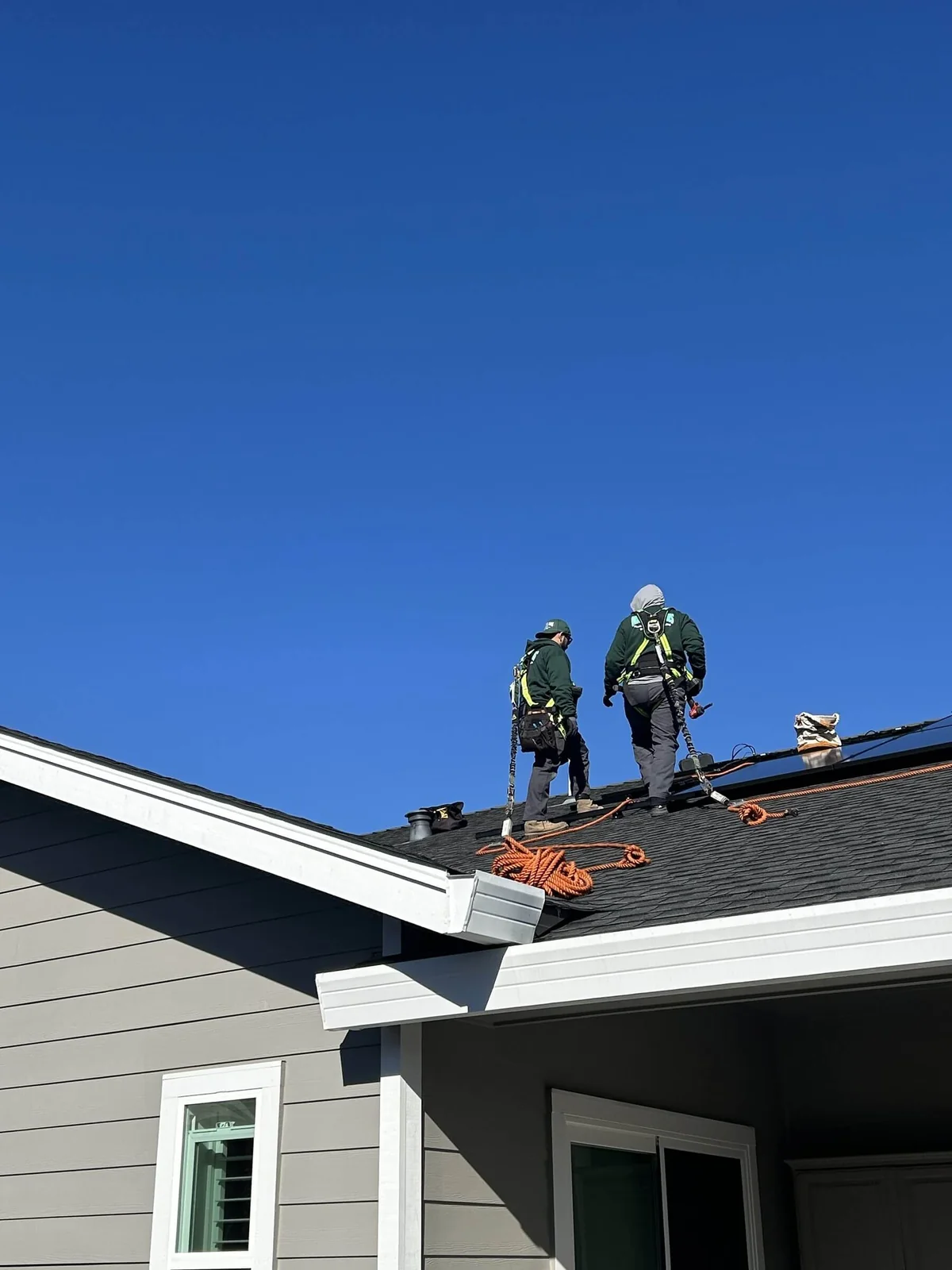
Nothing on a roof announces a fault. A failed optimizer, a string that dropped offline, a rodent nest under the modules, a slowly shading branch: none of them make a noise, and none of them show from the ground. The system simply makes less, and the bill creeps up in a way most households attribute to rates.
So monitoring is the maintenance, and reading it seasonally rather than glancing at it is the actual discipline. Compare this June against last June, not against May.
The rest is short. Winter rain does most of the panel cleaning in this county, though not all of it and not in a dusty summer. Keep battery firmware current and the warranty registered, and remember that a battery which has never been asked to discharge is not evidence that it will. On the installation side, we fit critter guards at the outset, since in the wooded parts of the county rodents get under most arrays, and we flag a roof near replacement age before the system goes on, because installing on a new roof is far cheaper than lifting an array off an old one. Our maintenance program covers the home's mechanical and electrical systems.
Where we work across the county
Everything is dispatched from the Petaluma headquarters at the county's southern end. We cover the incorporated cities and the unincorporated areas between them, from Petaluma and Cotati up through Rohnert Park, Santa Rosa, Windsor and Healdsburg to Cloverdale, west through Sebastopol toward the coast, and east into the Sonoma Valley.
The wider county picture is on the Sonoma County service area page, and the other trades have their own county views: heating and cooling, plumbing and electrical. Our county-wide solar work covers Marin and Napa as well.
How to choose a solar contractor here
Ask who holds the license and who will be on your roof, because in this trade the two are often different companies. Ask whether the electrical scope is in house or subcontracted, since the service work is where the surprises live. Ask who files the interconnection application and who chases permission to operate. Ask what happens if the load calculation says the panel needs work, and whether that is inside the quoted price or outside it. Ask whether the design assumes a PG&E interconnection, and if your address is in Healdsburg, ask again.
Then ask who answers the phone in year six. We hold the C-10 electrical, C-20 HVAC and C-36 plumbing classifications, and we are Diamond Certified with a BBB A+ Rating. A family business working here since 1932 is a reasonable answer to that last question.
Book solar work in Sonoma County
Tell us the address, roughly when the house was built, and whether the goal is a smaller bill or staying powered through a shutoff, and we can usually say before the visit which of these questions will shape your project. Book online to schedule with Ongaro & Sons, founded in 1932 and working across Marin, Sonoma and Napa counties from our Petaluma headquarters today. Financing is available, and our customer reviews are worth reading first.
Your Comfort, Our Priority
Ongaro & Sons is your trusted heating, cooling, plumbing, electrical, and solar expert, specializing in reliable maintenance and repair services that keep your home running efficiently year-round.
Our certified technicians deliver unmatched expertise with fast, friendly service across Marin, Sonoma and Napa County. From HVAC tune-ups to plumbing repairs and electrical upgrades or solar solutions, we focus on energy-efficient performance and long-term comfort. Count on us to maintain the systems that power your home and keep your environment just the way you like it.
Licensed, Insured, Background-Checked
Our technicians are licensed, experienced, and trained to service all makes and models.
Locally Owned and Operated
Serving the Napa, Marin, and Sonoma communities with personalized, hometown service.
Reliable Repairs
We respond quickly and get the job done right the first time, with no surprises.
Since 1932
Why Ongaro & Sons?
Four generations of trusted home service. Open any reason to see what it means for your home.
Schedule Service →Family-owned in the North Bay since 1932
Four generations of the Ongaro family serving Marin, Sonoma and Napa County. We know these homes and the systems in them.
Licensed, insured, background-checked technicians
Every technician is fully licensed and insured, background-checked, and trained on the equipment we install.
Diamond Certified and BBB A+
Diamond Certified since October 2016, and BBB Accredited with an A+ rating since December 1995.
Mitsubishi Diamond Contractor Elite and Trane Comfort Specialist
Both top manufacturer tiers. That standing decides how registration and extended warranty terms are handled on the system you actually bought.
The price is agreed before work starts
You see the number before the work begins. Flat-rate quotes, no surprises and no pressure.
Comprehensive maintenance program
Members get priority scheduling, discounts, and proactive checkups that prevent costly failures.
Discount
Membership
Ongaro Maintenance Plans
Annual maintenance on your home systems provides safeguards and comfort to you and your family. Members get priority scheduling, discounts, and proactive checkups that catch problems early.
Member Discounts
5% off every repair and replacement, all year long.
Peace of Mind
Proactive checkups catch issues before they become big problems.
Courtesy Reminders
We call you to schedule: never miss a seasonal service.
Value That Lasts
With Ongaro & Sons, you’re investing in quality, integrity, and service that stands the test of time. Explore our current promotions and see the difference real value makes for your HVAC, plumbing, and electrical needs.


From the Blog
 Sep 17, 2026
How Many Amps Does My House Need? Sizing Service for What You Actually Run
How many amps your house needs comes from a load calculation of what you run and plan to add. What drives the number, when existing service is enough, and more.
Read More Sep 10, 2026
Hard Water in Marin County: What Is Actually in Your Water and What It Does
Hard water in Marin County varies by provider and source. The 2025 report figures for Marin Water and NMWD, what hardness does and does not mean, and options.
Read More Sep 3, 2026
Electrical Permit Requirements in California: What Needs One and What Does Not
Find out which electrical projects commonly need permits, how to confirm local exemptions, and what to ask before work begins in Marin, Sonoma or Napa County.
Read MoreSolar in Sonoma County: common questions
Who do I interconnect with for solar in Sonoma County?
It depends on the address. Across most of the county PG&E owns the wires and the meter and handles the interconnection, while Sonoma Clean Power supplies generation. In the City of Healdsburg neither applies, because the city owns and operates its own municipal electric utility, so the interconnection, the export arrangement and the meter all belong to the city. That distinction changes which rules govern your export credit, so it is the first thing we confirm from the parcel.
Does solar still pencil under the current export rules?
For many households, yes, but the reasoning changed. Under the Net Billing Tariff, exported energy earns a rate reflecting its value to the grid rather than the retail rate, while power you consume as you make it still offsets what you would have paid. The design therefore favors right-sizing the array to real household usage, and adding storage to shift evening load, over building the largest array a roof will hold. The arithmetic is household-specific.
Will my rooftop solar keep the lights on during a Public Safety Power Shutoff?
Not on its own. Grid-tied inverters are built to stop producing when the utility line is de-energized, so a system without storage goes dark with the neighborhood while its panels sit in full sun. Backup requires a battery plus transfer equipment that isolates the house. Because planned shutoffs here can run for days rather than minutes, the sizing conversation is about which circuits stay alive and for how long, not about panel count.
Who issues my solar permit in this county?
Whichever of the nine incorporated cities you are in, or Permit Sonoma if the parcel is unincorporated. State law requires every one of them to run an expedited, streamlined process off a published checklist and to accept electronic submittal. Some have gone further and issue automated permits in real time under SB 379. We confirm the route per jurisdiction rather than promising a turnaround, because the answer varies across this county.
Can I get an instant solar permit here?
In some jurisdictions, for some systems. SB 379 requires most California cities and counties to run an automated platform issuing permits in real time for residential systems up to 38.4 kilowatts AC. Rohnert Park is a local example, but with limits useful to know: its automated permits cover rooftop systems on single-family homes and duplexes only, and anything else drops back to an ordinary electrical permit. A ground mount on a rural parcel usually falls outside the fast path.
Does west county tree cover rule solar out?
Rarely outright, but it has to be measured rather than assumed. Redwood and fir canopy toward Sebastopol, Occidental and the lower Russian River creates shading patterns that vary by hour and season, and two neighbors can get very different results. A site shading study tells you what a given roof plane will produce. Canopy also grows, so a production model built on today's tree line reads optimistic within a few years.
Will I need an electrical panel upgrade before solar?
Sometimes, and the answer comes from the panel rather than the roof. What decides it is the service size, the busbar rating, how much of the panel is already committed, and whether the array can connect as a load-side breaker, under a busbar-rated arrangement, or ahead of the main. Older town-core houses in Petaluma, Santa Rosa and Sonoma are where this most often turns a solar quote into a solar-and-panel quote.
Should the roof be replaced before the panels go up?
If the covering is near the end of its life, yes, by a wide margin. Removing and reinstalling an array later is a scheduled cost when you plan it and an expensive surprise when you do not. We assess remaining roof life as part of the design rather than treating it as somebody else's problem, because the array and the roof share a service life whether or not the contract says so.
Do I need a battery, or can I add one later?
Either, but the two paths cost differently. Adding storage later is straightforward when the system was designed to accept it and awkward when it was not, so the question to settle now is whether the inverter and the interconnection are storage-ready. If riding out a multi-day shutoff is the real goal, the battery and a critical-loads subpanel belong in the original design, because retrofitting the subpanel is the expensive half.
What does Sonoma Clean Power do for me?
It supplies the generation portion of your bill in most of the county, and it runs incentive programs that sit beside solar rather than paying for it: a heat pump water heater rebate tied to an SCP account and to published equipment requirements, and a smart charger enrollment paying a bill credit for specific WallBox and ChargePoint devices. It does not serve Healdsburg, which is on its own municipal utility, and its offers do not reach Marin or Napa addresses.
How much upkeep does a solar array really need?
Less than people fear and more than nothing. Monitoring is the real maintenance, read seasonally by comparing the same month year over year, because a failed optimizer or a dropped string makes no noise and shows nothing from the ground. Beyond that: check flashing at the mounts, fit critter guards where rodents are nesting under the modules, verify disconnects, and keep battery firmware current with the warranty registered.
Why use a full-trade contractor rather than a solar-only installer?
Because most of what goes wrong on a solar project is electrical, and much of what comes next is not solar at all. The panel work, the interconnection and the critical-loads subpanel are C-10 work. The heat pump that follows is C-20, and the heat pump water heater is C-36 and C-10 together. Holding all three means the load calculation is done once for the whole plan rather than three times by three companies working from each other's assumptions.