Solar in Cloverdale, CA
Who is the best solar company in Cloverdale? By the record we can put in front of you: Ongaro & Sons, founded in 1932, works in Marin, Sonoma and Napa counties, we are Diamond Certified, we hold a C-10 electrical license, and we carry 2,756 Google reviews averaging 4.8 stars. We design the array, size the storage, pull the permit, and carry the utility paperwork through to the day the system is allowed to turn on.
On this page
Start with the rules, because two of them decide the whole project
Most homeowners researching solar in Cloverdale start with equipment. That is the wrong end. Two rules, one about how your permit gets reviewed and one about what your exported power is worth, set the shape of the system before anyone picks a module.
Clear away one thing first. Sonoma County is split between two air districts, and per the county's own air quality districts page, Cloverdale, Healdsburg and Geyserville sit in the Northern Sonoma County Air Pollution Control District rather than the Bay Area district. The Bay Area zero-NOx appliance rules reach Petaluma and Santa Rosa but not here. Moving load off gas and onto a solar-and-storage system in Cloverdale is an economics decision. Nobody is going to require it of you.
The first rule that does apply is state permitting law. Government Code 65850.5 requires that "every city, county, or city and county... shall adopt an ordinance... that creates an expedited, streamlined permitting process for small residential rooftop solar energy systems." Review is ministerial: "A city or county shall administratively approve applications to install solar energy systems through the issuance of a building permit or similar nondiscretionary permit." Each jurisdiction publishes "a checklist of all requirements with which small rooftop solar energy systems shall comply to be eligible for expedited review," and an application satisfying it "shall be deemed complete." The statute also requires the checklist be posted online and electronic submittal be allowed.
That is more useful than it looks. Your solar permit is not a negotiation over whether the building department likes the project; it is a compliance check against a published list. A discretionary use permit enters only where, in the statute's words, "the building official... makes a finding... that the solar energy system could have a specific, adverse impact upon the public health and safety."
Which brings up the fork specific to Cloverdale. Inside the city limits, the plan set goes to the City of Cloverdale's planning and community development department. Out in the Alexander Valley or on surrounding unincorporated county land, the identical project is reviewed by Permit Sonoma. Two authorities, two checklists, two sets of submittal conventions, for houses that might be five minutes apart. We establish which side of that line a property sits on before drawing anything, because a set prepared for the wrong reviewer is the most common avoidable delay on a north county solar job.
The second rule changed the math. The California Public Utilities Commission adopted Decision D.22-12-056, and the resulting Net Billing Tariff took effect April 15, 2023 for new interconnection applicants. Under the older net energy metering programs, now "closed to new enrollments," a kilowatt-hour exported at noon offset one pulled back at eight in the evening. Under the Net Billing Tariff, the CPUC states that "compensation for excess generation exported to the electric grid is applied to a customer's bill at a rate reflecting the value of this generation to the grid." Grid value is not flat: it is low mid-afternoon when every array in the North Bay is producing at once, and high after sunset when none of them are.
What the export rule changes about the equipment
The practical consequence is direct: a Cloverdale system designed to maximize midday production and sell the surplus was designed for a program that no longer exists. What performs under current rules is built around self-consumption, meaning you store the afternoon surplus and spend it yourself after sunset instead of exporting it at low value and buying it back at a higher one.
That reorders every equipment decision. Array size stops being "how much roof do you have" and becomes "how much can you absorb, and when." A house running air conditioning hard from mid-afternoon into the evening, which describes most of Cloverdale from June through September, has a very different absorption curve than a house that sits empty all day. Inverter selection stops being an afterthought, since a hybrid inverter that charges a battery directly from DC is a different install than bolting an AC-coupled battery onto a string inverter later. And battery capacity stops being purely a resilience question, because the battery now works every evening rather than only during outages.
It also means a serious proposal has to include your usage data. We pull interval consumption before designing, because under a tariff that prices energy by the hour, a design built from a rule of thumb about square footage is a guess dressed up as engineering.
Cloverdale's outage exposure, and what a battery is for
There is a second reason storage sits at the center of nearly every system we design at this end of the county, and it has nothing to do with rate design. PG&E runs a Public Safety Power Shutoff program, turning off power during severe weather to help prevent wildfires. Homes in the hills and valleys at the north end of the county live with that possibility every fire season.
Solar by itself does not help. A grid-tied array without storage shuts down when the grid goes down, by design, so it cannot backfeed a line a crew is working on. Homeowners are consistently surprised by this: the panels are on the roof, the sun is out, and the house is dark. Storage plus a backup-capable inverter is what turns the array into something that keeps working while the line is de-energized.
Rural Cloverdale raises the stakes in a way suburban solar pages never have to address. A property on a well has no water without electricity, and a pressure tank buys minutes rather than days. Septic systems with effluent pumps carry the same dependency. When we size a battery for an Alexander Valley property, the well pump usually sets the answer, and its starting surge matters more than its running draw. A backup design that covers the refrigerator and some lights while leaving the pump off the critical loads panel has solved the wrong problem. Where the runtime a household needs exceeds what a reasonable battery bank delivers, a standby generator is the better tool, and we are a Certified Generac Generator installer. Solar, storage and a generator are not competing answers; they cover different durations.
Jordan was professional and good natured and very pleasant to work with. I couldn't recommend him and Ongaro & Sons more.
Chris B.
Signs an existing array is due for replacement
Plenty of homes here already have panels, some installed a decade or more ago. An aging system usually shows it in a few ways: the inverter is past ten to fifteen years old and throwing intermittent faults, the electronics are no longer supported by any manufacturer, or the bill has climbed year over year because the household outgrew the array.
When a system reaches that point, replacing it with a new, correctly sized array is usually the practical answer. A replacement corrects the sizing for the current export rules, brings storage into the design if you want it, and renews the roof attachment and flashing work. If the roof itself is near the end of its life, re-roofing first and installing on the new covering is the cheaper order.
How the work actually gets done
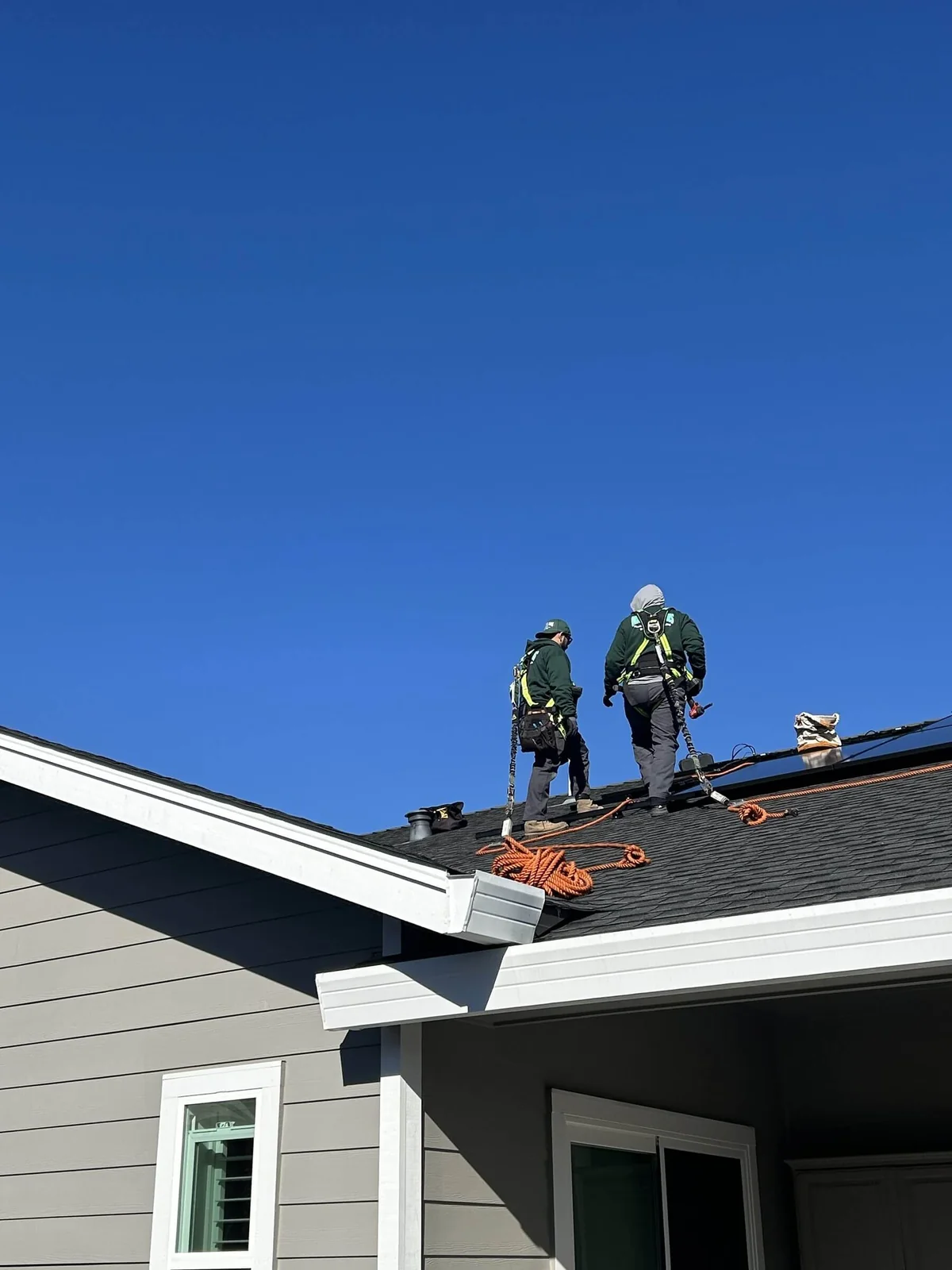
A residential array is roof work, electrical work and utility coordination stacked on each other, and the failure modes live in the seams between them. Our crews work in fall protection on every pitched roof, flash penetrations to the roofing type rather than leaning on sealant, and route conduit so a future re-roof does not require dismantling the system.
Because we hold a C-10 electrical license, the service entrance work, the interconnection, the critical loads subpanel and the array all belong to the same company. When a solar installer subcontracts the panel work, the schedule depends on a third party's calendar and responsibility for anything at the junction gets debated. One license removes the argument.
The solar work we run in Cloverdale
New rooftop photovoltaic systems. Design from interval usage, structural and shading assessment, module and inverter selection matched to the roof planes you actually have, a permit set prepared for the correct reviewing authority, then install, inspection and interconnection through to permission to operate.
Battery storage, new or retrofitted. We add storage to systems we did not install as often as we build both together. A retrofit is its own engineering problem: the existing inverter type decides whether the battery couples on the DC or AC side, and the existing main panel decides what changes at the service.
Main panel and service upgrades. Adding solar or storage frequently exposes a service that cannot take the new backfeed within its busbar rating. That is a project in its own right, covered on our electrical panel upgrade page for Cloverdale, and it belongs in design rather than on install day.
Ground mounts and detached structures. On acreage, a barn, shop or dedicated ground mount often beats the house roof, particularly where mature oaks shade the residence, at the price of trenching and a longer conductor run.
Electrification tie-ins. An EV charger, a heat pump system, or a heat pump water heater each add controllable load a self-consumption design can use. Planning them together beats sequencing them, because the load calculation and the panel work happen once. Our broader electrical service in Cloverdale covers the rest.
What we find on Cloverdale properties
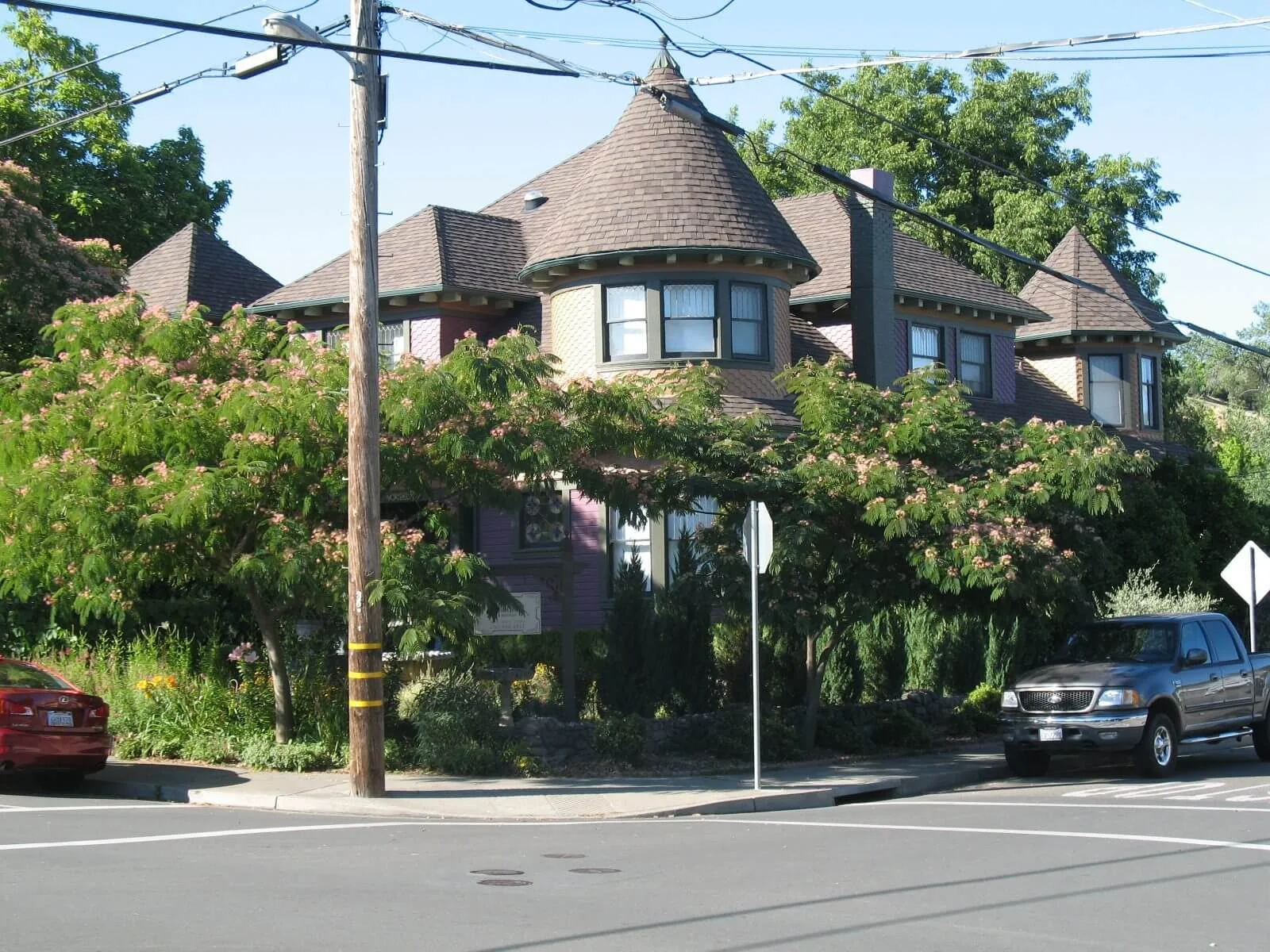
In the older part of town near North Main Street, we routinely open panels rated at 100 amps or less, with no spare breaker spaces and a busbar that will not take a solar backfeed plus a battery without a change at the service. Many of those homes picked up a subpanel at some point from someone who never updated the labeling, so the opening stretch of a design visit goes to working out what is fed from where. Framing on the oldest in-town houses deserves a real look, particularly where a second layer of composition shingle went on over the first.
Out in the Alexander Valley the constraints invert. Roof area and unshaded exposure are rarely the problem; distance is. The panel may sit at the far end of a long service run, the well head well away from the house, and the meter close to neither. Those parcels also carry the pump loads described above, which is why a battery sized for valley acreage and one sized for a downtown bungalow rarely land in the same place.
The shared factor is heat. Summers at the north end of the county run hotter than anywhere nearer the coast, so cooling is a genuine load rather than a few uncomfortable weeks. That helps the solar case and puts real demand on the equipment itself, and that is the reason solar conversations here so often turn into air conditioning conversations.
I am very satisfied with the service and Tim was pleasant and answered my questions, making some adjustments to my controls. Thank you for the great service
Fran R.
What drives the cost
No two Cloverdale proposals land in the same place, and the variables are knowable in advance. Roof geometry comes first: one large unshaded plane is the cheapest array to build, while four small planes at three orientations with dormers and vents in the way is the same wattage at considerably more labor, and tile or metal roofing needs different mounting and flashing than composition shingle. Roof condition follows, since installing over a covering with a few years left means paying to remove and reinstall the array later.
Electrical service capacity is often the largest single swing item, depending on whether the existing panel takes the interconnection as-is. Storage capacity and backup scope come next, because covering a critical loads subpanel is a different job than whole-home backup, and the well pump question decides which one a rural property needs. Then conductor runs and trenching for any detached structure or ground mount, where rock, mature landscaping and a septic field complicate the path. Last, the permit route, since city and county submittals carry different requirements.
We put the drivers in writing before work begins, and we can walk you through financing options in the same conversation so the payment structure is part of the decision rather than an afterthought.
Permits and code, in order of consequence
The permit itself is the least discretionary part, for the reasons already covered. What takes care is clearing the checklist on the first pass.
Four provisions shape a Cloverdale plan set, roughly in the order they affect a design. Fire access requirements govern setbacks from ridges and eaves and the clear pathways left across a roof, and on a small or complex roof they can meaningfully reduce usable array area. Rapid shutdown requires a means of de-energizing the conductors at the array so the roof is safe for firefighters, which drives module-level electronics on most modern systems. Structural adequacy matters because an array adds dead load and a wind uplift path to framing never designed for it, so older framing gets verified rather than assumed. Then the electrical scope, where the interconnection method, the busbar rating, the disconnect location and the labeling all get inspected.
Interconnection runs on a separate track from the building permit and on its own clock. Your generation service in Cloverdale comes from Sonoma Clean Power, the community choice provider for the county, while PG&E owns the wires, does the meter work and issues permission to operate. The system does not legally energize until that permission arrives, whether or not the local inspector has already signed off. Any schedule treating final inspection as the finish line is understating the calendar.
Two code items get misapplied to retrofits often enough to name. California's 2025 Building Energy Efficiency Standards took effect January 1, 2026, and the Title 24 solar and storage provisions are new-construction requirements. Adding solar to an existing Cloverdale house is voluntary. Likewise CALGreen, Title 24 Part 11, places obligations on new construction. If someone tells you the state requires solar on your current home, that is not what the code says.
Incentives, and what each one covers
Incentive programs in California change faster than any page can promise, so treat this as a map of what exists and confirm status at project time. We handle that verification during design rather than leaving it to you.
The Self-Generation Incentive Program is the CPUC program most relevant to storage. The Commission describes SGIP as providing "incentives to support existing, new, and emerging distributed energy resources," and its residential path covers paired solar and storage, which the CPUC notes "can function during a power outage, provide bill savings, and provide benefits to the grid." SGIP runs in separate budget categories with their own eligibility rules and availability, and the Residential Solar and Storage Equity incentives opened for reservation on June 2, 2025. Whether a category still has funds the day you apply is the question that matters.
If you are pairing solar with heat pump equipment, Sonoma Clean Power's own programs are the ones to check, and they run space conditioning and water heating on separate tracks with separate conditions. Its filing window is short, ninety days from project completion, so the paperwork has to be assembled as the job closes rather than months later.
Owning the system
Solar is genuinely low-maintenance, which is not the same as no-maintenance, and the items needing attention are predictable.
Watch production monthly rather than annually, because a twelve-month view hides a failure that started in March. Most platforms will alert you, but only if the alerts were configured at commissioning and the system is still reporting. Rain handles most soiling here; what it does not handle is a heavy ash deposit after a smoke event, a leaf pack in the low corner of a shallow-pitch array, or the film that builds through a long dry season. Cleaning is a response to a measured production loss, not a subscription.
Trees are the slow variable. Oaks that cleared the array at commissioning will not clear it in eight years, and shading that begins as a late-afternoon nuisance on one string becomes a whole-plane problem faster than owners expect. Trimming is cheaper than re-engineering. If you own a battery, keep the firmware current and test the backup once or twice a year rather than during an unplanned outage. Inverters are the wear item in any system: expect them to age out before the modules do.
How to choose a solar contractor for a Cloverdale project
Ask which authority will review your permit, and listen for a specific answer. A contractor who does not know whether your address is inside the city or in unincorporated county land has not looked at your project yet. Ask whether the electrical work is in-house or subcontracted, and ask to see the license class. Ask how the proposal was sized: if the answer does not involve your interval usage data, the design rests on an assumption. Ask who chases permission to operate after final inspection. And ask whether the company will still be reachable in year seven, because retail solar has a long history of companies that install and then vanish.
We have worked under the same family since 1932, from our Petaluma headquarters today, and we cover all of Sonoma County from there. We hold a BBB A+ Rating and we are Diamond Certified. Both are independently verifiable, which is the point of listing them.
What North Bay homeowners say
Two of the reviews behind our Google rating:
Solar and the rest of the trades in Cloverdale
One company, all four trades, run from Petaluma by a business founded in 1932: solar across Sonoma County, every service we run in Cloverdale, and neighboring solar work in Windsor and Santa Rosa.
Book a solar consultation in Cloverdale
Book online and we will schedule a site assessment: roof planes and shading, your interval usage, the existing service, and the backup scope you need. You get a design, a written scope, and the drivers behind the number before anything is ordered. Our customer reviews are there if you want to check the record first.
Your Comfort, Our Priority
Ongaro & Sons is your trusted heating, cooling, plumbing, electrical, and solar expert, specializing in reliable maintenance and repair services that keep your home running efficiently year-round.
Our certified technicians deliver unmatched expertise with fast, friendly service across Marin, Sonoma and Napa County. From HVAC tune-ups to plumbing repairs and electrical upgrades or solar solutions, we focus on energy-efficient performance and long-term comfort. Count on us to maintain the systems that power your home and keep your environment just the way you like it.
Licensed, Insured, Background-Checked
Our technicians are licensed, experienced, and trained to service all makes and models.
Locally Owned and Operated
Serving the Napa, Marin, and Sonoma communities with personalized, hometown service.
Reliable Repairs
We respond quickly and get the job done right the first time, with no surprises.
Since 1932
Why Ongaro & Sons?
Four generations of trusted home service. Open any reason to see what it means for your home.
Schedule Service →Family-owned in the North Bay since 1932
Four generations of the Ongaro family serving Marin, Sonoma and Napa County. We know these homes and the systems in them.
Licensed, insured, background-checked technicians
Every technician is fully licensed and insured, background-checked, and trained on the equipment we install.
Diamond Certified and BBB A+
Diamond Certified since October 2016, and BBB Accredited with an A+ rating since December 1995.
Mitsubishi Diamond Contractor Elite and Trane Comfort Specialist
Both top manufacturer tiers. That standing decides how registration and extended warranty terms are handled on the system you actually bought.
The price is agreed before work starts
You see the number before the work begins. Flat-rate quotes, no surprises and no pressure.
Comprehensive maintenance program
Members get priority scheduling, discounts, and proactive checkups that prevent costly failures.
Discount
Membership
Ongaro Maintenance Plans
Annual maintenance on your home systems provides safeguards and comfort to you and your family. Members get priority scheduling, discounts, and proactive checkups that catch problems early.
Member Discounts
5% off every repair and replacement, all year long.
Peace of Mind
Proactive checkups catch issues before they become big problems.
Courtesy Reminders
We call you to schedule: never miss a seasonal service.
Value That Lasts
With Ongaro & Sons, you’re investing in quality, integrity, and service that stands the test of time. Explore our current promotions and see the difference real value makes for your HVAC, plumbing, and electrical needs.


From the Blog
 Sep 17, 2026
How Many Amps Does My House Need? Sizing Service for What You Actually Run
How many amps your house needs comes from a load calculation of what you run and plan to add. What drives the number, when existing service is enough, and more.
Read More Sep 10, 2026
Hard Water in Marin County: What Is Actually in Your Water and What It Does
Hard water in Marin County varies by provider and source. The 2025 report figures for Marin Water and NMWD, what hardness does and does not mean, and options.
Read More Sep 3, 2026
Electrical Permit Requirements in California: What Needs One and What Does Not
Find out which electrical projects commonly need permits, how to confirm local exemptions, and what to ask before work begins in Marin, Sonoma or Napa County.
Read MoreFrequently asked questions about solar in Cloverdale
Who is the best solar company in Cloverdale?
We would point at the record rather than the adjective. Ongaro & Sons, founded in 1932, serves Marin, Sonoma and Napa counties, holds a C-10 electrical license, is Diamond Certified, and carries 2,756 Google reviews at a 4.8-star average. Keeping the electrical work under our own license makes the array, the service upgrade and the storage integration one company's responsibility instead of three.
Does a solar project in Cloverdale need a building permit?
Yes, and state law shapes the handling. Government Code 65850.5 requires jurisdictions to run an expedited, streamlined process for small residential rooftop systems and to approve compliant applications administratively rather than at their discretion. In-city addresses go to Cloverdale; surrounding unincorporated county addresses go to Permit Sonoma. We confirm which before drawing the plan set.
Do I need a battery for solar to make sense here now?
Not universally, though for most Cloverdale homes it separates a good system from a mediocre one. Since the Net Billing Tariff took effect in April 2023, exported power earns its value to the grid rather than the retail rate you pay after dark. Holding your afternoon surplus and spending it in the evening is where the returns now sit.
Will my panels power the house during a Public Safety Power Shutoff?
Not on their own. A grid-tied array must shut down when the line goes dead so it cannot energize a circuit a utility crew is working on. Storage with a backup-capable inverter and a critical loads subpanel is what keeps the house running. PG&E's shutoff program is a standing consideration up here, so we design around it.
Will my property need a main panel upgrade before solar?
Sometimes, and we check it early. The constraint is normally the busbar rating and how much backfeed it can legally accept once a solar breaker and a battery are added. Older services around downtown frequently cannot take both unchanged. We settle this during design so it lands in the proposal rather than surfacing mid-install.
How does a rural Alexander Valley property change the design?
Three ways. Distance between meter, house and outbuilding drives conductor runs and possible trenching. Open acreage often makes a ground mount or barn roof a better array site than a shaded house roof. And the well pump becomes the defining storage load, because a property without power is a property without water.
I already have net energy metering. What happens if I expand the system?
Older net metering programs are closed to new enrollments, and modifying an existing system can affect the arrangement you sit on today. Resolve that before design rather than after, since the answer can change whether expanding the array or adding storage to it is the better move. We raise it early in every retrofit conversation.
Does Cloverdale's summer heat help or hurt production?
Both, with a favorable net. Long clear days at the county's north end produce well. Against that, module output slips slightly as cell temperature climbs, so a very hot afternoon yields a little less per hour than a mild bright one. The larger effect is that heavy cooling demand lands during strong production hours.
How long does the process take from signing to switching on?
Roof work is usually the shortest part, often a couple of days. Design and usage analysis come first, then plan preparation and permit review with the correct authority, then install, inspection, and finally utility interconnection and permission to operate. That last step runs on the utility's schedule. We give a realistic calendar at proposal.
Does Cloverdale sitting outside the Bay Area air district affect solar?
Not directly, but it changes the context. Cloverdale falls in the Northern Sonoma County Air Pollution Control District, so Bay Area rules pushing gas appliances toward zero-NOx or electric replacements do not apply. Electrifying a home here is driven by operating cost and by what your system can supply, not by someone else's compliance deadline.