Electrician in Cloverdale, CA
Ongaro & Sons has wired homes in the North Bay since 1932, working north out of our Petaluma headquarters. We hold a C-10 electrical license, we are Diamond Certified, and we carry 2,756 Google reviews averaging 4.8 stars. We pull the permit from the right authority, size the work off an actual load calculation, and tell you what the job involves before anyone opens a panel.
On this page
Cloverdale sits outside the rule the rest of the county is planning around
The most consequential fact about electrical work at this end of Sonoma County is a district boundary almost nobody has heard of. Cloverdale is not in the Bay Area Air Quality Management District. It falls under the Northern Sonoma County Air Pollution Control District, as the county's own air quality districts page shows.
Why an air rule matters to an electrician: BAAQMD Regulation 9, Rule 6 established zero-NOx requirements for residential water heaters, with point of sale standards phased across 2027 and 2031 by equipment type, so they reach what may be sold and installed rather than the unit already in place. In Petaluma, Santa Rosa and Sonoma, that turns a plumbing replacement into an electrical project, because the equipment that satisfies it generally runs on a 240-volt circuit the house may not have. None of it reaches Cloverdale.
The practical consequence is worth stating plainly: added electrical load here is elective. Downcounty, a homeowner often gets pushed into a service conversation by a compliance date. In Cloverdale the conversation starts from the other direction, with what you want the house to do: air conditioning that holds through a north county August, a car charger in a detached garage, a standby generator that keeps the well pumping. Nobody here has to replace a working gas appliance because of an air district rule, and any contractor who says otherwise is selling from a map they have not read.
One town, two permit desks
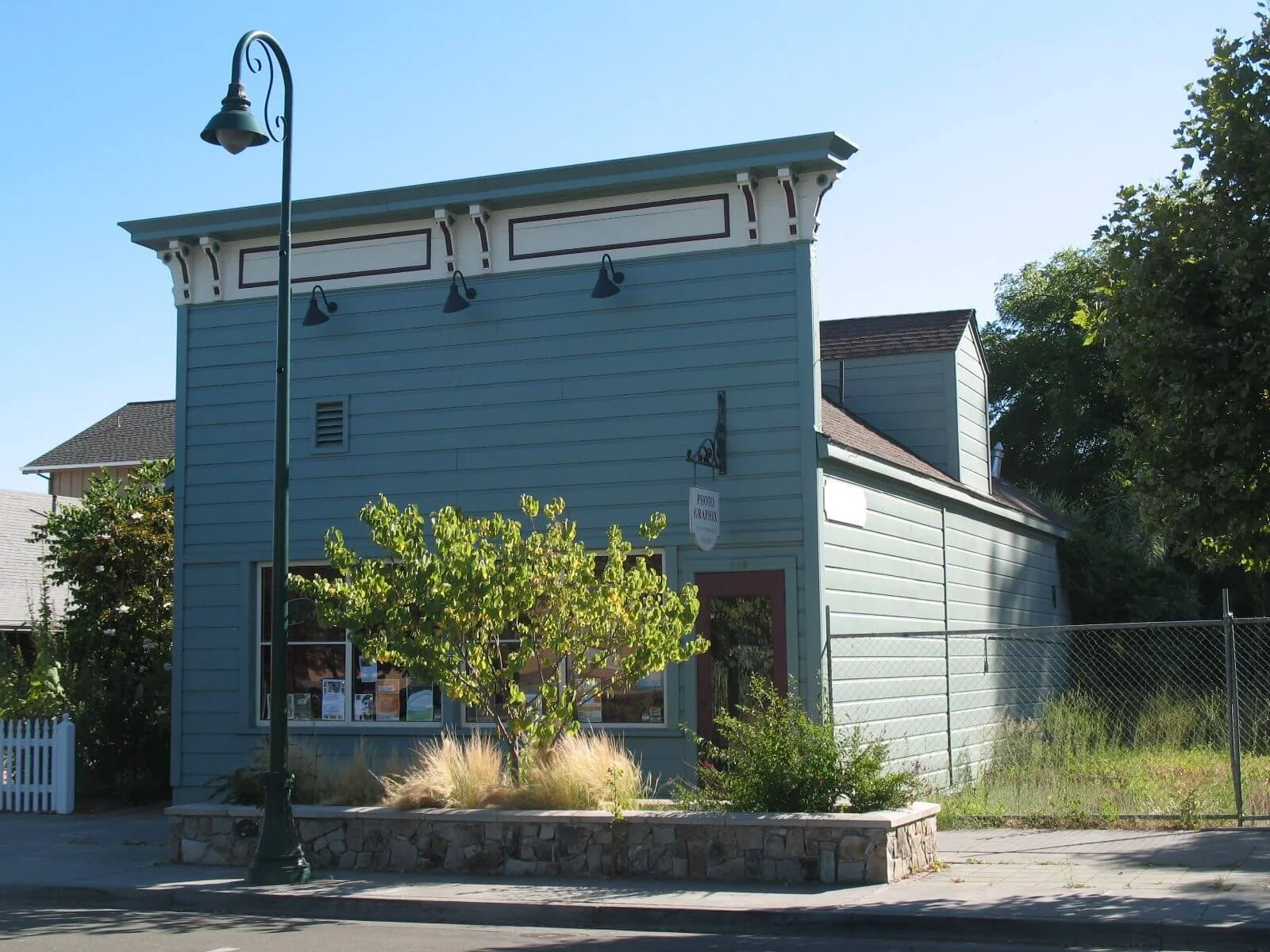
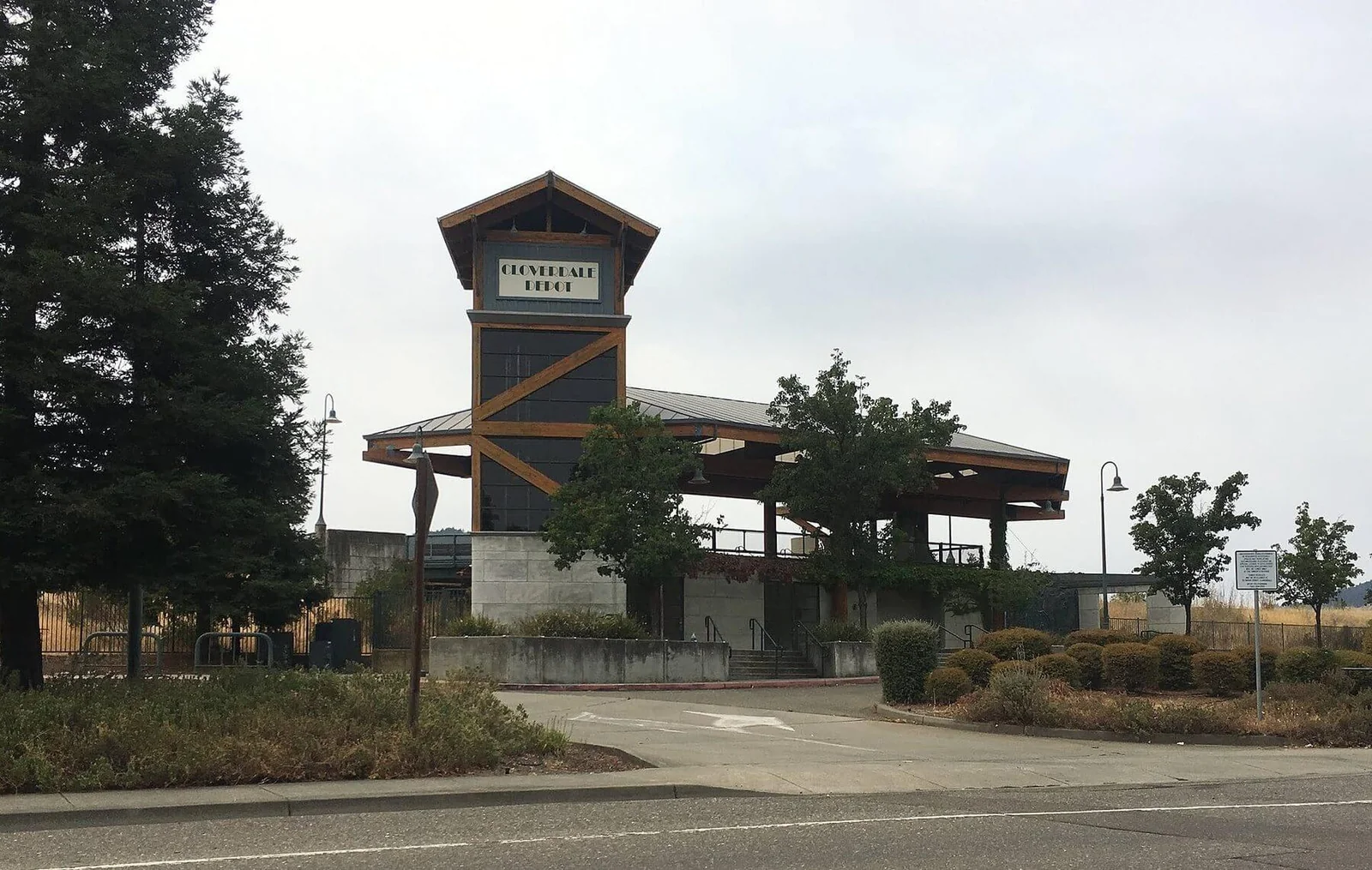
Cloverdale's city limits are the second boundary that decides how your project runs. Inside them, permits come from the City of Cloverdale Building Department at 124 North Cloverdale Boulevard, which accepts applications through its online building permitting portal or in carbon-copy triplicate at the counter. The city states that building permit fees are based upon the value of the proposed improvements and are due at the time of permit submittal, that inspection requests must be made at least 24 hours in advance to guarantee the inspection, and that inspections run Monday through Thursday from 2 to 4 pm.
That last detail is a scheduling constraint, not trivia. A service change needing a correction and a reinspection has four afternoons a week to land in, so we plan rough-in and utility coordination around that window instead of discovering it on a Friday.
Outside city limits, the identical job belongs to Permit Sonoma. Most Alexander Valley addresses and most rural parcels people describe as being in Cloverdale are unincorporated: different application, different inspector, different calendar. We verify the parcel before quoting, because a wrong assumption about jurisdiction is the cheapest possible way to lose two weeks.
Two things the state decides, and the city cannot
Home EV charging is one of them, and it sits in two sections rather than one. Government Code 65850.7 makes the jurisdiction adopt a streamlined process, approve by building permit or similar nondiscretionary permit, and limit review to health and safety, which takes the decision out of the realm of opinion. Section 65850.71 is where the clock lives: one to 25 stations at a single site is deemed complete after five business days and deemed approved twenty business days later, absent an approval, a substantial-evidence adverse impact finding, a denial or a pending appeal. You still need the permit. What the law caps is how long anyone can sit on it.
Backup power is the other, and Permit Sonoma states its threshold unusually clearly: "If you live in unincorporated Sonoma County and plan to use a generator that connects to your electrical panel, you will need to obtain a permit." The same back-up generator page adds that "If you plan to run your appliances directly off a portable generator (instead of through the electrical panel), you do not need a permit from the County." Submittals include an electrical single line diagram that must indicate the transfer switch or interlock and a lockable disconnecting means, and where the unit gets an enclosure of its own, "the structure may be subject to additional permits."
For a lot of households up here that distinction is the whole decision. Northern Sonoma County came through the 2019 Kincade Fire and is exposed to PG&E Public Safety Power Shutoffs, which the utility may use to keep customers safe during severe weather. Cords strung from a portable unit are unpermitted, and they will not carry a 240-volt well pump. A permanently wired generator behind a transfer switch is a permitted project with a drawing, an inspection, and a defined list of circuits that stay alive. We are a Certified Generac Generator installer and we build those systems to the permit set rather than around it.
Ryan came out and quickly assessed the situation with my electrical service, and made recommendations for an alternate solution that would work within my available power.
Matthew G.
What the rules change about the equipment you end up with
Everything above lands on one document: the load calculation. It is the difference between an install that passes and a panel that runs out of room the following spring.
Cooling drives that number here more than it does closer to the coast. Cloverdale runs hot in summer at the north end of the county, so a condenser is hours of running current on the worst afternoons rather than a light seasonal load. Add a well and the picture shifts again. This town mixes older in-town homes with rural valley properties, many on wells and septic, and a well pump is a 240-volt motor with a starting draw well above its running draw. On those parcels a shutoff takes your water and waste handling at the same moment it takes the lights.
The panel itself is the constraint you cannot talk your way around: bus rating, available breaker spaces, the condition of the service conductors, and whether the meter and mast can carry a change at all. When the calculation says the service is short, an electrical panel upgrade in Cloverdale becomes the first project rather than the third.
Charger selection is not purely an electrical decision in this county. Sonoma Clean Power runs a smart charger enrollment program rather than an installation rebate: a monthly bill credit plus a sign-up bonus for enrolling an eligible Wi-Fi connected smart charger, open to active SCP customers who are the account holder or an authorized representative. Eligible devices are currently limited to WallBox and ChargePoint models, and SCP says it is "working hard to add more EV chargers to our program." The program slows charging during grid stress, and the customer "can override an event anytime." Buy outside that list and the wiring still passes inspection, but the enrollment is closed to you, so we raise it before equipment is ordered on any EV charger installation in Cloverdale.
Metering deserves the same treatment. PG&E's electric vehicle rate plans split on hardware. EV2-A uses your existing single meter and applies to both home energy and vehicle use, with off-peak hours from midnight to 3 p.m. every day. EV-B requires a second dedicated meter, separates the vehicle's costs from those of the house, and is unavailable with CARE, FERA, or Medical Baseline. A second meter is a scope item, so the rate question belongs in the design conversation rather than a month after the inspection card is signed. PG&E's third residential option, E-ELEC, is written for a home taking on more than one electric load. It carries a Base Services Charge, so it is worth comparing rather than assuming.
What homeowners call us about
The symptom list up here skews toward capacity and toward age, in that order:
- Breakers that trip when the condenser starts, particularly during the first genuinely hot week
- Lights across the house that dim briefly whenever the well pump kicks on
- A panel cover that feels warm, or a faint smell of hot plastic near the service
- Two-prong outlets, or three-prong outlets with no ground behind them
- A GFCI that will not reset, or one that trips only after rain
- Cloth-insulated branch wiring, or a subpanel in a barn or shop with no separate grounding electrode
- A car charger delivering far less current than the unit is rated for
- A generator that starts but will not transfer, or transfers and immediately drops out
- Flickering that tracks with wind, which usually points at the service drop rather than the house
How we find it
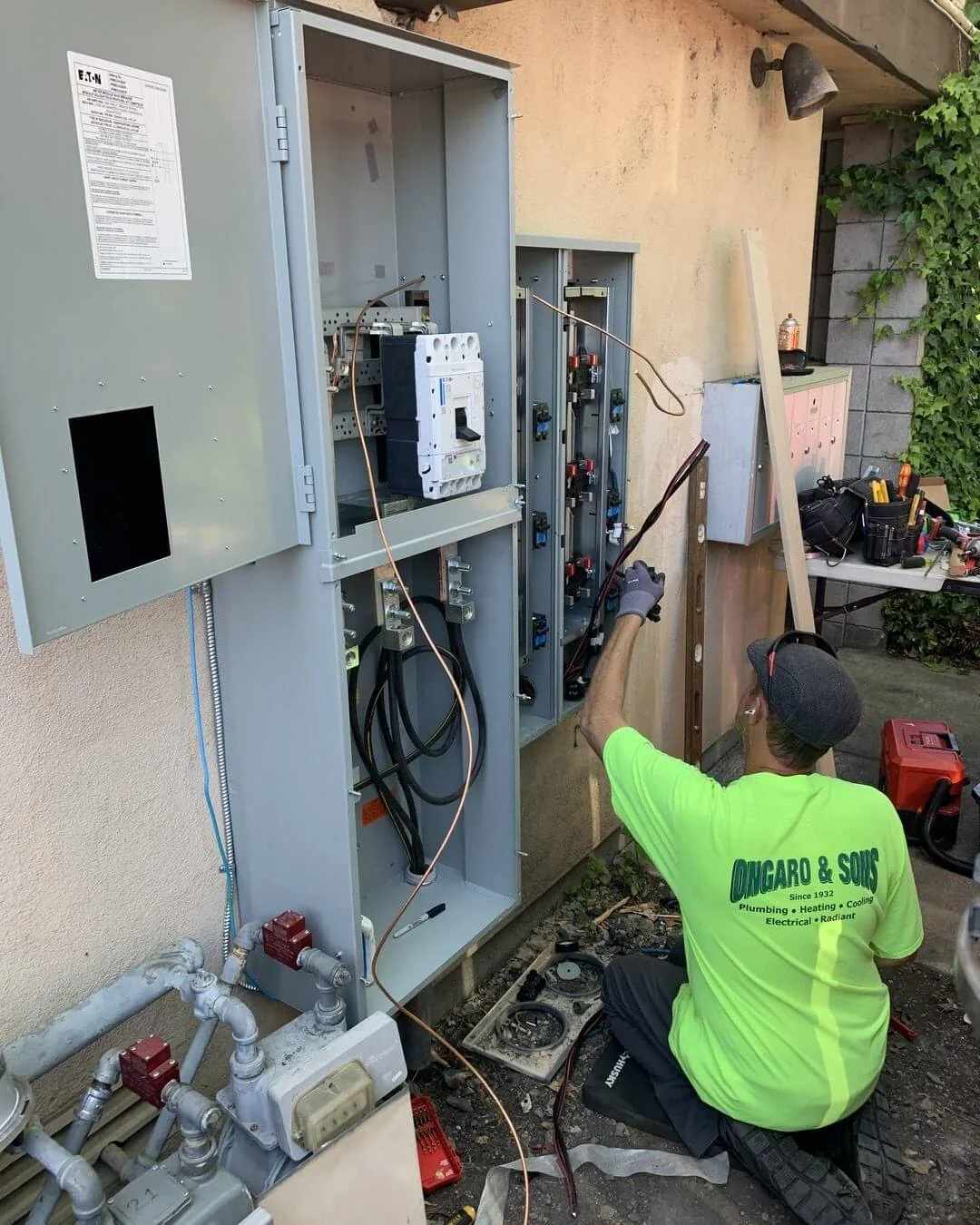
Diagnosis starts at the service and works inward, because in this town the fault sits upstream more often than people expect. Downtown Cloverdale holds a long stretch of older housing where circuits have been extended repeatedly across decades, so we map what is actually fed from where before anything else. Loose neutrals, undersized feeders and shared grounds mimic a bad fixture.
Out in the Alexander Valley the geometry is the problem. The service lands at the road, the house sits well back, the shop or well house sits somewhere else again, and voltage drop over those runs shows up as motors that struggle and equipment that ages early. We measure under load rather than at rest, because a reading taken on a quiet circuit says little about what happens when a pump and a compressor start seconds apart. Thermal imaging at the panel, torque checks on terminations, and a written load calculation come out of the same visit.
What drives what this costs
We do not publish figures, because four or five variables decide the number and they differ house to house. These are the ones that move it most.
Jurisdiction and scope set the permit side: the City of Cloverdale ties permit fees to the value of the proposed improvements, so the fee tracks the work rather than the address. Utility involvement is the next lever. A panel swap reusing the existing service is contained; a service change requiring PG&E to reset a drop, relocate a meter, or convert overhead to underground adds coordination, trenching, and a second schedule you do not control.
Distance and access matter more on rural parcels than anything inside the enclosure. Feeder length to a detached shop or a well house drives conductor size, and conductor size drives everything downstream of it. In older in-town homes, wall finish decides how invasive rewiring gets, and a usable attic or crawlspace path can turn three days of work into one. Condition is the last variable: a discontinued breaker line, aluminum branch wiring, or a bonding problem at the meter converts a straightforward upgrade into remediation that has to happen first. Those findings go in the estimate, not in a change order.
Ryan, was very knowledgeable about the electrical work we want to have done. Thank you Ryan!
Judi L.
Rebates, and what each one really covers
Programs in this space change faster than most contractors update their websites, so here is the current picture with sources attached.
Sonoma Clean Power pays above its usual level toward a heat pump water heater at the moment. When that lapses, the money continues only for households enrolled in CARE or FERA, who can have a share of the project cost remaining after other rebates covered. That program is plumbing on its face and electrical underneath, since the conversion usually needs a dedicated 240-volt circuit, which is why a water heater project in Cloverdale so often begins at the panel.
Maintenance that earns its keep up here
Standby equipment fails from neglect, not from use. A generator wants a documented annual service ahead of fire season, an exercise cycle that runs under load, fresh fuel and filters, and a transfer test that proves the switch moves rather than assuming it will. We schedule that before the dry months rather than during them, and it can ride along with other maintenance visits.
For the house itself the list is short: test GFCI and AFCI devices on a schedule instead of when something goes wrong, have panel terminations checked for heat and torque every few years, and consider whole-home surge protection on properties that see repeated shutoff and restoration events, since the switching transients that follow a restoration are harder on electronics than the outage itself. On well properties the pump circuit and pressure switch deserve a look on the same visit.
Where we work around Cloverdale
We cover downtown Cloverdale and the streets around North Cloverdale Boulevard, the properties spread through the Alexander Valley, and the parcels along the Russian River corridor where the city draws its municipal water from wells. Everything we handle at this address is listed on the Cloverdale service page, and generation and storage work sits under solar in Cloverdale.
How to choose an electrician for this work
Ask four questions and the field sorts itself quickly. First, which authority issues the permit for this parcel, and who is filing it? Anyone who cannot answer that in one sentence has not looked at your address. Second, is there a written load calculation, and may you see it? Third, on a generator, where is the single line diagram showing the transfer means and the lockable disconnect that Permit Sonoma requires in the submittal? Fourth, who handles the utility side of a service change, and who books the inspection? Then verify the license class is C-10.
What North Bay homeowners say
Two recent notes from customers about our electrical team.
Book electrical work in Cloverdale
Tell us the address and what the house is doing, and we will tell you which permit desk applies and what the job realistically involves. Book online at a time that suits you. Scope, jurisdiction and pricing are all confirmed before work starts. Nearby and related: electrical service across Sonoma County, electricians in Windsor, the full Cloverdale service list, panel upgrades, EV charger installation, heat pump work that depends on the panel, and solar and storage.
Your Comfort, Our Priority
Ongaro & Sons is your trusted heating, cooling, plumbing, electrical, and solar expert, specializing in reliable maintenance and repair services that keep your home running efficiently year-round.
Our certified technicians deliver unmatched expertise with fast, friendly service across Marin, Sonoma and Napa County. From HVAC tune-ups to plumbing repairs and electrical upgrades or solar solutions, we focus on energy-efficient performance and long-term comfort. Count on us to maintain the systems that power your home and keep your environment just the way you like it.
Licensed, Insured, Background-Checked
Our technicians are licensed, experienced, and trained to service all makes and models.
Locally Owned and Operated
Serving the Napa, Marin, and Sonoma communities with personalized, hometown service.
Reliable Repairs
We respond quickly and get the job done right the first time, with no surprises.
Since 1932
Why Ongaro & Sons?
Four generations of trusted home service. Open any reason to see what it means for your home.
Schedule Service →Family-owned in the North Bay since 1932
Four generations of the Ongaro family serving Marin, Sonoma and Napa County. We know these homes and the systems in them.
Licensed, insured, background-checked technicians
Every technician is fully licensed and insured, background-checked, and trained on the equipment we install.
Diamond Certified and BBB A+
Diamond Certified since October 2016, and BBB Accredited with an A+ rating since December 1995.
Mitsubishi Diamond Contractor Elite and Trane Comfort Specialist
Both top manufacturer tiers. That standing decides how registration and extended warranty terms are handled on the system you actually bought.
The price is agreed before work starts
You see the number before the work begins. Flat-rate quotes, no surprises and no pressure.
Comprehensive maintenance program
Members get priority scheduling, discounts, and proactive checkups that prevent costly failures.
Discount
Membership
Ongaro Maintenance Plans
Annual maintenance on your home systems provides safeguards and comfort to you and your family. Members get priority scheduling, discounts, and proactive checkups that catch problems early.
Member Discounts
5% off every repair and replacement, all year long.
Peace of Mind
Proactive checkups catch issues before they become big problems.
Courtesy Reminders
We call you to schedule: never miss a seasonal service.
Value That Lasts
With Ongaro & Sons, you’re investing in quality, integrity, and service that stands the test of time. Explore our current promotions and see the difference real value makes for your HVAC, plumbing, and electrical needs.


From the Blog
 Sep 17, 2026
How Many Amps Does My House Need? Sizing Service for What You Actually Run
How many amps your house needs comes from a load calculation of what you run and plan to add. What drives the number, when existing service is enough, and more.
Read More Sep 10, 2026
Hard Water in Marin County: What Is Actually in Your Water and What It Does
Hard water in Marin County varies by provider and source. The 2025 report figures for Marin Water and NMWD, what hardness does and does not mean, and options.
Read More Sep 3, 2026
Electrical Permit Requirements in California: What Needs One and What Does Not
Find out which electrical projects commonly need permits, how to confirm local exemptions, and what to ask before work begins in Marin, Sonoma or Napa County.
Read MoreFrequently asked questions
Who is the best electrician in Cloverdale?
We put our record up against anyone working this end of the county. Ongaro & Sons has served the North Bay since 1932, holds Diamond Certified status and a BBB A+ Rating, works under a C-10 electrical license, and carries 2,756 Google reviews at a 4.8 average. More useful to you: we know which permit desk covers your parcel, and the load calculation comes in writing.
Do I need a permit for electrical work at my Cloverdale home?
Yes, for anything past simple device replacement. Within city limits, applications go to the Cloverdale Building Department, either at the counter on North Cloverdale Boulevard or through the online portal, with fees tied to the value of the improvements. On unincorporated parcels the filing goes to Permit Sonoma instead. We identify the correct agency from the parcel before an estimate is written.
Do the Bay Area zero-NOx appliance rules apply to my house here?
No. Cloverdale falls under the Northern Sonoma County Air Pollution Control District rather than BAAQMD, so the water heater requirements phasing in downcounty from 2027 do not govern your address. Electrification here stays a choice you make for comfort, capacity or operating cost, not a deadline you are being marched toward. We still verify the current rules for your specific property before finalizing scope.
How long can the city take to approve a home car charger permit?
State law limits the wait, in two parts. Government Code 65850.7 makes the review ministerial and confines it to health and safety. Government Code 65850.71 sets the timing: for one to 25 stations at a single site the application is deemed complete five business days after submission and deemed approved twenty business days after that, unless the building official has acted, denied it, made a substantial-evidence adverse impact finding, or an appeal is pending. The permit itself is still required.
Does a backup generator need a permit?
If it ties into your electrical panel, yes. Permit Sonoma requires one for any generator connecting to the panel in unincorporated areas, and asks for a single line diagram showing the transfer switch or interlock plus a lockable disconnecting means. Running appliances directly off a portable unit, with no panel connection, is exempt. A separate enclosure built to house the generator can trigger additional permits of its own.
Will a standby generator keep my well running?
It can, provided the system is sized for it. A well pump is a 240-volt motor whose starting current far exceeds its running current, so the calculation has to account for that surge alongside refrigeration, heating and anything else sitting on the protected side of the transfer switch. On septic properties we usually include the effluent pump as well. Undersizing at this step is the most common mistake we get called out to correct.
How do I know whether my panel needs upgrading?
Symptoms give you a hint, arithmetic gives you the answer. Repeated trips under summer cooling load, no spare breaker spaces, a discontinued breaker line, or scorching at a lug all point one direction. The decision itself comes from a load calculation run against your existing service, and so we produce one before recommending anything rather than quoting a panel by reflex.
What is different about electrical work on a rural Alexander Valley property?
Distance, mostly. Service lands at the road while the house, shop and well house sit far back, so feeder length and voltage drop become design constraints rather than afterthoughts. Motors on long runs work harder and fail sooner. Trenching, conductor sizing and grounding at each detached structure all enter the scope, and the paperwork goes to Permit Sonoma rather than to the city.
Is there a rebate for putting a charger in at home?
Not for the installation. Sonoma Clean Power operates an enrollment program that pays a bill credit and a sign-up bonus for connecting an eligible smart charger, currently limited to WallBox and ChargePoint devices, and open to active SCP account holders. It also slows charging during grid events, with a customer override available. Because eligibility follows the hardware, the model matters before you order.
Are heat pump water heater rebates still available in Sonoma County?
Yes, with a clock on them. Sonoma Clean Power is paying above its normal level for heat pump water heaters at present, and afterwards the money narrows to households enrolled in the CARE or FERA bill discount programs. Gas equipment does not qualify at any point. The electrical half is the part people miss: the qualifying appliance usually wants a dedicated 240-volt circuit, so the panel decides whether the rebate is reachable at all.
Why do my lights dim every time the pump comes on?
That flicker is voltage sag from inrush current, and its severity tells you something. Mild dimming that recovers instantly is normal motor behavior. Deep or lingering dips usually mean an undersized feeder, a long run out to the pump, a loose neutral, or a service that is marginal for the total load. Measured under load, those causes separate quickly, and only one of them is expensive to correct.
What should I ask before hiring someone for a service change?
Ask who files the permit and with which agency, whether the load calculation will be provided on paper, who coordinates with the utility on the meter and drop, and how inspection scheduling works given the city's Monday through Thursday afternoon window. Confirm the C-10 license class. A number quoted without anyone walking an older or rural property is a guess about a house nobody has seen.