Electrician in Marin County
Ongaro & Sons, founded in Marin in 1932, does electrical work across Marin, Sonoma and Napa counties. We hold a C-10 electrical license, we are Diamond Certified, and we carry 2,756 Google reviews averaging 4.8 stars. We pull the permit in whichever of Marin's twelve permitting jurisdictions your address falls under, we run the load calculation before we quote, and we say plainly what the work involves before anyone opens a panel.
We also hold C-20 HVAC and C-36 plumbing licenses, which matters more here than it sounds like it should, because most Marin electrical calls now begin with an appliance rather than a wire. Everything runs from our Petaluma headquarters, a short drive up Highway 101 from the county line. We are a Certified Generac Generator installer, and hold a BBB A+ Rating.
The most common electrical problems in Marin
Four problems account for most of the electrical calls we get in this county.
A breaker that will not stay on. Usually a kitchen or bathroom circuit, usually right after a new appliance arrived, and usually described as "it worked fine for years." The circuit did work fine for years. What changed is what got plugged into it.
Lights that dip or brighten when a large motor starts. On a well-loaded 100-amp service that can be ordinary voltage drop. When one half of the house dims while the other half gets brighter at the same moment, that points at a failing neutral connection, and it is the one we want to hear about first.
Something warm that should not be warm. A cover plate, a dimmer, a breaker handle, the panel deadfront. Heat in an electrical system is nearly always a connection that is no longer tight, and connections do not get better on their own.
A panel with no room left. This is the modern Marin version, and it arrives attached to a project: an induction range, a heat pump, a heat pump water heater, a car. The homeowner was not shopping for electrical work. They are discovering that the electrical work is the project.

How we find what is wrong
We work a fixed order, and we call it the load path: service, panel, branch circuit, device. Almost every residential fault lives at one of those four points, and naming which one keeps everyone from paying to fix the wrong thing.
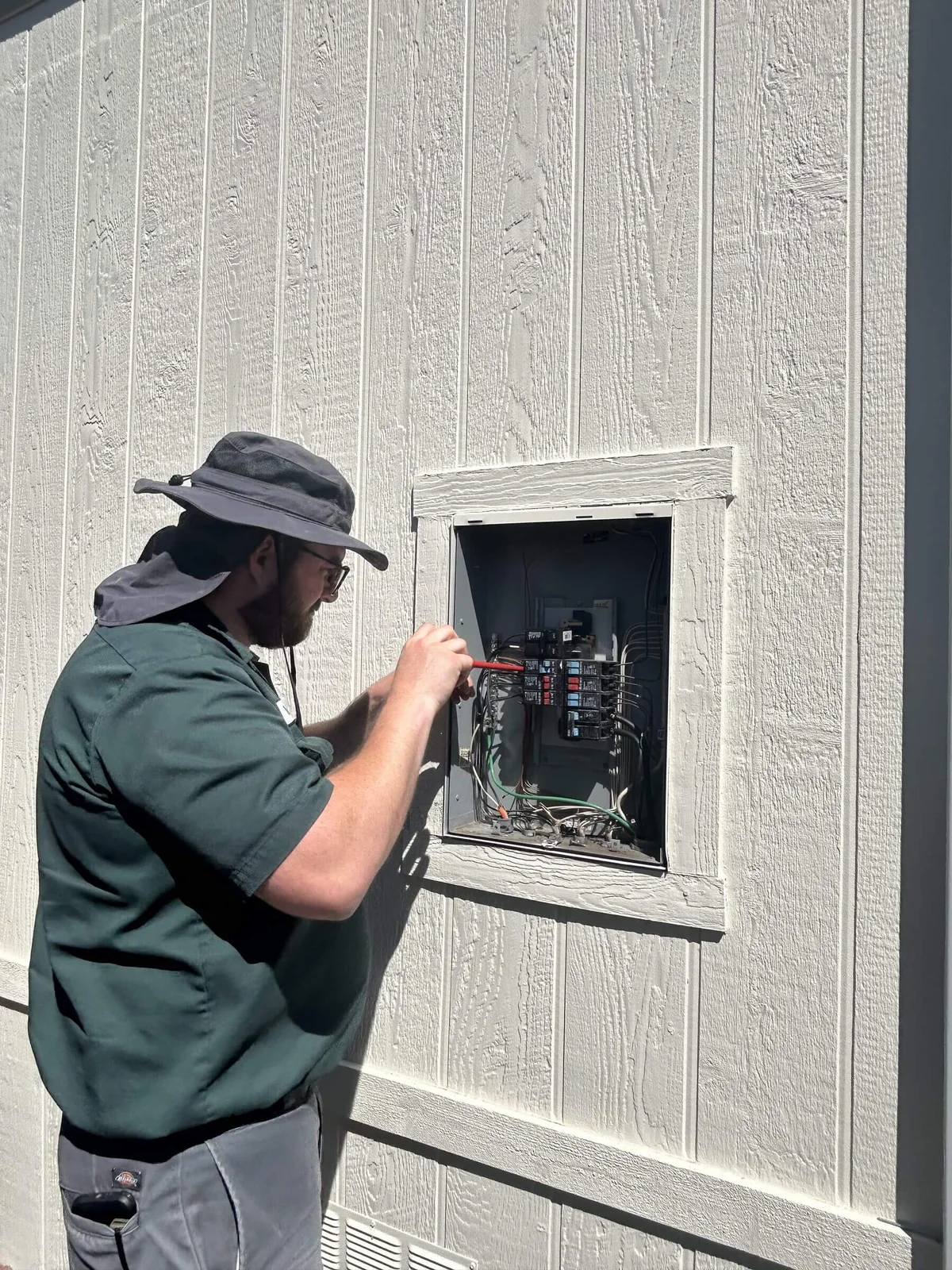
Service. The utility's conductors, the meter socket, and the main disconnect. One symptom points here more reliably than any other: part of the house browns out while another part runs bright, appliances behave erratically, and no breaker has tripped. That pattern suggests an open or degraded neutral on a split-phase service, which is not a homeowner troubleshooting item. Shut the main off and call. Ownership of the meter socket versus the utility's conductors is also settled here, and it determines who does what next.
Panel. Capacity, bus condition, and breaker availability. Two brands turn up constantly in Marin housing built between the 1950s and the early 1970s: Zinsco and Federal Pacific Stab-Lok. Neither manufacturer exists anymore, so there is no factory-current replacement breaker, and a panel you cannot buy parts for is a panel with a countdown on it. We also read the bus for heat discoloration and check whether a full panel got double-tapped by someone in a hurry.
Branch circuit. The wiring between the panel and the outlet, where three eras show up. Knob-and-tube in the pre-1940 stock through the older cores of San Rafael, Sausalito, San Anselmo, and Fairfax, usually with no equipment grounding conductor. Aluminum branch wiring in a slice of late-1960s and early-1970s construction, where the issue is the termination at each device rather than the wire itself. And ordinary modern cable extended one too many times by one too many people.
Device. Receptacles, switches, dimmers, and the terminations inside them. Backstabbed receptacles, where the conductor is pushed into a spring clip instead of wrapped under the screw, are the most common cause of a dead string of outlets in a postwar tract house, and the least expensive to correct once found.
Naming the failure point first is the whole job. A tripping breaker caused by a loose neutral, a shared circuit, or a failing appliance is three unrelated problems wearing the same shirt.
One county, twelve jurisdictions, two climates
Marin is small on a map and not uniform underneath, and a county page that treats it as one place is not much use to anyone.
Permitting. Eleven incorporated cities and towns issue their own building and electrical permits: Belvedere, Corte Madera, Fairfax, Larkspur, Mill Valley, Novato, Ross, San Anselmo, San Rafael, Sausalito, and Tiburon. Everything else, which is most of the county's land area, is unincorporated and permitted by the Marin County Community Development Agency: Marin City, Strawberry, Kentfield, Greenbrae, Santa Venetia, Lucas Valley, Marinwood, Sleepy Hollow, the San Geronimo Valley, and West Marin. Plenty of properties with a San Rafael or Novato mailing address sit outside either city's authority, which is why the county publishes an address lookup instead of expecting people to guess.
Air district. All of Marin sits inside the Bay Area Air Quality Management District, with no split anywhere in the county. Sonoma County is divided between two districts; Marin is not. BAAQMD's appliance rules therefore land countywide on the same schedule, and one of them is quietly an electrical rule.
Coast versus inland. Sausalito, Tiburon, and Belvedere sit on the bay, and Stinson Beach, Bolinas, Muir Beach, and the Point Reyes communities sit on open ocean. Salt in the air attacks exposed metal, and the first things it finds outside a house are the meter socket, the service entrance hardware, the outdoor disconnect, and the strain relief on anything surface-mounted. Corrosion at a termination is a resistance problem, and resistance is heat. Inland, through Novato, San Rafael, and the Ross Valley, summers run warmer, which pushes cooling loads up and makes panel capacity the binding constraint instead. Same county, different failure mode, different first thing we inspect.
Housing eras. The older town centers hold Victorian and early-twentieth-century homes with small original services, plaster walls, and no practical wire route. The postwar tracts through Novato and San Rafael are easier to work in and usually carry an undersized panel. And Marin holds a large concentration of Eichler homes, in Terra Linda, Lucas Valley, Marinwood, and Strawberry: post-and-beam construction, exposed-beam ceilings with no attic above, and a slab with radiant tubing in it. There is no hidden cavity to run a new circuit through, so every added circuit in an Eichler is a routing decision before it is an electrical one. We keep that work on its own page: Eichler home services.

I recently called Ongarro and Sons about a tricky problem involving an intermittently operative stove and a balky breaker box. Their technician, Rene, sorted everything nicely and (bonus!) taught me a lot about how electricity works.
Glenn H.
Choosing the equipment: service size, panel, and what has to fit
Once the failure point is named, the decision is rarely "which panel brand." It is how much service the house needs and whether the existing one can be kept.
The technical factor that decides it is the load calculation, which values the home's actual connected load with standard demand factors applied rather than adding up nameplate ratings and panicking. That distinction settles a large share of Marin projects, because plenty of homes that "obviously need 200 amps" do not, and a few that look fine do.
What tips a house toward a larger service is the number of large, simultaneous, continuous loads. One 240-volt appliance is usually absorbable. Three is a service conversation. An induction range, a heat pump condenser, a heat pump water heater, and a car charger together run a 100-amp service out of headroom, and that is the exact combination Marin households are assembling right now, one appliance at a time, across about five years.
Where the service cannot grow, or where the utility work to grow it is disproportionate, real alternatives are worth pricing against a full upgrade: a load management device that prevents two large loads from running at once, a charger with adjustable output set at commissioning, a heat pump water heater in a shared-circuit or 120-volt configuration, or a subpanel that reorganizes existing capacity rather than adding to it. On a hillside house in Mill Valley with a long service run, load management is frequently the better engineering answer and not merely the cheaper one.
Panel selection then follows the house rather than the other way around: breaker spaces left over after the work, whether surge protection is going in at the panel, whether backup power may be added later, and whether the location is outdoors in salt air and needs hardware chosen for that exposure.
Permits and code across Marin
Electrical work of any consequence is permitted work. The specifics below are what actually governs it here:
- Unincorporated addresses go to Marin County CDA. Building and Safety issues electrical permits covering circuits, outlets, service upgrades, and EV charging stations, and its online permitting portal can issue a permit for like-for-like replacement work as soon as the application is complete.
- Incorporated addresses go to that city or town. Eleven separate building departments, eleven separate submittal processes, and the mailing address is not the authority.
- Inspection can sometimes be remote. For certain permit types the county allows a California licensed contractor to elect electronic photographic inspection in place of a site inspection. That is a contractor-side option, and one more reason the licensed party should hold the permit.
- EV charger permits run on a statutory clock. Under Government Code 65850.7, every California city and county must adopt an expedited, streamlined process and must "administratively approve an application to install electric vehicle charging stations through the issuance of a building permit or similar nondiscretionary permit." The statutory clock is in Government Code 65850.71. For an application covering at least one but not more than 25 stations, it is deemed complete five business days after submission and deemed approved twenty business days after that, unless the building official has already acted or made adverse-impact findings. A permit is still required; the statute limits how long a jurisdiction can sit on it.
- Title 24 sets the energy requirements. California's 2025 Building Energy Efficiency Standards took effect January 1, 2026, per the California Energy Commission. That cycle set a single fuel baseline for new single-family construction, with heat pumps prescriptively required for water and space heating alike, and a new-construction baseline does not automatically transfer to a replacement in an existing home.
- An air rule is driving electrical work. BAAQMD Regulation 9, Rule 6 established zero-NOx requirements for residential water heaters, on compliance dates of 2027 and 2031 depending on size and equipment type, and they bite when equipment is replaced rather than while it is running. Nobody's gas water heater is banned. What is true is that a heat pump water heater commonly needs a new 240-volt circuit and the panel capacity to feed it, which is how an air rule turns into an electrician's calendar.
- Whoever pulls the permit owns it. A homeowner-pulled permit on contracted work shifts responsibility onto the homeowner. Ask who is named on the application.
What drives the cost of electrical work here
We do not publish prices, because a service upgrade in Novato and the same nameplate upgrade in Belvedere are not the same job. What we will do is name the variables that move the number, so you can read any proposal, ours included, and see where it came from.
Distance and access are usually the largest single factor. A meter and panel on an accessible garage wall is one scope. A service that climbs a hillside lot, crosses a deck, or arrives underground through mature landscaping is a different one, and the West Marin and Ross Valley properties where equipment sits far from the drive carry that difference. Overhead versus underground service matters for the same reason, and so does whether the panel has to move to satisfy current clearance requirements, since relocating one means new feeder, new penetrations, and patching.
Utility coordination is the second factor. Any change to the service itself involves PG&E scheduling on their timeline, and the sequencing of disconnect, upgrade, inspection, and reconnect is where calendar time collects. It is also where proposals differ most: a bid that quietly excludes utility coordination is not comparable to one that includes it.
After that it is condition and quantity. What the inspector finds once the panel is open, whether existing grounding and bonding are usable, how many devices and circuits are genuinely in scope, whether wire routes exist or have to be created, and whether the work is finish-sensitive in an occupied home with plaster or exposed beams. If timing rather than scope is the obstacle, we offer financing.
Rebates, incentives, and what is open
Incentive terms change on their own schedule, so we verify what follows against the program pages before any quote.
MCE is Marin's community choice provider. MCE offers heat pump rebates for water heating and space conditioning, accessed through a participating contractor rather than claimed afterward, so enrollment happens before the work and not after it. On vehicle charging, be precise rather than pessimistic: MCE's EV charging programs cover workplaces, multifamily properties of four or more units, and commuter lots such as park-and-rides and ferry terminals, so they do not fund a charger at a house. What does is PG&E's residential charger rebate, open by its own terms to Community Choice Aggregation customers, and MCE Sync, which pays MCE residential customers for smart charging rather than for buying equipment.
MCE's conditions are the ones to plan around. MCE's heat pump rebates carry three conditions. The home has to be single-family detached and you have to have owned and lived in it a full year. The contractor has to be a participating one who files the application for you. And the application has to precede the installation, because MCE will not apply a rebate retroactively. MCE adds that where a home already has solar or EV charging, "the equipment must have been installed for at least 12 months." None of it pays for a panel on its own, which is the point below.
Rate plan is part of the electrical scope. PG&E's EV rate plans split two ways. EV2-A uses your existing single meter for home and vehicle use together, off-peak from midnight to 3 p.m. daily and peak from 4 to 9 p.m.; customers above 800% of baseline allowance over the prior twelve months are not eligible. EV-B requires a second dedicated meter separating vehicle use from household use, and is unavailable with CARE, FERA, or Medical Baseline. Adding a meter is physical electrical work, so the rate question belongs in the design. A third plan is worth checking too. E-ELEC is PG&E's Electric Home plan, written around exactly the combination this page keeps describing: a charger, a heat pump, sometimes a battery.
They were reasonable and very responsive in installing my level 2 EV charger. We use them for HVAC too. Excellent service!
Thomas Q.
Maintenance that is actually worth doing
Residential electrical systems do not need much, and the little they need is specific. Exercise GFCI and AFCI devices with their own test buttons on a routine you will realistically keep. Replace smoke and carbon monoxide alarms at the manufacturer's stated end of listed life rather than when they start chirping. On coastal properties, check the exterior service equipment yearly for corrosion staining, gasket failure, and rust weeping from the bottom of an enclosure, and treat any of those as a call rather than a note to yourself. Run a standby generator on its exercise cycle and service it on schedule, because a generator that has not started in two years is decoration. Our maintenance plans cover the periodic side across all three trades.
Where we work in Marin County
We cover the whole county from Petaluma: Novato, San Rafael, Terra Linda, Marinwood, Lucas Valley, Larkspur, Corte Madera, Greenbrae, Kentfield, Ross, San Anselmo, Fairfax, Mill Valley, Strawberry, Tiburon, Belvedere, Sausalito, Marin City, and out through the San Geronimo Valley to Point Reyes Station, Inverness, Bolinas, and Stinson Beach. We keep no office in any of those towns, and we would rather say so than imply a storefront that is not there. Full county detail sits on our Marin County service area page, alongside heating and cooling in Marin County, plumbing in Marin County, and solar in Marin County. We handle commercial electrical work here as well.
How to choose an electrician for this work
Five questions separate a serious proposal from a number on a page. Ask for the C-10 classification rather than accepting "we're licensed," since classification is what defines scope legally. Ask to see the load calculation, because a service size recommended without one is a guess in a nice font. Ask who will be named on the permit application. Ask whether PG&E coordination is inside the bid, since that single line moves both price and schedule. And ask what happens if the inspector finds an existing condition that has to be corrected, because on Marin's older stock that is a likely outcome rather than a remote one. More on how we work is on the electrical services page.
What North Bay homeowners say
Two recent reviews, unedited:
Book electrical work in Marin County
Tell us the address, what the system is doing, and what you are trying to add. We will say whether it is a device-level repair, a circuit problem, or a service conversation, and which of Marin's twelve permitting authorities your project answers to. Book online and a licensed electrician comes out from Petaluma. Related pages: electrical services, Eichler home services, heating and cooling in Marin County, plumbing in Marin County, solar in Marin County, Marin County service area, maintenance plans, and financing.
Your Comfort, Our Priority
Ongaro & Sons is your trusted heating, cooling, plumbing, electrical, and solar expert, specializing in reliable maintenance and repair services that keep your home running efficiently year-round.
Our certified technicians deliver unmatched expertise with fast, friendly service across Marin, Sonoma and Napa County. From HVAC tune-ups to plumbing repairs and electrical upgrades or solar solutions, we focus on energy-efficient performance and long-term comfort. Count on us to maintain the systems that power your home and keep your environment just the way you like it.
Licensed, Insured, Background-Checked
Our technicians are licensed, experienced, and trained to service all makes and models.
Locally Owned and Operated
Serving the Napa, Marin, and Sonoma communities with personalized, hometown service.
Reliable Repairs
We respond quickly and get the job done right the first time, with no surprises.
Since 1932
Why Ongaro & Sons?
Four generations of trusted home service. Open any reason to see what it means for your home.
Schedule Service →Family-owned in the North Bay since 1932
Four generations of the Ongaro family serving Marin, Sonoma and Napa County. We know these homes and the systems in them.
Licensed, insured, background-checked technicians
Every technician is fully licensed and insured, background-checked, and trained on the equipment we install.
Diamond Certified and BBB A+
Diamond Certified since October 2016, and BBB Accredited with an A+ rating since December 1995.
Mitsubishi Diamond Contractor Elite and Trane Comfort Specialist
Both top manufacturer tiers. That standing decides how registration and extended warranty terms are handled on the system you actually bought.
The price is agreed before work starts
You see the number before the work begins. Flat-rate quotes, no surprises and no pressure.
Comprehensive maintenance program
Members get priority scheduling, discounts, and proactive checkups that prevent costly failures.
Discount
Membership
Ongaro Maintenance Plans
Annual maintenance on your home systems provides safeguards and comfort to you and your family. Members get priority scheduling, discounts, and proactive checkups that catch problems early.
Member Discounts
5% off every repair and replacement, all year long.
Peace of Mind
Proactive checkups catch issues before they become big problems.
Courtesy Reminders
We call you to schedule: never miss a seasonal service.
Value That Lasts
With Ongaro & Sons, you’re investing in quality, integrity, and service that stands the test of time. Explore our current promotions and see the difference real value makes for your HVAC, plumbing, and electrical needs.


From the Blog
 Sep 17, 2026
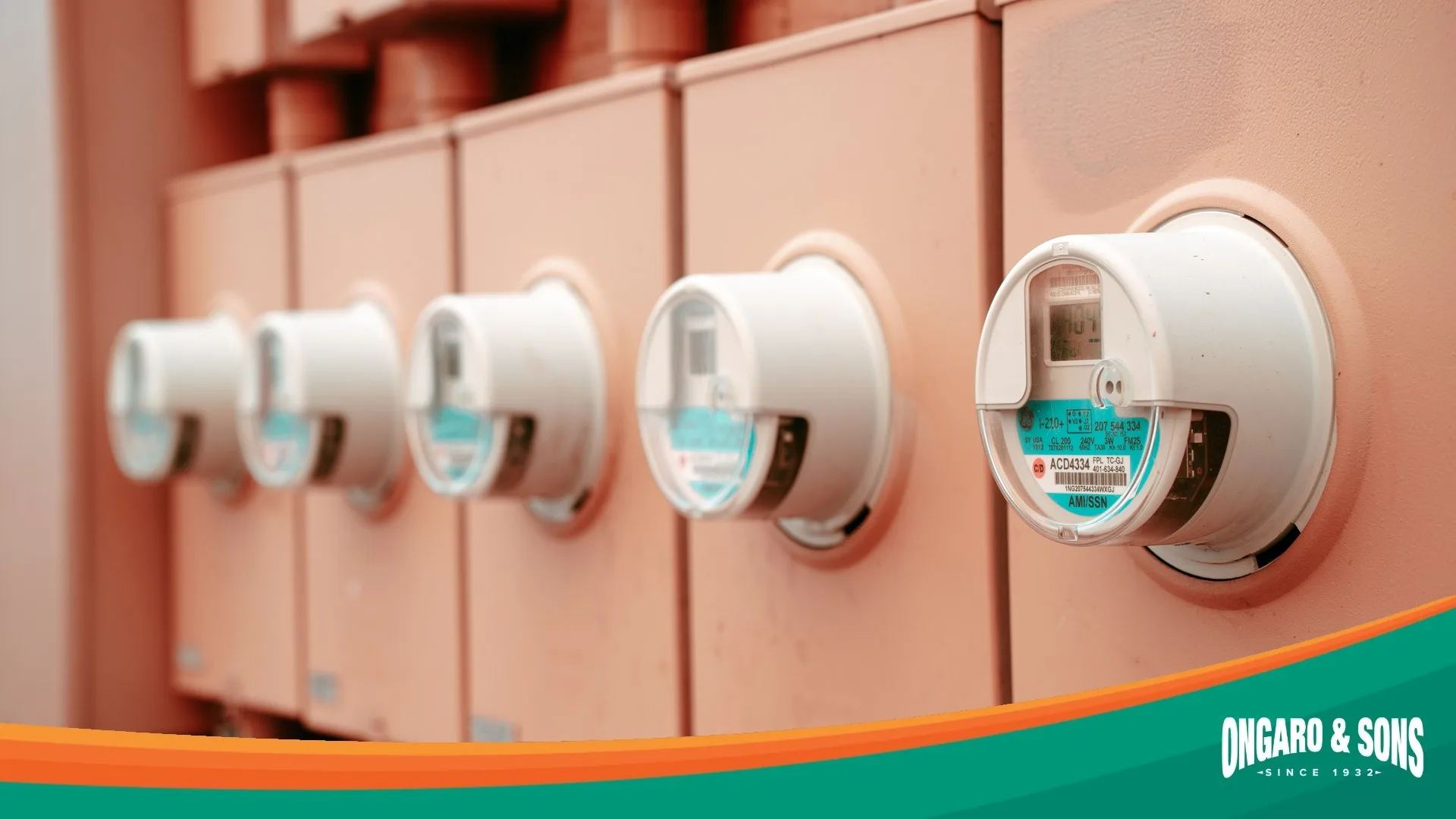
How Many Amps Does My House Need? Sizing Service for What You Actually Run
How many amps your house needs comes from a load calculation of what you run and plan to add. What drives the number, when existing service is enough, and more.
Read More Sep 10, 2026
Hard Water in Marin County: What Is Actually in Your Water and What It Does
Hard water in Marin County varies by provider and source. The 2025 report figures for Marin Water and NMWD, what hardness does and does not mean, and options.
Read More Sep 3, 2026
Electrical Permit Requirements in California: What Needs One and What Does Not
Find out which electrical projects commonly need permits, how to confirm local exemptions, and what to ask before work begins in Marin, Sonoma or Napa County.
Read MoreFrequently asked questions
Who is the best electrician in Marin County?
Judge it on evidence rather than adjectives. Ongaro & Sons has served the North Bay since 1932, holds a C-10 electrical license, is Diamond Certified, and carries 2,756 Google reviews averaging 4.8 stars. Ask any candidate for a written load calculation, a named permit holder, and a clear answer on utility coordination.
Do I need a permit to replace my electrical panel in Marin?
Yes. Service and panel replacement is permitted work throughout the county. Unincorporated addresses go through Marin County's Community Development Agency; addresses inside the eleven cities and towns go to that jurisdiction's building department. Verify by address, since a San Rafael or Novato mailing address does not by itself place you inside city limits.
How fast does a Marin city have to approve an EV charger permit?
State law sets the pace. Government Code 65850.7 requires every California jurisdiction to run an expedited, non-discretionary process. The clock sits in the companion section, 65850.71, rather than in 65850.7. An application for one to 25 charging stations is deemed complete five business days after submission and deemed approved twenty business days later, unless the building official acts, denies it, or makes adverse-impact findings.
Is there still a rebate for upgrading an electrical panel in Marin?
No program currently pays for a panel on its own. MCE's incentives target heat pump water heating and space conditioning rather than the panel alone, though a panel upgrade enabling one of those appliances can sit inside a qualifying project.
My breaker keeps tripping. Does that mean I need a new panel?
Usually not. A breaker doing its job is evidence of a circuit problem rather than a panel problem. Overload, a short between conductors, a ground fault, and an arc fault each trip differently and point somewhere different. Panel replacement enters the picture when capacity, bus condition, or parts availability is the real limit.
What is wrong with Zinsco and Federal Pacific panels?
Both are obsolete lines whose original makers no longer exist, so no current-production breaker is built for them. Any future circuit addition or breaker failure then has no clean solution. They are common in Marin housing from the 1950s through the early 1970s, and we assess bus condition directly rather than by label.
Half my house is dim and the other half is bright. What is that?
Stop using the affected circuits and switch off the main. That pattern is characteristic of a lost or degraded neutral on a split-phase service, where the two legs stop sharing a stable reference and voltage seesaws between them. It can damage electronics fast, and it straddles utility-owned and homeowner-owned equipment.
Do Eichler homes need a different approach to electrical work?
They need a different routing approach. Post-and-beam construction with exposed-beam ceilings leaves no attic, and a slab carrying radiant tubing rules out cutting freely into the floor. New circuits travel through walls, through cabinetry, or in deliberately planned surface raceway, and how that looks matters to owners of these houses.
Does living near the water change anything electrically?
It changes what fails first outdoors. Salt-laden air corrodes exposed metal, and in a service that means the meter enclosure, entrance hardware, outdoor disconnects, and fasteners. Corrosion at a connection raises resistance, resistance makes heat, and heat accelerates the next failure. Coastal properties get hardware chosen for the exposure and more frequent inspection.
Should I change my PG&E rate plan after installing a car charger?
Decide before installing rather than after. EV2-A keeps your existing single meter and covers household and vehicle use together, and it excludes customers who ran above 800% of baseline allowance over the prior year. EV-B needs a second dedicated meter and is unavailable with CARE, FERA, or Medical Baseline.
Do I need a larger service before installing a heat pump water heater?
Sometimes, and only a calculation tells you. These units generally want a dedicated 240-volt circuit, and whether your service can carry one depends on total connected load with demand factors applied rather than on how full the panel looks. Load management or a 120-volt unit can sometimes avoid a full upgrade.
How often should a home electrical system be looked at?
An annual walkthrough covers most Marin homes: press the test buttons on GFCI and AFCI devices, examine exterior equipment for corrosion or rust staining, confirm alarms are inside their listed service life, and exercise any standby generator. Anything hot, discolored, or smelling of heated plastic becomes a service call that week.