Toilet Keeps Running? What to Check Before Buying Parts
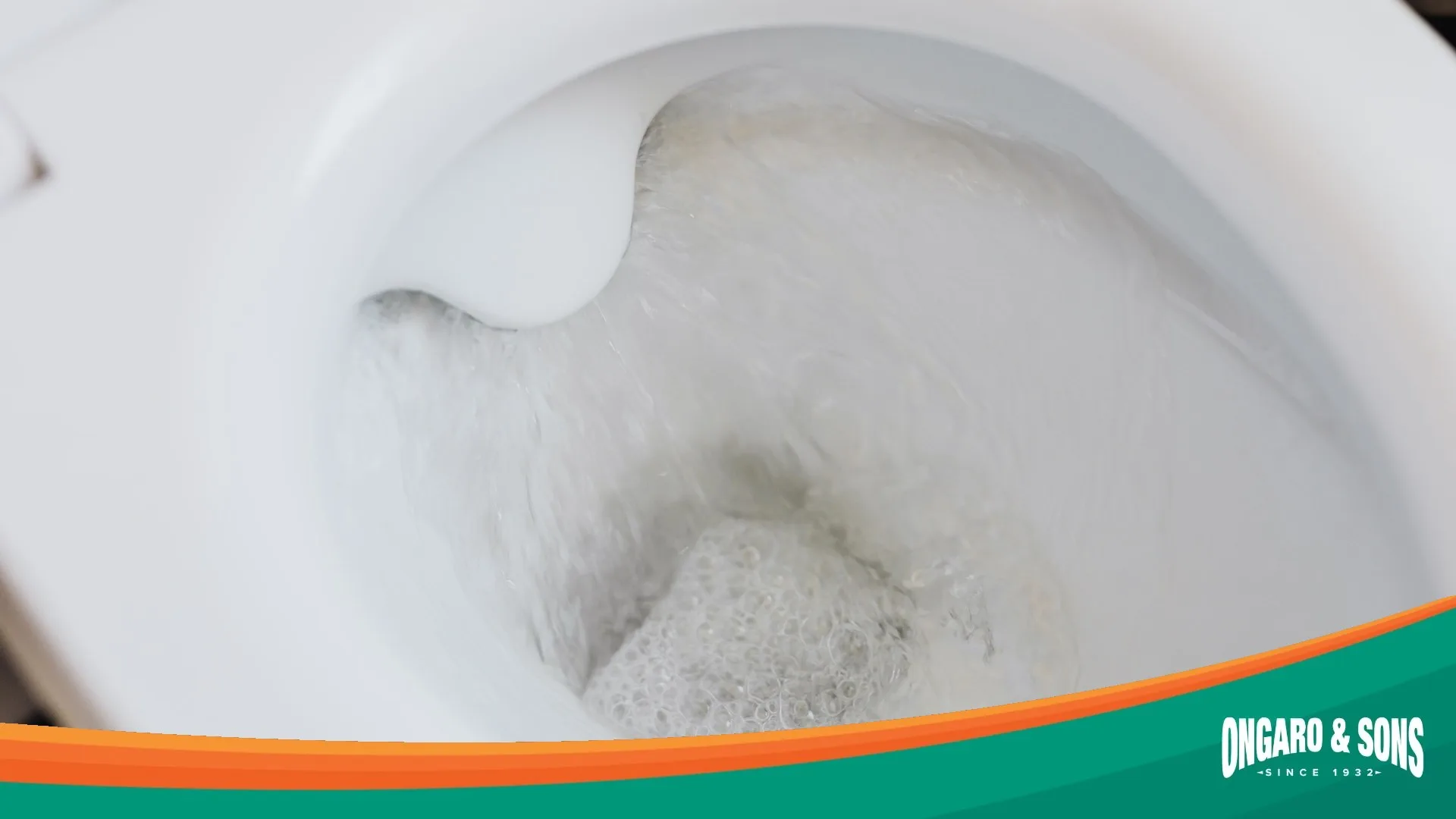
A toilet that keeps running is either losing water from the tank or failing to stop the refill properly. The common causes are a leaking flush valve seal, a tank that overfills into the overflow tube, a handle or chain that binds, and a fill valve or refill tube that is not doing what its design intends. Most of them are visible from the top of the tank, and most are repairable with a matching part and the model's instructions.
Quick answer. Take the tank lid off and look at where the water level sits against the overflow tube, then watch what happens after a flush. Water spilling into the overflow tube points at the level or the fill valve; a tank that refills on its own points at leakage into the bowl, which a dye test can confirm. Parts must match the toilet's model, so find it before buying anything. If water is leaking onto the floor, stop using the toilet, close its supply valve if it turns easily, and call a licensed C-36 plumber; do not force a seized valve.
The checks below apply to conventional gravity-tank toilets. Canister and dual-flush mechanisms use different seals and adjustments, and pressure-assisted and electronic models have their own instructions, so identify what you have first. The reason this is worth taking seriously is cost: a running toilet can waste a large volume over a billing cycle, and unlike a dripping tap it often makes almost no noise. The EPA's WaterSense leak guidance treats leaking toilets as one of the largest sources of household water waste.
How Does a Toilet Tank Work?
On a conventional gravity tank, the handle lifts a chain, the chain lifts the flapper (or, on a canister design, the canister seal), and the open flush valve lets tank water drop into the bowl. As the tank empties, the seal drops back and closes the valve. The float drops with the water level, which opens the fill valve, and the tank refills; as the water rises, the float rises with it and shuts the fill valve at the set level. A small refill tube from the fill valve runs into the overflow tube to top up the bowl during the refill.
The overflow tube is the vertical open pipe in the middle of the tank. Its job is to send excess water down into the bowl instead of onto your floor if the fill valve fails to stop. That is why a fill valve problem shows up as water running into the bowl.
What Does the Water Level Tell You?
Take the tank lid off and set it somewhere safe; porcelain lids are heavier and more fragile than they look. Then look at where the water level sits relative to the top of the overflow tube, and at the marked fill line inside the tank if there is one.
| Observation | Possible next check |
|---|---|
| Observation Water entering the overflow tube | Possible next check Check the specified water level, the float movement and whether the fill valve shuts off |
| Observation Tank refills without a flush | Possible next check Check for tank-to-bowl leakage (dye test) and the model's refill tube arrangement |
| Observation Handle or chain does not return freely | Possible next check Compare its position and adjustment with the model instructions |
| Observation Hissing continues | Possible next check Work out whether the valve is overfilling or replacing water that is leaving the tank somewhere else |
| Observation Water outside the tank or bowl | Possible next check Stop and identify the external leak before continuing |
For a conventional tank, the dye test is the confirmation. Add a few drops of food coloring to the tank and leave the toilet unflushed for ten minutes. Color appearing in the bowl means water is leaking from the tank into the bowl. Flush right afterward to reduce the chance of staining. The test confirms a leak; it does not identify which component. Check the seal, its seating surface and the refill arrangement before assuming a new flapper will solve it.
Cause One: The Water Level Is Too High
The simplest of the four and an easy one to miss, because an overfilling tank looks normal from above. If water is at or above the top of the overflow tube, it runs down it into the bowl continuously and the fill valve keeps topping up. That can be an adjustment problem or a valve that does not shut off.
Use the tank's marked water level and the manufacturer's adjustment instructions. Older toilets use a ball on a float arm; newer ones use a cup float that slides on the fill valve shaft with a clip or a screw. Do not bend a float arm unless the instructions for that design allow it. Adjust a little, flush, let it refill, and check again.
Cause Two: The Flush Valve Seal Is Leaking
The flapper or canister seal is rubber and sits in water permanently. Over years it hardens, warps, or picks up mineral deposits on its sealing edge, and it stops making a watertight seal. Water seeps past into the bowl, the level drops, and the fill valve runs briefly to top it up. The characteristic symptom is a toilet that refills on its own every so often with nobody having flushed it, sometimes called phantom flushing.
Replacing the seal is within reach on many gravity models: turn off the supply valve behind the toilet if it turns easily, flush to empty the tank, unhook the old seal from the pegs on the overflow tube, unclip the chain, and fit the matching replacement the same way. The seal must match the toilet's flush valve design, so take the old part to the store or look the model up. If the seating surface it closes against is pitted or scaled, a new seal may not fix it. In-tank cleaning tablets, the kind that turn the water blue, are hard on rubber parts; if you use them and the seal failed early, those two facts are related.
Cause Three: The Fill Valve
If the water level is correct and the seal is holding but the valve still hisses or runs, the valve may be worn, or debris may be holding it open. The symptom is a continuous hiss or trickle that does not stop, or a valve that shuts off and then starts again a moment later. Hissing can also be the valve replacing water that is leaving the tank somewhere else, which is why the water level and the dye test come first. Some valves have a manufacturer-directed cleaning procedure for debris that avoids a replacement.
If replacing the fill valve, use the new valve's complete instructions for its height, its refill tube routing, its connections and its testing; the short description here is not a substitute for that procedure. Stop if the supply shutoff will not close, if the locknut under the tank is seized, if the porcelain is cracked, or if the installation is unfamiliar. A seized angle stop is its own repair, and forcing a locknut can crack the tank.
Cause Four: The Handle, the Chain and the Refill Tube
The chain between the flush lever and the seal needs a little slack; too taut and it holds the seal slightly open, too loose and it tangles under the seal. Compare its adjustment with the model instructions rather than a universal measurement, and check that the handle returns fully to rest, because a corroded handle mechanism can hold the lever partly raised.
Check the refill tube too. Keep it secured in the position the model specifies. On some designs, a refill tube pushed too far down into the overflow tube can siphon water out of the tank, which looks like a leak.
When Is It Not a Running Toilet?
Water on the floor around the base. That is an external leak, and it can come from the wax seal under the toilet, the tank-to-bowl bolts, the supply connection, condensation on the tank, or a cracked fixture. Stop and identify it, because water at the base goes into the subfloor. Our toilet repair page covers it.
The bowl empties slowly or gurgles. That is a drain or vent issue rather than a tank issue. Gurgling suggests a venting problem, and if other fixtures gurgle when the toilet flushes, the drain is the place to look. Our drain cleaning page covers that side.
Several toilets with the same problem. If several toilets repeatedly develop problems, have the supply pressure and the relevant water conditions checked, and verify that the parts and adjustments match each toilet. A recurring symptom is a reason to investigate the cause rather than keep replacing the same part.
Should You Repair or Replace?
Repair, in most cases. Many running-toilet problems are fixed with a compatible part or an adjustment, and a sound toilet serves for decades. Replacement makes sense for cracked porcelain, for parts that are no longer available, or for a broader performance problem; a pitted flush valve seat, for example, may have a repair option or may not, depending on the model. Compare the repair and replacement scope before deciding. If you do replace, fixtures sold in California have to meet the flush volume limits in the California Plumbing Code, and the EPA WaterSense label identifies models that meet both efficiency and flush performance criteria.
Ongaro & Sons is a family-owned company based in Petaluma, serving Marin, Sonoma and Napa County since 1932, licensed C-36 plumbing, C-20 HVAC and C-10 electrical. Toilet repair is straightforward C-36 work, and you can verify any California contractor's license on the Contractors State License Board site.
Frequently Asked Questions
Why does my toilet keep running?
Usually because water is leaving the tank or the refill is not stopping: a leaking flush valve seal, a water level set high enough to spill into the overflow tube, a fill valve that will not shut off, or a handle, chain or refill tube out of position. Take the lid off and look at the water level against the overflow tube; that observation narrows it quickly.
How do I stop a toilet from running?
Identify which cause applies, then fix that one with a part that matches the model. As a temporary measure, closing the supply valve behind the toilet stops the water while you get parts, if the valve turns easily. Do not force a seized valve.
Why does my toilet refill when nobody flushed it?
Water is probably leaving the tank through the flush valve assembly or another path, and the fill valve is topping it up. A dye test and a check of the model's refill tube arrangement help narrow the cause.
How much water can a running toilet waste?
It depends on the leak rate and how long it continues. For perspective, a continuous leak of a tenth of a gallon per minute would total 144 gallons in a day; that is an arithmetic example, not an estimate for your toilet. Fix a confirmed leak promptly.
Can I fix a running toilet myself?
On many gravity-tank models, yes: adjusting the level and the chain costs nothing, and replacing a matching seal or a fill valve is a short job with the supply shut off and the part's instructions in hand. Stop and call a plumber if the shutoff valve will not close, a fitting is seized, the porcelain is cracked, or water is appearing outside the tank.
Should I replace the whole toilet if it keeps running?
Usually not. Many running-toilet problems are repaired with a compatible part or an adjustment. Replacement makes sense for cracked porcelain, for unavailable parts, or for a broader performance problem. Compare the repair and replacement scope before deciding.
Why do my toilets keep needing new fill valves?
Repeated failures across several toilets are a reason to have the supply pressure and the relevant water conditions checked, and to verify that the parts and adjustments match each toilet. Keep investigating the cause rather than replacing the same part again.
Where to Start
Take the lid off and look at the water level. Do the dye test if the tank refills on its own. Find the model before you buy a part. After any repair, watch a full flush and refill, check later for unexplained refilling, and look at the accessible connections for leaks.
If it turns out to be the shutoff valve, the tank bolts or water at the base, that is where it stops being a homeowner job. Contact us and tell us what you saw; our toilet repair page covers what we handle, and if you are seeing plumbing problems in more than one place, these fourteen signs cover the wider picture.