How Many Amps Does My House Need? Sizing Service for What You Actually Run
How many amps your house needs is determined by a load calculation, which adds up the electrical demand of your heating, cooling, water heating, cooking, laundry, vehicle charging and general lighting and receptacle loads, then applies the demand factors in the electrical code. Floor area is one input; the fixed equipment and the calculation method matter more. Most modern homes are served at 100, 150 or 200 amps, and the number that fits yours comes from the calculation rather than from the age of the house.
Quick answer. Before you buy new equipment, ask a licensed C-10 electrician to assess the existing service and the loads you plan to add. The result may support using the existing capacity, an approved load-management option, or a service upgrade. A larger panel enclosure on its own does not create more electrical capacity, and a home on gas heat, gas cooking and a gas water heater is often fine on 100 amps, while a home moving to a heat pump, an EV charger, a heat pump water heater and an induction range may need more, or may fit with the right controls.
This question is being asked far more often than it used to be, and the reason is straightforward. For most of the last fifty years the electrical load in a North Bay house was fairly static. Now people are adding a car charger, replacing a furnace with a heat pump, and swapping a gas range for induction, sometimes within a couple of years of each other. Each of those can be a substantial dedicated circuit, and the panel that comfortably ran the house in 1998 is suddenly the constraint.
How Do You Find Out What You Have Now?
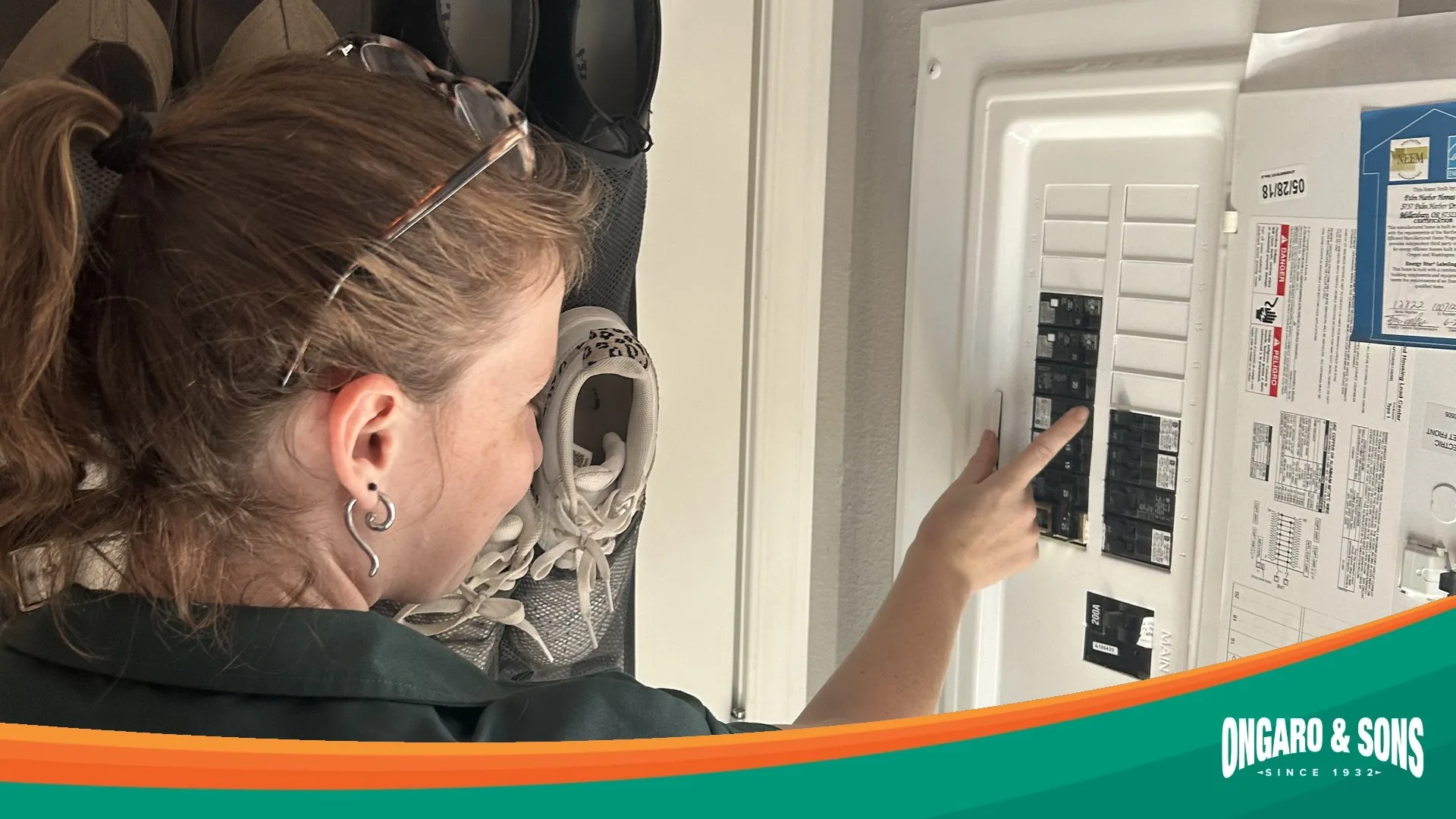
If the equipment is safely accessible and shows no sign of damage, open the outer hinged door of your electrical panel and photograph the visible label and the breaker ratings. Leave the screwed-on cover and the meter enclosure closed, and do not operate a pull-out disconnect to investigate. The number on the largest breaker, usually 60, 100, 125, 150 or 200, is a useful starting point.
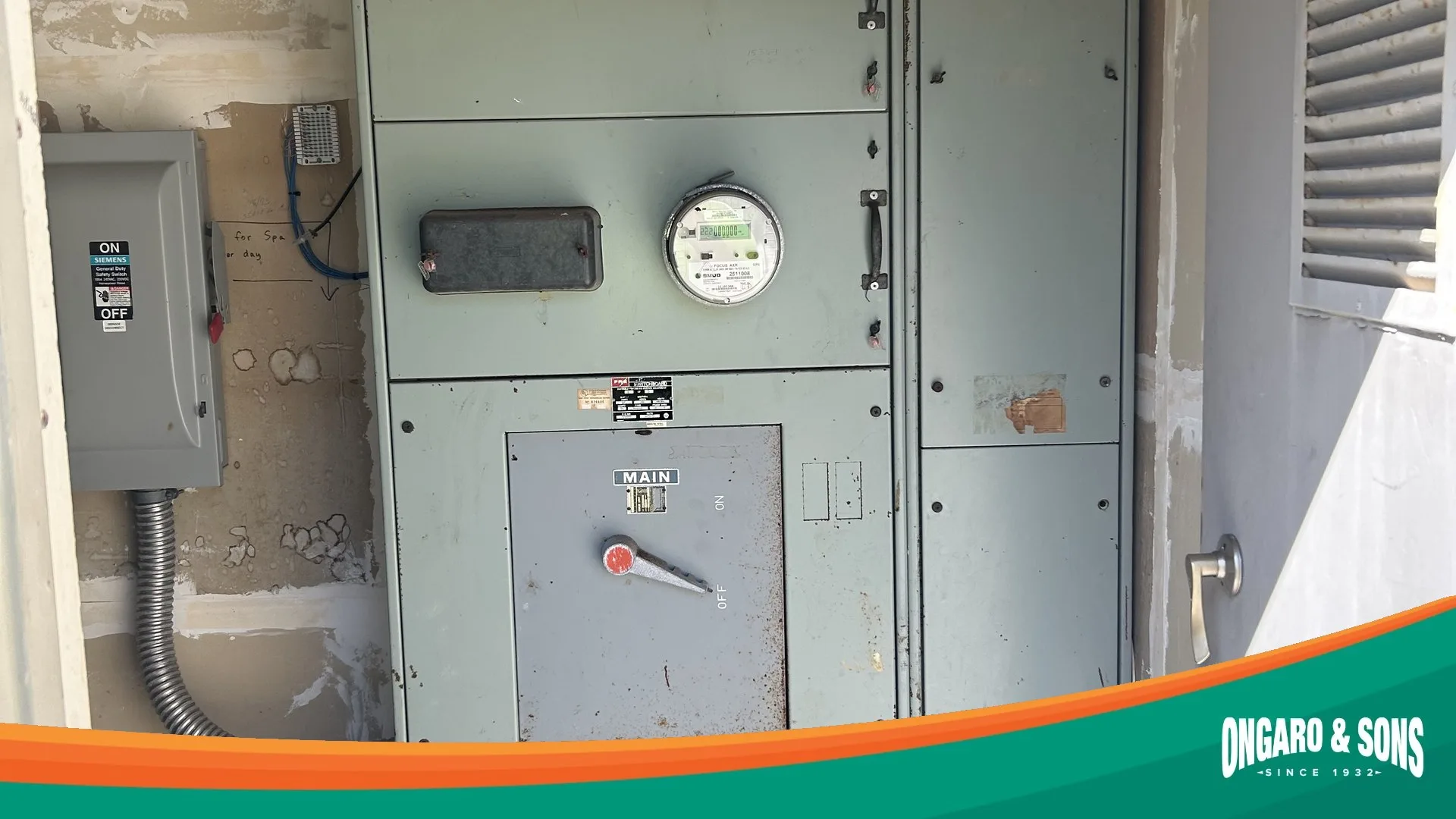
A visible rating helps an electrician identify the installation, but it does not confirm the capacity of the complete service. Some homes have a separate main disconnect at the meter, which is common in California, and some have more than one panel. If you want the mechanics of what is inside, how breaker boxes work covers them; the questions below are what the electrician actually checks.
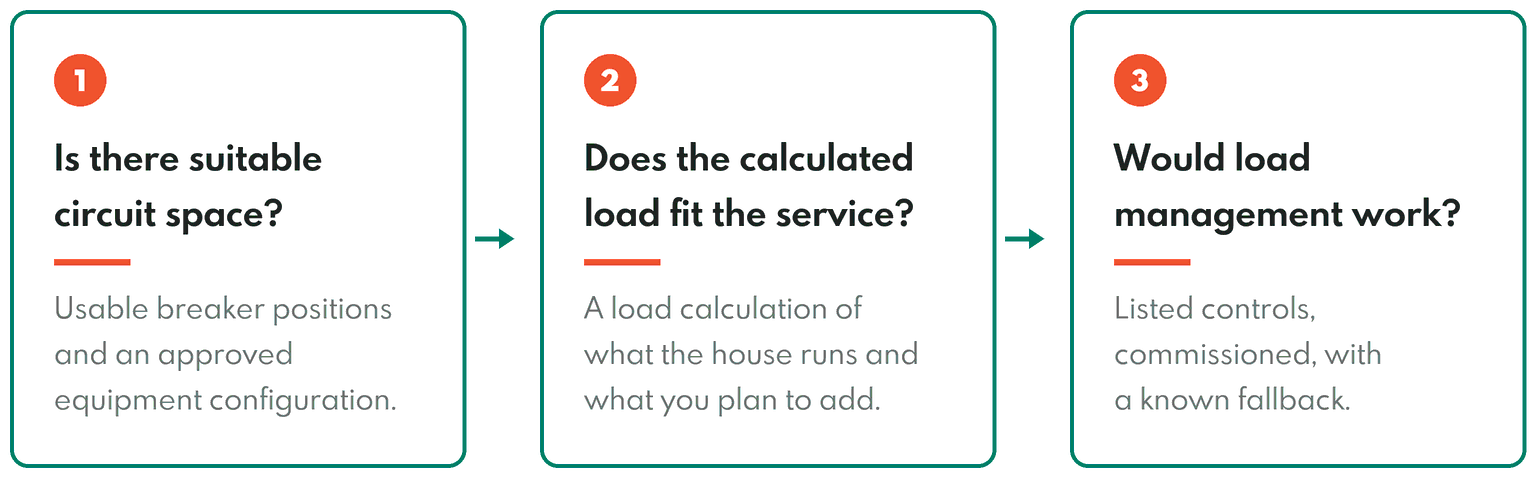
| Question | What the electrician checks |
|---|---|
| Question Can another circuit be installed? | What the electrician checks Usable circuit positions and approved equipment configurations |
| Question Can the service support the planned equipment? | What the electrician checks Existing ratings, the calculated load and the applicable requirements |
| Question Could controls avoid a service increase? | What the electrician checks Suitable listed controls and an accepted load-management design |
| Question Is the existing panel suitable to keep? | What the electrician checks Equipment condition, protective devices and compatibility |
Those four are separate checks, and the electrical panel upgrade page describes the work that follows when the answer to the last one is no.
What Uses the Capacity?
Not everything draws at once, and that is the reason a calculation exists. The code does not simply add up every appliance, because a house never runs everything simultaneously. It applies demand factors that reflect realistic diversity of use, and the set of large, dedicated loads is what moves the number.
Large appliances can have very different electrical requirements. A heat pump with resistance backup heat needs different consideration from one without it, and some heat pump water heaters run on a standard 120 volt supply while others need 240. Use the selected equipment's own ratings rather than treating every device in a category as the same load.
| Load | Typical circuit | Effect on service sizing |
|---|---|---|
| Load Electric range or cooktop | Typical circuit 240 volt | Effect on service sizing Large |
| Load Electric or heat pump water heater | Typical circuit 240 volt, or 120 volt on some heat pump models | Effect on service sizing Depends on the model |
| Load Heat pump or electric furnace | Typical circuit 240 volt | Effect on service sizing Large, and larger with resistance backup |
| Load Air conditioning condenser | Typical circuit 240 volt | Effect on service sizing Moderate to large |
| Load EV charger | Typical circuit 240 volt, continuous | Effect on service sizing Large, with the continuous-load treatment the code requires |
| Load Electric clothes dryer | Typical circuit 240 volt | Effect on service sizing Moderate |
| Load Well pump | Typical circuit 240 volt | Effect on service sizing Moderate, on rural Sonoma and Napa properties |
| Load Lighting and general receptacles | Typical circuit 120 volt, many | Effect on service sizing Calculated by floor area |
EV charging has its own continuous-load requirements. The configured charging current, the equipment's instructions and the calculation method have to be considered together, which is why a charger that looks modest on its nameplate takes up more room in the calculation than a homeowner expects. Our article on EV charger installation covers the specifics.
How Is the Calculation Done?
The electrical code sets out the method. California adopts the California Electrical Code, which is the National Electrical Code with state amendments, published as part of the Title 24 building standards through the California Building Standards Commission; the model code is developed by the National Fire Protection Association as NFPA 70.
The code allows more than one approach for a dwelling. A standard method works through each load category and applies demand factors to each. An optional method common for single-family homes takes the general lighting and receptacle load plus the nameplate ratings of the fixed appliances and applies a demand factor to most of it, with the largest heating or cooling load counted separately. Where an existing service is being evaluated, measured demand and approved controls can also come into it.
You do not need to perform this yourself. What you should know is that a real calculation exists, that it produces a number, and that a contractor recommending a service upgrade should be able to show it to you. "Your panel is old, so you should go to 200 amps" is not a calculation. A worksheet showing your calculated load against your service rating, with the new equipment included, is. Ask for it.
Is 100 Amps Enough?
It can be, and a lot of homeowners are told otherwise.
A house with gas heating, a gas water heater, a gas range and a gas dryer places relatively little demand on the electrical service. The large loads are the ones that make heat, and if gas is making the heat, the panel is mostly running lighting, receptacles, a refrigerator, and possibly an air conditioner. Many such homes run comfortably on 100 amps.
Where 100 amps becomes tight is when heat moves onto the panel. A heat pump for space heating, a heat pump water heater, an induction range and an EV charger together represent four substantial loads that did not exist before, and at that point the calculation may cross what 100 amps supports, or may not, depending on the equipment chosen and the controls used. The useful framing is "is 100 amps enough for what I am going to run in five years." If you are staying on gas, it probably is. If you are electrifying, have the whole plan calculated once rather than upgrading twice.
Do You Always Have to Upgrade to Add Load?
No, and this is the part that has changed most in recent years. Three approaches can fit new load into an existing service, and a good electrician considers them before quoting a service upgrade. The Department of Energy's research on solutions to electrical panel constraints is the neutral background.
Lower charging current. A suitable EV charging installation may use a lower maximum current, provided the setting and the equipment comply with the applicable requirements. Charging takes longer, which for a car that sits overnight is often irrelevant, but check that the resulting charging time meets your driving needs.
Circuit sharing. An approved arrangement can prevent designated loads, an EV charger and a dryer for example, from operating at the same time, so the calculation does not have to count both at once. It needs suitable equipment and controls; agreeing to run the appliances at different times is not the same thing.
Service load management. An approved energy-management system can control selected loads to keep total demand within the available capacity. A SPAN panel is one such product, and we explain how it works in what a SPAN electrical panel is. Compatibility, settings, commissioning and local acceptance all matter.
Whichever of these is proposed, ask the electrician to explain how the controls are accounted for in the calculation and what happens if a control or its communication link fails. A service upgrade is not automatically the only path, and if nobody raised these alternatives with you, ask why.
What Makes an Upgrade Expensive?
The panel itself is rarely the largest part. What drives the cost is everything around it.
| Factor | Simpler | More involved |
|---|---|---|
| Factor Service entrance conductors | Simpler Already sized for the new service | More involved Need replacing from the utility connection |
| Factor Meter location | Simpler Stays where it is | More involved Has to move to meet current requirements |
| Factor Utility connection type | Simpler Overhead, accessible | More involved Underground, requiring trenching |
| Factor Grounding electrode system | Simpler Present and adequate | More involved Needs new ground rods or a bonded water pipe connection |
| Factor Panel location | Simpler Stays in place | More involved Relocated, requiring circuits to be extended |
| Factor Existing branch wiring | Simpler Sound and modern | More involved Knob and tube or aluminum, needing evaluation |
The utility side is the variable many owners do not expect. If the service drop or the underground lateral is not rated for the larger service, that has to be addressed with PG&E, and the utility's schedule determines the timeline.
What About Solar, Batteries and Generators?
Each interacts with service size in its own way, and each needs its own check. Solar pushes power into the panel instead of drawing it out, and the code limits how much can be connected relative to the panel's busbar rating, so a panel that is adequate for your loads can still cap the size of array you can connect; our solar page covers the installation side. Battery storage can be configured to back up selected loads rather than the whole house, which changes what capacity is needed where. A standby generator does not change your service size, but it needs a transfer switch, and deciding whether it backs up the whole panel or a subpanel of essential circuits is a load-sizing question of its own; our whole home generator page covers that, and generators and battery backup compares the two approaches. If several of these are on your horizon, have one calculation done that accounts for all of them.
What Should You Do Before Calling Anyone?
- Your current service size. The number on the main breaker, read with the outer door open only.
- A photo of the panel label and breaker layout. Shows the brand, the layout and the free slots.
- A list of what is gas and what is electric today. Heat, water heater, range, dryer.
- A list of what you intend to add and roughly when. This is the one that changes the answer most, and it is the one homeowners most often leave out.
The fourth item matters because sizing for today produces a different recommendation than sizing for a plan. If you tell an electrician only about the EV charger, you may get a solution that works until the heat pump arrives.
Ongaro & Sons is a family-owned company based in Petaluma, serving Marin, Sonoma and Napa County since 1932, licensed C-10 electrical, C-20 HVAC and C-36 plumbing. Because we hold the HVAC and electrical classifications together, the heat pump load and the panel capacity can be evaluated in the same conversation. You can verify any California contractor's license and classification on the Contractors State License Board site.
Frequently Asked Questions
How many amps does a typical house need?
Most modern homes are served at 100, 150 or 200 amps. A house running gas heat, a gas water heater and a gas range is often adequately served at 100. A house with a heat pump, a heat pump water heater, an induction range and an EV charger may need more, or may fit within existing service with approved controls. The specific answer comes from a load calculation of what you run and plan to add.
How do I find out how many amps my house has?
With the panel dry and undamaged, open the outer door and read the number on the largest breaker. If there is no main breaker inside the panel, there may be a separate disconnect at the meter. Do not remove the inner cover or open the meter enclosure, and treat the number as a starting point rather than a confirmed capacity.
Is 100 amp service enough for a heat pump?
It can be, depending on the home's other loads and the heat pump's requirements, including any resistance backup heat. Have the proposed equipment included in a load calculation before assuming an upgrade is necessary.
Do I need 200 amp service for an EV charger?
Not always. Many homes add a charger on existing service, either because the calculation supports it or because the charging current is limited or managed against another large load with approved equipment. A service upgrade is one solution among several, and it should be recommended only after the calculation shows it is needed.
What does a repeatedly tripping main breaker mean?
It needs electrical diagnosis. An overload is one possibility, but a fault or an equipment problem may also be involved. Do not keep resetting it, and do not assume a larger breaker is the remedy.
How much does a service upgrade cost?
What moves it is whether the service entrance conductors need replacing, whether the meter has to move, whether the utility connection is overhead or underground, the state of the grounding electrode system, and whether the panel relocates. Ask for those items to be broken out on any quote so you can compare like for like.
Can I add a subpanel instead of upgrading the service?
A subpanel can provide circuit spaces when the existing service has adequate capacity and the installation is suitable. It does not increase the service rating, and the feeder and the connected loads still need to be assessed.
Does square footage determine how many amps I need?
Only partly. Floor area sets the general lighting and receptacle load in the calculation, but the large fixed appliances dominate the result. A compact fully electrified home can calculate higher than a much larger home running gas appliances.
Where to Start
Read the number on your main breaker and write down what in your house is gas today. Then write down what you expect to add over the next five years. Those three pieces of information turn a vague question into a calculable one.
If you would like the calculation run properly, you can request a free online estimate. Our electrical panel upgrade page covers the work, whether you need to replace your electrical panel covers the condition side, and the whole home electrification guide covers the wider plan.