Electrical Panel Upgrade For Solar And EV: Marin And Sonoma
Adding Solar or an EV Charger? Here Is What a Home Electrical Panel Upgrade Actually Involves
Quick Answer: An electrical panel upgrade is the replacement of your home’s main electrical service panel with a higher-capacity unit, typically from 100-amp or 125-amp service to 200-amp or 400-amp service, to safely handle the additional electrical loads from solar inverters, EV chargers, heat pumps, and other electrification equipment. Cost varies based on service level, existing service entrance condition, and installation complexity. A permit and utility coordination with PG&E are required for all service upgrades. Ongaro & Sons is a licensed C-10 electrical contractor based in Petaluma, CA, serving Marin, Sonoma, and Napa counties since 1932.
A generation ago, the question of whether a home’s electrical panel needed upgrading was mostly about age and safety: was it a Federal Pacific or Zinsco panel that presented a fire risk, or an outdated fuse box that couldn’t handle a modern appliance load? The answer was usually “replace it when it gives you trouble.”
That calculus has changed. Across Sonoma and Marin counties, homeowners are adding solar arrays, EV chargers, heat pumps, induction ranges, and battery storage systems at a pace the electrical infrastructure in most existing homes wasn’t designed for. Marin County, with one of the highest EV adoption rates in California, has been at the front of this electrification wave. The electrical panel, which most homeowners never think about until something goes wrong, has become the bottleneck standing between what your home can power today and what you want it to do in the next decade.
Understanding what a panel upgrade actually involves, when you need one, and how it fits into a broader home electrification project is what this guide covers.
Why Are Solar and EV Charging Driving a Wave of Panel Upgrades?
The North Bay’s EV adoption rate is among the highest in the country, and California’s solar incentive structure has made rooftop solar a mainstream choice rather than an enthusiast niche. When homeowners begin stacking these systems, the math on electrical capacity changes quickly.
Consider a typical home in Sonoma or Marin County built in the 1960s or 1970s with a 100-amp service panel. Whether that home is in Santa Rosa or in San Rafael, in Sebastopol or in Fairfax, the story is the same: the panel was sized for the loads of its era, a refrigerator, lights, a window AC unit, and perhaps an electric dryer, and the 100-amp service provided adequate headroom for those loads.
Now add a Level 2 EV charger (40 to 48 amps), a solar inverter (which adds a supply connection, not a load, but requires breaker space and proper interconnection), and a heat pump system replacing a gas furnace (typically 30 to 60 amps). The 100-amp panel is not just full. It’s incompatible with the interconnection requirements of the solar system, and adding a 50-amp EV circuit to a panel already at capacity is a code violation that no licensed electrician will perform.
The panel upgrade is not a discretionary upgrade in these cases. It’s the prerequisite.
What Does a Home Electrical Panel Upgrade Actually Involve?
A panel upgrade is more than swapping one box for another. The full scope of work depends on your current service entrance condition, but typically includes:
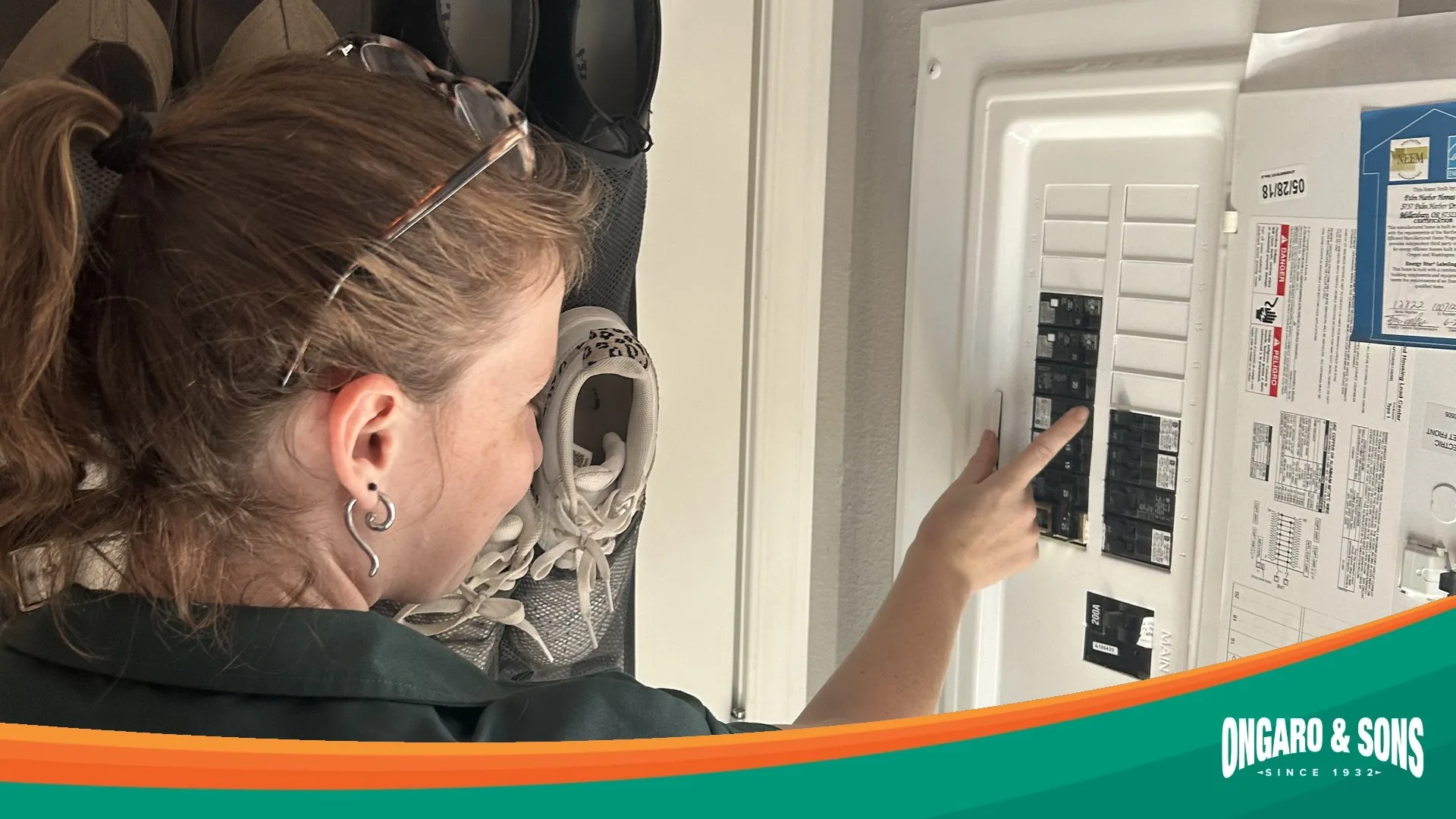
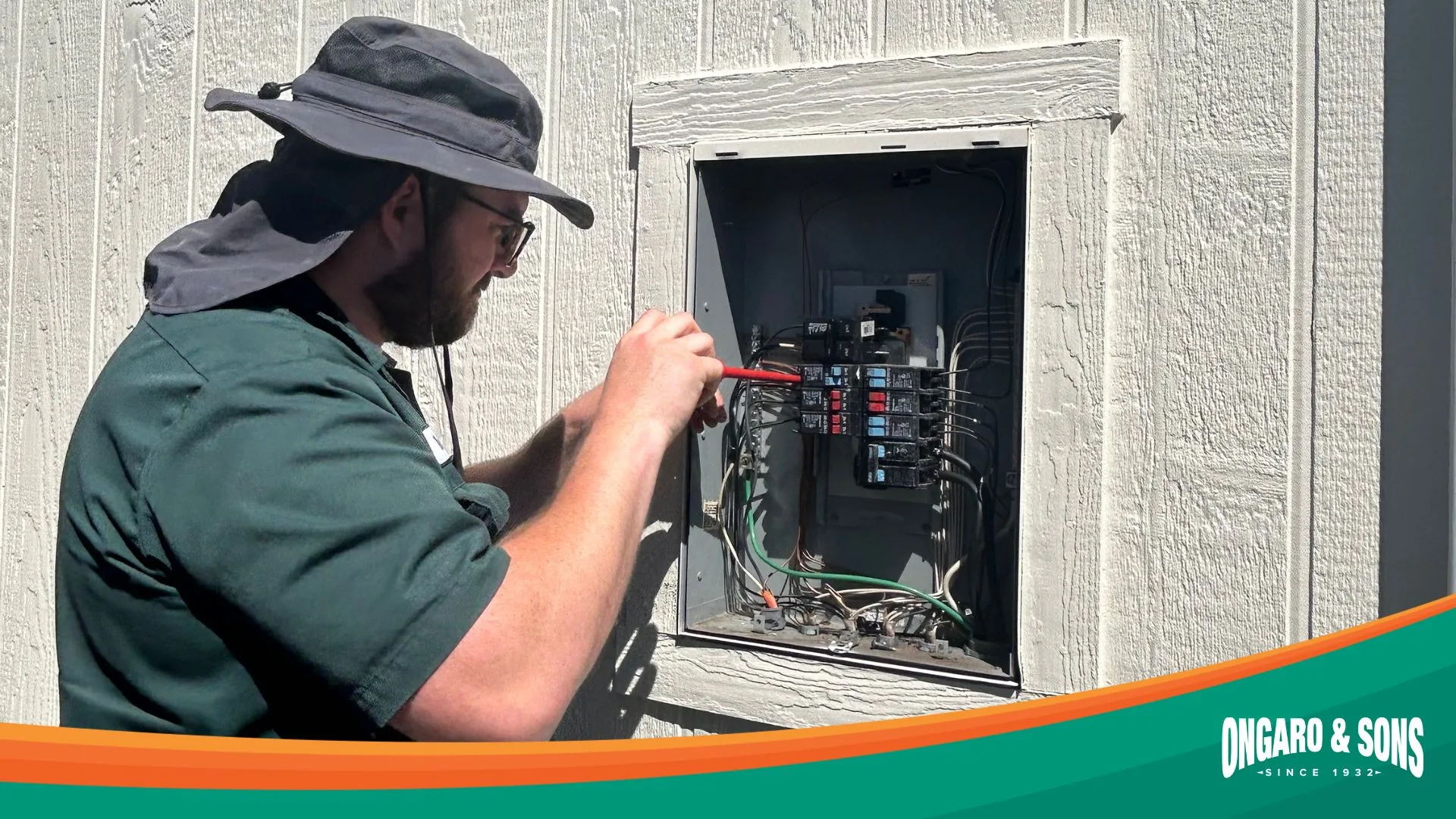
Replacing the main service panel. The existing panel is de-energized, existing branch circuits are labeled and transferred to the new panel, and the new main breaker panel is installed in the same or a nearby location. A properly sized main breaker is installed: a 200-amp panel requires a 200-amp main breaker, which interrupts power to the entire panel in the event of an overcurrent condition.
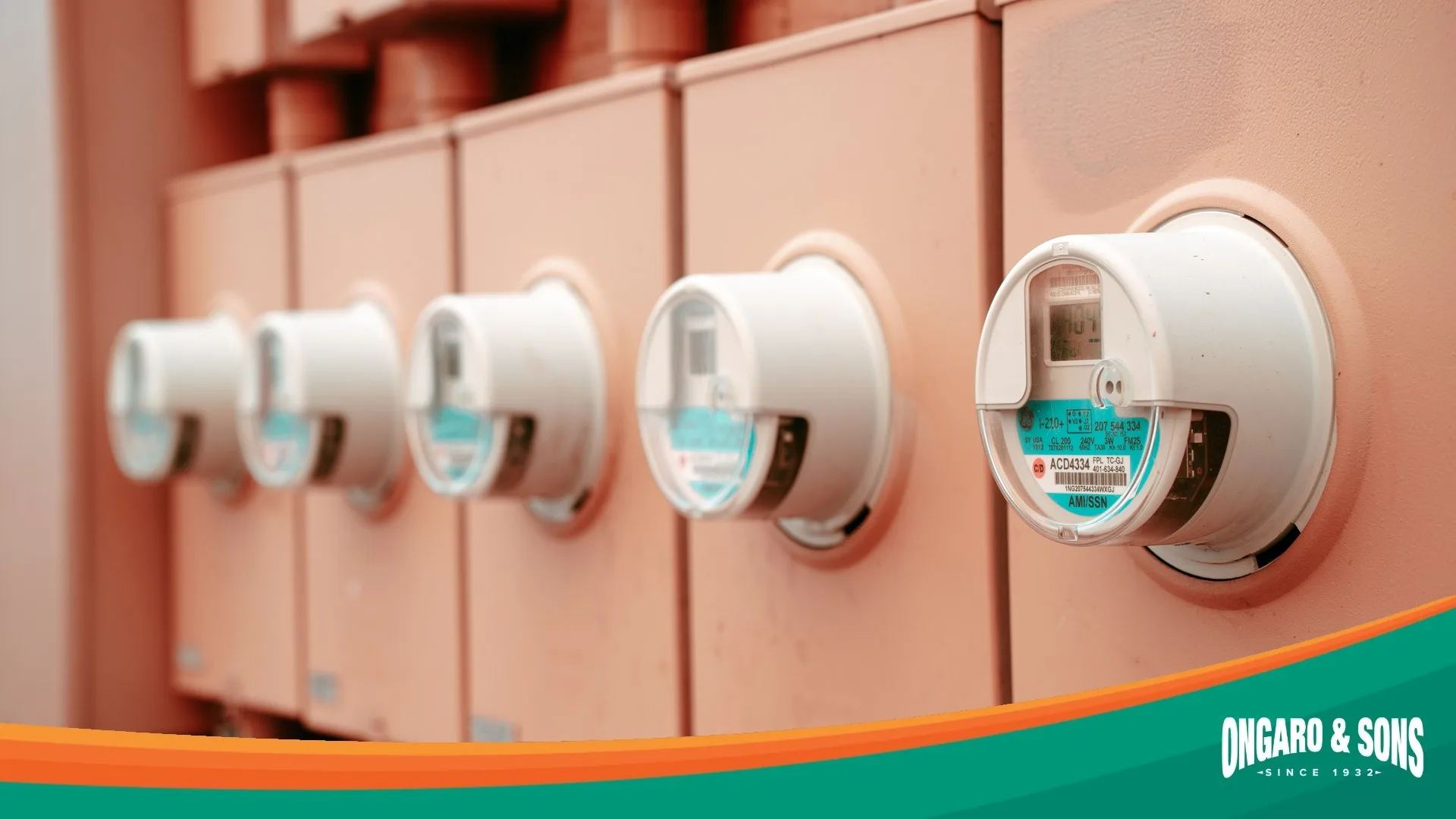
Upgrading the meter base and service entrance conductors. The wires that run from the utility company’s transformer to your meter and from your meter to your main panel are sized for the existing service ampacity. Upgrading from 100-amp to 200-amp service requires replacing these conductors and, in many cases, the meter base itself. This is the part of the job that requires utility company coordination: PG&E must disconnect and reconnect service at the transformer, which adds scheduling time to the project.
Grounding and bonding. Modern electrical code requires specific grounding electrode systems and bonding connections that older installations may not have. A code-compliant panel upgrade brings the grounding system current.
New branch circuits. Once the panel has capacity, new dedicated circuits are added for the EV charger, solar inverter connection, and any other new loads. Each circuit requires appropriately sized wire and a correctly rated breaker.
Permit and inspection. A permit is required for all service upgrade work in California. A city or county electrical inspector verifies the installation before PG&E restores service. This is not optional and not something a legitimate licensed electrician will skip.
The entire process, from permit application to final inspection and PG&E reconnection, typically takes one to three weeks, depending on permit processing speed and PG&E’s scheduling in your area.
How Do You Know If Your Panel Can Handle Solar and EV Charging?
Several signals indicate your current panel is at or near its capacity limit:
The panel is at 100-amp or 125-amp service. Most modern solar inverter interconnection requirements and EV charger circuits are difficult or impossible to add to a 100-amp panel without significant load shedding or a service upgrade.
All breaker slots are occupied. A full panel has no room for the new dedicated circuits that solar and EV charging require. Tandem breakers can create space in some panels but are not a substitute for proper capacity.
You’re already tripping breakers regularly. A panel that’s regularly losing breakers under normal household load is operating near its design capacity. Adding significant new loads will make this worse.
Your HVAC contractor or solar installer has told you an upgrade is needed. Load calculations performed during the design of a solar or heat pump system often reveal panel capacity constraints. If you’ve been told this during a project assessment, it’s accurate.
The panel is a known problematic brand. Certain panels, particularly Federal Pacific Electric (FPE) Stab-Lok and Zinsco/Sylvania panels common in homes built between the 1950s and 1980s, have documented safety deficiencies regardless of capacity. These warrant replacement independent of any electrification project.
An electrician performing a load calculation will assess your current service ampacity, existing circuit loads, and the additional load requirements of any planned equipment to determine whether an upgrade is needed and what size service is appropriate.
What Size Electrical Panel Does a Solar-and-EV Home Need?
For most single-family homes in Sonoma and Marin counties planning solar plus one or two EV chargers, 200-amp service is the standard and sufficient baseline. Here is how the math works in practice:
A 200-amp panel provides 200 amps of total service capacity. Under the NEC load calculation method, a typical home’s existing loads (lighting, HVAC, appliances) might account for 100 to 130 amps of calculated load. A 50-amp EV charger circuit adds 50 amps. A solar inverter connection doesn’t add a load but requires breaker space and is subject to the 120 percent rule (the solar breaker plus all other breakers in the panel cannot exceed 120 percent of the panel’s bus bar rating, which limits how large a solar array can interconnect with a given panel without modification).
For most homes, 200-amp service with a new panel comfortably accommodates the combination of standard household loads, one or two EV chargers, and a reasonably sized solar array. It’s the right answer for the majority of residential electrification projects in the North Bay.
When does 400-amp service make sense?
400-amp service, which typically involves two 200-amp meters or a single large-capacity service entrance, is appropriate for:
- Larger homes with significant existing electrical loads
- Homes planning to add multiple EV chargers (a multi-vehicle household with two 48-amp chargers)
- Properties with ADUs, shops, or outbuildings that share the main service
- Homes planning large battery storage systems alongside solar
- Properties adding a whole-home generator with automatic transfer switch in addition to solar and EV infrastructure
400-amp work is more involved and more expensive. For most single-family homes in the North Bay, it’s more than what’s needed. A load calculation by a licensed electrician will clarify which is appropriate for your specific situation.
How Does a Panel Upgrade Interact with Solar Installation?
The sequencing of a panel upgrade and solar installation matters, and getting it wrong adds time and cost.
Solar systems connect to the electrical panel through a dedicated circuit, typically at a breaker on the bus bar. The NEC’s 120 percent rule governs how large that interconnection can be relative to the panel’s main breaker rating. For a standard 200-amp panel with a 200-amp main breaker, the solar backfeed breaker plus all other breakers cannot exceed 240 amps (120 percent of 200).
In practice, this means a large solar array, anything over 10 to 12 kilowatts in many residential configurations, may require either a load-side interconnection method (connecting to a subpanel or using a line-side connection before the main breaker) or a panel upgrade to accommodate the solar system’s size. Your solar contractor and electrician should coordinate this before either project is designed.
What is NEM 3.0 and how does it affect this?
California’s Net Energy Metering 3.0 (NEM 3.0) program, which took effect for new solar interconnections in 2023, significantly reduced the export compensation rate for solar energy sent back to the grid during peak solar production hours. Under NEM 3.0, the economics of solar have shifted toward self-consumption and battery storage.
The practical implication for panel upgrades: homes adding solar under NEM 3.0 are increasingly pairing solar with battery storage (such as Tesla Powerwall or Enphase IQ Battery systems) to store daytime production for evening use rather than exporting it at reduced rates. Battery storage systems add another interconnection point and load to the panel design. If battery storage is in your future, that needs to be part of the panel sizing conversation now, not added as an afterthought that requires another panel modification.
For specifics on how solar installation and panel capacity interact in PG&E territory, a combined electrical and solar assessment is the most efficient starting point.
What Are the Permitting and Utility Coordination Steps?
This is the part of a panel upgrade that most homeowners underestimate in terms of timeline.
Permit application. The electrical contractor submits a permit application to the local building department. In Santa Rosa, Petaluma, and most Sonoma County jurisdictions, as well as in San Rafael, Mill Valley, Novato, and Marin County communities, standard residential electrical permits are typically processed within a few days to two weeks. Some jurisdictions have online permitting portals that speed this up.
PG&E coordination. A service upgrade requires PG&E to disconnect power at the meter, allowing the contractor to replace the service entrance conductors and meter base safely. PG&E must then reconnect service after the installation is complete and inspected. Scheduling PG&E can add one to two weeks to the project timeline depending on their current workload. Your electrical contractor manages this coordination, but the timing is outside their control.
Rough inspection and final inspection. Most jurisdictions require an inspection before the panel is energized and a final inspection after PG&E restores service. The inspector verifies code compliance, grounding, and proper installation.
Solar interconnection (if applicable). If the panel upgrade is part of a solar project, a separate interconnection application is submitted to PG&E through the solar contractor or electrical contractor. PG&E reviews and approves the interconnection plan before the system can be energized and export-approved. Solar interconnection timelines in PG&E territory currently run several weeks to several months depending on complexity and PG&E workload.
Planning the full sequence realistically: a panel upgrade plus solar interconnection project in Sonoma or Marin County typically takes six to twelve weeks from permit application to a fully operational solar system. Starting the process early, before the season when you most want the system running, is strongly advisable.
What Should You Do First: Panel, Solar, or EV Charger?
This is a common sequencing question, and the answer depends on your specific situation.
If a panel upgrade is confirmed as necessary: Do the panel upgrade first. Installing an EV charger or beginning solar design before the panel is upgraded can result in rework if the final panel configuration differs from what was assumed.
If you’re getting both solar and an EV charger: Coordinate both with the same electrical contractor or have the solar contractor and electrician communicate directly. The solar inverter interconnection and EV charger circuit should be designed as part of the same panel configuration. Installing the EV charger separately before solar is designed can result in a panel configuration that complicates the solar interconnection.
If you’re uncertain whether you need a panel upgrade: Get a load calculation from a licensed electrician before signing any solar or EV charger contracts. Some solar companies will design around a panel limitation to close the sale, leaving you with a smaller system than your roof and budget support. Others will specify the panel upgrade as part of the project scope, which is the right approach. Know what your panel can support before you commit to a system design.
For a comprehensive look at your home’s current electrical capacity and what it can support, an energy audit is a useful first step that addresses panel capacity, insulation, HVAC efficiency, and electrification readiness together.
What Does an Electrical Panel Upgrade Cost in Sonoma and Marin Counties?
Cost depends primarily on the service level being upgraded to, the condition of the existing service entrance, and the complexity of the installation location.
Standard 100-amp to 200-amp upgrade: Cost includes the new panel, main breaker, meter base replacement if needed, permit, and PG&E coordination. Labor-intensive service entrance situations, difficult panel access, or significant grounding work push costs higher.
200-amp upgrade with new branch circuits for EV and solar: Adding dedicated circuits and conduit runs to the panel work increases the total cost accordingly.
400-amp service upgrade: 400-amp installations often involve a more complex service entrance configuration and may require a new meter base upgrade coordinated with PG&E, making them a more significant investment than a standard 200-amp upgrade.
Older home with wiring concerns: Homes that need a whole-home rewire in addition to a panel upgrade, which is common in North Bay homes built before 1970 with aluminum branch circuit wiring or aging knob-and-tube, carry significantly higher total costs. An inspection of the branch circuit wiring condition is worth doing alongside any panel assessment.
Get written estimates that itemize panel equipment, meter base work, permit fees, and branch circuit additions separately. Scope creep is common on older homes where problems that weren’t visible become apparent once the panel is opened.
Are There Tax Credits or Rebates for Panel Upgrades?
Federal and California rebate programs for electrical upgrades change frequently. The information below reflects programs available as of early 2026. Verify eligibility before scheduling any work.
Federal Incentives. Federal tax credit programs that previously applied to electrical panel upgrades in connection with electrification work have been significantly modified or repealed by recent legislation. Consult a qualified tax professional to understand what federal incentives, if any, currently apply to your panel upgrade.
TECH Clean California. The TECH Clean California program offers rebates for qualifying electrification upgrades, and in some cases the electrical panel upgrade required to support qualifying equipment may be included in the project scope for rebate purposes. Eligibility depends on what equipment is being installed and income qualification. Verify current availability before your installation.
PG&E Programs. PG&E periodically offers programs supporting electrification-related electrical upgrades. Check PG&E’s rebate and incentive page for current offerings before your installation date.
Marin Clean Energy (MCE). Marin County customers receive electricity supply through MCE, Marin’s community choice aggregator. MCE offers its own rebate programs for electrification upgrades including panel work connected to qualifying clean energy projects. Check MCE’s current programs before your installation. In some cases MCE and PG&E programs can be stacked for the same project.
Frequently Asked Questions
What is an electrical panel upgrade? An electrical panel upgrade is the replacement of a home’s main electrical service panel with a higher-capacity unit, typically upgrading from 100-amp or 125-amp service to 200-amp or 400-amp service. It includes replacing the main panel, the meter base and service entrance conductors, and updating the grounding system to current code. A permit and PG&E coordination are required.
Do I need a panel upgrade to add solar panels? Not always, but often. Whether a panel upgrade is required depends on your current panel’s capacity, the size of the solar system being installed, and whether the existing panel can accommodate the solar interconnection under the NEC’s 120 percent rule. A load calculation by a licensed electrician will determine if an upgrade is necessary before you commit to a solar system design.
Do I need a panel upgrade to add an EV charger? A 40-amp or 48-amp Level 2 EV charger requires a 50-amp or 60-amp dedicated circuit. If your existing panel doesn’t have the available capacity and breaker space to safely add that circuit, a panel upgrade is required. Many 100-amp panels in older homes throughout Sonoma and Marin counties do not have this headroom.
How long does a panel upgrade take? The physical installation typically takes one day. The full project, including permit processing, PG&E disconnection and reconnection scheduling, and final inspection, typically takes two to four weeks. Combined with solar interconnection, the total timeline extends to six to twelve weeks depending on PG&E workload.
Can I add solar and an EV charger without upgrading my panel? In some cases yes, if your panel has sufficient remaining capacity and the solar system is sized appropriately. In many cases no, particularly in older homes with 100-amp service. The only reliable answer is a load calculation based on your specific panel and planned equipment. A contractor who designs solar or EV infrastructure without confirming panel capacity first is doing incomplete work.
What is the difference between a panel upgrade and a service upgrade? The terms are often used interchangeably, but strictly speaking a panel upgrade refers to replacing the main breaker panel itself, while a service upgrade includes replacing the service entrance conductors and meter base as well. Most projects that increase service ampacity from 100 to 200 amps involve both, because the existing conductors and meter base are typically sized for the old service level.
Are Federal Pacific and Zinsco electrical panels dangerous? Yes. Federal Pacific Electric (FPE) Stab-Lok panels and Zinsco/Sylvania panels have documented safety deficiencies that are independent of their age or current load. FPE Stab-Lok breakers have a documented failure rate in which they do not trip under overcurrent conditions, meaning a circuit fault or overload may not be interrupted as designed, creating a fire risk. Zinsco breakers have a known failure mode in which the breaker mechanism fuses to the aluminum bus bar, making it impossible to trip manually or reset and leaving the circuit permanently energized even when the breaker handle appears off. Both panel types warrant replacement regardless of whether an electrification project is planned. If your panel has either of these labels, replacement should be prioritized.
Is a permit required for an electrical panel upgrade in California? Yes. A permit is required for all service upgrade work in California, and a licensed C-10 electrical contractor must perform the work. The installation is inspected by a city or county electrical inspector before PG&E restores service. Any contractor offering to do panel upgrade work without a permit should not be hired.
Are there federal tax credits for electrical panel upgrades? Federal tax credit programs that previously applied to panel upgrades in connection with electrification work have been significantly modified or repealed by recent legislation. Consult a qualified tax professional to understand what federal incentives currently apply. State and utility rebate programs through TECH Clean California and PG&E remain available and are worth checking before your installation.
Should I upgrade to 200-amp or 400-amp service? For most single-family homes in Sonoma or Marin County adding solar and one or two EV chargers, 200-amp service is adequate. 400-amp service makes sense for larger homes, properties with ADUs or significant outbuildings, multi-vehicle households with multiple high-amperage chargers, or homes planning large battery storage systems. A load calculation will determine which is appropriate.
Schedule Your Electrical Panel Upgrade in Sonoma or Marin County
Ongaro & Sons is a licensed C-10 electrical contractor based in Petaluma, CA, serving Marin, Sonoma, and Napa counties since 1932. We are a SPAN Certified Installer, hold Diamond Certified® status and a BBB A+ rating. We handle electrical panel upgrades as standalone projects and as part of broader electrification work that includes EV charger installation and solar integration.
If you’re not sure whether your panel can support what you’re planning, start with an assessment. We will do the load calculation, tell you what the panel can handle, and give you a clear picture of what work is required before you commit to any equipment or installation contracts. Schedule a consultation to get started.