HVAC in Napa County
Ongaro & Sons has installed and repaired heating and cooling systems across the North Bay since 1932. We hold a C-20 HVAC license, we are Diamond Certified, and we carry 2,756 Google reviews averaging 4.8 stars. We pull the permit, size the equipment to the house, and explain the options before anything comes out.
Everything runs from our Petaluma headquarters, over the hill to the west. Distance is not the complication in this county. The complication is that Napa County holds five incorporated cities plus a large unincorporated remainder, spread along a valley whose climate changes as you drive north, and the right answer changes with it.
On this page
The rule that will shape your next furnace decision
Start with the regulation, because it applies identically to every address in the county and most homeowners have not heard about it.
Napa County sits entirely inside the Bay Area Air Quality Management District, which describes its territory as "nine counties that surround San Francisco Bay: Alameda, Contra Costa, Marin, Napa, San Francisco, San Mateo, Santa Clara, southwestern Solano, and southern Sonoma counties". Solano and Sonoma carry a directional qualifier because only part of each is in the district. Napa carries none. Every city and rural parcel here answers to the same air regulator, which is not true one county west, where the northern towns fall under a separate air pollution control district.
That means one countywide compliance path for appliance rules.
What this does not mean: nobody is banning your furnace, and a working gas furnace in a Napa County house in 2026 is a legal, permittable, replaceable appliance. The compliance date lands on the equipment side, so what you can buy here changes before what is already installed does. If your unit is near the end of its life, the choice is between a gas replacement that stays well supported for years and an electric heat pump that retires the question. Choosing without knowing the date exists is the only wrong move. The rule is still in motion, so we confirm requirements with the district when we scope a project.
Title 24 sits on top of that. California's 2025 Building Energy Efficiency Standards took effect January 1, 2026, and a furnace or condenser replacement is an alteration under those standards, not a free pass. Depending on scope, it can trigger third-party HERS verification of items such as duct leakage and refrigerant charge. New construction and replacement are separate compliance paths, and conflating them is how homeowners end up expecting a rebate that does not exist.
Who issues the permit depends on which line you are inside
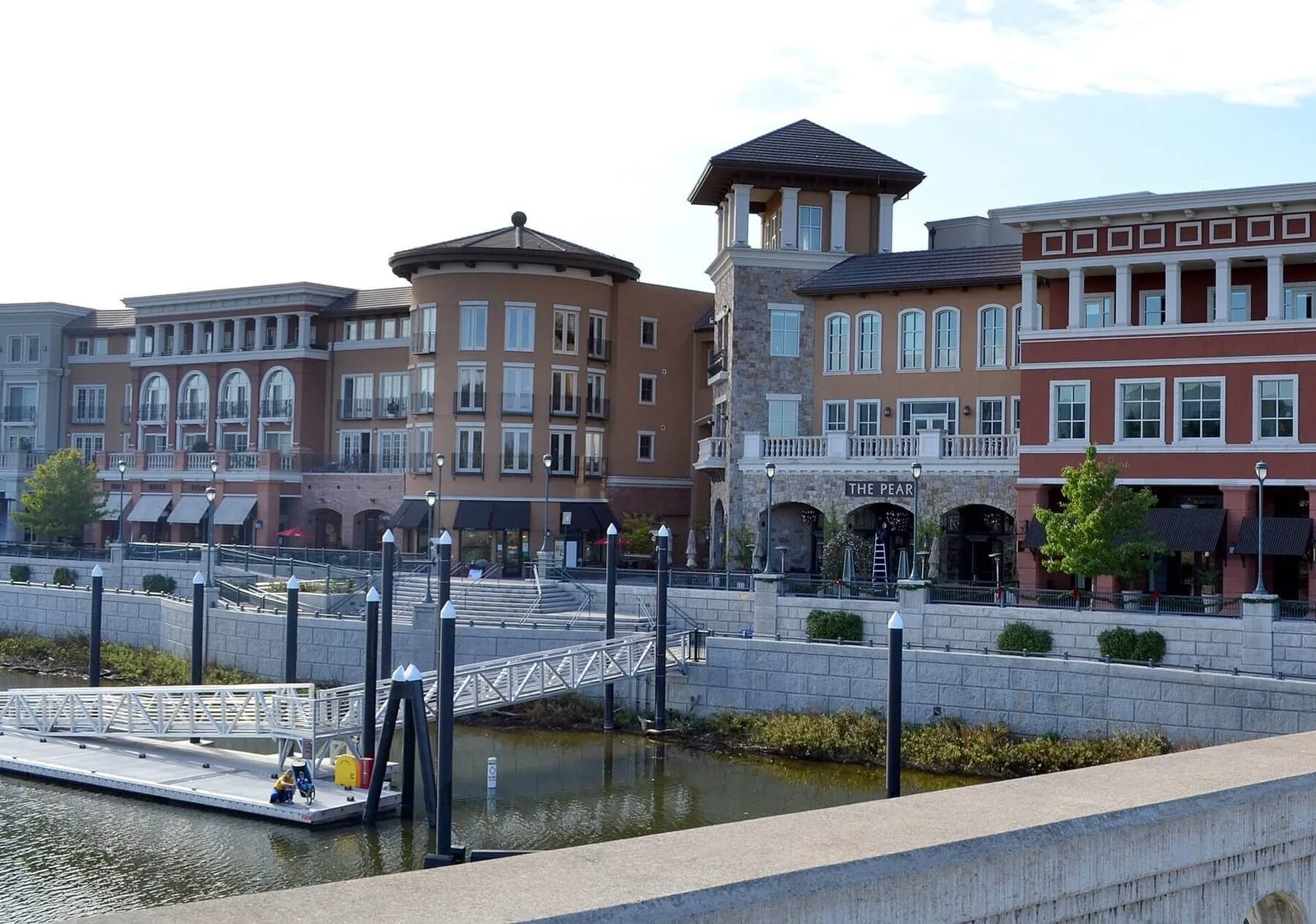
Napa County is a small county with a lot of permitting jurisdictions. Napa, American Canyon, Yountville, St. Helena and Calistoga each run their own building department and issue their own mechanical permits. Everything outside those city limits, most of the county's land area, is permitted by Napa County Planning, Building & Environmental Services.
For the unincorporated side, the county moved permitting online. Its Building Division states that effective January 1, 2024, all building permit submittals are handled digitally through the county's Online Permit Center, which also covers status checks and inspection scheduling. A straightforward equipment changeout is a light application, but it is still an application, and the final inspection is the part that protects you.
Two things follow. A contractor who works one city well does not automatically work the rest of the county well, because portals, scheduling and documentation differ by jurisdiction. And the permit should be pulled by the licensed contractor, not by you as an owner-builder at the contractor's suggestion. An owner-builder permit moves liability for the installation onto the homeowner, which is a poor trade on a job you are hiring out.
What the rules change about the equipment itself
The fork here is gas furnace, heat pump, or a dual-fuel system using both. None is the automatic answer, and the marketing around heat pumps has gotten loud enough that it is worth stating what governs the decision.
A modern heat pump heats and cools from one piece of equipment, and cold-climate models hold usable capacity well below anything a Napa Valley winter produces. Hillside mornings here get genuinely cold, but the design temperature in this county is not a Sierra design temperature. The binding constraint is electrical rather than thermal: a heat pump changes the load profile of the house, and on older services we routinely find no headroom without a load calculation and often a service upgrade. That is why heat pump projects turn into electrical projects, and why we would rather learn that at the estimate than on install day.
Dual fuel is the underrated middle path here, particularly up-valley. The heat pump carries cooling and the large majority of heating hours while the existing gas furnace stays on as the backup stage for the coldest mornings, which hedges the fuel question without demanding that the house be electrically ready for everything at once.
Replacing like for like with gas is still a real choice, because the refrigerant side is moving. R-22 production and import ended in the United States in 2020, so repairs on those systems now depend on reclaimed or stockpiled supply, which by itself often settles repair versus replace on anything installed before about 2010. R-410A is being phased down under the AIM Act, with new equipment moving to lower global warming potential refrigerants, under a 700 GWP limit on newly manufactured residential and light commercial equipment. An existing R-410A system is fine; the point is that a new system will likely run a different refrigerant than the one it replaces.
We are a Mitsubishi Diamond Contractor Elite and a Trane Comfort Specialist, the top designation tiers those manufacturers award. For a homeowner that means the full equipment line and the coverage that follows a factory-recognized installation, rather than a warranty argument later.
I've been working with Ongaro for about 5 years now and all I can say, these guys are the best. They are fair, they make sense when they explain any issue, they listen and they deliver. Highly recommend for any HVAC issue you have.
Rocco C.
Symptoms, and what is usually behind them
Most calls start with one of these. The list is short on purpose; diagnosis is the part that matters.
- Cooling that keeps up in June and gives out on an August afternoon: undersized equipment, leaking ducts in a hot attic, or a slow refrigerant loss in its second season.
- Rooms at the far end of the house that never match the thermostat: almost always duct design or duct condition, not equipment capacity.
- A furnace that short cycles, firing for a few minutes and shutting off again: airflow restriction, a failing flame sensor or limit switch, or an oversized unit fighting itself.
- New grinding or screeching from the outdoor unit: usually a fan motor or a compressor bearing announcing its timeline.
- Ice on the refrigerant line or coil in cooling season: low airflow or low charge, and running it that way damages the compressor.
- The system runs constantly in smoke season and the house still smells like smoke: normally a filtration and envelope problem, not an equipment problem.
Fuel, ducts, panel, position
We work through the same four questions, in order, on every heating and cooling project in this county. It keeps the conversation from starting at the brochure.
Fuel. What is feeding the house today? Inside the city limits of Napa or American Canyon it is almost always natural gas. On rural county parcels we regularly find propane instead, because there is no main to connect to, and that changes the arithmetic. A propane-heated house is among the strongest heat pump candidates in the county, since the comparison is a delivered fuel against electricity rather than piped gas.
Ducts. Whether the existing distribution system is worth keeping, covered in detail below.
Panel. What the electrical service can support. On an older house this is not a formality, and it is the item that most often expands a project's scope. A load calculation answers it; a guess does not.
Position. Where the house sits in the county. South county gets marine air that up-valley towns never see, so the same floor plan in American Canyon and in Calistoga carries meaningfully different cooling loads. Hillside properties are a third case: colder winter nights, more exposure, longer outage history. We size to the site rather than copying tonnage off the old nameplate.
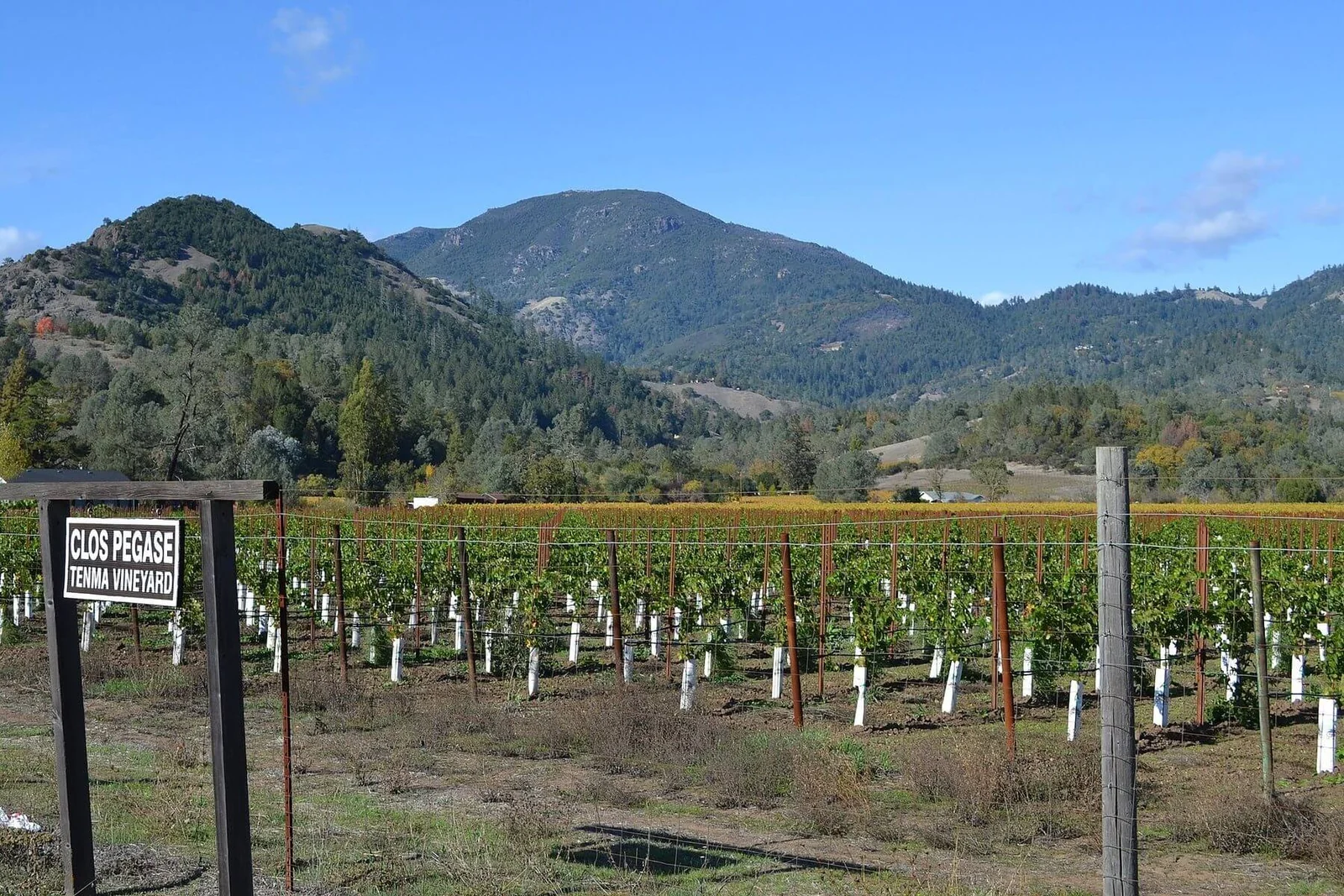
Ductwork is usually the factor that decides the outcome
If this page changes one thing about how you read a bid, let it be this. Homeowners shop equipment, and equipment is the easy part. The distribution system decides whether that equipment can do its job, and it is where the difference between a good installation and a cheap one lives.
Duct problems arrive in three forms, and older Napa County housing supplies all three. Leakage, where conditioned air escapes into an attic or crawlspace before reaching a room. Undersizing, where trunk and branch runs cannot carry the airflow the new equipment needs, which shows up as high static pressure and a system that runs hot and dies early. And layout, where ducts were run for a house since added onto, so half the system fights a floor plan that no longer exists.
In the older housing stock, especially homes heated by a floor or wall furnace long before central air arrived, we frequently find retrofit ductwork threaded through spaces never designed to carry it. In postwar and later tracts the runs are usually in the attic, so in a valley summer the air picks up heat on the way to the register. Neither case is cause for alarm. Both are reasons to test the ducts rather than assume them onto the new unit.
A proposal that names equipment and says nothing about distribution is not a plan, it is a price.
What drives the cost of a Napa County project
We do not publish prices, because a number without a scope is worthless and the same equipment in two houses is two different jobs. What moves the number, roughly in order:
Scope beyond the box comes first. Swapping a furnace and condenser in place is one project. Doing that and repairing distribution ducts is substantially larger, and adding zoning to fix a room that never conditioned properly is larger again.
Electrical readiness is second, and it catches people off guard. A conversion needing a new dedicated circuit, or a service upgrade to carry the load, is real work with its own permit and inspection.
Access is third, and very much a Napa County variable. A garage installation with room to move is not the same job as an older attic with a small hatch, a tight crawlspace, or a hillside property where equipment gets carried a long way from wherever the truck can park.
Then fuel and configuration: gas, all-electric or dual fuel, and single-stage, two-stage or fully modulating. Then compliance, meaning the permit and any third-party verification. Then equipment tier, which is where most people assume the money goes and where it usually does not go first. If spreading the cost matters, we offer financing options, and that conversation belongs at the estimate.
Tim came out to our house to price extending our heating system into a proposed family room addition. Our existing system was installed by Ongaro seven years ago. Tim spent great time reviewing the existing installation and reviewed our plans of the addition.
Steve B.
Incentives, and what is left
Incentive programs in California move fast, and a page describing one that closed six months ago costs you real money. As of this writing:
MCE is the community choice electricity provider serving Napa County, with PG&E still delivering the power and maintaining the lines. Which provider serves you determines what programs are on the table, and Napa's answer differs from Sonoma County's next door. We check MCE eligibility during the estimate rather than promising it in advance.
MCE's heat pump rebates are the local option here. They cover heat pump water heaters and heat pump heating and cooling, and three conditions decide eligibility: twelve months of ownership and residency in a single-family detached home in MCE territory, a participating contractor who files the paperwork for you, and an application submitted before installation, because MCE states its rebates cannot be applied retroactively.
Maintenance in a valley with dust, heat and planned outages
Three things age heating and cooling equipment faster here than the manufacturer's test lab assumes.
Dust and agricultural particulate. Anyone who has wiped a windowsill during harvest knows what the return filter is up against. A loaded filter raises static pressure, which cuts airflow, which makes the system work harder for less output. It is the cheapest thing a homeowner controls and the most common cause of the calls we take.
Smoke season. Through late summer and fall we field a lot of filtration questions, and the answer is usually a better filter rated for fine particulate plus attention to how the house itself leaks, not new equipment. A central system has a limit to what it can clean, and knowing that limit beats buying hardware that cannot deliver.
Planned outages. PG&E may call a Public Safety Power Shutoff during periods of high wildfire risk, and the rural and hillside parts of this county carry more exposure than the valley floor. Work that through before making a house fully electric: what conditions it while the power is off, and whether backup generation belongs in the plan. We are a Certified Generac Generator installer and can scope that with the HVAC work.
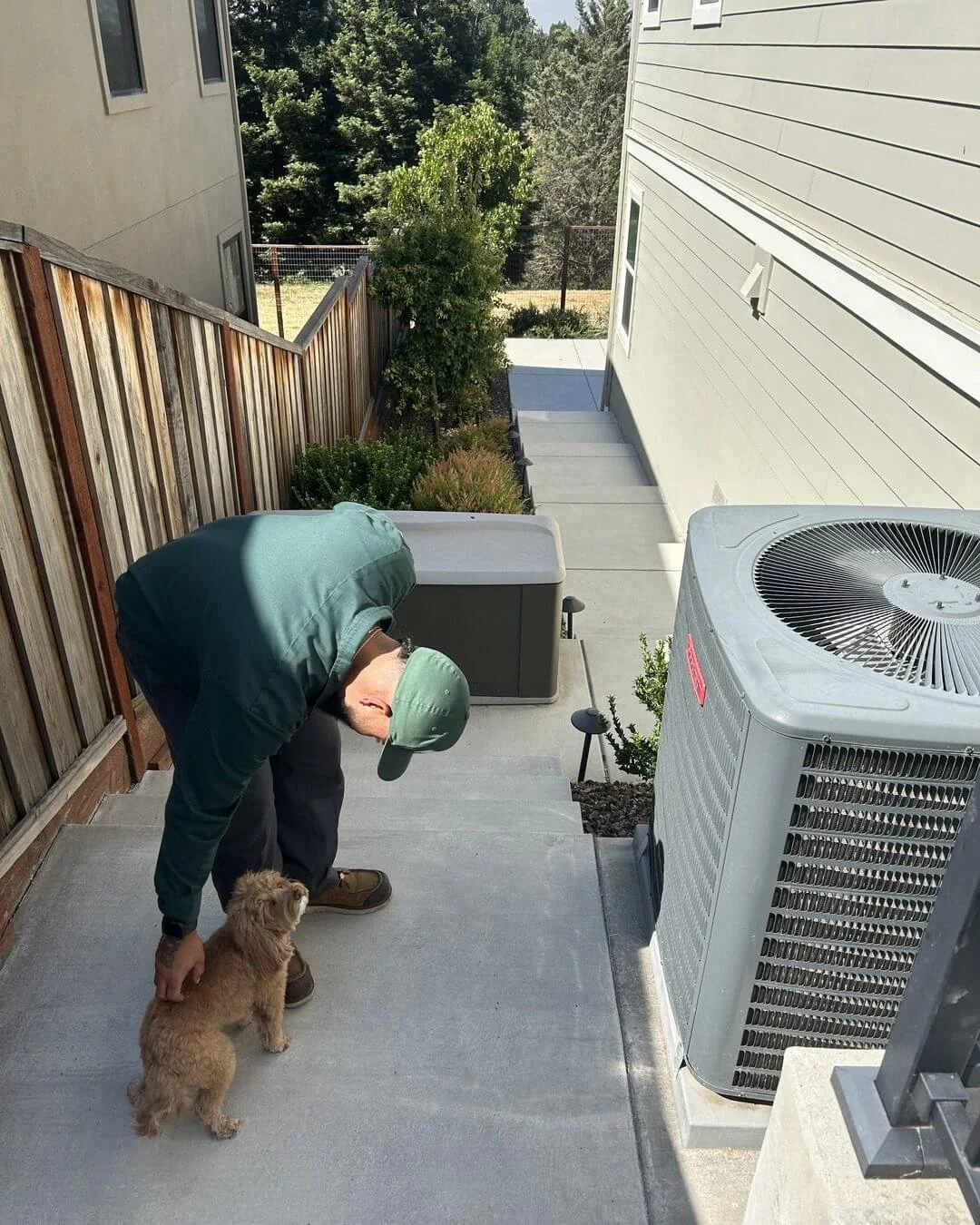
The cadence we recommend is simple: cooling serviced in spring, heating in fall, filters changed on a schedule you will keep, and the outdoor unit clear of vegetation. A maintenance plan puts that on a calendar, and it is how failures get caught in April rather than during the first heat event.
Where we work in Napa County
We cover the whole county from Petaluma, with no separate office anywhere in Napa County, and we treat it as several service problems rather than one.
South county, meaning American Canyon, south Napa and the Carneros side, gets the strongest marine influence. Cooling loads are the most moderate and the housing skews newer, which usually means garage or exterior equipment locations with workable access and a panel with some capacity.
The city of Napa is the county's largest housing market and its most varied. Older neighborhoods near downtown and along the river hold the oldest housing stock and its retrofit history, while the postwar and later neighborhoods east and north are more consistent and easier to work in.
Up-valley, from Yountville through Oakville and Rutherford to St. Helena and Calistoga, the marine influence falls away and cooling stops being optional. Correct sizing earns its keep here, and this is where we most often recommend zoning on a two-story house.
The hills and the rural county, including Angwin, Deer Park, Pope Valley, the Silverado Trail side and the Berryessa area, form their own category: propane rather than natural gas on many parcels, colder winter mornings, more outage exposure, and access that has to be planned rather than assumed.
We also handle commercial heating and cooling here, which in Napa often means tasting rooms, hospitality and small production facilities where comfort and process requirements are not the same thing.
How to choose an HVAC contractor for this county
Five questions separate a real bid from a brochure. Do they hold a C-20 license, and will the permit be pulled in their name? Did they run a load calculation on your house, and can you see it? What did they find in the ducts, and what does the bid do about it? Which jurisdiction issues the permit, because a contractor who cannot answer that has not looked. And who returns afterward for warranty work and any required verification?
We have been answering those questions in the North Bay since 1932. We are Diamond Certified, carry a BBB A+ Rating, and run HVAC alongside plumbing, electrical and solar under one roof, which matters on projects that cross trades.
What North Bay homeowners say
Two reviews that describe the work the way we would want it described.
Book HVAC service in Napa County
Tell us the address, what the system is doing, and roughly how old it is. Book online and we will confirm the appointment, or start with the Napa County service overview. Ongaro & Sons has been family-run in the North Bay since 1932. Explore our full heating and cooling services, or see how the trades connect on a Napa County property: electrical for panel capacity and backup power, plumbing for water heating and gas lines, and solar when the goal is running more of the house on electricity you generate.
Your Comfort, Our Priority
Ongaro & Sons is your trusted heating, cooling, plumbing, electrical, and solar expert, specializing in reliable maintenance and repair services that keep your home running efficiently year-round.
Our certified technicians deliver unmatched expertise with fast, friendly service across Marin, Sonoma and Napa County. From HVAC tune-ups to plumbing repairs and electrical upgrades or solar solutions, we focus on energy-efficient performance and long-term comfort. Count on us to maintain the systems that power your home and keep your environment just the way you like it.
Licensed, Insured, Background-Checked
Our technicians are licensed, experienced, and trained to service all makes and models.
Locally Owned and Operated
Serving the Napa, Marin, and Sonoma communities with personalized, hometown service.
Reliable Repairs
We respond quickly and get the job done right the first time, with no surprises.
Since 1932
Why Ongaro & Sons?
Four generations of trusted home service. Open any reason to see what it means for your home.
Schedule Service →Family-owned in the North Bay since 1932
Four generations of the Ongaro family serving Marin, Sonoma and Napa County. We know these homes and the systems in them.
Licensed, insured, background-checked technicians
Every technician is fully licensed and insured, background-checked, and trained on the equipment we install.
Diamond Certified and BBB A+
Diamond Certified since October 2016, and BBB Accredited with an A+ rating since December 1995.
Mitsubishi Diamond Contractor Elite and Trane Comfort Specialist
Both top manufacturer tiers. That standing decides how registration and extended warranty terms are handled on the system you actually bought.
The price is agreed before work starts
You see the number before the work begins. Flat-rate quotes, no surprises and no pressure.
Comprehensive maintenance program
Members get priority scheduling, discounts, and proactive checkups that prevent costly failures.

Discount
Membership
Ongaro Maintenance Plans
Annual maintenance on your home systems provides safeguards and comfort to you and your family. Members get priority scheduling, discounts, and proactive checkups that catch problems early.
Member Discounts
5% off every repair and replacement, all year long.
Peace of Mind
Proactive checkups catch issues before they become big problems.
Courtesy Reminders
We call you to schedule: never miss a seasonal service.
Value That Lasts
With Ongaro & Sons, you’re investing in quality, integrity, and service that stands the test of time. Explore our current promotions and see the difference real value makes for your HVAC, plumbing, and electrical needs.


From the Blog
 Sep 17, 2026
How Many Amps Does My House Need? Sizing Service for What You Actually Run
How many amps your house needs comes from a load calculation of what you run and plan to add. What drives the number, when existing service is enough, and more.
Read More Sep 10, 2026
Hard Water in Marin County: What Is Actually in Your Water and What It Does
Hard water in Marin County varies by provider and source. The 2025 report figures for Marin Water and NMWD, what hardness does and does not mean, and options.
Read More Sep 3, 2026
Electrical Permit Requirements in California: What Needs One and What Does Not
Find out which electrical projects commonly need permits, how to confirm local exemptions, and what to ask before work begins in Marin, Sonoma or Napa County.
Read MoreHVAC in Napa County: frequently asked questions
Who is the best HVAC company in Napa County?
We would point you at the record rather than the adjective. Ongaro & Sons has worked in the North Bay since 1932, holds a C-20 HVAC license, is Diamond Certified, and averages 4.8 stars across 2,756 Google reviews. We are a Mitsubishi Diamond Contractor Elite and a Trane Comfort Specialist, covering every jurisdiction in the county as one licensed company.
Do I need a permit to replace a furnace or air conditioner here?
Yes, and the issuing authority depends on your address. Inside Napa, American Canyon, Yountville, St. Helena or Calistoga, your city's building department handles it. Outside those city limits, it goes through the county's Building Division and its online submittal system. We handle the application, the documentation and the inspection scheduling as part of the installation.
Will the air district's furnace rule force me to replace my gas furnace?
No. The zero-NOx standards adopted by the Bay Area Air Quality Management District attach to equipment at future compliance dates, with the furnace rule pointed at 2029, and they do not require anyone to remove a working appliance. The rule is also still under development. Our position is that you should know the date before you buy, not that you should rush.
Does a heat pump work in up-valley summer heat?
Yes, and heat is the easier half of the problem. A properly sized heat pump carries both the cooling load in St. Helena or Calistoga and the winter heating load in one box. What decides whether it fits your house is electrical capacity and duct condition, which is why we run a load calculation and inspect the distribution system first.
Why does my Calistoga house need more cooling than a similar house in American Canyon?
Geography, not construction. The bay's cool marine air reaches the southern end of the county and thins as you move north up the valley, so the two ends have different cooling demands. Sizing from a county average leaves equipment too small at one end and oversized at the other, and oversized systems short cycle and dehumidify poorly.
Should I keep my existing ductwork when I replace the equipment?
Sometimes, and it has to be inspected to know. We look for leakage, undersized runs and a layout that no longer matches the house, especially where additions were made after the original system went in. Reusing a bad duct system is the most common reason a new, correctly sized unit still underperforms, and it is the item most often left silent in a low bid.
What incentives are available for Napa County HVAC work right now?
MCE is your community choice electricity provider and runs the heat pump rebates that reach this county, conditioned on twelve months of ownership and residency in a single-family detached home, a participating contractor filing the application, and no retroactive claims. Sonoma Clean Power offers do not reach a Napa address.
My property is on propane instead of natural gas. What changes?
Quite a lot, and usually in favor of electrification. Many rural parcels in this county have no natural gas main, so heating runs on delivered propane. That changes the operating cost comparison against a heat pump substantially, and it removes the gas line as a constraint. The remaining question becomes electrical service capacity, which a load calculation settles.
How do planned power shutoffs affect an all-electric system?
An all-electric house has no heating or cooling while the power is off, which matters more on the rural and hillside parcels where PG&E's Public Safety Power Shutoff program has the most reach. Options include keeping a gas furnace as the backup stage in a dual-fuel system, or adding standby generation. We are a Certified Generac Generator installer and can plan both together.
My system uses R-22. Do I repair it or replace it?
Lean replace, and the reason is supply. Production and import of R-22 ended in the United States in 2020, so any recharge comes from reclaimed or stockpiled stock. That makes refrigerant repairs increasingly costly and uncertain, and equipment old enough to hold R-22 is usually old enough that the next failure is close behind. We will say so when a repair still makes sense.
How often should a system in this county be serviced?
Twice a year is the right cadence: cooling before summer, heating before winter. Given the dust load during harvest and the particulate we deal with in late summer and fall, filters need attention more often than most manufacturers' baseline schedule assumes. Keeping the outdoor coil clear of vegetation matters too, and that is a homeowner task between visits.