Drain Cleaning in Mill Valley, CA
Ongaro & Sons has been clearing drains in the North Bay since 1932. We hold a C-36 license for plumbing, we are Diamond Certified, and 2,756 Google reviews come to 4.8 stars on average. We put a camera in the line before quoting any repair, we tell you whether the problem is a clog or a pipe that is failing, and you get the number before anyone starts.
On this page
Start with the house, not the clog
Most drain advice organizes itself around symptoms. That is backward here. In Mill Valley the era and siting of the building predict the failure better than the symptom does, because the drainage was designed for the house that existed when the pipe went in the ground, and most of these houses have been added to since.
Three things make that true. The canopy is heavy and the root systems under it are shallow and wide, so any open joint is a target. The lots are steep, so lines run long distances at slopes that are too aggressive at the top and too flat at the bottom. And the winters are wet in shaded ground that dries slowly, so a line that limps along in September runs full of groundwater in January.
The city says as much on its own sewer page. It encourages owners to replace clay laterals because rainwater gets into deteriorated pipe and contributes to overflows at the treatment plant, and it warns that a downspout or area drain tied into the sewer is illegal (City of Mill Valley sewer FAQs). Those two points describe most of the winter calls we take in this town.

Five kinds of Mill Valley house, five different drain problems
Pre-1930 cottages near downtown and the canyon floor. Many began as small seasonal buildings and were winterized and expanded in stages. We routinely find the original waste line still doing work it was sized for a century ago, with a bathroom or kitchen added later and tied in wherever was convenient rather than wherever drained best. The tell is a fixture that has never drained well, as opposed to one that changed.
1920s to 1940s hillside houses on posts. Built into the slope, living space at street level, a stepped crawl space underneath. Drainage runs long and horizontal before turning downhill. Access is genuinely good, though so was the temptation to add on with the shortest pipe rather than the best-pitched one.
Postwar flats in Tam Valley and Homestead Valley. Simpler layouts, shorter runs, cast iron inside and clay or early plastic to the street. Failure here is less about layout than soil. Valley-floor ground is soft and holds water, and pipe laid in soft fill settles unevenly, producing a low section that collects solids.
Slab-on-grade midcentury, including the Strawberry Eichlers. Strawberry holds a small group of Eichlers, roughly a dozen homes, and the wider area has other slab construction. With no crawl space and no attic, drain lines are cast in the slab. You cannot open a joint from below, the cleanouts you have are the cleanouts you get, and a spot repair means breaking concrete.
1970s and later hillside contemporary. ABS or PVC throughout, so root intrusion at joints is uncommon and the problem shifts to geometry. A long lateral dropping steeply from a house perched above the street, then flattening to meet the main, will deposit solids at that transition.
The fixture-count rule
Before anyone touches your line, you can narrow the problem yourself. We call it the fixture-count rule, and it works because drainage is a tree: the more branches affected, the closer the blockage sits to the trunk.
One fixture only. The trap or branch arm serving that fixture. A slow lavatory while everything else behaves is a local problem and it stays local.
Two or more fixtures on the same side or level. A branch line several fixtures share, usually where a bathroom group ties together before joining the main.
The lowest fixtures back up when you run something upstairs. Main line or lateral. A lower-level shower filling while a washer drains above it is the classic version.
Slow drainage that appears in the rain and clears in dry weather. Nearly specific to older properties here, and it points at groundwater entering the pipe, a downspout wrongly connected to the sewer, or both. If the pattern tracks the weather rather than your household, treat that as the diagnosis until a camera says otherwise.
A fifth belongs on the list: gurgling with no standing water is usually a venting problem, not a drainage problem.

Jose located and repaired a leak in the drainage system for our dishwasher. he also corrected the length of the hose between the air gap and the garbage disposal. He performed all work capably and efficiently.
Thomas K.
What fails inside these pipes
Clay lateral joints. Vitrified clay was laid in short sections with hub-and-spigot joints, and every joint is a seam. Warm vapor leaves the seam, roots follow it, hair roots enter, then thicken until the hub cracks. The redwood, bay and oak canopy that makes these streets what they are is the same canopy putting roots across your lateral. Cutting them restores flow, but the seam stays open, so the interval to the next backup is a fact about your pipe.
Cast iron scale. Interior cast iron corrodes from the inside, heaviest along the bottom where water sits, and over decades the buildup narrows the channel. A cable punches a hole through that buildup. It does not remove it. Restoring real diameter takes jetting with a descaling head, which is the most useful thing to understand about a recurring cast iron clog.
Bellies and settlement. A low spot holds water, solids fall out of suspension, and the line re-clogs on a rhythm you could set a calendar by. Camera plus locate tells you where and how deep, which is the difference between one small excavation and a trenched yard. Where we find pipe that has gone oval or collapsed outright, cleaning is no longer the question at all.
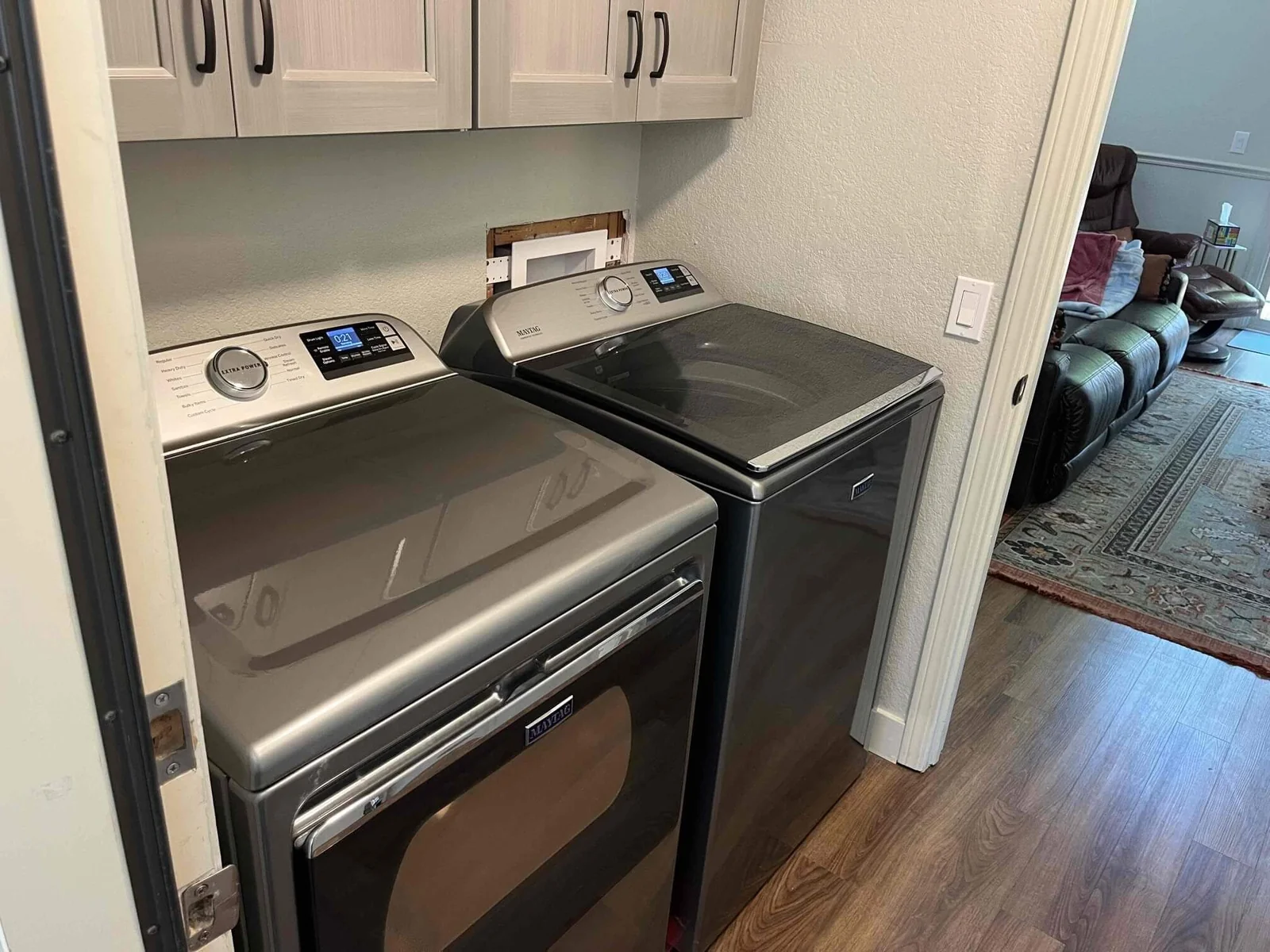
Overwhelmed fixture drains. Older laundry standpipes were sized for older machines, and a modern washer pumps out fast enough to overflow one at the top while draining fine the rest of the time.
Blocked vents. Every drain needs air behind the water. Under heavy tree cover, roof vent terminals fill with needles and leaf litter, and a restricted vent makes fixtures gurgle, empties trap seals, and slows drainage across the house with no obstruction in the waste piping at all.
Fall and joint count decide most of these jobs
The variable that decides how a Mill Valley drain job goes is not the clog. It is how much fall the line has combined with how many joints it contains.
Drain lines want a steady, modest drop, in the neighborhood of a quarter inch per foot on the smaller sizes. Hillside lots break that in both directions on one property. The upper run is often far steeper than ideal, and water moving too fast outruns the solids it should be carrying. The lower run, where the lateral turns to meet the main near the street, is much flatter, which is exactly where that material comes to rest. Homeowners tell us the clog is always in the same place. They are right, because the geometry puts it there.
Joint count is the other half. A long clay lateral running downslope contains a great many hubs, each an opportunity, while a modern lateral in solid plastic has almost none. Two houses on one street under the same trees can face completely different maintenance futures for that reason alone.
Clear it or fix it, decided by house type
Cottages with clay to the street. Clearing is the right first move, but the camera pass afterward tells you whether you bought a year or a decade. Fine root hair at intact seams means cleaning on a schedule is reasonable. Displaced hubs and standing water between them mean you are paying repeatedly for the same afternoon.
Post-and-pier hillside houses. The accessible crawl space is worth real money, because failing interior cast iron can be replaced without opening a floor or a wall.
Valley-floor postwar houses. Settlement is the theme, so the question is whether the low section is short enough to spot-repair or long enough to justify replacing the run.
Slab houses and the Strawberry Eichlers. The calculus flips. Since access means concrete, we push harder on non-destructive options and stay conservative about calling for excavation. When repair is unavoidable, routing around the slab is sometimes better than through it.
Modern hillside houses in plastic. These rarely need pipe replaced for age. They need the transition at the bottom of the slope understood and a cleanout in the right place.
David came in smiling and friendly and professional and in minutes cleared my drain that had been fully stopped up for weeks. Highly recommend!
Heather R.
Permits, the property line, and what the city expects
Clearing a line is maintenance and requires no permit anywhere we work. Cutting into pipe is different, and your address decides who issues that permit. Inside the city limits it is the City of Mill Valley Building Division. For the surrounding unincorporated areas it is the Marin County Community Development Agency, and many addresses that say Mill Valley on the mail sit outside the city boundary, including much of Tam Valley, Homestead Valley and Strawberry.
Two points from the city are worth knowing before you take a quote from anyone. First, responsibility. The city states that "the owner of a sewer lateral is responsible for maintaining their sewer lateral all the way to the City main, including the portion within the right-of-way." That surprises people. A failure under the sidewalk or the pavement is still the owner's pipe, so a quote that stops at the property line has not priced the whole system. The same page tells owners in the unincorporated areas around Mill Valley and Tiburon that responsibility can differ and to check with their own sanitary district.
Second, stormwater. The city is direct: "connection of storm drains to the sewer system, which is illegal. If you have a downspout or area drain connected to your sewer, this should be corrected so the stormwater is discharged in an appropriate manner." On properties remodeled repeatedly across eighty or ninety years, these connections exist and were not always documented.
On a repair we add or relocate a cleanout at the property line when one is missing, because that fitting changes the difficulty of every future service call. For the pipe repair side of this work, see sewer repair in Mill Valley.
What drives the cost
No page should price a drain it has not seen, but we can name the variables that move the number.
Access. Whether the property has a findable, usable cleanout is the biggest single lever. Without one, entry is through a pulled toilet or a roof vent, which is slower and limits the tools available.
Terrain and method. A hillside property where equipment comes up two flights of exterior stairs is a longer job than a flat driveway approach, before a tool touches the pipe. Cabling, jetting, and jetting with a descaling head then differ again in equipment and time on site.
Diagnosis. A camera run with a locate adds time and prevents a wrong repair. On a first-time single-fixture clog it is often unnecessary. On a repeating main-line problem, skipping it is how owners pay for the same visit four times.
What the camera finds. A break, a belly, or deformed pipe turns the conversation into a repair, and that turns on depth, length, trenched versus trenchless, and restoration. On these lots the mature landscaping, retaining walls, stairs and decking over the line often cost more to put back than the pipe costs to fix, which is the strongest argument for a precise locate.
Rebates and incentives, stated plainly
There is no rebate program for drain cleaning. Not from the county, not from PG&E, and not from MCE, the community choice electricity provider serving Marin. Drain and sewer work is not an energy efficiency measure, so it does not attract efficiency money.
What exists is good to know if a drain job grows into a larger plumbing project, and the short version is that none of it reaches drainage. Incentives in Marin fund energy work: MCE's heat pump rebates pay toward a heat pump water heater, not toward a lateral or a cleanout. Budget drainage as drainage.
The one place sequencing saves money is access. If a trench is open across the yard, that is the moment to handle other work needing it. Water heater work in Mill Valley is the common example, particularly since Bay Area Air District rules for gas water heaters begin phasing in during 2027 with compliance dates that vary by unit size.
Maintenance that matches the canopy
Camera the lateral before the rains, not during them. On clay under mature trees, a dry-season pass tells you what your winter will look like, and our maintenance program exists partly so it is not something you have to remember.
Clear the roof vents. Under this much tree cover, vent terminals fill. Adding them to whatever gutter clearing already happens each fall removes a whole category of mysterious slow drains.
Keep the storm side and the sewer side separate. Downspouts and yard drains belong at grade or in a storm system, and correcting a wrong connection is a direct fix for wet-weather backups.
Grease is worse in a cold crawl space. In a shaded canyon the pipe under your kitchen stays cool most of the year, and fats set up on a cool wall faster than a warm one. Scrape pans into the trash, and skip chemical drain openers, which sit on top of an obstruction and do nothing about scale.
Know where your pumps are. Below-grade fixtures on the canyon floor often drain to an ejector or sump pump, and a pump stops when power does. Mill Valley's wooded hillsides sit in high fire-risk country, and PG&E may call a Public Safety Power Shutoff when severe weather raises the risk.
Where we work around Mill Valley
We cover downtown Mill Valley and the canyon streets above it, Homestead Valley, Tam Valley, Strawberry, and the hillside neighborhoods running toward the ridge, all dispatched from our Petaluma headquarters. Municipal water here comes from Marin Water. For the rest of what we do in town see plumbing in Mill Valley and sewer repair in Mill Valley, with the wider view on plumbing across Marin County.
How to choose a drain contractor for this work
1. Ask what happens if the cable does not clear it. A company with one tool will keep using it. Ask whether they carry jetting equipment and a descaling head. 2. Ask whether the camera is included, and whether you get the footage. You should be able to watch it and keep it. Anything else means taking a repair recommendation on faith. 3. Ask for the locate, in feet and in depth. Anyone recommending excavation who cannot say where and how deep has not finished the diagnostic work. 4. Ask who pulls the permit. For pipe repair the licensed contractor should. A company asking you to pull an owner-builder permit is moving liability onto you. 5. Check the license class and be skeptical of a free camera that always finds a replacement. Drain and sewer work belongs to a C-36 plumbing contractor, and sometimes the correct answer is that the line is fine and the clog was a clog.
What North Bay homeowners say
Two reviews that reflect how this work goes:
More sit on our reviews page.
Book drain cleaning in Mill Valley
Book online and tell us which fixtures are affected and whether the trouble tracks the weather. That detail alone shapes what we bring. Ongaro & Sons, founded in 1932, serves Marin, Sonoma and Napa counties, works from Petaluma, and every technician arriving at your door works for us. Nearby drain work: Corte Madera, Sausalito, San Rafael, and Novato. For everything we do at a Mill Valley address, see our full Mill Valley service list.
Your Comfort, Our Priority
Ongaro & Sons is your trusted heating, cooling, plumbing, electrical, and solar expert, specializing in reliable maintenance and repair services that keep your home running efficiently year-round.
Our certified technicians deliver unmatched expertise with fast, friendly service across Marin, Sonoma and Napa County. From HVAC tune-ups to plumbing repairs and electrical upgrades or solar solutions, we focus on energy-efficient performance and long-term comfort. Count on us to maintain the systems that power your home and keep your environment just the way you like it.
Licensed, Insured, Background-Checked
Our technicians are licensed, experienced, and trained to service all makes and models.
Locally Owned and Operated
Serving the Napa, Marin, and Sonoma communities with personalized, hometown service.
Reliable Repairs
We respond quickly and get the job done right the first time, with no surprises.
Since 1932
Why Ongaro & Sons?
Four generations of trusted home service. Open any reason to see what it means for your home.
Schedule Service →Family-owned in the North Bay since 1932
Four generations of the Ongaro family serving Marin, Sonoma and Napa County. We know these homes and the systems in them.
Licensed, insured, background-checked technicians
Every technician is fully licensed and insured, background-checked, and trained on the equipment we install.
Diamond Certified and BBB A+
Diamond Certified since October 2016, and BBB Accredited with an A+ rating since December 1995.
Mitsubishi Diamond Contractor Elite and Trane Comfort Specialist
Both top manufacturer tiers. That standing decides how registration and extended warranty terms are handled on the system you actually bought.
The price is agreed before work starts
You see the number before the work begins. Flat-rate quotes, no surprises and no pressure.
Comprehensive maintenance program
Members get priority scheduling, discounts, and proactive checkups that prevent costly failures.

Discount
Membership
Ongaro Maintenance Plans
Annual maintenance on your home systems provides safeguards and comfort to you and your family. Members get priority scheduling, discounts, and proactive checkups that catch problems early.
Member Discounts
5% off every repair and replacement, all year long.
Peace of Mind
Proactive checkups catch issues before they become big problems.
Courtesy Reminders
We call you to schedule: never miss a seasonal service.
Value That Lasts
With Ongaro & Sons, you’re investing in quality, integrity, and service that stands the test of time. Explore our current promotions and see the difference real value makes for your HVAC, plumbing, and electrical needs.


From the Blog
 Sep 17, 2026
How Many Amps Does My House Need? Sizing Service for What You Actually Run
How many amps your house needs comes from a load calculation of what you run and plan to add. What drives the number, when existing service is enough, and more.
Read More Sep 10, 2026
Hard Water in Marin County: What Is Actually in Your Water and What It Does
Hard water in Marin County varies by provider and source. The 2025 report figures for Marin Water and NMWD, what hardness does and does not mean, and options.
Read More Sep 3, 2026
Electrical Permit Requirements in California: What Needs One and What Does Not
Find out which electrical projects commonly need permits, how to confirm local exemptions, and what to ask before work begins in Marin, Sonoma or Napa County.
Read MoreMill Valley drain cleaning questions
Who is the best drain cleaning company in Mill Valley?
We would point at three things and let you judge. Ongaro & Sons has been in this county since its 1932 founding, we are Diamond Certified, and we hold a C-36 plumbing license, with 2,756 Google reviews averaging 4.8 stars. Practically, the difference is that we diagnose with a camera before recommending pipe work, hand you the footage, and price the job before starting.
Why do my drains keep clogging in the same spot?
Because something about the pipe puts them there. Usually a settled low section holding water, a root mass at a joint that regrows, or a slope change where a steep hillside run flattens near the street. Repeated clearing treats the symptom on a shortening cycle, while a camera pass identifies which of the three applies.
Do I need a permit to have a drain cleared?
No. Clearing or jetting an existing line is maintenance and needs no permit. Permits enter the picture once pipe is cut, replaced, relined or rerouted. Inside city limits that comes from the Mill Valley Building Division, and for unincorporated addresses nearby it comes from the county's Community Development Agency. We identify the right authority as part of the estimate.
My drains only act up when it rains. What is that?
That pattern points away from a household clog and toward water arriving from outside. Deteriorated clay admits groundwater through cracked joints, and on older properties a yard drain is sometimes tied to the sanitary sewer, which the city prohibits. Either way the pipe is already running partly full before you use it. A wet-weather camera inspection usually settles which applies.
Is hydro jetting better than snaking?
They do different jobs. A cable bores through an obstruction and restores flow quickly, which is what you want when a fixture has stopped. Jetting scours the pipe wall and, with a descaling head, strips corrosion out of old cast iron. For a one-time blockage, cabling is appropriate. For a line failing on a repeating schedule, cabling alone will not change the schedule.
Are tree roots really the main cause here?
They are one of two leading causes on older properties in town, alongside cast iron scale. The mature canopy on these lots produces broad, shallow root systems, and clay pipe laid in short jointed sections gives them a way in. Homes built from the 1970s onward with plastic drain lines see far less intrusion, since there are almost no seams to exploit.
How do I know whether I have a main-line problem?
The signal is several fixtures behaving badly at once, especially the lowest in the house. If running an upstairs fixture makes a downstairs shower or floor drain fill, the restriction sits downstream of everything and lives in the main or the lateral. One sluggish sink almost never points there. Main lines are routine work for us either way.
What if the camera shows the pipe is broken?
Then cleaning is not the answer and we say so. We give you the location and depth, describe what a trenched repair involves on your lot, and say whether a trenchless method is viable, which depends on the pipe still holding enough of its shape. Putting landscaping, hardscape and stairs back is part of that conversation.
My washing machine drain overflows but everything else is fine, so is that a clog?
Sometimes, and sometimes it is capacity. Older standpipes were sized for older machines, and a modern washer discharges fast enough to overwhelm a narrow standpipe or a partly restricted trap arm even when the line passes water normally. We check both, because rebuilding a laundry drain and clearing a stoppage are different fixes for identical-looking symptoms.
Is there any program that helps with sewer or drain costs?
Not for drain cleaning or sewer work. The one thing worth checking is whether your sanitary district requires a lateral compliance certificate at sale, because that changes when the work has to happen rather than what it costs. We tell you which certificate applies to your parcel before the work is scheduled rather than after.
Do you handle the job if the drain problem turns out to be something else?
Yes. Plenty of drain calls end up involving a water heater, a fixture, or an electrical circuit feeding a pump. We are one company holding C-36 plumbing, C-20 HVAC and C-10 electrical classifications, which means a single estimate, one crew coordinating, and no handoff between trades halfway through.