Sewer Repair in Mill Valley
Ongaro & Sons has repaired and replaced sewer laterals in the North Bay since 1932, running crews into southern Marin from our Petaluma headquarters. We carry a C-36 plumbing license, we are Diamond Certified, and 2,756 Google reviews average 4.8 stars. We put a camera down the line before quoting anything, and you see the footage the recommendation came from.
On this page
Sewer work is one of the few trades where the house tells you most of the story before the camera goes in. The decade a home was built sets what the pipe is made of, how long the run is, how deep it sits, what grows over it, and whether there is any way to reach it without opening the ground. A cottage off the downtown plaza and a postwar ranch on the flats have almost nothing in common as sewer jobs. Mill Valley also enforces a lateral inspection requirement that most Marin cities do not, and it fires more often than owners expect.
The old canyon houses: downtown and the creek streets
The oldest housing sits where the town started, in the canyon bottoms and on the wooded slopes above them. Much of it began as seasonal cabins and was winterized in stages over the following century. The plumbing shows it.
On these streets we routinely find vitrified clay laterals with bell-and-spigot joints every few feet, cast iron under the building, and a run that leaves the house well above the street and drops a long way to the main. Clay does not rot. It fails at the joints, where the original mortar or a later gasket gives up and roots find the gap. Once a root is in it thickens, the joint offsets, and every root after it follows the same opening. The redwoods, bays and oaks shading these lots put out shallow, wide-ranging root systems and are very good at locating a joint that weeps. An owner who has the line cleared every autumn is not unlucky. They are paying for a temporary fix on a joint that already failed structurally.
Access is the second problem. The lateral usually runs under a mature garden, wooden stairs, a retaining wall, a deck, or a driveway built when trucks were smaller, on narrow streets with limited parking. Two more canyon-lot habits matter. The pipe is often deeper at the street than the owner assumed, which changes shoring and pit size. And laterals here sometimes cross a neighboring parcel or an easement before reaching a main, which happens wherever the street grid and the topography disagree. A line crossing someone else's land needs access permission before it needs a plumber.

The flats: Tam Valley, Almonte, Alto and the bay side
Come down out of the canyons and the housing turns to postwar single-story homes on level lots closer to Richardson Bay. Nearly every variable flips. Runs are shorter and straighter, machine access is usually fine, the trench is shallower, and what replaces those problems is water.
This ground sits low, winter groundwater rises close to the surface, and a lateral with open joints is not only letting sewage out, it is letting groundwater in. That inflow is what the city's rules target: the ordinance requires each owner to keep the line in a condition where it "does not cause or contribute to any sewage overflow from either the private sewer lateral or the public sewer."
Flat ground also means tight slope. A hillside lateral has more fall than it needs and shrugs off small settlement. A flat lot's lateral is built near the minimum pitch the plumbing code allows, so a belly of an inch or two holds standing water, catches solids, and produces a blockage at the same spot every few months. When the camera shows water rising in front of the lens and then draining away slowly, that is grade, and cleaning does not change grade.
Cast iron is common here, inside and for the first stretch outside. It fails from the inside along the bottom of the pipe, where waste sits: the invert corrodes away, the bore roughens, solids catch, and eventually the underside is gone while the top still looks sound. A jetter does not fix that. Backflow is the last flat-lot factor. Where a home's lowest fixtures sit below the level of the next upstream manhole cover, a surcharge in the public main can push back into the house, and the plumbing code addresses that with a backwater valve. Our C-36 crews evaluate it on every low-lying property and confirm the requirement against the code in force when the permit is pulled.
We had a sewer scope done for a home inspection and Aldo did a super job. He was very friendly and knowledgeable. The support staff was equally helpful. We highly recommend Ongaro & Sons!
Pamela K.
Strawberry and the slab-built tracts
Strawberry and the other tract-built pockets are their own category, and slab construction is why. Where a house sits on a concrete slab instead of a crawlspace, the drain lines under the building are cast into that slab. There is nothing to crawl into and no easy path to reroute through, so an interior defect means opening concrete, and the finish work above it usually outweighs the pipe.
Strawberry also holds a small Eichler group, roughly a dozen homes. Eichlers pair slab-on-grade construction with radiant heating tubing embedded in the same slab, so anything involving concrete has to be located before the first cut. We scan before opening a slab in a radiant house every time, because a nicked heating loop turns one repair into two. The upside is that the exterior run on these houses is typically short, shallow and reachable from both ends, and when the failure is outside the foundation, which it more often is, these are among the cleaner replacements in town.
Symptoms, and what they tell you
The most useful diagnostic an owner can run costs nothing: count the fixtures. One slow fixture with everything else draining normally means a branch line, not the main lateral. Several fixtures misbehaving together, especially when the lowest ones go first, puts the restriction downstream of where those branches join. A toilet that gurgles when the tub empties, a shower that fills when the washing machine discharges, a floor drain that surfaces during a laundry cycle: those are main-line signals worth a camera rather than another round of drain cleaning.
Other things we read as lateral evidence:
- Backups that return on a schedule. A predictable interval means a defect that regrows or refills, not a one-time obstruction.
- Sewer smell outdoors near the cleanout or along the run, most noticeable on a still, damp morning.
- A strip of lawn staying greener or wetter than the rest during a dry stretch, running straight toward the street.
- Settlement or a soft depression over the run, which can mean soil is washing into a break.
- Rodent activity at the foundation. Rats travel the sewer system and enter through breaks in laterals.
Spot repair, lining or full replacement
Three methods are available for most laterals here, and the choice among them is not a preference. The camera and the locate decide it. We work the same three questions every time.
How much of the pipe is failing, and is the failure local or continuous? One offset joint under an open lawn with sound pipe on both sides is a spot repair. Root intrusion at every joint down a century-old clay run is not, however tempting it is to fix the worst one.
Does the pipe still hold its line and grade? This usually decides the job and is the factor owners hear about least. Cured-in-place lining installs a new structural pipe inside the old one and is excellent at sealing joints, bridging cracks and stopping root entry. What it cannot do is correct geometry. If the host pipe has a belly, a back-pitched section, a hard offset where two lengths shifted apart, or a collapsed segment, the liner reproduces that defect in a new material and you have bought a smoother version of the same problem. Pipe bursting, which pulls new HDPE along the old path while splitting the old pipe outward, does re-establish a continuous line, but it needs a clear pull path and a pit at each end.
Where does the line run, and who controls that ground? Under a lawn is one job. Under a redwood, a stone patio, a retaining wall, a hillside stair, a neighbor's parcel or the public street is another, and on these lots the answer is very often the second one. That is where a trenchless method earns its cost, because two small pits beat a hundred feet of open trench through a mature garden.
All three methods get sold locally as though they were interchangeable. They are not.
What the survey records
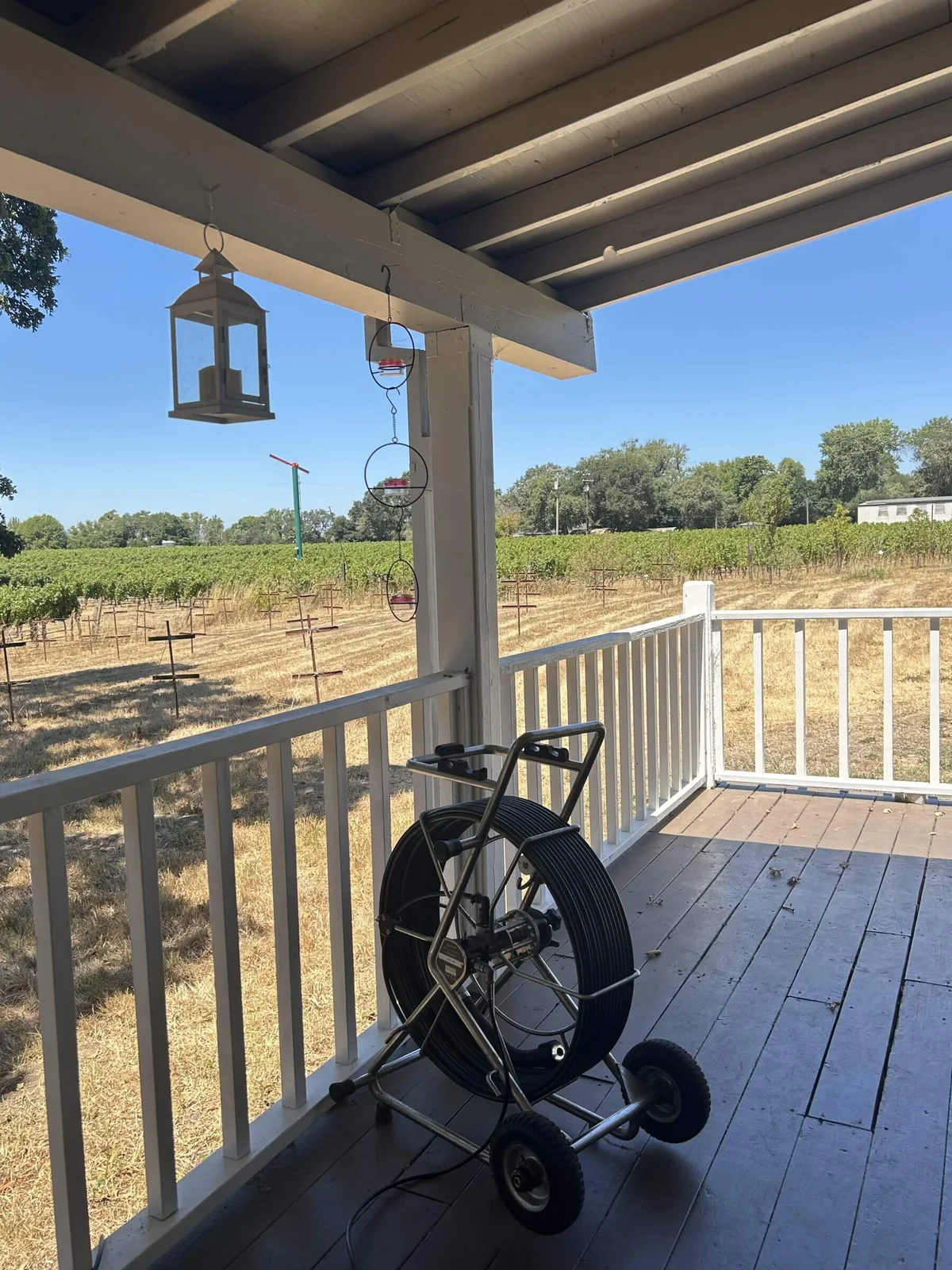
A closed-circuit inspection produces four things we need before quoting: pipe material and diameter, the type and position of every defect, the depth and surface location of each defect from a sonde locate, and the condition of the connection at the far end.
That last item matters most, because the two ends of an old lateral carry the highest stress. A run that stops at sixty feet because the operator was out of cable missed the part most likely to be broken. We reach the tie-in at the main or document why we could not, and we mark the surface, since knowing a defect sits under the second stair tread rather than the driveway is what changes the plan.
Justin was pleasant, courteous, and professional. He did a great job and we are very pleased. All expectations were exceeded. Thank you!
Judson S.
The Mill Valley lateral ordinance, and the permits behind the work
Mill Valley adopted its private sewer lateral requirements by amending Section 17.04.270 of the municipal code, and the Sewer Lateral Ordinance took effect June 2, 2015. Two parts catch owners off guard.
First, responsibility. The lateral belongs to the property owner for its entire length, from the building connection out to and including the wye where it joins the city main, the portion under the public street included. Owners must inspect, maintain, repair and replace it at their own expense. Many people assume the city takes over at the property line. It does not.
Second, the triggers. An inspection is required in four situations: when a building permit application covers improvements above a set valuation threshold over a three-year period, when a property is sold, when a sewage overflow or other public health threat occurs at the property, and when the city repaves the road above the lateral. The last one surprises people most, because it arrives on the city's schedule and new pavement makes a street far less welcoming to a trench.
The inspection must be performed by a licensed plumbing contractor using a closed-circuit television camera, and a passing line has to be shown "without leaks and has proper connection." Submission goes to the City Engineer as an inspection report form with a shareable video link, a site sketch and the city's filing fee. Two exemptions are worth knowing: a lateral originally installed or fully replaced within the last twenty years, and one repaired within the last three, with proof.
The repair permit comes from the City of Mill Valley Building Division, and anything reaching the street is a second permit. The city requires an encroachment permit for "any work within, upon, or beneath the streets, sidewalks or any other property owned by the City of Mill Valley," explicitly including excavating and installation of utility pipes. Applications go in online with a site plan, and the city advises that review "may take up to 7 working days," which puts it on the critical path of any replacement reaching the main. We file it as part of the job. Once collected, the wastewater is treated by the Sewerage Agency of Southern Marin.
If your mail says Mill Valley but you are not in the city
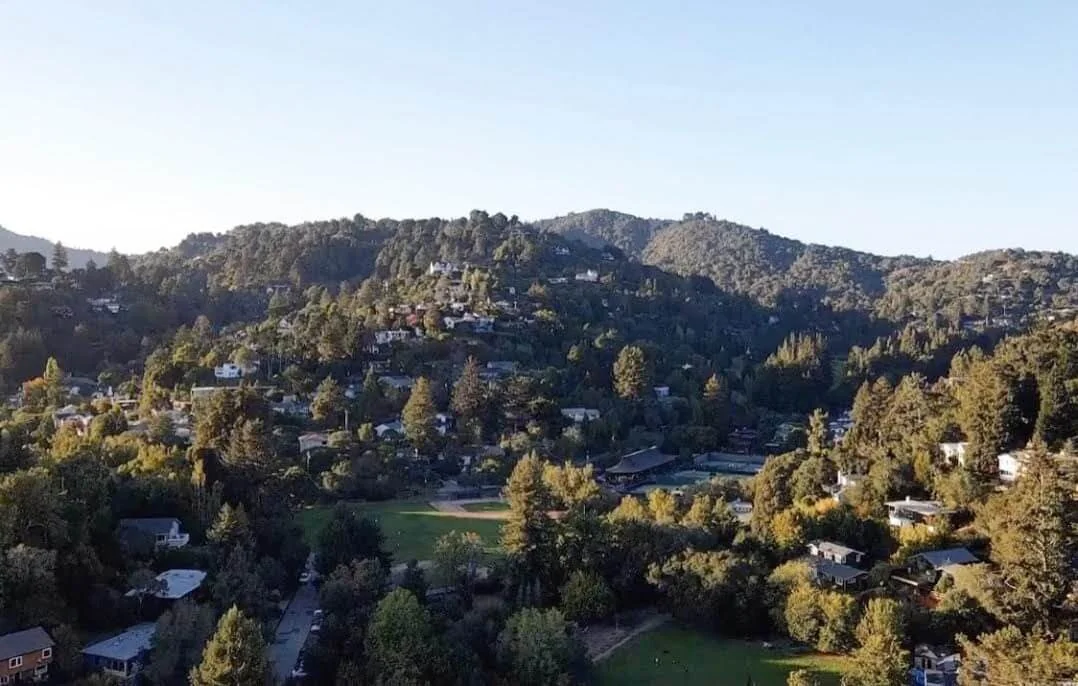
Plenty of addresses carry a Mill Valley mailing address while sitting outside the city limits in unincorporated Marin County. Homestead Valley and parts of Tam Valley are the ones we field questions about. That is not a technicality on a sewer job: it changes who issues the permit and, in some areas, which agency owns the main your lateral ties into, since several small sanitary districts run collection systems in southern Marin alongside the city's. Unincorporated parcels permit through the Marin County Community Development Agency, and the county publishes its own explanation of unincorporated status. Confirming jurisdiction is the first thing we do on any address here.
What drives the cost
We do not publish prices for lateral work, because a number without the survey behind it is a guess. These are the variables that move it, so you can read any proposal you receive.
- Length and depth. Hillside lots produce long laterals, and depth at the street decides whether shoring is required.
- What sits on top of the line. Mature landscaping, redwoods, stone patios, retaining walls, stairs, decks and hardscape driveways are the largest swing factor here, and it is restoration, not plumbing, carrying most of it.
- Whether the work reaches the right of way, which adds the encroachment permit, traffic control, a pavement cut and restoration to city standard.
- Method. Spot repair, lining, bursting and open-trench replacement have very different labor and equipment profiles, and the pipe decides which are eligible.
- Access. Narrow canyon streets, no truck parking, steep driveways and gated side yards determine what size machine reaches the pits, and hand excavation is slower.
- Reinstatements. Every branch connection has to be reopened after a lining, and both ends have to be rebuilt and inspected after a replacement.
- What else the survey found, since a camera run for a sale often turns up a second defect that also has to be corrected before the report will pass.
Rebates: what exists and what does not
There is no rebate for a sewer lateral. The programs operating in Marin fund electrification and energy efficiency, not drainage, so no community choice provider, state program or utility offer applies to this work. The ordinance's twenty-year exemption is the closest thing to a return the job produces, so keep the paperwork and the video with the house records. It is also worth checking whether your homeowners policy carries a service line endorsement, since coverage for underground lines varies a great deal.
Adjacent upgrades are a different matter. Marin's community choice provider is MCE, and its rebates fund heat pump equipment rather than anything underground, so a lateral is budgeted as a lateral. What is worth checking before the trench opens is which sanitary district holds your parcel, because in this county the answer decides whether a compliance certificate is required at sale.
Keeping a lateral out of trouble
Old pipe is not automatically bad pipe. Well-laid clay that has never been disturbed can outlast the people who installed it. What shortens a lateral's life is water it was not built to carry and roots it was never sealed against.
- Know where your cleanout is and keep it reachable. Many older houses here never got one, and adding an accessible cleanout at the building is cheap next to what it saves on every future service call.
- Keep storm water out of the sanitary lateral. Downspouts, area drains, French drains and sump discharge belong in the storm system, and routing them into the sanitary line is the exact inflow the lateral rules were written to reduce.
- Treat repeat root clearing as a diagnosis. Cutting restores flow through a joint that is already open, and the interval between visits generally shortens.
- Camera an old clay run before the wet season, and before you buy an older house here.
- Keep new planting off the run, and watch what goes down: grease solidifies in a cold pipe on a shaded lot, and wipes labeled flushable do not break down.
Choosing a contractor for lateral work
Four questions separate a real proposal from a pitch. Did the survey reach the connection at the main, and can you watch the footage rather than hear it described? Which method is proposed, and specifically why were the other two ruled out? Who pulls the encroachment permit and handles pavement restoration? And what documentation do you receive at the end, since the report, the video and the permit records are what satisfy the city and what a future buyer's agent will want.
We are a C-36 licensed plumbing contractor, Diamond Certified, and hold a BBB A+ Rating. Sewer work is part of our full plumbing service here, which matters when a lateral repair turns up a second problem inside the house.
What North Bay homeowners say
These are recent reviews from Ongaro customers across the North Bay.
Sewer repair across Mill Valley and Marin County
More from Ongaro & Sons in this area: plumbing in Mill Valley, every service we run in Mill Valley, and plumbing across Marin County. Nearby sewer repair coverage: Sausalito, Corte Madera, San Rafael, and Novato.
Book sewer repair in Mill Valley
The quickest way to get a camera on your line is to Book online. Tell us the symptoms and roughly when the house was built, and we will bring the right survey equipment on the first visit instead of a second one.
Your Comfort, Our Priority
Ongaro & Sons is your trusted heating, cooling, plumbing, electrical, and solar expert, specializing in reliable maintenance and repair services that keep your home running efficiently year-round.
Our certified technicians deliver unmatched expertise with fast, friendly service across Marin, Sonoma and Napa County. From HVAC tune-ups to plumbing repairs and electrical upgrades or solar solutions, we focus on energy-efficient performance and long-term comfort. Count on us to maintain the systems that power your home and keep your environment just the way you like it.
Licensed, Insured, Background-Checked
Our technicians are licensed, experienced, and trained to service all makes and models.
Locally Owned and Operated
Serving the Napa, Marin, and Sonoma communities with personalized, hometown service.
Reliable Repairs
We respond quickly and get the job done right the first time, with no surprises.
Since 1932
Why Ongaro & Sons?
Four generations of trusted home service. Open any reason to see what it means for your home.
Schedule Service →Family-owned in the North Bay since 1932
Four generations of the Ongaro family serving Marin, Sonoma and Napa County. We know these homes and the systems in them.
Licensed, insured, background-checked technicians
Every technician is fully licensed and insured, background-checked, and trained on the equipment we install.
Diamond Certified and BBB A+
Diamond Certified since October 2016, and BBB Accredited with an A+ rating since December 1995.
Mitsubishi Diamond Contractor Elite and Trane Comfort Specialist
Both top manufacturer tiers. That standing decides how registration and extended warranty terms are handled on the system you actually bought.
The price is agreed before work starts
You see the number before the work begins. Flat-rate quotes, no surprises and no pressure.
Comprehensive maintenance program
Members get priority scheduling, discounts, and proactive checkups that prevent costly failures.

Discount
Membership
Ongaro Maintenance Plans
Annual maintenance on your home systems provides safeguards and comfort to you and your family. Members get priority scheduling, discounts, and proactive checkups that catch problems early.
Member Discounts
5% off every repair and replacement, all year long.
Peace of Mind
Proactive checkups catch issues before they become big problems.
Courtesy Reminders
We call you to schedule: never miss a seasonal service.
Value That Lasts
With Ongaro & Sons, you’re investing in quality, integrity, and service that stands the test of time. Explore our current promotions and see the difference real value makes for your HVAC, plumbing, and electrical needs.


From the Blog
 Sep 17, 2026
How Many Amps Does My House Need? Sizing Service for What You Actually Run
How many amps your house needs comes from a load calculation of what you run and plan to add. What drives the number, when existing service is enough, and more.
Read More Sep 10, 2026
Hard Water in Marin County: What Is Actually in Your Water and What It Does
Hard water in Marin County varies by provider and source. The 2025 report figures for Marin Water and NMWD, what hardness does and does not mean, and options.
Read More Sep 3, 2026
Electrical Permit Requirements in California: What Needs One and What Does Not
Find out which electrical projects commonly need permits, how to confirm local exemptions, and what to ask before work begins in Marin, Sonoma or Napa County.
Read MoreSewer repair questions from Mill Valley homeowners
Who is the best sewer repair company in Mill Valley?
Judge it on evidence rather than claims. Ongaro & Sons has worked in the North Bay since 1932, holds a C-36 plumbing license, is Diamond Certified, and carries 2,756 Google reviews at 4.8 stars. On lateral work we survey to the main connection, hand you the footage, explain why one method fits your pipe and the others do not, and file both permits ourselves.
Do I have to inspect my lateral before selling my house?
Yes, if the property is inside city limits. The owner must give the City Engineer an inspection report before title transfers on a sale. You are exempt with proof that the line was originally installed or fully replaced within the past twenty years, or repaired within the past three. Starting early avoids a scramble during escrow.
Who owns the pipe under the street?
You do. The city's rules place the whole private lateral on the property owner, out to and including the wye where it meets the public main, with the portion in the right of way included. City responsibility begins at the main itself, which is why encroachment permitting and pavement restoration land inside a homeowner's project.
How do I tell a lateral problem from a clogged drain?
Count how many fixtures are affected and note which acts up first. A single slow sink or tub is almost always a branch. Trouble showing up at the lowest fixtures, or several fixtures reacting to one another, points downstream to the building drain or the lateral. Repetition on a predictable schedule is the other reliable tell.
Can my lateral be relined instead of dug up?
Sometimes. Lining works where the existing pipe is continuous and correctly pitched but leaking at joints or cracked. It is not a candidate where the pipe has sagged, back-pitched, separated at an offset or collapsed, because a liner takes the shape it is installed into. The survey and the locate answer this before anyone quotes.
Do I need a permit for sewer repair in Mill Valley?
Yes. A plumbing permit comes from the City of Mill Valley Building Division for the repair. Any excavation or pipe installation in a city street, sidewalk or other city property needs a separate encroachment permit, submitted online with a site plan, with the city advising up to seven working days for review. Unincorporated parcels permit through the county.
My address says Mill Valley but I am outside the city. What changes?
The permitting authority, and possibly the sewer agency. Unincorporated parcels around Homestead Valley and Tam Valley go through the Marin County Community Development Agency rather than city staff, and several small sanitary districts operate collection systems in southern Marin. We confirm jurisdiction before the survey so the permit path is settled from the start.
What is my lateral most likely made of?
It depends on when the house was plumbed. Older canyon-area homes commonly have vitrified clay outside with cast iron under the building. Postwar houses tend toward cast iron and early clay. Some mid-century properties have Orangeburg, a bituminized fiber pipe that deforms oval as it ages. Newer work uses ABS or PVC. The camera identifies it in the first few feet.
Will roots grow back after the line is cleared?
Through an open joint, yes, usually on a shortening cycle. Cutting removes the mass blocking flow but leaves the entry point exactly as it was, and the root system knows where the moisture is. Sealing the joint is what ends it, by lining that section, spot repairing it, or replacing the run. Chemical treatments slow regrowth without closing the opening.
How long does a lateral replacement take?
Field work on a straightforward residential run is typically a small number of days. What extends the calendar is everything around it: encroachment permit review, coordination if the street is involved, access limits on narrow hillside streets, and restoration of hardscape or landscaping afterward. We give you a realistic sequence at the proposal stage rather than a best case.
Are there rebates that help pay for this?
Not for sewer work. Incentive programs in Marin target energy efficiency and electrification, so a lateral repair falls outside all of them. Where it is worth asking is your insurance policy, since some carry an underground service line endorsement. If you are bundling other upgrades into the same project, those separate measures may have programs attached.
Does replacing the lateral end future inspections?
For twenty years, provided you keep the documentation. A line originally installed or fully replaced inside that window is exempt from the city's inspection requirement, and a repair carries a three-year exemption. Store the permit record, the report and the video with your house documents, because a future buyer, agent or city reviewer will ask for exactly those.