Heat Pump Installation and Repair in Napa
Ongaro & Sons has worked in the North Bay since 1932, installs and repairs heat pumps across it, and we hold both the C-20 mechanical and the C-10 electrical license, so one company handles the equipment and the panel. We are Diamond Certified, a Mitsubishi Diamond Contractor Elite and a Trane Comfort Specialist, and we carry 2,756 Google reviews averaging 4.8 stars.
Everything is dispatched from our Petaluma headquarters. What follows is a Napa heat pump job in the order the decisions arrive.
On this page
The real decision here
Most heat pump projects here start because something quit, or because a gas furnace quote arrived with a heat pump listed as an alternative and they cannot tell which one is the trap. The question really contains four smaller ones.
Repair or replace. A failed part on a healthy eight-year-old system is a repair. The same part on a system running a refrigerant no longer in production is a different conversation.
Fuel. Stay with gas heat and a separate air conditioner, go all-electric, or run dual fuel where the heat pump carries the mild hours and a furnace picks up the coldest ones.
Sizing. Napa runs hot through the summer, cooler than up-valley St. Helena but well above the coast, so the cooling side does real work here. One box has to satisfy two loads that peak in opposite seasons.
Staging. Single-stage, two-stage, or variable-capacity inverter equipment that modulates instead of cycling.
The mechanical fact underneath all four is worth knowing. A heat pump and an air conditioner are the same machine. A heat pump adds a reversing valve that flips the direction refrigerant travels, so the outdoor coil dumping heat in August absorbs it in January. If you were already replacing the air conditioner, you are buying the same category of equipment with one more valve and a different control strategy.
What fails, and what each failure tells you
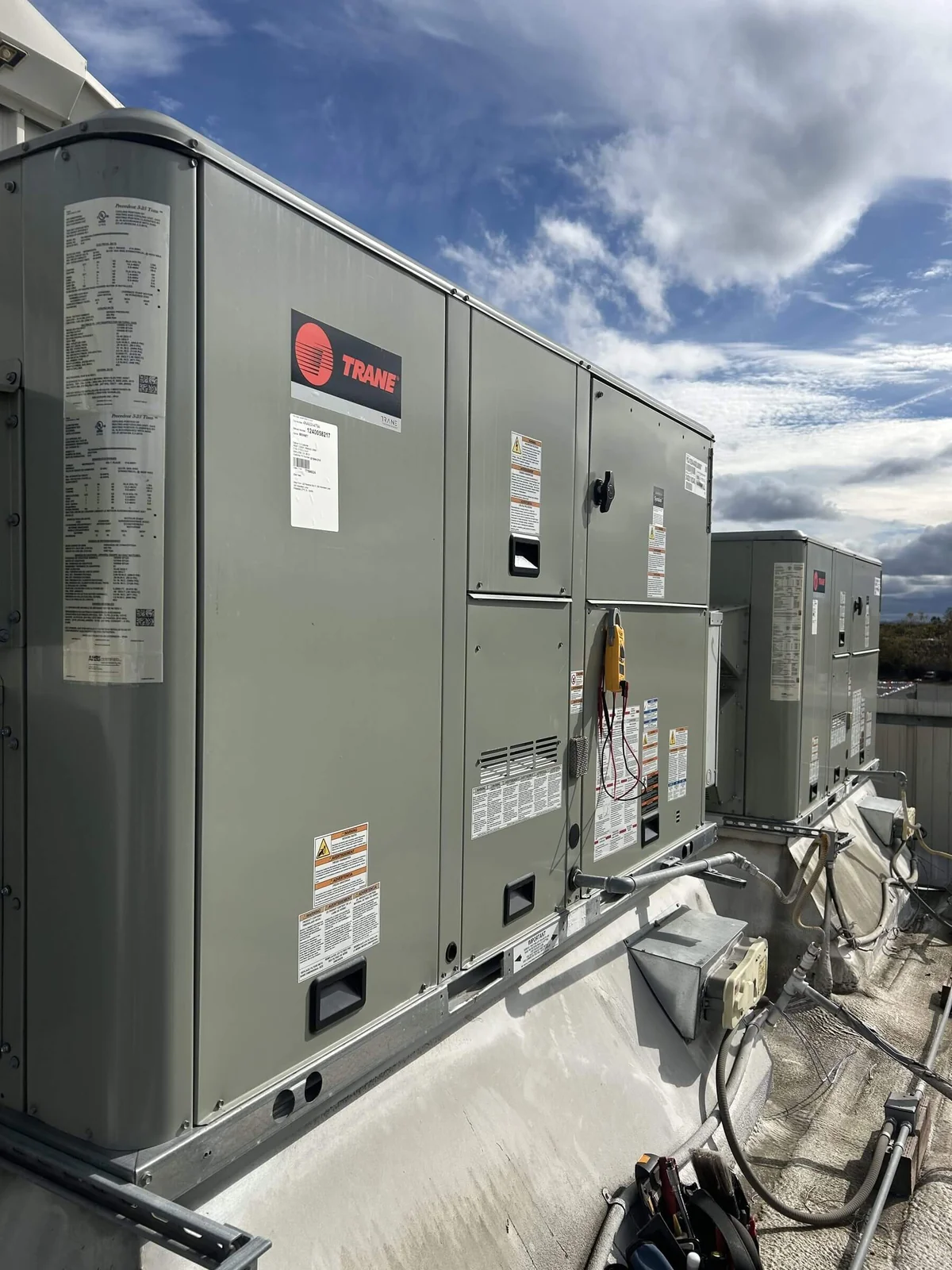
Diagnosis is more informative here than on a cooling-only system: you watch the same components work in two directions.
Capacitor and contactor. The most frequent calls and the least dramatic. A weak run capacitor shows up as a compressor that hums without starting.
The reversing valve. If the system cools when it should heat, or delivers barely-conditioned air in one mode and normal air in the other, suspect the valve or its solenoid. A valve stuck part way lets refrigerant bypass internally, which reads on gauges as a machine somehow both undercharged and overcharged.
The defrost cycle. In heating mode the outdoor coil runs below ambient and collects frost, and the control board briefly reverses the system to melt it off. A failed sensor or board leaves the unit iced over and the house cold. That fault only appears in winter, which is why we exercise the defrost sequence in the fall.
Refrigerant loss. A heat pump is less forgiving of a low charge than a straight air conditioner, since it runs year-round in both directions. A slow decline across two seasons, rather than a sudden failure, points here.
Auxiliary electric heat. The resistance strips in the air handler supplement the compressor, they do not replace it. A normal-feeling house paired with an alarming electric bill usually means a control fault left the strips energized while the compressor sat idle.
Thermostat wiring. This equipment needs reversing-valve control and staged backup heat. A standard furnace-and-air-conditioner thermostat wired to it appears to work while running the system backward or leaning on the strips constantly, which we find after do-it-yourself smart thermostat swaps more than any other single cause.
How we decide, in order
Every Napa heat pump job runs through the same four questions, in this order. Order matters, because the electrical question kills more projects than the other three combined, and learning that after the equipment is chosen wastes everyone's time.
Age and refrigerant. R-22 production and import ended in the United States in 2020, so repairs on R-22 equipment draw on reclaimed or stockpiled supply. On pre-2010 systems that alone often decides it. R-410A is now being phased down under the AIM Act and new equipment is moving to refrigerants under the 700 global warming potential limit that now applies to newly manufactured residential and light commercial equipment, though your existing R-410A system does not need replacing because of that.
Electrical capacity. Detailed below. It decides most projects here.
Ducts and airflow. A heat pump asks more of a duct system than a furnace does, and if the ducts cannot deliver, no equipment selection rescues the job.
July versus January. Size to the cooling load and you may fall short on the coldest mornings. Size to the heating load and you oversize for summer, producing short cycling. Variable capacity splits that difference.
| Option | When it fits a Napa home | What has to be true | Watch for |
|---|---|---|---|
| Repair what you have | Under roughly ten years old, one identifiable fault | Refrigerant available, compressor healthy | A second failure the same season changes the math |
| Gas furnace plus new air conditioner | Ducted home, sound gas appliance, no electrification goal | Flue and gas piping serviceable | Two machines aging on separate clocks |
| Ducted heat pump | Ducted home replacing heating and cooling at once | Panel capacity for the system and its backup heat, ducts that pass a static pressure check | Careless backup strips drive the electrical scope |
| Ductless heat pump | Older downtown homes with no ductwork, additions, converted attics and garages | Wall space for indoor heads, a route for line sets | Head placement is a design decision, not a guess |
| Dual fuel | You want the heat pump but keep a serviceable furnace | Compatible controls and a switchover strategy | Cheap controls handle the changeover badly |
Professional, efficient, respectful of our property. Moved our heat pump to new location. Secured all lines entering our home.
Peggy G.
The electrical service usually decides it
This is the part most Napa homeowners have not had explained, and where projects stall.
The housing here splits cleanly. On the older streets near downtown we routinely find 100-amp services, panels already full, and no spare capacity for a 240-volt appliance, let alone two. In south and east Napa's newer subdivisions we typically open a 200-amp panel with room to work and a short run to a garage or side-yard location. The same equipment on those two houses is a different job.
The load driver is usually not the compressor. It is the auxiliary electric heat. A ducted system specified with generous backup strips presents a very large connected load, and that forces the service question. Two levers exist. Equipment selection comes first: inverter-driven systems that hold capacity at low outdoor temperatures need far less backup heat, sometimes none in this climate. Calculation method comes second: a load calculation built on the home's measured actual demand, rather than a nameplate worst case, frequently finds capacity a glance at the panel would not. Circuit-level load management is worth evaluating before anyone quotes a service upgrade.
If the panel truly will not carry it, we do that Electrical Panel Upgrade in Napa under our own C-10 license rather than handing you a second contractor with a second permit. If an EV Charger Installation in Napa is anywhere in your plans, say so now, because both loads belong in one calculation. MCE, which serves Napa, funds EV charging for workplaces, multifamily properties of four or more units and commuter lots rather than for houses (MCE, EV Charging), while the rebate on the charger itself is PG&E's and its terms make Community Choice Aggregation customers eligible.
Airflow is the other half of the answer
A gas furnace delivers hot supply air. A heat pump delivers warm supply air and makes up the difference by moving more air for longer. That is why duct defects a furnace masked turn into comfort complaints the week the new system goes in.
Before quoting a ducted system we measure static pressure across the air handler and study the return path, not just the supply registers. Undersized or leaky returns are the most common problem we find and the most commonly ignored. In older downtown homes the ductwork was often added in stages across decades, routed through tight crawlspaces and repurposed closets, sized for a furnace that left the house twenty years ago. Correcting the returns is frequently the difference between equipment that satisfies and equipment that never quite does.
If the air conditioner is the immediate failure and heating is fine, start at AC Repair in Napa. If it is the furnace, start at Furnace Repair in Napa. Either diagnosis feeds the same four questions.
Permits and code inside the city of Napa
Inside city limits, a changeout permits through the City of Napa Building Division. If your address sits in unincorporated Napa County, jurisdiction belongs to Napa County Planning, Building and Environmental Services. We pull it either way, and a homeowner should never be the applicant on a licensed contractor's mechanical work.
California's 2025 Building Energy Efficiency Standards took effect January 1, 2026 (California Energy Commission) and set the framework a replacement is inspected against. We name the verification steps your job carries at proposal time rather than discovering them at inspection.
The city also sits fully inside the Bay Area Air Quality Management District, so the district's appliance rules apply. Its Regulation 9, Rule 6 sets a zero-NOx standard for residential water heaters and switches it on appliance by appliance between 2027 and 2031, dates that govern what may be sold or installed rather than what you may keep. Rule 9-4 addresses fan-type residential central furnaces on a later phase. Neither rule bans the gas appliance you own today. It does mean anyone specifying equipment here should read the district's current language rather than last year's, and we confirm what applies on the day we write your project.
What drives the cost
Five things move a Napa proposal, and no figure means much without the scope behind it.
The electrical scope. Whether the panel carries the new load as-is, needs a subpanel, or needs a service upgrade. The largest swing variable here.
The duct verdict. Sealing and resizing returns is modest work. Replacing a distribution system routed through a tight crawlspace is not.
Staging. The three tiers price differently, and the highest is also the one most likely to shrink or eliminate the backup strips, which can pay part of itself back on the electrical side.
Line set and condensate. Newer lower-GWP refrigerants sometimes allow the existing line set to be reused and sometimes do not. Separately, an air handler produces condensate in cooling mode, and a closet that only ever held a gas furnace may have no drain and nowhere to put one.
Access and decommissioning. Narrow utility spaces and limited attic access cost more labor for identical equipment, and converting off gas means capping the line and handling an abandoned flue correctly.
Josh and Brandon did a fantastic job. Professional & relieable. Solved our heat pump problem that had been a real problem for a long time.
Parker L.
Rebates and incentives, and where they stand
California heat pump programs changed sharply in the last year. Current status:
MCE is your community choice provider, not Sonoma Clean Power. That trips people up, because Napa searches surface Sonoma County programs constantly and those do not apply on this side of the county line. MCE runs a residential rebate and incentive finder and notes that "if you're part of an income-qualifying household, you might be eligible for extra savings" (MCE, Find Rebates and Incentives).
We confirm what is live and what your household qualifies for before specifying equipment, because eligibility sometimes constrains the choice rather than following it.
Maintenance this climate needs
This equipment works in both seasons, accumulating operating hours a cooling-only system never sees, so two visits a year is the correct interval rather than an upsell. What we check is specific to the machine: the defrost sequence, forced rather than assumed; the reversing valve, confirmed by watching changeover in both directions; refrigerant charge, measured, because performance in both modes depends on it; the auxiliary strips and their sequencers, which should energize only when the compressor genuinely needs help; and the condensate path, which matters in a closet or attic install in a way it never did for a furnace.
Outdoors, keep clearance. Napa summers put dust on the coil and mature street trees add leaf litter, and homeowners on smaller south Napa lots often solve the aesthetics by fencing the condenser into a box it cannot breathe in, which degrades heating and cooling alike. Our maintenance plans cover both visits and put the defrost check in the fall where it belongs.
The Napa neighborhoods we work in
Downtown Napa and the older blocks around it are where retrofit thinking earns its keep: original layouts, tight utility spaces, electrical services sized for a different century, ductwork that arrived in stages. Alta Heights sits up off the valley floor, and on still winter mornings the flats hold the cold longer than the slopes do, which shows up in run times. In Browns Valley we work on a lot of single-story homes with attic distribution, where return sizing is the first thing worth measuring. South and east Napa's newer subdivisions are the most straightforward work in the city: accessible equipment, panels with capacity, ducts designed as a system rather than assembled over time.
The hills around Napa see PG&E Public Safety Power Shutoffs, and since a heat pump only heats and cools while the power is on, backup power belongs in the conversation early. We are a Certified Generac Generator installer, and sizing standby power or a battery around the new electric heating load is a design decision rather than a later purchase, which is where Solar in Napa comes in.
What North Bay homeowners say
Two of the reviews left by heat pump customers:
How to choose a contractor for this work
Four questions separate a serious proposal from a brochure. Ask for a room-by-room load calculation and refuse a per-square-foot rule of thumb. Ask for the electrical load calculation in writing, and whether panel work sits inside the scope. Ask what the equipment does at low outdoor temperature and what the backup heat strategy is. Ask which refrigerant it uses and what that means for parts in ten years.
We are Diamond Certified and hold a BBB A+ Rating. Manufacturer tier matters here because diagnostic tools and parts access follow it, and we hold the top tier with both Mitsubishi, as a Diamond Contractor Elite, and Trane, as a Trane Comfort Specialist. What matters most in this city is simpler: holding C-20 and C-10 puts the mechanical and electrical scopes in one proposal and one permit path, so nobody blames the other trade when the panel turns out to be the problem.
Book a heat pump visit in Napa
Book online and we will schedule a visit that starts with the load calculation and the panel, not with equipment somebody already decided to sell you. You get the full scope in writing and the incentive status verified before anything is ordered. Elsewhere in the house: HVAC in Napa covers heating and cooling across the city, AC Repair in Napa and Furnace Repair in Napa handle the systems a heat pump might replace, Electrical Panel Upgrade in Napa and EV Charger Installation in Napa cover the electrical side, Solar in Napa and our maintenance plans round out the long-term picture, and Napa home services lists every trade we run in this city.
Your Comfort, Our Priority
Ongaro & Sons is your trusted heating, cooling, plumbing, electrical, and solar expert, specializing in reliable maintenance and repair services that keep your home running efficiently year-round.
Our certified technicians deliver unmatched expertise with fast, friendly service across Marin, Sonoma and Napa County. From HVAC tune-ups to plumbing repairs and electrical upgrades or solar solutions, we focus on energy-efficient performance and long-term comfort. Count on us to maintain the systems that power your home and keep your environment just the way you like it.
Licensed, Insured, Background-Checked
Our technicians are licensed, experienced, and trained to service all makes and models.
Locally Owned and Operated
Serving the Napa, Marin, and Sonoma communities with personalized, hometown service.
Reliable Repairs
We respond quickly and get the job done right the first time, with no surprises.
Since 1932
Why Ongaro & Sons?
Four generations of trusted home service. Open any reason to see what it means for your home.
Schedule Service →Family-owned in the North Bay since 1932
Four generations of the Ongaro family serving Marin, Sonoma and Napa County. We know these homes and the systems in them.
Licensed, insured, background-checked technicians
Every technician is fully licensed and insured, background-checked, and trained on the equipment we install.
Diamond Certified and BBB A+
Diamond Certified since October 2016, and BBB Accredited with an A+ rating since December 1995.
Mitsubishi Diamond Contractor Elite and Trane Comfort Specialist
Both top manufacturer tiers. That standing decides how registration and extended warranty terms are handled on the system you actually bought.
The price is agreed before work starts
You see the number before the work begins. Flat-rate quotes, no surprises and no pressure.
Comprehensive maintenance program
Members get priority scheduling, discounts, and proactive checkups that prevent costly failures.
Discount
Membership
Ongaro Maintenance Plans
Annual maintenance on your home systems provides safeguards and comfort to you and your family. Members get priority scheduling, discounts, and proactive checkups that catch problems early.
Member Discounts
5% off every repair and replacement, all year long.
Peace of Mind
Proactive checkups catch issues before they become big problems.
Courtesy Reminders
We call you to schedule: never miss a seasonal service.
Value That Lasts
With Ongaro & Sons, you’re investing in quality, integrity, and service that stands the test of time. Explore our current promotions and see the difference real value makes for your HVAC, plumbing, and electrical needs.


From the Blog
 Sep 17, 2026
How Many Amps Does My House Need? Sizing Service for What You Actually Run
How many amps your house needs comes from a load calculation of what you run and plan to add. What drives the number, when existing service is enough, and more.
Read More Sep 10, 2026
Hard Water in Marin County: What Is Actually in Your Water and What It Does
Hard water in Marin County varies by provider and source. The 2025 report figures for Marin Water and NMWD, what hardness does and does not mean, and options.
Read More Sep 3, 2026
Electrical Permit Requirements in California: What Needs One and What Does Not
Find out which electrical projects commonly need permits, how to confirm local exemptions, and what to ask before work begins in Marin, Sonoma or Napa County.
Read MoreHeat pump questions from Napa homeowners
Who is the best heat pump installer in Napa?
Judge it on four things: whether the contractor runs a real load calculation, measures duct static pressure before quoting, holds the electrical license to handle the panel in-house, and pulls the permit. Ongaro & Sons has served the North Bay since 1932, holds C-20 and C-10, is Diamond Certified, and carries 2,756 Google reviews averaging 4.8 stars.
Does a heat pump really work through a Napa winter?
Yes. The valley's cold season is mild by the standards of equipment now sold, and inverter-driven systems hold useful capacity well below the temperatures this city sees. The design question is not whether it works but how much backup electric heat sits behind it, which is specific to your house rather than a general answer.
Will I need a panel upgrade to put one in?
Sometimes, and it depends far more on the backup heat strips than on the compressor. Homes near downtown with 100-amp services often do. Newer south and east Napa homes with 200-amp panels frequently do not. Rather than assume, we run a load calculation using measured actual demand and check whether equipment selection or load management removes the need entirely.
Do I need a permit to replace a heat pump in Napa?
Yes, and your contractor should be the applicant, not you. Inside the boundary the file goes to the city. Unincorporated county addresses go through Napa County Planning, Building and Environmental Services. The permit is also protection: it puts an independent inspector on the installation, the only outside check most homeowners ever get.
Can I keep my gas furnace and add a heat pump?
That configuration is called dual fuel. It suits homeowners who want lower operating costs across the mild majority of the year while keeping a serviceable furnace for the coldest mornings. It requires controls that hand off cleanly between two heat sources, so the thermostat and control strategy deserve as much attention as the equipment itself.
Why does the air feel cool coming out of the register?
Because it is cooler than furnace air by design. A gas furnace delivers a short blast of hot air; this equipment delivers milder air over a longer run and reaches the same room temperature by a different route. If the house holds its setpoint, nothing is wrong. If not, suspect restricted airflow, a low charge, or a control fault.
Should I repair or replace a system more than ten years old?
Start with which refrigerant it uses. Anything on R-22 is being repaired from reclaimed or stockpiled supply, which shortens the sensible repair horizon considerably. On newer equipment, a single failed component with a healthy compressor is usually worth fixing. A second significant failure inside the same year, or a compressor problem, generally moves the decision toward replacement.
Are there rebates for a heat pump in Napa right now?
Fewer than there were, and the provider matters before the amount does. Napa's community choice provider is MCE, not Sonoma Clean Power, so the Sonoma programs that fill search results do not apply here. MCE publishes an incentive finder with additional pathways for income-qualifying households. Because budgets and eligibility both move, we verify what is live on the day we write your proposal rather than putting a number in front of you that may already be gone.
Is a ductless system a better fit for an older home near downtown?
Often, yes. Where a home has no ducts, or has ductwork that would need replacing to carry the required airflow, ductless equipment avoids the demolition and lets you condition rooms individually. The design work shifts to indoor head placement and line set routing, which in a period home is a genuine planning exercise.
What size heat pump does my house need?
Whatever the calculation says, which is rarely what a square-footage rule of thumb says. The inputs are construction, insulation, window area and orientation, air leakage, duct condition and room-by-room layout. Summers here mean the cooling load is a real constraint rather than an afterthought, and balancing it against the winter load is exactly what equipment selection is for.