Solar Panel Installation in Napa, CA
Ongaro & Sons has been at work in the North Bay since 1932. The trades on the license today are heating and cooling, plumbing, electrical and solar. We are Diamond Certified and carry C-10 for electrical, with an average of 4.8 stars over 2,756 Google reviews. We design the array, pull the permit, run the utility interconnection, and explain what drives the number before anything is fastened to your roof.
On this page
The rule that reset solar math, and what it does on a Napa roof
Solar in California is paid for differently than it was five years ago. The California Public Utilities Commission's net energy metering page states that "Since April 15, 2023, customers applying for interconnection have taken service on the new net billing tariff (NBT)," under which "compensation for excess generation exported to the electric grid is applied to a customer's bill at a rate reflecting the value of this generation to the grid."
That one shift changes the whole design. A kilowatt-hour you consume inside the house is worth more to you than one you push onto the wires, and size, orientation and storage all follow from it.
Napa's climate makes the point physical. The city gets hot from late spring into September, cooler than the up-valley towns but well above anything the coast sees, and the heat holds into the evening. Cooling load peaks in late afternoon, and so does the price of grid power. A due-south array is already sliding down its curve by then, while a west-leaning array trades a little annual production for output during the expensive hours.
A second wrinkle catches people here. Your electricity supplier and your wires company are not the same organization. MCE is the community choice provider serving Napa, while PG&E owns the service drop, the meter and the interconnection process. Two approvals, two clocks.
Third, outages. PG&E may turn off power during severe weather to reduce wildfire risk through its Public Safety Power Shutoff program, and the hillside edges of town sit closer to the terrain driving those decisions than the valley floor does. A grid-tied array does not run when the utility drops, because it shuts down so it cannot energize a line a crew may be working on. Staying powered is a storage question.
We work every project here in a fixed order: roof, load, service, outage. Skip a step and the design fails at the next one.

What we look at on the first visit
Remaining roof life. A composition shingle roof ages out on a schedule and an array is built to sit for decades. If your covering has a few years left, the sensible sequence is roof first, since removing and resetting a full array later means paying that labor twice and cutting a second set of penetrations.
Material and structure. Composition shingle is the straightforward case. Tile means tile hooks, replacement tiles and slower going. The older homes near downtown often have steep pitches, several small planes, dormers and skylights, which cuts usable area and pushes labor up. We get into the attic to read rafter size and spacing, since framing sized for its original load sometimes needs blocking or sistering before it carries an array.
Shading. This varies block to block. The mature oaks and street trees that make the older neighborhoods pleasant throw long afternoon shadows, and the hillside streets pick up shade from terrain as well as canopy. We model each roof plane across the year, because one chimney can take a string offline during exactly the hours you were counting on.
Electrical. We open the main panel and read the busbar rating, the main breaker, the free spaces and the meter position. On the older streets near downtown we routinely find services sized for a much smaller house, panels with no room left, and legacy branch wiring never meant to sit alongside a modern interconnection. In the newer south and east Napa subdivisions we more often find a 200-amp panel in the garage with space to work in.
What is coming next. We ask what else you plan to add: a heat pump, an electric water heater, a car, a pool pump, a well pump. A system sized on last year's bills alone is undersized the week you electrify something.
Sizing to your usage, not your square footage
Good sizing starts with twelve months of metered usage. Two homes on one street with the same floor plan can differ by a factor of two depending on occupancy, pool, and whether the heat is gas or electric. Under net billing the shape of that usage matters as much as the total, so we look at when you draw power and not only how much.
Then we layer in the loads you are likely to add, which is where Napa homeowners undersize themselves. The Bay Area Air Quality Management District's Regulation 9, Rule 6 set zero-NOx requirements for residential water heaters with point of sale standards phased across 2027 and 2031 by equipment type, so they reach what may be sold and installed rather than the unit already in place, and Napa sits fully inside that district. No existing gas water heater is banned, and we confirm the current requirement at project time. For sizing, the point is that a meaningful share of local water heating will move onto electricity, and today's array should have that in the arithmetic. The same holds for heat pump heating and cooling and heat pump water heaters.
On the code side, California's 2025 Building Energy Efficiency Standards took effect January 1, 2026, per the California Energy Commission. Those govern new construction and certain alterations. They place no retrofit obligation on an existing Napa house.
Ricardo was prompt and efficient. Once again an excellent job by ONGARO personnel.
Michael G.
The electrical tie-in, where most projects are decided
This step separates a simple install from a complicated one, and it has almost nothing to do with the panels.
Code limits how much combined current a panel busbar may carry from the utility and the solar system together. That single constraint is why a modest array lands cleanly on one house and forces a redesign next door. When the existing panel cannot accept a back-fed solar breaker within the limit, the routes are a supply-side connection ahead of the main breaker, a derated main, or a full electrical panel upgrade. Each carries a different cost and permit footprint, and a quote that has not resolved it is not a finished quote.
Code also requires the array to be de-energized at the module level when the system shuts down, which is why microinverters or optimizers are effectively standard on residential work. That helps on shaded Napa roofs, since one dim module no longer drags a whole string down with it.
The rest of the scope is unglamorous and matters: conductor sizing for the run length, overcurrent protection, a clean grounding and bonding path, disconnects where the fire service expects them, and permanent labeling. We do all of it with our own crews instead of subcontracting the electrical half of a solar job, which is the usual source of the finger-pointing homeowners describe when a system fails inspection.
Permits, and the two approvals people confuse
California does not leave solar permitting to local discretion. Government Code 65850.5 directs that "every city, county, or city and county... shall adopt an ordinance... that creates an expedited, streamlined permitting process for small residential rooftop solar energy systems," and requires jurisdictions to "administratively approve applications to install solar energy systems through the issuance of a building permit or similar nondiscretionary permit." Review is limited to health and safety, which makes it ministerial. The statute defines the small residential category, including a ceiling of "10 kilowatts alternating current nameplate rating or 30 kilowatts thermal" on a single or duplex family dwelling. An application meeting the published checklist is deemed complete, and once confirmed complete the jurisdiction is to approve it and issue the permits.
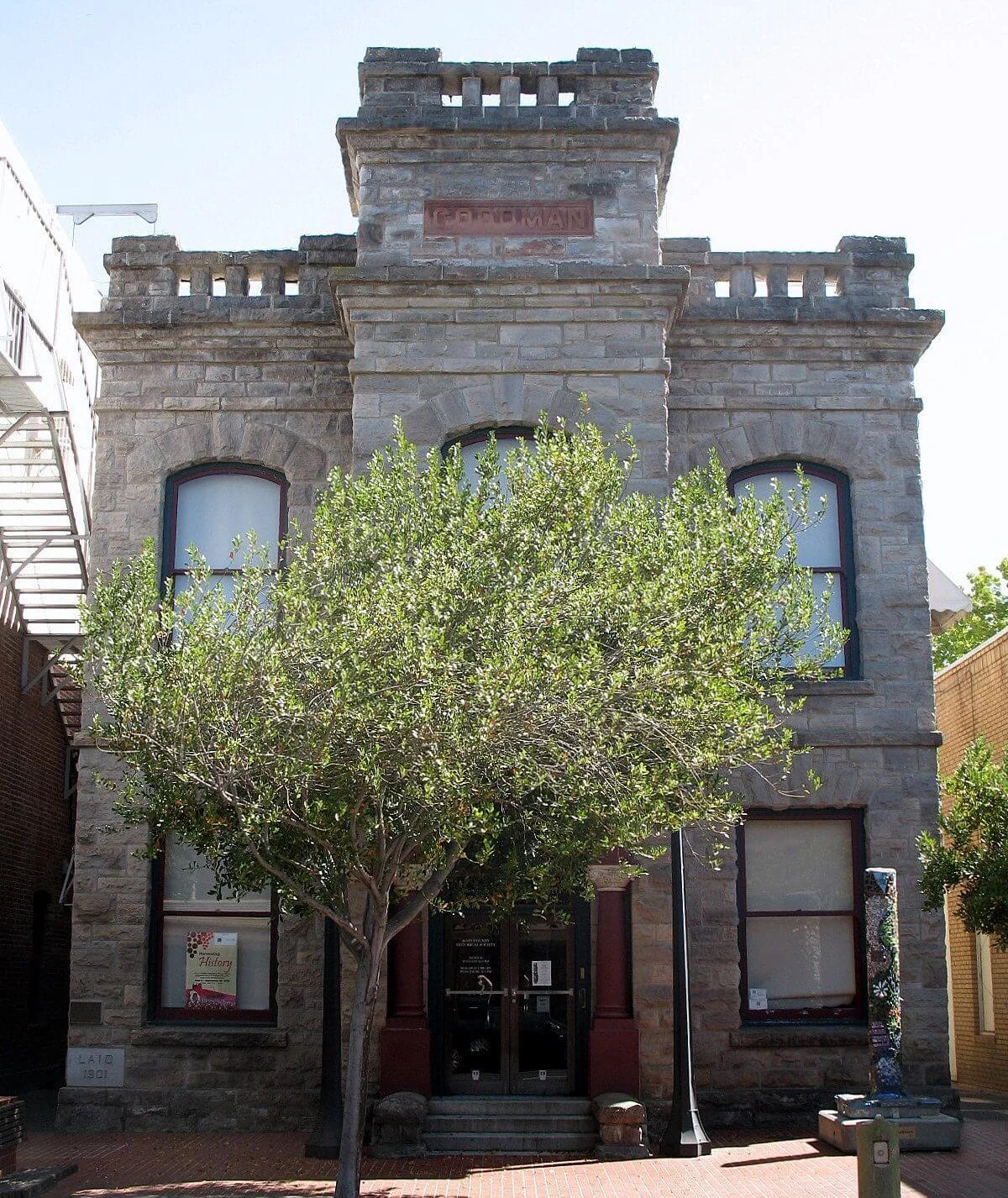
Inside city limits that permit comes from the City of Napa Building Division. Outside city limits it goes through Napa County Planning, Building and Environmental Services, along with any extra review that applies on rural or hillside parcels. We handle either path, and the unincorporated side is covered on our Napa County solar page.
The approval people forget is the utility one. PG&E's interconnection application runs on its own schedule, and permission to operate is what allows the system to export. A permit lets your array be built legally. Permission to operate turns it on.
Plan review also shapes something homeowners do not anticipate: roof access pathways and setbacks near ridges are part of the layout, so a sound design rarely covers every square foot of a complex roof. On the cut-up planes common in the older parts of town, those clearances often set the final module count.
Install day
Most residential arrays go up in one to three days on the roof. That moves with roof material, the number of planes, conduit length and whether a service change is in scope.
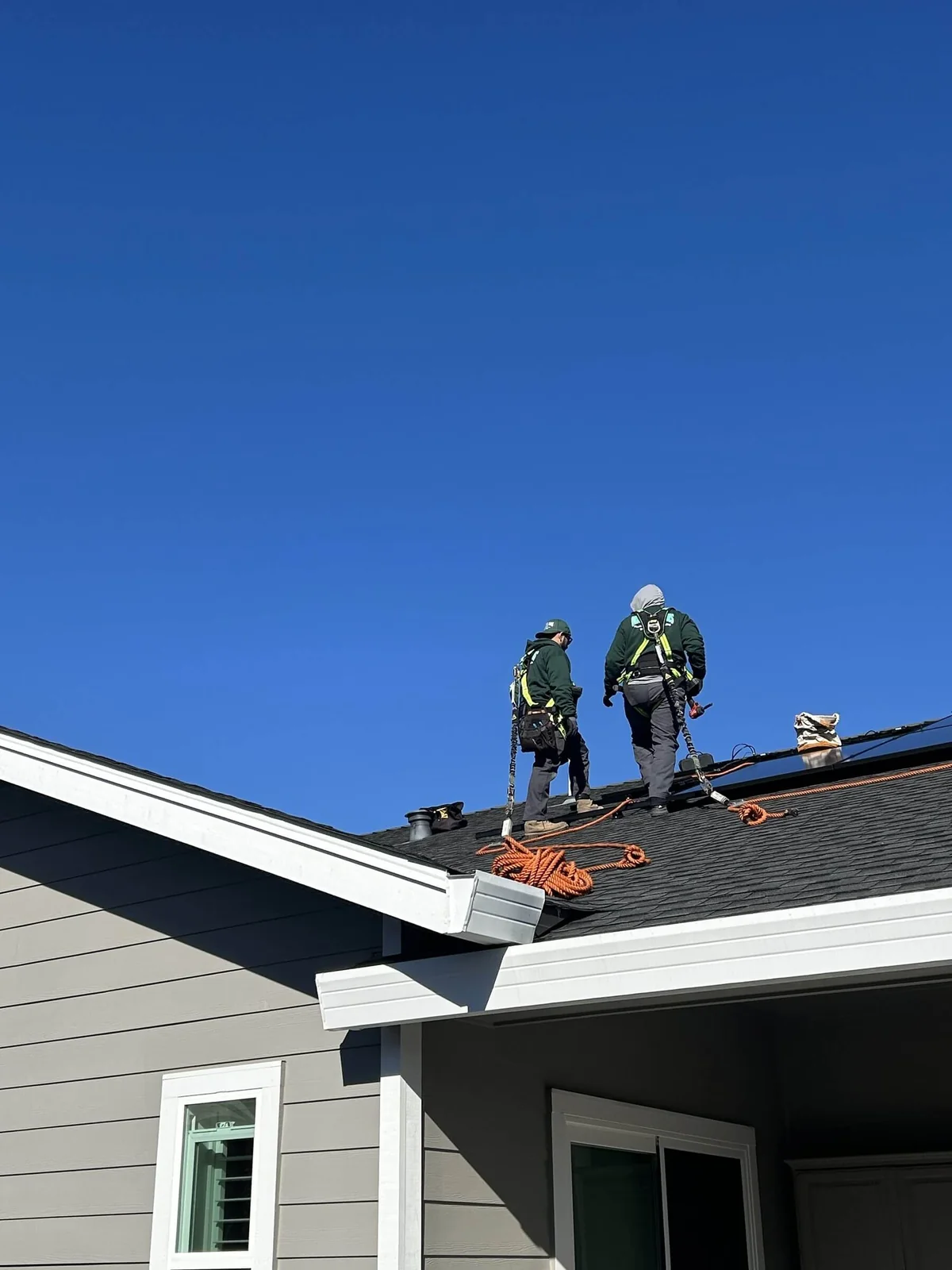
The crew sets fall protection and staging, marks rafters, sets flashed mounts, and runs rails. Every penetration gets flashed, and that unglamorous detail is the most common source of a leak two winters later. Wiring runs get supported and protected, the inverter is mounted somewhere serviceable and out of the worst afternoon sun, and the array is bonded back to the service. Tying in at the panel takes a short planned power interruption, and a supply-side connection or meter change puts PG&E coordination on the schedule.
Inspection, interconnection, and switch-on
The building inspector checks mounting and flashing, conductors and overcurrent protection, disconnects, grounding and bonding, the rapid shutdown provision and the labeling. We meet the inspector rather than leaving a homeowner to explain someone else's work.
Once that signs off, the package goes to PG&E and the system waits. Until the release arrives the array stays off, and people occasionally hear they can quietly run it in the meantime. No licensed contractor should suggest that. At release we commission the system: verify every module reports, compare production against the modeled curve for that time of year, register your monitoring account, and walk you through the disconnects.
I had a lot of COVID safe requirements before he came into my house (aside from what he already was doing) and he not only complied but had a very good attitude. Good work too!
Jenifer B.
What fails on a home solar system over time
Panels themselves rarely fail. Almost everything around them can.
Inverter faults. A string inverter is the shortest-lived major component in a typical system and eventually needs replacing. Microinverters fail one at a time and show up as a single module missing from monitoring rather than a dark system.
Monitoring dropping offline. The most common reason a system looks dead is a changed Wi-Fi password or a replaced router. The array is fine, the reporting path is not.
Production drift. Soiling, a tree that grew, a critter nest under the modules. Local summers are dry and dusty and the film that settles between rains takes a real bite. Winter rain does most of the cleaning at no charge, but a system nobody has looked at in eight years usually has something to find.
Smoke. In smoke-heavy stretches we watch production sag on customer monitoring for days and then recover. That is atmospheric, not a defect.
Roof work. A future re-roof means the array comes off and goes back on with new flashing. Plan it as a scheduled project rather than something a roofer improvises.
When an array ages out, or its original installer is gone, we design and install a replacement system sized to how the house actually runs now. If the array itself is still earning its keep, adding battery storage is an install job we take on too, because the panel and interconnection work sits under our own C-10 license.
Batteries, backup, and what to expect here
Storage does two different jobs and they deserve separate consideration. The first is economic: under the current export rules, holding midday production for the expensive evening hours captures more value than sending it out. That is what moved batteries from a luxury to a normal part of a well-designed system.
The second is riding out an outage, and here the specifics matter. A battery does not usually back up a whole house. Most installations feed a subpanel of chosen circuits: refrigeration, some lighting, internet, a few outlets, the furnace or air handler controls. Air conditioning is a large draw and backing it up meaningfully changes the sizing, so we ask what you want running and design to that list.
Runtime is a function of load. A battery that carries a light demand overnight will not carry a heavy one for three days. For households that need to stay powered through a long shutoff, a standby generator is the better tool, and we install those as a Certified Generac Generator installer.
One case comes up constantly outside the city limits. Properties on private wells lose water the instant they lose power, because the pump is electric. On those homes we treat the well pump as a backed-up circuit from the start, which is a very different sizing exercise than a house on the City of Napa water system.
What drives the cost of a solar project here
No two quotes are comparable until you know what is inside them. These are the variables that move the number:
- Array size in DC kilowatts, which follows from your usage and the loads you plan to add
- Roof material and complexity. Tile and multi-plane roofs cost more labor than a single-plane composition roof
- Roof condition, since a re-roof beforehand is a separate project and a real line item
- Structural work, if framing needs reinforcement to carry the array
- The electrical tie-in. A clean back-fed breaker is one number, a supply-side connection another, a service upgrade another again
- Conduit run length from array to inverter to panel, which your meter location sets
- Module and inverter selection, including efficiency, warranty term and shade electronics
- Storage, meaning how many units and how large a backed-up subpanel
- Detached structures or ground mounts, which add trenching and a feeder
- Permit and interconnection fees, which vary by jurisdiction and scope
All of it goes in writing before work begins, so you can see which line moved when the design moves. If spreading the cost matters, financing options come up front rather than at signing.
Incentives: what applies in Napa, and what does not
Programs in this state change often. Current status:
- MCE supplies your electricity here, and its offerings differ from what you will read about for Sonoma County. MCE's EV charging program covers workplace, multifamily properties of four or more units, and commuter parking lots. That list has no room for a single-family house. Say that precisely rather than broadly, though, because two other routes do reach one: PG&E's residential charger rebate, whose terms make Community Choice Aggregation customers eligible, and MCE Sync, which rewards smart charging rather than the purchase.
- Sonoma Clean Power programs, which surface constantly in North Bay searches, serve Sonoma County accounts and do not reach a Napa address.
The rest of the work a solar project touches
Solar rarely stays in its own lane, which is the practical argument for one licensed company across the trades.
Panel and service work. The most common companion project is a service or panel upgrade, either because the busbar cannot accept the interconnection or because the household is stacking new electric loads. We hold the C-10 and run that work ourselves.
EV charging. A charger is a large continuous load and belongs in the load calculation before the array is sized. Details are on our Napa EV charger installation page.
Heating and cooling. A heat pump reshapes summer and winter consumption both and is often the largest electrical load a Napa home adds. We are a Mitsubishi Diamond Contractor Elite and a Trane Comfort Specialist and hold the C-20.
Water heating. A heat pump water heater usually needs a dedicated 240-volt circuit, another reason panel capacity gets checked early. We hold the C-36 plumbing license for that side of the work.
Commercial and agricultural sites. Bigger roofs, bigger services and three-phase equipment change the design entirely.
Where we work in Napa
We install across the city and the surrounding county. Downtown and the streets around it hold Victorian and early-twentieth-century homes with the complex roofs and dated services described earlier. Alta Heights climbs the hills east of downtown, where terrain shading and canopy matter more than they do on flat ground. Browns Valley runs west toward the hills with a mix of eras on larger lots. South and east Napa are mostly newer subdivisions, and a simple composition roof over a 200-amp garage panel makes for the most straightforward installations we do here.
Beyond the city limits, hillside and rural parcels bring longer conduit runs, well pumps, propane instead of piped gas, and a different permit authority.
How to choose a solar contractor in Napa
Ask what happens at the main panel. If the quote does not say whether your service can accept the interconnection and what the alternative is, the design is unfinished.
Ask who performs the electrical work. Companies that subcontract that half are common, and the seams show at inspection and again when something needs attention in year six.
Ask how the shade study was done and for which months. One annual average number hides the exact problem you need to see on a treed lot.
Ask whether the company will still be reachable. Ongaro & Sons has operated since 1932 and works from Petaluma, we are Diamond Certified, and we hold a BBB A+ Rating. Every Napa job is served out of that Petaluma headquarters by our own crews, and warranty work comes back to the same company that did the install.
What North Bay homeowners say
Two reviews from customers across our service area:
Book solar work in Napa
The fastest way to start is to Book online and pick a time. We will walk the roof, open the panel, pull your usage history, and give you a design and a written scope you can hold up against anything else you have been quoted. Ongaro & Sons covers every trade a Napa home needs: electrical in Napa, heating and cooling in Napa, EV charger installation, heat pump systems, water heaters, and solar across Napa County. The full list for this city sits on our Napa service page.
Your Comfort, Our Priority
Ongaro & Sons is your trusted heating, cooling, plumbing, electrical, and solar expert, specializing in reliable maintenance and repair services that keep your home running efficiently year-round.
Our certified technicians deliver unmatched expertise with fast, friendly service across Marin, Sonoma and Napa County. From HVAC tune-ups to plumbing repairs and electrical upgrades or solar solutions, we focus on energy-efficient performance and long-term comfort. Count on us to maintain the systems that power your home and keep your environment just the way you like it.
Licensed, Insured, Background-Checked
Our technicians are licensed, experienced, and trained to service all makes and models.
Locally Owned and Operated
Serving the Napa, Marin, and Sonoma communities with personalized, hometown service.
Reliable Repairs
We respond quickly and get the job done right the first time, with no surprises.
Since 1932
Why Ongaro & Sons?
Four generations of trusted home service. Open any reason to see what it means for your home.
Schedule Service →Family-owned in the North Bay since 1932
Four generations of the Ongaro family serving Marin, Sonoma and Napa County. We know these homes and the systems in them.
Licensed, insured, background-checked technicians
Every technician is fully licensed and insured, background-checked, and trained on the equipment we install.
Diamond Certified and BBB A+
Diamond Certified since October 2016, and BBB Accredited with an A+ rating since December 1995.
Mitsubishi Diamond Contractor Elite and Trane Comfort Specialist
Both top manufacturer tiers. That standing decides how registration and extended warranty terms are handled on the system you actually bought.
The price is agreed before work starts
You see the number before the work begins. Flat-rate quotes, no surprises and no pressure.
Comprehensive maintenance program
Members get priority scheduling, discounts, and proactive checkups that prevent costly failures.
Discount
Membership
Ongaro Maintenance Plans
Annual maintenance on your home systems provides safeguards and comfort to you and your family. Members get priority scheduling, discounts, and proactive checkups that catch problems early.
Member Discounts
5% off every repair and replacement, all year long.
Peace of Mind
Proactive checkups catch issues before they become big problems.
Courtesy Reminders
We call you to schedule: never miss a seasonal service.
Value That Lasts
With Ongaro & Sons, you’re investing in quality, integrity, and service that stands the test of time. Explore our current promotions and see the difference real value makes for your HVAC, plumbing, and electrical needs.


From the Blog
 Sep 17, 2026
How Many Amps Does My House Need? Sizing Service for What You Actually Run
How many amps your house needs comes from a load calculation of what you run and plan to add. What drives the number, when existing service is enough, and more.
Read More Sep 10, 2026
Hard Water in Marin County: What Is Actually in Your Water and What It Does
Hard water in Marin County varies by provider and source. The 2025 report figures for Marin Water and NMWD, what hardness does and does not mean, and options.
Read More Sep 3, 2026
Electrical Permit Requirements in California: What Needs One and What Does Not
Find out which electrical projects commonly need permits, how to confirm local exemptions, and what to ask before work begins in Marin, Sonoma or Napa County.
Read MoreSolar in Napa: common questions
Who is the best solar company in Napa?
Judge it on the electrical work, since that is where these projects fail. Ongaro & Sons has served the North Bay since 1932, holds a C-10 electrical license, is Diamond Certified and carries a BBB A+ Rating, with 2,756 Google reviews averaging 4.8 stars. We design, permit, interconnect and service with our own licensed crews out of Petaluma, so nobody hands your project between companies.
Do I need a permit to install solar in Napa?
Yes, and state law shapes how it is handled. Government Code 65850.5 requires jurisdictions to adopt an expedited, streamlined process for small residential rooftop systems and to approve qualifying applications administratively rather than at their discretion. Within the city, the permit comes from the City of Napa Building Division. Beyond city limits it comes from Napa County. We prepare and submit the package either way.
Will my solar panels work during a Public Safety Power Shutoff?
Not by themselves. A grid-tied array must stop producing when utility power drops so it cannot energize lines that crews may be working on. Continuing through a shutoff takes storage, a standby generator, or both together. We build the backed-up circuit list with you instead of assuming an entire house has to stay live, since that assumption drives sizing past what most families need.
Does my Napa home need a panel upgrade for solar?
Sometimes. It turns on your busbar rating, your main breaker and the size of the array. There is a code ceiling on the combined current a panel can carry from the utility and the solar system at once. Where the existing equipment cannot accommodate that, a supply-side connection, a derated main or new gear are the usual answers. We settle it on the first visit.
How does solar credit work now that net metering changed?
New interconnection applicants take service on the net billing tariff, in place since April 2023, which credits exports at a value-based rate rather than the retail rate. The practical effect is that energy consumed inside the house outperforms energy sent to the grid. That is what pushed design toward matching output to household demand and toward adding storage.
I am an MCE customer. Does that change my project?
It changes who supplies your generation, not how the equipment works. MCE is the community choice provider for this city while PG&E still owns the meter and manages interconnection, so the application for permission to operate goes to PG&E. It also means the Sonoma Clean Power offers you may come across in North Bay searches are not available on your account.
Should I replace my roof before adding solar?
If the covering has only a few years of service left, yes. Taking an array down and putting it back later means buying that labor a second time and cutting another set of roof penetrations. We assess roof age and condition before designing anything, and we will tell you when roofing should come first even though it pushes our own project back.
How long does a Napa solar project take start to finish?
Roof work is typically one to three days. The calendar is dominated by everything around it: assessment and design, permit submittal and approval, then utility review and the release to operate after inspection. Those final steps sit outside any contractor's control, which means we track them and give you status instead of one optimistic date.
Is a battery worth adding on a Napa home?
Depends which problem you are solving. For bill management under current export rules, holding midday output for evening use is usually the stronger play. For outage exposure, storage is the only way a solar home keeps running. Households wanting to ride out a long shutoff often pair a battery with a standby generator rather than buying capacity that sits unused.
Why do two solar quotes for the same house differ so much?
Usually the electrical scope. One assumes a clean back-fed breaker while the other has priced a supply-side connection or new service gear. Roof material, structural reinforcement, conduit distance, module and inverter selection, and whether storage is included all shift the figure too. Compare the scope line by line before comparing anything else about the two proposals.
My existing solar system is old and underperforming. What are my options?
First check the monitoring connection, because an array that "stopped producing" after a router or network change is often producing fine and simply not reporting. If the system genuinely no longer covers the house, or its electronics are obsolete and unsupported, the practical path is usually a new, correctly sized system in its place, designed for the current export rules, with storage included if you want it. We can also add a battery to a working array, since that side of the project is electrical work under our own C-10 license.
Do you install solar outside the Napa city limits?
Yes. Rural and hillside parcels permit through Napa County rather than the city, and they carry their own design considerations: longer runs out to detached structures, propane in place of piped gas, and well pumps that stop the moment power does. On well properties we plan the pump into the backed-up load list at the design stage.