EV Charger Installation in Cloverdale, CA
Ongaro & Sons has been a North Bay trades company since 1932, and we install EV chargers in Cloverdale under a C-10 electrical license. We are Diamond Certified, we carry 2,756 Google reviews averaging 4.8 stars, and we run the load calculation before we quote, because in Cloverdale that calculation decides the job more often than the charger does.
The most common EV charging problems in Cloverdale
Most of the EV charger calls we get here are about an existing setup that is misbehaving, or a quote that came back with unexpected panel work attached. Four problems account for most of it.
The first is a main breaker that trips on a July afternoon when the air conditioner has been cycling for hours and the car plugs in at five o'clock. Cloverdale runs hot in summer at the north end of the county, so cooling carries real load, and the charger arrives on top of a service already near its limit. The charger gets blamed. The charger is rarely the cause.
The second is a unit that works but delivers far less than the car can accept, hung on whatever spare circuit existed, usually a 20 or 30 amp breaker, with nobody explaining that the equipment can pull much more if the wiring allows it.
The third shows up on rural parcels: a charger on a detached garage or shop a long way from the meter that faults out intermittently, or derates and stays derated. That is a conductor and voltage problem, not a software problem.
The fourth is procedural. Nobody pulled a permit, and it surfaces years later during a sale or an insurance inspection, once the wall is closed.
Reading the symptom before touching the equipment
Each has a distinct signature, and telling them apart is most of the diagnostic work.
A trip at the main breaker while other large loads are running points at total service capacity. A trip at the charger's own breaker, with nothing else unusual happening, points at the branch circuit: undersized conductors, a loose termination heating up, or a breaker never rated for a continuous load.
A unit that quietly reduces output on hot days is usually doing what it was designed to do. These devices monitor their internal temperature and the temperature at the plug, and they throttle rather than damage themselves. An exterior installation on a west-facing wall in Cloverdale sees a very different afternoon than one inside a shaded garage, and that difference alone changes observed charging speed.
Faulting, resetting, and faulting again at the end of a long underground run points at voltage drop or a bad ground path.
Then there is the one that is not a fault at all. The car is charging on a schedule, set either in the vehicle or in the app, and it is waiting for an off-peak window. Homeowners who recently changed rate plans report this as a broken charger more often than any real defect we find.
Choose the circuit first, then the brand
The City of Cloverdale's own electric vehicle charging station permit checklist is a better decision framework than any manufacturer's marketing, because the city makes you declare which tier you are installing before it will issue anything. It lists Level 1 at 110/120 volts on a 15 or 20 amp circuit, then four Level 2 tiers at 208/240 volts: 3.3 kilowatts at 20 or 30 amps, 6.6 kilowatts at 40 amps, 9.6 kilowatts at 50 amps, and 19.2 kilowatts at 100 amps. DC fast charging sits at 440 or 480 volts and is not a residential product.
Work down that list rather than up. Decide how much energy the household has to replace overnight, pick the smallest tier that covers it comfortably, then find out whether your service supports it. Buying the largest charger available and discovering afterward that the service will not carry it is the most common way these projects go sideways.
One Cloverdale-specific wrinkle sits on top of that. Sonoma Clean Power is the community choice provider here, and its EV charger program is an enrollment program rather than an installation rebate. Eligible devices are currently limited to WallBox and ChargePoint models. SCP says it is "working hard to add more EV chargers to our program," but as things stand the brand on the wall determines whether you can enroll at all, which makes the equipment choice partly a utility question.
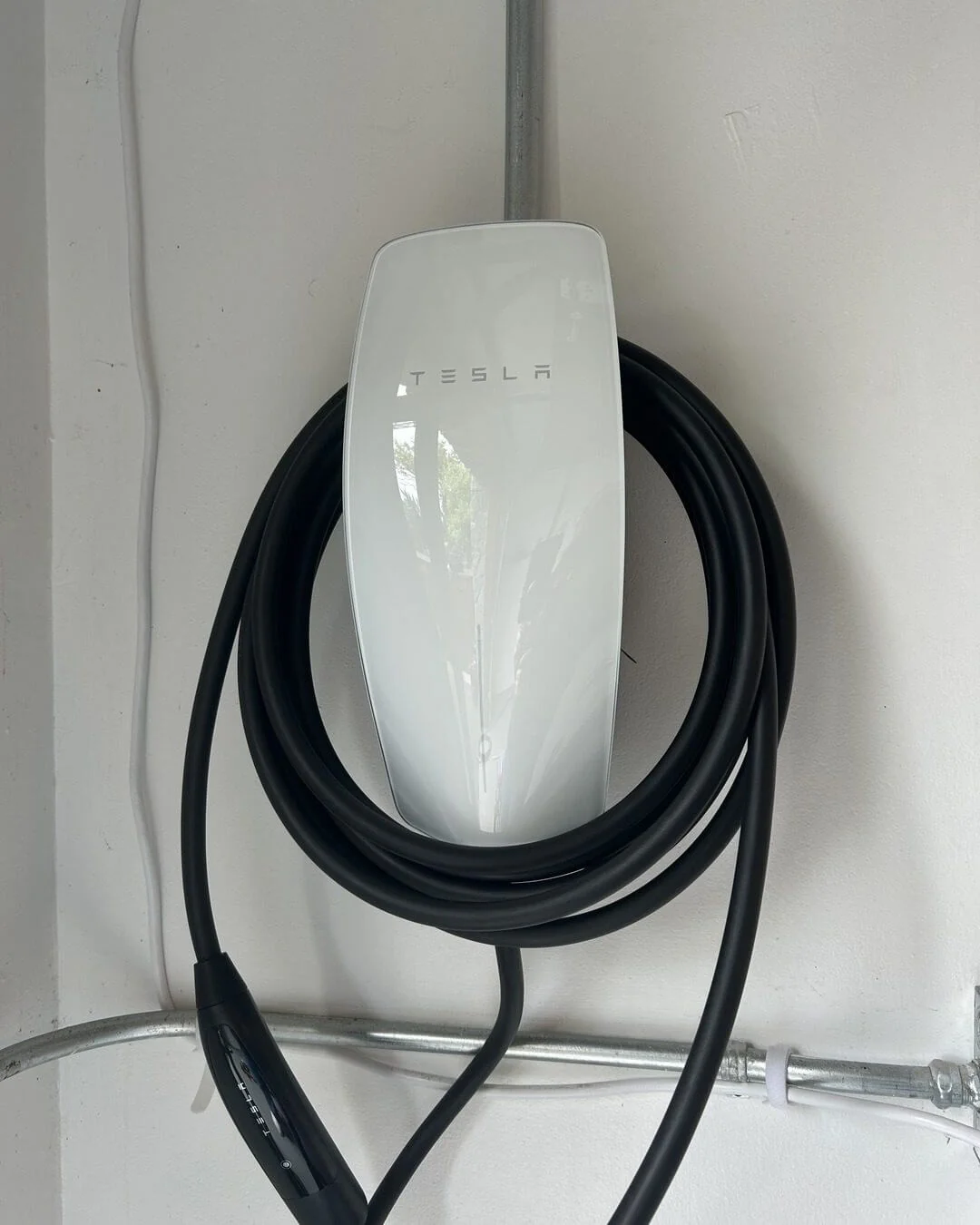
We had on Ongaro and sons install an EV charger and new panel, they did an excellent job it was all done in one day, thanks for the great work!!!
Brent M.
The load calculation is the deciding factor
Cloverdale does not leave this to interpretation. The city's checklist requires an electrical load calculation with the permit application, asks directly whether that calculation shows a service panel upgrade is required, and states the rule plainly: the existing service must be equal to or larger than the minimum required size of main service breaker the calculation determines, and if the panel is smaller, "a new upgraded electrical service panel must be installed in order to handle the added electrical load from the proposed EVCS."
That is why an electrical panel upgrade in Cloverdale and an EV charger so often turn out to be one project instead of two.
What goes into that calculation is where local housing stock starts to matter. In-town homes near downtown frequently still have modest services sized for a mid-century load: a range, a dryer, a furnace, and not much else. Add a Level 2 charger at 40 or 50 amps and the arithmetic gets tight fast.
Rural Alexander Valley parcels have the opposite problem. Their services are often larger, but the math has to account for equipment an in-town house does not have. Many of these properties are on wells and septic, and a well pump is a motor load with a starting draw that belongs in the numbers. Septic effluent pumps, shop compressors, welders, and irrigation controls all count. We have seen a generous-looking service still fail once the pumps were entered correctly.
If the result comes back short, a service upgrade is not the only path. Listed load management equipment can carry a charger on a service that would otherwise fall short, by automatically limiting or pausing it when the rest of the house is drawing hard. It has to appear on the plans, because the city asks the panel question explicitly.
The checklist also sets the conductor rule: the branch circuit conductor must be sized for a continuous load of 125 percent of the EVCS equipment plus any other non-continuous loads. This is why a unit drawing 40 amps continuously lands on a 50 amp circuit, and why "it fits on the breaker I already have" is usually wrong.
Permits, plans, and inspection in Cloverdale
Permitting here is governed by state law rather than local preference. Two sections of state law carry this, and they are commonly conflated. Government Code 65850.7 makes every city and county adopt an expedited, streamlined permitting process and "administratively approve an application to install electric vehicle charging stations through the issuance of a building permit or similar nondiscretionary permit," with review limited to health and safety. Government Code 65850.71 is the one that puts a clock on it. What that means on the ground:
- A permit is required. The statute streamlines the process; it does not remove the permit.
- The state clock caps delay. Under 65850.71, an application for "at least 1, but not more than 25 electric vehicle charging stations at a single site" is deemed complete five business days after submission and deemed approved twenty business days after that, unless the official has already approved it, made a substantial-evidence finding of adverse impact, denied it, or an appeal is pending.
- Cloverdale has actually adopted the checklist. Plenty of California jurisdictions have not. The city's Building Division publishes an EV charging station permit checklist which states that once documentation is correctly and fully completed and submitted, "a permit will be processed and approved for issuance in a timely manner (usually 1 to 3 business days)."
- The Building Department owns it, conducting both the plan review and the inspection.
- Planning review is not part of it, unless the building official determines the installation will have a specific, adverse impact on public health or safety.
- Fire review has one trigger. Fire Department plan review and inspection approval is not required unless the system includes a stationary storage battery system as defined in the California Fire Code. Pairing a charger with a battery changes the review path.
- Three sets of plans, 11 by 17, including a title page, manufacturer installation details and specifications, and electrical service load calculations.
- Several sheets are waived. No site plan for Level One or Level Two equipment inside an existing one- or two-family residential structure such as a garage or carport. No electrical floor plan for exterior installations. No single-line diagram for Level 1.
- A smoke and carbon monoxide alarm declaration is completed and signed where applicable.
- The plans need a licensed signature. The checklist requires electrical plans "completed, stamped and signed by a California Licensed Electrical Engineer or a C-10 electrical" contractor, which is a reason to know whose license is going on your submittal.
- Above 60 amps there is a disconnect rule. Where the equipment is rated more than 60 amps or more than 150 volts to ground, the plans have to show a disconnecting means that is lockable open and readily accessible.
- Outside city limits, it is Permit Sonoma, which publishes its own expedited route for charging stations, with a separate checklist and the same one-to-three-business-day language.
What drives the price
We do not publish figures, because an install in an older house near downtown and one in a newer home with an attached garage share nothing but the box on the wall. What we can tell you is which variables move the number.
Distance from the panel to the charger location is the largest single driver. A unit hung on the garage wall directly behind the panel is a short run of conduit. One at a detached shop across a gravel driveway means trenching, a buried run, and often a subpanel at the far end. Older in-town construction with lath and plaster is also slower to fish than modern drywall, which pushes more of these installs to exterior surface conduit.
Panel capacity is the second driver, and its effect is binary. If the load calculation passes, you are paying for a circuit. If it does not, you are paying for either load management equipment or a service upgrade, and the upgrade brings PG&E coordination and a second inspection into the schedule.
Charger tier drives conductor, breaker, and sometimes conduit size, so a 50 amp install costs more in materials than a 30 amp run of the same length. Adding a second meter for PG&E's EV-B rate plan changes the scope again, since that is a metering and service change, not an accessory. PG&E also lists E-ELEC, its Electric Home plan, aimed at households adding some combination of vehicle, battery and heat pump. The house does not have to be all-electric to qualify.
Older properties add their own line items: aluminum feeders needing proper terminations, a panel with no remaining physical spaces, a subpanel never bonded correctly, or a ground electrode system that has to be brought current first. We would rather find those on the walkthrough than at the inspection.
Incentives and rate plans, as they stand today
There is no installation rebate for a single-family home charger in Sonoma County. What exists is the Sonoma Clean Power enrollment program described above, which pays a monthly bill credit plus a sign-up bonus for an eligible connected device. You have to be an active SCP customer and either the account holder or an authorized representative. SCP reduces charging speed during grid stress events, and the customer "can override an event anytime."
The larger lever is your rate plan. PG&E delivers power everywhere we work, and its two electric vehicle rate plans are structured very differently.
Home Charging EV2-A uses your existing single meter and applies to both household and vehicle electricity. Off-peak runs midnight to 3 p.m. every day, partial-peak covers 3 to 4 p.m. and 9 p.m. to midnight, and peak is 4 to 9 p.m. That peak window lands squarely on the hottest stretch of a Cloverdale summer afternoon, when the air conditioning is already working hardest. Customers with high energy usage, over 800 percent of baseline allowance across the last 12 months, are not eligible.
EV-B requires a second dedicated meter and separates vehicle electricity costs from household costs. Off-peak runs 11 p.m. to 7 a.m., partial-peak covers 7 a.m. to 2 p.m. and 9 p.m. to 11 p.m., and peak is 2 to 9 p.m. It is not available with CARE, FERA, or Medical Baseline.
That second meter is an electrical scope decision, which is why the rate plan question belongs in the design phase and not six weeks after the charger is live.
I had an EV charger installed and a few other small repairs. Excellent response time, friendly, efficient, and reasonable. I highly recommend.
Elizabeth F.
Keeping it working
The list is short, but it is not empty on a property that sees hot summers and wet winters. Look at the connector and the cable a few times a year, since exterior units take real ultraviolet exposure here and jackets crack at the strain relief first. Keep the cable on a holster rather than coiled in a puddle or dragged across gravel.
Terminations deserve a check after the first year, particularly on older services with aluminum feeders. Heat cycling loosens connections, and a loose connection under a continuous load is the failure mode that matters most. Keep firmware current on a connected model: if you enrolled with Sonoma Clean Power, a device that has quietly dropped off Wi-Fi can stop qualifying with no visible sign at the wall.
Northern Sonoma County came through the 2019 Kincade Fire, and PG&E Public Safety Power Shutoffs are part of fire season here. After a restoration, confirm that the charger came back, that its schedule survived, and that it is drawing at the expected rate. If backup power is part of the goal, our solar work in Cloverdale is the better place to start.
Where we work in Cloverdale
Downtown Cloverdale and the older residential streets around it are the tightest jobs. Original services, plaster walls, and detached garages set back from the house mean nearly all of them need panel capacity settled before anything else is decided.
Newer homes with attached garages sit at the straightforward end: panel in the garage, charger on the adjacent wall, short run.
The Alexander Valley and the unincorporated parcels around it are their own category. Long driveways, outbuildings, wells, and septic systems all show up in the numbers, and the permit goes through Permit Sonoma rather than the city. We tell you which of the three you are before we quote.
Choosing an electrician for this work
Four questions separate the field quickly.
Ask to see the load calculation before you see a price. Anyone quoting a Level 2 charger without having looked at your panel and your existing loads is guessing, and the guess is being made with your money.
Ask who pulls the permit and whose license is on it. This work requires a C-10 electrical license, and the application asks for the contractor's license details. A homeowner-pulled permit on a contractor-performed job is a problem waiting to be found.
Ask what happens if the calculation comes back short. A contractor whose only answer is a full service upgrade has not considered load management, and one who has never installed load management may not be the right party to specify it.
Ask whether the charger they recommend is currently eligible for Sonoma Clean Power enrollment. A blank look means they are not working in this county often. Our full range of electrical work in Cloverdale runs through the same standard.
What North Bay homeowners say
Two reviews that followed charger installs:
Book an EV charger installation in Cloverdale
We start with a walkthrough and a load calculation, not a price sheet. You will know before committing whether your service supports the charger you want, whether load management beats a panel upgrade, and which models remain eligible for Sonoma Clean Power enrollment. Book online and we will schedule it. Cloverdale homeowners also come to us for electrical panel upgrades, air conditioning repair, and solar and storage. Our Cloverdale service list covers every trade we run, and we install chargers across the county, including Windsor and Santa Rosa. For the wider region, see electrical services in Sonoma County.
Your Comfort, Our Priority
Ongaro & Sons is your trusted heating, cooling, plumbing, electrical, and solar expert, specializing in reliable maintenance and repair services that keep your home running efficiently year-round.
Our certified technicians deliver unmatched expertise with fast, friendly service across Marin, Sonoma and Napa County. From HVAC tune-ups to plumbing repairs and electrical upgrades or solar solutions, we focus on energy-efficient performance and long-term comfort. Count on us to maintain the systems that power your home and keep your environment just the way you like it.
Licensed, Insured, Background-Checked
Our technicians are licensed, experienced, and trained to service all makes and models.
Locally Owned and Operated
Serving the Napa, Marin, and Sonoma communities with personalized, hometown service.
Reliable Repairs
We respond quickly and get the job done right the first time, with no surprises.
Since 1932
Why Ongaro & Sons?
Four generations of trusted home service. Open any reason to see what it means for your home.
Schedule Service →Family-owned in the North Bay since 1932
Four generations of the Ongaro family serving Marin, Sonoma and Napa County. We know these homes and the systems in them.
Licensed, insured, background-checked technicians
Every technician is fully licensed and insured, background-checked, and trained on the equipment we install.
Diamond Certified and BBB A+
Diamond Certified since October 2016, and BBB Accredited with an A+ rating since December 1995.
Mitsubishi Diamond Contractor Elite and Trane Comfort Specialist
Both top manufacturer tiers. That standing decides how registration and extended warranty terms are handled on the system you actually bought.
The price is agreed before work starts
You see the number before the work begins. Flat-rate quotes, no surprises and no pressure.
Comprehensive maintenance program
Members get priority scheduling, discounts, and proactive checkups that prevent costly failures.
Discount
Membership
Ongaro Maintenance Plans
Annual maintenance on your home systems provides safeguards and comfort to you and your family. Members get priority scheduling, discounts, and proactive checkups that catch problems early.
Member Discounts
5% off every repair and replacement, all year long.
Peace of Mind
Proactive checkups catch issues before they become big problems.
Courtesy Reminders
We call you to schedule: never miss a seasonal service.
Value That Lasts
With Ongaro & Sons, you’re investing in quality, integrity, and service that stands the test of time. Explore our current promotions and see the difference real value makes for your HVAC, plumbing, and electrical needs.


From the Blog
 Sep 17, 2026
How Many Amps Does My House Need? Sizing Service for What You Actually Run
How many amps your house needs comes from a load calculation of what you run and plan to add. What drives the number, when existing service is enough, and more.
Read More Sep 10, 2026
Hard Water in Marin County: What Is Actually in Your Water and What It Does
Hard water in Marin County varies by provider and source. The 2025 report figures for Marin Water and NMWD, what hardness does and does not mean, and options.
Read More Sep 3, 2026
Electrical Permit Requirements in California: What Needs One and What Does Not
Find out which electrical projects commonly need permits, how to confirm local exemptions, and what to ask before work begins in Marin, Sonoma or Napa County.
Read MoreFrequently asked questions
Who is the best EV charger installation company in Cloverdale?
We would point you at the criteria rather than at ourselves. Look for a C-10 electrical contractor that performs a documented load calculation before pricing, pulls the permit in its own name, and knows which charger models currently qualify for Sonoma Clean Power enrollment. Ongaro & Sons meets all three, has served the North Bay since 1932, is Diamond Certified, and holds a BBB A+ Rating.
Do I need a permit for a home EV charger in Cloverdale?
Yes. State law requires the city to offer a streamlined process, but it does not waive the permit itself. The City of Cloverdale Building Department issues it and performs the inspection. Skipping this step tends to surface later at resale or during an insurance review, when opening a finished wall costs far more than the paperwork would have at the outset.
How fast is the permit issued?
The city's published EVCS checklist says a complete and correct submittal is typically processed and approved for issuance within one to three business days. State law sets the outer limit separately, in Government Code 65850.71 rather than 65850.7: an application for one to 25 stations at a single site is deemed complete five business days after submission and deemed approved twenty business days after that, absent action by the building official or a pending appeal. The two are not in tension, they are a target and a backstop.
Will I need a panel upgrade?
Only the load calculation can answer that, and Cloverdale requires the calculation as part of the submittal. Where the existing service falls below the minimum size the calculation demands, the city requires an upgraded service panel before the charger goes in. Listed load management equipment is sometimes an acceptable alternative, and either route has to be drawn on the submitted plans.
What size circuit does a Level 2 charger need?
It depends on which tier you install. The city's checklist maps 3.3 kilowatt units to 20 or 30 amps, 6.6 kilowatt units to 40 amps, 9.6 kilowatt units to 50 amps, and 19.2 kilowatt units to 100 amps, all at 208 or 240 volts. Conductors are sized at 125 percent of the continuous load, so the breaker always exceeds the charger's rated draw.
Can you install a charger at a detached shop or garage in the Alexander Valley?
Yes, and it is common work out there. The variables are trench length, conduit routing, whether a subpanel already exists at the outbuilding, and voltage drop over the distance. Well pumps and septic pumps have to be entered into the load calculation, which is where these properties sometimes surprise people despite carrying a larger service than an in-town house.
Is there a rebate for a home charger in Sonoma County?
Not for the installation. Sonoma Clean Power runs an enrollment program instead: connect an eligible smart charger, and you receive a sign-up bonus and an ongoing monthly bill credit. Eligible devices are currently limited to WallBox and ChargePoint models, and you must be an active SCP customer and the account holder or an authorized representative to sign up.
Does the Bay Area zero-NOx appliance rule apply here?
No. Cloverdale sits in the Northern Sonoma County Air Pollution Control District rather than the Bay Area Air Quality Management District, per Sonoma County's air district page. Those appliance rules concern gas water heaters and furnaces regardless, not electrical work, but the question comes up constantly from homeowners planning a broader electrification project.
My breaker trips on hot afternoons while the car charges. What is happening?
Most likely the combined draw is exceeding what the service can carry, rather than any defect in the charging equipment. Cooling demand peaks in the late afternoon here, and a vehicle plugged in at the end of the workday stacks on top of it. Which breaker opens is the tell: the main implicates service capacity, the charger's own breaker implicates the branch circuit.
Can I add battery storage at the same time?
You can, and many households up here want to, given the Public Safety Power Shutoff history. Be aware that including a stationary storage battery system as defined in the California Fire Code brings Fire Department plan review and inspection into a process that otherwise skips it. Build that into the schedule instead of treating the battery as a late addition.
Is a standard 120-volt outlet enough?
For some households, yes. Level 1 charging on a 15 or 20 amp circuit replaces a modest amount of range overnight, which suits short local driving and a plug-in hybrid. It stops being enough when daily mileage rises or a second vehicle joins the driveway. Work out the energy you need to replace each night before deciding.