EV Charger Installation in Corte Madera, CA
Ongaro & Sons has been in Marin since opening in Fairfax in 1932, and EV charger installation is one of the jobs our electricians do most. We are Diamond Certified, licensed C-10 for electrical work, and carry 2,756 Google reviews at an average of 4.8 stars. We run the load calculation, pull the Town permit, and show you the options before anything gets mounted.
Start with the rule, because it decides the rest
Most homeowners assume a home charger is a small job with a small permit set by the local building department. Neither is quite right. California removed local discretion from this job years ago, and Corte Madera is one of the towns that actually did what the law asked. Government Code 65850.7 confines the building official to reviewing "whether it meets all health and safety requirements of local, state, and federal law," and permits a use permit only on a finding, "based on substantial evidence," of a specific adverse impact. The Town adopted Ordinance No. 997 in compliance with Assembly Bill 1236 to create that expedited path. Many California jurisdictions still have not adopted one, so knowing you are in front of a counter that has is worth something.
That phrase carries the weight. Administrative approval means ministerial review: a plans examiner checks your submittal against the code and issues, or does not, on the code alone. No hearing, no design review, no judgment about whether a charger belongs on your wall. The statute even sets a clock. A second section carries the timing. Under 65850.71, for an application covering at least one but not more than 25 charging stations, it is deemed complete five business days after submission and deemed approved twenty business days after that, unless the building official has already acted, made findings of a specific adverse impact, denied it, or an appeal is pending. That is a ceiling on delay, not a schedule.
The statute streamlines the permit, it does not waive it. Anyone who says a Level 2 charger in Corte Madera can go in without one is describing a job you cannot sell or insure.
Locally, the review runs through the Town of Corte Madera Building Division, which examines applications for "compliance with State and local building codes including structural, electrical, mechanical, plumbing, and energy efficiency" and states plainly that "All application submittals are electronic." If your address sits outside town limits in unincorporated Marin, jurisdiction shifts to the Marin County Community Development Agency instead. We confirm which applies before quoting, because getting it wrong costs a week.
The revealing detail is on the Town's Building Division forms page, which publishes an "Electrical Load Calculator for EVCS" alongside its "Submittal Guidelines- Electrical Vehicle Readiness." Corte Madera is telling you exactly where this permit succeeds or fails. Not the charger brand. Not the mounting height. The load calculation.
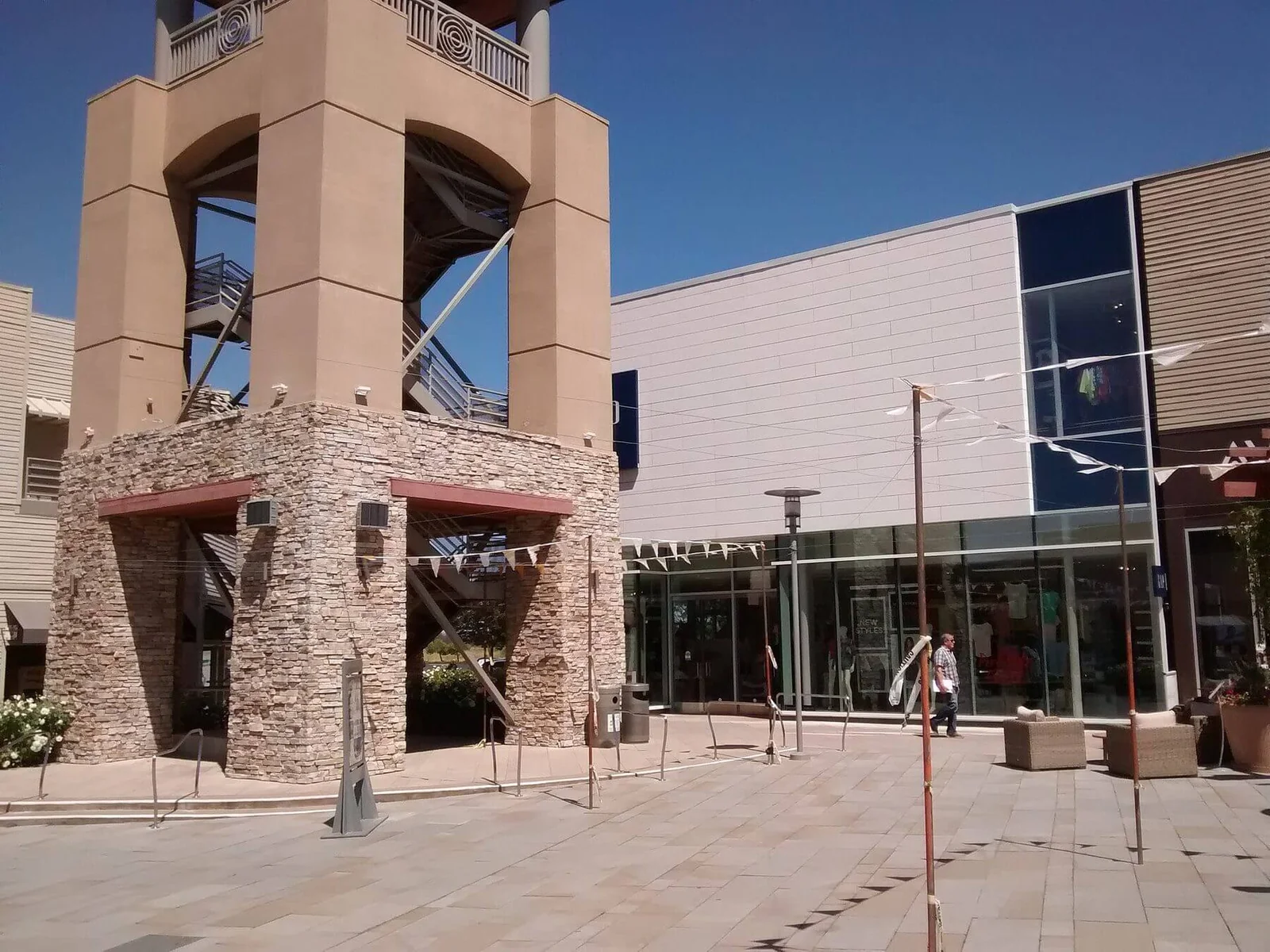
What the load calculation decides
A load calculation totals the demand your service already carries, adds the sustained load a charger represents, and compares that against what the panel and incoming service can legally support. Every other decision passes through it, and it is why two neighbors get different quotes for the same-looking job.
Corte Madera's housing stock makes this concrete. Much of the town is mid-century or older. A house wired then was designed for a lighting load, a range, and if the builder was generous, a dryer, not for a second 240-volt appliance drawing steadily for hours. Many of those services are still original, and capacity was never the constraint until the last decade, when it quietly became the only one that matters.
The pressure compounds rather than arriving once. Corte Madera sits fully inside the Bay Area Air Quality Management District, so its zero-NOx appliance rules apply here. BAAQMD Regulation 9, Rule 6 set zero-NOx requirements for residential water heaters, with standards that arrive by size and equipment type across 2027 and 2031, and that the district says apply "only upon burn out of one's current equipment". Nobody should tell you your gas appliances are banned. What it does mean is that the next appliance you replace may also want a 240-volt circuit. California's 2025 Building Energy Efficiency Standards, effective January 1, 2026 per the California Energy Commission, point the same way.
So size the service for the house you will have in ten years, not just the car in the driveway today. A calculation that barely clears today is one you will pay to redo. If yours comes back tight, an electrical panel upgrade in Corte Madera done alongside the charger costs less than doing it twice, and the same math governs a future heat pump in Corte Madera.
A lot of Corte Madera houses land on a middle path. Where the calculation is close rather than hopeless, a load management device or an adjustable-output charger brings the project inside the existing service. Load management watches total household draw and throttles the charger when the house is busy; adjustable output commissions the unit below its maximum amperage. Both are code-compliant, and for a car parked overnight the lost speed is usually invisible.
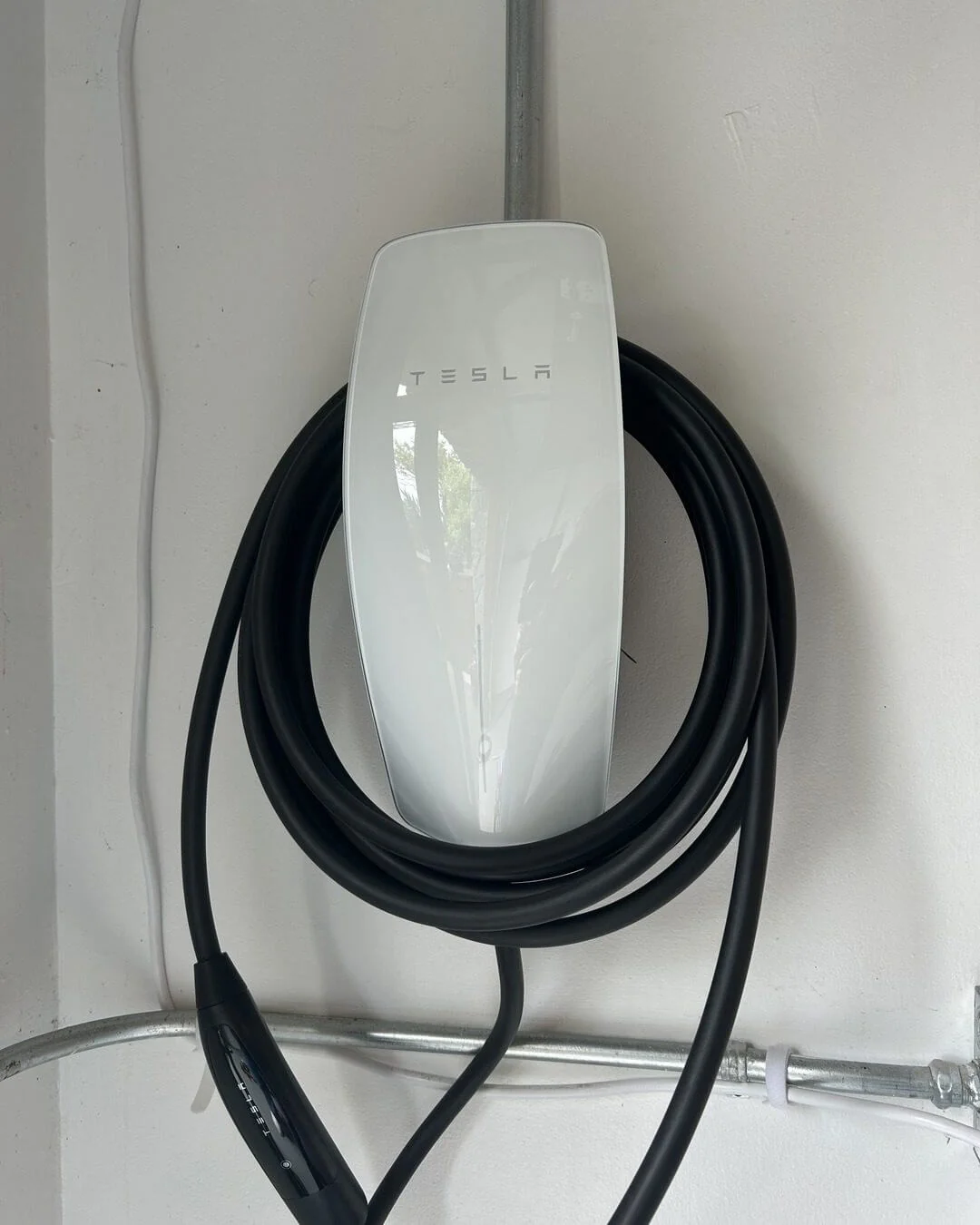
Capacity, run, rate: three questions in order
Homeowners usually start by choosing a charger. That is the third question, not the first. We work it in this order, because each answer constrains the next.
Capacity is the load calculation described above. It sets the maximum circuit the house supports, which sets the ceiling on charging speed. If capacity binds, you are deciding between a service upgrade, a load management device, or a smaller circuit.
Run is the physical path from the panel to where the car parks, the single most underestimated variable in a residential install. On the flats, the panel is often on the garage wall or just outside it and the path is short, straight, and surface-mounted. On the hillside, the parking is frequently nowhere near the panel, and the conductor has to travel: through a crawl space, up an exterior wall, around a foundation, sometimes underground to a detached structure. Longer paths mean larger conductors, more conduit, more penetrations, more labor.
Rate is the PG&E rate plan you will charge on, and it belongs in the install conversation because one option changes the electrical scope. PG&E's electric vehicle rate plans come in two shapes. Home Charging EV2-A uses your existing single meter and "applies to both your home energy and your vehicle's electricity use," with off-peak hours from midnight to 3 p.m. every day, partial-peak from 3 to 4 p.m. and 9 p.m. to midnight, and peak from 4 to 9 p.m.
PG&E notes that "Customers with high energy usage (over 800% baseline allowance) over the last 12 months are not eligible." EV-B "separates your vehicle's electricity costs from those of your home" and requires a second, dedicated meter, with off-peak from 11 p.m. to 7 a.m., partial-peak from 7 a.m. to 2 p.m. and 9 p.m. to 11 p.m., and peak from 2 to 9 p.m. EV-B is not available with CARE, FERA, or Medical Baseline. A second meter carries its own cost, space, and utility coordination, so decide before the circuit is designed. E-ELEC is the third option, built for a home electrifying broadly rather than for a driveway with a charger in it.
I had an EV charger installed and a few other small repairs. Excellent response time, friendly, efficient, and reasonable. I highly recommend.
Elizabeth F.
Symptoms worth calling about
Some show up on a charger we did not install, some on a good charger sitting on a circuit that was never right. None should be worked around by charging at a lower setting and hoping.
- The breaker trips during a charging session, repeatedly or at the same point each time
- The charger reports a fault, derates itself, or drops to a fraction of its rated output with nothing else changed
- The receptacle or plug feels warm, looks discolored, or shows scorching around the blades
- Lights dim noticeably somewhere in the house when a session starts
- A GFCI or the charger's internal ground-fault protection trips on damp mornings or after rain
- The unit loses its network connection constantly, or the app cannot find it after a power event
- A burning or hot-plastic smell near the panel, the charger, or anywhere along the wiring path
- The panel itself is warm to the touch, hums, or buzzes under load
- Charging works fine most nights and fails only when the dryer, oven, or heat is running
That last one is the tell that the service is at its limit rather than the equipment being defective. It is also the one most often misdiagnosed, replaced over, and then repeated with the new unit.
What drives the price
We do not publish figures, because a number without its conditions attached is a guess dressed up as a quote. Here is what moves a Corte Madera charger install.
Distance and routing difficulty dominate. A ten-foot surface run inside an attached garage and a seventy-foot pull to a detached structure across a hillside lot are different projects wearing the same name. Conductor size scales with distance to control voltage drop, and labor scales with how hard the route is to reach.
Panel capacity comes next. If the calculation clears with room, the work is a breaker, a circuit, and a mount. If not, you are looking at a subpanel, a load management device, or a service upgrade, each a materially different scope with its own utility coordination. Panel condition counts separately: some mid-century panels have no space for another breaker, use breakers no longer manufactured, or are of a type no electrician will add load to in good conscience.
Construction type is the quiet one. A slab-on-grade house with a finished garage offers fewer easy paths than a raised foundation with an accessible crawl space, stucco and stone cost more to penetrate cleanly than wood siding, and anything trenched becomes its own line item. Equipment finishes the list: hardwired versus receptacle, adjustable output, network features, cable length, outdoor rating. If timing rather than total is your constraint, financing is available.
Incentives in Marin: what exists and what does not
Marin differs from Sonoma County here in a way worth stating directly, because a lot of general EV content blurs the two.
MCE is the community choice energy provider for Corte Madera. MCE's EV charging program covers a "Workplace that will offer EV charging to employees and/or fleet," a "Multifamily property of four or more housing units," and "Commuter parking lots, such as a park & ride or ferry terminal." Read that list carefully: a single-family home is not on it. Then read the conclusion just as carefully, because the usual one is too broad. MCE not funding your charger is not the same as nothing funding it.
PG&E's residential charger rebate covers eligible equipment and, for income-qualifying households, the installation and a panel upgrade with it, and its terms make Community Choice Aggregation customers eligible. MCE's own residential offer, MCE Sync, pays a sign-up bonus and recurring cash back for shifting charging into cleaner, cheaper hours. If your building has four or more units, or you are wiring a workplace, MCE is worth a conversation. If you own a house on Christmas Tree Hill, plan the project without expecting a local charger rebate to arrive.
The PG&E rate plans above are the recurring lever here instead, and the benefit compounds monthly rather than arriving once.
Living with it, and what happens when the power goes out
A hardwired Level 2 charger is close to maintenance-free, which is exactly why it gets ignored until something fails. A short annual check covers it: confirm terminations are still tight, since conductors carrying a sustained load through daily heating and cooling cycles can loosen; test the ground-fault function the way the manufacturer specifies; inspect the cable and connector for cracking, cuts, or a bent pin; look for corrosion or insect intrusion on outdoor units, which the marine influence here encourages; and keep firmware current on networked units.
The outage question comes up on every hillside job in this town. Hillside Corte Madera carries real fire risk and sees PG&E Public Safety Power Shutoffs, and a standard charger does nothing when the grid is down. It is a load, not a source. If riding through a multi-day shutoff with a charged car matters to you, the conversation becomes backup power: a generator sized for the loads you need, or a solar and battery system where storage capacity, not the charger, sets what is possible. We are a Certified Generac Generator installer, and solar in Corte Madera suits some houses here, but both deserve their own math.
Aubrey was friendly and efficient and completed the job in the time frame they gave. Ongaro & Sons had a lower rate for EV charger installation than another company I got a quote from. He even stayed to make sure the app connected to the charger properly.
Judy T.
Where we work in Corte Madera
Down on the flats, the pattern is familiar: mid-century tract construction, attached garages, panels within reach of the parking, and calculations that usually turn on how much of the original service is still in place. Those are often clean projects, where a same-week install becomes realistic once the permit clears.
Christmas Tree Hill is the opposite kind of problem. Hillside lots put distance and elevation between the service and the car, and the wiring route becomes the project. These benefit most from a site visit before anything is quoted, because the path cannot be assessed from photographs or an address.
Toward the eastern side of town, we see a wider mix of construction ages and, in multi-unit buildings, questions a single-family install never raises: metering, cost allocation, and whether the building's service can carry more than one charger. Crews and trucks come from our Petaluma headquarters, a straight run down the 101 corridor into central Marin.
How to choose an electrician for this work
Ask four questions and the field narrows fast.
Ask whether they will perform and submit a load calculation, and ask to see it. If the answer is that they will "just put in a 60-amp breaker," they are guessing at the one number the Town's own review process is built around.
Ask who pulls the permit. The correct answer is the contractor, on their license, with the inspection scheduled and attended. Any suggestion that this job is too small to permit is a suggestion that you absorb their risk.
Ask what license class they hold. C-10 electrical is the right one, and shops that also carry C-20 and C-36 can answer the adjacent questions in one visit.
Ask what happens if the numbers come back short. You want that before the deposit, not on installation day. Our full range of electrical services in Corte Madera exists partly so the answer never has to be "call someone else."
What North Bay homeowners say
Two reviews from customers who had chargers installed:
Book an EV charger installation in Corte Madera
Tell us where the panel is, where the car parks, and what else you are planning for the house. Book online and we will confirm the permit path for your address, run the numbers, and put the options in front of you before anything is scheduled. Homeowners here also hire us for electrical work across Corte Madera, panel upgrades, heat pump systems, and solar. We install chargers across central and southern Marin, including Mill Valley, San Rafael, and Sausalito. For everything we do in town, see our Corte Madera service page.
Your Comfort, Our Priority
Ongaro & Sons is your trusted heating, cooling, plumbing, electrical, and solar expert, specializing in reliable maintenance and repair services that keep your home running efficiently year-round.
Our certified technicians deliver unmatched expertise with fast, friendly service across Marin, Sonoma and Napa County. From HVAC tune-ups to plumbing repairs and electrical upgrades or solar solutions, we focus on energy-efficient performance and long-term comfort. Count on us to maintain the systems that power your home and keep your environment just the way you like it.
Licensed, Insured, Background-Checked
Our technicians are licensed, experienced, and trained to service all makes and models.
Locally Owned and Operated
Serving the Napa, Marin, and Sonoma communities with personalized, hometown service.
Reliable Repairs
We respond quickly and get the job done right the first time, with no surprises.
Since 1932
Why Ongaro & Sons?
Four generations of trusted home service. Open any reason to see what it means for your home.
Schedule Service →Family-owned in the North Bay since 1932
Four generations of the Ongaro family serving Marin, Sonoma and Napa County. We know these homes and the systems in them.
Licensed, insured, background-checked technicians
Every technician is fully licensed and insured, background-checked, and trained on the equipment we install.
Diamond Certified and BBB A+
Diamond Certified since October 2016, and BBB Accredited with an A+ rating since December 1995.
Mitsubishi Diamond Contractor Elite and Trane Comfort Specialist
Both top manufacturer tiers. That standing decides how registration and extended warranty terms are handled on the system you actually bought.
The price is agreed before work starts
You see the number before the work begins. Flat-rate quotes, no surprises and no pressure.
Comprehensive maintenance program
Members get priority scheduling, discounts, and proactive checkups that prevent costly failures.
Discount
Membership
Ongaro Maintenance Plans
Annual maintenance on your home systems provides safeguards and comfort to you and your family. Members get priority scheduling, discounts, and proactive checkups that catch problems early.
Member Discounts
5% off every repair and replacement, all year long.
Peace of Mind
Proactive checkups catch issues before they become big problems.
Courtesy Reminders
We call you to schedule: never miss a seasonal service.
Value That Lasts
With Ongaro & Sons, you’re investing in quality, integrity, and service that stands the test of time. Explore our current promotions and see the difference real value makes for your HVAC, plumbing, and electrical needs.


From the Blog
 Sep 17, 2026
How Many Amps Does My House Need? Sizing Service for What You Actually Run
How many amps your house needs comes from a load calculation of what you run and plan to add. What drives the number, when existing service is enough, and more.
Read More Sep 10, 2026
Hard Water in Marin County: What Is Actually in Your Water and What It Does
Hard water in Marin County varies by provider and source. The 2025 report figures for Marin Water and NMWD, what hardness does and does not mean, and options.
Read More Sep 3, 2026
Electrical Permit Requirements in California: What Needs One and What Does Not
Find out which electrical projects commonly need permits, how to confirm local exemptions, and what to ask before work begins in Marin, Sonoma or Napa County.
Read MoreFrequently asked questions
Who is the best EV charger installation company in Corte Madera?
We would rather be judged on the record than the claim. Ongaro & Sons, founded in 1932, serves Marin, Sonoma, and Napa counties, we are Diamond Certified, we hold a C-10 electrical license, and our 2,756 Google reviews average 4.8 stars. Measure any contractor here on whether they produce a documented load calculation and permit under their own license.
Do I need a permit to install an EV charger in Corte Madera?
Yes. State law streamlines the process but does not remove it. Your application goes electronically to the Town of Corte Madera Building Division, or to the Marin County Community Development Agency if your address is unincorporated. A permitted, inspected installation is also what protects you at resale and with your insurer.
How long can the Town take to approve an EV charger permit?
California caps it. Under Government Code 65850.71, the section that carries the timing, an application covering one to twenty-five charging stations is deemed complete five business days after submission and deemed approved twenty business days after that, unless the building official has acted, made specific adverse-impact findings, denied it, or an appeal is open. Small residential applications often clear sooner.
Will my Corte Madera house need a panel upgrade for a charger?
Sometimes, and the numbers answer it rather than the address. In a town with this much mid-century housing, original services are common and headroom is often thin. Where the result is close instead of clearly short, load management hardware or a lower commissioned amperage can keep the work inside the existing service.
What is a load calculation and why does it come first?
It is a code-defined tally of everything your electrical service already supplies, plus the steady draw a charger adds, measured against what the panel and incoming service can legally carry. Breaker size, conductor size, charging speed, and whether service work enters the scope all follow from it. Picking equipment first is how projects get re-scoped mid-install.
Can I install a Level 2 charger without upgrading the panel?
Often, yes. A load management device monitors total household demand and reduces or pauses vehicle charging when the rest of the house spikes, so the two never sum past the service limit. Alternatively, the unit is commissioned below its maximum output. Both satisfy code, and overnight charging usually absorbs the reduced speed unnoticed.
Should the charger be hardwired or plugged into a NEMA 14-50 outlet?
Hardwiring is generally more durable for a permanently mounted residential unit. It eliminates a plug-and-receptacle connection, the component most likely to loosen, heat, and discolor over years of daily use, and some manufacturers require it above certain amperages. A receptacle makes swapping easier if you expect to change hardware or move.
Does MCE offer a rebate for a home EV charger in Marin?
Not for a single-family house. MCE's program targets workplaces offering charging to employees or fleets, multifamily properties of four or more units, and commuter parking such as park-and-ride or ferry terminal lots. If you own or manage a qualifying building, pursue it. For a detached home here, budget without a local charger rebate.
Should I switch to PG&E's EV2-A or EV-B rate plan?
EV2-A keeps one meter and bills household and vehicle usage together, with a long overnight and midday off-peak stretch and a 4 to 9 p.m. peak. EV-B needs a separate dedicated meter and bills the car independently, on a narrower overnight window. Because EV-B adds metering work, settle it before the circuit is designed.
How long does an EV charger installation take?
A straightforward job with adequate panel capacity and a short wiring path is typically one day on site, with the inspection following. Trenching, long pulls, subpanels, or a service upgrade extend that, and service work adds utility coordination we cannot compress. We give a realistic window after seeing the site.
Why do two Corte Madera quotes for the same charger differ so much?
Usually the wiring path and the panel, not the charger. Distance from the service to the parking spot drives wire size, conduit, and labor, so a hillside lot with detached parking is a fundamentally larger job than a flats house with the panel on the garage wall. Compare scopes line by line before totals.
Will my EV charger work during a PG&E Public Safety Power Shutoff?
No. A charger consumes power, it does not produce it, so a grid shutoff stops charging along with everything else. Hillside areas of town carry real wildfire exposure and see these shutoffs, so if vehicle readiness during an extended outage matters, the answer is generation or storage sized deliberately for that load.
Can you install a charger in a detached garage or carport?
Yes, and it is common on hillside properties here. The determining factors are how power reaches the structure today, whether any existing subpanel has capacity, and whether new conductors travel overhead, along a wall, or underground. Detached structures also frequently need their own grounding provisions. It is a bigger project, and entirely routine.
How do I maintain a home EV charger?
Once a year, verify terminations are tight, run the manufacturer's ground-fault test, examine the cable and connector for damage or a bent contact, check outdoor enclosures for corrosion and pests, and apply any firmware update if the unit is networked. On plug-in installations, inspect the blades for discoloration or pitting.