Electrical Panel Upgrade in Corte Madera, CA
Ongaro & Sons, founded in 1932, upgrades electrical services across Marin, Sonoma and Napa counties. Licensed C-10 for electrical, Diamond Certified, and averaging 4.8 stars over 2,756 Google reviews. Every crew runs out of our Petaluma headquarters. We pull the town permit, run the load calculation before quoting a service size, and schedule the utility disconnect so the power goes off once.
Start with the rules, because they decide the scope
A panel upgrade is one of the few residential jobs where regulation comes first and the equipment choice follows. Get that order backward and you buy hardware the plan checker, the utility, or the load calculation will not accept.
The Town of Corte Madera Building Division "reviews building permit applications and plans for compliance with State and local building codes including structural, electrical, mechanical, plumbing, and energy efficiency," and the town states that "All application submittals are electronic" (Town of Corte Madera, Building Division). That sequences the week: the application, the calculation and the equipment cut sheets are filed before anyone opens the meter enclosure, and the final inspection sits on the town's calendar rather than ours.
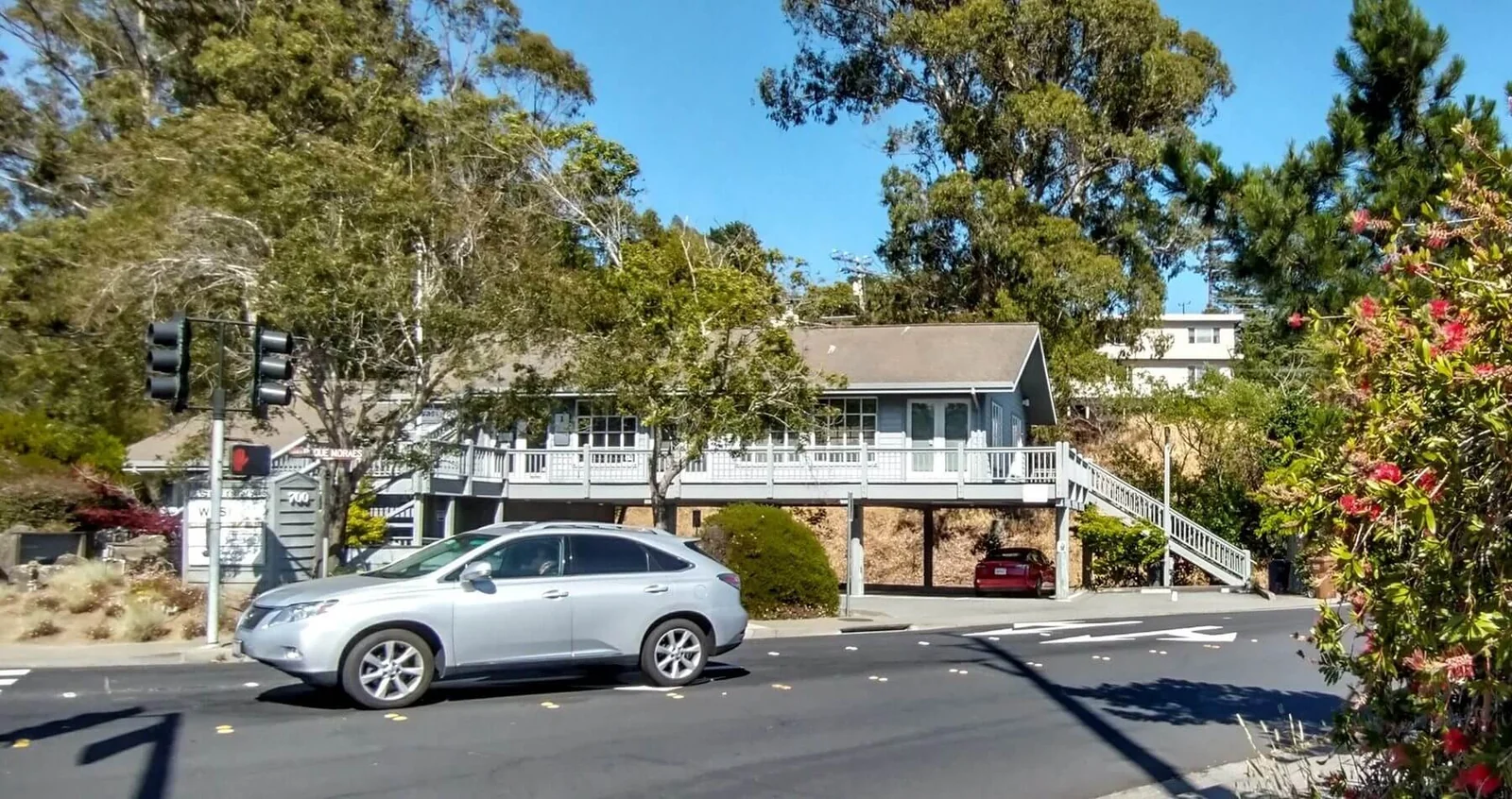
Which department you belong to depends on the parcel, not the mailing address. Inside town limits, Corte Madera issues the permit and sends the inspector. On an unincorporated parcel nearby, the Marin County Community Development Agency is your building department, with its own submittal path and inspection queue. Filing with the wrong one costs you the schedule.
The utility is a separate party with its own calendar. PG&E owns the service drop or lateral, the meter connection, and the conductors feeding it. MCE is the community choice electricity provider here, so MCE buys and supplies the power on your bill, but the poles, wires, meter and physical reconnection stay PG&E's work. On a like-for-like swap that involvement is brief; on a real service increase, PG&E availability is often the longest item in the timeline.
Then there is the code edition. California enforces a statewide electrical code, and the town applies the edition in force the day your permit issues, not the day you got the quote. Arc-fault scope, working clearance in front of the equipment, surge protection provisions, and labeling all shift between cycles, so ask which cycle a proposal is priced to.
The energy code pushes the same way. California's 2025 Building Energy Efficiency Standards took effect January 1, 2026 (California Energy Commission). That cycle set a single fuel baseline for new single-family construction, with heat pumps prescriptively required for water and space heating alike. It does not force a replacement in a 1960 house, but it shows where the standard is headed.
Finally, the air rule. Corte Madera sits fully inside the Bay Area Air Quality Management District, so the zero-NOx appliance requirements apply here in full. The 2023 amendment to Regulation 9, Rule 6 set zero-NOx requirements for residential water heaters, on dates that arrive across 2027 and 2031 by size and equipment type, applying when equipment is replaced rather than to what is already installed. No existing gas water heater is banned. What it means is that the zero-NOx path most homeowners here are eventually offered is a 240-volt appliance, and that is a panel question before it is a plumbing question.
What those rules change about the equipment
The load calculation decides your service size, and it is arithmetic rather than opinion. It derives a general lighting and receptacle load from conditioned square footage, adds small-appliance and laundry circuits, counts every fixed appliance at nameplate, applies the demand factors the code allows, then adds the largest motor. On a mid-century Corte Madera house with a gas furnace, a gas water heater, a gas range and no compressor, a 100-amp service often calculates with room left. Add a heat pump, a heat pump water heater, an induction cooktop and a car, and the same house runs out of service long before it runs out of breaker spaces.
The number that usually decides the outcome is not the main breaker; it is the busbar rating stamped inside the panel. The busbar is the metal spine every breaker clamps onto, and both the loads pulling from it and any source pushing power back into it have to live inside that rating. That is why an array or a battery can force a panel decision that had nothing to do with the roof. If solar in Corte Madera is anywhere in your next few years, the busbar rating you choose today sets the ceiling on that project.
Placement is the next decision the rules touch. Corte Madera has both: older homes with the meter on an exterior wall and the panel inside a hallway, closet or garage, and later work where meter and main breaker share one outdoor enclosure. Moving the main outside gives you a main shutoff reachable without entering the house, and it usually satisfies the working-clearance requirement interior closets frequently fail. It costs more, since the feeder back to the interior distribution must be run and protected.
Overhead versus underground is the other fork. Where service arrives overhead, an upgrade is rarely just a panel: mast, weatherhead, attachment point, and clearance over roof, walkway and driveway all enter the scope, and steep hillside lots make each harder. Where service is already underground, the work concentrates at the meter.
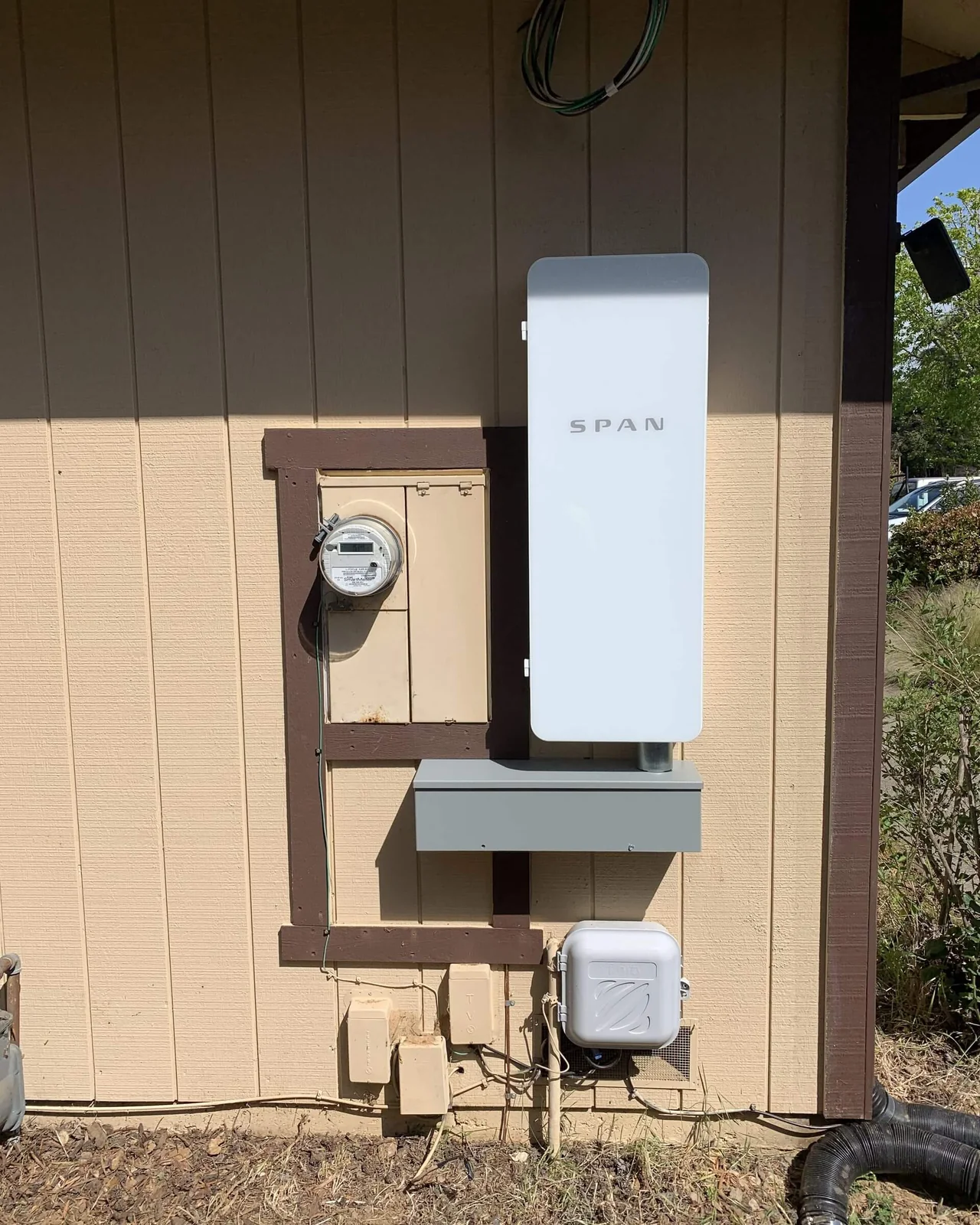
There is a third path many homeowners are never offered. Rather than raising the service size, you can sometimes keep it and manage the load. A smart panel meters every circuit individually and can shed, stagger or throttle large loads so the car charger, the heat pump and the water heater never peak in the same instant, converting a capacity problem into a scheduling problem. It is not universal: if your service conductors, meter socket or equipment condition is the constraint, load management repairs none of it. We are a SPAN Certified Installer, so when a SPAN smart panel is the right call for a Corte Madera home we install, configure and commission it in-house.
We have been using Ongaro & Sons for quite a while. From replacing our furnace and the gas line from the meter to our house, we just had 2 electric panels replaced. Alejandro Cassino and Ron came over and did an amazing job.
Joel B.
Symptoms: what a failing panel looks like
Most panels here do not announce themselves. On the streets where we do the most panel work the enclosure on the wall is frequently the original one, and decades of thermal cycling leave marks worth learning to recognize. Watch for these:
- Breakers that trip repeatedly on one circuit with no change in what is plugged in
- A main breaker you have reset by hand more than once in a season
- Rust streaks, scorch marks, or a hot-plastic smell at the panel door
- Two rows of breakers with no single main disconnect, which is a split-bus design
- Screw-in or cartridge fuses instead of circuit breakers
- Two conductors landed under one breaker lug because the panel ran out of spaces
- Aluminum branch-circuit wiring terminated on devices not listed to accept it
- Lights that visibly dim when the dryer, a compressor, or a shop tool starts
- Warmth you can feel through the dead front cover
- No grounding electrode conductor you can trace, or a missing bonding jumper
- Zero remaining spaces, with a subpanel already tapped off the main
A real evaluation goes past the visible list. We check terminations for torque, look for heat signatures under load, verify the grounding electrode system is continuous rather than assumed, inspect the meter socket for burned or spread jaws, and count usable spaces against the circuits you need.
One finding surprises people: a panel can look clean, measure fine and still be finished, because listed replacement breakers are no longer manufactured for its bus geometry. Then an ordinary repair is unavailable at any price, and replacement beats a salvaged breaker.
What drives the price
We publish no figures, because one address can produce very different scopes. Service size and whether the utility connection changes is the first fork; a same-amperage swap and a true service increase are different jobs with different agencies involved. Whether the meter stays put matters nearly as much, since relocating it pulls PG&E deeper into the schedule. Overhead service adds mast, weatherhead and clearance work. Panel location decides whether drywall, stucco or siding gets opened and closed.
Existing branch circuits matter in mid-century housing: brittle cloth-insulated conductors and aluminum wiring slow terminations and sometimes need pigtailing to listed connectors. The grounding electrode system frequently gets rebuilt, because houses of this vintage were often grounded to a metallic water pipe since partly replaced with plastic. Code catch-up attaches to the scope you touch, not the whole house. Access matters on hillside lots with steep driveways and narrow side yards. How much capacity you buy for appliances not yet purchased is a genuine choice, not an upsell: headroom is least expensive on the day the panel is already open.

Incentives, and what is genuinely open
Programs here change faster than the code, so treat this section as something to verify.
Which measures are open moves during a program year, and only one incentive is available per measure per address, so we check what is reservable at proposal time.
MCE is your community choice provider, and what it does not fund is useful to know. On EV charging, its program covers a "Workplace that will offer EV charging to employees and/or fleet," a "Multifamily property of four or more housing units," and "Commuter parking lots, such as a park & ride or ferry terminal" (MCE, EV Charging). A single-family charger is outside all three. What is worth being aware of for a panel project specifically is that PG&E's residential charger rebate has an income-qualifying tier reaching the purchase and installation of a charger together with an electrical panel upgrade, and its terms make Community Choice Aggregation customers eligible. That is the one route where charger money can touch the panel, so it belongs in the sequencing conversation rather than after it.
If the panel work exists because a car is arriving, the rate plan belongs in the same conversation. PG&E's EV2-A is a single-meter plan that "applies to both your home energy and your vehicle's electricity use," off-peak from midnight to 3 p.m. daily and peak from 4 to 9 p.m.; customers whose usage exceeded 800% of baseline allowance over the last 12 months are not eligible. EV-B requires a second, dedicated meter, which is a scope item on the install drawing rather than a billing preference you select later (PG&E, Electric Vehicle Rate Plans). The plan most often overlooked is E-ELEC, which carries a Base Services Charge against lower per-kilowatt-hour prices and is aimed at homes electrifying in more than one direction.
The charger permit runs on a statutory clock. Government Code 65850.7 requires every California city and county to "adopt an ordinance... that creates an expedited, streamlined permitting process for electric vehicle charging stations" and to approve those applications through "a building permit or similar nondiscretionary permit." The statutory clock is in Government Code 65850.71. For an application covering at least 1 but not more than 25 stations, it is deemed complete five business days after submission and deemed approved twenty business days after that, subject to the statute's exceptions. A permit is still required; the law limits how long it can sit. That matters for EV charger installation in Corte Madera, where the charger and the panel are usually one project.
Maintenance after the upgrade
New service equipment is not maintenance-free. Terminations relax slightly through the first year of thermal cycling, so a torque check at the one-year mark is worth scheduling. Arc-fault and ground-fault devices carry test buttons because pressing them is the only proof they still function. Keep the circuit directory accurate. If a surge protective device was installed at the service, it has a status indicator, and a spent one stops protecting silently.
Backup power deserves its own note. PG&E may turn off power during severe weather to reduce the risk of its equipment causing a wildfire, through the program it calls a Public Safety Power Shutoff, and the wooded streets above town are where that exposure sits. PG&E does not commit to a fixed amount of warning either, since a fast-moving forecast can compress it to the same day. If you want the house to ride through a shutoff, design the transfer equipment alongside the panel: the transfer switch, the backed-up circuit selection and the panel layout are one design problem. Ongaro & Sons is a Certified Generac Generator installer, and we would rather draw that into the original single-line.
Revisit the calculation whenever the house electrifies further. Adding a heat pump in Corte Madera or converting to a heat pump water heater both land new 240-volt loads on the service, and the math that justified your panel two years ago may not carry the house you have now.
Ongaro is an outstanding company to work with. I just moved to a new house, and they assembled a SWAT team to help me with plumbing, electrical, and HVAC projects.
Tom J.
Where we work in Corte Madera
We cover the whole town, from the flats up onto Christmas Tree Hill. Where a street's houses went in together, we find their original panels and original water heaters coming due together as well, which is why so many Corte Madera electrical calls start as one problem and turn into a sequencing conversation.
The climate is mild with real marine influence, and cooling demand has historically been modest. That is precisely why capacity bites now: for sixty years these houses never needed a compressor, so nobody asked the service to carry one, and heat pumps changed that inside a decade. Marine air also works on outdoor equipment, so meter sockets nearer the shoreline show corrosion that sheltered installations do not.
One local detail affects the paperwork more than people expect. Homes in town are served by Marin Water, the Marin Water, so no well pump enters the load calculation. On unincorporated Marin parcels served by a private well, that pump is a fixed load and frequently the largest motor in the math, which changes the recommended service size. Two houses a few miles apart get different answers for that alone.
How to choose an electrician for this work
Ask to see the load calculation before you see a number. A contractor who recommends a service size without producing one is guessing with your money.
Ask who pulls the permit. If the answer is that you will pull it as an owner-builder, you have taken on the liability and the inspection.
Ask who coordinates PG&E and who stands there when the meter is pulled and reset. Both belong to the contractor.
Ask what happens to the grounding electrode system. It is most often skipped on a fast swap and the item an inspector most reliably checks.
Ask what the quote assumes about your branch circuits, and what changes if that assumption fails once the dead front comes off.
Ask for the license classification in writing. C-10 is the California electrical classification; C-20 covers HVAC and C-36 covers plumbing, and a multi-trade project should show all three. Then ask whether replacement breakers for the proposed panel will still be purchasable in ten years.
What North Bay homeowners say
Unedited reviews from Ongaro & Sons customers in the North Bay.
Book a panel evaluation in Corte Madera
We walk the service, check grounding and bonding, look at the meter and its enclosure, count usable spaces against real needs, and run the load calculation for the house you have and the one you are planning. You get that calculation and the recommended service size in writing before anything is scheduled. Book online and pick a window. Homeowners here also reach us through our full Corte Madera service list or our broader Marin County electrical coverage, and we do the same panel work one town over in Mill Valley.
Your Comfort, Our Priority
Ongaro & Sons is your trusted heating, cooling, plumbing, electrical, and solar expert, specializing in reliable maintenance and repair services that keep your home running efficiently year-round.
Our certified technicians deliver unmatched expertise with fast, friendly service across Marin, Sonoma and Napa County. From HVAC tune-ups to plumbing repairs and electrical upgrades or solar solutions, we focus on energy-efficient performance and long-term comfort. Count on us to maintain the systems that power your home and keep your environment just the way you like it.
Licensed, Insured, Background-Checked
Our technicians are licensed, experienced, and trained to service all makes and models.
Locally Owned and Operated
Serving the Napa, Marin, and Sonoma communities with personalized, hometown service.
Reliable Repairs
We respond quickly and get the job done right the first time, with no surprises.
Since 1932
Why Ongaro & Sons?
Four generations of trusted home service. Open any reason to see what it means for your home.
Schedule Service →Family-owned in the North Bay since 1932
Four generations of the Ongaro family serving Marin, Sonoma and Napa County. We know these homes and the systems in them.
Licensed, insured, background-checked technicians
Every technician is fully licensed and insured, background-checked, and trained on the equipment we install.
Diamond Certified and BBB A+
Diamond Certified since October 2016, and BBB Accredited with an A+ rating since December 1995.
Mitsubishi Diamond Contractor Elite and Trane Comfort Specialist
Both top manufacturer tiers. That standing decides how registration and extended warranty terms are handled on the system you actually bought.
The price is agreed before work starts
You see the number before the work begins. Flat-rate quotes, no surprises and no pressure.
Comprehensive maintenance program
Members get priority scheduling, discounts, and proactive checkups that prevent costly failures.
Discount
Membership
Ongaro Maintenance Plans
Annual maintenance on your home systems provides safeguards and comfort to you and your family. Members get priority scheduling, discounts, and proactive checkups that catch problems early.
Member Discounts
5% off every repair and replacement, all year long.
Peace of Mind
Proactive checkups catch issues before they become big problems.
Courtesy Reminders
We call you to schedule: never miss a seasonal service.
Value That Lasts
With Ongaro & Sons, you’re investing in quality, integrity, and service that stands the test of time. Explore our current promotions and see the difference real value makes for your HVAC, plumbing, and electrical needs.


From the Blog
 Sep 17, 2026
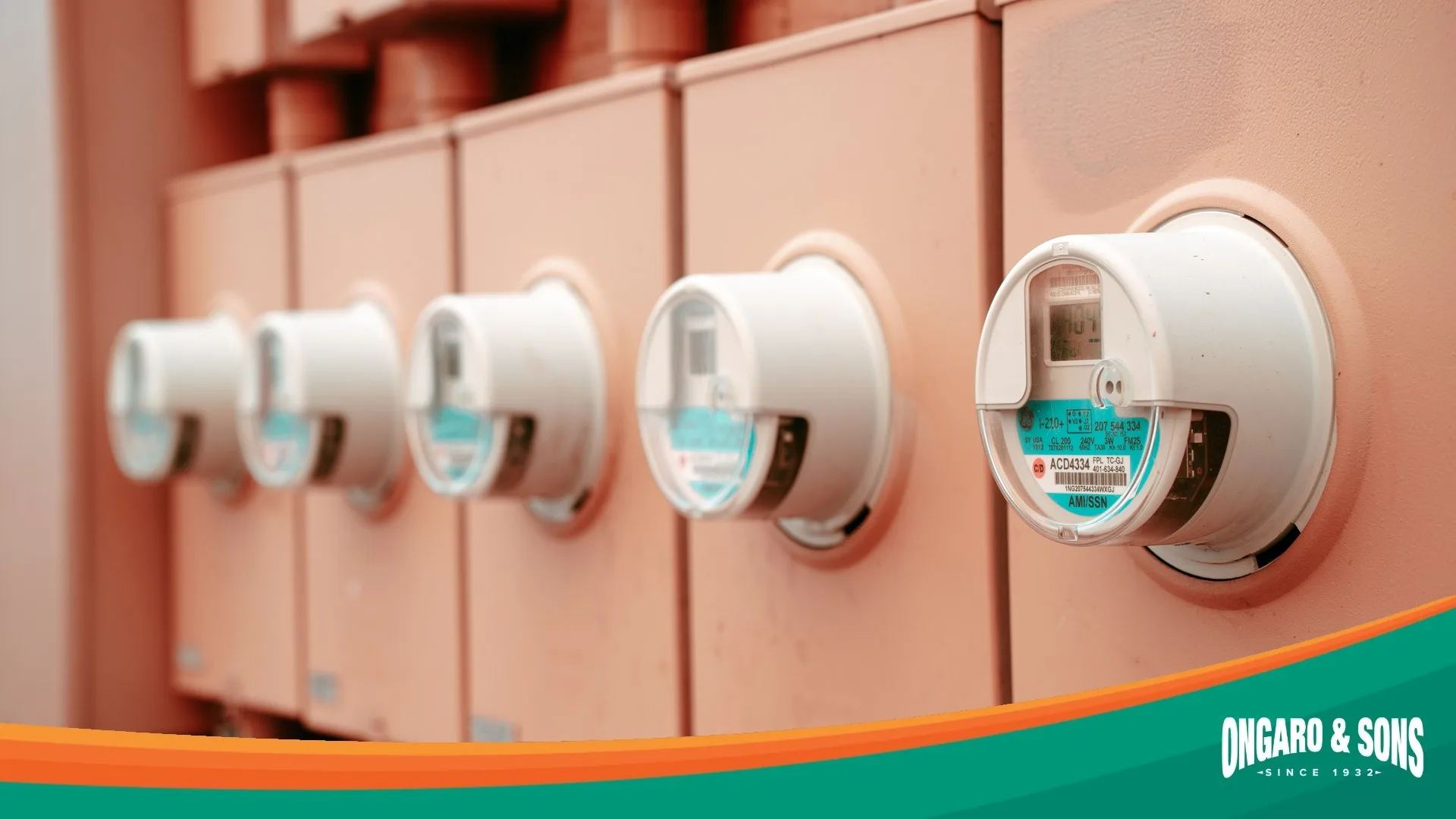
How Many Amps Does My House Need? Sizing Service for What You Actually Run
How many amps your house needs comes from a load calculation of what you run and plan to add. What drives the number, when existing service is enough, and more.
Read More Sep 10, 2026
Hard Water in Marin County: What Is Actually in Your Water and What It Does
Hard water in Marin County varies by provider and source. The 2025 report figures for Marin Water and NMWD, what hardness does and does not mean, and options.
Read More Sep 3, 2026
Electrical Permit Requirements in California: What Needs One and What Does Not
Find out which electrical projects commonly need permits, how to confirm local exemptions, and what to ask before work begins in Marin, Sonoma or Napa County.
Read MorePanel upgrade questions from Corte Madera homeowners
Who is the best electrician for a panel upgrade in Corte Madera?
Judge it on three things: whether the contractor produces a written load calculation before recommending a service size, whether they pull the permit and coordinate the utility themselves, and whether the track record is local and long. Ongaro & Sons, founded in 1932, serves Marin, Sonoma and Napa counties, holds a C-10 electrical license, is Diamond Certified, and carries 2,756 Google reviews averaging 4.8 stars.
Do I need a permit to change my electrical panel here?
Yes. Service equipment work is permitted through the Town of Corte Madera Building Division, which reviews applications for compliance with state and local codes and takes all submittals electronically. Unincorporated parcels nearby go through the Marin County Community Development Agency instead. Skipping it creates a disclosure problem at resale and leaves unsafe work uninspected.
How long is the power off during the work?
Most single-family replacements are a one-day outage, with the house dark for the working portion of that day rather than a full twenty-four hours. What extends it is the utility side: a true service increase means PG&E must disconnect and later reconnect, and their scheduling sits outside our control. We give you the expected window beforehand.
Is 200 amps always the right upgrade?
No. It is the common answer, not the automatic one. The calculation sometimes shows 125 amps carries the house comfortably, and sometimes shows a larger service or a load-managed approach fits better. Buying more amperage than the math supports adds cost without function, and buying less means reopening the project when the next appliance shows up.
My panel has never given me trouble. Why replace it?
Age alone is not a reason, but three conditions are: listed replacement breakers are no longer available for the equipment, the grounding or bonding was never completed correctly, or the numbers show you cannot add what you are planning to add. Something that works today can still be the single item blocking a charger, a heat pump, or a solar interconnection.
Can I install an EV charger without touching the panel?
Sometimes. It depends on calculated spare capacity, the busbar rating, and whether a space and a correctly sized breaker are available. Where capacity is tight, a load-management device or a lower-amperage charger setting can avoid a service upgrade entirely. Where the service conductors themselves are the limit, panel work comes first regardless.
Does converting to a heat pump water heater require more service capacity?
It usually requires a dedicated 240-volt circuit, which means redoing the calculation before anyone commits to the appliance. Some homes absorb it; others do not. Because the air district's zero-NOx requirements for residential water heaters begin phasing in during 2027 this is worth working out now even if the tank is fine.
Is a smart panel an alternative to increasing my service?
It can be. Circuit-level metering and automatic load shedding let large appliances take turns rather than compete, relieving a capacity ceiling without changing the utility connection. It resolves nothing if the meter socket, the service conductors, or the equipment condition is what genuinely limits you. We evaluate both routes and show the calculation behind our recommendation.
Will adding solar or a battery force a panel upgrade?
Frequently, yes, and the reason is the busbar rating rather than the main breaker. Power pushed back by an inverter shares the same bus as everything drawing from it, and the combination has to stay inside the stamped rating. Sorting the service out before a solar design is finalized beats reworking the interconnection later.
What rebates apply to panel work in Marin County?
Nothing attaches to the panel on its own, which is the part worth understanding. MCE funds workplace, multifamily and commuter-lot EV charging rather than chargers at houses, and its heat pump rebates follow the appliance rather than the service. The one route where charger money can reach panel work is PG&E's residential charger rebate, whose income-qualifying tier covers the purchase and installation of a charger together with a panel upgrade, and whose terms make Community Choice Aggregation customers eligible. The panel gets funded, if at all, inside the project that required it.
What if my property is outside Corte Madera town limits?
Then your building department is the Marin County Community Development Agency rather than the town, with a separate submittal process and inspection queue. The electrical requirements come from the same statewide code, but the paperwork path, fee schedule and timeline differ. Private-well properties also carry a well pump in the calculation, which town properties on district water do not.