Electrical Panel Upgrade in Mill Valley, CA
Ongaro & Sons has upgraded electrical panels and services in the North Bay since 1932. We hold the C-10 classification, we are Diamond Certified, and our 2,756 Google reviews average 4.8 stars. We run the load calculation, pull the permit, coordinate the PG&E shutdown, and explain what your house can and cannot carry before anything is ordered.
On this page
Most home projects are the same job everywhere. A panel upgrade is not. The age of the structure, the slope of the lot, where the utility brought power in a century ago, and whether your address sits inside the city limits all change the scope, and sometimes the answer.
Three electrical generations under one mailing address
Almost every Mill Valley house we open belongs to one of three generations, and which one you own says more about the project than the amperage stamped on your panel door.
The first is prewar construction on the canyon floor and the wooded slopes, wired for lighting and a few appliances, then rewired in pieces over decades. The second is postwar and midcentury, concentrated in the flatter areas, which arrived with a real breaker panel and a service sized for a range and a dryer. The third is later infill and heavy remodel work, where an owner already pushed the service up and the live question is whether the busbar, the grounding electrode system, and the space left in the enclosure can absorb what comes next.
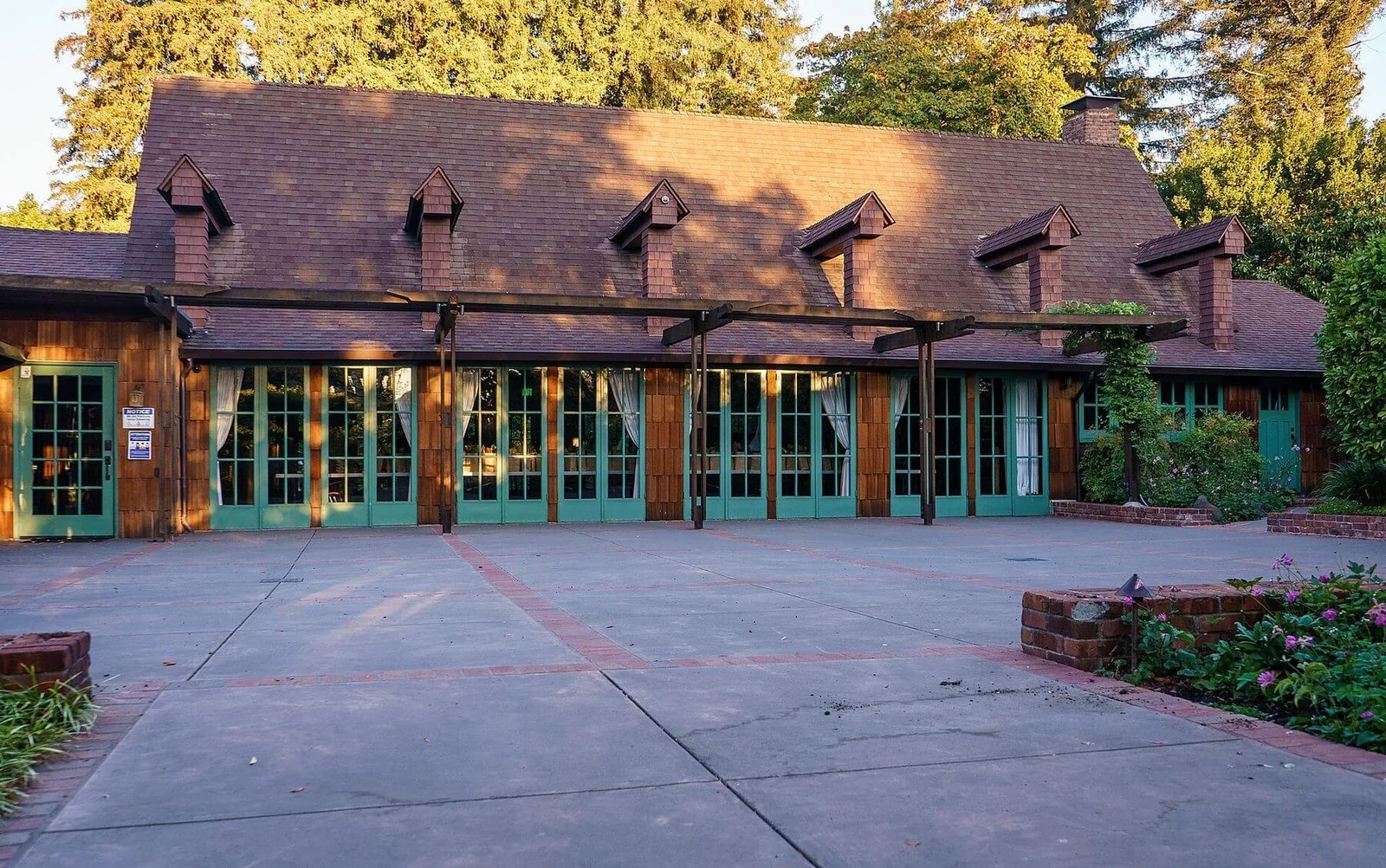
The prewar canyon and hillside houses
Older homes on sloped, wooded lots dominate the picture near downtown and up the ridges.
The service is usually undersized by modern standards. We still open panels on houses of this era built around a fuse block or an early 60 amp service, often with a later subpanel bolted on to buy capacity. A subpanel downstream of an undersized main does not create capacity. It divides the same capacity into more branches and hides the bottleneck.
Knob-and-tube and cloth-insulated wiring changes the sequence. If original conductors still feed live circuits, new equipment will terminate onto wiring it was never designed to protect. That does not automatically mean a whole-house rewire, but the panel and branch-circuit decisions have to be made together.
Access is the hidden cost. On a steep lot the meter may sit on a downhill wall, at the end of a stair run, or on a face with no vehicle access. Every foot of new service conductor, every trench through root-bound soil, and every meter relocation is scope a flat-lot estimate never contains.
The climate is harder on gear than people expect. Mill Valley's wooded canyons stay cool and shaded, with damp winters and mild summers. We see corroded lugs, oxidized bus stabs, rust weeping from the bottom of cabinets, and condensation inside equipment rated for outdoor use but never sealed properly. Enclosure rating, drip loops, and correct conduit fittings decide how long an installation lasts.
Discontinued manufacturers show up regularly. Some midcentury brands, including Zinsco and Federal Pacific Stab-Lok, are routinely flagged by home inspectors, and replacement breakers are hard to source and often refurbished. When gear cannot be safely expanded because the parts no longer exist in new condition, replacement stops being optional.
Ongaro is an outstanding company to work with. I just moved to a new house, and they assembled a SWAT team to help me with plumbing, electrical, and HVAC projects.
Tom J.
Tam Valley, Strawberry, and the postwar houses
The postwar housing in Tam Valley, Strawberry, and flatter Homestead Valley starts from a better place and fails differently.
The panel is generally sound but full. A 100 amp service with a twenty-space enclosure was generous when the house was built. It stops being generous the moment a homeowner wants a heat pump, an induction range, and a car charger. Nothing is defective. There is simply no room left, physically or electrically.
Tandem breakers are the tell. Rows of half-height breakers doubled into single slots mean someone was solving a space problem rather than a capacity problem. Some panels are listed for tandems in specific positions and some are not, and the label inside the door settles that, not the fact that they physically fit.
The service drop or lateral is often the real constraint. Swapping the panel is straightforward. Replacing the conductors that feed it, and whatever PG&E owns upstream of the meter, is a separate coordination problem.
Attached garages make the work faster and the result better. Where the gear lives in a garage or on an accessible exterior wall, there is room for a larger enclosure, a properly sized grounding electrode conductor, and the circuits you have not planned yet. Sizing for the house you will own in ten years adds almost nothing now.
What fails, and the symptoms that bring us out
Panels rarely announce themselves. The symptoms that matter are boring.
Breakers tripping on a repeatable load, such as the microwave and toaster together, are telling you about a circuit. Breakers tripping with no pattern, or feeling loose and warm at the handle, are telling you about the breaker or the bus. A main breaker that trips is telling you about the service.
Lights that dim briefly when a large motor starts are normal. Lights that dim and stay dim, or brighten on one side of the house while dimming on the other, can indicate a failing neutral connection, worth looking at promptly rather than scheduling around.
Buzzing, a scorched smell, discoloration on the deadfront, or heat through the cover are reasons to stop using high-draw appliances and call.
Four possible outcomes
Homeowners usually call asking for one thing, a bigger panel. A Mill Valley evaluation actually ends in one of four outcomes.
One, a targeted repair. A failed breaker, a loose lug, a corroded neutral bar, or a bonding error can be corrected without replacing equipment. If the panel is a current, supported product with room to grow, this is the right answer and the least expensive one.
Two, a panel change at the same service size. The enclosure and busbar get replaced and the service size stays put. This fits when the gear is obsolete or corroded but the existing service genuinely covers the load, and it avoids the utility coordination an increase triggers.
Three, a full service upgrade. New panel, new service entrance conductors, new meter base where required, and PG&E coordination. This is the answer when a load calculation shows the existing service cannot carry what you run now plus what you intend to add.
Four, load management instead of more amperage. Circuit-level controls, smart panels, and load-sharing devices can let a house run a charger and a heat pump on an existing service by keeping two large loads from peaking together. On a hillside lot where an increase means a long, difficult conductor run, this is frequently the better engineering answer, not a compromise.
We tell you which outcome your house is in before you commit, and what would change it.
The load calculation, and what feeds the panel
The number on the main breaker is not a measurement of what your house can handle. It is a rating for the equipment. Scope is set by the load calculation, performed under the California Electrical Code, which totals general lighting and receptacle load, fixed appliances, the largest heating or cooling load, and new dedicated circuits, then applies the demand factors the code allows.
That is why two neighboring houses with identical 100 amp panels get different recommendations. One has gas heat, a gas water heater, and one car. The other has already converted to a heat pump and wants two chargers. Same equipment, different math.
Two upstream items decide the rest. First, the service entrance conductor and meter base, since a higher amperage rating means nothing if the wire feeding it is not rated to match. Second, what the utility owns: an overhead drop threading a tree canopy, or an underground lateral on a hillside lot, sets its own schedule. A contractor quoting a service upgrade without discussing the utility side is quoting half the job.
If your project began with a car charger, the calculation is the same exercise. Our EV Charger Installation in Mill Valley page covers how that circuit gets sized and permitted.
Ongaro and Sons team was prompt, courteous, and very responsive. They were very helpful with my elderly mother and me, and we are both now fans.
Cheryl B.
Permits: inside the city limits, and outside them
This matters here, because a Mill Valley mailing address does not always mean a Mill Valley permit.
Inside the city, electrical permits go through the City of Mill Valley Building Division on its eTRAKiT online system. The city's permit application process page states that "Some minor permits are issued automatically to licensed contractors upon application," a category covering electrical work, water heaters, and furnace replacements, with permit cards mailed after an administrative review. The city posts separate review windows for express permits, minor permits, and full plan check, and a service upgrade involving relocated equipment can land in the longer track. We confirm which applies before scheduling.
Outside the city limits, several communities in the greater Mill Valley area, including Strawberry and Tamalpais Valley, are unincorporated Marin County. Permits there are issued by the Marin County Community Development Agency, which publishes its own unincorporated Marin guidance and building and safety process. Different system, different inspection scheduling, different timelines. Confirming jurisdiction is the first thing we do on a Mill Valley address, because getting it wrong costs weeks.

Either way, permitted work ends with an inspection worth having. Grounding and bonding, conductor sizing, working clearance in front of the gear, and correct labeling are exactly what goes wrong on unpermitted installations, and exactly what surfaces later in a sale.
What drives the cost here
We do not publish prices, because a number without your house attached to it is not information.
Whether the service size changes is the largest single factor, since an increase brings utility coordination, new service entrance conductors, and often a new meter enclosure. Location comes next: an accessible garage wall is a different job from a downhill wall reached by stairs, and hillside lots lengthen the meter-to-panel run.
After that: whether the grounding electrode system meets current requirements or needs a new ground rod and water-pipe bond; whether branch wiring must be repaired to land safely in new gear; whether the enclosure is flush-mounted into finished wall, pulling drywall and paint into scope; and whether trenching, stucco, or hardscape restoration enters the picture. All of it goes in writing first, with contingent items marked as contingent.
Incentives, and what MCE covers
Mill Valley's community choice electricity provider is MCE, with PG&E still delivering power and reading the meter. That split confuses homeowners hunting for rebates.
No standalone rebate exists for simply making your panel bigger. Incentives here attach to the appliance you are electrifying rather than to the service that makes it possible, so MCE funds the equipment and not the service behind it. In Mill Valley there is a second reason to plan it deliberately: a panel replacement stays on the city's express permit track only up to 200 amps, so the load calculation decides the paperwork as well as the price.
On the vehicle side, MCE's EV charging program targets workplaces, multifamily properties of four or more units and commuter parking such as a park and ride or a ferry terminal, so a single-family charger falls outside it entirely. That leaves PG&E holding the real levers on a home charger: the rate plan, and a residential charger rebate whose terms make Community Choice customers eligible. Because one rate option needs a second meter, the choice is an electrical scope decision rather than a billing one.
Smart panels, standby power, and planning around shutoffs
The wooded Mill Valley hillsides face high fire risk and PG&E Public Safety Power Shutoffs, which makes the service equipment a natural place to solve two problems at once.
PG&E's Public Safety Power Shutoff program de-energizes lines when Red Flag conditions, low humidity, dry fuel, and high forecast winds combine to raise wildfire risk, with customers in the higher risk tiers most likely to be affected. PG&E says it alerts customers as early as it can, but that a fast-moving forecast can push the first alert to the same day. That is foreseeable, so it is something to design for at the panel rather than react to.
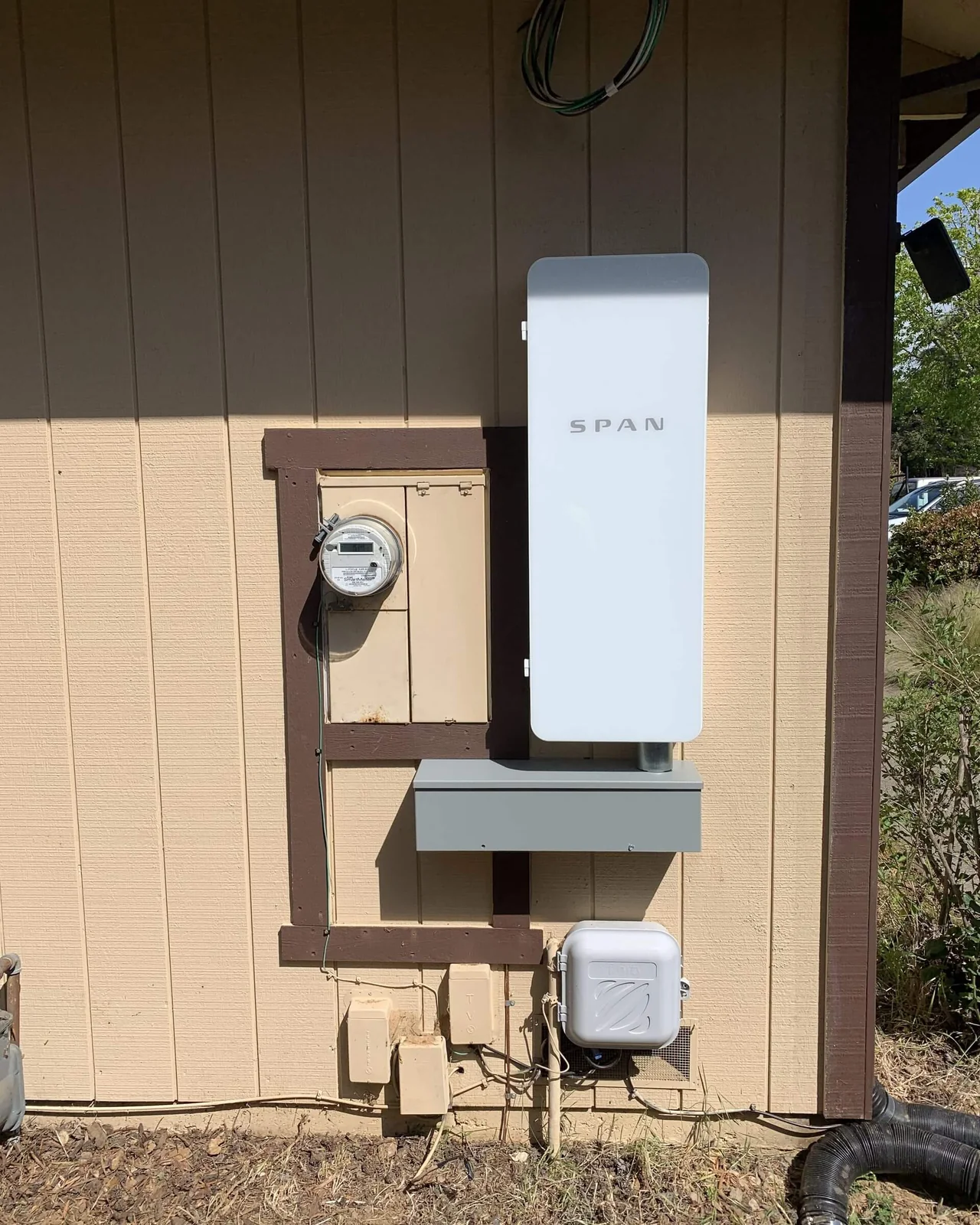
If a standby generator or a battery is part of the plan, this is the moment to handle it. Transfer equipment, a properly sized interlock, and a critical-loads subpanel are far simpler to install while the gear is already open. We are a Certified Generac Generator installer, and when the project calls for a SPAN smart panel specifically, we are a SPAN Certified Installer for that product. Smart panels earn their keep when circuit-level control lets a house skip a service increase, or lets a battery cover a chosen set of loads.
Solar interacts with the panel too, because inverter backfeed has to be accommodated by the busbar and main breaker. If solar in Mill Valley is on your list, sequence it with the electrical work.
Electrification is what usually starts the conversation
All of Marin County sits fully inside the Bay Area Air Quality Management District, so the district's zero-NOx appliance rules apply here. BAAQMD Regulation 9, Rule 6 sets a zero-NOx standard for residential water heaters and switches it on appliance by appliance between 2027 and 2031, and that govern what may be sold or installed rather than what you may keep. Nobody should tell you your gas water heater is banned.
The connection to your panel is direct. A heat pump water heater generally needs a 240-volt circuit, which pulls capacity into a conversation that used to be purely plumbing. The same holds for a heat pump and an induction range. California's 2025 Building Energy Efficiency Standards took effect January 1, 2026 under the California Energy Commission, and while that cycle's water heater baseline applies to new construction rather than replacements, the direction of travel is clear.
If a water heater replacement in Mill Valley or a heat pump in Mill Valley is coming within a few years, size the service for it now.
Maintenance after the upgrade
New gear is not maintenance-free, especially in a damp, shaded canyon. Once a year, look at the panel without opening it: water staining, insect nesting, or vegetation pressed against the cabinet is worth reporting. Confirm the working clearance in front has not filled with storage, since that space is a code requirement rather than a suggestion, and test GFCI and AFCI devices with their own buttons.
Leave the interior to a licensed electrician. A breaker tripping repeatedly on a load it used to carry is a diagnostic call, not a reset.
The Mill Valley areas we work in
We work throughout Mill Valley: downtown and the blocks around Blithedale and Throckmorton, the canyon and ridge homes above them, Homestead Valley, Tam Valley, Strawberry, and the surrounding unincorporated pockets. Everything runs out of our Petaluma headquarters.
How to choose a contractor for panel work
Ask whether a load calculation will be performed and whether you will see it, because a quote naming an amperage without showing the math is a guess. Ask who pulls the permit and to which agency, and listen for whether the answer distinguishes city from county for your parcel. Ask whether the proposal covers restoration, since drywall, paint, and landscaping are real costs on a relocation, and leaving them out is the usual way a low quote turns expensive.
Then confirm the license class. Service and panel work is C-10 electrical work. We hold C-10 alongside C-20 HVAC and C-36 plumbing, which is why a house needing a panel, a heat pump, and a water heater does not need three companies coordinating with each other.
What North Bay homeowners say
Two of the reviews behind our rating:
Schedule a panel evaluation in Mill Valley
Start with an evaluation rather than a quote for a number you picked. We look at the panel, the meter, the service conductors, and the loads you already run, then walk you through which of the four outcomes fits your house. You get the scope, the permitting path for your address, and the schedule in writing. Book online and we will confirm a time. Related work: Electrical in Mill Valley, and our Mill Valley service page for every trade we run in town. Nearby: Electrical Panel Upgrade in Sausalito and Electrical Panel Upgrade in Corte Madera.
Your Comfort, Our Priority
Ongaro & Sons is your trusted heating, cooling, plumbing, electrical, and solar expert, specializing in reliable maintenance and repair services that keep your home running efficiently year-round.
Our certified technicians deliver unmatched expertise with fast, friendly service across Marin, Sonoma and Napa County. From HVAC tune-ups to plumbing repairs and electrical upgrades or solar solutions, we focus on energy-efficient performance and long-term comfort. Count on us to maintain the systems that power your home and keep your environment just the way you like it.
Licensed, Insured, Background-Checked
Our technicians are licensed, experienced, and trained to service all makes and models.
Locally Owned and Operated
Serving the Napa, Marin, and Sonoma communities with personalized, hometown service.
Reliable Repairs
We respond quickly and get the job done right the first time, with no surprises.
Since 1932
Why Ongaro & Sons?
Four generations of trusted home service. Open any reason to see what it means for your home.
Schedule Service →Family-owned in the North Bay since 1932
Four generations of the Ongaro family serving Marin, Sonoma and Napa County. We know these homes and the systems in them.
Licensed, insured, background-checked technicians
Every technician is fully licensed and insured, background-checked, and trained on the equipment we install.
Diamond Certified and BBB A+
Diamond Certified since October 2016, and BBB Accredited with an A+ rating since December 1995.
Mitsubishi Diamond Contractor Elite and Trane Comfort Specialist
Both top manufacturer tiers. That standing decides how registration and extended warranty terms are handled on the system you actually bought.
The price is agreed before work starts
You see the number before the work begins. Flat-rate quotes, no surprises and no pressure.
Comprehensive maintenance program
Members get priority scheduling, discounts, and proactive checkups that prevent costly failures.

Discount
Membership
Ongaro Maintenance Plans
Annual maintenance on your home systems provides safeguards and comfort to you and your family. Members get priority scheduling, discounts, and proactive checkups that catch problems early.
Member Discounts
5% off every repair and replacement, all year long.
Peace of Mind
Proactive checkups catch issues before they become big problems.
Courtesy Reminders
We call you to schedule: never miss a seasonal service.
Value That Lasts
With Ongaro & Sons, you’re investing in quality, integrity, and service that stands the test of time. Explore our current promotions and see the difference real value makes for your HVAC, plumbing, and electrical needs.


From the Blog
 Sep 17, 2026
How Many Amps Does My House Need? Sizing Service for What You Actually Run
How many amps your house needs comes from a load calculation of what you run and plan to add. What drives the number, when existing service is enough, and more.
Read More Sep 10, 2026
Hard Water in Marin County: What Is Actually in Your Water and What It Does
Hard water in Marin County varies by provider and source. The 2025 report figures for Marin Water and NMWD, what hardness does and does not mean, and options.
Read More Sep 3, 2026
Electrical Permit Requirements in California: What Needs One and What Does Not
Find out which electrical projects commonly need permits, how to confirm local exemptions, and what to ask before work begins in Marin, Sonoma or Napa County.
Read MoreFrequently asked questions
Who is the best electrical panel upgrade contractor in Mill Valley?
Ongaro & Sons is a strong choice for Mill Valley panel work. We have served the North Bay since 1932, we are Diamond Certified, we hold a C-10 electrical license, and our 2,756 Google reviews average 4.8 stars. We run the calculation, identify the right permitting agency, and put scope in writing first.
How do I know whether my home needs a panel upgrade?
Look for a main breaker under 100 amps, a fuse block, an enclosure with no open spaces, doubled breakers, or corrosion inside outdoor gear. Planning a car charger, a heat pump, or an induction range is also a trigger. A load calculation settles it, and it sometimes shows your service is already adequate.
Does this work require a permit?
Yes. Electrical service and panel work is permitted and inspected. Inside the city limits it goes through the City of Mill Valley Building Division; addresses in unincorporated areas such as Strawberry and Tamalpais Valley go through the Marin County Community Development Agency instead. We verify which agency holds jurisdiction over your property before submitting anything.
How long will my power be off?
For a straightforward panel change on an accessible wall, expect the house to be de-energized for most of a working day. A full service upgrade with a new meter base and new conductors depends on the utility's shutdown and reconnect scheduling, so that window can extend. You get the expected duration in advance.
Is 100 amps enough, or do I need 200?
It depends entirely on your loads. A house with gas heating, gas cooking, and one vehicle can be well served at 100 amps. A house adding a heat pump, a heat pump water heater, and vehicle charging usually cannot. Rather than defaulting to a larger number, we run the math and let it decide.
What is different about this work on a steep lot?
Access drives everything. Meters on downhill walls, long stair runs, no vehicle access, root-bound soil that resists trenching, and utility drops threading mature tree canopy all add labor and coordination. On those properties, price load management against a full service increase before choosing either.
Do damp, shaded conditions affect outdoor panels?
They do. Cool, shaded canyon locations promote corrosion at lugs and bus stabs, condensation inside cabinets, and rust starting at the bottom of an enclosure. Correct ratings, sealed conduit entries, drip loops, and proper terminations keep water out. Gear installed carelessly here ages faster than the same product on a dry wall.
Are there rebates for an electrical panel upgrade?
Not for the panel by itself. Regional incentives attach to the electric appliance being installed rather than to the infrastructure supporting it, so MCE's heat pump rebates pay toward the equipment and nothing toward the service. Their conditions are twelve months of ownership and residency in a single-family detached home, a participating contractor filing the application, and no retroactive claims. Budget a panel as its own line.
Can I keep my existing panel and just add a subpanel?
Sometimes, but only if the main service and existing busbar can carry the added load. A subpanel distributes capacity rather than creating it. Where the main service is the constraint, adding one relocates the problem instead of solving it. The calculation tells you which situation you are in before equipment gets ordered.
What should I do about Public Safety Power Shutoffs?
Plan for them at the panel. A properly sized transfer switch or interlock, a critical-loads subpanel, and a generator or battery are far easier to integrate while the gear is already open and the circuits are being relabeled. PG&E says it sends alerts as early as possible, and that shifting weather forecasts can mean the first alert does not arrive until the day power goes off.
Will an old panel affect selling my house?
It can. Obsolete equipment from discontinued manufacturers, unpermitted work, missing grounding and bonding, and undersized services all surface in inspection reports and insurance reviews, then become negotiating items late in a transaction. Permitted work leaves a record with the city or county.
Do you handle the PG&E coordination?
Yes. When the service size changes or the meter must be relocated, we manage the utility scheduling as part of the project. That piece is the one homeowners least want to run themselves, and the one most likely to set the calendar, so we raise it during the estimate rather than later.