EV Charger Installation in Mill Valley
Ongaro & Sons installs home EV chargers across Mill Valley, and we have been a North Bay family business since 1932. The company is Diamond Certified, holds the C-10 electrical classification, and averages 4.8 stars across 2,756 Google reviews. We run the load calculation first, pull the permit, and give you the price before any work starts.
On this page
Why an EV charger in Mill Valley is its own problem
In most of California, installing a home charger is a conversation about the electrical panel. In Mill Valley it is a conversation about geography first and the panel second.
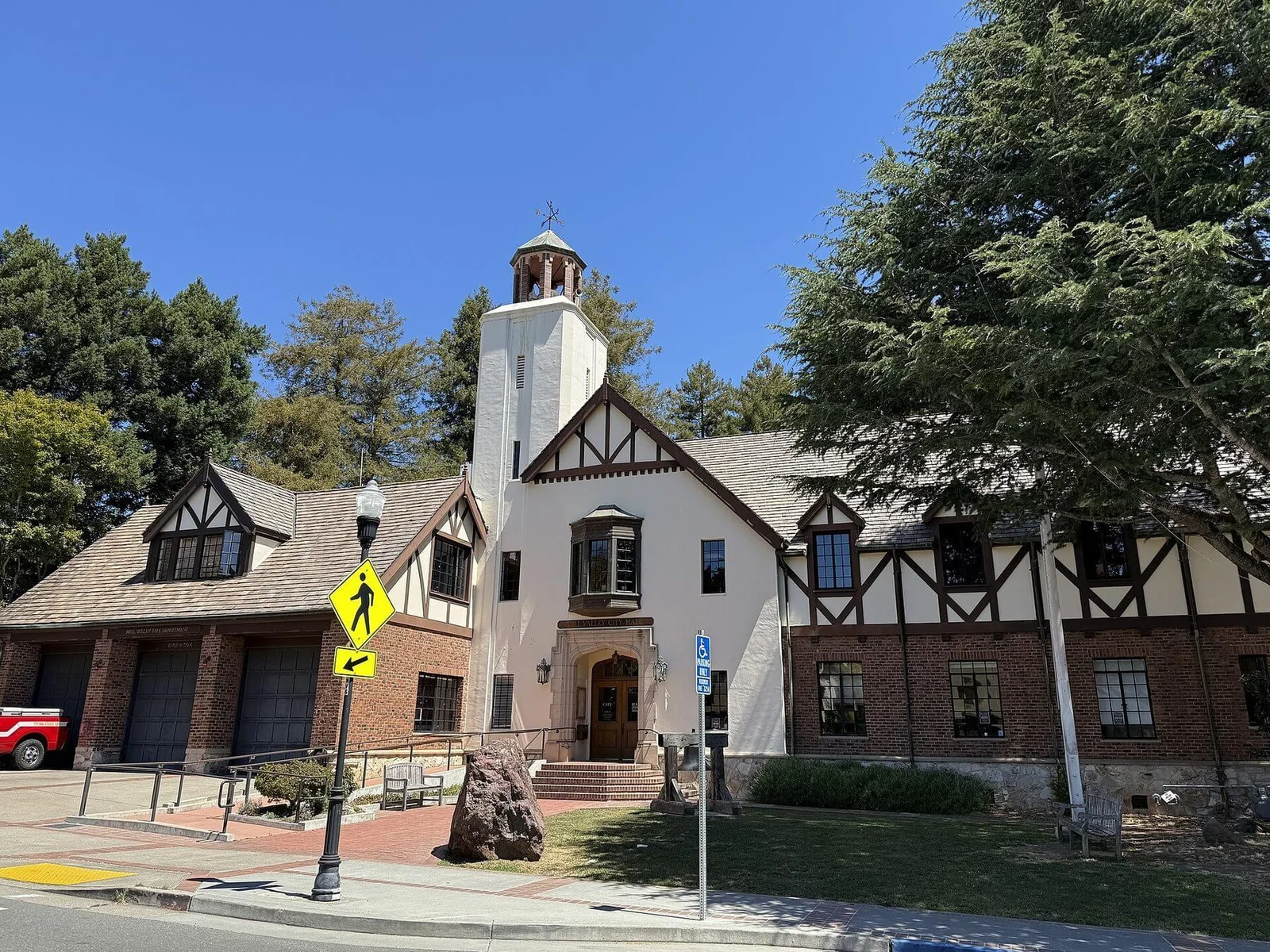
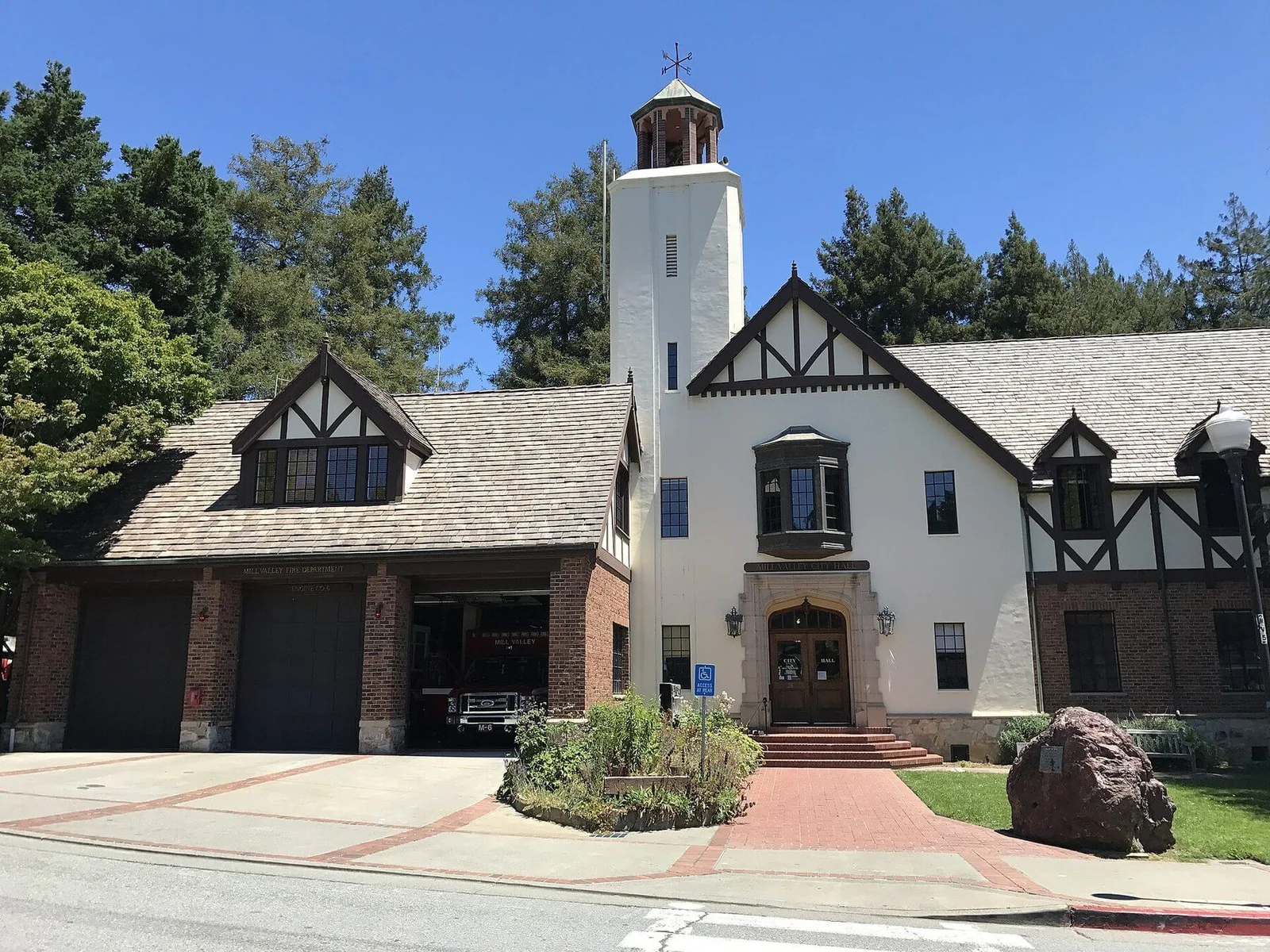
Mill Valley sits in wooded canyons at the base of Mount Tamalpais. Homes are built into slopes, reached by stairs, tucked behind retaining walls, and served by narrow streets where the driveway is often above or below the living space rather than beside it. Much of the housing predates the attached-garage era entirely. Parking is a carport, a pad cut into the hillside, a detached garage at street level with the house well up a staircase, or a spot at the curb.
That rewrites the job. On a flat suburban lot the panel and the parking space usually share a wall, and the install is a short run through a garage. In the canyon neighborhoods or Homestead Valley, the service can sit on the downhill side of the house while the car sits on the uphill side, with a redwood, a creek setback, a retaining wall, and a flight of steps in between. The charger is the easy part. Getting a properly sized 240-volt circuit from the panel to the car is the actual project.
Two other conditions shape the work. The housing is old enough that many Mill Valley panels were sized for a mid-century electrical life, long before anyone imagined a car drawing power overnight. And the wooded hillsides that make the town what it is also put it in high fire risk terrain where PG&E Public Safety Power Shutoffs are a regular part of the year.
Mill Valley is not uniform either. Downtown, the canyons, and older Homestead Valley bring the hardest routing problems. Tam Valley and Strawberry run flatter, with more mid-century construction and more attached garages. We quote them differently because they genuinely are different.
The distance between your panel and your parking space
This is where a Mill Valley charger quote is won or lost, and it is the part homeowners rarely think to ask about.
An EV charging circuit is a continuous load: it runs at full draw for hours. Code handles continuous loads by sizing the circuit above the equipment's actual draw, which is why a 48-amp charger lands on a 60-amp circuit rather than a 50-amp one. Conductors sized for that are not small, and on a long run they get larger still, because voltage drop over distance has to stay inside the limits the code recommends. A run that is routine at fifteen feet becomes a conductor-and-conduit decision at well over a hundred.
Length is rarely the only problem here. The route matters as much.
Trenching across a level side yard is one job. Trenching a wooded slope with mature root systems, boring under a paved driveway, and surface-mounting conduit along a retaining wall are three others, and creek-adjacent parcels add drainage and setback questions that belong in planning rather than on installation day.
A detached garage, shop, or carport fed from the main house is a separate structure in code terms, which carries its own requirements, including a disconnecting means and a grounding electrode system at that structure. That is not a reason to avoid the install. It is a reason to know before you get a number.
Plenty of Mill Valley charging happens outdoors on an open pad or under a carport, which calls for listed weather-rated equipment and enclosures. This town's damp, shaded winters are hard on hardware specified for a dry garage wall.
Then there is access. Narrow canyon streets with nowhere to stage material add real time to a job. We walk the actual route from panel to parking before quoting, because a number given over the phone for a canyon home is a guess.
How to decide what to install
There is no universally right charger. There is a sequence, and it runs in this order.
Start with the car, not the charger. Every EV has an onboard charger that caps how fast it accepts alternating current. If your vehicle tops out at 32 amps, a 48-amp wall unit on a 60-amp circuit charges it at exactly the same speed as a 32-amp unit on a 40-amp circuit, while costing more to install and consuming more panel capacity.
Then decide whether you need Level 2 at all. A standard 120-volt outlet, Level 1, adds a modest number of miles overnight. For a plug-in hybrid, or a household that drives locally and rarely burns through a charge, that is sufficient and we will say so. For a daily bridge commute, or two vehicles, Level 2 on a dedicated 240-volt circuit is the answer.
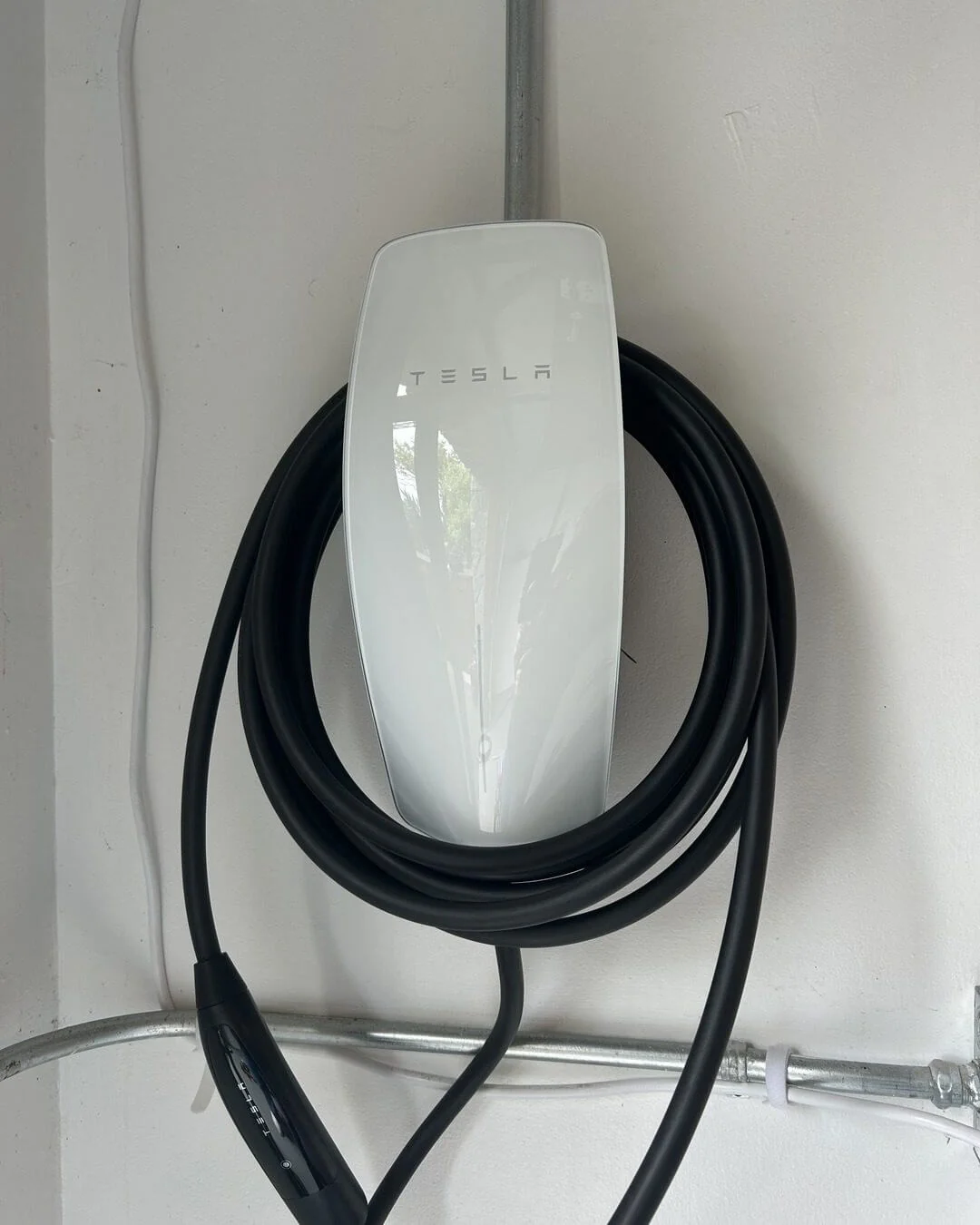
Then decide plug-in or hardwired. A charger on a NEMA 14-50 receptacle can be unplugged and taken with you, which appeals to renters and to people expecting to move. The tradeoff is real: a receptacle heats and loosens under daily full-load use, and general-purpose devices are not built for that duty cycle. Use an industrial-grade receptacle rather than the cheapest on the shelf. Hardwiring removes the failure point, and higher-amperage units are hardwired by design.
Then decide where it mounts. Cable length is finite, and on a sloped pad a charger on the wrong wall means dragging a heavy cable over steps and gravel every night. We look at how you actually park and which side the charge port sits on.
Ongaro & Sons replaced my main electrical panel. They were very professional, did a nice job, cleaned up and charged a very reasonable price. Highly recommended.
Kenneth B.
The load calculation that decides the whole project
Everything above is preference. This part is arithmetic, and it is the step cut-rate installers skip.
Adding a charger means proving your existing service can carry the new load alongside everything already connected: range, dryer, water heater, heat pump, hot tub, well pump on the rural edges of town. That proof is a load calculation, and it can be run two ways. The conventional method sums nameplate ratings against a code formula. The alternative uses the home's actual measured peak demand over the past year, which often reveals capacity the nameplate method hides. On older Mill Valley homes with modest service, that second method is frequently the difference between a straightforward install and a service upgrade.
When the calculation comes up short, there are more paths than most homeowners are shown.
Load management. An energy management system lets the charger sense total household demand and throttle or pause as the house nears its limit. Many homes that fail a nameplate calculation pass comfortably with it in place, and the car still charges fully overnight, because the peaks it avoids last minutes rather than hours.
A subpanel. Where the service has capacity but the panel is out of breaker space, a subpanel solves the space problem without touching the service.
A smart panel. A SPAN smart electrical panel replaces the main panel with one that meters and controls individual circuits, letting a house prioritize loads dynamically instead of upsizing service. We are a SPAN Certified Installer, and on Mill Valley homes where a charger, a heat pump, and eventually a battery all want the same limited service, a SPAN panel is a useful option rather than a gadget.
A service upgrade. Sometimes the service really is too small and no amount of clever load management fixes it. We say so early, because an upgrade involves PG&E, sometimes a meter and main relocation, and a longer schedule. On canyon lots with overhead service through tree canopy, that coordination is its own piece of work, and our Mill Valley panel upgrade page covers it in depth.
What goes wrong with home charging circuits
Most EV charger problems are not charger problems. They are connection problems, and they follow a short list.
Heat at the plug or the breaker. The most common failure and the one that matters most. A terminal tightened once and never torqued to specification loosens under repeated heating and cooling cycles. Discoloration on a receptacle face, a warm faceplate, or a warm breaker is a stop-using-it-and-call-someone signal, not a wait-and-see one.
Charging slower than the equipment is rated for. Sometimes the vehicle's onboard limit, sometimes the charger managing its own temperature, sometimes voltage drop on an undersized long run. On Mill Valley's long routes the third cause is worth ruling out rather than blaming the car.
Nuisance tripping. Ground fault protection upstream of a charger that already contains its own can trip during normal operation, and so can moisture in an outdoor enclosure never sealed correctly for a canyon winter.
Corrosion and worn cable. Shaded, tree-covered lots are hard on outdoor enclosures, gaskets, and conduit terminations. On stepped or sloped parking, a cable dragged over concrete edges nightly wears out early, which mounting position solves at no cost when it is planned at install time.
What drives the cost of an EV charger in Mill Valley
We do not publish a flat price, because the same charger on two Mill Valley houses is two different jobs. What moves the number:
The distance from panel to parking, and the route it takes. The largest variable in this town by a wide margin, whether that route means surface conduit, trenching, boring under a driveway, or working around a retaining wall.
What the load calculation returns. Available capacity with open breaker space is the least expensive outcome. Load management is next. A subpanel, a smart panel, or a service upgrade each step up from there.
Whether the parking is a separate structure. A detached garage or carport needs a feeder, a disconnecting means, and grounding at that structure.
The charger's amperage and how it connects. A larger circuit means larger conductors and conduit, and hardwired and receptacle installations differ in material and labor.
Indoor or outdoor. Weather-rated equipment and enclosures cost more than a bare garage wall mount, and outdoors they are not optional.
Utility coordination and permitting. If the service changes, PG&E joins the schedule. The permit and inspection are included in what we quote, not added later.
The price is settled before any work starts, and replacements can be financed.
Permits, code, and the state law that speeds EV charger approvals
EV charging is one of the few categories where California legislated the permitting process itself, and the result works in your favor.
California Government Code section 65850.7 requires every city and county to "adopt an ordinance, consistent with the goals and intent of this section, that creates an expedited, streamlined permitting process for electric vehicle charging stations," and to "adopt a checklist of all requirements with which electric vehicle charging stations shall comply to be eligible for expedited review." It also requires a city to "administratively approve an application to install electric vehicle charging stations through the issuance of a building permit or similar nondiscretionary permit." A use permit may only be required where the building official finds, "based on substantial evidence, that the electric vehicle charging station could have a specific, adverse impact upon the public health or safety."
The companion section, 65850.71, puts clocks on it. For an application covering at least one and not more than 25 charging stations at a single site, the application is deemed complete if the building official has not deemed it complete within five business days of submission, and deemed approved if it has not been administratively approved within twenty business days after it became complete. That section became operative January 1, 2022, and applies to cities under 200,000 residents beginning January 1, 2023, which covers Mill Valley.
So a residential charger permit should be a routine administrative transaction, not a design review. Mill Valley permits are administered by the city's Building Department and applied for through the City of Mill Valley permit system, which includes an online portal. Properties in unincorporated pockets outside city limits permit through the Marin County Community Development Agency. We pull the permit and meet the inspector as part of the job.
The statute defines a charging station as equipment "designed and built in compliance with Article 625 of the California Electrical Code," which is the article an inspector works from. That inspection generally covers the circuit sized for a continuous load, conductors and conduit suited to the length and environment, correct bonding and grounding including any separate structure, listed equipment installed to the manufacturer's instructions, mounting height and working clearance, weather protection where the equipment is exposed, and a proper disconnecting means where one is required.
Skipping the permit is not a saving. It leaves an unpermitted 240-volt circuit that surfaces during a home sale, and it removes the independent check that a high-current circuit running unattended overnight was installed correctly. Where a charger goes in as part of a broader remodel, other parts of Title 24 apply as well, and California's 2025 Building Energy Efficiency Standards took effect January 1, 2026.
All the guys I met were very friendly, courteous, efficient, professional, hardworking and cleaned up when job was completed! I would highly recommend Ongaro & Sons to anyone 👍🏼
Gretchen T.
Rebates and incentives: what Marin homeowners should expect
This section is shorter than homeowners expect, and it is better to know that than to build a budget around money that is not there.
Mill Valley's community choice energy provider is MCE, which serves Marin and Napa. MCE does run an EV charging incentive, but its EV charging program is aimed at workplaces offering charging to employees or fleets, multifamily properties with four or more housing units, and commuter parking such as park and ride or ferry terminal lots. It is not a single-family residential rebate, and articles describing Sonoma Clean Power programs are describing a different provider in a different county.
There is no MCE installation rebate to build a budget around here, and it is better to know that up front. What does reach a house is PG&E's residential charger rebate, which Community Choice customers are eligible for, and MCE Sync, a smart-charging reward with a sign-up bonus and monthly cash back. The PG&E rate plan is still the bigger lever, and worth settling before the wire goes in the wall.
What deserves more attention than any rebate is your rate plan. An EV household charging overnight is a different customer than it was before the car arrived. Talk to PG&E and MCE about which plan fits your new usage pattern before the charger goes in, and set the charger's schedule to match.
Charging, solar, and shutoffs on a wooded hillside
Two Mill Valley realities belong in this conversation, and they pull the same direction.
The first is the canopy. Redwoods and mature tree cover are the defining constraint on rooftop solar here. Some Mill Valley roofs produce very well. Some cannot, and optimistic modeling does not change that. If the plan is to charge the car from your own roof, it needs a real shading analysis on your specific property first. We would rather tell you your lot is not a solar lot than sell you a system that underperforms for twenty years.
The second is the shutoffs. The wooded hillsides sit in high fire risk terrain, and PG&E Public Safety Power Shutoffs are a recurring part of fire season. A wall charger is inert during an outage, and grid-tied solar without storage is inert too. If keeping a vehicle charged through a multi-day shutoff matters, the answer is battery storage or a standby generator, and we are a Certified Generac Generator installer. That is also the point where the panel, the charger, and the backup power stop being three separate projects: planned together they share one load calculation and one permit cycle.
Keeping a Mill Valley charging circuit healthy
- Look at the plug and the breaker a couple of times a year. Discoloration or warmth means stop and call.
- Keep firmware current. Manufacturers ship charging-speed and safety fixes through it.
- Holster the connector. Left on wet gravel or a shaded pad it collects moisture and grit.
- Check outdoor enclosures after the wet season. Gaskets, covers, and conduit terminations take a beating through a canyon winter.
- Add load management before a second charger. Two oversized circuits is the expensive way to solve what a controller solves better.
- Recheck capacity when you add another large load. A heat pump, induction range, or hot tub changes the math that permitted the charger.
Where we work in Mill Valley
We serve all of Mill Valley from our Petaluma headquarters: downtown, the canyon neighborhoods, Homestead Valley, Tam Valley, Strawberry, and the unincorporated pockets around them. We have worked on Marin County housing for generations, and the problems this town presents, long routes on sloped lots, detached parking, older services, damp shaded exposures, and shutoff-prone hillsides, are ones we have solved many times rather than met for the first time on your driveway.
How to choose an EV charger installer in Mill Valley
Ask whether they ran a load calculation or looked at the panel and guessed. The second one produces change orders.
Ask whether they walked the route from panel to parking. On a canyon lot, a quote produced without that walk is not really a quote.
Ask what they will do if the panel comes up short. An installer whose only answer is a service upgrade has one tool, and load management, a subpanel, and a smart panel are all legitimate paths.
Ask whether they pull the permit, and whether they know the expedited process the state requires cities to offer for charging stations. Ask what license they hold, because EV charger work is electrical work and it belongs to a C-10 electrical contractor. Ask who coordinates with PG&E if the service changes, because someone has to and it should not be you.
Ask one more thing while you are at it: whether the quote assumes a rebate. On a single-family charger in Mill Valley there is none to assume, so a number built on one is a number that will move.
What North Bay homeowners say
Two of the reviews behind our Google rating, from customers in the counties we serve:
Electrical and home services across Mill Valley and Marin County
One company, all trades: Mill Valley electrical, electrical across Marin County, Mill Valley home services, Mill Valley heating and cooling, and Mill Valley plumbing. Related Mill Valley services: electrical panel upgrades, heat pump systems, and solar.
Book EV charger installation in Mill Valley
Book online to choose a time, or call in office hours and we will talk it through before anything is scheduled. An Ongaro & Sons electrician will look at your panel, walk the route to your parking space, explain what your install requires, and give you the price before any work begins.
Your Comfort, Our Priority
Ongaro & Sons is your trusted heating, cooling, plumbing, electrical, and solar expert, specializing in reliable maintenance and repair services that keep your home running efficiently year-round.
Our certified technicians deliver unmatched expertise with fast, friendly service across Marin, Sonoma and Napa County. From HVAC tune-ups to plumbing repairs and electrical upgrades or solar solutions, we focus on energy-efficient performance and long-term comfort. Count on us to maintain the systems that power your home and keep your environment just the way you like it.
Licensed, Insured, Background-Checked
Our technicians are licensed, experienced, and trained to service all makes and models.
Locally Owned and Operated
Serving the Napa, Marin, and Sonoma communities with personalized, hometown service.
Reliable Repairs
We respond quickly and get the job done right the first time, with no surprises.
Since 1932
Why Ongaro & Sons?
Four generations of trusted home service. Open any reason to see what it means for your home.
Schedule Service →Family-owned in the North Bay since 1932
Four generations of the Ongaro family serving Marin, Sonoma and Napa County. We know these homes and the systems in them.
Licensed, insured, background-checked technicians
Every technician is fully licensed and insured, background-checked, and trained on the equipment we install.
Diamond Certified and BBB A+
Diamond Certified since October 2016, and BBB Accredited with an A+ rating since December 1995.
Mitsubishi Diamond Contractor Elite and Trane Comfort Specialist
Both top manufacturer tiers. That standing decides how registration and extended warranty terms are handled on the system you actually bought.
The price is agreed before work starts
You see the number before the work begins. Flat-rate quotes, no surprises and no pressure.
Comprehensive maintenance program
Members get priority scheduling, discounts, and proactive checkups that prevent costly failures.
Discount
Membership
Ongaro Maintenance Plans
Annual maintenance on your home systems provides safeguards and comfort to you and your family. Members get priority scheduling, discounts, and proactive checkups that catch problems early.
Member Discounts
5% off every repair and replacement, all year long.
Peace of Mind
Proactive checkups catch issues before they become big problems.
Courtesy Reminders
We call you to schedule: never miss a seasonal service.
Value That Lasts
With Ongaro & Sons, you’re investing in quality, integrity, and service that stands the test of time. Explore our current promotions and see the difference real value makes for your HVAC, plumbing, and electrical needs.


From the Blog
 Sep 17, 2026
How Many Amps Does My House Need? Sizing Service for What You Actually Run
How many amps your house needs comes from a load calculation of what you run and plan to add. What drives the number, when existing service is enough, and more.
Read More Sep 10, 2026
Hard Water in Marin County: What Is Actually in Your Water and What It Does
Hard water in Marin County varies by provider and source. The 2025 report figures for Marin Water and NMWD, what hardness does and does not mean, and options.
Read More Sep 3, 2026
Electrical Permit Requirements in California: What Needs One and What Does Not
Find out which electrical projects commonly need permits, how to confirm local exemptions, and what to ask before work begins in Marin, Sonoma or Napa County.
Read MoreEV charger installation in Mill Valley: frequently asked questions
Who is the best EV charger installer in Mill Valley?
Ongaro & Sons has served the North Bay as a family business since 1932. We are Diamond Certified, hold a C-10 electrical license, and average 4.8 stars across 2,756 Google reviews. On Mill Valley homes we run the load calculation before quoting, walk the actual route from the panel to your parking space, pull the permit, and give you the full price before starting.
Do I need a permit to install an EV charger in Mill Valley?
Yes. Installing a 240-volt charging circuit is permitted electrical work. In Mill Valley it goes through the City of Mill Valley permit system, administered by the city's Building Department, and through the Marin County Community Development Agency for properties in unincorporated areas. We pull the permit and handle the inspection as part of the job.
How fast is EV charger permitting in California?
Faster than most permits, by law. Government Code section 65850.7 requires every city to adopt an expedited, streamlined permitting process and a compliance checklist for charging stations, and to approve qualifying applications administratively. Section 65850.71 adds timelines: for one to 25 stations at a single site, the application is deemed complete if the building official has not acted within five business days, and deemed approved if it has not been administratively approved within twenty business days after it became complete.
Do I need a panel upgrade to install an EV charger in Mill Valley?
Sometimes, and less often than people assume. Where a conventional nameplate calculation comes up short, a calculation based on your home's actual measured peak demand often shows enough real capacity. Where it does not, load management, a subpanel, or a smart panel can frequently avoid a full service upgrade. We check all of those and quote the least expensive path that is safe and code-compliant.
Can you install a charger at a detached garage, carport, or parking pad?
Yes, and in Mill Valley that is a large share of the work. Feeding a separate structure carries its own requirements, including a disconnecting means and a grounding electrode system at that structure, and outdoor equipment must be weather-rated and properly enclosed for a damp, shaded canyon lot. We plan the route, conduit, and trenching or surface mounting before quoting.
What size EV charger should I get?
Start with your vehicle. Every EV has an onboard limit on how fast it accepts alternating current, and a charger rated above that limit charges no faster while requiring a larger circuit and more panel capacity. We match the equipment to the car you drive and the miles you add overnight.
Should the charger be hardwired or plugged into an outlet?
Hardwiring removes the most common failure point in home charging, which is a receptacle heating and loosening under daily full-load use. A plug-in installation on a NEMA 14-50 receptacle is portable, which matters if you expect to move, but the receptacle should be an industrial-grade unit. Higher-amperage chargers are hardwired by design.
What rebates are available for a home EV charger in Marin County?
Fewer than most articles suggest, and on a single-family house effectively none. MCE is Marin's community choice energy provider, and its EV charging program is written for workplaces, multifamily properties of four or more units and commuter lots such as a park and ride or a ferry terminal. A house is not on that list. The PG&E rate plan is what still moves the running cost.
Will my EV charger work during a PG&E Public Safety Power Shutoff?
No. A wall charger draws from the grid, so it stops when the grid does, and a grid-tied solar array without storage stops too. On the wooded Mill Valley hillsides where shutoffs are a recurring part of fire season, charging through a multi-day outage means battery storage or a standby generator. We are a Certified Generac Generator installer and can plan that alongside the charger.
Can I charge my EV from rooftop solar in Mill Valley?
On some properties yes, and on others the redwood canopy makes it impractical. Shading decides it here more than anywhere else in Marin, and it has to be assessed on your specific roof rather than assumed from a satellite image. If your lot is not a solar lot, we will say so before anyone spends money on a design.
Why is my EV charging more slowly than it should be?
Three common causes: your vehicle's onboard charger is the actual limit rather than the equipment, the charger is managing its own temperature, or voltage drop on a long undersized run is costing you capacity. On Mill Valley's long panel-to-parking routes the third is worth ruling out, and it can be measured rather than guessed.
Do you install chargers in Mill Valley Eichlers and post-and-beam homes?
Yes. Post-and-beam construction with slab floors and no attic or crawlspace removes the concealed routing paths most homes offer, so conduit runs have to respect the architecture rather than cut through it. These homes also carry electrical service sized for the decade they were built, which makes the load calculation the first step rather than an afterthought.